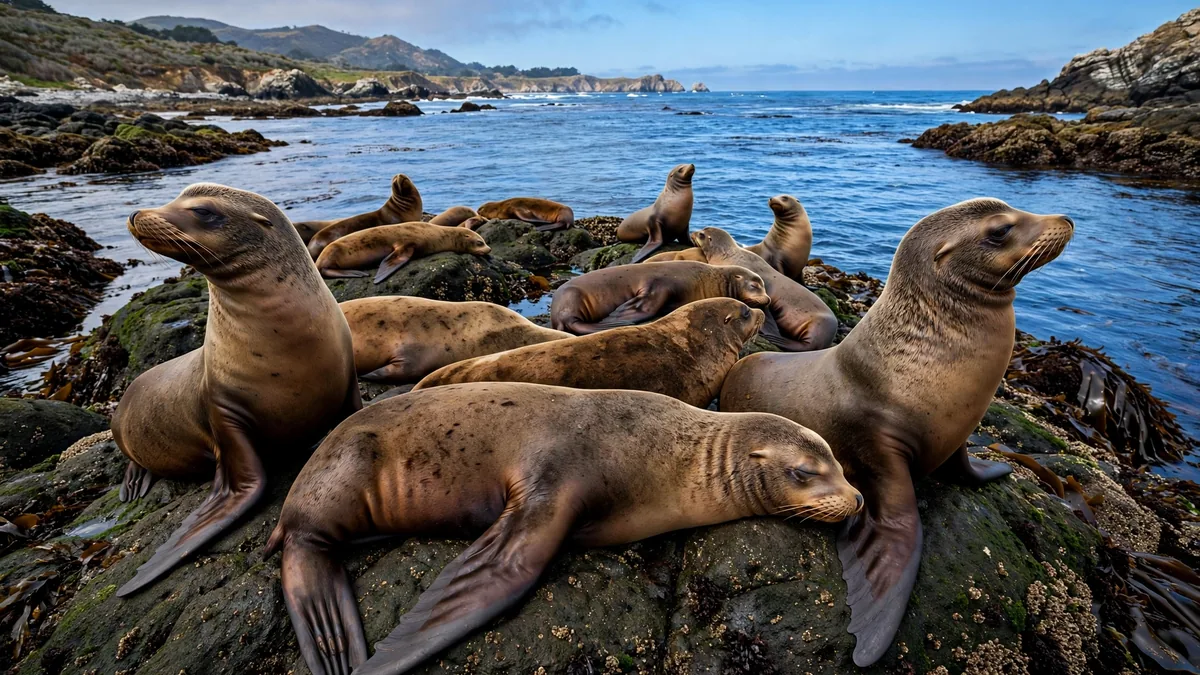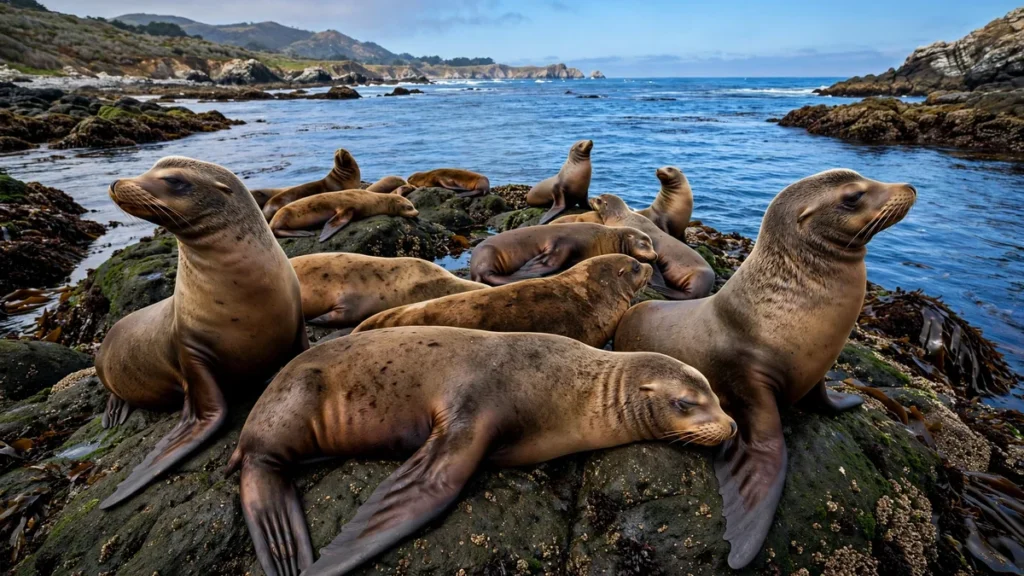
The sea lion species are the eared seals of the family Otariidae, with small external ear flaps, long front flippers and hind flippers that rotate forward so the animal can walk on land. If you are asking how many sea lion species there are, the answer is six living species, plus a seventh, the Japanese sea lion, which was hunted to extinction in the twentieth century.
A sea lion is not a true seal, and the difference is easy to see once you know what to look for. True seals have only ear holes and drag themselves along on their bellies, while a sea lion has visible ear flaps and can turn its hind flippers underneath its body, sit upright and even gallop across a beach.
Key takeaways
- There are six living sea lion species in the family Otariidae, in five genera, plus the extinct Japanese sea lion, last confirmed in 1974.
- Sea lions differ from true seals in having small external ear flaps, long front flippers that power their swimming, and hind flippers that rotate forward for walking on land.
- The Steller sea lion is the largest eared seal: males reach about 2.8 to 3.2 metres and average about 566 kilograms.
- Sea lions eat fish, squid, octopus and crustaceans, and they breed in noisy colonies on beaches and rocky shores, where one pup is born each year.
- Three species are listed as Endangered, the Galapagos, Australian and New Zealand sea lions, while the Steller is Near Threatened and the California and South American sea lions are Least Concern.
What makes a sea lion a sea lion
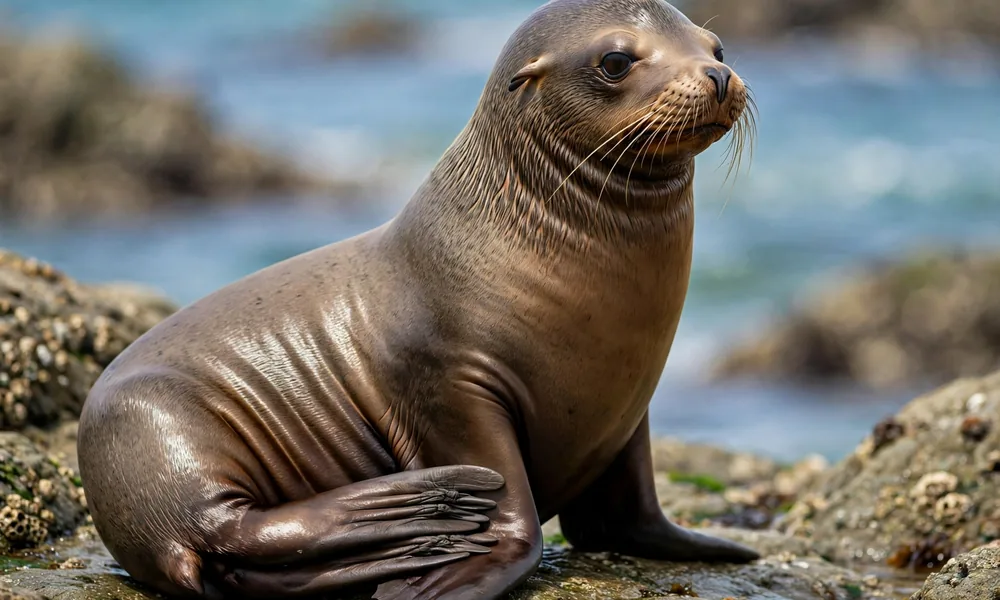
A sea lion is an otariid, a member of the eared seal family Otariidae, and three features mark it out: the pinna, the small external ear flap that gives the family its name, from the Greek otarion, meaning little ear; the long, mostly hairless front flipper, which does the work of swimming; and the hind flipper, which can rotate forward under the body, so a sea lion can lift its chest, sit upright and walk on all fours.
Sea lions are set apart from the fur seals, their closest relatives in the same family, by their short, coarse coats and larger size. Fur seals have a dense underfur beneath long guard hairs and a more pointed snout, while sea lions have a sleeker coat and a blunter face. Like the harbor seal, a true seal of the same coasts, a sea lion hunts in the sea and rests on land, but it is far stronger and more agile out of the water.
The sea lion species and their relatives
The sea lion species belong to five genera of the family Otariidae: Zalophus holds the California and Galapagos sea lions, plus the extinct Japanese sea lion; Eumetopias holds the Steller; Otaria holds the South American; Neophoca holds the Australian; and Phocarctos holds the New Zealand sea lion. The family also holds the fur seals, close cousins rather than sea lions themselves.
The other pinnipeds are the true seals of the family Phocidae, the earless seals, and the walrus, the only living member of its own family. The elephant seal is the largest of the true seals, far heavier than any sea lion, yet it cannot walk on land the way a sea lion can, and the walrus is a tusked bottom-feeder of the Arctic.
| Type | Animal | Where it lives | Best-known food | Length or Weight |
|---|---|---|---|---|
| Family | Eared seals (family Otariidae) | Pacific and southern coasts | Fish, squid and crustaceans | 15 living species in all |
| Species | Steller sea lion (Eumetopias jubatus) | North Pacific, Japan to California | Pollock, herring and salmon | Males up to 1,120 kg |
| Species | California sea lion (Zalophus californianus) | Eastern Pacific, Mexico to Canada | Sardines, anchovies and squid | Males about 300 kg |
| Species | Galapagos sea lion (Zalophus wollebaeki) | Galapagos Islands, Ecuador | Sardines, squid and lanternfish | Up to about 360 kg |
| Species | Australian sea lion (Neophoca cinerea) | Southern and south-western Australia | Fish, squid and octopus | Males about 300 kg |
| Species | New Zealand sea lion (Phocarctos hookeri) | New Zealand and subantarctic islands | Fish, squid and octopus | Males over 400 kg |
| Species | South American sea lion (Otaria flavescens) | Coasts of South America | Fish, squid and crustaceans | Males about 350 kg |
How sea lions live
Sea lions are carnivores that hunt fish, squid, octopus and crustaceans, and the larger species will also take small sharks and the pups of other seals. A California sea lion eats sardines, anchovies and squid, a Steller sea lion takes pollock, herring, salmon and octopus, and a New Zealand sea lion forages on the sea floor. They hunt by sight and by the sensitive whiskers on their muzzles, and they swallow their prey whole.
Sea lions are strong divers. A Steller sea lion has been recorded diving to more than 400 metres, and older juveniles can dive to at least 500 metres and stay under for over 16 minutes, though most feeding dives are far shallower. They slow their heart rate as they dive and store oxygen in their blood and muscles, and they communicate with barks, growls and roars.
Breeding takes place on beaches and rocky shores, in rookeries where males arrive first and claim territories. A dominant male may hold a territory with ten to twenty females. Females give birth to a single pup soon after arriving, then mate again ten to fourteen days later, and the fertilised egg does not implant for three to four months, so the pup is born at the right season the following year. The total gestation is about eleven months, the pup nurses for about a year, and in Steller sea lions some pups nurse for up to three years. Sea lions live for about 15 to 25 years in the wild.
Where sea lions live
Sea lions live along the temperate and subpolar coasts of the Pacific, with the South American species also reaching the Atlantic. The Steller sea lion ranges around the North Pacific rim, from Japan through the Aleutian Islands and Alaska to California, and the California sea lion ranges from Mexico to British Columbia. The Australian sea lion lives only on the southern and south-western coasts of Australia, the New Zealand sea lion breeds mainly on the Auckland and Campbell Islands and is now returning to the New Zealand mainland, and the South American sea lion ranges from Peru around the tip of the continent to Brazil.
Sea lions haul out on beaches, rocky shores and offshore rocks, and like the sea otter they depend on rich, cold, productive waters.
The fortunes of the six living species are very different. The California and South American sea lions are listed as Least Concern. The Steller sea lion is listed as Near Threatened: its numbers fell from an estimated 250,000 to 300,000 in the 1960s to about 85,000 by 2000, and although the eastern population has recovered, the western population in Alaska and Russia is still struggling. The Galapagos, Australian and New Zealand sea lions are all listed as Endangered, threatened by entanglement in fishing gear, food shortages and disturbance at their breeding colonies. The Australian sea lion is unusual even among sea lions: it breeds on a cycle of about 17 and a half months rather than once a year, which slows its recovery.
Best seasons for sea lion watching
The best time to watch sea lions is the breeding season, when the colonies are at their noisiest and most crowded. In the northern Pacific that means May to July, when pups are born in June, while in the Galapagos the breeding season runs roughly from August to January. The New Zealand sea lion pups in December and January. Outside the breeding season, sea lions can be watched all year at haul-outs such as Pier 39 in San Francisco.
Staying safe around sea lions
A sea lion is a wild animal and should be watched from a distance, never approached, touched or fed. A resting sea lion may look sleepy, but it can move fast, and a cornered animal can bite hard enough to cause serious injury. A pup left alone on the beach is usually not abandoned, so never pick it up or push it back into the water. If you find a sea lion that looks injured or tangled, call the local marine mammal rescue service instead.
Sea lion watching checklist
A little preparation turns a noisy rookery visit into a real chance of seeing sea lions at their most dramatic.
- A visit to a known rookery or haul-out, such as the Galapagos, Pier 39, Kangaroo Island or the Otago coast, with a local guide.
- A trip timed for the breeding season, when the colonies are full.
- Binoculars, because viewpoints are often set back from the colony.
- A camera with a zoom lens, for close views without approaching the animals.
- Warm, windproof clothing for the sea wind.
- Sun protection and water.
- A field guide to marine mammals, for telling a sea lion from a fur seal or a true seal.
Frequently asked questions
How many sea lion species are there?
There are six living sea lion species: the Steller, California, Galapagos, Australian, New Zealand and South American sea lions, in five genera of the family Otariidae. A seventh, the Japanese sea lion, was hunted to extinction and last confirmed in 1974.
What is the difference between a sea lion and a seal?
A sea lion has small external ear flaps, long front flippers that power its swimming, and hind flippers that rotate forward so it can walk and sit upright on land. A true seal has only ear holes and hind flippers that point backwards, so it can only drag itself along on its belly ashore.
What does a sea lion eat?
Sea lions eat fish, squid, octopus and crustaceans, and the larger species also take small sharks. California sea lions eat sardines, anchovies and squid, and Steller sea lions eat pollock, herring, salmon and octopus.
How long can a sea lion stay underwater?
Sea lions can stay underwater for many minutes on a deep dive: older juvenile Steller sea lions can dive to at least 500 metres and stay down for over 16 minutes. Most feeding dives are much shorter.
How is this guide different from the saiga antelope guide?
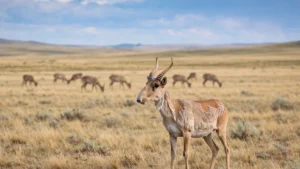
This guide covers the sea lion, a family of six living species of eared seals that hunt fish and squid in the ocean and breed in noisy colonies on beaches and rocky shores, while our saiga antelope species guide covers the saiga antelope, a single species of steppe antelope from Central Asia that lives in nomadic herds, eats grasses and lichens, and is famous for its bulbous trunk-like nose. Sea lions swim with their front flippers and walk on land, and saigas run in herds across the steppe.
Are sea lions endangered?
Three of the six living species are listed as Endangered: the Galapagos, Australian and New Zealand sea lions. The Steller sea lion is listed as Near Threatened, and the California and South American sea lions are listed as Least Concern. The main threats are entanglement in fishing gear, food shortages and disturbance at breeding colonies.
Conclusion
The sea lion species show how one family can spread across the whole Pacific and keep the same clever design: ear flaps, wing-like front flippers and hind flippers that turn forward, letting a deep-sea hunter walk and sit on the beach.
If you go looking for one, go in the breeding season, go with a guide, and keep your distance. Watch a bull rear up and bark over his territory while pups tumble on the rocks, and you will see why sea lions feel like animals that belong to both the sea and the land.