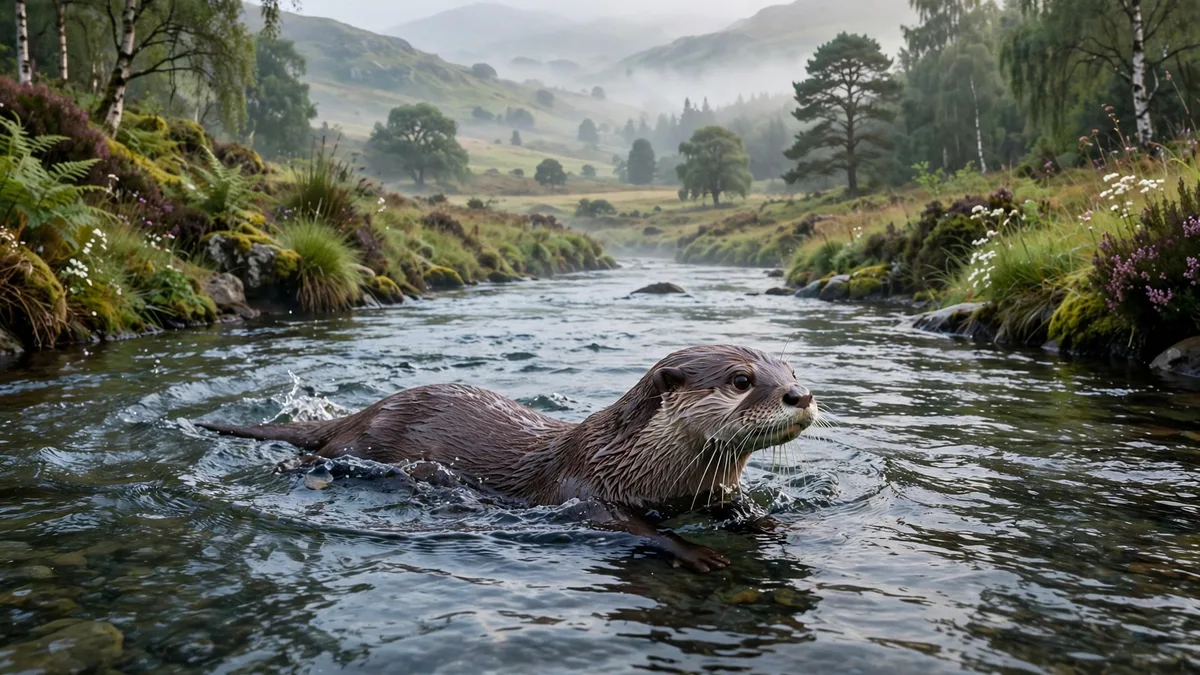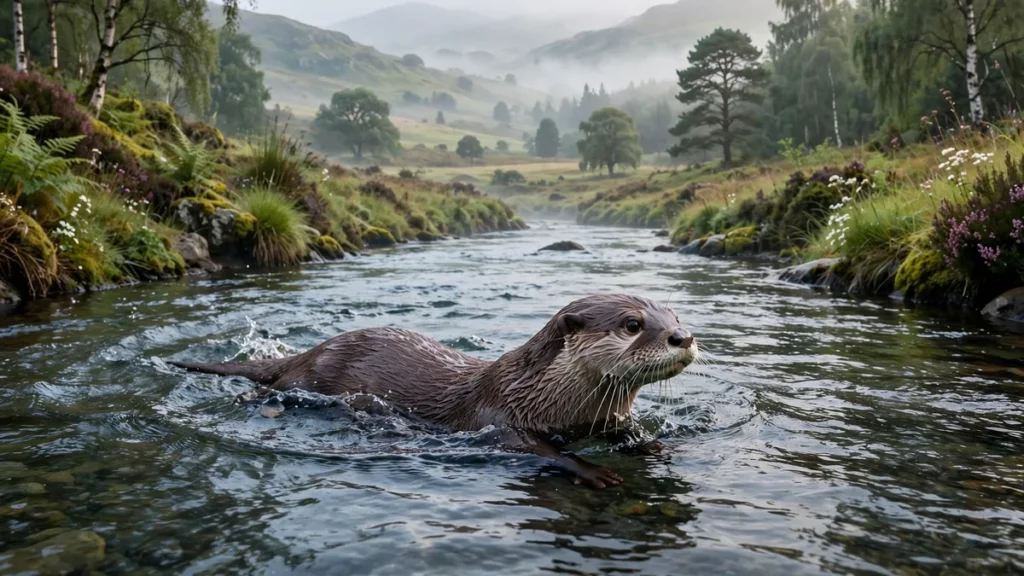
The European otter species is Lutra lutra, one of 13 otter species in the world, a sleek swimmer of rivers, lakes and coasts across Europe and parts of Asia and North Africa. If you are asking how many European otter species there are, the answer is one: there is only one European otter species, and every European otter alive today belongs to it, although it is only one of 13 otter species worldwide.
The European otter belongs to the mustelid family, the same family as the badger, the weasel and the stoat, yet it lives very differently from all of them. It is most active at dawn and dusk, and it hunts in cold rivers where few other mammals can follow.
Key takeaways
- There is only one European otter species, Lutra lutra, and it is one of 13 otter species in the world.
- European otters live in rivers, lakes and coasts across Europe and parts of Asia and North Africa.
- Fish make up most of the diet, with eels, trout and other freshwater fish eaten most often.
- European otters usually weigh between 7 and 12 kilogrammes, and they live in dens called holts.
- European otters are listed as Near Threatened, with numbers recovering in many countries after a sharp decline.
What makes a European otter a European otter
A European otter is a long, low animal with a brown back, a pale throat and belly, a flat head, small ears, and a thick tail that tapers to a point. Its body measures roughly 57 to 95 centimetres, with a tail about 35 to 45 centimetres long again, and it usually weighs between 7 and 12 kilogrammes, with males heavier than females.
The fur defines the European otter: two layers of dense hair that trap air and keep the skin dry and warm in cold water, with about 50,000 hairs per square centimetre. European otters hunt mainly at dawn and dusk, and they catch fish with their paws and teeth, eating small fish in the water and larger fish on the bank.
The European otter species and its relatives
Lutra lutra is the only European otter species, and it is one of 13 otter species in the world, spread across Europe, Asia, Africa and the Americas. It is not split into formally recognised subspecies in most modern accounts, although otters in different parts of its wide range vary a little in size and colour, and these differences are not enough to split it into separate species.
The North American river otter is the European otter’s closest relative in build, being a river swimmer of similar size, but it lives in the rivers and lakes of North America, while the sea otter lives in the cold Pacific and spends almost its whole life in the sea. The giant otter of South America is much larger and lives in family groups, while the Asian small-clawed otter is the smallest otter in the world.
| Type | Animal | Where it lives | Best-known food | Length |
|---|---|---|---|---|
| Species | European otter (Lutra lutra) | Rivers, lakes and coasts of Europe and Asia | Fish, especially eels and trout | 57 to 95 cm body, tail 35 to 45 cm |
| Subspecies | Japanese river otter (extinct) | Rivers of Japan | Fish and crustaceans | About 65 to 80 cm body |
| Close relative | North American river otter | Rivers and lakes of North America | Fish and crayfish | 66 to 107 cm body |
| Close relative | Sea otter | Coasts of the North Pacific | Sea urchins and shellfish | 100 to 130 cm body |
| Close relative | Giant otter | Rivers of South America | Fish, especially catfish | 100 to 140 cm body |
| Close relative | Asian small-clawed otter | Wetlands of South and South East Asia | Crabs and shellfish | 45 to 61 cm body |
| Close relative | Smooth-coated otter | Rivers of South and South East Asia | Fish and frogs | 65 to 79 cm body |
How European otters live
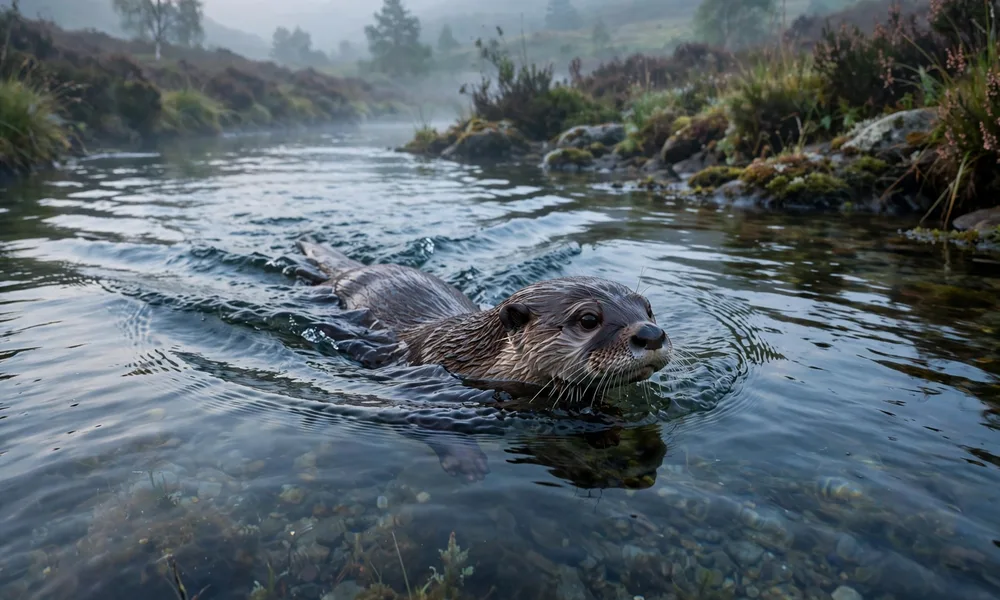
European otters are creatures of clean water. An otter lives alone, except for a mother with her cubs, holding a territory along a river or a stretch of coast that it marks with scent, and it sleeps in a den called a holt, dug into a riverbank or hidden among tree roots and rocks. Like other wetland animals, the otter depends on healthy water, with plenty of fish and quiet banks where it can rest unseen.
Fish make up most of the diet, and the otter hunts by diving and chasing fish underwater, using its whiskers to sense movement in murky water. An otter eats about 1 to 1.5 kilogrammes of food a day, and it needs clean water to hunt well, because it hunts by sight and by touch.
Breeding can happen at any time of year, and after a gestation of about 60 to 64 days the female gives birth to one to three cubs in the holt. The cubs are born blind and helpless, and they stay in the holt for about two months, learning to swim at about three months old. European otters live for around 8 to 10 years in the wild, and more than 15 years in captivity.
Where European otters live
The European otter’s range covers rivers, lakes and coasts across most of Europe, and it extends into parts of Asia and North Africa, from Ireland and Scotland to the rivers of Siberia and the coasts of Morocco. It lives wherever there is clean fresh water or sheltered coast, with plenty of fish and quiet banks for its holts. It is one of the characteristic forest animals of wooded river valleys, most common where the rivers run through trees and the banks are undisturbed.
Clean water is the key requirement. An otter needs rivers with fish and quiet stretches where it can hunt without disturbance, so it avoids polluted water and busy canals. It depends on the rivers staying clean and connected, like many other Asian animals that share its range in the east.
The species is listed as Near Threatened, and its numbers are recovering in many countries. The main pressure has been pollution, especially pesticides that built up in fish and in otters, which caused a sharp decline in the second half of the twentieth century. Cleaner rivers, legal protection and the return of fish have helped otters come back to rivers in Britain, Ireland and much of Europe, although they are still scarce or absent in some countries.
Best seasons for European otter watching
There is no closed season, because European otters are active all year, but winter and early spring are usually the best times to look for them. The trees are bare, the otters are easier to see against the banks, and their tracks and spraints, their droppings, are easier to find. In Britain the best months are often November to March.
The summer has its own rewards: the rivers are warm, the cubs are learning to swim, and the otters are at their most playful. Whichever season you choose, the best hours are the first few after dawn and the hour before dusk, when the otters hunt in the low light.
Good places to try include the rivers and lochs of Scotland, where the otters are well known, and the coasts of Shetland and the Hebrides, where otters hunt in the sea at low tide. River valleys in Wales, Ireland and mainland Europe also give a good chance of a sighting, especially at dawn.
Staying safe around European otters
A European otter is a wild animal with sharp teeth and strong jaws, and it can bite if cornered, though otters almost never attack people. Keep your distance, never try to touch or feed an otter, and never block its path to the water. If you meet an otter on a riverbank, stand still, stay quiet and back away slowly, and never run, because running can startle the animal.
Like other wild mammals, European otters can carry diseases, and any bite or scratch should be washed at once and checked by a doctor without delay. Admire from a distance. Avoid flash photography too, because a bright flash can startle an otter and disturb its hunting.
European otter watching checklist
A little preparation turns a river walk into a real chance of seeing a European otter, so pack for cold mornings and muddy banks.
- Binoculars with good low-light performance, for picking an otter out of the river at dawn.
- A camera with a long lens, because otters should always be watched from a distance.
- Warm layers and waterproof clothing, because riverbanks are cold and damp all year.
- Waterproof boots for muddy banks, because the best otter signs are found close to the water.
- A booked local guide who knows the holts, the fishing pools and the otter trails.
- A plan to be out at dawn, when otters are most active and the light is at its best.
- Patience and silence, because otters are shy animals and a noisy group will send them away.
Frequently asked questions
How many European otter species are there?
There is one European otter species, Lutra lutra. It is one of 13 otter species in the world, and it is the only otter species in Europe. No second European otter species is recognised, and otters in different countries are all the same species.
What do European otters eat?
European otters eat mostly fish, with eels, trout, perch and other freshwater fish eaten most often. An adult eats about 1 to 1.5 kilogrammes of food a day.
What is a holt?
A holt is the den of an otter, dug into a riverbank or hidden among tree roots, rocks and dense vegetation. The otter sleeps in its holt by day, raises its cubs there, and uses it as a safe place to rest between hunting trips, often with an entrance below the waterline.
Can you keep a European otter as a pet?
No. A European otter is a wild animal that needs a large stretch of clean river, hunts at dawn and dusk, and can bite hard if cornered. Keeping one is illegal in many places, and many pet otters end up in rescue centres when they grow too strong and too messy to handle.
How is this guide different from the giant panda species guide?
This guide covers the single European otter species, a fish-eating swimmer of European rivers and coasts, while our giant panda species guide covers the single giant panda species, a bamboo-eating bear of the mountains of central China. The otter lives in the water and hunts fish, and the giant panda lives in the forest and eats bamboo.
Are European otters endangered?
European otters are listed as Near Threatened, so they are not classed as endangered, but they are still scarce in some countries. Their numbers fell sharply in the twentieth century because of pollution, and they have recovered in many places as rivers became cleaner. Keeping rivers clean and protecting quiet riverbanks are the most important steps for keeping them healthy.
Conclusion
The European otter species shows how much specialisation one animal can hold: Lutra lutra, with dense fur that keeps it warm in cold water, webbed feet for swimming, whiskers that sense fish in murky water, and a life spent hunting along quiet rivers and coasts. It is one of the best signs of a healthy river, and it has returned to many waters that were once too polluted for it.
If you go looking for one, go at dawn, go with a guide, and go quietly. Watch an otter slip into a river at first light and you will understand why it has earned its place as a symbol of clean water, and why keeping its rivers clean matters most.