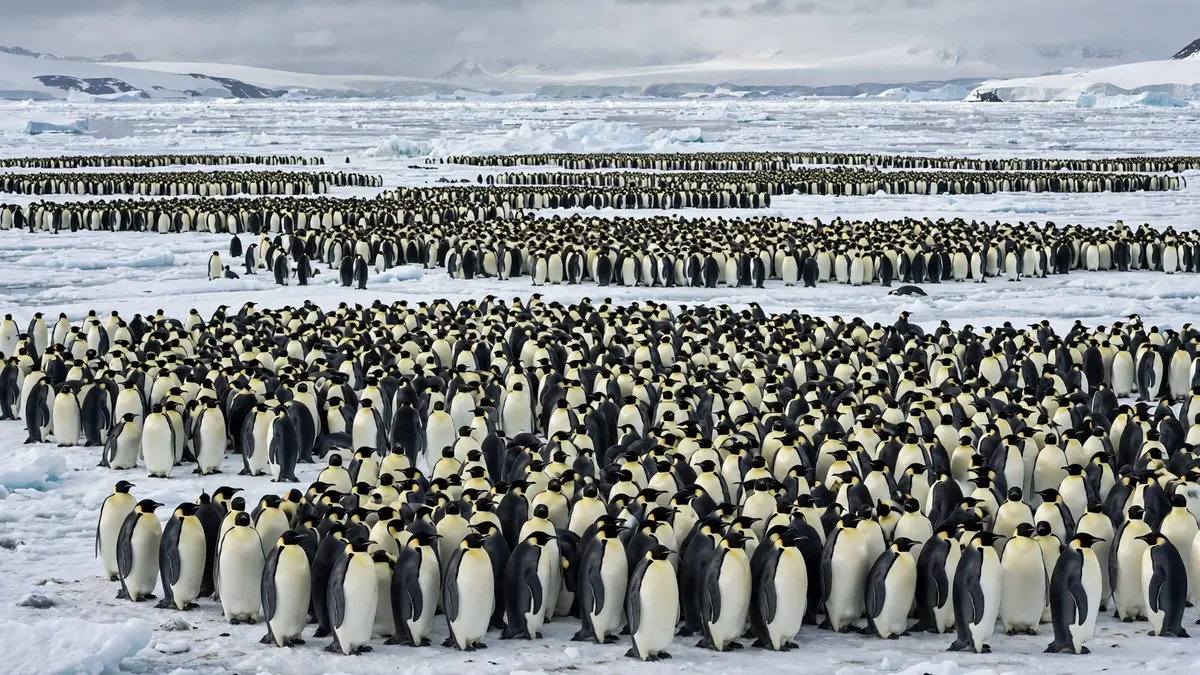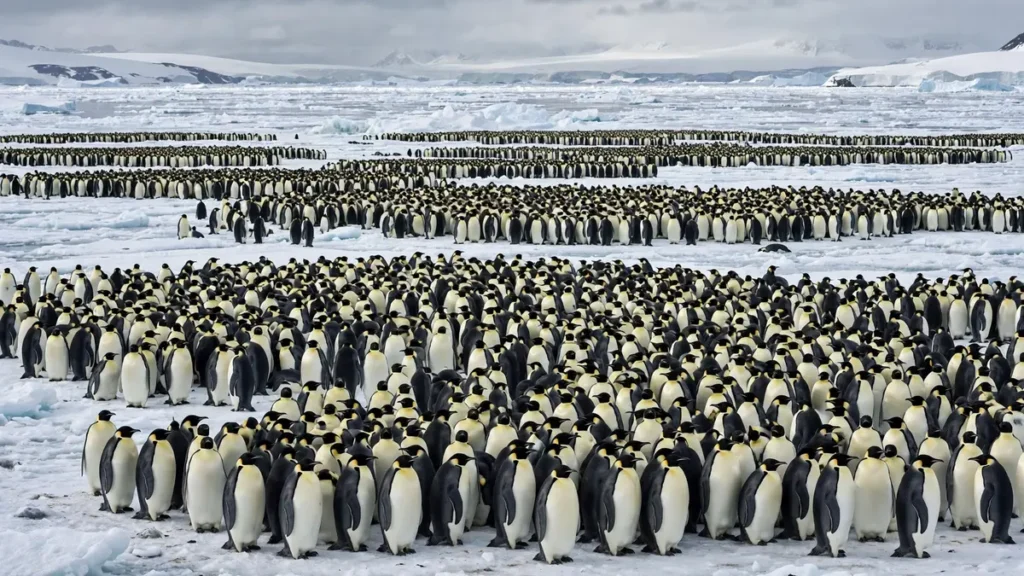
The emperor penguin species is a single species, Aptenodytes forsteri, the tallest and heaviest penguin on Earth, a bird that raises its chick in the middle of the Antarctic winter, when the temperature falls below minus 50 degrees Celsius and the sun does not rise for months. If you are asking how many emperor penguin species there are, the answer is one: there is only one emperor penguin species in the world, and every emperor penguin alive today belongs to it.
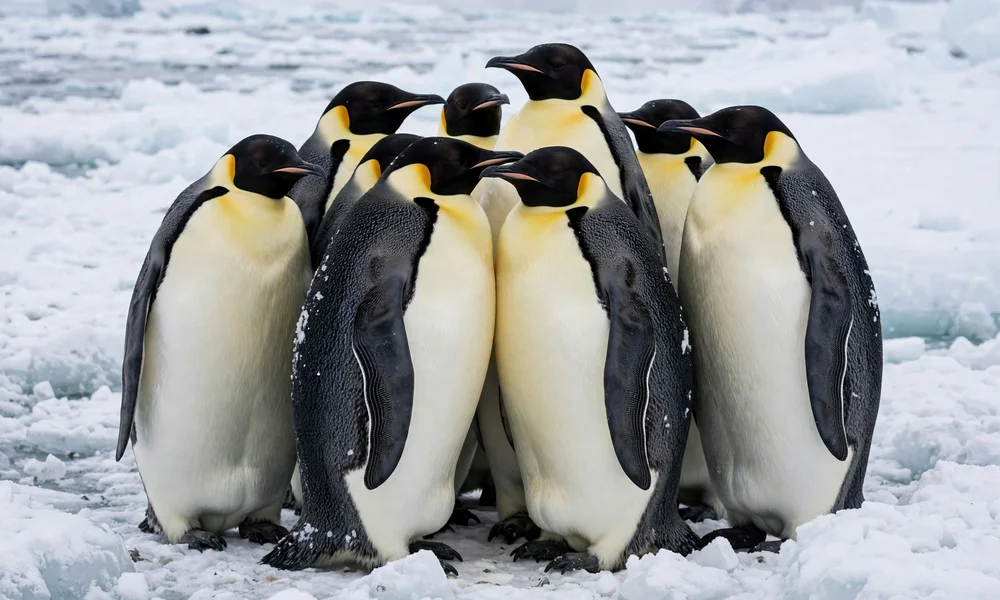
The emperor penguin belongs to the penguin family, Spheniscidae, and it is the only animal on Earth that chooses to breed in the Antarctic winter. Its black head, its pale yellow breast and its pink bill make it one of the most recognisable birds on Earth.
Key takeaways
- There is only one emperor penguin species, Aptenodytes forsteri, with about 256,000 to 280,000 breeding pairs left in the wild.
- Emperor penguins are the tallest penguins on Earth, standing 110 to 122 centimetres tall and weighing 22 to 45 kilogrammes.
- Emperor penguins are the only penguins that breed in the Antarctic winter, with males incubating the egg on their feet.
- Emperor penguins dive deeper than 500 metres to hunt fish, krill and squid in the dark Southern Ocean.
- Emperor penguins are listed as Near Threatened, and the loss of Antarctic sea ice is the main threat to their future.
What makes an emperor penguin an emperor penguin
An emperor penguin is a large flightless bird with a black head and back, a white belly, a pale yellow breast and a pink lower bill, built for a life on the ice. An adult stands roughly 110 to 122 centimetres tall and usually weighs between 22 and 45 kilogrammes, with the weight changing through the year as the bird fasts and feeds.
The breeding defines the emperor penguin: it is the only penguin that nests in the Antarctic winter, and the male balances the single egg on his feet under a fold of belly skin, fasting for about four months in the dark and the cold while the female walks to the sea to feed. Its feathers are short, dense and waterproof, and a layer of fat up to 3 centimetres thick keeps the cold out, while its solid bones make it a better diver than a flyer. Like other penguins, it swims with its wings, and it can travel underwater at up to 15 kilometres per hour.
The emperor penguin species and its relatives
Aptenodytes forsteri is the only emperor penguin species, and it is not split into formally recognised subspecies. Emperor penguins in different parts of Antarctica form more than 60 separate colonies, but they are all the same species, and the birds return to the same colony each year.
The king penguin is the emperor penguin’s closest relative, being the only other member of its genus, but it is smaller, lives further north on sub-Antarctic islands, and breeds in summer rather than winter. The Adélie penguin is a smaller Antarctic penguin with a white ring around its eye, while the gentoo, chinstrap and macaroni penguins are smaller brush-tailed and crested penguins of the Southern Ocean. The little blue penguin is the smallest penguin of all, standing just 30 centimetres tall in Australia and New Zealand.
| Type | Animal | Where it lives | Best-known food | Length or Weight |
|---|---|---|---|---|
| Species | Emperor penguin (Aptenodytes forsteri) | Coast of Antarctica | Fish, krill and squid | 110 to 122 cm, 22 to 45 kg |
| Close relative | King penguin | Sub-Antarctic islands | Fish and squid | 85 to 95 cm |
| Close relative | Adélie penguin | Coast of Antarctica | Krill and fish | 46 to 71 cm |
| Close relative | Gentoo penguin | Antarctic Peninsula and islands | Krill, fish and squid | 51 to 90 cm |
| Close relative | Chinstrap penguin | Antarctic Peninsula and islands | Krill | 68 to 76 cm |
| Close relative | Macaroni penguin | Sub-Antarctic islands | Krill and small fish | 70 to 76 cm |
| Close relative | Little blue penguin | Australia and New Zealand | Small fish and squid | 30 to 33 cm |
How emperor penguins live
Emperor penguins are creatures of the Antarctic ice. An emperor penguin lives in colonies of thousands, huddling together for warmth through the winter night, and the huddle slowly rotates so that every bird takes a turn in the warm centre and on the cold edge. Like other ocean animals, it depends on the sea.
Fish make up most of the diet, along with krill and squid, and the emperor penguin hunts by diving deeper than 500 metres, where the light never reaches, staying underwater for more than 20 minutes on a single breath. It finds its prey by sight in the dark water, and it swallows fish whole, catching them with its spiny tongue.
Breeding happens in the Antarctic winter, and after the female lays a single egg in May or June, she passes it to the male and walks to the sea, while the male balances the egg on his feet and fasts for about 65 days until it hatches. The chick is born grey and downy, weighing around 300 grammes, and both parents take turns feeding it until it fledges in December or January. Emperor penguins live for around 15 to 20 years in the wild.
Where emperor penguins live
The emperor penguin lives only in Antarctica, breeding in more than 60 colonies scattered around the coastline, from the Ross Sea to the Weddell Sea and the Antarctic Peninsula. It spends the summer at sea and the winter on the fast ice, the sea ice locked to the shore, where it breeds. It is one of the characteristic Antarctic animals, most common around the Ross Sea, where the largest colonies hold more than 20,000 pairs.
Sea ice is the key requirement. An emperor penguin needs stable fast ice to breed on, so it follows the ice as it grows and melts with the seasons, and when the ice breaks up too early the chicks drown or freeze. It depends on the ice lasting from autumn until the chicks fledge in summer, like the seals and the krill it feeds on, and in 2022 four whole colonies in the Bellingshausen Sea failed to raise a single chick after the ice broke up early.
The species is listed as Near Threatened, and its numbers are falling in several regions. The main pressure is the loss of Antarctic sea ice as the climate warms, which threatens the breeding colonies and the krill the penguins eat. The United States listed the emperor penguin as threatened under its Endangered Species Act in 2022, and scientists project that the population could fall by 50 to 70 percent by 2100. About 256,000 to 280,000 breeding pairs are estimated to live in the wild.
Best seasons for emperor penguin watching
There is no simple watching season, because emperor penguins live in the most remote place on Earth and are hard to reach even for experienced guides. The best chance comes in summer, from about November to January, when the sea ice breaks up and expedition ships can reach the colonies, and the chicks are fledging.
The summer has its own rewards: the Antarctic is at its brightest and the penguins are easy to spot against the ice, though the colonies are far from shore and the weather is changeable. Good places to try include the Ross Sea and the Antarctic Peninsula.
Staying safe around emperor penguins
An emperor penguin is a wild bird with a sharp beak and strong flippers, and it can hurt a person, though emperor penguins are curious and almost never aggressive. Keep your distance, never approach a colony on foot, and never get between a parent and its chick, because a frightened colony can panic and crush chicks.
Like other wild birds, emperor penguins can carry diseases, and any bite or scratch should be washed at once and checked by a doctor without delay. Admire from a distance, from the deck of a ship, and never feed an emperor penguin, because a fed penguin becomes a danger to itself and to people.
Emperor penguin watching checklist
A little preparation turns an Antarctic cruise into a real chance of seeing an emperor penguin, so pack for extreme cold, sea spray and long days on deck.
- Binoculars with good low-light performance, for picking a black-and-white bird out of the ice.
- A camera with a long lens, because emperor penguins should always be watched from a distance.
- Warm layers and a waterproof jacket, because the Antarctic wind is cold even in summer.
- Sea-sickness tablets, taken before boarding, because the best trips spend days at sea.
- A booked licensed expedition operator with guides who know the colonies and the ice.
- A plan to be out in summer, when the ice breaks up and the ships can reach the colonies.
- Patience and silence, because emperor penguins are shy birds and a noisy group will send them away.
Frequently asked questions
How many emperor penguin species are there?
There is one emperor penguin species, Aptenodytes forsteri. Emperor penguins in different parts of Antarctica form more than 60 separate colonies, but they are all the same species. No second emperor penguin species is recognised.
Why do male emperor penguins fast for four months?
Male emperor penguins fast for about four months because they must stay on the ice to incubate the egg while the female walks to the sea to feed, and there is no food on the breeding ice. A male can lose up to half his body weight during the fast, and he is fed again only when the female returns with food for the chick.
How deep can emperor penguins dive?
Emperor penguins dive deeper than 500 metres to hunt fish, krill and squid in the dark, and they can stay underwater for more than 20 minutes on a single breath. They are the deepest-diving birds on Earth, and their solid bones help them withstand the pressure.
Can you keep an emperor penguin as a pet?
No. An emperor penguin is a wild bird that needs Antarctic ice, eats fish and krill from the Southern Ocean, and is fully protected by the Antarctic Treaty. Emperor penguins in zoos need huge cold enclosures with pools and snow, and they are not pets.
How is this guide different from the snowy owl species guide?
This guide covers the single emperor penguin species, a flightless bird that breeds on the Antarctic sea ice in winter, while our snowy owl species guide covers the single snowy owl species, a bird of prey that hunts lemmings on the Arctic tundra. The emperor penguin swims and dives in the Southern Ocean, and the snowy owl flies and hunts in the far north.
Are emperor penguins endangered?
Emperor penguins are listed as Near Threatened, so they are not classed as endangered, but their numbers are falling. About 256,000 to 280,000 breeding pairs remain in the wild, and the loss of Antarctic sea ice is the main threat.
Conclusion
The emperor penguin species shows how much endurance one bird can hold: Aptenodytes forsteri, with males that fast for four months in the dark, dives deeper than 500 metres, and a life spent breeding on the ice in the coldest place on Earth. It is the tallest penguin on Earth, and it has lived on the Antarctic coast for thousands of years.
If you go looking for one, go in summer to the Ross Sea or the Antarctic Peninsula, go with a small expedition cruise, and go with patience. Watch an emperor penguin colony huddled on the ice and you will understand why it has earned its place as the winter bird of Antarctica, and why keeping its sea ice matters most.