The first sign that wolves are nearby may not be a howl. It might be a set of tracks crossing fresh snow, a distant movement between trees, or the sudden silence of animals that sensed a predator before you did.
For centuries, wolves have occupied a special place in human imagination. They have appeared in folklore as dangerous villains, symbols of wilderness, and intelligent animals that move through forests under the cover of darkness. Yet the real wolf is more complicated than either legend suggests.
Wolves are social hunters, devoted parents, long-distance travelers, and adaptable predators. They survive in some of the world’s harshest environments, from Arctic tundra to temperate forests and mountain landscapes. Their lives revolve around finding food, protecting their young, maintaining relationships, and navigating territories that can stretch across vast areas.
Wolves are wild carnivorous mammals in the dog family, Canidae. The gray wolf (Canis lupus) is the best-known species and one of the largest wild members of the family. Wolves primarily hunt hoofed mammals such as deer, elk, and moose, but their diets vary by location and may include smaller animals and carrion.
Understanding wolves means looking beyond their reputation. Their behavior reveals how predators survive, how family groups cooperate, and how wildlife can influence the ecosystems around them.
What Is a Wolf?
A wolf is a member of the family Canidae, which also includes domestic dogs, coyotes, foxes, and jackals.
The gray wolf is distributed across parts of North America, Europe, and Asia. Its historical range was much broader than its present distribution, and populations have recovered in some regions while remaining absent or threatened in others.
Wolves have long legs, strong jaws, well-developed senses, and bodies built for traveling long distances. Their coats may be gray, brown, black, cream, or nearly white, depending on the individual and population.
Although wolves resemble large domestic dogs, they are wild animals with their own behavioral patterns, ecological needs, and survival strategies. Their physical appearance alone is not always enough to distinguish them from large dogs, particularly at a distance.
Wolves are also highly social. Many live in packs organized around a breeding pair and their offspring, although pack size and structure vary according to food availability, mortality, territory, and other conditions.
A wolf’s life is therefore shaped by two closely connected challenges: surviving as an individual and functioning as part of a social group.
Types of Wolves Around the World
The word wolf can refer to several different species and regional populations. Their appearances, habitats, prey, and conservation situations vary.
Gray Wolf
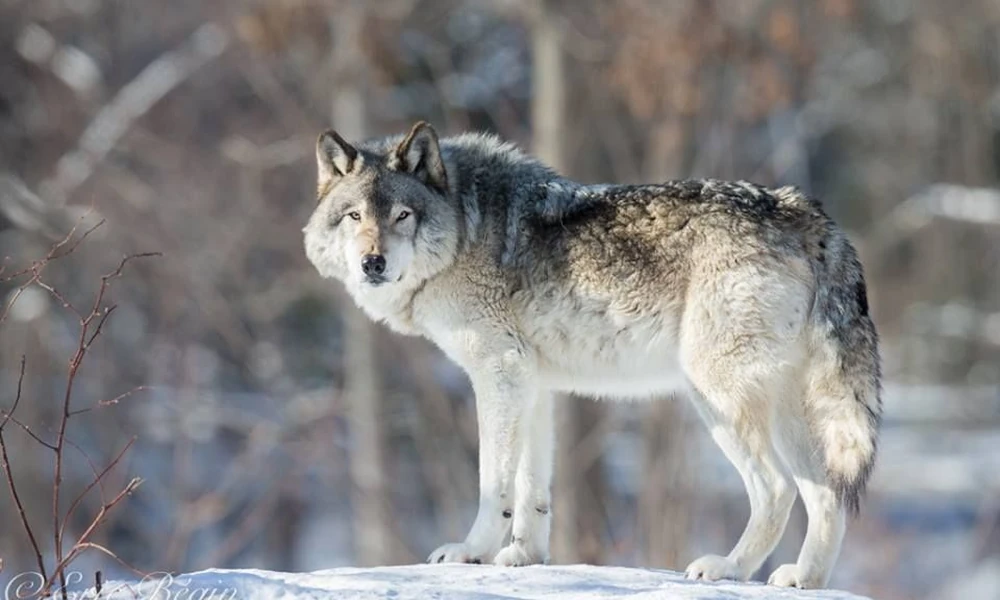
The gray wolf (Canis lupus) is the most widely recognized wolf species. It occupies a range of environments across parts of the Northern Hemisphere, including forests, mountains, tundra, grasslands, and some arid landscapes.
Despite its name, the gray wolf does not always have gray fur. Individuals may be black, brown, reddish, cream-colored, or white.
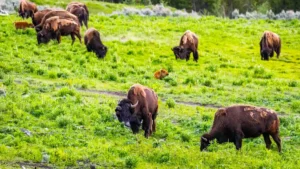
Gray wolves often hunt in packs, particularly when pursuing large prey. Their diet can include deer, elk, moose, caribou, bison, beavers, hares, and other available animals.
Their adaptability has allowed them to survive in diverse ecosystems, but their relationship with people remains complicated. Habitat changes, persecution, livestock conflicts, and different wildlife-management policies have shaped wolf populations across their range.
Arctic Wolf
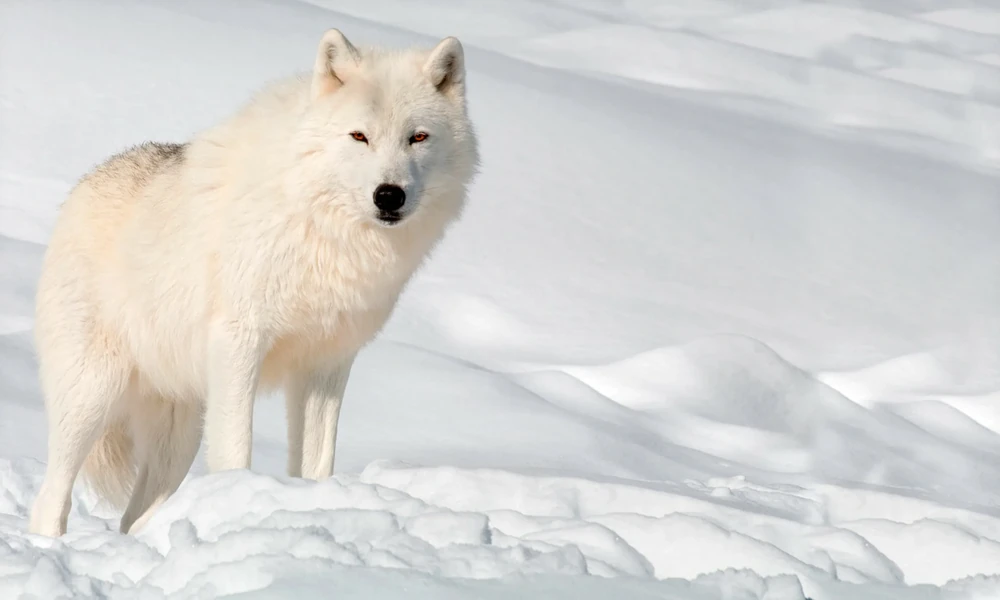
The name Arctic wolf commonly refers to wolves living in high Arctic regions, including populations of the gray wolf.
These wolves face long winters, extreme cold, and seasonal changes in daylight. Their thick coats help insulate them, while their wide-ranging movements allow them to search for prey across expansive landscapes.
Depending on the region, prey may include caribou, muskoxen, and smaller mammals. Food availability can change dramatically with the seasons, making successful hunting essential.
Arctic wolves are not immune to the challenges of their environment. When prey becomes scarce, the distance between a meal and the next can be considerable.
Mexican Wolf
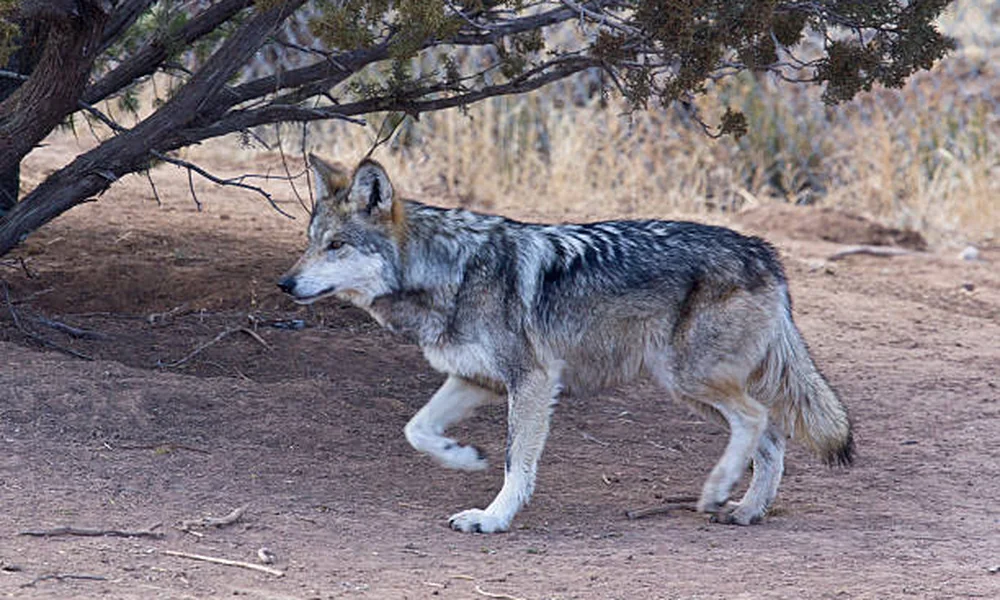
The Mexican wolf (Canis lupus baileyi) is a rare, smaller subspecies of gray wolf native to parts of the southwestern United States and Mexico.
It has a coat that can include gray, tan, rust, and darker markings. Historically, it inhabited forested mountain landscapes and other areas supporting suitable prey.
The Mexican wolf was severely reduced by predator-control programs and persecution. Conservation efforts, including captive breeding and reintroduction, have helped establish wild populations again.
Its recovery remains a long-term challenge involving habitat, genetic diversity, monitoring, and coexistence with people who raise livestock.
Red Wolf
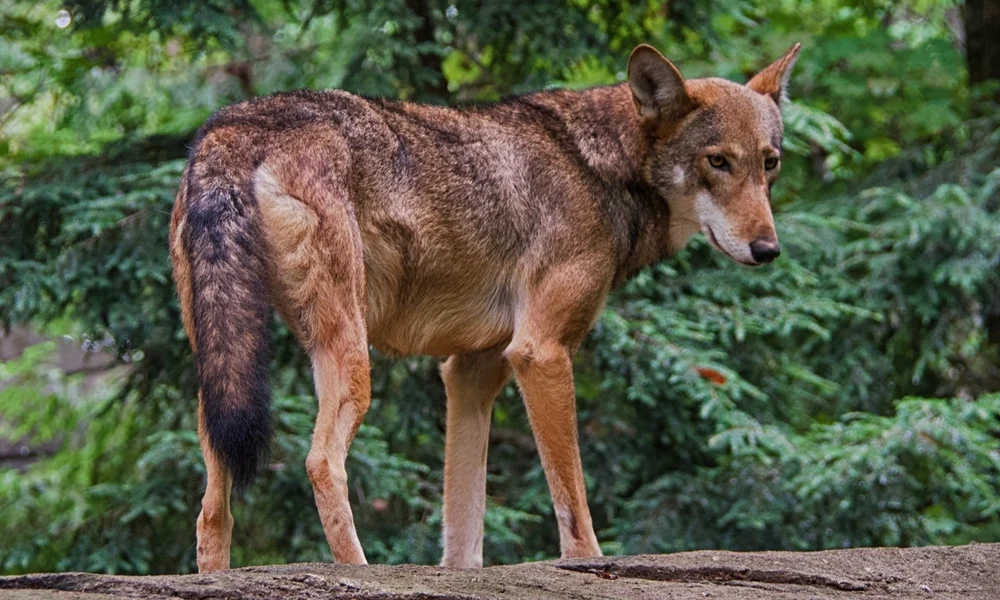
The red wolf (Canis rufus) is a distinct North American wolf species associated with the southeastern United States.
It is generally smaller than the gray wolf and often has reddish tones around the ears, legs, and other parts of its coat. Its appearance can overlap with that of coyotes and wolf-coyote hybrids, making identification difficult without expert assessment.
Red wolves have faced severe population declines, and their conservation has involved intensive management and recovery efforts.
Their story demonstrates that protecting a wolf is not simply about preserving a large predator. It can require safeguarding genetic diversity, managing human-wildlife conflict, and maintaining suitable habitat.
Himalayan Wolf
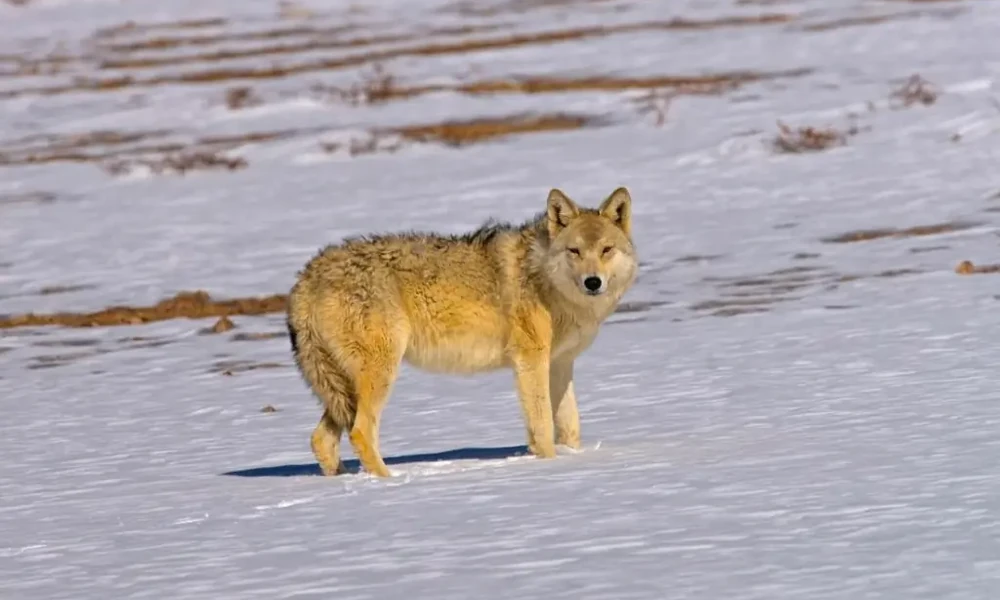
The Himalayan wolf is a wolf lineage associated with high-altitude regions of the Himalayas and the Tibetan Plateau. Its classification and evolutionary relationships have been the subject of scientific research.
It lives in landscapes where cold temperatures, thin air, and limited vegetation create demanding conditions.
Depending on location, its prey can include wild sheep, goats, and other mountain animals. Competition with people and livestock, habitat pressures, and conflict over prey can affect its survival.
The Himalayan wolf highlights the diversity within the broader wolf family and the importance of studying animals in the environments where they evolved.
Where Do Wolves Live?
Wolves are adaptable, but they cannot live just anywhere. They need enough food, space, suitable conditions for raising pups, and a landscape where they can move and find mates.
Forests and Woodlands
Forests provide cover, prey, and sheltered places where wolves can rest and raise young.
Depending on the region, wolves may hunt deer, elk, moose, beavers, and smaller mammals. Forests also offer routes through which packs can travel without being constantly exposed.
However, wolves do not require dense forest everywhere. In some regions, they regularly move through open woodland, meadows, and other mixed landscapes.
Mountains
Mountain environments can provide wolves with extensive territories and access to wild ungulates such as deer, elk, and wild sheep.
The terrain influences how wolves travel and hunt. Steep slopes, snow cover, rocky ground, and seasonal prey movements can all affect their behavior.
Some wolf populations move between elevations as prey shifts between summer and winter ranges.
Arctic Tundra
The Arctic tundra is a landscape of low vegetation, open ground, and severe seasonal weather.
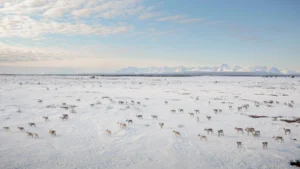
Wolves living there may travel long distances while following or searching for prey. Their survival depends on the availability of animals such as caribou and muskoxen, although diets differ among locations.
The lack of dense cover makes hunting and movement different from life in a forest. Wolves must adapt their strategies to the terrain, weather, and behavior of their prey.
Grasslands and Open Country
Wolves can also inhabit grasslands and other relatively open environments. These areas may support large grazing animals and provide long sightlines across the landscape.
Open country does not necessarily make wolves more successful hunters. Prey can detect approaching predators more easily, and a hunt may require patience, endurance, and cooperation.
Can Wolves Live Near Humans?
Yes. Wolves sometimes occupy landscapes that include farms, roads, settlements, and other human activities.
Their presence depends on factors such as prey availability, habitat connectivity, human tolerance, and local management. Wolves may avoid heavily developed areas but still travel through them when moving between habitats.
Problems can arise when wolves encounter livestock, unsecured animal feed, carcasses, or domestic dogs. Reducing these attractants and using appropriate livestock-protection methods can help limit conflict.
Wolves should never be fed or approached. Habituating wild wolves to people can increase risks for both humans and animals.
What Do Wolves Eat?

Wolves are carnivores, and their diets usually depend on the prey available in their environment.
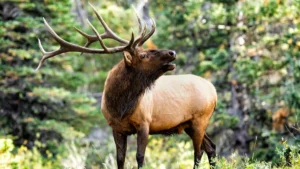
In many North American ecosystems, large hoofed mammals are important food sources. These may include white-tailed deer, mule deer, elk, moose, and caribou.
Wolves may also eat:
- Beavers and other small mammals
- Rabbits and hares
- Rodents
- Birds
- Fish in some regions
- Carrion, or animals that have already died
The exact diet varies by season and location. A pack living where elk are abundant may rely heavily on elk, while wolves in another environment may depend on deer, caribou, or smaller prey.
Wolves do not always hunt successfully. Chasing and attacking large animals can require substantial energy and expose the hunters to injury. An unsuccessful hunt may leave the pack searching for another opportunity.
After a successful kill, wolves may eat large quantities of food in a short period. They can then go days without another substantial meal if prey is difficult to find.
This feast-or-famine pattern is one reason wolves need access to large, connected habitats with enough prey to sustain them.
How Do Wolves Hunt in Packs?
Cooperative hunting is one of the wolf’s best-known behaviors, but it is often misunderstood.
Wolves do not win every hunt simply because they work together. Large prey can run quickly, turn suddenly, and injure a predator with kicks or horns. Hunting therefore involves risk, and the outcome depends on the animals involved and the conditions.
A wolf pack may travel through its territory while searching for signs of prey. Smell, tracks, and other environmental cues can help the animals locate potential food.
Once they encounter prey, the wolves may test the herd, pursue an individual, or abandon the attempt if the risk is too high.
They may focus on an animal that is young, injured, old, isolated, or otherwise easier to catch. However, prey selection is not identical in every hunt, and healthy animals can also be killed.
Pack hunting can make it possible to pursue prey larger than a single wolf could safely handle. Yet wolves also hunt smaller animals alone or in pairs when circumstances favor it.
Their success depends on experience, endurance, coordination, terrain, weather, and prey behavior not simply on the number of wolves present.
Why Do Wolves Howl?
A wolf’s howl can carry across a quiet landscape, sometimes making the animal seem much closer than it really is.
Howling is an important form of wolf communication. Wolves use vocalizations to maintain contact, signal their presence, coordinate with pack members, and communicate around territorial boundaries.
A wolf separated from its group may howl, while other wolves may answer. These calls can help the animals locate one another without needing to see each other.
Wolves also communicate through scent marking, body posture, facial expressions, and physical contact.
Their communication is not limited to dramatic howls. Growls, whines, barks, and subtle changes in posture can all convey information.
Do Wolves Howl at the Moon?
No scientific evidence suggests that wolves howl specifically at the moon.
They may howl at night because their activities and communication continue after dark, but they also vocalize during other times. The moon has become associated with wolf howling through stories, art, and popular culture.
When a wolf raises its head and howls, it is communicating with other wolves—not performing a ritual directed at the sky.
What Is a Wolf Pack?
A wolf pack is usually a family group rather than a collection of unrelated animals constantly fighting for dominance.
A typical pack may consist of a breeding pair and their offspring from one or more years. Some packs also include other relatives or additional wolves, depending on local circumstances.
The breeding adults often guide movement, reproduction, and other important activities. Older offspring may help the parents care for younger pups.
Pack size can change. Young wolves may leave to search for a mate and establish a territory of their own. Other individuals may die, disperse, or join a group under particular circumstances.
The popular image of a pack as a rigid hierarchy dominated by an unrelated, constantly aggressive “alpha” does not accurately describe many wild wolf families.
In natural settings, family relationships, reproduction, age, experience, and cooperation are central to how packs function.
Do Wolves Stay Together for Life?
Some breeding pairs remain together for many years, and they may continue raising pups as a family. However, a lifelong partnership is not guaranteed.
If one member dies, the surviving wolf may form a new pair. Pack structure can also change when animals disperse or environmental conditions shift.
The strength of wolf social bonds is real, but their relationships are best understood through the behavior of wild family groups rather than human romantic ideas.
How Do Wolves Raise Their Pups?
Wolf pups are born in a den, often in spring, after a gestation period of about two months.
At birth, the pups are helpless. Their eyes and ears are not yet fully functional, and they depend on their mother for warmth and nourishment.
The mother remains close to the den during the earliest stages, while the other adult wolves may bring food or help protect the area. As the pups grow, they begin to explore their surroundings and interact with members of the pack.
Play is an important part of development. Young wolves chase one another, wrestle, bite gently, and practice movements that later contribute to hunting and social behavior.
As they mature, the pups gradually move farther from the den and eventually accompany older wolves on journeys through the territory.
Not every pup survives. Food shortages, disease, weather, accidents, and other threats can affect survival during the first year.
The pack’s care improves the pups’ chances, but growing into an adult wolf still requires overcoming the challenges of life in the wild.
How Fast Can a Wolf Run?
Wolves are built for endurance and efficient travel rather than maintaining top speed indefinitely.
They can move across large territories at a steady pace, sometimes covering considerable distances while searching for food or traveling between resting sites.
During a chase, a wolf can accelerate to a high speed over a short distance. Exact speeds vary with the animal, terrain, and conditions, so a single maximum figure should not be treated as a speed wolves can sustain throughout a hunt.
Their long legs, narrow chests, and efficient movement help them cover ground. Large paws also provide support on soft surfaces such as snow.
Endurance can be as important as speed. A hunt may involve tracking, waiting, testing prey, and pursuing an animal over difficult ground.
Wolves succeed not because they are faster than every animal they encounter, but because they combine stamina, experience, and flexible hunting strategies.
Are Wolves Dangerous to Humans?

Wolves are powerful wild animals, but they generally avoid people. Attacks on humans are uncommon, although they can occur, and risks depend on circumstances and location.
A wolf that has become accustomed to people or food waste may behave differently from one that maintains a natural fear of humans. Sick or injured animals can also behave unpredictably.
The safest approach is to observe wolves from a distance and never attempt to feed, touch, or approach them.
If you encounter a wolf:
- Do not approach it or attempt to take a close-up photograph.
- Do not run away.
- Stand tall and remain aware of the animal’s movements.
- Make yourself appear assertive and give the wolf space to retreat.
- If it approaches, speak firmly, make noise, and slowly move away while facing the animal.
- Keep children close and dogs leashed.
Follow the specific safety instructions issued by local wildlife authorities, especially in areas with known wolf activity.
Wolves may also pose a risk to domestic animals. Dogs can be perceived as competitors, territorial intruders, or potential prey, depending on the circumstances. Livestock can be vulnerable when protective measures are inadequate.
These risks are real, but they should be discussed in proportion to the evidence rather than used to portray all wolves as animals that seek out people.
Do Wolves Have Natural Predators?
Adult wolves have few natural predators, but they can be injured or killed by other wolves, bears, and other animals in particular circumstances.
Territorial disputes between wolf packs can be especially dangerous. A wolf traveling alone may also be vulnerable when encountering a larger group.
Young pups face greater risks than adults. They can be exposed to predators, harsh weather, disease, and food shortages before they are strong enough to travel with the pack.
Humans have had an especially significant effect on wolf populations through hunting, habitat alteration, persecution, and changes to prey populations.
In modern landscapes, roads and other infrastructure can also create hazards as wolves travel between habitat areas.
The absence of many natural predators does not mean wolves are free from danger. Their survival depends on food, space, social relationships, and their ability to coexist with people.
Why Are Wolves Important to the Ecosystem?
Wolves are often described as apex predators because they occupy a high position in many food webs. Their influence can extend beyond the animals they directly kill.
By preying on deer, elk, and other herbivores, wolves can affect prey behavior, population numbers, and how animals use the landscape.
These effects vary between ecosystems. The presence of wolves does not automatically restore every habitat or produce the same result everywhere. Climate, vegetation, human activity, other predators, and prey availability all shape ecological outcomes.
Wolves also provide food for scavengers when they leave remains from a kill. Ravens, eagles, bears, and smaller scavenging animals may benefit from these resources.
Their presence can influence relationships among predators, including coyotes and other carnivores. The direction and size of these effects depend on local conditions.
What Happens When Wolves Disappear?
When wolves disappear from an ecosystem, some prey populations may experience reduced predation from that species. However, the overall result depends on other factors, including hunting by humans, food availability, disease, and the presence of alternative predators.
In certain landscapes, changes in herbivore numbers or behavior can affect vegetation and other wildlife. In other places, the consequences may be more complicated or less obvious.
Wolf reintroduction projects have helped researchers study these interactions, but no single story explains every ecosystem.
The key point is that wolves are part of a network of relationships. Protecting them means considering the wider habitat and the animals that share it.
Are Wolves Endangered?
The conservation status of wolves depends on the species, subspecies, and region.
The gray wolf is widespread globally, but its populations are unevenly distributed. Some populations have recovered following protection and reintroduction, while others remain threatened or are absent from parts of their former range.
The red wolf and Mexican wolf face particularly significant conservation challenges in North America. Their recovery involves habitat management, monitoring, genetic considerations, and efforts to reduce conflict with people.
Major threats to wolves include:
- Habitat fragmentation and loss of connected landscapes
- Persecution and illegal killing
- Conflicts involving livestock
- Declines or changes in prey populations
- Road collisions and other human-related hazards
- Hybridization concerns for some small populations
Conservation approaches vary. Protected areas can provide important habitat, but wolves often travel beyond park boundaries. Effective long-term management therefore requires cooperation among wildlife agencies, landowners, Indigenous communities, ranchers, researchers, and local residents.
Helping wolves survive does not mean ignoring the concerns of people who live alongside them. It means developing practical ways to reduce conflict while maintaining healthy wildlife populations.
Wolf vs. Coyote: How Can You Tell the Difference?
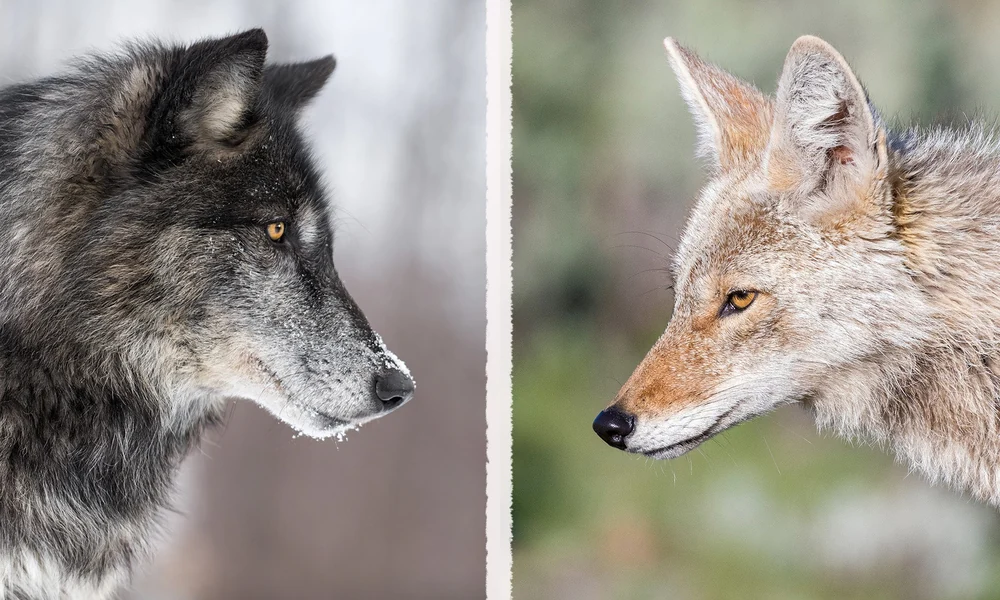
Wolves and coyotes can look similar from a distance, particularly in regions where their ranges overlap. However, several physical features may help distinguish them.
Wolves are generally larger and heavier, with broader heads, larger feet, and thicker bodies. Their ears often look proportionally smaller than those of coyotes.
Coyotes are usually more slender, with narrower muzzles, relatively large ears, and a lighter build. Their tails often appear narrow and bushy, while a wolf’s tail is typically thick and hangs down when the animal walks.
Color alone is not a reliable identification method because both animals can have different coat colors.
Tracks can provide clues, but size varies and prints can be misleading depending on the ground. A photograph, location, and observed behavior may help a wildlife professional make a more reliable identification.
If you believe you have seen a wolf, keep your distance. Do not approach the animal to inspect its features or attempt to measure its tracks.
Frequently Asked Questions About Wolves
What is a wolf’s scientific name?
The gray wolf’s scientific name is Canis lupus. Other animals commonly called wolves, such as the red wolf, have different scientific names.
What do wolves eat?
Wolves primarily eat meat. Depending on their location, their prey may include deer, elk, moose, caribou, bison, beavers, rabbits, rodents, and birds. They may also scavenge carcasses.
Do wolves hunt alone or in packs?
They do both. Packs can cooperate to hunt large prey, while individual wolves or pairs may hunt smaller animals. Their hunting strategy depends on prey, location, and circumstances.
How long do wolves live?
Wild wolves often live around six to eight years, although some survive longer. Lifespan varies with food availability, disease, injuries, human activity, and other environmental pressures. Wolves in human care may live longer.
How many pups does a wolf have?
A litter often contains around four to six pups, but litter size varies. Food availability, the mother’s condition, and other factors can influence reproductive success.
Why do wolves howl at night?
Wolves howl to communicate with other wolves, maintain contact, and signal their presence. They also howl during daylight, so the behavior is not limited to nighttime.
Can wolves climb trees?
Wolves are not adapted to climb trees like squirrels or some other mammals. They may use uneven terrain, fallen logs, or low obstacles, but climbing trees is not part of their normal behavior.
Are wolves afraid of humans?
Wild wolves generally avoid people. However, individual behavior varies, and wolves that become accustomed to human presence or food may be less wary. They should always be treated as wild animals.
Are wolves and dogs related?
Yes. Domestic dogs descended from ancient wolf populations, and dogs and modern wolves share a close evolutionary relationship. Despite their similarities, domestic dogs and wild wolves differ in behavior, ecology, and adaptation to life around humans.
What is a lone wolf?
A lone wolf is an individual living or traveling without a pack. Many are young animals that have left their family group in search of a mate and territory. Being alone does not necessarily mean a wolf has been rejected or is naturally antisocial.
The Wolf’s Place in the Wild
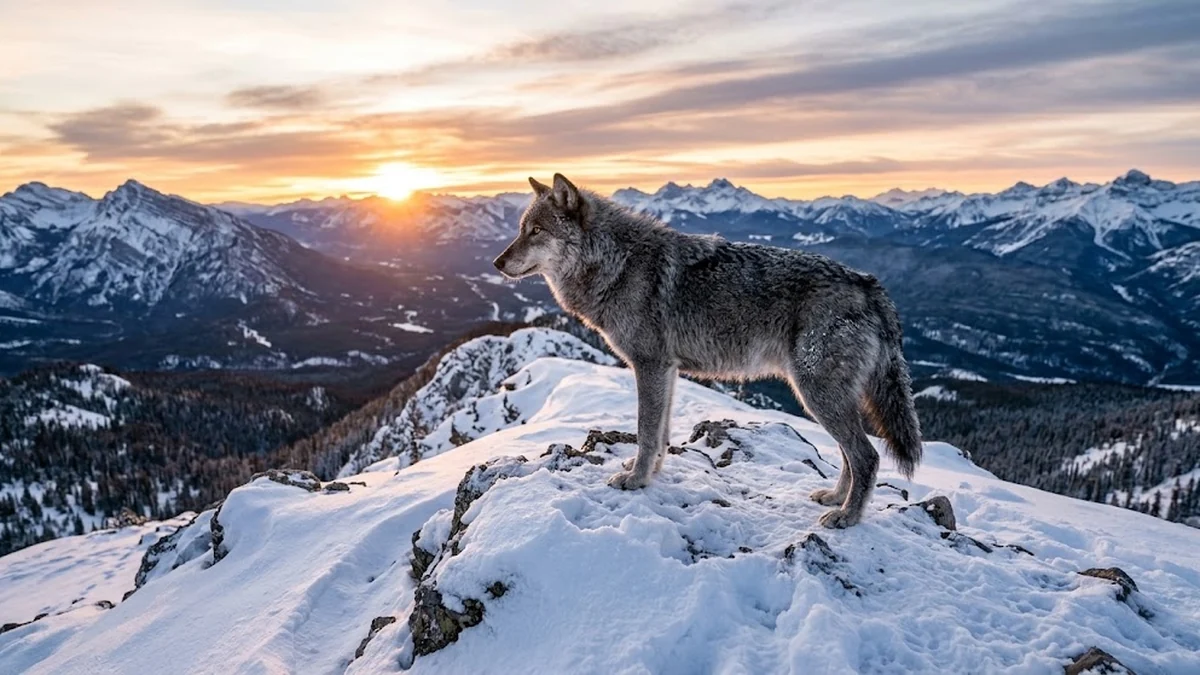
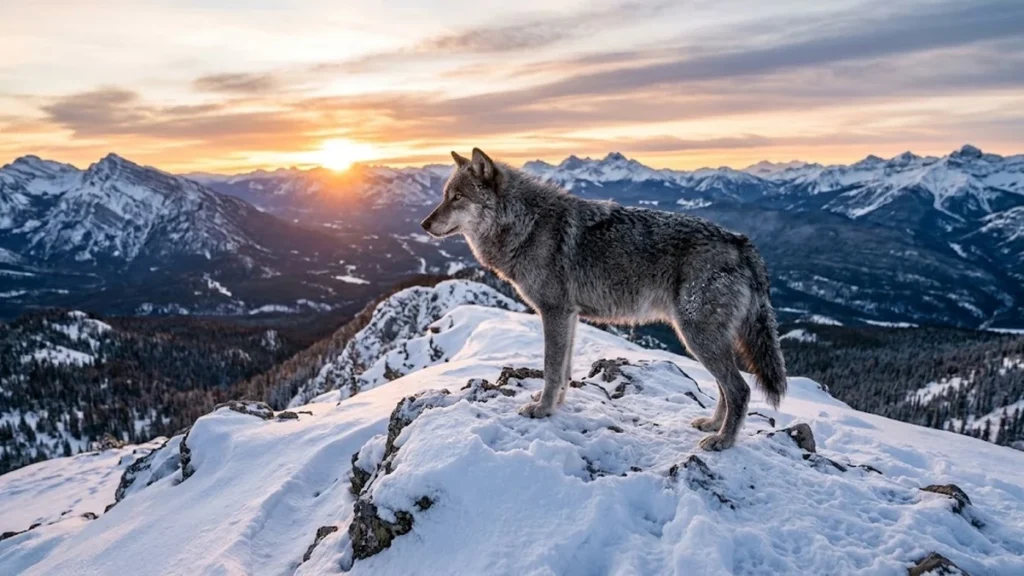
A wolf crossing a snowy ridge or moving silently through a forest is more than a symbol of wilderness. It is an animal whose survival depends on family, movement, patience, and an intimate understanding of its environment.
Wolves can travel great distances, cooperate to hunt large prey, and raise young through some of the most demanding stages of life. Their howls connect members of a pack, while their movements influence the animals and habitats around them.
Their story also reflects a difficult relationship with people. Wolves have been persecuted, pushed out of parts of their former range, and reintroduced into landscapes where their presence can bring both ecological benefits and real challenges for local communities.
Learning about wolves helps replace myths with understanding. They are neither supernatural villains nor perfect symbols of nature. They are complex predators, shaped by evolution and dependent on functioning ecosystems.
Protecting wolves means protecting the space, prey, and natural relationships they need to survive. And when those conditions are maintained, the howl of a wolf can remain part of the living wilderness for generations to come.