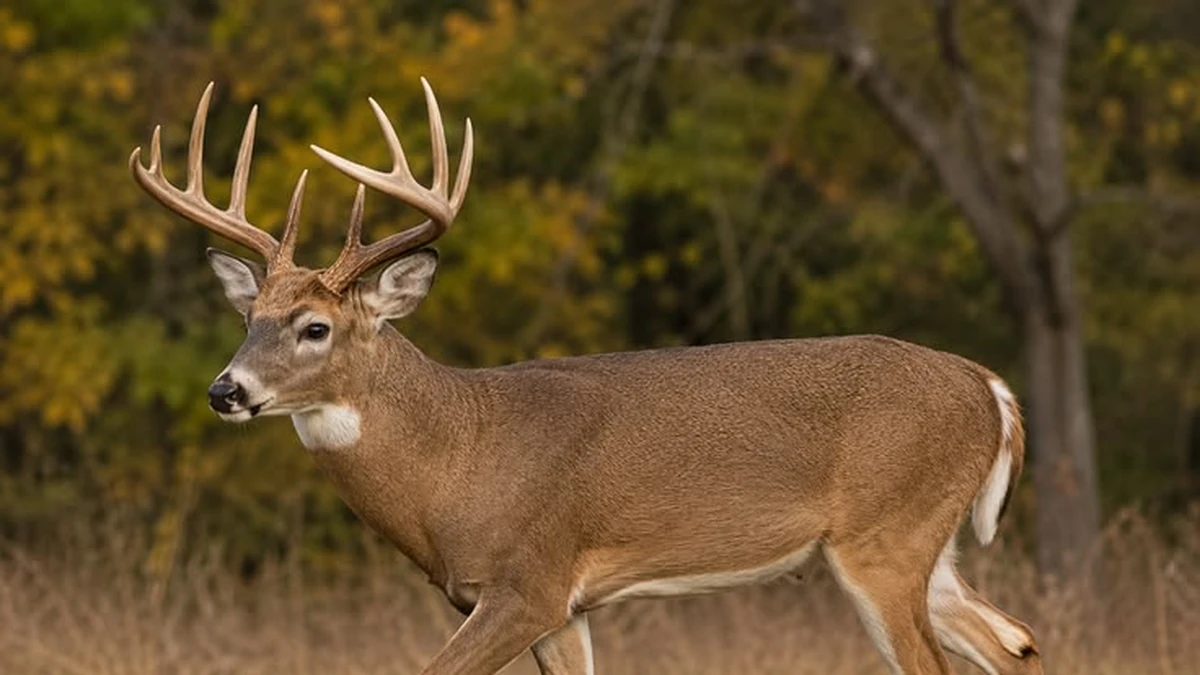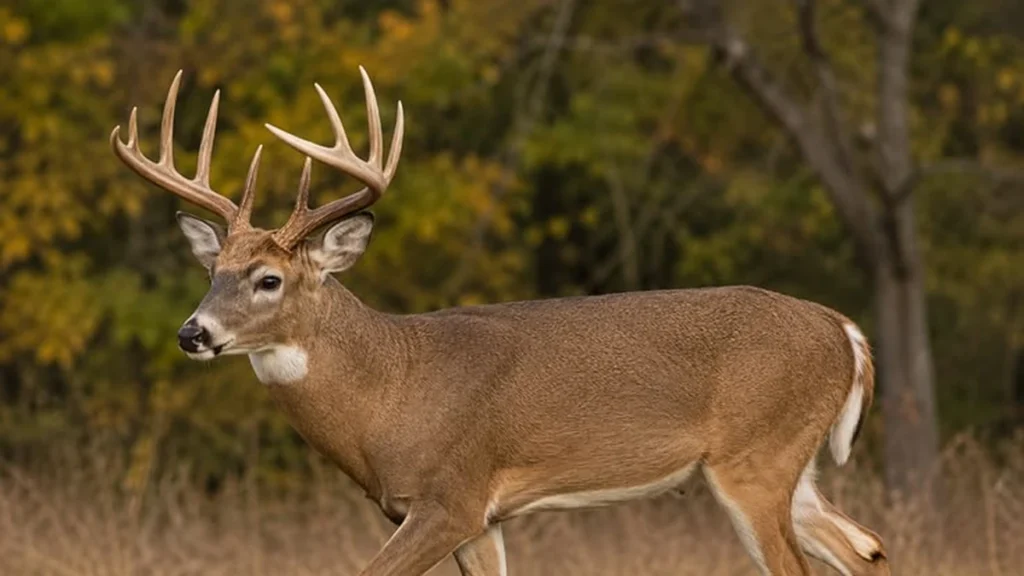
At the edge of an American forest, just as the morning light begins to reach the grass, a white-tailed deer steps quietly out of the trees. Its ears turn toward a distant sound, its nose tests the air, and its delicate movements reveal an animal that is constantly paying attention to the world around it. For a moment, it seems perfectly still. Then something catches its attention, its bright white tail rises, and it disappears into the woodland.
The white-tailed deer is one of North America’s most recognizable wild mammals. Known for its seasonal coat, impressive antlers, remarkable agility, and distinctive white tail, this adaptable animal lives in forests, wetlands, grasslands, farmland, and even suburban neighborhoods.
But there is much more to this familiar deer than its appearance. Its survival depends on an extraordinary combination of senses, seasonal behavior, plant-based nutrition, and an ability to adjust to changing landscapes.
What Is a White-Tailed Deer?
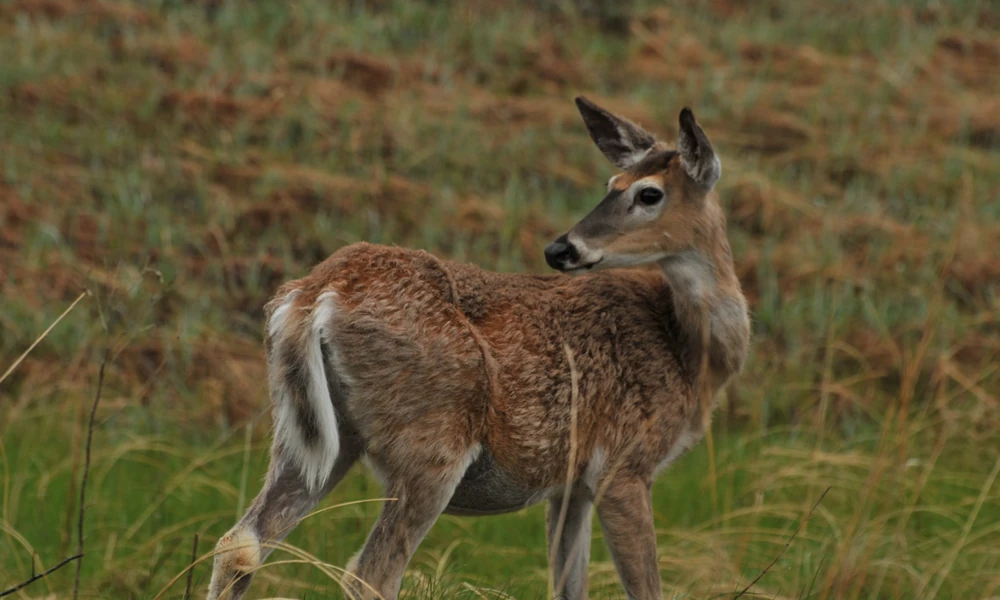
The white-tailed deer, scientifically known as Odocoileus virginianus, is a hoofed mammal belonging to the deer family, Cervidae. It is native to the Americas and is especially widespread throughout the United States, southern Canada, Mexico, and parts of Central and South America.
Its common name comes from the white underside of its tail, which becomes especially noticeable when the animal raises it while alarmed or running away.
White-tailed deer are herbivores, meaning their diet consists primarily of plant material. They are also ruminants, with a specialized digestive system that allows them to extract nutrients from leaves, shoots, fruits, nuts, and other vegetation.
The species is highly adaptable. Some populations live in remote forests, while others regularly visit fields, parks, gardens, and wooded areas near human settlements.
White-Tailed Deer at a Glance
- Scientific name: Odocoileus virginianus
- Animal group: Mammal
- Family: Cervidae
- Diet: Herbivore
- Typical habitat: Forests, woodland edges, wetlands, grasslands, farmland, and suburban green spaces
- Distinctive feature: White underside of the tail
- Male deer: Buck
- Female deer: Doe
- Young deer: Fawn
- Antlers: Usually grown by males and shed annually
- Most active periods: Commonly dawn and dusk
What Does a White-Tailed Deer Look Like?
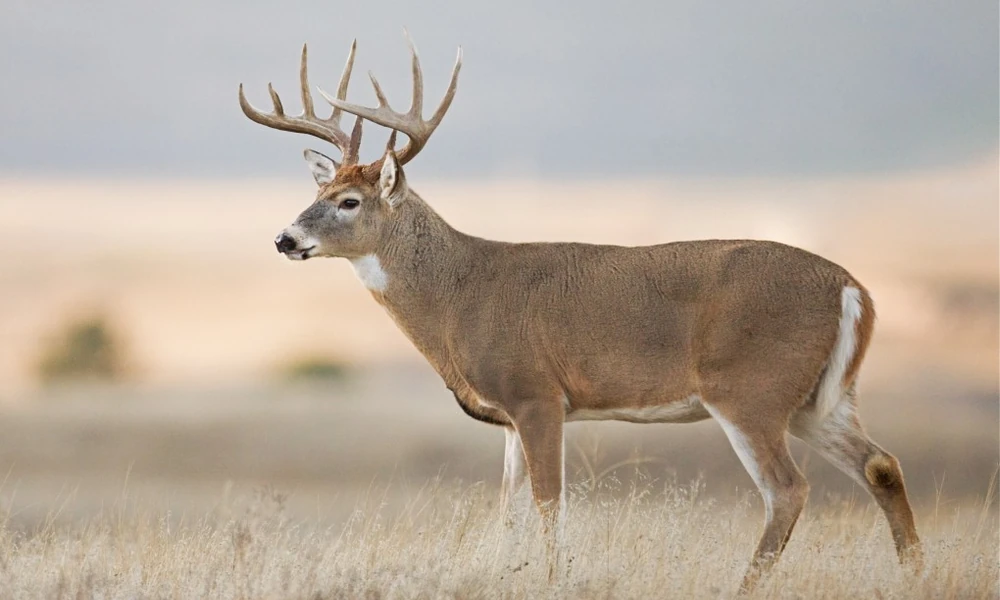
White-tailed deer have slender bodies, long legs, narrow faces, large ears, and dark, expressive eyes. Their build helps them move quickly through dense vegetation and leap over obstacles when escaping danger.
Adult deer vary considerably in size depending on their geographic location, food availability, age, and sex. Many stand around 30 to 40 inches at the shoulder, although individuals from different regions can fall outside this range. Males are generally larger and heavier than females.
Their coats also change with the seasons. During spring and summer, the fur is typically reddish-brown. As autumn progresses, the coat becomes grayer or more muted brown, helping the deer blend into the winter landscape.
White markings are especially useful for identification. The underside of the tail is white, and pale areas may also appear around the throat, belly, and underside of the body.
Why Is the Tail White?
The white tail is more than a distinctive marking. It plays an important role in communication.
When a deer senses danger, it may lift its tail, exposing the bright underside. This behavior, often called flagging, makes the animal’s warning signal more visible to other deer.
The sudden flash can help alert nearby individuals that something may be wrong. When several deer flee together, these movements can also help animals keep track of one another through vegetation.
A raised tail does not necessarily reveal exactly what frightened the deer, but it is a useful warning sign for anyone observing wildlife.
How Fast Can a White-Tailed Deer Run?
White-tailed deer are built for rapid escapes. They can reach speeds of approximately 30 to 35 miles per hour in short bursts, depending on the individual and conditions.
They can also make powerful leaps, clearing substantial obstacles and covering considerable distances in a single bound.
Speed is only part of their defense. Deer combine quick acceleration with sharp turns, sudden changes of direction, and the ability to move through thick brush where larger predators may struggle to follow.
However, their athletic ability does not make them invulnerable. Fences, slippery roads, deep snow, exhaustion, and collisions with vehicles can all turn an attempted escape into a dangerous situation.
Where Do White-Tailed Deer Live?
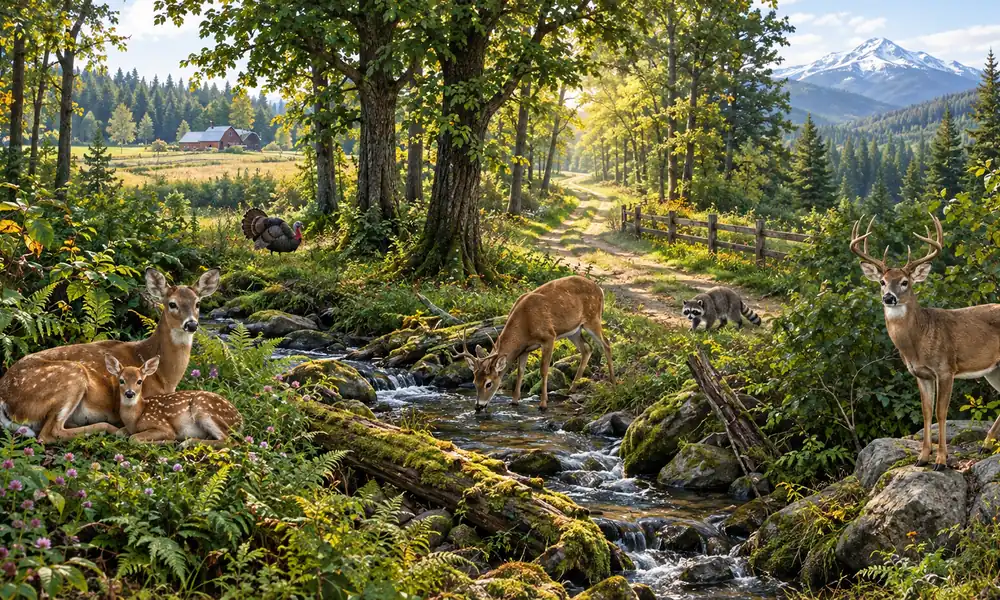
White-tailed deer occupy a wide range of habitats across the Americas. They are particularly successful in landscapes where different environments meet, such as the boundary between a forest and a grassy field.
These woodland edges provide access to nutritious plants, open feeding areas, protective cover, and places where deer can rest without being easily seen.
Forests and Woodlands
Forests provide shelter from weather and predators. Dense shrubs and young trees offer hiding places, while mature trees produce nuts and other foods that become important during autumn.
Deer do not necessarily prefer the darkest, thickest parts of a forest at all times. Areas with a mixture of trees, shrubs, openings, and younger vegetation often provide a more useful combination of food and cover.
Grasslands and Agricultural Fields
White-tailed deer frequently visit fields and agricultural land where suitable food is available. Depending on the region and season, they may feed on crops such as corn, soybeans, and alfalfa.
Open fields provide abundant food, but they can also leave deer exposed. Animals often feed near the edges of fields and retreat toward nearby cover when disturbed.
This behavior can bring deer into conflict with farmers when feeding damages crops.
Wetlands and River Corridors
Swamps, marshes, streamside forests, and river corridors can provide water, vegetation, and shelter. White-tailed deer are capable swimmers and may cross waterways when traveling between feeding areas or escaping danger.
Their ability to use different habitat types helps explain why they occur in such a wide range of environments.
Can White-Tailed Deer Live Near People?
Yes. White-tailed deer are frequently found in suburban neighborhoods, parks, golf courses, and wooded areas near homes.
Gardens and landscaped spaces may offer attractive vegetation, while patches of woodland provide shelter. In some areas, the relative absence of large predators can also make developed landscapes suitable for deer.
Living near people creates risks, however. Roads, fences, domestic dogs, landscaping chemicals, and conflicts over gardens can affect their survival.
Deer that appear comfortable around people are still wild animals. Their behavior can change quickly, particularly when they feel cornered or when males are competing during the breeding season.
What Do White-Tailed Deer Eat?
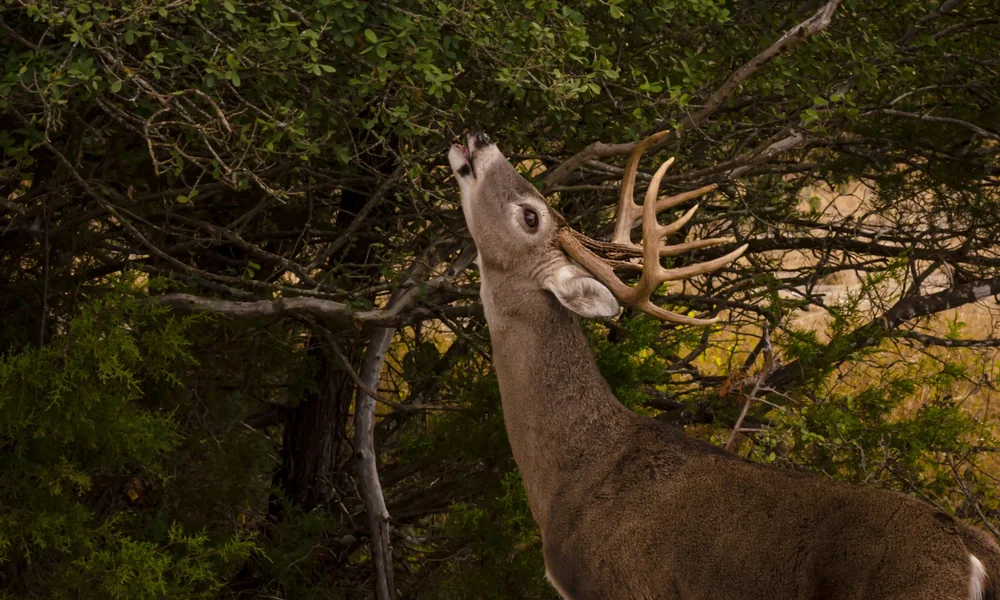
White-tailed deer are selective herbivores. Rather than eating every plant they encounter equally, they often choose the most nutritious leaves, buds, shoots, fruits, and other plant parts available.
Their diet changes throughout the year as plants grow, produce seeds, and become less accessible.
Spring and Summer Diet
During spring and summer, fresh vegetation provides many feeding opportunities. White-tailed deer may eat:
- Tender leaves and young shoots
- Wildflowers and other broad-leaved plants
- Buds and stems from shrubs
- Grasses and sedges when suitable
- Berries and other fruits
- Mushrooms and certain other fungi
New plant growth can be particularly valuable because it often contains nutrients that support body growth, pregnancy, and milk production.
Autumn Diet
Autumn can bring a major change in feeding behavior. Acorns, beechnuts, other nuts, and fallen fruits may become important food sources where they are available.
These foods can provide concentrated energy before winter, when fresh vegetation becomes less abundant in colder regions.
Deer also continue to feed on leaves, crops, and other vegetation depending on local conditions.
Winter Diet
Winter is often the most challenging season for deer living in colder climates. Snow can cover ground-level plants, and many nutritious plants stop growing.
Deer then rely more heavily on woody browse, including twigs, buds, and the stems of shrubs and young trees. Evergreen cover may provide shelter from wind and harsh weather.
When food becomes scarce, deer may lose body condition. Severe winters can also reduce fawn survival and make it harder for pregnant females to maintain sufficient energy reserves.
How Do Deer Digest Plants?
Like cattle and sheep, white-tailed deer are ruminants. Their stomach has four compartments that help process plant material.
After swallowing food, a deer can later bring partially digested material back into its mouth and chew it again. This process, known as rumination, helps break down tough plant matter and allows microorganisms in the digestive system to extract nutrients.
It is an efficient adaptation for an animal whose natural diet often contains fibrous leaves, stems, and other vegetation.
White-Tailed Deer Behavior and Social Life
White-tailed deer are alert animals whose behavior changes with the season, availability of food, and level of danger in their surroundings.
They are often most active during the quieter hours around sunrise and sunset, although they can be seen feeding or moving at other times. Human activity, weather, and local conditions can influence their daily patterns.
Do White-Tailed Deer Live in Groups?
Their social lives are flexible rather than rigid.
Female deer often form small groups with related females and their young. These associations can provide familiarity and may help animals respond to danger.
Young males may spend time together outside the breeding season. Adult males are often more solitary at certain times of year, although small groups can form when conditions allow.
Group size varies according to habitat, food availability, season, and disturbance.
How Do White-Tailed Deer Communicate?
Deer communicate through scent, sounds, body posture, and movement.
Their sense of smell is particularly important. Scent cues can help them recognize other deer, detect possible danger, and exchange information related to reproduction.
They also use vocalizations, including snorts, bleats, and distress calls. Fawns can make sounds to communicate with their mothers, while adults may react vocally when alarmed.
Body language is equally revealing. A deer that suddenly freezes, raises its head, points its ears toward a sound, or stamps a foot may have detected something unusual.
How Do White-Tailed Deer Protect Themselves?
White-tailed deer depend on early detection and rapid escape rather than physical confrontation with most predators.
Their large ears can turn toward sounds, their eyes are well suited to detecting movement, and their noses can identify scents carried through the air.
When danger becomes clear, a deer may freeze to avoid attracting attention. If the threat approaches, it can sprint away, leap over obstacles, or disappear into thick vegetation.
Fawns rely heavily on camouflage and hiding behavior during their earliest weeks of life.
White-Tailed Deer Antlers: Why They Grow and Fall Off
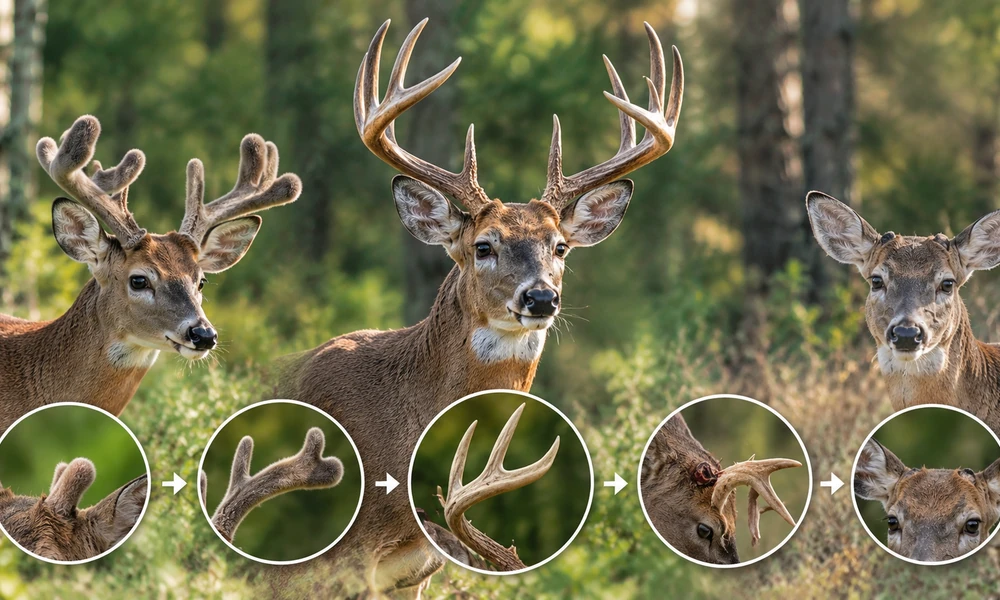
One of the most recognizable features of an adult male white-tailed deer is its antlers.
Unlike permanent horns, antlers are made of bone and are shed and regrown annually. This cycle is closely connected to the animal’s seasonal biology.
How Do Antlers Grow?
Antler development generally begins in spring. At first, the growing structures are covered by a soft layer of skin and fine hair known as velvet.
This velvet contains blood vessels that deliver oxygen and nutrients to the developing bone. During this period, the antlers are living, growing tissue and can be sensitive to injury.
As growth finishes, the antlers harden. The velvet dries and is rubbed away, revealing the solid bone beneath.
Males may rub their antlers against saplings and other vegetation during this stage. Such rubbing can leave visible marks on trees and shrubs.
Why Do Deer Shed Their Antlers?
After the breeding season, changes in hormones help trigger the shedding process. The old antlers fall off, and a new set begins growing in the following season.
The timing varies with region, age, nutrition, and individual biology. In many populations, antlers are shed during winter or early spring.
The cycle allows males to grow new antlers for the next breeding season without carrying the same structures permanently.
Do Bigger Antlers Mean an Older Deer?
Not necessarily.
Antler size is influenced by several factors, including age, genetics, nutrition, and overall health. Older males may develop larger antlers than younger ones, but there is no reliable universal rule that allows age to be determined simply by counting points.
A deer with a smaller set of antlers is not automatically young or unhealthy. Environmental conditions and individual differences matter.
White-Tailed Deer Mating Season
The breeding season of white-tailed deer is commonly known as the rut. In many northern populations, it peaks during autumn, often around October or November, although the exact timing differs by latitude and local conditions.
As the breeding season approaches, males become more active in searching for females that are ready to mate.
How Do Bucks Compete?
Male deer may establish dominance through displays, chasing, and sparring. When two males challenge one another, they can lock antlers and push against each other until one gives way.
These encounters can be forceful and sometimes cause injuries. However, not every meeting between males ends in a fight. Displays may be enough to settle a contest without prolonged combat.
Antlers are especially important during this period because they provide a means of competing with other males.
How Long Is a White-Tailed Deer Pregnant?
Pregnancy usually lasts around 200 days, though the duration can vary.
Females commonly give birth in late spring or early summer, when vegetation is becoming abundant. This timing provides mothers with access to food while they recover from pregnancy and produce milk.
A healthy adult female often gives birth to twins, although single fawns and, in some circumstances, triplets also occur. Younger females are more likely to have a single fawn.
White-Tailed Deer Fawns: How Young Deer Survive
A newborn white-tailed deer is small, vulnerable, and heavily dependent on its mother. Its reddish-brown coat is covered with white spots that help it blend into dappled sunlight, leaves, and surrounding vegetation.
For much of their earliest life, fawns survive through a combination of camouflage, hiding, and maternal care.
Why Does a Mother Leave Her Fawn Alone?
One of the most misunderstood behaviors of white-tailed deer is a mother leaving her fawn hidden while she feeds elsewhere.
This is often normal. A very young fawn has little scent and remains still for long periods, reducing the chance that a predator will notice it. The mother may return at intervals to nurse and care for it.
Finding a fawn alone does not automatically mean it has been abandoned.
People should not touch, move, or attempt to feed a seemingly healthy fawn simply because its mother is not visible. Approaching can cause unnecessary stress, and moving it may separate it from its mother.
If the fawn is visibly injured, in immediate danger, or clearly in distress, contact a qualified wildlife rehabilitator or local wildlife authority for advice.
When Do Fawns Become Independent?
Fawns begin eating vegetation as they grow, while continuing to nurse for a period of time. They gradually become more mobile and develop the skills needed to follow their mothers and respond to danger.
Their white spots fade as the juvenile coat changes, usually during their first few months.
The time needed to become independent varies with the individual, habitat, and local conditions. Staying close to the mother during early development gives young deer important opportunities to learn where to feed and how to navigate their surroundings.
What Eats White-Tailed Deer?
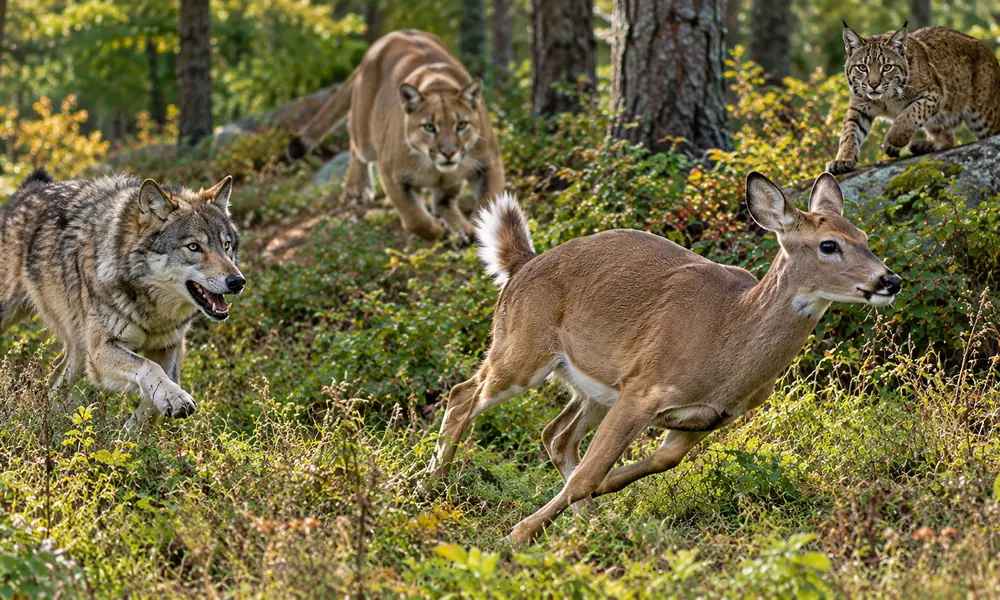
White-tailed deer are an important food source for several predators. The exact predators depend on where the deer live.
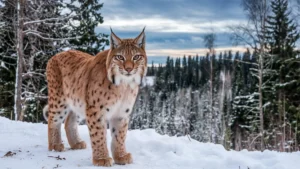
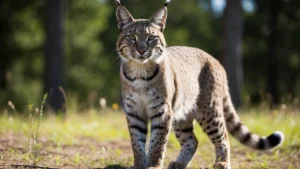
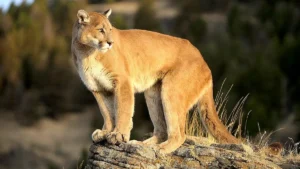
Coyotes and bobcats may prey on fawns, while larger predators such as mountain lions can hunt deer of different ages. Wolves also prey on deer in regions where their ranges overlap.
Predation often affects young, injured, sick, or otherwise vulnerable animals, although healthy adult deer can also be killed.
The deer’s response to danger is shaped by this pressure. Remaining alert, feeding near cover, and escaping quickly can increase its chances of survival.
Humans are another major influence on deer populations. Vehicle collisions, habitat fragmentation, hunting, and other human activities can affect survival rates and movement patterns.
The Ecological Role of White-Tailed Deer
White-tailed deer influence the landscapes they inhabit. By feeding on leaves, shoots, fruits, and nuts, they affect plant growth and help move seeds through their environment.
They are also an important part of the food web. Predators depend on deer as prey, while scavengers may benefit from animals that die naturally or are killed by other predators.
However, deer populations that become unusually dense in a particular area can create ecological problems. Heavy browsing may reduce young tree growth, change the mix of plant species, and limit food and cover for other wildlife.
Their impact depends on habitat quality, population density, predators, weather, and the availability of alternative food sources. Healthy ecosystems require a balance between deer populations and the resources available to support them.
Are White-Tailed Deer Endangered?
White-tailed deer are generally not considered endangered as a species and remain widespread across much of their native range. Their conservation story, however, is not identical everywhere.
In some areas, habitat loss, vehicle collisions, severe weather, disease, and other pressures can affect local populations. In other places, abundant food and favorable habitat allow deer numbers to grow substantially.
Chronic wasting disease is one concern in parts of North America. This serious neurological disease affects deer and related species, and wildlife agencies monitor its spread and impacts.
Conservation approaches vary by region. They can include habitat protection, population monitoring, disease surveillance, road-safety measures, and regulated wildlife management.
The fact that a species is widespread does not mean every local population is free from threats.
White-Tailed Deer and Human Encounters
Seeing a white-tailed deer in the wild can be memorable, especially when the animal pauses at a woodland edge or walks quietly through a meadow.
The safest way to observe deer is to remain at a respectful distance and allow them to move freely.
Do not attempt to pet or feed wild deer. Feeding can alter natural behavior, attract animals to roads and residential areas, and increase the risk of disease transmission or conflict.
Drivers should be especially cautious at dawn and dusk, when deer are often active. If one crosses the road, slow down carefully and watch for additional deer that may follow.
During the rut, males may be more distracted or aggressive, and females with young may react defensively if approached too closely. Wild animals should always be given space.
Fascinating Facts About White-Tailed Deer
- Their tails act as warning signals. The bright white underside becomes visible when a deer raises its tail, often while fleeing danger.
- They grow new antlers every year. Male deer shed their antlers and regrow them as part of a recurring seasonal cycle.
- Fawns are born with camouflage. White spots help young deer blend into their surroundings during their vulnerable early weeks.
- Their diet changes with the seasons. Fresh leaves and shoots may dominate in spring, while acorns and other nuts can become important in autumn.
- They are excellent jumpers. Strong hind legs allow them to clear obstacles and make sudden leaps when escaping threats.
- They can swim. White-tailed deer may cross rivers and other waterways when moving between habitats or avoiding danger.
- They can thrive near towns. When food, cover, and safe movement corridors are available, deer may live close to human development.
- Antler size is not a simple age indicator. Genetics, nutrition, health, and age all influence antler development.
Frequently Asked Questions About White-Tailed Deer
What is the scientific name of the white-tailed deer?
Its scientific name is Odocoileus virginianus. It belongs to the deer family, Cervidae, and is native to the Americas.
Why is it called a white-tailed deer?
The species is named for the white underside of its tail. When startled, a deer may raise its tail, making the white marking conspicuous as it runs away.
What do white-tailed deer eat?
They eat a variety of plant foods, including leaves, shoots, buds, wildflowers, fruits, acorns, other nuts, and some fungi. Their diet changes according to the season and the food available in their habitat.
Where do white-tailed deer live?
They inhabit forests, woodland edges, wetlands, grasslands, agricultural landscapes, and suburban green spaces throughout much of the Americas.
Do all white-tailed deer have antlers?
Most antler growth occurs in males. Females usually do not have antlers, although rare exceptions can occur.
When do white-tailed deer have babies?
Fawns are commonly born in late spring or early summer. The exact timing depends on the region and the local breeding season.
How many fawns can a white-tailed deer have?
A female may give birth to one, two, or sometimes three fawns. Twins are common among mature, healthy females in many populations.
What should I do if I find a baby deer alone?
Keep your distance and do not move or feed it. The mother may be nearby and intentionally keeping away while the fawn hides. Contact a wildlife professional if the animal appears injured, distressed, or in immediate danger.
Are white-tailed deer dangerous to humans?
They generally avoid people, but they remain wild animals. A frightened deer, a male during the breeding season, or a female defending her young can be dangerous if approached too closely. Observe them from a safe distance.
How long do white-tailed deer live?
Their lifespan varies with habitat, predation, disease, hunting, and other conditions. Some individuals survive for many years, but many wild deer die much earlier because of environmental and human-related risks.
Conclusion
The white-tailed deer is far more than a familiar figure in North American forests. Its seasonal coat, alert senses, flexible diet, annual antler cycle, and careful approach to raising young reveal an animal shaped by both opportunity and danger.
Its adaptability has helped it survive across a remarkable variety of landscapes, from quiet woodland corridors to the edges of busy towns. Yet the same adaptability can bring challenges when deer populations grow beyond what local habitats can comfortably support or when roads and development interrupt their movements.
Understanding white-tailed deer means looking beyond their graceful appearance. They are important participants in the food web, influential browsers, and a reminder that even common wildlife depends on suitable habitat and responsible human behavior.
Disclaimer: This article is intended for general educational and wildlife-awareness purposes. Animal behavior, size, diet, breeding seasons, and conservation status can vary by region. Do not approach, feed, handle, or relocate wild deer or fawns; consult a qualified wildlife professional or local wildlife authority when an animal appears injured or in danger.