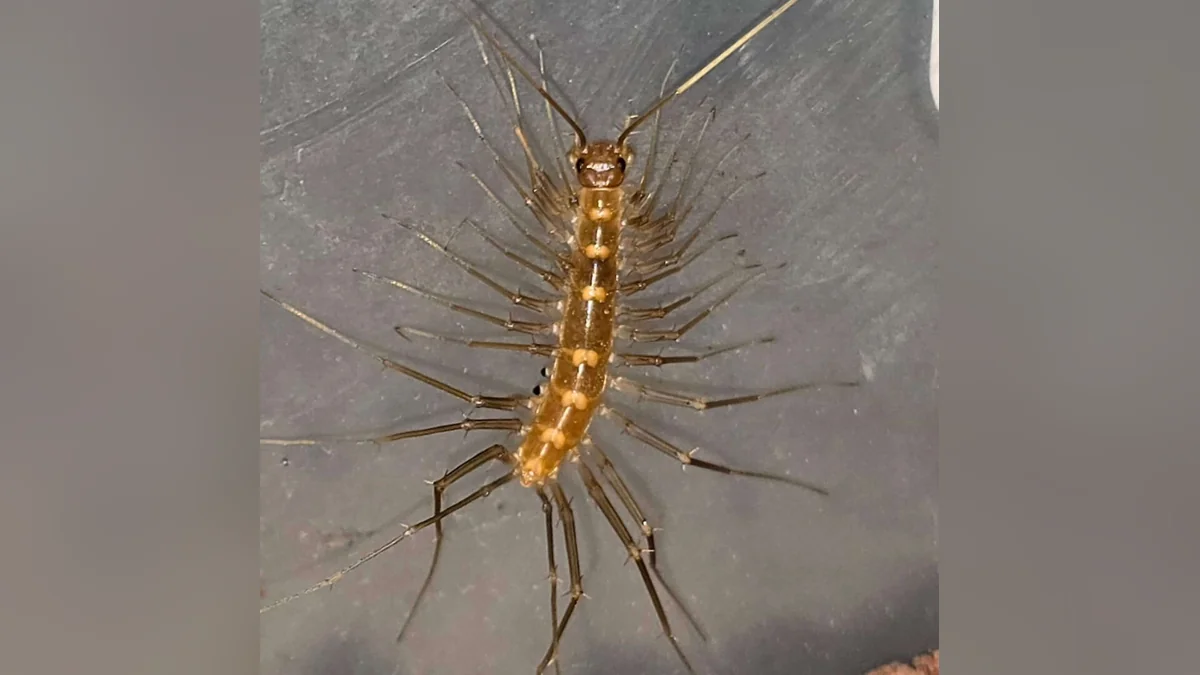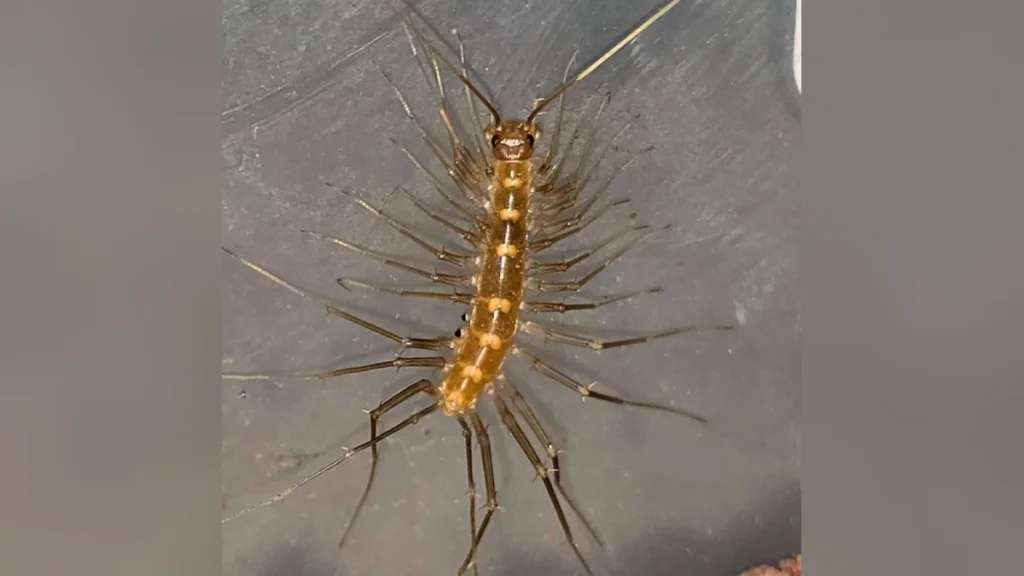
You switch on the bathroom light in the middle of the night, and something with far too many legs races across the floor. Before you can decide what you saw, it disappears beneath the cabinet. There’s a good chance it was a house centipede.
They look unsettling, move incredibly fast, and seem to appear out of nowhere. But these strange-looking creatures are usually more interested in catching insects than bothering people. In fact, having one in your home may mean you have a tiny predator quietly hunting some of the other pests you would rather not see.
What Is a House Centipede?
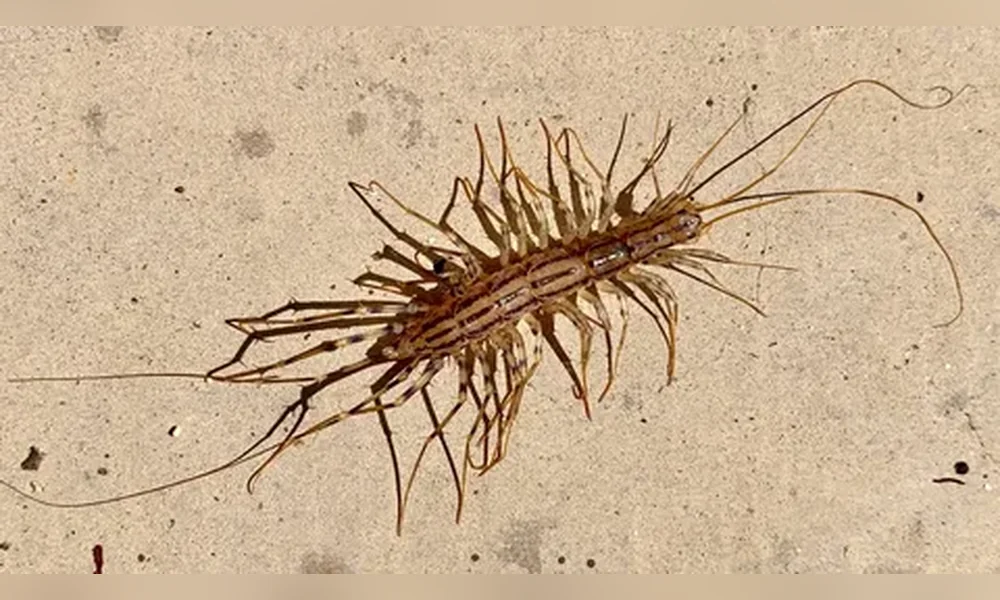
A house centipede (Scutigera coleoptrata) is a small, fast-moving centipede commonly found inside buildings. It belongs to the arthropod group, not the insect group, and is recognized by its long legs, striped body, and unusually long antennae. Those antennae do a lot of work. Animal communication researchers know little about how centipedes signal each other, but the antennae clearly pick up touch, vibration and scent. That’s how a it finds prey in the dark.
Unlike many centipedes that remain hidden beneath stones or logs, house centipedes have adapted remarkably well to indoor environments. Bathrooms, basements, laundry rooms, and damp corners can provide the shelter and prey they need.
They may look like something from a horror film, but their everyday role is much simpler: they are hunters searching for a meal.
How to Identify a House Centipede
The first clue is usually its movement. A house centipede can race across a wall or floor so quickly that its legs seem to blur.
Look more closely, and several features help identify it:
- Long, delicate legs: Adult house centipedes have 15 pairs of legs, with the rear pair especially long.
- Yellowish-gray body: The body often has darker stripes running along its length.
- Long antennae: These help the centipede sense its surroundings.
- Flattened body: Its narrow shape helps it move through small gaps.
- Fast, sudden movement: It may freeze when disturbed before darting away.
Young house centipedes have fewer developed leg pairs than adults, gaining additional pairs as they grow and molt.
Their appearance can be alarming, but the long legs are useful hunting equipment. They help the animal move quickly and maneuver after prey.
Why Do House Centipedes Have So Many Legs?
House centipedes have 15 pairs of legs as adults, giving them 30 legs in total. Each pair is attached to a body segment, and the legs are arranged to help the animal move with remarkable speed.
The rear legs are longer than the front ones, creating the distinctive, almost feathery outline that makes a it so recognizable.
Those legs are not just for running. The centipede uses its front appendages, which are modified into venom-delivering claws called forcipules, to subdue prey.
And despite the name, centipedes do not have exactly 100 legs. The number varies by species, and house centipedes have 30 legs as adults.
Are House Centipedes Dangerous to Humans?
They are generally not dangerous to people. They can bite if handled or trapped against the skin, but bites are uncommon and usually cause limited, temporary symptoms such as localized pain, redness, or swelling.
Their venom helps them capture small prey; it is not normally a serious threat to healthy adults.
Still, it is best not to pick one up with bare hands. If a bite causes severe or worsening pain, significant swelling, trouble breathing, or other concerning symptoms, seek medical care promptly.
For most households, the bigger problem is simply the surprise of seeing one sprint across the wall.
What Do House Centipedes Eat?
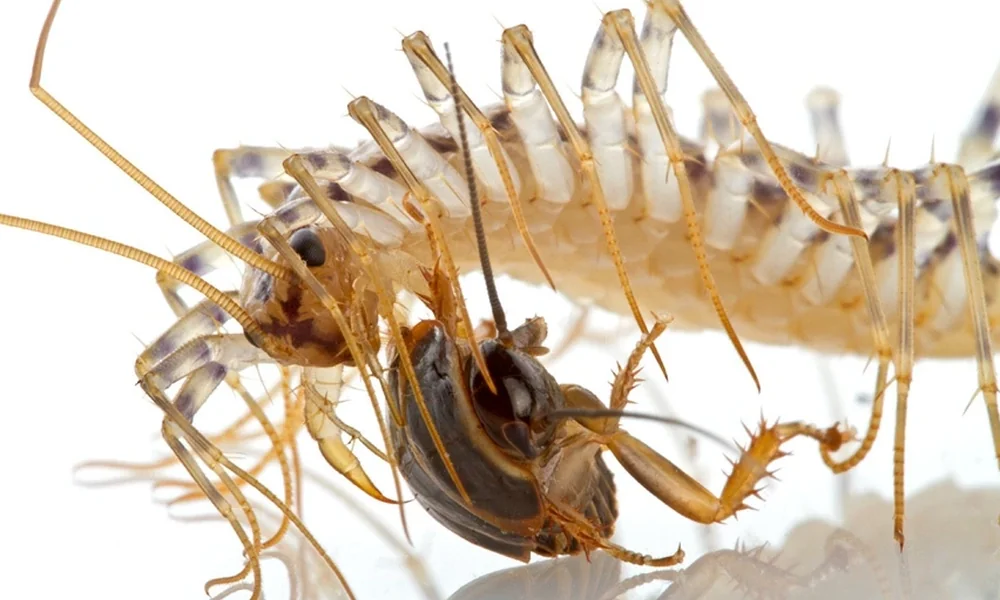
House centipedes are predators. They hunt other small arthropods, often catching creatures that people consider household pests.
Their prey may include:
- Flies and mosquitoes
- Silverfish
- Cockroaches and their young
- Moths and other small insects
- Spiders and other small arthropods
House centipedes aren’t the only small hunters that work indoors and out. Skinks are lizards that also eat insects and spiders, so both animals compete for some of the same prey. A house centipede does not need a web or trap to catch its food. It chases prey, grabs it with its specialized front appendages, and uses venom to subdue it.
That makes it a natural predator inside the home. However, seeing house centipedes regularly can also suggest that other small arthropods are available for them to eat.
Where Do House Centipedes Hide?
Think of the places in your home that stay cool, quiet, and slightly damp. Those are the places where house centipedes are most likely to turn up.
Common hiding spots include:
- Bathrooms and laundry rooms
- Basements and crawl spaces
- Beneath sinks and cabinets
- Behind stored boxes
- Along baseboards and in wall gaps
- Around drains, plumbing, and other damp areas
They are especially active when hunting, and you may spot one running across an open floor or wall. They do not necessarily live inside drains; they may simply be moving through a damp area nearby.
House centipedes prefer moisture, but finding one does not automatically mean your home is dirty. They can enter clean houses, too, especially where small prey and suitable hiding places are available.
Why Are House Centipedes Appearing in Your Home?
One centipede may be a stray visitor. Repeated sightings can point to conditions that make your home attractive to them.
The most common reasons include moisture, shelter, and access to prey.
A damp basement, leaking pipe, cluttered storage area, or gap around a door can provide favorable conditions. Other insects and spiders can also make a home an appealing hunting ground.
To make your home less inviting:
- Repair leaks and improve ventilation in damp rooms.
- Use a dehumidifier in persistently humid basements if needed.
- Seal gaps around doors, windows, pipes, and foundations.
- Reduce clutter where arthropods can hide.
- Address other pest problems rather than focusing only on the centipedes.
Killing every centipede you see may not address the reason they are there. Reducing moisture and limiting their prey is usually a more useful long-term approach.
House Centipede vs. Other Centipedes
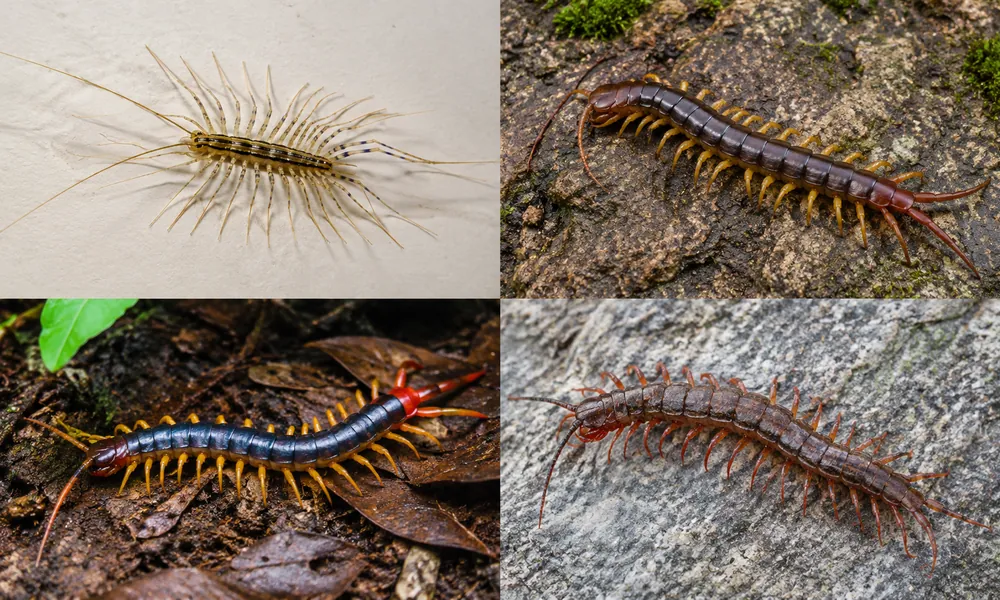
Not every many-legged creature found indoors is a house centipede. Other centipede species can have shorter legs, sturdier bodies, or different coloring.
| Feature | House centipede | Many other centipedes |
| Body shape | Narrow and flattened | Often more robust |
| Legs | 15 pairs in adults; very long | Varies by species |
| Movement | Extremely fast | Varies; many move quickly |
| Typical indoor locations | Damp rooms, basements, walls | Often hidden in dark, sheltered places |
| Human risk | Bites are uncommon and usually mild | Some larger species can cause more painful bites |
Appearance alone may not identify every species with certainty. If you find a large, unfamiliar centipede, avoid handling it.
Should You Kill a House Centipede?
Usually, you do not need to. If one is in your home and you want it gone, you can cover it with a container, slide stiff paper underneath, and release it outdoors away from the house. Keep your hands clear of its legs and front end.
If you are seeing them frequently, concentrate on dampness, entry points, and other insect activity. Persistent sightings may justify a professional pest inspection, especially if you cannot identify the source of the moisture or prey.
House centipedes can be startling, but they are not automatically a sign of an infestation or an unclean home.
Frequently Asked Questions
Do house centipedes bite?
Yes, they can bite when handled or trapped, but bites are uncommon. Symptoms are usually mild and localized.
How many legs does a house centipede have?
An adult has 15 pairs of legs, for a total of 30. Young house centipedes develop additional pairs as they grow.
Are house centipedes poisonous?
They use venom to subdue prey. Their bites are generally not medically significant for people, although symptoms can vary.
Why do house centipedes run so fast?
Their long legs and coordinated movements help them chase prey and escape threats quickly.
Does seeing a house centipede mean my house is dirty?
No. House centipedes can enter clean homes. Moisture, shelter, and available prey are more relevant factors.
What is the best way to get rid of house centipedes?
Reduce excess moisture, seal entry gaps, remove clutter, and address other pest activity. Relocate individual centipedes rather than handling them directly.
The Strange Little Hunter in Your House
A house centipede is easy to mistake for a threat. Its legs seem endless, its movements are startling, and it appears to vanish the moment you look away.
But behind that unsettling appearance is a specialized predator doing what it has evolved to do: hunt small arthropods and avoid larger animals.
You do not have to welcome one into your bathroom. You also do not need to panic when you see one.
Understand what attracts it, make your home less hospitable to unwanted pests, and remember that sometimes the creature that looks most frightening is simply another small animal trying to survive.