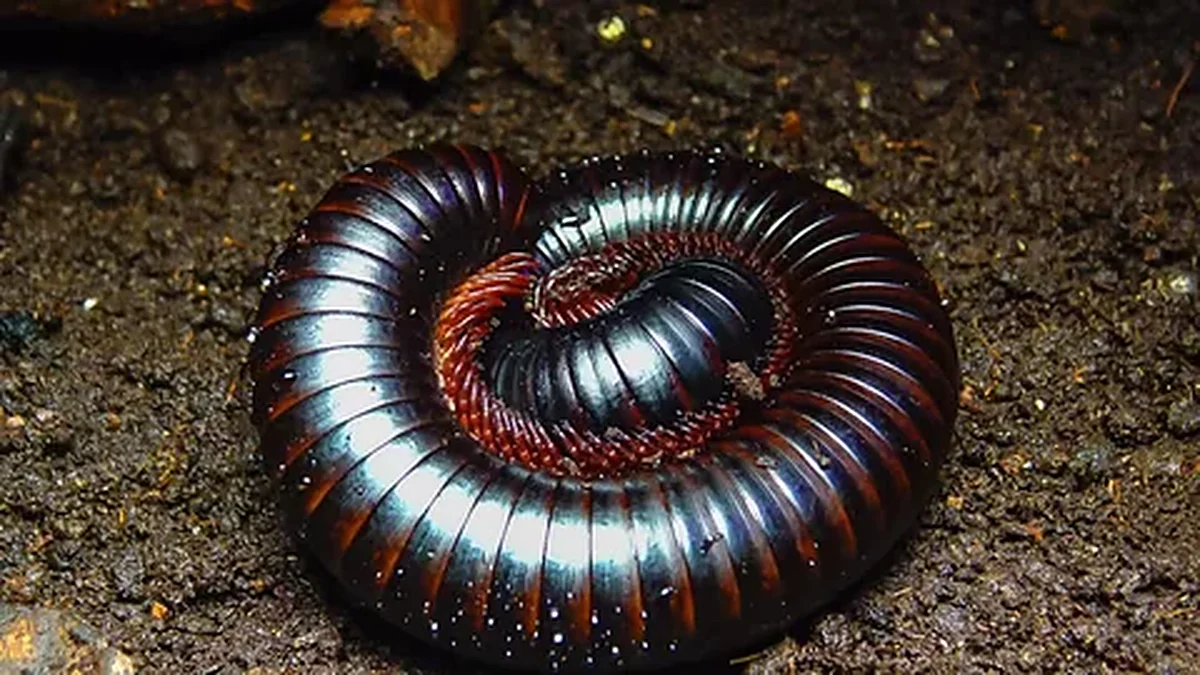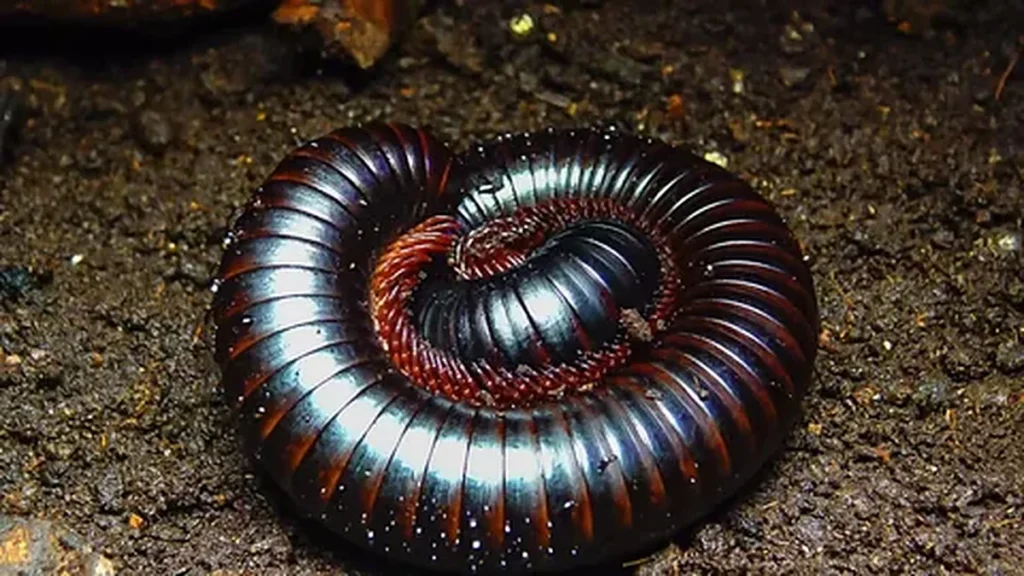
After a rainy night, you open the garage door and notice a tiny creature crawling across the concrete. Its dark, rounded body moves in gentle waves, dozens of little legs rippling underneath it. When you get closer, it curls into a tight spiral. That is probably a millipede.
Millipedes are among the most misunderstood little animals around our homes. They have countless legs, move slowly, and sometimes appear in surprising numbers after wet weather. Yet they are not aggressive hunters or miniature monsters. Most are peaceful decomposers, quietly helping turn dead leaves and other organic material into healthier soil.
Millipedes are generally harmless to people, but some species release irritating defensive chemicals when threatened. Knowing how to recognize one can help you handle an unexpected encounter safely.
What Is a Millipede?
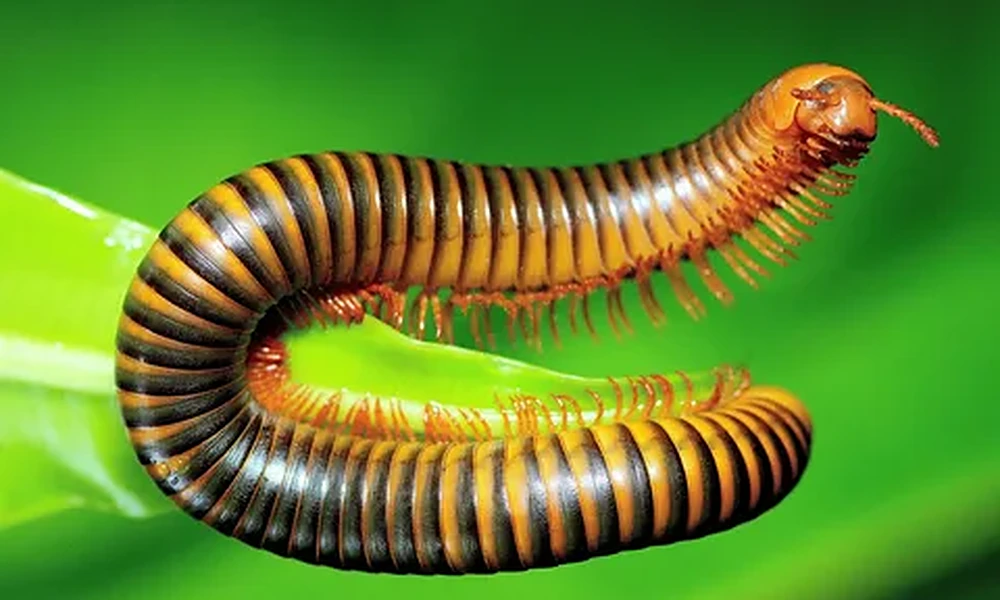
A millipede is an arthropod belonging to the class Diplopoda. It is related to centipedes, but it has a different body shape, movement pattern, and feeding behavior.
Most millipedes have long, segmented bodies with many short legs. They usually move slowly and feed on decaying leaves, rotting wood, and other organic matter.
Unlike centipedes, which are generally predators, millipedes mostly act as nature’s recyclers. They break down dead plant material, helping return nutrients to the soil. Their responses to touch, movement, and their surroundings can also relate to animal communication through physical signals and environmental cues.
You might find them beneath a flowerpot, under a damp log, inside a compost pile, or crossing a garage floor after heavy rain. Their presence often reflects moisture and available organic material rather than a problem with household cleanliness.
How to Identify a Millipede
Millipedes are usually easy to recognize once you know what to look for.
- Long, segmented body: The body resembles a chain of small, connected rings.
- Many short legs: Their legs sit close to the body and move in coordinated waves.
- Rounded shape: Most common millipedes have a cylindrical or slightly flattened body.
- Slow movement: They typically crawl rather than sprint.
- Curling behavior: Many species coil into a spiral when disturbed.
Color varies widely. Millipedes can be brown, black, gray, reddish, or nearly cream-colored, depending on the species.
Some are only a few millimeters long, while others grow several inches. Their size, color, and segment pattern can help narrow down an identification, but not every species can be reliably identified from appearance alone.
How Many Legs Does a Millipede Have?
Despite the name, millipedes do not necessarily have 1,000 legs. The number depends on the species and the animal’s stage of development. Many have dozens or hundreds of legs, and they gain additional body segments and legs as they grow.
Most body segments behind the head have two pairs of legs, which helps distinguish millipedes from centipedes. The arrangement is a result of fused body segments rather than a separate pair of legs on every visible ring.
The name millipede comes from Latin roots meaning “thousand feet,” but it describes their many-legged appearance rather than a fixed number.
Are Millipedes Dangerous to Humans?
Most millipedes are not dangerous to people and do not bite or sting. They are not venomous predators like many centipedes. However, some species protect themselves by releasing defensive chemicals when handled or crushed. Depending on the species, these substances can irritate the skin and eyes, cause discoloration, or produce a strong odor. The safest approach is simple:
- Avoid handling unfamiliar millipedes with bare hands.
- Keep them away from your eyes and mouth.
- Wash your hands after accidental contact.
- If defensive fluid gets into your eyes, rinse thoroughly with clean water and seek medical advice if irritation continues or is severe.
Children and pets should not be encouraged to play with them. If a pet mouths a millipede and develops drooling, vomiting, or persistent irritation, contact a veterinarian. For most people, a millipede found indoors is an unpleasant surprise rather than a serious threat.
What Do Millipedes Eat?

Millipedes mostly eat dead and decaying plant material. Their diet commonly includes:
- Fallen leaves
- Rotting wood
- Dead roots and plant debris
- Decomposing vegetation
- Organic matter in soil and compost
As they feed, they help break large pieces of dead material into smaller particles. Other organisms, including fungi and bacteria, continue the decomposition process, returning nutrients to the soil.
Some species may feed on soft or damaged living plant tissue, particularly when conditions favor them, but most millipedes are not major garden pests.
If you see one near a plant, it does not automatically mean the animal is eating the healthy leaves. Look for actual plant damage before assuming the millipede is responsible.
Where Do Millipedes Live?
Millipedes need moisture because their bodies can dry out. They usually seek cool, damp environments where they can hide during dry or hot conditions. Common habitats include:
- Leaf litter and garden soil
- Beneath stones, logs, and flowerpots
- Compost piles and rotting wood
- Mulch around plants
- Damp basements, garages, and crawl spaces
- Spaces around foundations after rain
Many species spend much of their time hidden beneath the ground or organic debris. You may see them more often after rain, when their usual hiding places become saturated or when large numbers move across the surface.
A millipede wandering indoors may simply have entered through a gap near a door, foundation, or utility opening.
Why Are Millipedes Suddenly Appearing in Your House?
Imagine dozens of millipedes crawling across a patio or gathering near a doorway after a storm. It can look like an infestation has appeared overnight.
Often, the explanation is a change in moisture.
Heavy rain can flood their normal hiding places and drive them onto exposed surfaces. Dry weather can also cause them to move in search of moisture. Seasonal changes may trigger mass movement in some species.
If millipedes are repeatedly entering your home, check for:
Excess moisture: Leaking pipes, damp basements, and poor drainage can create attractive conditions.
Outdoor hiding places: Thick mulch, leaf piles, and rotting wood near foundations provide shelter.
Entry gaps: Small openings around doors, windows, vents, and pipes may let them inside.
To reduce sightings, remove accumulated leaves near the foundation, move decaying wood away from the house, improve drainage, repair leaks, and seal entry points. Indoors, sweep up millipedes rather than crushing them, since some species can release irritating fluids.
Millipede vs. Centipede: What’s the Difference?
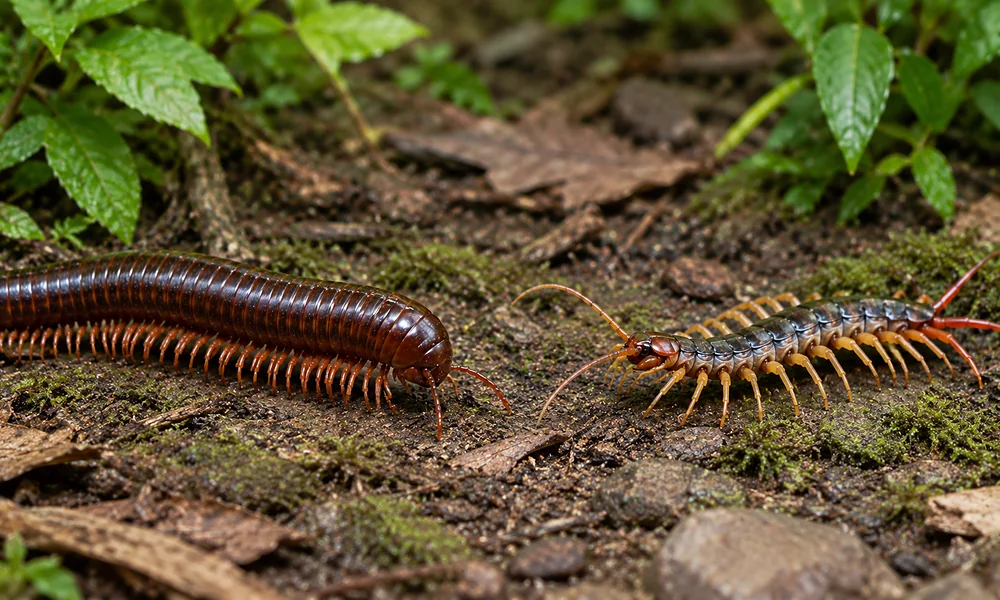
Millipedes and centipedes are often confused because both have elongated bodies and many legs. But they live differently.
| Feature | Millipede | Centipede |
| Body shape | Usually rounded or cylindrical | Usually flattened |
| Legs per body segment | Generally two pairs on most segments | One pair per body segment |
| Movement | Usually slow | Often fast |
| Main diet | Decaying plant material | Mostly small animals and arthropods |
| Defense | Often curls up; some release chemicals | May bite with venom-delivering front appendages |
| Role in nature | Decomposer | Predator |
The easiest clue is behavior. A slow-moving animal that curls up is often a millipede. A fast, flattened animal that darts away may be a centipede.
Neither should be handled casually if you cannot identify it.
Should You Kill Millipedes in Your Garden?
Usually, no. Millipedes contribute to decomposition and nutrient cycling, making them useful members of a healthy garden ecosystem. They help process dead plant material and support the natural life of the soil.
If you find one outdoors, leaving it alone is generally the best option.
If they enter your home in large numbers, focus on keeping them outside rather than treating every millipede as a dangerous pest. Remove individuals with a broom or vacuum, reduce moisture where possible, clear leaf litter near foundations, and seal gaps.
Pesticides are rarely the first solution for occasional sightings. If a persistent, large-scale problem develops, identifying the species and the conditions attracting it is a more effective starting point.
Frequently Asked Questions
Do millipedes bite?
Millipedes generally do not bite people. Their main defenses are curling up and, in some species, releasing irritating chemicals.
Are millipedes poisonous?
Some species release defensive chemicals that can irritate skin or eyes. They are not venomous hunters like centipedes, but you should avoid handling unfamiliar species.
Why do millipedes curl into a ball?
Curling protects their softer underside and reduces the body surface exposed to a threat. Some species form a tight spiral, while others bend into a less compact shape.
Why do millipedes come out after rain?
Heavy rain can flood their hiding places or force them to move across the surface. Damp weather can make them more noticeable around houses and gardens.
Do millipedes damage plants?
Most feed on decaying plant material. Some may eat soft or damaged living tissue, but a millipede near a plant is not proof that it is causing damage.
How can I keep millipedes out of my house?
Reduce excess moisture, clear leaf litter and mulch away from the foundation, repair leaks, improve drainage, and seal gaps around doors and pipes.
Small Creatures Doing Important Work
A millipede may not win any beauty contests. Its many legs, slow crawl, and habit of appearing after rain can make it seem like an unwelcome visitor.
But beneath a log or among fallen leaves, it is doing a job that healthy ecosystems depend on: breaking down dead plant material and helping nutrients return to the earth.
The next time one crosses your path, remember that it is usually not looking for trouble. It is a small decomposer moving through a world built from leaves, soil, moisture, and decay.