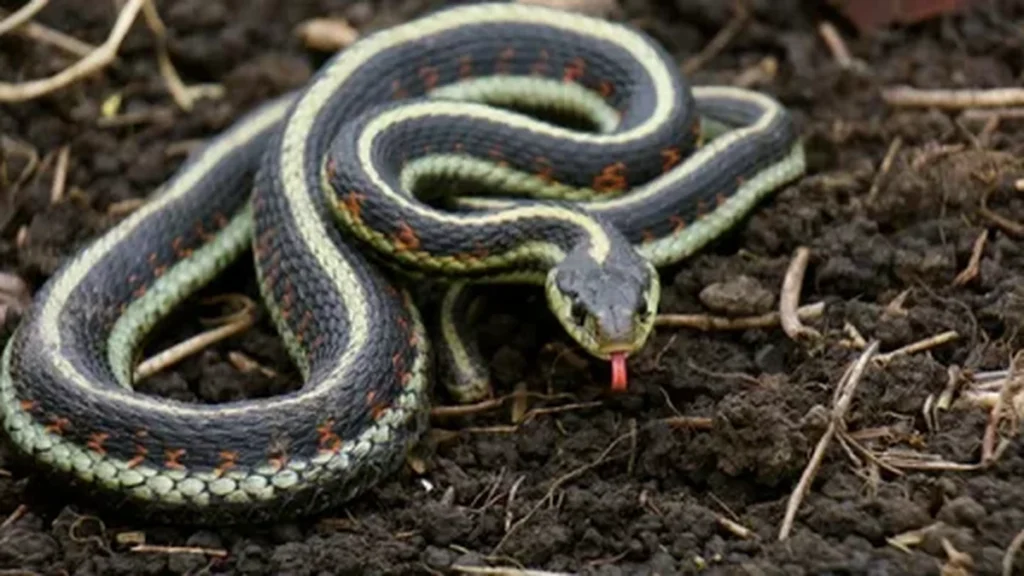
You are watering the garden when a thin, striped snake slips between two flowerpots. It pauses for a moment, its tongue flicking in and out, then disappears beneath a patch of grass.
Your first instinct might be to step back. But this little visitor could be a garter snake, one of the most widespread and familiar snakes in North America.
Garter snakes often live near gardens, ponds, fields, and woodland edges. They hunt small animals, adapt to many environments, and generally avoid people when given the chance.
They are mildly venomous, but they are not considered dangerous to most people. Their bites rarely cause serious problems, although you should never try to handle an unfamiliar snake.
What Is a Garter Snake?

A garter snake is a nonvenomous-looking, slender snake from the genus Thamnophis. The genus includes numerous species and subspecies found across much of North America.
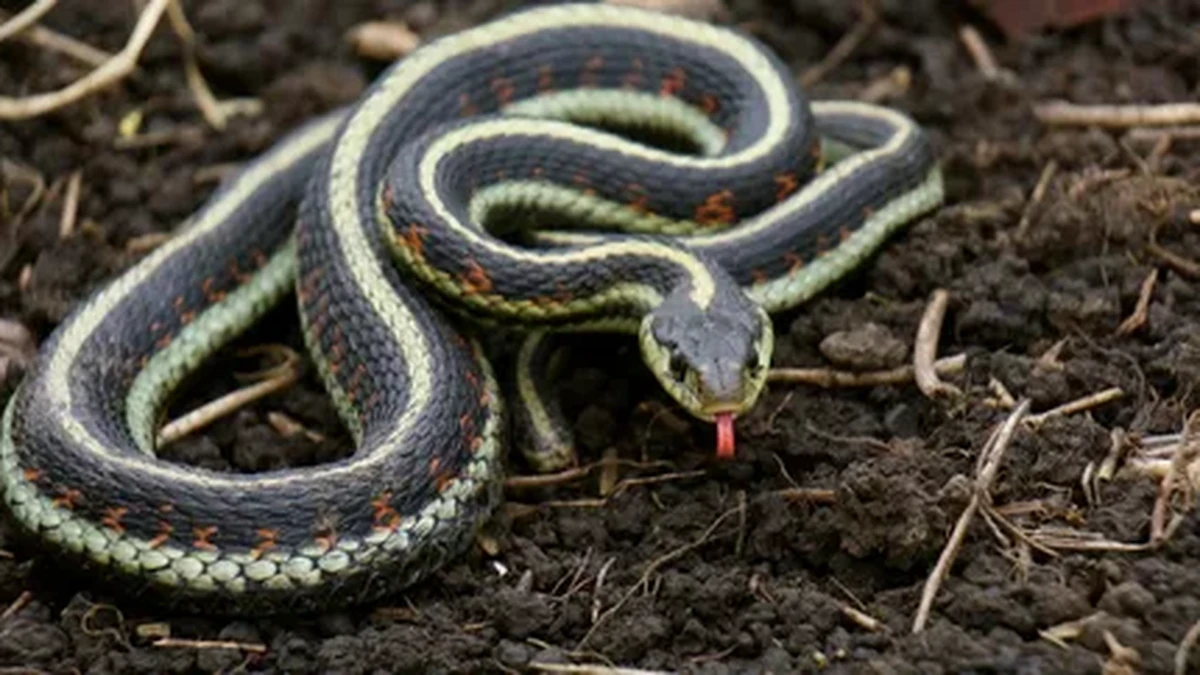
They are famous for their striped bodies, though not every individual has the same pattern. Many have one or more pale stripes running along a darker background, sometimes accompanied by checkered markings.
They live in a wide range of habitats, from wetlands and forests to grasslands and suburban gardens. Their adaptability helps explain why people encounter them near homes, especially where there is water, vegetation, and plenty of small prey.
Rather than being a threat to the garden, a garter snake is often a sign of an active local food web.
How to Identify a Garter Snake
A garter snake is usually recognizable by its slim body and long, striped appearance.
Common identifying features include:
- Long, slender body: Most of them are relatively thin compared with many larger snakes.
- Longitudinal stripes: Pale yellow, cream, greenish, or white stripes often run along the back and sides.
- Checkered markings: Some species have dark spots between the stripes, creating a checkerboard appearance.
- Small head: The head is usually not dramatically wider than the neck.
- Variable coloring: Background colors may include brown, black, gray, olive, or green.
Patterns differ by species and region, so stripes alone cannot confirm an identification. Some other snakes have similar markings, and some garter snakes have less distinct stripes than expected.
If you find a snake outdoors and cannot identify it confidently, leave it alone and observe from a safe distance.
Are Garter Snakes Venomous?
Garter snakes are often described as nonvenomous in everyday conversation, but the biology is more nuanced. They possess mild venom delivered through specialized teeth toward the back of the mouth. Their venom is primarily adapted to subdue small prey, and it is not generally considered medically significant to humans.
A garter snake can still bite if restrained or handled. A bite may cause scratches or punctures, and the snake’s saliva can enter the wound. Some people may experience localized irritation or swelling.
If you are bitten, wash the area with soap and water and monitor it for worsening redness, swelling, pain, or signs of infection. Seek medical advice if symptoms are significant, the wound becomes infected, or you are unsure what species bit you.
Never assume a snake is safe to handle because someone has called it harmless.
What Do Garter Snakes Eat?

A garter snake’s diet depends on its species, size, age, and habitat. These snakes are active hunters that use their senses to locate prey.
Their food may include:
- Earthworms
- Slugs and other soft-bodied invertebrates
- Frogs and toads
- Small fish
- Salamanders
- Small rodents and other suitable animals
Some garter snakes hunt around ponds and streams, where amphibians and fish are available. Others forage through gardens, damp soil, or grass in search of worms and slugs.
Young snakes generally eat smaller prey than adults. As they grow, their available food choices can expand.
Because they consume a variety of small animals, garter snakes play a useful role in local ecosystems. However, they are not a guaranteed solution for garden pests, and their diet varies by species and location.
Where Do Garter Snakes Live?
Garter snakes are found across much of North America, including large areas of the United States and Canada. Different species occupy different regions, so the exact species you see depends on where you live. Typical habitats include:
- Gardens and grassy yards
- Meadows and open fields
- Forest edges and woodland clearings
- Ponds, streams, and wetlands
- Rock piles and fallen logs
- Farms and areas with suitable ground cover
They often stay near places that provide both shelter and food. A garden with damp soil, thick vegetation, and access to a pond may offer ideal conditions. Garter snakes are also ectothermic, meaning their body temperature depends on their surroundings. They may bask in sunlight to warm up, then retreat into cover when temperatures become too high.
In colder regions, they spend winter in sheltered places called hibernacula, sometimes gathering in large numbers with other snakes.
Why Do Garter Snakes Come Into Gardens?
A garden can provide nearly everything a garter snake needs: food, shelter, moisture, and places to warm up. You may see one near a compost pile, beneath a garden border, around a pond, or moving through long grass.
The snake may be hunting earthworms or amphibians, looking for a sheltered resting place, or moving between habitats. Its presence does not automatically mean there is a problem. If you prefer not to have snakes close to the house, you can make the area less attractive without harming them:
- Keep grass trimmed around frequently used paths.
- Remove piles of unused boards, stones, and other debris near entrances.
- Store firewood neatly and away from the house.
- Seal gaps that could allow snakes into buildings.
- Manage standing water and other conditions that attract unwanted pests.
Avoid using glue traps or attempting to kill a snake. These approaches can injure wildlife and create additional risks for people and pets.
Do Garter Snakes Bite?
Yes. Garter snakes can bite when frightened, restrained, or picked up. These warning behaviors are a form of animal communication, telling a threat to back off before a fight starts. They generally prefer to escape rather than confront a person. If cornered, a garter snake may flatten its body, strike defensively, or release a strong-smelling fluid from glands near its tail.
Some may also twist and struggle when held. This behavior is defensive, not evidence that the snake is trying to hunt a person. The safest response is to step back and give it an escape route. Do not attempt to pick it up to move it, even if you believe it is a harmless species.
Garter Snake vs. Copperhead

Garter snakes and copperheads may occur in some of the same regions, but they have different body shapes, patterns, and levels of medical risk.
| Feature | Garter snake | Copperhead |
| Body shape | Usually slender | Usually stout |
| Common markings | Long stripes, sometimes checkered | Dark hourglass-shaped bands |
| Head | Generally narrow | Broad, distinct from the neck |
| Venom | Mild venom, generally not medically significant | Venom capable of causing serious injury |
| Typical response to people | Usually tries to escape | Often relies on camouflage; may bite defensively |
| Recommended action | Observe from a distance | Keep well away and never handle |
These descriptions are helpful clues, not a foolproof identification test. Color and markings can vary, and a brief glimpse may not reveal enough detail to distinguish a snake safely. If you are uncertain, do not approach it.
Are Garter Snakes Good for Your Garden?
They can be beneficial members of a garden ecosystem.
Depending on the species and local food supply, garter snakes may eat slugs, worms, amphibians, and other small animals. They also serve as prey for larger wildlife, including birds of prey and some mammals.
Their role is not always straightforward: they may eat animals that gardeners consider pests, but they can also consume frogs and other wildlife that people want to protect.
The best approach is to recognize them as part of the natural environment rather than expecting them to solve a particular pest problem.
Frequently Asked Questions
Are garter snakes poisonous?
Garter snakes possess mild venom, but it is not generally considered medically significant to humans. Their bites can still cause minor wounds or irritation.
Are garter snakes aggressive?
They generally avoid people and try to escape. They may bite or release a strong-smelling fluid if handled or cornered.
Can garter snakes live in your backyard?
Yes. They may use gardens with suitable shelter, moisture, and food. Their presence does not automatically mean your yard has a snake problem.
What do baby garter snakes eat?
Young garter snakes eat small prey, which may include tiny worms and other suitable invertebrates, depending on the species and habitat.
How can you tell a garter snake from a copperhead?
Garter snakes are generally slender and often have long stripes. Copperheads are usually stockier, with distinctive hourglass-shaped bands. Never approach a snake to inspect these features.
Should I remove a garter snake from my property?
If it is outdoors and not creating a specific safety concern, leaving it alone is usually best. If it enters a building or remains in a busy area, contact a qualified local wildlife professional.
A Small Neighbor Worth Understanding
A garter snake moving through the grass can be startling, especially when it appears unexpectedly. But once you recognize its slender shape and striped body, the encounter becomes easier to understand. This is a snake adapted to life among ponds, gardens, fields, and forests. It hunts small prey, shelters when conditions change, and usually wants nothing to do with people.
Give it room to move away, resist the temptation to handle it, and let the garden remain a place where wildlife can carry on with its quiet work.