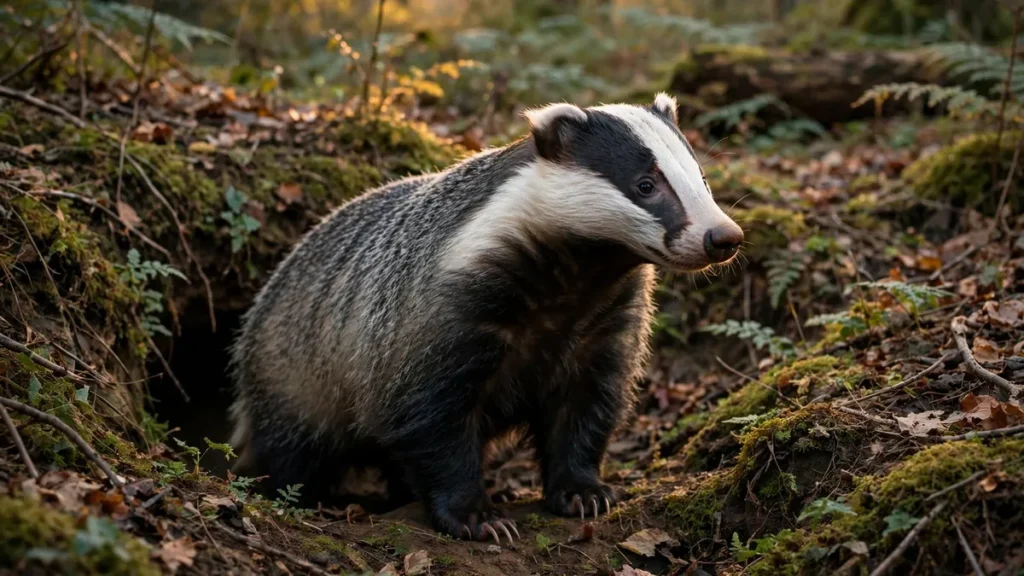
Badger species are the toughest diggers of the weasel family, and there are 11 badger species in the world, from the European badger of woodland setts to the American badger of the open prairie and the famously fearless honey badger of Africa and Asia. If you are wondering which badger species exist and what makes a badger different from other weasels, the short answer is this: badgers are short-legged, powerfully built burrowers with long claws and striped faces, and they dig elaborate underground homes, hunt at night and defend themselves with a courage far beyond their size.
Key takeaways
- There are 11 badger species, grouped into Eurasian badgers, the American badger, the honey badger and the ferret-badgers.
- European badgers live in family groups in underground setts, some used for generations and with dozens of entrances.
- The American badger is a solitary digger of open grassland, and it can dig a burrow in minutes.
- The honey badger, or ratel, is famously fearless, taking on snakes, porcupines and much larger animals.
- Badgers are best seen at dusk near a sett, watching from a distance with binoculars and never approaching the entrance.
What makes a badger a badger
A badger is a stocky, short-legged member of the weasel family, built low to the ground for digging. Its body is broad and muscular, its neck is thick, and its front feet carry long, strong claws that can shift earth at astonishing speed. Its fur is coarse and grizzled, and most badger species wear a bold black and white pattern on the face, stripes that may help young badgers recognise each other in the dark of the sett.
Badgers are mostly nocturnal, leaving their burrows at dusk to hunt and returning before dawn. They have a keen sense of smell, which they use to find earthworms, grubs and small animals in the dark, and their hearing is sharp, though their eyesight is poor. Badgers are omnivores, eating almost anything they can find, from worms and insects to fruit, eggs and small mammals.
The badgers of the world
The European badger is the badger most people in Britain and Europe know best. It is a large, grey animal with a striking black and white striped face, living in family groups called clans in underground homes called setts. A sett may have many entrances and chambers, and some setts have been used by badgers for more than a hundred years. European badgers eat mainly earthworms, and on a damp night a badger may eat hundreds of them, snuffling through the grass with its nose to the ground.
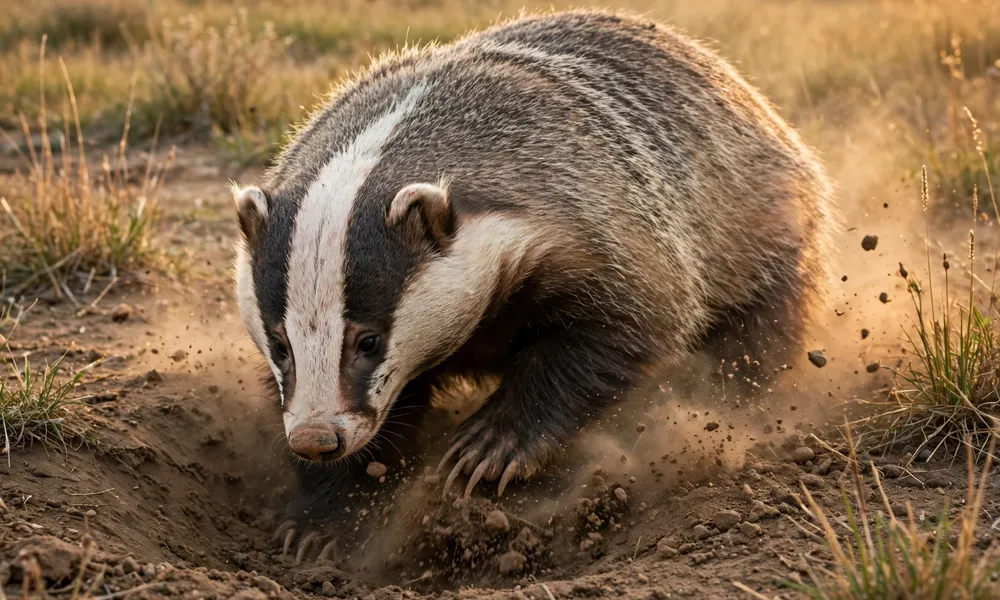
The American badger is a very different animal. It is a solitary digger of the open grasslands and deserts of North America, with grey-brown fur, a white stripe running from its nose to its shoulders, and claws so long they look like small spades. It hunts ground squirrels and prairie dogs, digging them out of their burrows, and it can dig a hole faster than almost any other mammal its size. Unlike the European badger, it lives alone, in a burrow of its own.
The honey badger, also called the ratel, is the most famous badger of all, and the most fearless. It lives across Africa, the Middle East and South Asia, and it is a thick-skinned, grey and black animal with a loose coat that lets it twist around inside its own skin when grabbed. Honey badgers eat snakes, including venomous ones, raid beehives for honey, and have been known to stand their ground against lions and leopards. They are not true badgers of the same genus as the European badger, but they carry the badger name and the badger’s fearless character.
The Asian badger and the Japanese badger are close cousins of the European badger, living in the forests and grasslands of central and eastern Asia, and in Japan. The greater hog badger and the Sumatran hog badger live in the forests of South-East Asia, and are named for their pig-like snouts, which they use to root through the soil for worms and grubs. The ferret-badgers are the smallest badgers: the Chinese, Burmese, Javan and Bornean ferret-badgers are slender, long-tailed animals of the forests of South-East Asia, hunting insects, frogs and small animals at night.
How badgers dig and hunt
Digging is the badger’s great skill. A European badger clan digs and maintains a sett with chambers for sleeping, raising young and storing bedding, and the digging never stops: badgers drag fresh bedding of dry grass and leaves into the sett and push out tonnes of earth over the years. An American badger, hunting alone, digs with such speed that it can vanish into the ground in minutes, throwing soil behind it in a spray.
Badgers hunt mostly by smell. A European badger finds earthworms by scent, snuffling along the grass at night and listening for the faint sound of a worm moving. The American badger hunts ground squirrels by digging them out, and it sometimes hunts with coyotes, each taking the prey the other flushes out. Among the predators of the grasslands and woodlands, badgers are unusual in combining brute digging power with a patient, nose-to-the-ground hunting style.
A badger’s claws are its tools, and they grow constantly, worn down by digging and regrown through the year. The front claws of an American badger can be five centimetres long, curved like small sickles, and they leave deep, unmistakable scratches in the soil at the mouth of a burrow. Badgers also use their claws to defend themselves, and a cornered badger can fight off animals far larger than itself.
Where badgers live
Badgers live on almost every continent except Australia, Antarctica and South America, in woodlands, grasslands, deserts and mountains. European badgers need woodland with soft soil for their setts and damp pasture for earthworms. American badgers need open grassland and desert, where ground squirrels are plentiful. Honey badgers live in savannas, rocky deserts and forests, from Africa to India. In Britain, the European badger is one of the most widespread wild mammals, found from the far south-west to the Scottish Highlands, while in Japan the Japanese badger is confined to the main islands of Honshu, Shikoku and Kyushu. The nocturnal animals of the woodland include the European badger, and the desert animals of the dry plains include the American badger and the honey badger, digging for life in the hardest ground.
Badgers and people
People have admired and feared badgers for centuries. In Britain, badger watching has become a popular pastime, with hides and sett cameras letting people see the animals without disturbing them. In other places, badgers have been persecuted as pests, blamed for damage to crops and for spreading disease to cattle. The honey badger’s reputation has grown into legend, and it is listed in the Guinness Book of Records as the world’s most fearless animal.
| Species | Where it lives | Best-known food | Length |
|---|---|---|---|
| European badger | Woodlands of Europe and western Asia | Earthworms, grubs, fruit | 0.9 metres |
| American badger | Grasslands of North America | Ground squirrels, prairie dogs | 0.8 metres |
| Honey badger | Africa, Middle East, South Asia | Snakes, honey, small mammals | 0.9 metres |
| Asian badger | Central and eastern Asia | Earthworms, insects, fruit | 0.8 metres |
| Japanese badger | Forests of Japan | Earthworms, insects, berries | 0.7 metres |
| Greater hog badger | Forests of South-East Asia | Earthworms, grubs, roots | 0.9 metres |
| Chinese ferret-badger | Forests of China and South-East Asia | Insects, frogs, fruit | 0.5 metres |
| Burmese ferret-badger | Forests of South-East Asia | Insects, worms, small animals | 0.6 metres |
Best seasons for badger watching
Spring and summer are the finest seasons for badger watching. In spring, European badger cubs begin to appear at the sett entrance in the evening, playing and tumbling in the last light, and the adults are out early, feeding hard after winter. In summer, the long evenings give watchers the best chance of all, with badgers emerging at dusk and feeding through the night.
Autumn is also rewarding, when badgers are at their fattest, building up reserves for winter and dragging bedding into the sett. Winter is the quietest season, when European badgers stay underground for long spells in cold weather, though they do not truly hibernate. In North America, spring is the best time to see American badger cubs playing at the mouth of the burrow in the evening light.
Staying safe around badgers
Badgers are wild animals, and they deserve respect. Never approach a sett, never block an entrance, and never try to touch or feed a badger. A cornered badger is a dangerous animal, with powerful jaws and long claws, and it will defend itself fiercely. Watch from a hide or from a distance with binoculars, downwind so the badger cannot smell you, and leave before the badgers return to the sett.
Badger watching checklist
- Find a sett by looking for large spoil heaps and well-worn paths in woodland.
- Watch from downwind at dusk, when badgers leave the sett to feed.
- Look for badger tracks and latrines, the shallow pits where badgers leave droppings.
- Listen for snuffling and rustling in the grass on a damp night.
- Never approach a sett, never feed a badger, and keep dogs on a lead.
- Leave no trace: take your rubbish home and keep to marked paths.
Frequently asked questions
How many badger species are there?
There are 11 badger species in the world. The table above shows eight of the best-known: the European, American, honey, Asian, Japanese, greater hog, Chinese ferret-badger and Burmese ferret-badger. The other three are the Sumatran hog badger and the Javan and Bornean ferret-badgers, all of South-East Asia.
How is this guide different from the forest animals guide?
This guide covers only the 11 badger species, from European badger setts to the fearless honey badger. The forest animals guide covers the whole community of animals that live in forests, from deer and owls to moles and beetles.
Is the honey badger a true badger?
The honey badger is not a true badger of the same genus as the European badger. It belongs to its own genus, Mellivora, and its own subfamily, while the European, Asian and Japanese badgers belong to the genus Meles. It carries the badger name because it shares the badger’s low, powerful build, long claws and fearless character.
What do badgers eat?
Badgers eat almost anything they can find. European badgers eat mainly earthworms, along with grubs, fruit and small mammals. American badgers hunt ground squirrels and prairie dogs, and honey badgers eat snakes, small mammals, birds and honey, raiding beehives for the honeycomb inside.
Do badgers live alone or in groups?
It depends on the species. European badgers live in family groups called clans, sharing a sett that may have dozens of entrances. American badgers and honey badgers live alone, each in its own burrow, and ferret-badgers are also mostly solitary, meeting only to mate.
Where is the best place to see a badger?
The best place to see a badger is near a European badger sett in woodland at dusk, watching from a hide or from downwind with binoculars. In North America, American badgers are best in open grassland at dawn and dusk, and honey badgers are best on the savannas of Africa, where they forage in the open at night.
Conclusion
Badger species, all 11 of them, are the diggers and defenders of the mammal world: European badgers sharing ancient setts in the woodland, American badgers hunting ground squirrels on the open prairie, and honey badgers standing their ground against animals far larger than themselves.
The next step is to find a badger sett near you — a spoil heap in the woodland, a worn path in the grass, a latrine at the sett edge — and return at dusk, quietly and downwind, to watch until the striped face appears.