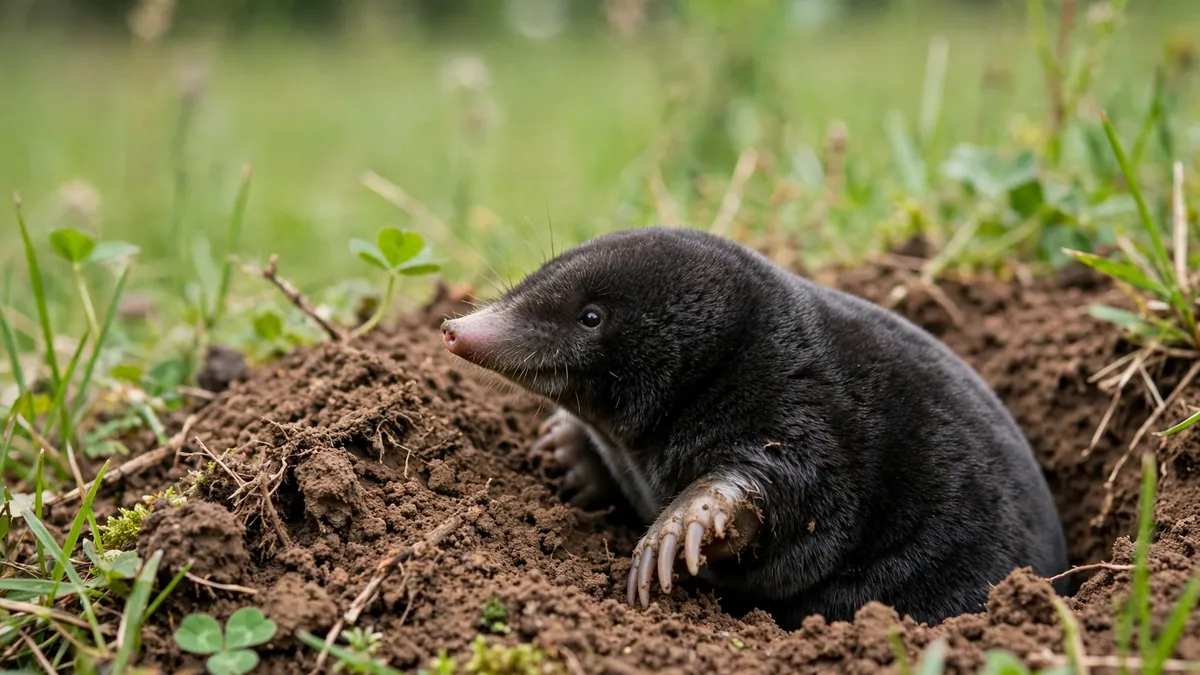
Mole species are the underground engineers of the mammal world, and there are around 45 mole species in the family Talpidae, from the European mole of gardens and meadows to the star-nosed mole of North American wetlands. If you are wondering which mole species exist and how these nearly blind animals find food in total darkness, the short answer is this: moles are powerful diggers with velvety fur, spade-like front feet and an exquisite sense of touch and smell, and they spend almost their whole lives in tunnels they dig themselves, hunting earthworms and other small creatures underground.
Key takeaways
- There are around 45 mole species in the family Talpidae, living across Europe, Asia and North America.
- Moles are built for digging, with broad front feet, strong claws, velvety fur and almost no visible eyes.
- The star-nosed mole has 22 pink tentacles on its nose, the most sensitive touch organ of any mammal.
- Moles eat mainly earthworms, which they store alive in underground larders after biting them to stop them wriggling away.
- You almost never see a mole itself, but molehills, raised ridges and soft soil are the signs to look for.
What makes a mole a mole
A mole is a small mammal built for a life spent almost entirely underground. Its body is cylindrical, its neck is short, and its fur is short, dense and velvety, lying flat in any direction so the animal can move backwards through a tunnel as easily as forwards. Its front feet are broad, flat and turned outwards, armed with strong claws that work like spades, and its shoulders are powered by muscles strong enough to push through packed soil.
Moles have very poor eyesight. Their eyes are tiny, and in some species they are covered by skin, so a mole can barely tell light from dark. What they lack in sight they make up for in touch and smell. Their snouts are packed with sensitive nerve endings, their whiskers feel every movement of the soil, and they can smell earthworms through the ground. Their hearing is sharp too, and they can sense the vibrations of a worm moving nearby.
The moles of the world
The European mole is the mole most people in Britain and Europe know best, even though few have ever seen one. It is a dark grey-black animal about 12 to 16 centimetres long, with velvet fur, a pink pointed snout and powerful digging feet. It lives in gardens, meadows, woodland edges and farmland across Europe, from Britain to Russia, and it is the mole behind the molehills that appear on lawns after rain.
The eastern mole is the common mole of North America, living from the eastern United States down into Mexico. It is a little larger than its European cousin, with grey-brown fur and a long pointed snout, and it digs its tunnels through lawns, fields and woodland soil. Like the European mole, it is almost never seen above ground, and most people know it only from the ridges and mounds it leaves behind.
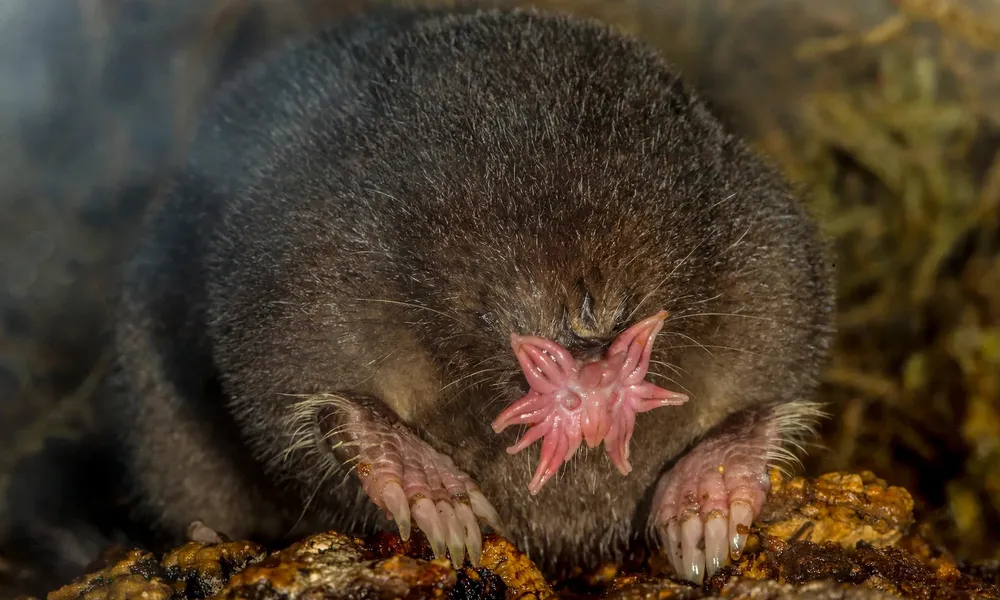
The star-nosed mole is the strangest of all mole species, and one of the most remarkable animals on Earth. Around its nose it carries a ring of 22 pink, fleshy tentacles that twitch and probe constantly, feeling for food in the dark. It is the fastest eater of any mammal, able to find, identify and swallow a small creature in about a quarter of a second. Star-nosed moles live in the wet soils and marshes of north-eastern North America, and they are good swimmers, hunting underwater as well as underground.
The hairy-tailed mole lives in the forests of eastern North America, and is named for the short tail covered in coarse hairs. It is smaller and darker than the eastern mole, and it spends more time above ground than most moles, sometimes feeding on the forest floor at night. The coast mole and Townsend’s mole live along the Pacific coast of North America, from British Columbia to California, digging through the rich, damp soils of forests and meadows. Townsend’s mole is one of the largest North American moles, and the coast mole is one of the most common moles of the north-west.
The blind mole lives in south-eastern Europe and the Mediterranean, and true to its name, its eyes are covered by skin and it cannot see at all. The broad-footed mole lives in the western United States and Mexico, with especially wide front feet for digging through dry, hard soils. Together with the European, eastern, star-nosed and hairy-tailed moles, these eight species show just how varied the mole family is, from wet marshes to dry hillsides.
How moles dig and hunt
A mole digs by scooping soil with its broad front feet and pushing it backwards with its hind feet, or by pressing it up to the surface to form a molehill. A single mole can dig several metres of tunnel in a day, and its burrow system may stretch for hundreds of metres, with deeper tunnels for living in and shallow tunnels for hunting. The shallow tunnels are the ones that show as ridges across a lawn.
Moles eat mostly earthworms, along with grubs, beetles, slugs and other small creatures they find in the soil. A mole eats a large part of its own body weight every day, and it cannot go long without food, so it hunts almost constantly. When it catches an earthworm, it bites the worm in a way that stops it wriggling away but keeps it alive, and stores it in an underground larder to eat later. Among the predators of the animal world, the mole is unusual in hunting entirely by touch and smell, in the dark, underground.
Where moles live
Moles live across the northern half of the world, in Europe, Asia and North America, wherever the soil is deep, soft and full of earthworms. They need damp soil that is easy to dig and rich in food, so they are common in meadows, gardens, woodland and river valleys, and rare on dry, rocky or waterlogged ground. The nocturnal animals of the garden include the mole, which is active day and night, and the wetland animals of marshes and wet meadows include the star-nosed mole, which swims as well as it digs.
Moles and people
People have had a mixed relationship with moles for centuries. Gardeners dislike molehills on a neat lawn, and farmers have trapped moles for their velvet fur, yet moles do a great deal of good, aerating the soil, mixing its layers and eating the grubs and pests that damage crops. A molehill is a sign of healthy soil, full of earthworms, and most gardeners learn to live with the mounds, flattening them rather than trying to remove the mole. In some countries, mole catchers were once a familiar trade, employed by estates and farms to keep lawns and fields clear, and their work is still remembered in the names of villages and the tools of the trade.
| Species | Where it lives | Best-known food | Length |
|---|---|---|---|
| European mole | Europe, from Britain to Russia | Earthworms, grubs, beetles | 0.15 metres |
| Eastern mole | Eastern United States to Mexico | Earthworms, grubs, insects | 0.18 metres |
| Star-nosed mole | Wetlands of north-eastern North America | Small fish, worms, insects | 0.18 metres |
| Hairy-tailed mole | Forests of eastern North America | Earthworms, insects, snails | 0.14 metres |
| Coast mole | Pacific coast, British Columbia to California | Earthworms, insects | 0.17 metres |
| Townsend’s mole | Pacific coast of North America | Earthworms, grubs | 0.22 metres |
| Blind mole | South-eastern Europe and the Mediterranean | Earthworms, grubs | 0.12 metres |
| Broad-footed mole | Western United States and Mexico | Earthworms, insects | 0.17 metres |
Best seasons for mole watching
Spring and autumn are the finest seasons for mole watching, when the soil is damp and soft and moles are digging hard. After rain, fresh molehills appear overnight on lawns and meadows, and the raised ridges of shallow tunnels are easy to see in the morning light. In spring, moles are at their most active, feeding hard after winter and raising their young in deep nest chambers lined with dry grass.
Winter can also reward the patient watcher, when molehills stand out against frost or light snow. Summer is the hardest season, when dry, hard soil drives moles deeper underground and few new mounds appear.
Staying safe around moles
Moles are wild animals, and they deserve respect. Never try to dig a mole out of its tunnel, never handle one with bare hands, and never block a burrow entrance. Moles rarely bite, but a frightened mole can nip, and handling one causes it great stress. Watch for the signs of moles rather than the animal itself: the molehill is the mole’s calling card, and it tells you everything you need to know.
Mole watching checklist
- Look for fresh molehills on lawns and meadows, especially after rain.
- Follow the raised ridges of shallow tunnels across soft ground.
- Check damp soil near streams and woodland edges, where earthworms are plentiful.
- Watch at dawn and dusk, when moles are at their most active.
- Never dig into a tunnel or handle a mole with bare hands.
- Leave no trace: take your rubbish home and keep to marked paths.
Frequently asked questions
How many mole species are there?
There are around 45 mole species in the family Talpidae, living across Europe, Asia and North America. The table above shows eight of the best-known true moles: the European, eastern, star-nosed, hairy-tailed, coast, Townsend’s, blind and broad-footed moles. The other species in the family include the shrew moles and the two desmans, which are close relatives that swim rather than dig.
How is this guide different from the forest animals guide?
This guide covers only the mole species of the family Talpidae, from the European mole to the star-nosed mole. The forest animals guide covers the whole community of animals that live in forests, from deer and owls to badgers and beetles.
What do moles eat?
Moles eat mostly earthworms, along with grubs, beetles, slugs and other small creatures they find in the soil. A mole eats a large part of its own body weight every day, and it stores live earthworms in underground larders after biting them so they cannot wriggle away.
Are moles blind?
Most moles have very poor eyesight, and some, like the blind mole, have eyes covered by skin and cannot see at all. Moles find their food by touch and smell instead, using sensitive whiskers, a keen nose and, in the star-nosed mole, a ring of 22 tentacles.
Why do moles make molehills?
A molehill is the pile of soil a mole pushes to the surface while digging its tunnels. The mole digs with its front feet and presses the loose earth up through a vertical shaft, leaving a neat mound above the burrow. Fresh molehills after rain are the clearest sign that a mole is active nearby.
Where is the best place to see signs of a mole?
The best place to see signs of a mole is a damp lawn, meadow or woodland edge after rain, where fresh molehills and raised tunnel ridges appear overnight. You will almost never see the mole itself, so look for the signs, and watch the ground at dawn and dusk for movement in the soil.
Conclusion
Mole species, all around 45 of them, are the hidden workers of the soil: European moles tunnelling through gardens, star-nosed moles feeling their way through marshes with 22 tentacles, and eastern moles leaving their ridges across the lawns of North America.
The next step is to find a fresh molehill after rain — a damp lawn, a meadow edge, a woodland path — and look closely at the mound, because beneath it is one of the hardest-working animals in the wild.