Animals That Start With the Letter G include some of the most remarkable creatures on Earth: the giraffe, gorilla, giant panda, gray wolf, and great white shark. They also include stranger stars, such as the goblin shark, the gharial, and the Greenland shark, which may live for centuries. This guide covers well-known G animals, sorted into mammals, birds, reptiles, amphibians, fish, invertebrates, insects, prehistoric animals, and mythical creatures.
Each entry gives the scientific name, family, habitat, range, size, diet, lifespan, and conservation status. A short key fact follows. The letter G holds several world records. It includes the tallest land animal, the largest living primate, the largest living frog, and one of the longest-lived vertebrates. As you read, notice how many G names describe size or color, such as “giant,” “golden,” “gray,” and “green.”
Mammals That Start With G
Mammals are warm-blooded animals that feed their young milk. The G list runs from the towering giraffe to the tiny golden lion tamarin, and from forest apes to ocean giants.
Gaur

- Scientific Name: Bos gaurus
- Family: Bovidae
- Habitat: Evergreen and deciduous forests, and hilly grasslands
- Range: South and Southeast Asia
- Size and Weight: About 1.6–2.2 m tall at the shoulder; roughly 700–1,500 kg
- Diet: Grasses, leaves, bark, and fruit
- Lifespan: About 20–30 years
- Conservation Status: Vulnerable
- Key Fact: The gaur is the largest wild cattle species and the largest member of the bovid family, and it is called seladang in Malaysia.
Gazelle

- Scientific Name: Gazella spp.
- Family: Bovidae
- Habitat: Savannas, grasslands, semi-deserts, and deserts
- Range: Africa and Asia, depending on species
- Size and Weight: Varies by species; about 0.5–1.1 m tall at the shoulder; roughly 15–75 kg
- Diet: Grasses, leaves, and shoots
- Lifespan: About 10–12 years in the wild
- Conservation Status: Varies by species
- Key Fact: Gazelles often “stott,” or leap straight up with stiff legs, which is thought to signal alertness to predators and other gazelles.
Genet
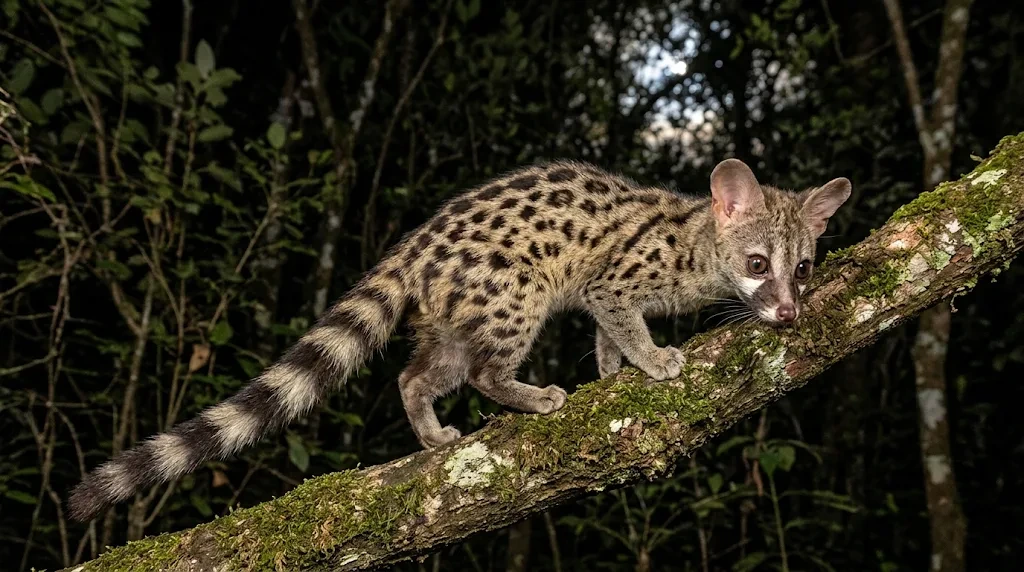
- Scientific Name: Genetta genetta (common genet example)
- Family: Viverridae
- Habitat: Woodlands, savannas, rocky areas, and scrubland
- Range: Africa, southwestern Europe, and the Middle East
- Size and Weight: About 40–55 cm long, plus a tail of 40–51 cm; roughly 1.3–2.3 kg
- Diet: Small mammals, birds, reptiles, insects, and fruit
- Lifespan: Up to about 13 years in captivity
- Conservation Status: Least Concern
- Key Fact: Genets are slender, nocturnal hunters with spotted coats and long ringed tails, and they are skilled climbers.
Giant Anteater
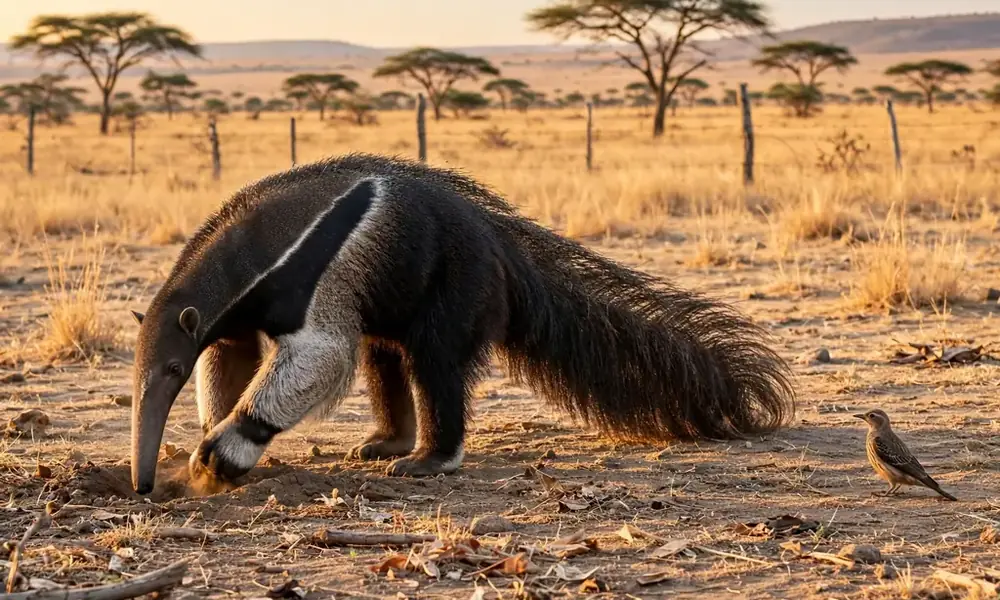
- Scientific Name: Myrmecophaga tridactyla
- Family: Myrmecophagidae
- Habitat: Grasslands, savannas, forests, and wetlands
- Range: Central and South America
- Size and Weight: About 1–1.3 m long, plus a tail of 0.6–0.9 m; roughly 22–39 kg
- Diet: Ants and termites
- Lifespan: About 14–16 years in the wild; up to about 25 years in captivity
- Conservation Status: Vulnerable
- Key Fact: The giant anteater has no teeth, and its sticky tongue can reach about 60 cm to collect insects.
Giant Otter

- Scientific Name: Pteronura brasiliensis
- Family: Mustelidae
- Habitat: Slow rivers, lakes, and flooded forests
- Range: South America, mainly the Amazon and Orinoco basins
- Size and Weight: About 1.5–1.8 m long; roughly 22–32 kg
- Diet: Fish, crabs, and other aquatic animals
- Lifespan: About 8–12 years in the wild; longer in captivity
- Conservation Status: Endangered
- Key Fact: The giant otter is the longest member of the weasel family, and it lives in noisy family groups.
Giant Panda

- Scientific Name: Ailuropoda melanoleuca
- Family: Ursidae
- Habitat: Cool, misty mountain forests with bamboo
- Range: Central China, in Sichuan, Shaanxi, and Gansu
- Size and Weight: About 1.2–1.9 m long; roughly 70–125 kg
- Diet: Almost entirely bamboo, with occasional other plants and small animals
- Lifespan: About 15–20 years in the wild; up to about 30 years in captivity
- Conservation Status: Vulnerable
- Key Fact: The giant panda is a bear that gets nearly all of its food from bamboo, and it has long served as a national symbol of China.
Gibbon

- Scientific Name: Hylobatidae
- Family: Hylobatidae
- Habitat: Tropical and subtropical rainforests
- Range: Southeast Asia, northeastern India, and southern China
- Size and Weight: About 40–65 cm tall; roughly 4–13 kg, depending on species
- Diet: Fruit, leaves, flowers, and insects
- Lifespan: About 25–40 years
- Conservation Status: Varies by species; most are Endangered or Critically Endangered
- Key Fact: Gibbons are small apes that swing from branch to branch using their long arms, and many species sing loud, far-carrying songs.
Giraffe

- Scientific Name: Giraffa spp.
- Family: Giraffidae
- Habitat: Savannas and open woodlands
- Range: Sub-Saharan Africa
- Size and Weight: About 4.3–5.7 m tall; roughly 800–1,900 kg
- Diet: Leaves, especially from acacia trees, plus flowers and fruit
- Lifespan: About 20–25 years in the wild
- Conservation Status: Vulnerable overall; some species are Endangered or Critically Endangered
- Key Fact: The giraffe is the tallest land animal, and its dark tongue can be about 45 cm long.
Goat
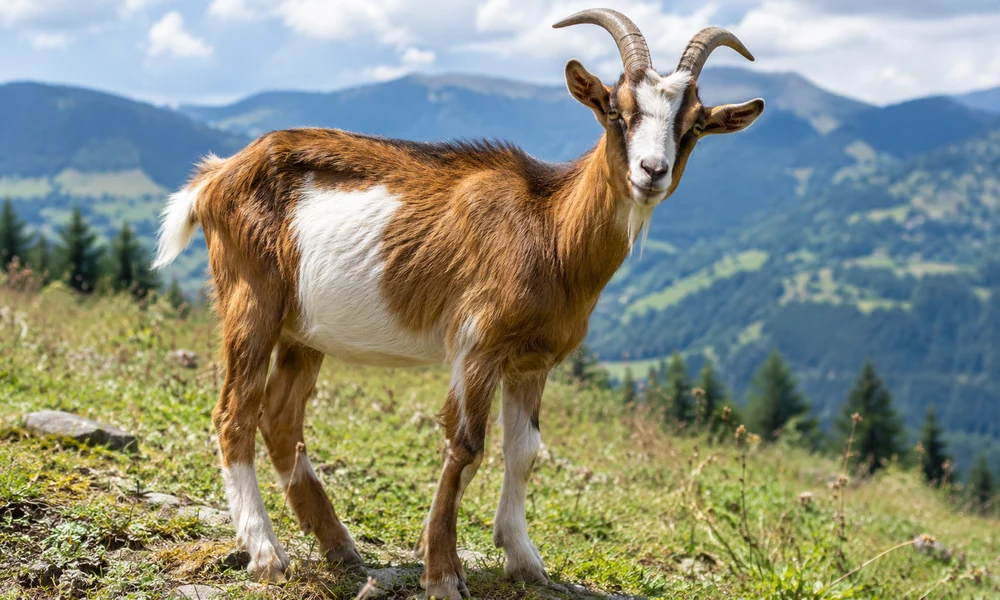
- Scientific Name: Capra hircus
- Family: Bovidae
- Habitat: Farms, pastures, hills, and mountains
- Range: Worldwide as a domesticated animal
- Size and Weight: Varies greatly by breed; roughly 20–140 kg
- Diet: Grasses, shrubs, leaves, and hay
- Lifespan: About 10–18 years
- Conservation Status: Domesticated; not assessed as a wild species
- Key Fact: The domestic goat descends from the wild goat of Southwest Asia and has been kept by people for thousands of years.
Golden Jackal

- Scientific Name: Canis aureus
- Family: Canidae
- Habitat: Grasslands, scrub, forests, and wetlands
- Range: Southeastern Europe, North and East Africa, the Middle East, and South and Southeast Asia
- Size and Weight: About 70–105 cm long; roughly 7–15 kg
- Diet: Small mammals, birds, reptiles, insects, fruit, and carrion
- Lifespan: About 8–10 years in the wild; longer in captivity
- Conservation Status: Least Concern
- Key Fact: The golden jackal is more closely related to wolves and coyotes than to the black-backed and side-striped jackals of Africa.
Golden Lion Tamarin
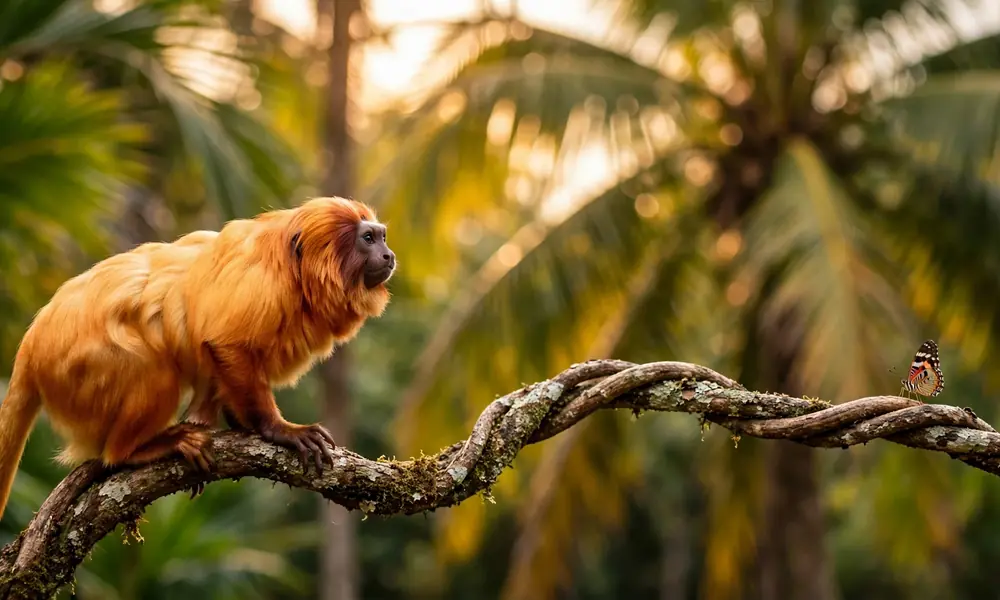
- Scientific Name: Leontopithecus rosalia
- Family: Callitrichidae
- Habitat: Lowland Atlantic coastal forest
- Range: Southeastern Brazil
- Size and Weight: About 20–34 cm long, plus a tail of 31–40 cm; roughly 480–700 g
- Diet: Fruit, insects, small vertebrates, and flowers
- Lifespan: About 8–15 years
- Conservation Status: Endangered
- Key Fact: The golden lion tamarin is a conservation success story because captive breeding and reintroduction helped bring wild numbers back from the brink.
Gorilla

- Scientific Name: Gorilla spp. (Gorilla gorilla and Gorilla beringei)
- Family: Hominidae
- Habitat: Tropical lowland and mountain forests
- Range: Central Africa
- Size and Weight: About 1.25–1.8 m tall when standing; roughly 70–220 kg
- Diet: Leaves, stems, shoots, and fruit
- Lifespan: About 35–40 years in the wild
- Conservation Status: Critically Endangered (both species)
- Key Fact: Gorillas are the largest living primates, and the two living species are the western gorilla and the eastern gorilla.
Gray Fox
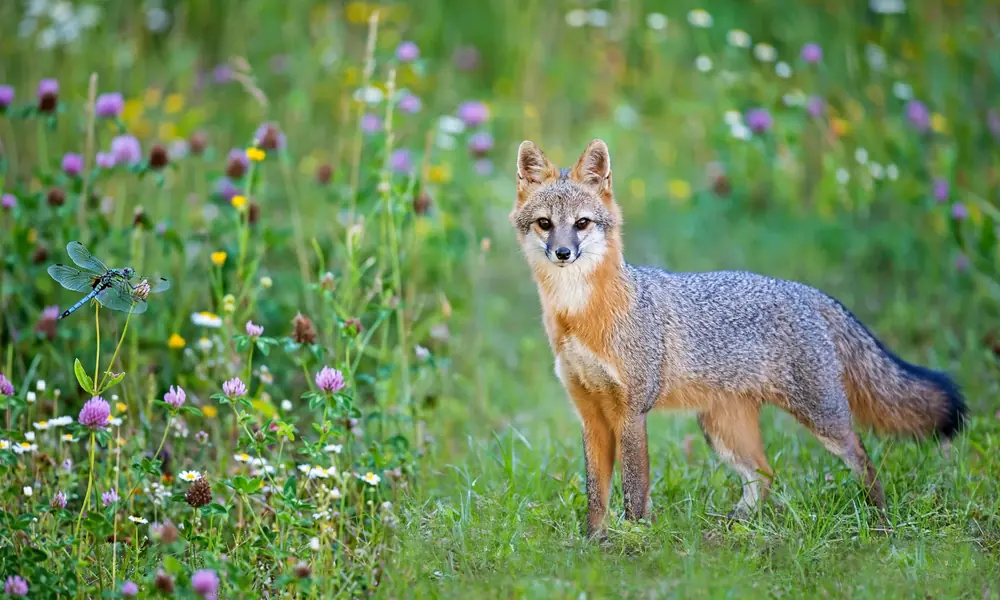
- Scientific Name: Urocyon cinereoargenteus
- Family: Canidae
- Habitat: Woodlands, brushy areas, and rocky country
- Range: North and Central America, reaching northern South America
- Size and Weight: About 48–70 cm long, plus a tail of 27–44 cm; roughly 3–7 kg
- Diet: Small mammals, birds, insects, fruit, and nuts
- Lifespan: About 6–10 years in the wild
- Conservation Status: Least Concern
- Key Fact: The gray fox can climb trees, which is unusual among canids.
Gray Whale

- Scientific Name: Eschrichtius robustus
- Family: Eschrichtiidae
- Habitat: Coastal waters and shallow seas
- Range: The North Pacific Ocean
- Size and Weight: About 12–15 m long; roughly 15,000–40,000 kg
- Diet: Small crustaceans called amphipods, which it filters from seafloor mud
- Lifespan: About 55–70 years
- Conservation Status: Least Concern overall; the western North Pacific population is Critically Endangered
- Key Fact: Gray whales make one of the longest migrations of any mammal, traveling roughly 16,000–20,000 km round trip.
Gray Wolf
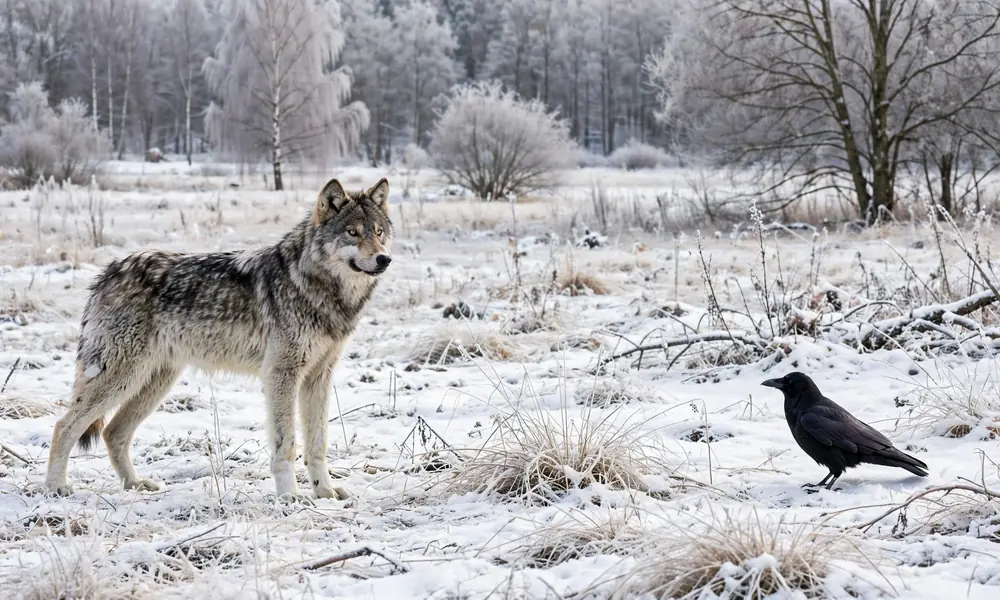
- Scientific Name: Canis lupus
- Family: Canidae
- Habitat: Forests, tundra, mountains, grasslands, and deserts
- Range: North America, Europe, and Asia
- Size and Weight: About 1–1.6 m long; roughly 16–60 kg
- Diet: Deer, elk, moose, and other animals, plus smaller prey
- Lifespan: About 6–8 years in the wild; longer in captivity
- Conservation Status: Least Concern
- Key Fact: Gray wolves live in family packs and are the wild ancestors of domestic dogs.
Greater Kudu
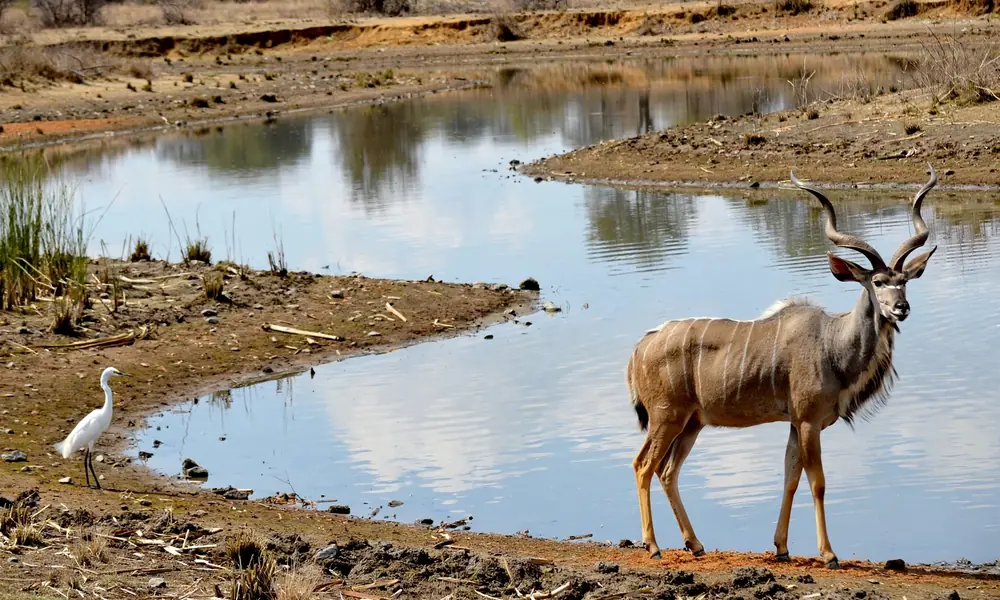
- Scientific Name: Tragelaphus strepsiceros
- Family: Bovidae
- Habitat: Woodlands, savannas, and scrub
- Range: Southern and eastern Africa
- Size and Weight: About 1–1.5 m tall at the shoulder; roughly 120–315 kg
- Diet: Leaves, shoots, grasses, and fruit
- Lifespan: About 7–8 years in the wild
- Conservation Status: Least Concern
- Key Fact: Male greater kudus grow long, spiraled horns that can be more than 1 m long.
Grizzly Bear

- Scientific Name: Ursus arctos horribilis
- Family: Ursidae
- Habitat: Forests, mountain meadows, tundra, and coastlines
- Range: Western North America, including Alaska and western Canada
- Size and Weight: About 1.7–2.8 m long; roughly 130–450 kg
- Diet: Berries, roots, fish such as salmon, and mammals
- Lifespan: About 20–25 years in the wild
- Conservation Status: Least Concern as a brown bear; grizzlies in the lower 48 United States are listed as Threatened
- Key Fact: The grizzly is a subspecies of the brown bear, and its shoulder hump is made of muscle used for digging.
Groundhog
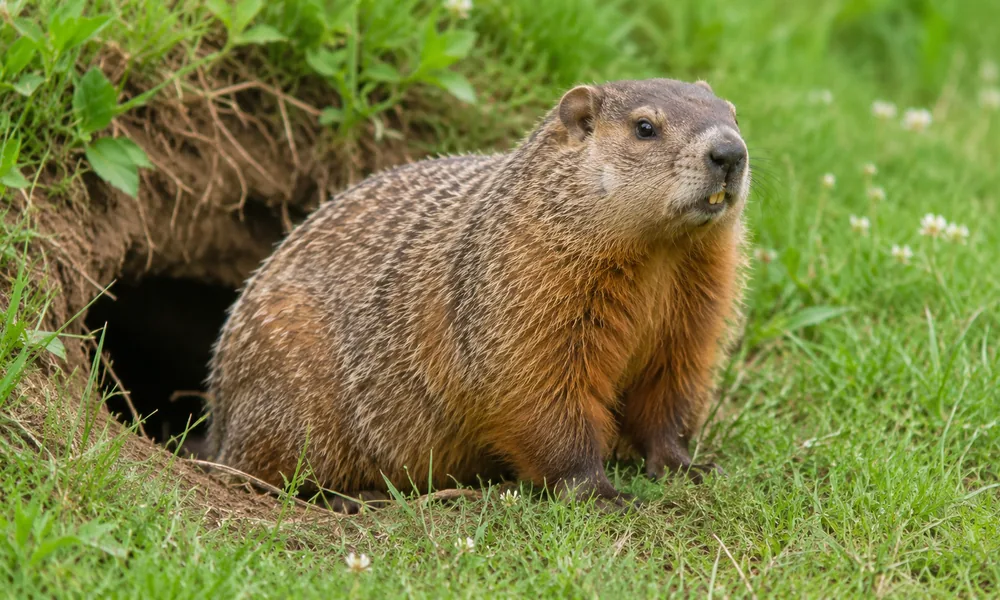
- Scientific Name: Marmota monax
- Family: Sciuridae
- Habitat: Woodland edges, fields, and meadows with burrows
- Range: Eastern and central North America
- Size and Weight: About 40–65 cm long; roughly 2–6 kg
- Diet: Grasses, clover, herbs, and garden crops
- Lifespan: About 2–6 years
- Conservation Status: Least Concern
- Key Fact: Groundhogs, also called woodchucks, are true hibernators, and their burrows help keep soil healthy.
Guanaco
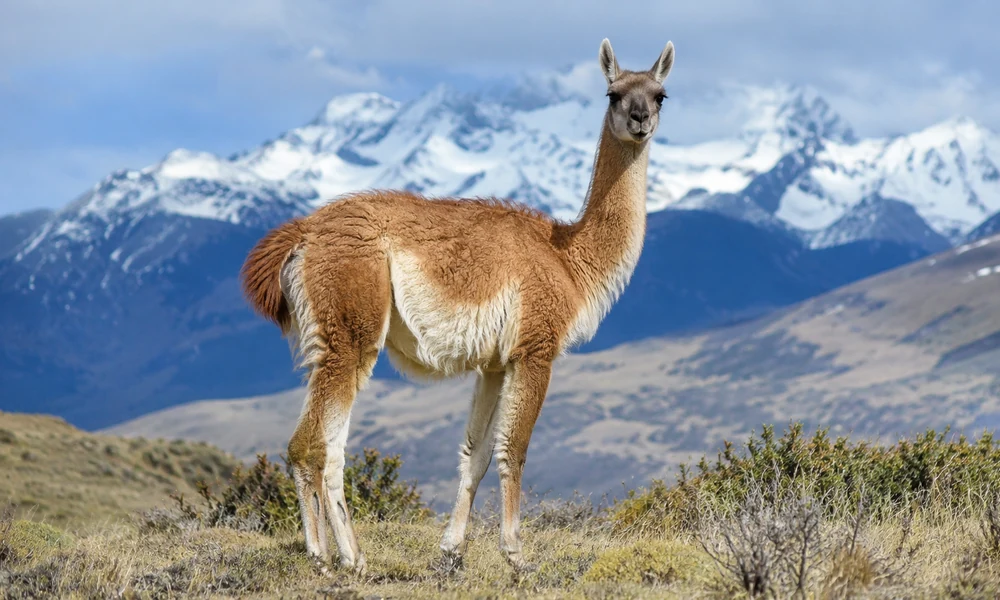
- Scientific Name: Lama guanicoe
- Family: Camelidae
- Habitat: Grasslands, scrub, and mountain slopes
- Range: The Andes and Patagonia in South America
- Size and Weight: About 1–1.2 m tall at the shoulder; roughly 90–140 kg
- Diet: Grasses, shrubs, and herbs
- Lifespan: About 20–25 years
- Conservation Status: Least Concern
- Key Fact: The guanaco is the largest wild camelid in South America and the wild ancestor of the domestic llama.
Guinea Pig

- Scientific Name: Cavia porcellus
- Family: Caviidae
- Habitat: Homes and cages as a pet
- Range: Worldwide as a domesticated animal
- Size and Weight: About 20–25 cm long; roughly 0.7–1.2 kg
- Diet: Hay, fresh vegetables, and pellets with added vitamin C
- Lifespan: About 5–8 years
- Conservation Status: Domesticated; not assessed as a wild species
- Key Fact: Guinea pigs were domesticated in the Andes thousands of years ago, and like humans, they cannot make their own vitamin C.
Birds That Start With G
Birds are feathered animals that lay eggs, and most can fly. The G list includes some of the world’s most powerful hunters, tall waders, and penguins from opposite ends of the planet.
Galah
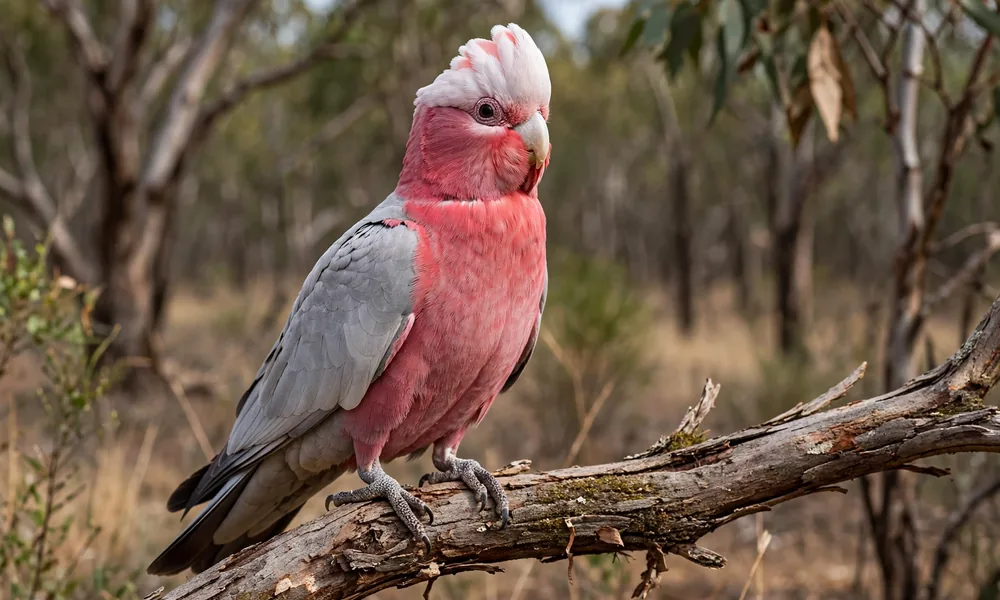
- Scientific Name: Eolophus roseicapilla
- Family: Cacatuidae
- Habitat: Open woodland, grasslands, farmland, and towns
- Range: Australia
- Size and Weight: About 35 cm long; roughly 270–350 g
- Diet: Seeds and grains
- Lifespan: About 20–40 years
- Conservation Status: Least Concern
- Key Fact: The galah is a member of the cockatoo family, and its pink and gray feathers make it easy to spot.
Galápagos Penguin

- Scientific Name: Spheniscus mendiculus
- Family: Spheniscidae
- Habitat: Rocky coasts and cool, nearby waters
- Range: The Galápagos Islands, mainly Fernandina and Isabela
- Size and Weight: About 48–53 cm tall; roughly 1.7–2.6 kg
- Diet: Small fish and crustaceans
- Lifespan: About 15–20 years
- Conservation Status: Endangered
- Key Fact: The Galápagos penguin is the only penguin that lives naturally on the equator.
Gentoo Penguin

- Scientific Name: Pygoscelis papua
- Family: Spheniscidae
- Habitat: Sub-Antarctic islands, coasts, and the Antarctic Peninsula
- Range: The Southern Ocean and nearby coasts
- Size and Weight: About 70–90 cm tall; roughly 4.5–8.5 kg
- Diet: Krill, fish, and squid
- Lifespan: About 15–20 years
- Conservation Status: Least Concern
- Key Fact: The gentoo is the fastest underwater swimmer among penguins, reaching about 36 km/h.
Goldcrest
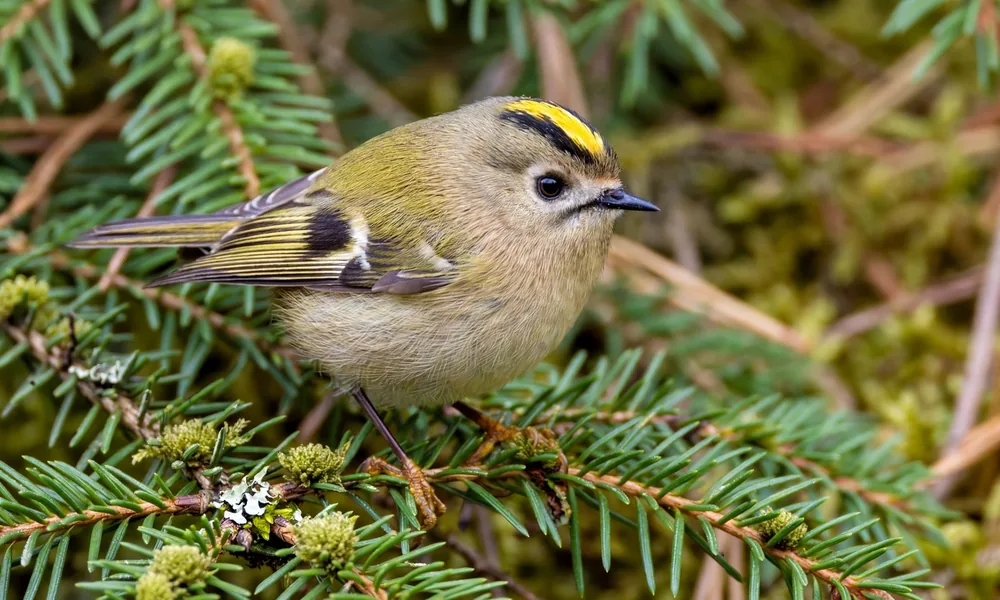
- Scientific Name: Regulus regulus
- Family: Regulidae
- Habitat: Coniferous and mixed forests
- Range: Europe, Asia, and the Azores
- Size and Weight: About 8.5–9.5 cm long; roughly 4.5–7 g
- Diet: Tiny insects and spiders
- Lifespan: About 2 years on average
- Conservation Status: Least Concern
- Key Fact: The goldcrest is one of the smallest birds in Europe, and the male’s bright golden crest gave it its name.
Golden Eagle

- Scientific Name: Aquila chrysaetos
- Family: Accipitridae
- Habitat: Mountains, cliffs, and open country
- Range: The Northern Hemisphere
- Size and Weight: About 66–100 cm long; wingspan about 1.8–2.3 m; roughly 2.5–6.5 kg
- Diet: Rabbits, hares, marmots, and birds
- Lifespan: About 20–30 years
- Conservation Status: Least Concern
- Key Fact: The golden eagle is the most widely distributed eagle species in the world.
Goose
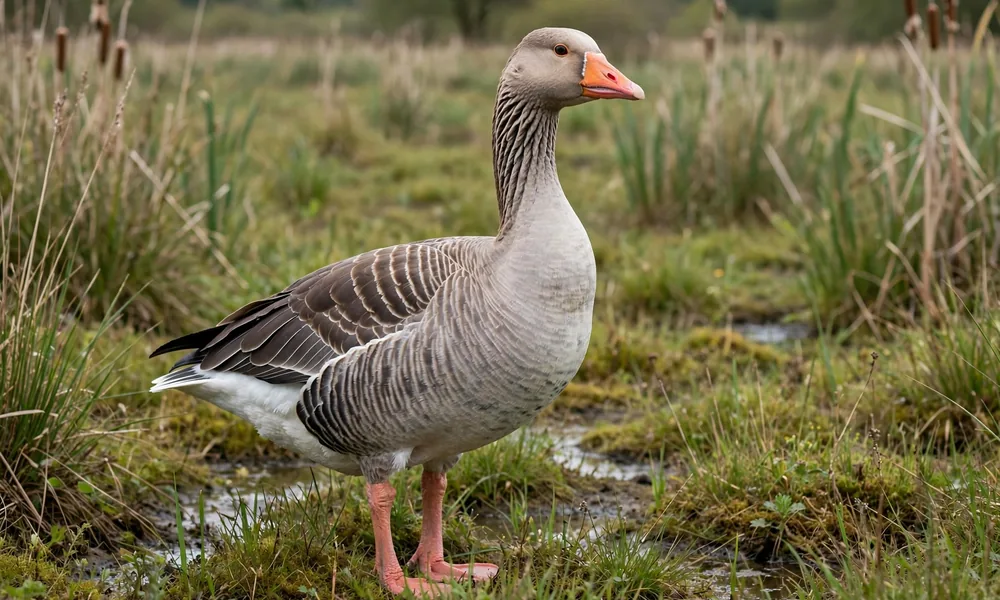
- Scientific Name: Anser and Branta spp.
- Family: Anatidae
- Habitat: Wetlands, grasslands, and tundra
- Range: Mainly the Northern Hemisphere
- Size and Weight: About 55–110 cm long; roughly 2–6 kg
- Diet: Grasses, grains, and aquatic plants
- Lifespan: About 10–25 years, depending on species
- Conservation Status: Varies by species
- Key Fact: Many geese form long-term pairs and migrate in V-shaped flocks.
Gouldian Finch
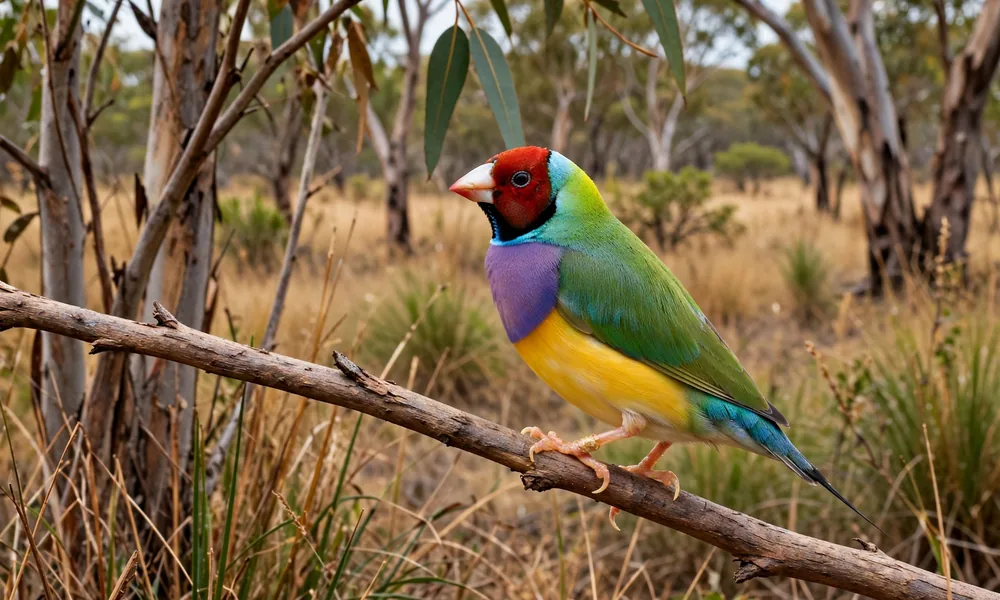
- Scientific Name: Chloebia gouldiae
- Family: Estrildidae
- Habitat: Tropical savanna woodlands and grasslands
- Range: Northern Australia
- Size and Weight: About 12–14 cm long; roughly 12–15 g
- Diet: Grass seeds
- Lifespan: About 5–8 years
- Conservation Status: Least Concern
- Key Fact: The Gouldian finch was named by the artist John Gould for his wife Elizabeth, and its feathers come in vivid colors.
Great Blue Heron
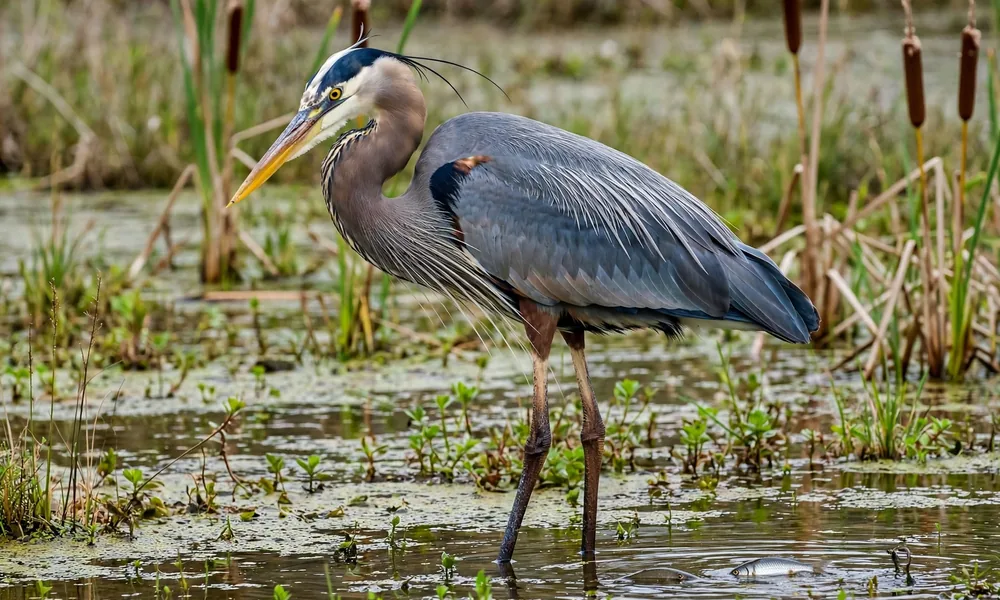
- Scientific Name: Ardea herodias
- Family: Ardeidae
- Habitat: Wetlands, shorelines, and marshes
- Range: North and Central America
- Size and Weight: About 91–137 cm long; wingspan about 1.7–2.1 m; roughly 2.1–2.5 kg
- Diet: Fish, frogs, and small mammals
- Lifespan: About 15 years on average
- Conservation Status: Least Concern
- Key Fact: The great blue heron stands perfectly still in shallow water, then strikes at fish with a lightning-fast stab.
Great Egret

- Scientific Name: Ardea alba
- Family: Ardeidae
- Habitat: Wetlands, marshes, and shallow lakes
- Range: Temperate and tropical regions worldwide
- Size and Weight: About 80–104 cm long; roughly 0.9–1.5 kg
- Diet: Fish, amphibians, and small reptiles
- Lifespan: About 15 years or more
- Conservation Status: Least Concern
- Key Fact: Great egrets were once hunted heavily for their plumes, and they became a symbol of early bird conservation in North America.
Great Horned Owl

- Scientific Name: Bubo virginianus
- Family: Strigidae
- Habitat: Forests, deserts, grasslands, and cities
- Range: North and South America
- Size and Weight: About 46–63 cm long; wingspan about 1–1.5 m; roughly 0.9–2.5 kg
- Diet: Rabbits, rodents, birds, and skunks
- Lifespan: Often 13 years or more in the wild
- Conservation Status: Least Concern
- Key Fact: The great horned owl is the most widely distributed true owl in the Americas, and it is one of the earliest birds to nest each year.
Great Indian Bustard
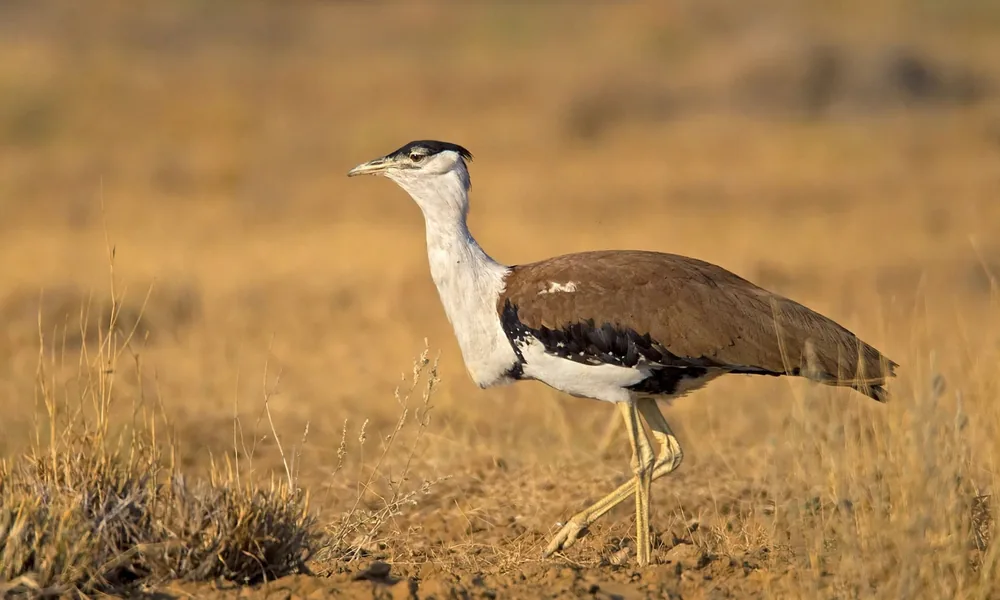
- Scientific Name: Ardeotis nigriceps
- Family: Otididae
- Habitat: Dry grasslands and scrub
- Range: The Indian subcontinent, mainly western India
- Size and Weight: About 90–120 cm tall; roughly 8–15 kg
- Diet: Seeds, insects, small reptiles, and grass
- Lifespan: Not well documented
- Conservation Status: Critically Endangered
- Key Fact: The great Indian bustard is among the heaviest flying birds, and habitat loss and hunting have caused a steep decline.
Great Tit
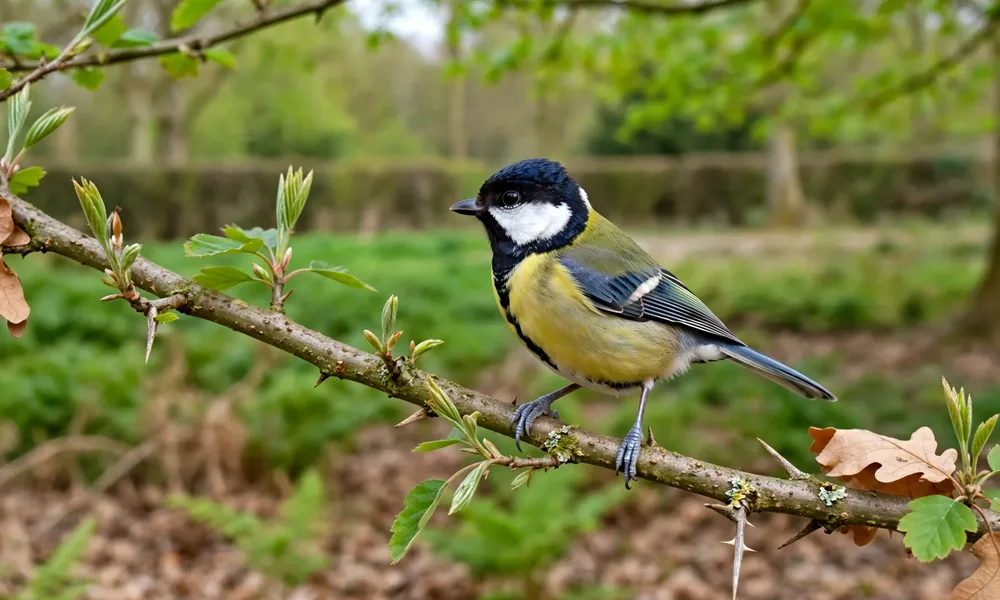
- Scientific Name: Parus major
- Family: Paridae
- Habitat: Woodlands, parks, and gardens
- Range: Europe, North Africa, the Middle East, and Central and East Asia
- Size and Weight: About 12.5–14 cm long; roughly 16–21 g
- Diet: Insects, seeds, and nuts
- Lifespan: Usually about 2–3 years; some live much longer
- Conservation Status: Least Concern
- Key Fact: The great tit has adapted well to human-changed landscapes and is a common visitor to garden feeders.
Greater Flamingo

- Scientific Name: Phoenicopterus roseus
- Family: Phoenicopteridae
- Habitat: Shallow lagoons, salt lakes, and estuaries
- Range: Africa, southern Europe, the Middle East, and South Asia
- Size and Weight: About 110–150 cm tall; roughly 2–4 kg
- Diet: Algae, small crustaceans, and brine shrimp
- Lifespan: About 20–30 years in the wild; longer in captivity
- Conservation Status: Least Concern
- Key Fact: The greater flamingo is the largest and most widespread flamingo species, and its pink color comes from pigments in its food.
Guinea Fowl
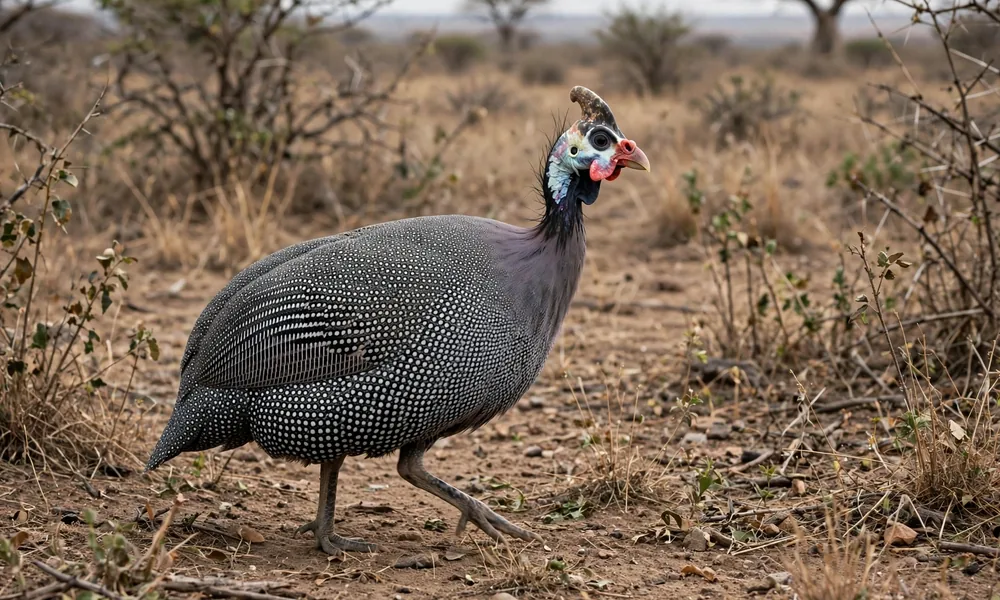
- Scientific Name: Numididae (Numida meleagris is the helmeted guinea fowl)
- Family: Numididae
- Habitat: Savannas, scrub, and farmland
- Range: Africa, with domesticated birds kept worldwide
- Size and Weight: About 50–60 cm long; roughly 1–1.6 kg
- Diet: Seeds, insects, and plant material
- Lifespan: Often 10 years or more
- Conservation Status: Varies by species; the helmeted guinea fowl is Least Concern
- Key Fact: Guinea fowl have speckled feathers and loud calls, and the helmeted species is kept on farms around the world.
Gyrfalcon

- Scientific Name: Falco rusticolus
- Family: Falconidae
- Habitat: Arctic tundra, mountains, and coasts
- Range: Arctic and subarctic North America, Europe, and Asia
- Size and Weight: About 48–65 cm long; wingspan about 1.1–1.3 m; roughly 0.8–2.1 kg
- Diet: Ptarmigan, seabirds, and small mammals
- Lifespan: Often around 10–13 years in the wild
- Conservation Status: Least Concern
- Key Fact: The gyrfalcon is the largest falcon species and is the official bird of Canada’s Northwest Territories.
Reptiles That Start With G
Reptiles are cold-blooded animals with scaly skin. Most lay eggs, and they depend on outside heat to warm their bodies. The G list includes the world’s heaviest snake, one of the longest-lived land animals, and one of the few venomous lizards.
Gaboon Viper
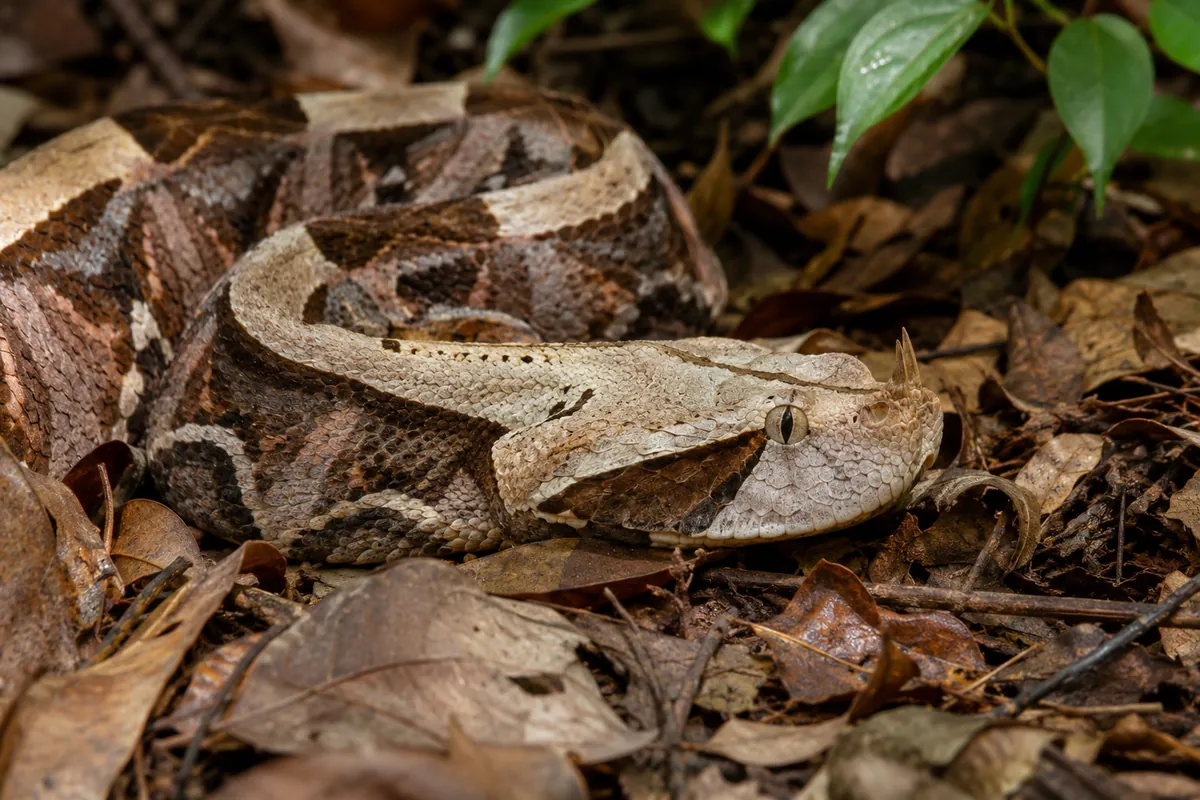
- Scientific Name: Bitis gabonica
- Family: Viperidae
- Habitat: Rainforest floors and woodlands
- Range: Sub-Saharan Africa
- Size and Weight: About 1.2–1.8 m long; up to about 20 kg
- Diet: Small mammals and birds
- Lifespan: Up to about 20 years in captivity
- Conservation Status: Least Concern
- Key Fact: The Gaboon viper has the longest fangs of any venomous snake, up to about 5 cm.
Galápagos Tortoise

- Scientific Name: Chelonoidis niger complex
- Family: Testudinidae
- Habitat: Highlands and dry lowlands
- Range: The Galápagos Islands, Ecuador
- Size and Weight: Shell up to about 1.2–1.5 m long; up to about 400 kg
- Diet: Grasses, cactus pads, leaves, and fruit
- Lifespan: More than 100 years
- Conservation Status: Varies by species; from Vulnerable to Critically Endangered
- Key Fact: The Galápagos tortoise is the largest living tortoise and one of the longest-lived vertebrates.
Garter Snake

- Scientific Name: Thamnophis spp. (common garter snake, Thamnophis sirtalis, is an example)
- Family: Colubridae
- Habitat: Meadows, wetlands, woodland edges, and gardens
- Range: North America
- Size and Weight: About 46–137 cm long, depending on species
- Diet: Earthworms, amphibians, fish, and small rodents
- Lifespan: About 2–10 years
- Conservation Status: Least Concern for the common garter snake; varies by species
- Key Fact: Garter snakes are among the most widespread snakes in North America, and they give birth to live young instead of laying eggs.
Gecko
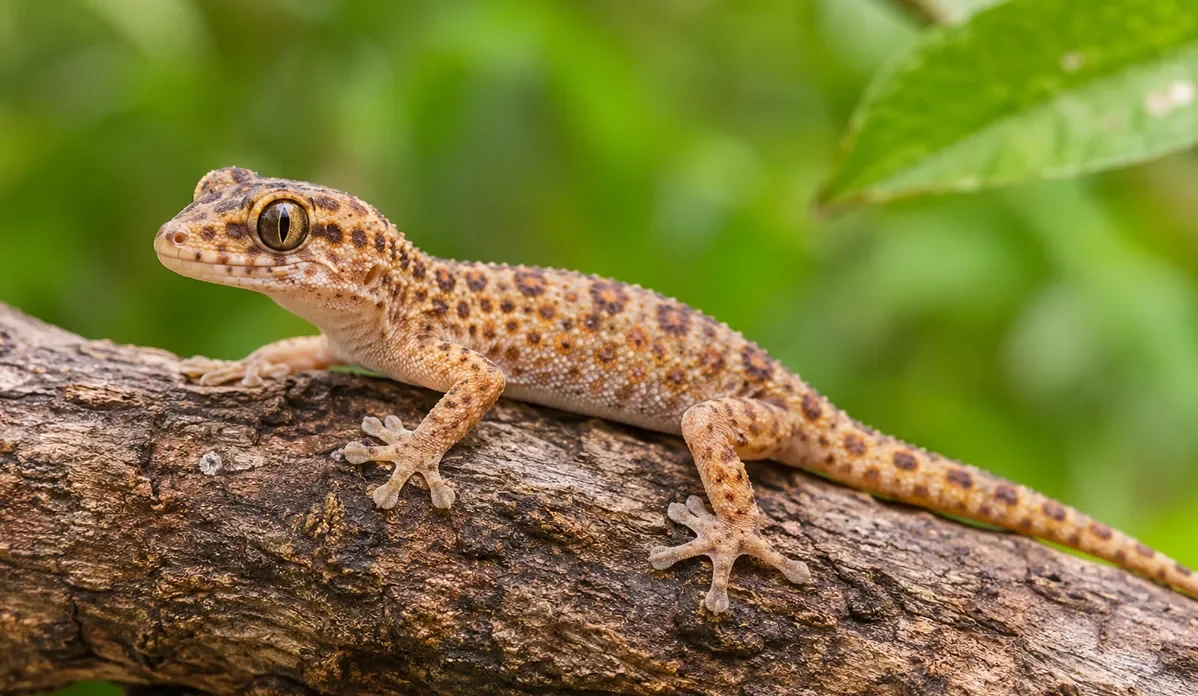
- Scientific Name: Gekkota
- Family: Gekkonidae and related families
- Habitat: Forests, deserts, rocky areas, and buildings
- Range: Warm regions worldwide
- Size and Weight: Varies greatly by species; from about 1.6 cm to more than 30 cm long
- Diet: Insects, spiders, nectar, and fruit, depending on species
- Lifespan: About 5–20 years, depending on species
- Conservation Status: Varies by species
- Key Fact: Many geckos can climb smooth walls and ceilings using microscopic hairs on their toe pads.
Gharial
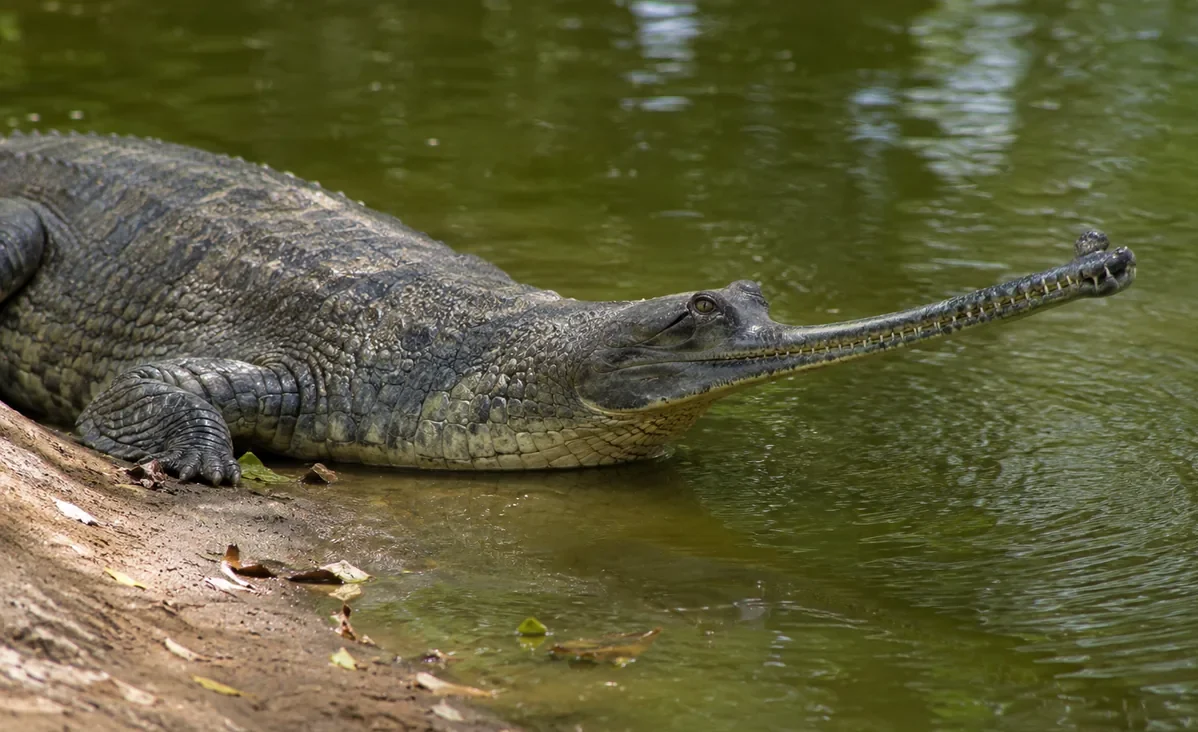
- Scientific Name: Gavialis gangeticus
- Family: Gavialidae
- Habitat: Deep, clean, fast-flowing rivers
- Range: Northern India and Nepal
- Size and Weight: Males commonly reach about 4–5 m long, and some are larger; roughly 160–250 kg for adult males
- Diet: Fish
- Lifespan: About 40–60 years
- Conservation Status: Critically Endangered
- Key Fact: The gharial has the narrowest snout of any crocodilian, and adult males grow a bulbous growth at the snout tip.
Gila Monster

- Scientific Name: Heloderma suspectum
- Family: Helodermatidae
- Habitat: Deserts and scrublands
- Range: The southwestern United States and northwestern Mexico
- Size and Weight: About 35–55 cm long; roughly 0.5–1.5 kg
- Diet: Eggs, nestlings, and small mammals
- Lifespan: About 20–30 years
- Conservation Status: Near Threatened
- Key Fact: The Gila monster is one of the few venomous lizards in the world and the largest lizard native to the United States.
Grass Snake
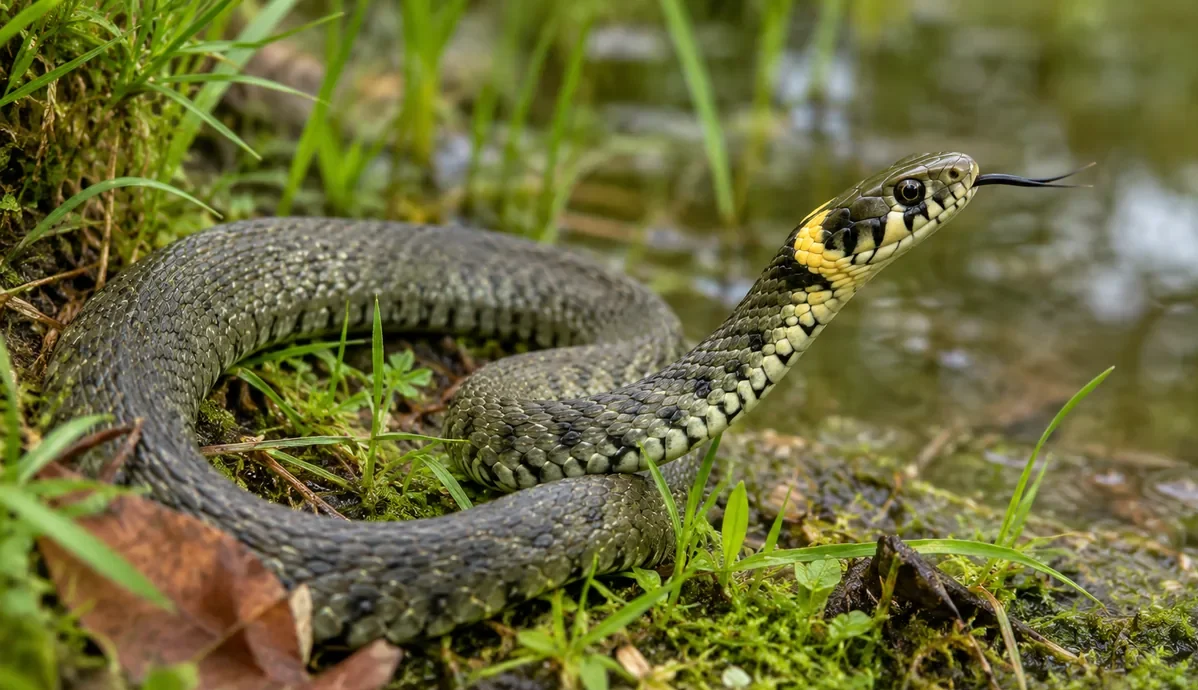
- Scientific Name: Natrix natrix
- Family: Colubridae
- Habitat: Meadows, wetlands, and areas near water
- Range: Europe, western Asia, and northwestern Africa
- Size and Weight: About 70–100 cm long, with some females longer
- Diet: Frogs, toads, and fish
- Lifespan: About 15–25 years
- Conservation Status: Least Concern
- Key Fact: The grass snake is nonvenomous and may play dead and release a foul-smelling fluid when threatened.
Green Anaconda

- Scientific Name: Eunectes murinus
- Family: Boidae
- Habitat: Swamps, marshes, and slow-moving rivers
- Range: The Amazon and Orinoco basins in South America
- Size and Weight: About 4–6 m long; typically 30–100 kg, with some larger
- Diet: Capybaras, fish, birds, and caimans
- Lifespan: About 10 years in the wild; up to about 30 years in captivity
- Conservation Status: Least Concern
- Key Fact: The green anaconda is the heaviest known snake, and it is a nonvenomous constrictor.
Green Mamba

- Scientific Name: Dendroaspis viridis (western green mamba) and Dendroaspis angusticeps (eastern green mamba)
- Family: Elapidae
- Habitat: Tropical forests and coastal thickets
- Range: West Africa for the western species; East Africa for the eastern species
- Size and Weight: About 1.5–2.5 m long
- Diet: Birds, eggs, small mammals, and lizards
- Lifespan: About 10 years or more in captivity
- Conservation Status: Least Concern
- Key Fact: Green mambas are highly venomous but shy, and they spend most of their time in trees.
Green Sea Turtle

- Scientific Name: Chelonia mydas
- Family: Cheloniidae
- Habitat: Tropical and subtropical seas, seagrass beds, and coastal waters
- Range: Oceans worldwide
- Size and Weight: Shell about 80–120 cm long; roughly 70–200 kg
- Diet: Seagrass and algae as adults
- Lifespan: Estimated at about 60–70 years or more
- Conservation Status: Endangered
- Key Fact: The green sea turtle is named for the greenish fat under its shell, not for the color of its shell.
Amphibians That Start With G
Amphibians live part of their lives in water and part on land. Their thin, moist skin is why most of them stay close to water. The G list includes the largest living frog, one of the most poisonous animals, and a frog with see-through skin.
Glass Frog
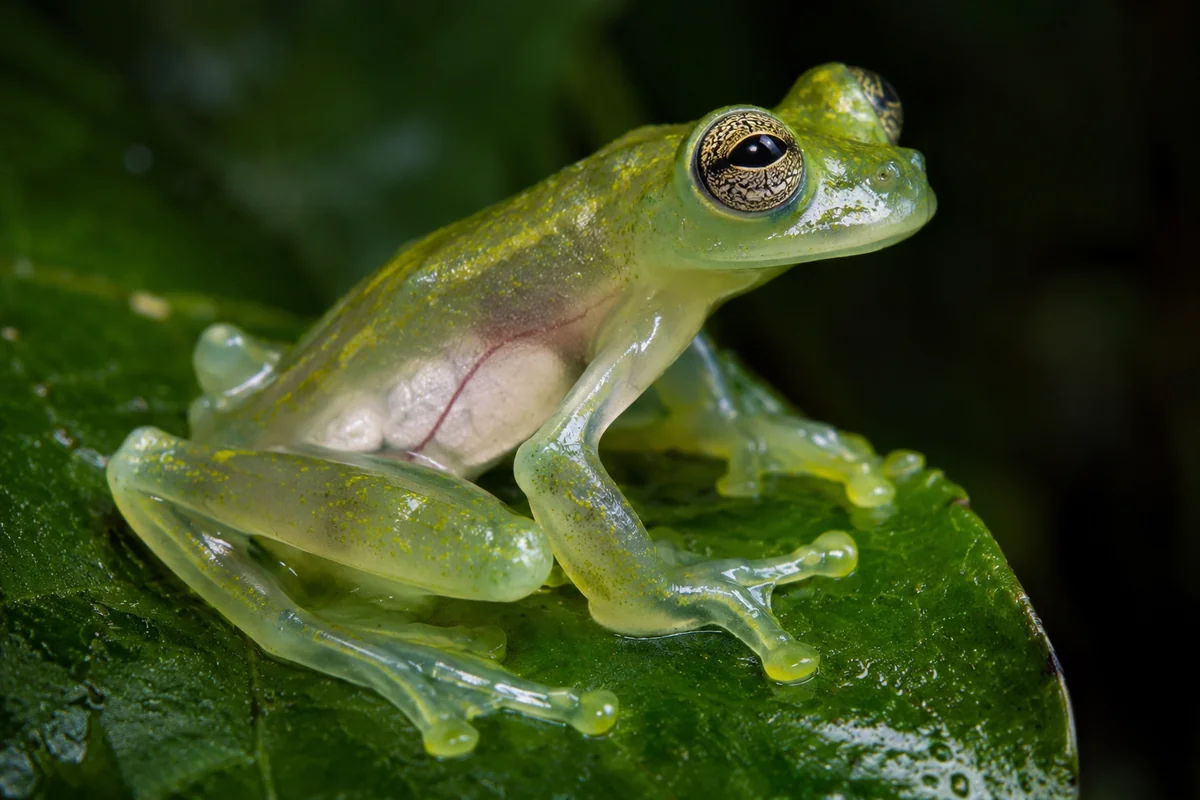
- Scientific Name: Centrolenidae
- Family: Centrolenidae
- Habitat: Rainforest streams and the plants beside them
- Range: Central and South America
- Size and Weight: About 2–7.5 cm long, depending on species
- Diet: Small insects
- Lifespan: Not well documented
- Conservation Status: Varies by species
- Key Fact: Many glass frogs have translucent skin on their bellies, which lets you see the heart and other organs.
Goliath Frog

- Scientific Name: Conraua goliath
- Family: Conrauidae
- Habitat: Fast-flowing rivers and waterfalls in rainforest
- Range: Cameroon and Equatorial Guinea
- Size and Weight: Up to about 30 cm long; up to about 3 kg
- Diet: Insects, crustaceans, small fish, and other frogs
- Lifespan: Up to about 15 years
- Conservation Status: Endangered
- Key Fact: The Goliath frog is the largest living frog in the world.
Golden Poison Frog
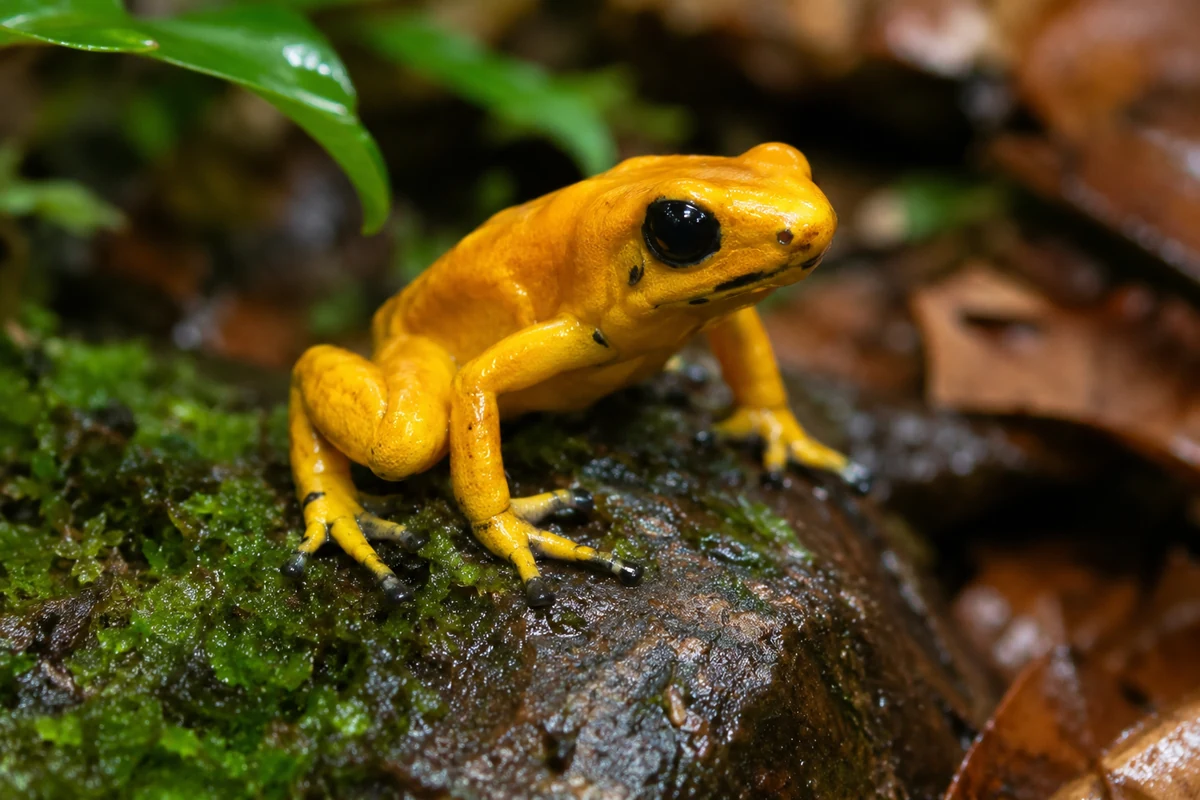
- Scientific Name: Phyllobates terribilis
- Family: Dendrobatidae
- Habitat: Humid rainforest floors
- Range: The Pacific coast of Colombia
- Size and Weight: About 4–5.5 cm long
- Diet: Small ants, beetles, and other tiny insects
- Lifespan: About 5 years in the wild; up to about 10 years in captivity
- Conservation Status: Endangered
- Key Fact: The golden poison frog is among the most poisonous animals on Earth, and Indigenous people in Colombia have used its skin toxin on blowgun darts.
Gray Tree Frog
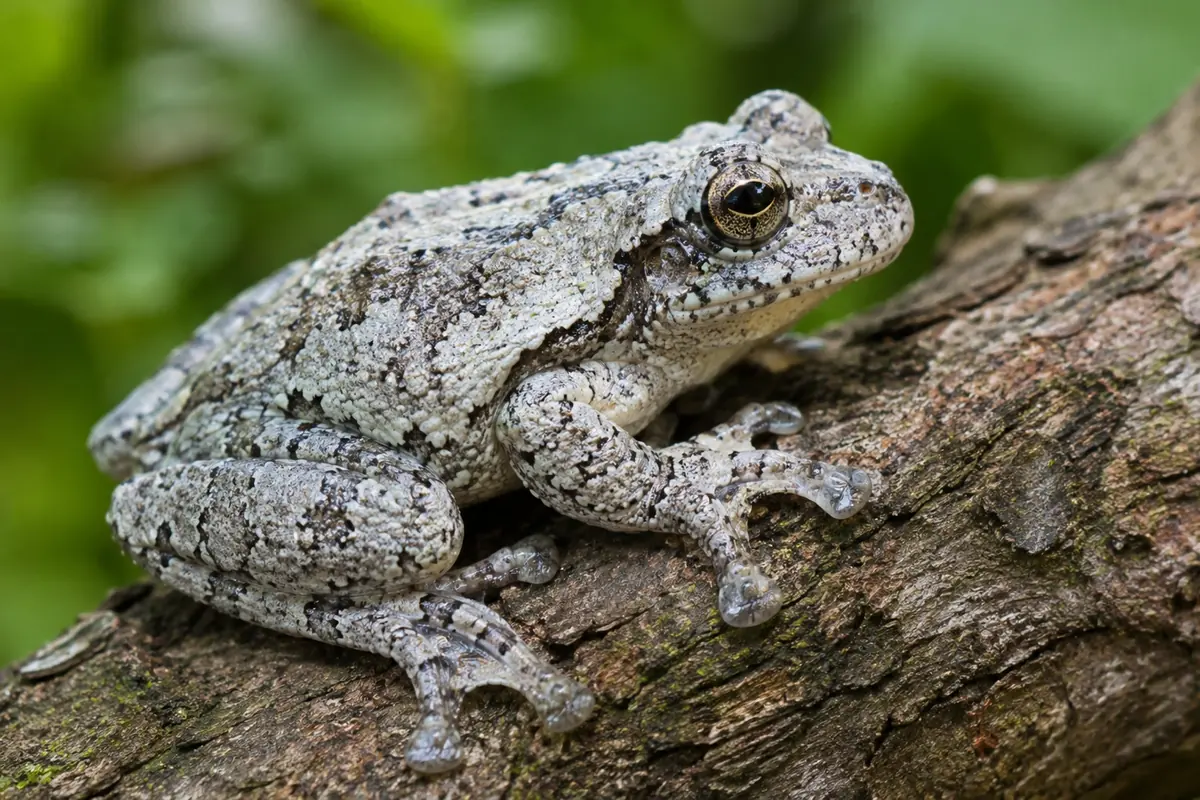
- Scientific Name: Dryophytes versicolor
- Family: Hylidae
- Habitat: Woodlands near ponds and swamps
- Range: Eastern and central North America
- Size and Weight: About 3–6 cm long
- Diet: Insects and spiders
- Lifespan: About 5–9 years
- Conservation Status: Least Concern
- Key Fact: The gray tree frog can change color between gray and green and can survive freezing winter temperatures.
Fish That Start With G
Fish breathe through gills and live in water for their whole lives. The G list ranges from famous ocean predators to a deep-sea oddity with an enormous mouth.
Goblin Shark
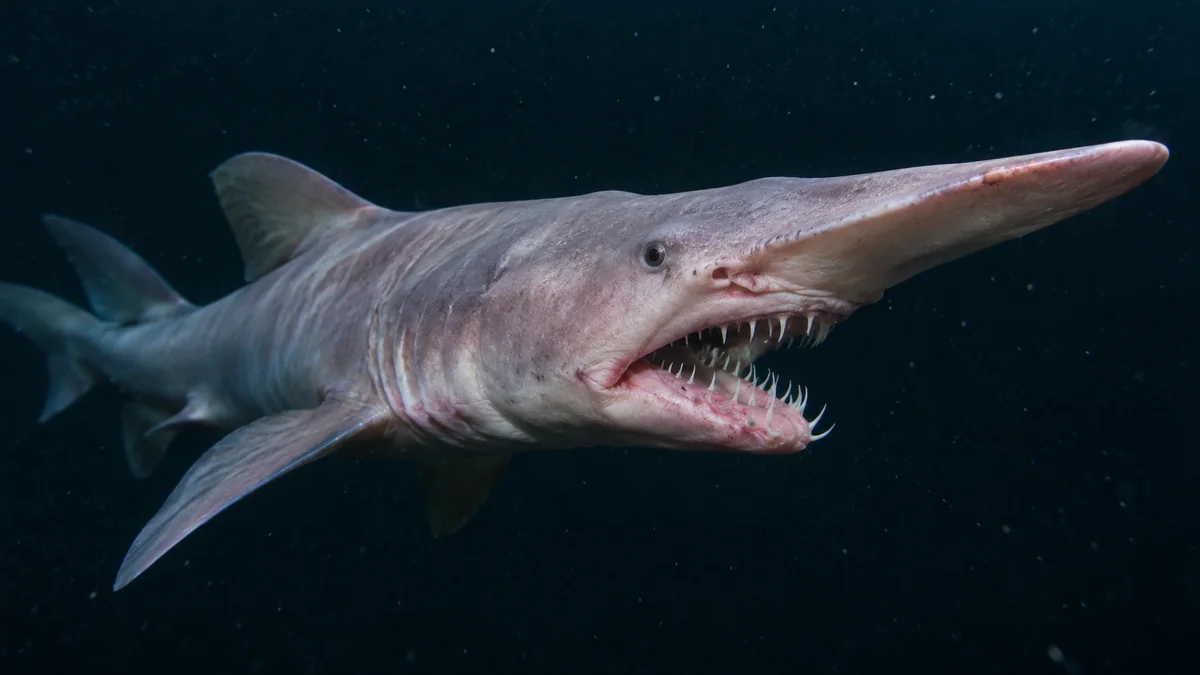
- Scientific Name: Mitsukurina owstoni
- Family: Mitsukurinidae
- Habitat: Deep waters, usually about 200–1,300 m down
- Range: The Atlantic, Pacific, and Indian oceans
- Size and Weight: Commonly about 3–4 m long; weight up to about 200 kg
- Diet: Fish, squid, and crustaceans
- Lifespan: Not well documented
- Conservation Status: Least Concern
- Key Fact: The goblin shark can shoot its jaws forward to snatch prey, and its long, flat snout gives it an unusual look.
Goldfish

- Scientific Name: Carassius auratus
- Family: Cyprinidae
- Habitat: Ponds, tanks, and slow freshwater
- Range: Native to East Asia; kept and introduced worldwide
- Size and Weight: About 10–30 cm long
- Diet: Algae, plants, insects, and small crustaceans
- Lifespan: About 10–15 years with good care; some live longer
- Conservation Status: Domesticated; widely introduced
- Key Fact: Goldfish were first domesticated in China more than 1,000 years ago.
Goliath Grouper

- Scientific Name: Epinephelus itajara
- Family: Epinephelidae
- Habitat: Reefs, mangroves, and shipwrecks
- Range: The western Atlantic, the eastern Pacific, and West Africa
- Size and Weight: Up to about 2.5 m long; up to about 360 kg
- Diet: Crabs, lobsters, fish, and sometimes small turtles
- Lifespan: Up to about 37 years
- Conservation Status: Vulnerable
- Key Fact: The goliath grouper has been protected from harvest in Florida waters since 1990.
Great Hammerhead Shark
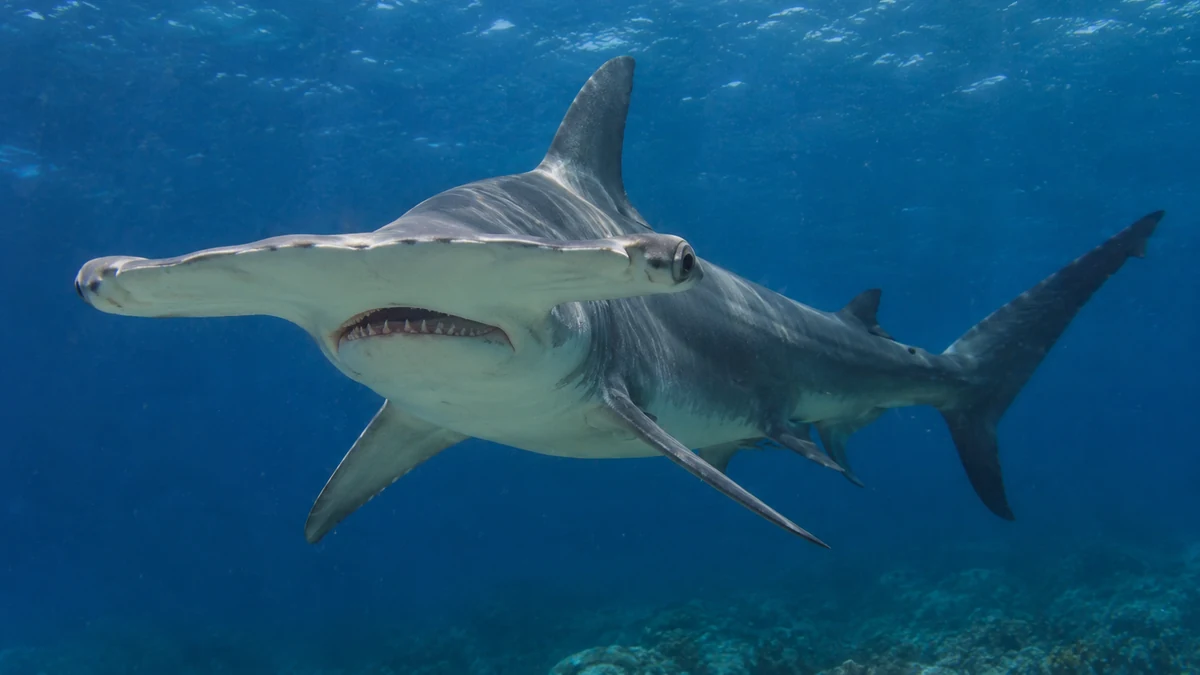
- Scientific Name: Sphyrna mokarran
- Family: Sphyrnidae
- Habitat: Warm coastal waters, reefs, and open ocean
- Range: Tropical and subtropical seas worldwide
- Size and Weight: Commonly about 3–4.5 m long, with some larger; roughly 230–450 kg
- Diet: Stingrays, fish, and crustaceans
- Lifespan: About 20–30 years
- Conservation Status: Critically Endangered
- Key Fact: The great hammerhead is the largest hammerhead shark, and it is known for hunting stingrays.
Great White Shark

- Scientific Name: Carcharodon carcharias
- Family: Lamnidae
- Habitat: Coastal and offshore temperate seas
- Range: Oceans worldwide
- Size and Weight: About 4–6 m long; roughly 680–1,800 kg
- Diet: Seals, sea lions, fish, and dolphins
- Lifespan: About 70 years
- Conservation Status: Vulnerable
- Key Fact: The great white shark is the largest predatory fish in the ocean.
Greenland Shark

- Scientific Name: Somniosus microcephalus
- Family: Somniosidae
- Habitat: Cold, deep waters and sometimes shallower Arctic seas
- Range: The North Atlantic and Arctic oceans
- Size and Weight: About 4–5 m long; up to about 1,000 kg
- Diet: Fish, squid, seals, and carrion
- Lifespan: Estimated at least 250 years, possibly longer
- Conservation Status: Vulnerable
- Key Fact: The Greenland shark is the longest-lived vertebrate known to science.
Guppy
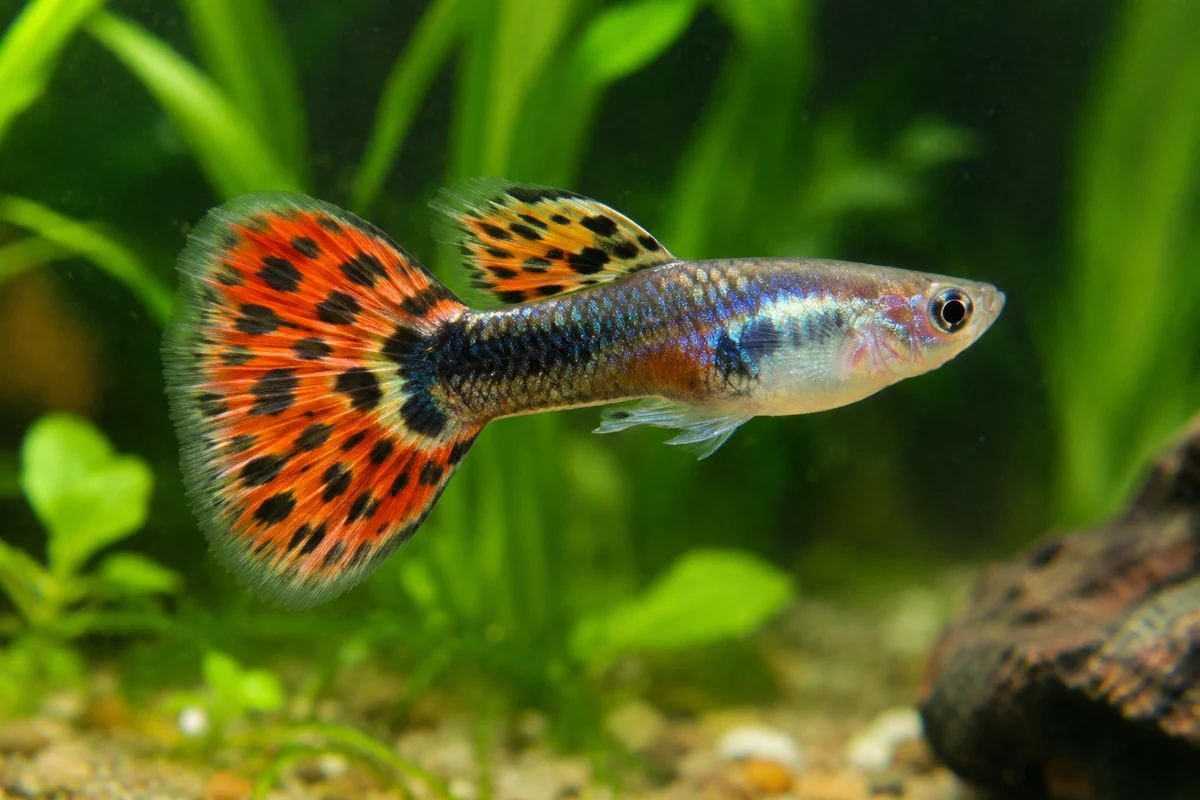
- Scientific Name: Poecilia reticulata
- Family: Poeciliidae
- Habitat: Streams, ponds, and slow-moving waters
- Range: Native to northern South America and nearby islands; introduced widely
- Size and Weight: Males about 2.5–3.5 cm long; females about 4–6 cm
- Diet: Algae, insect larvae, and small invertebrates
- Lifespan: About 2–3 years
- Conservation Status: Least Concern
- Key Fact: Guppies give birth to live young instead of laying eggs, and males are usually more colorful than females.
Gulper Eel

- Scientific Name: Eurypharynx pelecanoides
- Family: Eurypharyngidae
- Habitat: Deep ocean waters, about 500–3,000 m down
- Range: Tropical and temperate oceans worldwide
- Size and Weight: Up to about 1 m long
- Diet: Small crustaceans, plankton, and small fish
- Lifespan: Not well documented
- Conservation Status: Least Concern
- Key Fact: The gulper eel has a huge, hinged mouth and a whip-like tail that ends in a light-producing organ.
Sea and Freshwater Invertebrates That Start With G
Invertebrates are animals without backbones, and they make up most of the animal kingdom. The G list includes deep-sea giants, a shellfish that can live for over a century, and a snail that has become a world-famous invader.
Geoduck
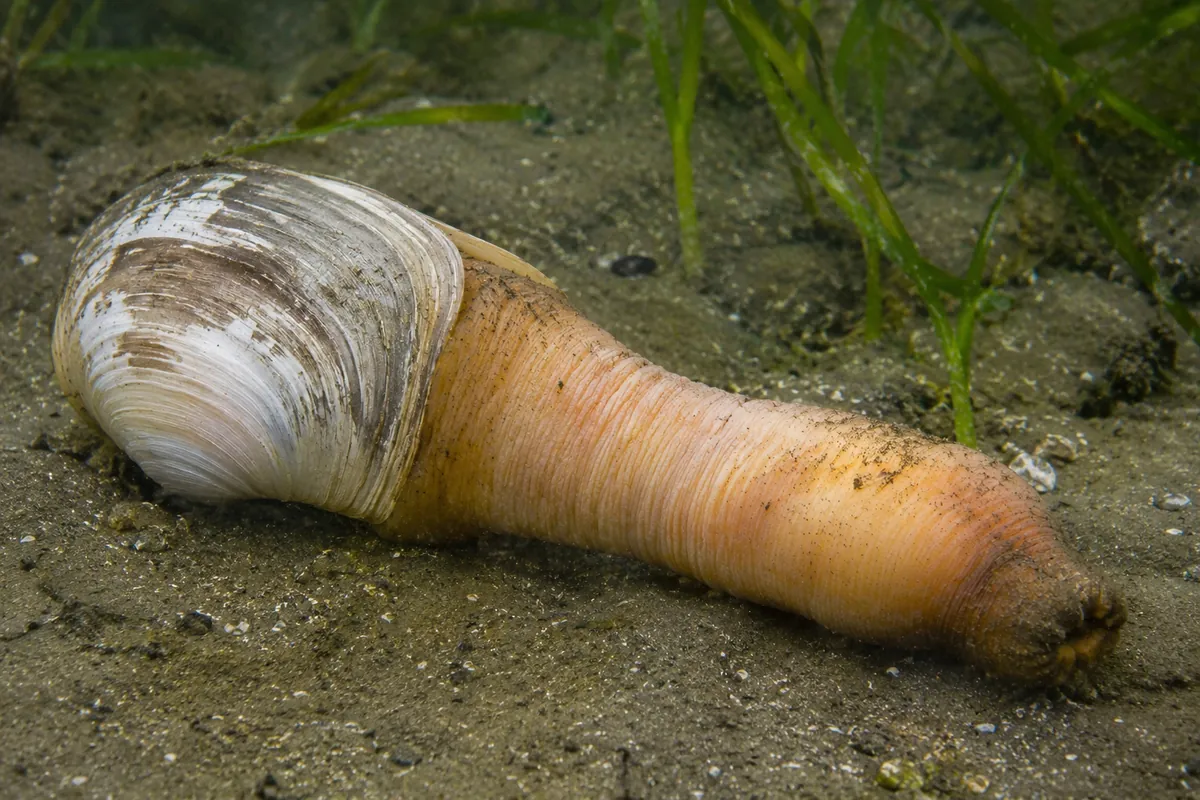
- Scientific Name: Panopea generosa
- Family: Hiatellidae
- Habitat: Sand and mud on the seafloor, buried deep
- Range: The Pacific coast of North America
- Size and Weight: Shell about 15–20 cm long, with a long siphon; roughly 0.7–1.4 kg
- Diet: Tiny algae and particles filtered from the water
- Lifespan: More than 100 years
- Conservation Status: Least Concern
- Key Fact: The geoduck, pronounced “gooey-duck,” is one of the longest-lived animals on Earth.
Ghost Crab
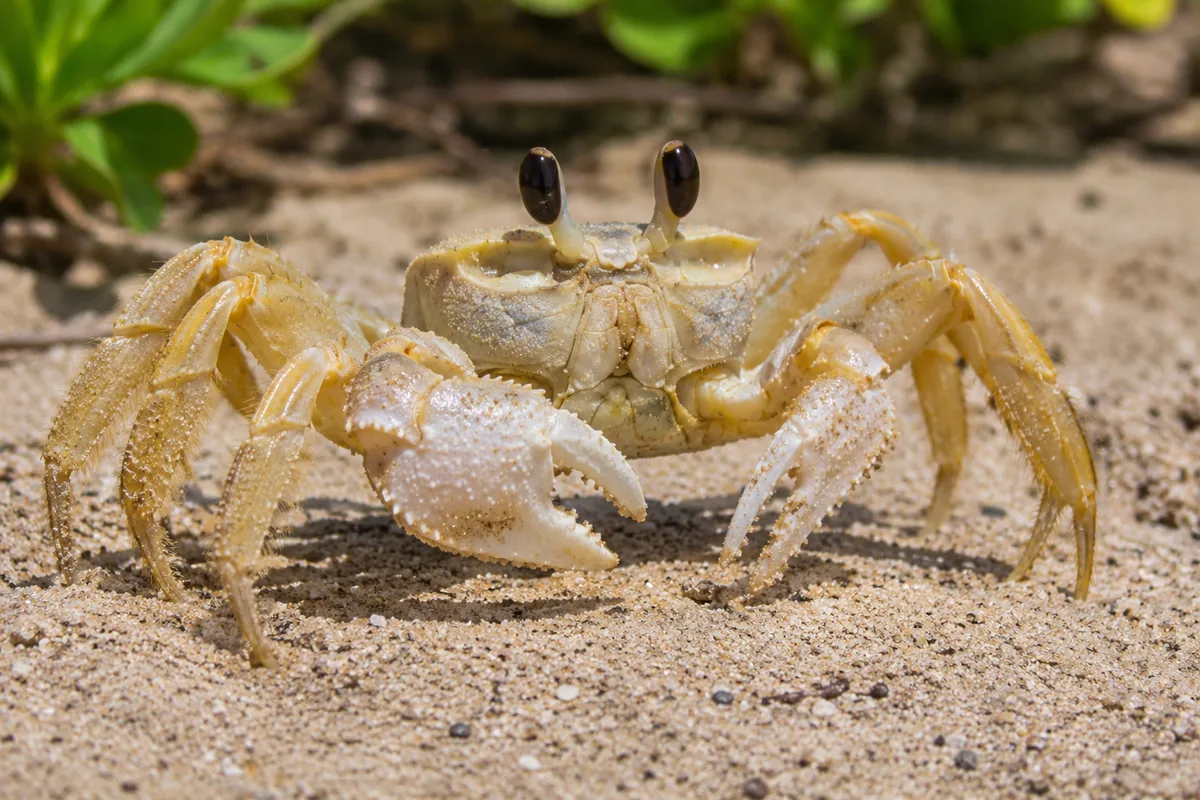
- Scientific Name: Ocypode spp.
- Family: Ocypodidae
- Habitat: Sandy beaches and dunes
- Range: Tropical and subtropical coasts worldwide
- Size and Weight: Shell about 2–6 cm wide, depending on species
- Diet: Small invertebrates, dead animals, and plant material
- Lifespan: About 3 years
- Conservation Status: Varies by species
- Key Fact: Ghost crabs are fast, mostly nocturnal crabs that dig deep burrows in beach sand.
Giant African Land Snail

- Scientific Name: Lissachatina fulica
- Family: Achatinidae
- Habitat: Gardens, farmland, and forest edges
- Range: Native to East Africa; invasive in many regions worldwide
- Size and Weight: Shell up to about 20 cm long
- Diet: Plants, fruit, and decaying matter
- Lifespan: About 5–6 years, longer in captivity
- Conservation Status: Not threatened; considered a serious invasive species
- Key Fact: The giant African land snail can damage crops and carry a parasite that can infect people, so it should not be handled with bare hands.
Giant Clam
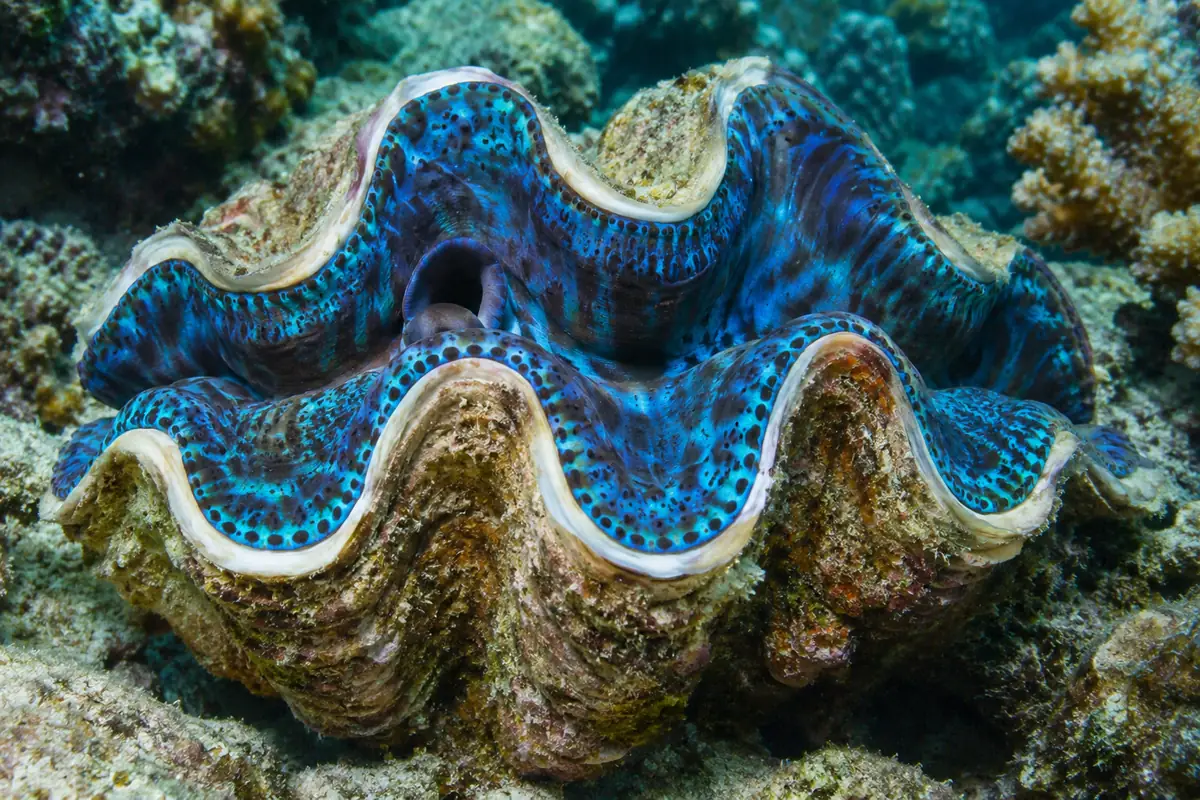
- Scientific Name: Tridacna gigas
- Family: Cardiidae
- Habitat: Shallow tropical coral reefs
- Range: The Indo-Pacific
- Size and Weight: Shell up to about 1.2 m long; up to about 200 kg
- Diet: Food made by symbiotic algae in its tissues, plus filtered plankton
- Lifespan: About 100 years or more
- Conservation Status: Vulnerable
- Key Fact: The giant clam is the largest living bivalve mollusk.
Giant Isopod

- Scientific Name: Bathynomus giganteus
- Family: Cirolanidae
- Habitat: Deep, cold seafloor, about 170–2,100 m down
- Range: The western Atlantic, including the Gulf of Mexico and Caribbean
- Size and Weight: About 19–36 cm long; up to about 1.7 kg
- Diet: Dead animals that sink to the seafloor, plus slow-moving prey
- Lifespan: Not well documented
- Conservation Status: Least Concern
- Key Fact: The giant isopod is a deep-sea relative of the common pill bug, and it can survive long periods without food.
Giant Pacific Octopus

- Scientific Name: Enteroctopus dofleini
- Family: Octopodidae
- Habitat: Rocky reefs, kelp forests, and dens
- Range: The North Pacific coasts
- Size and Weight: Arm span commonly 3–5 m; typically about 10–50 kg
- Diet: Crabs, clams, and fish
- Lifespan: About 3–5 years
- Conservation Status: Not listed as threatened
- Key Fact: The giant Pacific octopus is the largest octopus species, and like all octopuses it has three hearts.
Giant Squid
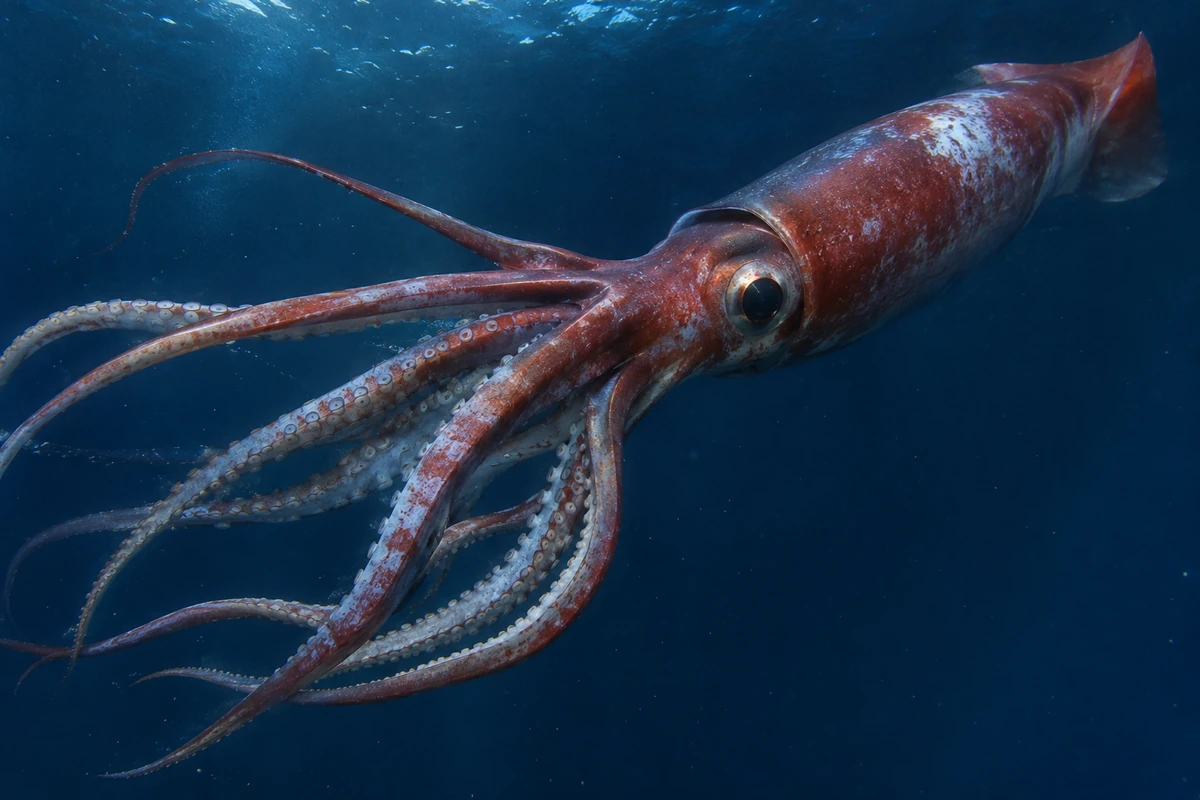
- Scientific Name: Architeuthis dux
- Family: Architeuthidae
- Habitat: Deep ocean waters, about 300–1,000 m down
- Range: Oceans worldwide
- Size and Weight: Up to about 12–13 m long, including tentacles
- Diet: Fish and other squid
- Lifespan: Not well documented
- Conservation Status: Least Concern
- Key Fact: The giant squid has some of the largest eyes in the animal kingdom, and it was first filmed alive in its deep-sea habitat in 2012.
Insects and Creepy Crawlies That Start With G
Insects have six legs and three body parts. This group also includes the garden spider, which is an arachnid with eight legs. The G list includes some of the heaviest insects in the world and some of the most troublesome pests.
Garden Spider

- Scientific Name: Araneus diadematus (European garden spider example)
- Family: Araneidae
- Habitat: Gardens, hedges, and woodland edges
- Range: Europe; introduced to North America
- Size and Weight: Body about 6–20 mm long, with females larger
- Diet: Flying insects caught in its web
- Lifespan: About 1 year
- Conservation Status: Not assessed
- Key Fact: The garden spider builds round orb webs and often rebuilds them.
German Cockroach
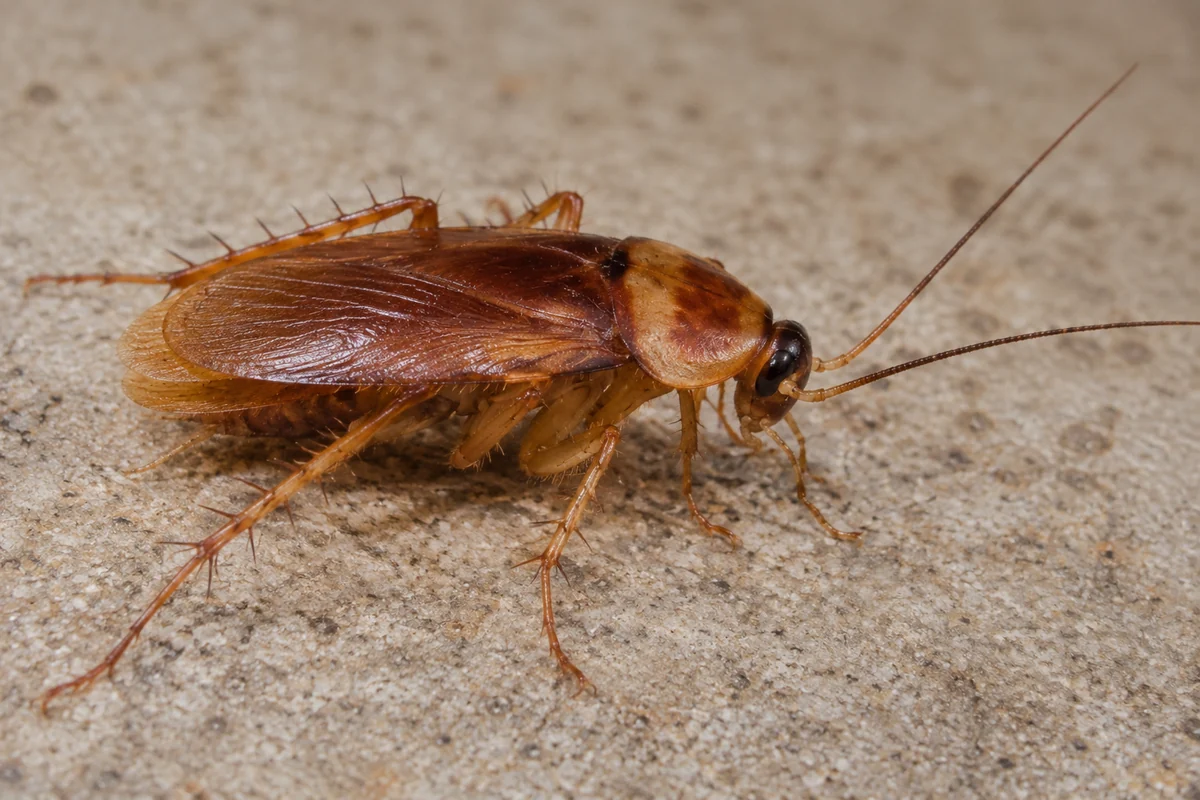
- Scientific Name: Blattella germanica
- Family: Ectobiidae
- Habitat: Warm indoor spaces, especially kitchens and bathrooms
- Range: Worldwide
- Size and Weight: About 1.1–1.6 cm long
- Diet: Food scraps, starches, grease, and many other foods
- Lifespan: About 100–200 days
- Conservation Status: Not threatened
- Key Fact: The German cockroach is one of the most common indoor cockroach pests, and females carry their egg case until shortly before it hatches.
Giant Weta

- Scientific Name: Deinacrida spp.
- Family: Anostostomatidae
- Habitat: Forests, alpine scree, and islands
- Range: New Zealand
- Size and Weight: Body up to about 8–10 cm long; the heaviest females weigh about 70 g
- Diet: Leaves, fruit, flowers, and some insects
- Lifespan: About 1–2 years
- Conservation Status: Varies by species; several are threatened
- Key Fact: Giant wetas are among the heaviest insects in the world, and introduced rats have driven many species toward extinction on the mainland.
Glowworm

- Scientific Name: Arachnocampa luminosa (New Zealand glowworm example)
- Family: Keroplatidae
- Habitat: Caves and damp, sheltered forest
- Range: New Zealand
- Size and Weight: Larvae about 3 cm long
- Diet: Small flying insects caught in sticky threads
- Lifespan: The larval stage lasts about 6–12 months; adults live only a few days
- Conservation Status: Not assessed
- Key Fact: Glowworm larvae make blue-green light to lure prey, and the name “glowworm” is also used for the larvae of some fireflies.
Goliath Beetle

- Scientific Name: Goliathus spp.
- Family: Scarabaeidae
- Habitat: Tropical forests
- Range: Central and West Africa
- Size and Weight: Adults about 6–11 cm long
- Diet: Adults eat sap and fruit; larvae eat decaying matter
- Lifespan: Adults live a few months; the larval stage lasts longer
- Conservation Status: Not assessed
- Key Fact: Goliath beetles are among the largest and heaviest insects in the world.
Grasshopper
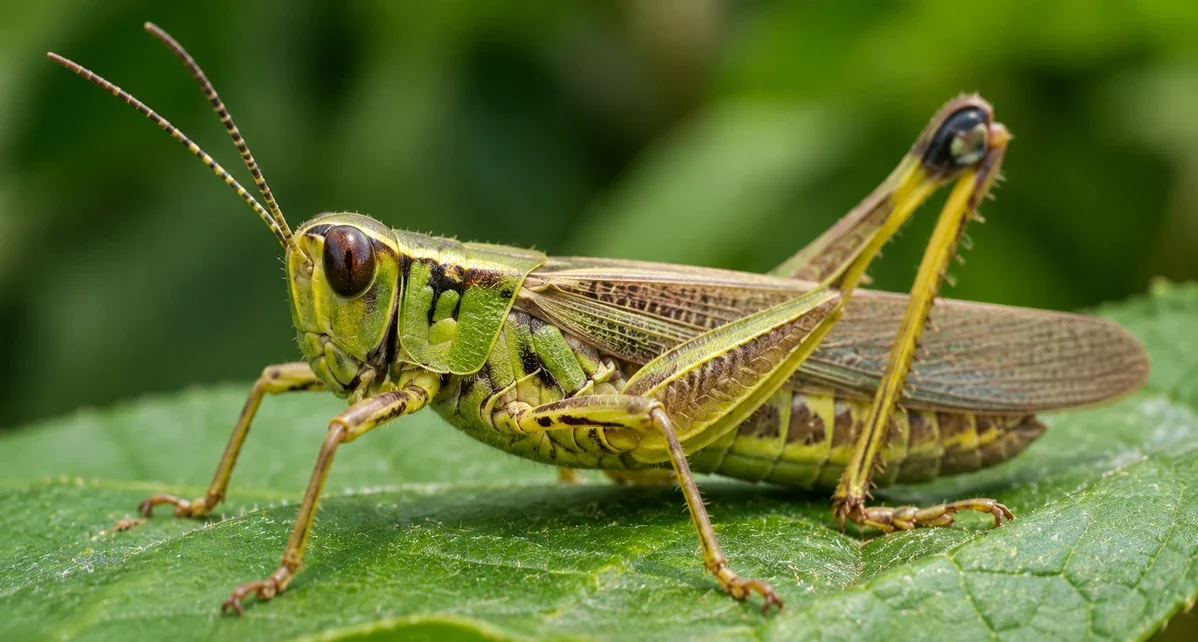
- Scientific Name: Caelifera
- Family: Acrididae and related families
- Habitat: Grasslands, meadows, and deserts
- Range: Worldwide, except polar regions
- Size and Weight: About 1–7 cm long, depending on species
- Diet: Grasses, leaves, and crops
- Lifespan: Usually about 1 year, with adults living weeks to months
- Conservation Status: Varies by species
- Key Fact: Grasshoppers launch themselves with powerful hind legs and make chirping sounds by rubbing their legs against their wings.
Gypsy Moth

- Scientific Name: Lymantria dispar
- Family: Erebidae
- Habitat: Forests and woodlands, especially oak
- Range: Native to Europe and Asia; introduced to North America
- Size and Weight: Wingspan about 3.7–6.6 cm
- Diet: Caterpillars eat leaves from oak and many other trees; adults do not feed
- Lifespan: About 1 year for the full life cycle; adult moths live about a week
- Conservation Status: Not threatened; considered a serious forest pest
- Key Fact: This moth is now also called the spongy moth, and its caterpillars can strip trees of their leaves in outbreak years.
Prehistoric Animals That Start With G
Prehistoric animals lived long before humans and are known mainly from fossils. These three G animals include a giant flightless bird, the largest known ape, and a powerful early tyrannosaur.
Gastornis
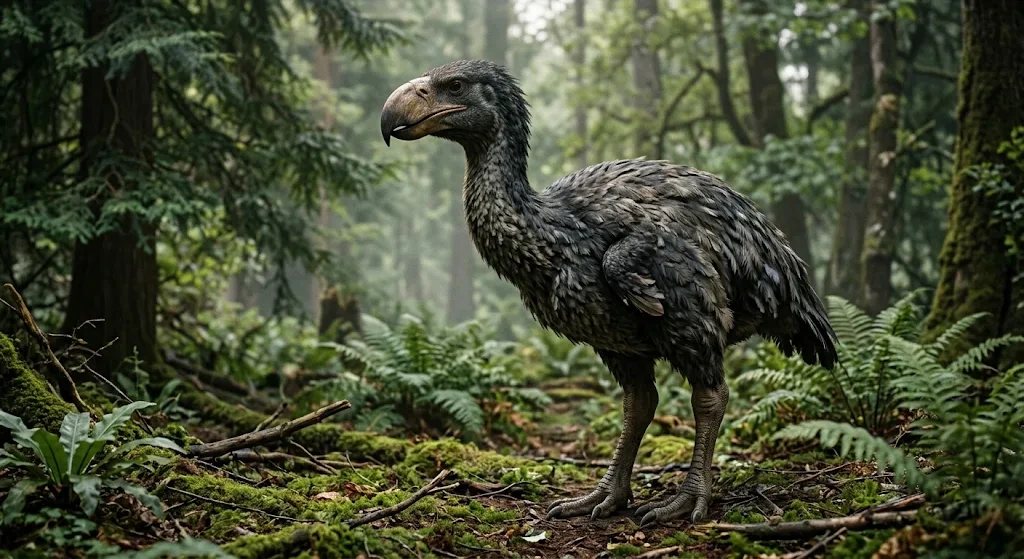
- Scientific Name: Gastornis giganteus
- Family: Gastornithidae
- Habitat: Warm forests of the Paleocene and Eocene
- Range: Europe and North America
- Size and Weight: About 2 m tall; estimated at more than 100 kg
- Diet: Probably plants, though it was once thought to eat meat; scientists still debate this
- Lifespan: Unknown
- Conservation Status: Extinct
- Key Fact: Gastornis was a giant flightless bird that lived roughly 55 to 45 million years ago.
Gigantopithecus
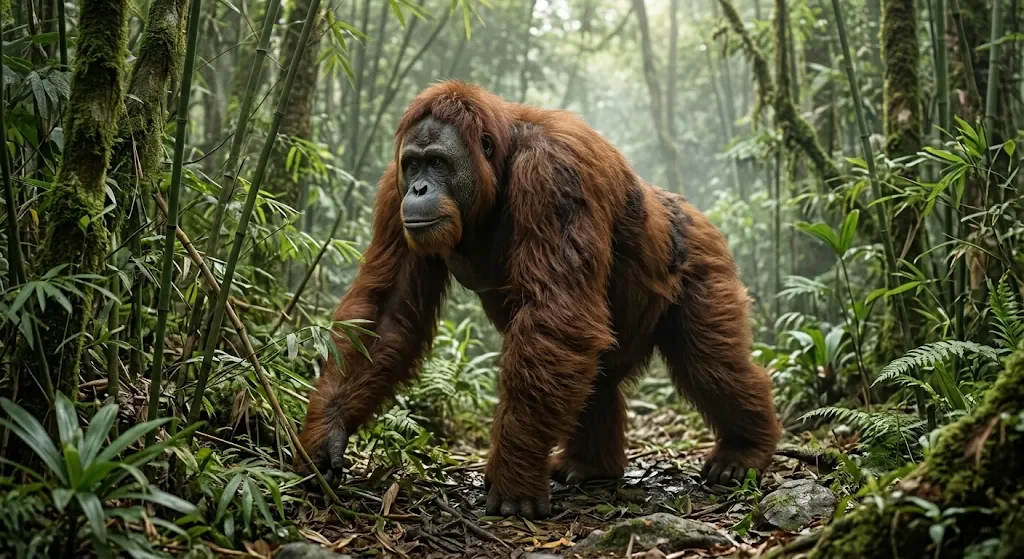
- Scientific Name: Gigantopithecus blacki
- Family: Hominidae
- Habitat: Subtropical forests
- Range: Southern China and parts of Southeast Asia
- Size and Weight: Estimated at about 2–3 m tall and 200–300 kg, based on jaws and teeth
- Diet: Mainly plants, including fruit
- Lifespan: Unknown
- Conservation Status: Extinct
- Key Fact: Gigantopithecus is the largest known ape, and scientists know it mainly from teeth and jawbones.
Gorgosaurus
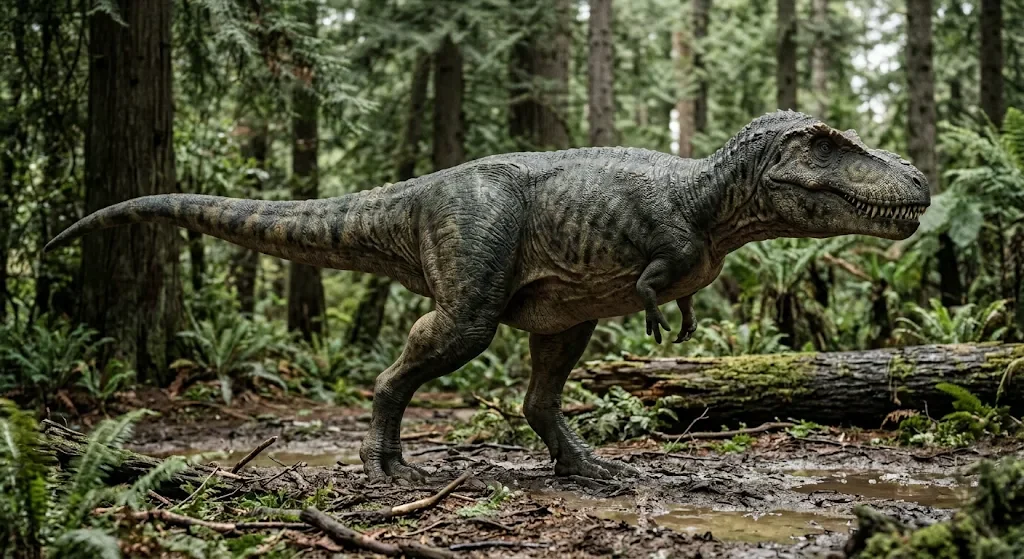
- Scientific Name: Gorgosaurus libratus
- Family: Tyrannosauridae
- Habitat: Late Cretaceous floodplains and coastal plains
- Range: Western North America, especially Alberta, Canada
- Size and Weight: About 8–9 m long; estimated at roughly 2–3 tonnes
- Diet: Meat
- Lifespan: Unknown
- Conservation Status: Extinct
- Key Fact: Gorgosaurus was a tyrannosaur that lived about 76 million years ago, earlier than Tyrannosaurus rex, and its name means “fierce lizard.”
Mythical Animals That Start With G
Mythical creatures come from legends and folklore, not from the living world. People invented them to explain fears, mysteries, and the natural world. None of these animals has ever been proven to exist.
Griffin
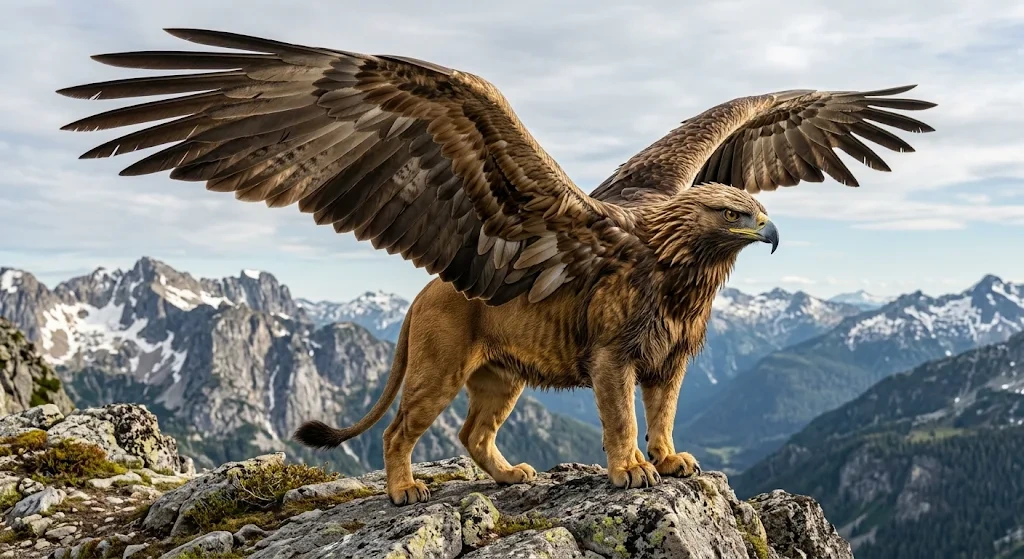
- Scientific Name: None; mythological creature
- Family: None; Greek and Near Eastern mythology
- Habitat: Mythological mountains, often guarding gold
- Range: Ancient Greek, Persian, and Near Eastern art and legend
- Size and Weight: Depicted with the head and wings of an eagle and the body of a lion
- Diet: Varies by story
- Lifespan: Mythological
- Conservation Status: Mythical; not a real animal
- Key Fact: The griffin combines the king of birds and the king of beasts, and it is a common figure in heraldry.
Gorgon

- Scientific Name: None; mythological creature
- Family: None; Greek mythology
- Habitat: The far edges of the world in Greek myth
- Range: Ancient Greek mythology
- Size and Weight: Depicted as a female monster with snakes for hair
- Diet: Varies by story
- Lifespan: Mythological
- Conservation Status: Mythical; not a real animal
- Key Fact: The best-known gorgon is Medusa, whose gaze turned people to stone, and the hero Perseus defeated her.
Garuda
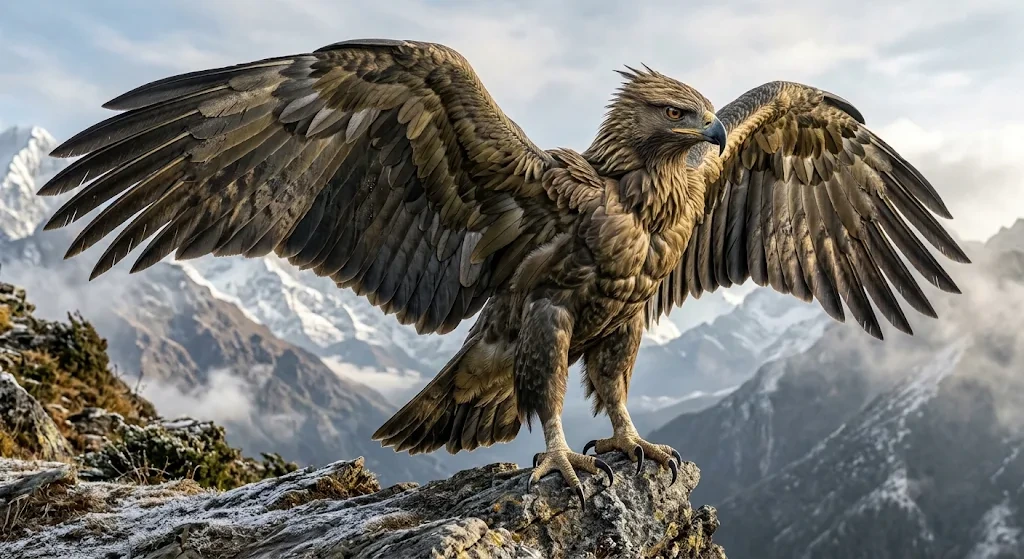
- Scientific Name: None; mythological creature
- Family: None; Hindu and Buddhist mythology
- Habitat: The heavens in myth
- Range: South and Southeast Asian mythology
- Size and Weight: Depicted as a huge, powerful bird-like being
- Diet: Snakes in many stories
- Lifespan: Mythological
- Conservation Status: Mythical; not a real animal
- Key Fact: In Hindu tradition, Garuda is the mount of the god Vishnu, and he appears on the national emblems of Indonesia and Thailand.
Gullinbursti

- Scientific Name: None; mythological creature
- Family: None; Norse mythology
- Habitat: The realm of the gods in Norse myth
- Range: Norse mythology
- Size and Weight: Depicted as a boar with golden bristles
- Diet: Varies by story
- Lifespan: Mythological
- Conservation Status: Mythical; not a real animal
- Key Fact: Gullinbursti, whose name means “golden bristles,” was made by dwarves and became the boar of the god Freyr, and its glowing bristles lit up the dark.
Frequently Asked Questions
Why are the gorilla and goose missing from some lists of G animals?
“Gorilla” and “goose” are group names, not full species names. The two gorilla species are the eastern gorilla and the western gorilla, and neither full name starts with G. Only two goose species, the greylag goose and the greater white-fronted goose, have full names that start with G. Lists that count only full species names leave these animals out, while lists that use everyday names include them.
What is the biggest animal that starts with the letter G?
It depends on how you measure. The gray whale is the heaviest G animal in this guide, at up to about 40,000 kg. The giraffe is the tallest land animal, and the gorilla is the largest living primate. The gaur is the largest wild cattle species, and the giant squid can reach about 12–13 m long, including its tentacles.
Which G animals live the longest?
The Greenland shark is the longest-lived vertebrate known, with an estimated lifespan of at least 250 years. The Galápagos tortoise can live more than 100 years, and so can the geoduck and the giant clam. The great white shark may live about 70 years.
Which G animals are critically endangered?
The gharial, great hammerhead shark, and great Indian bustard are Critically Endangered, and so are both gorilla species. Many gibbon species, and some giraffe species, are Endangered or Critically Endangered. Conservation work has helped animals like the golden lion tamarin, but habitat loss, hunting, and fishing still threaten many G animals.
Which G animals glow or make their own light?
The glowworm uses chemical light to lure prey into sticky threads. The gulper eel has a light-producing organ at the tip of its tail. Giant squid and other deep-sea animals live where almost no sunlight reaches, so light and sight matter in different ways.
Which G animals have names that mislead?
Several do. The guinea pig is not a pig and does not come from Guinea, because it was domesticated in the Andes of South America. A glowworm is not always a worm, since the name is used for the larvae of some insects. The golden jackal is not closely related to Africa’s other jackals. The giant panda is a bear, and the gray fox can climb trees.
Which G animals can be dangerous to people?
The Gaboon viper and green mamba are venomous snakes. The Gila monster is a venomous lizard whose bite is painful but rarely deadly. The great white shark, grizzly bear, and gorilla are powerful wild animals. Most of these animals avoid people when given space, so watching from a safe distance is always best.