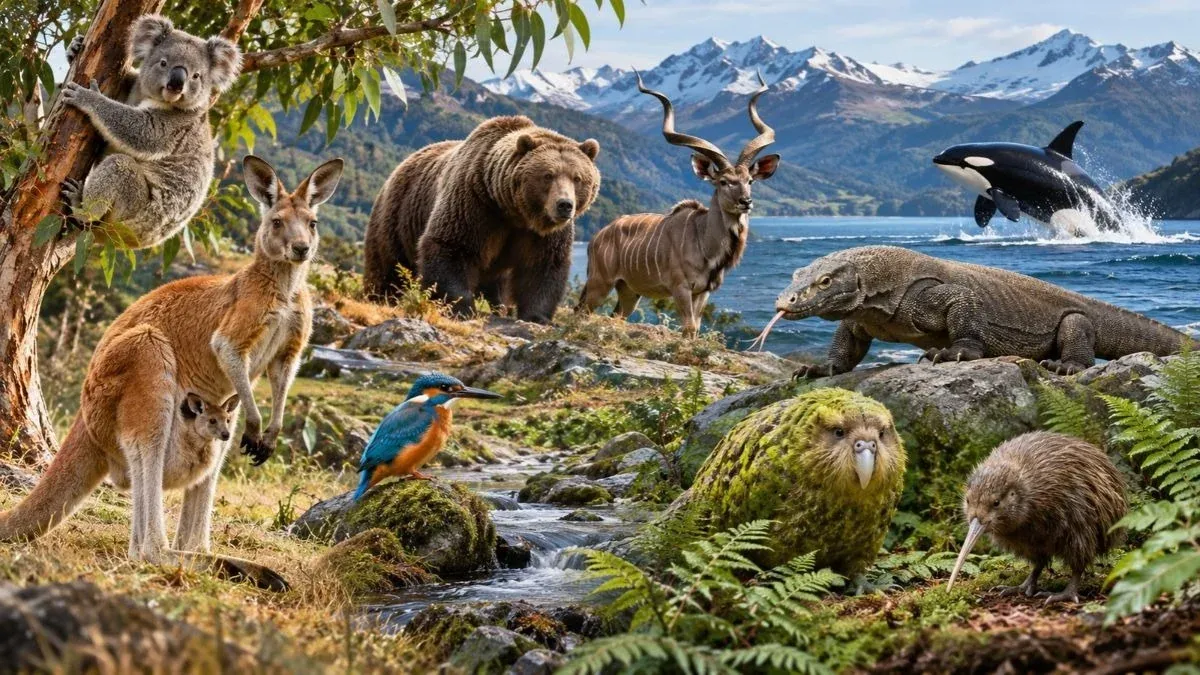
Animals that start with K include some of the world’s most fascinating wildlife. This diverse group features familiar mammals like kangaroos, koalas, and Kodiak bears, alongside unusual creatures such as kinkajous, Komodo dragons, and kangaroo rats.
This guide explores interesting K animals from different parts of the world.
From Australian grasslands and African savannas to tropical rainforests, snowy mountains, and deep oceans, each animal has unique characteristics and animal adaptations worth discovering.
Key Takeaways
- Kangaroos use powerful hind legs to travel across open landscapes.
- Koalas depend heavily on eucalyptus leaves for food and shelter.
- Komodo dragons are the largest living lizards.
- Kākāpōs are rare, flightless parrots native to New Zealand.
- Killer whales are the largest members of the dolphin family.
- King cobras are the world’s longest venomous snakes.
- Kinkajous use their long tongues to collect nectar and fruit.
- Many K animals have specialized adaptations that help them survive in different environments.
Mammals That Start With K
Mammals beginning with K include powerful marsupials, large bears, small desert rodents, and fascinating rainforest animals. These species belong to the broader group of vertebrate animals, which have backbones and well-developed internal skeletons.
These species occupy different environments, including grasslands and open plains where grassland animals have developed unique adaptations for finding food, avoiding predators, and surviving in the wild.
1. Kangaroo
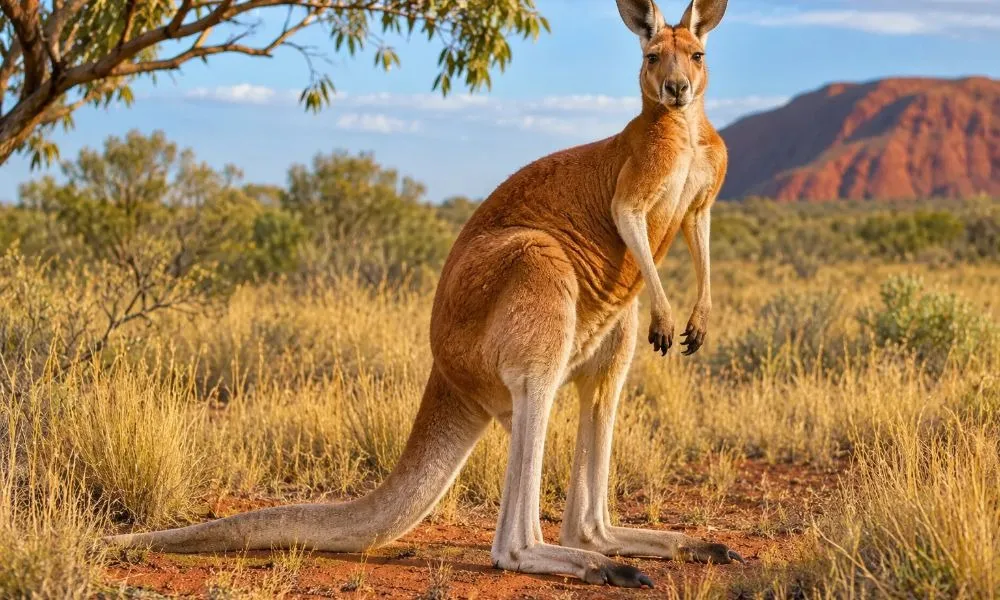
Scientific Name: Osphranter rufus (Red Kangaroo)
Family: Macropodidae
Habitat: Grasslands, scrublands, and dry open plains
Range: Australia
Size and Weight: About 1.3–1.6 m in head-and-body length; males can weigh up to 90 kg
Diet: Grasses, herbs, and shrubs
Lifespan: Around 8–12 years in the wild
Conservation Status: Least Concern
Key Fact: Red kangaroos are the largest living marsupials. Their powerful hind legs allow them to cover long distances with impressive jumps. They also use their muscular tails for balance while standing and moving.
2. Koala
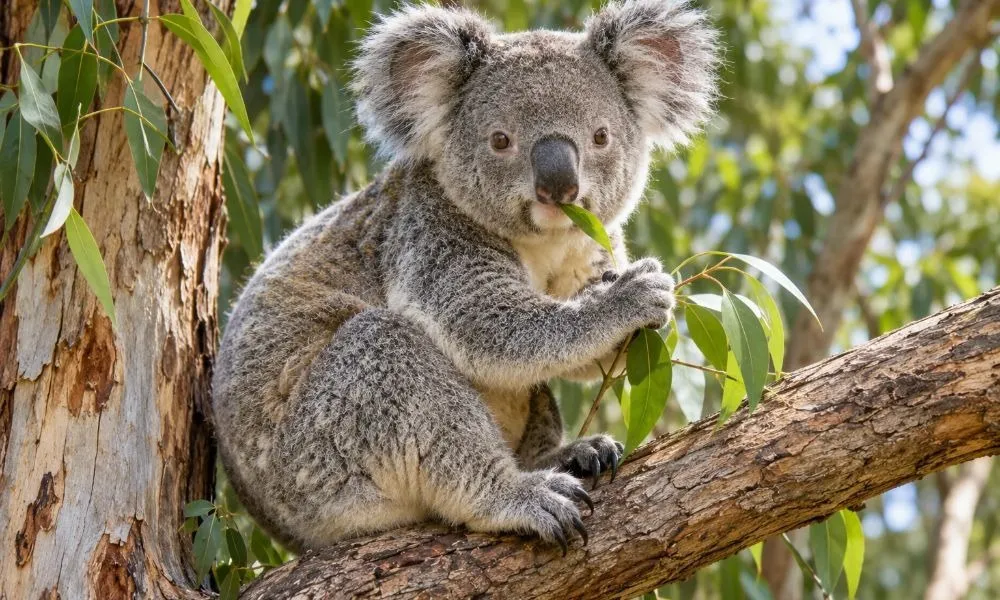
Scientific Name: Phascolarctos cinereus
Family: Phascolarctidae
Habitat: Eucalyptus forests and woodlands
Range: Eastern and southeastern Australia
Size and Weight: About 60–85 cm long; roughly 4–15 kg
Diet: Primarily eucalyptus leaves
Lifespan: Around 10–15 years in the wild
Conservation Status: Vulnerable
Key Fact: Koalas spend much of their lives resting in trees. Their specialized digestive systems help them process eucalyptus leaves, which contain chemicals that many other animals cannot tolerate. They can sleep for approximately 18–20 hours daily.
3. Kinkajou

Scientific Name: Potos flavus
Family: Procyonidae
Habitat: Tropical rainforests and dense woodland canopies
Range: Central America and northern South America
Size and Weight: About 40–60 cm long, excluding the tail; roughly 1.5–4.5 kg
Diet: Fruit, nectar, flowers, and occasional insects
Lifespan: Around 20–25 years in captivity
Conservation Status: Least Concern
Key Fact: Kinkajous are nocturnal mammals with long, prehensile tails. They use these tails to grip branches while climbing through trees. Their unusually long tongues help them collect nectar from flowers and reach fruit.
4. Kodiak Bear
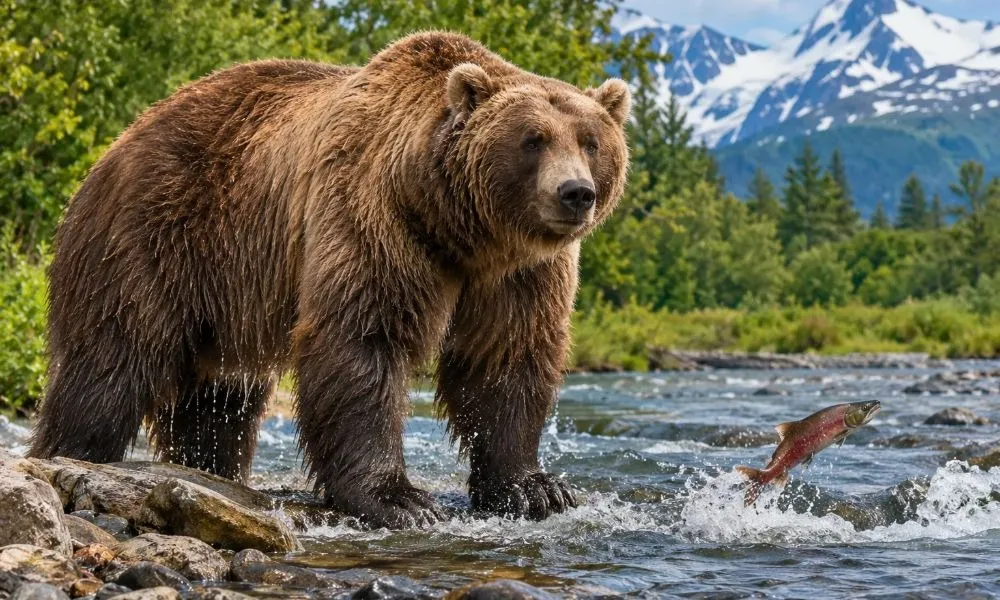
Scientific Name: Ursus arctos middendorffi
Family: Ursidae
Habitat: Coastal forests, mountains, and river valleys
Range: Kodiak Archipelago, Alaska, USA
Size and Weight: Approximately 2–3 m long; large males can exceed 600 kg
Diet: Salmon, berries, grasses, roots, and small animals
Lifespan: Around 20–25 years in the wild
Conservation Status: Not separately assessed from the brown bear species
Key Fact: Kodiak bears are among the largest bears in the world. Their impressive size is supported by an abundant food supply, particularly salmon during seasonal spawning runs. Their thick coats also help them withstand Alaska’s cold climate.
5. Kudu
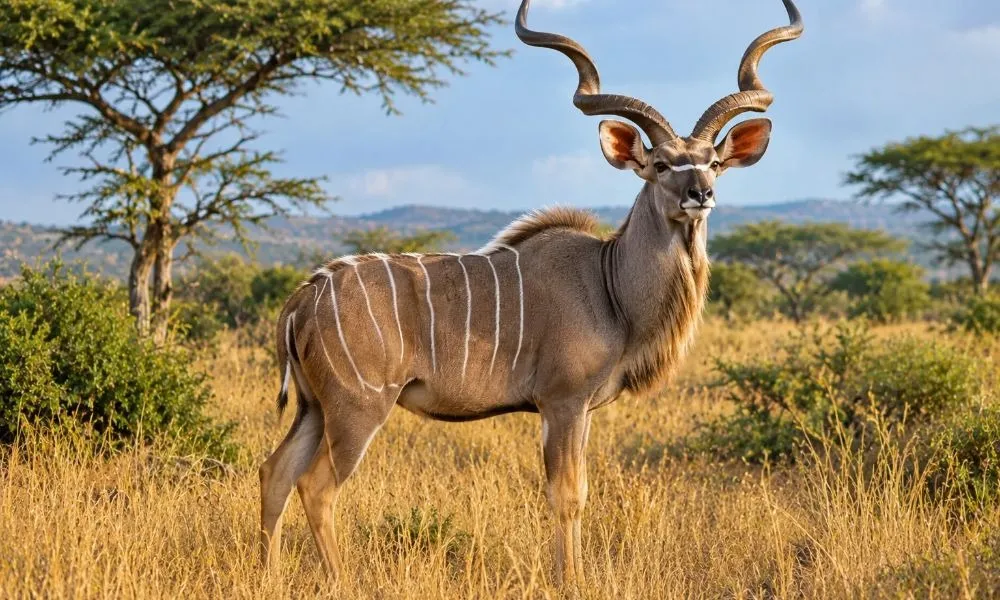
Scientific Name: Tragelaphus strepsiceros (Greater Kudu)
Family: Bovidae
Habitat: Woodland, savanna, and scrubland
Range: Eastern and southern Africa
Size and Weight: About 1.8–2.5 m long; approximately 120–315 kg
Diet: Leaves, shoots, fruits, and grasses
Lifespan: Around 7–10 years in the wild
Conservation Status: Least Concern
Key Fact: Male greater kudus have spectacular spiral-shaped horns that can grow extremely long. These horns help establish dominance during competition with other males. Their brown coats and white markings provide camouflage among woodland vegetation.
6. Kangaroo Rat
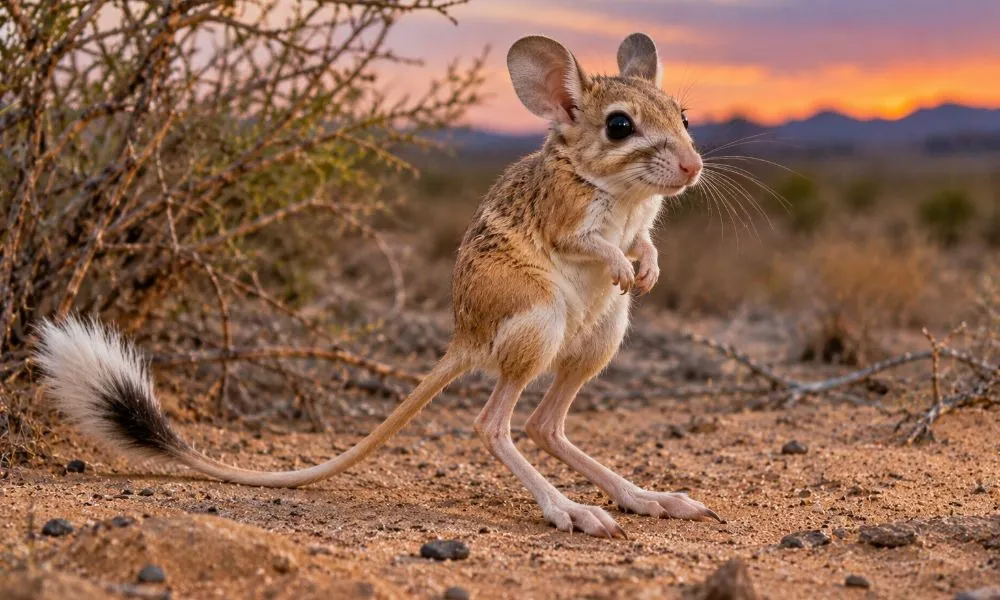
Scientific Name: Dipodomys species
Family: Heteromyidae
Habitat: Sandy deserts and dry grasslands
Range: Western and southwestern United States and Mexico
Size and Weight: Approximately 10–18 cm long, excluding the tail; around 35–180 g, depending on species
Diet: Seeds and occasional plant material or insects
Lifespan: Around 2–5 years in the wild
Conservation Status: Varies by species
Key Fact: Kangaroo rats are remarkably adapted to desert life. They obtain much of their water from food and metabolic processes. Their powerful hind legs help them jump quickly across sandy ground while escaping predators.
7. Klipspringer
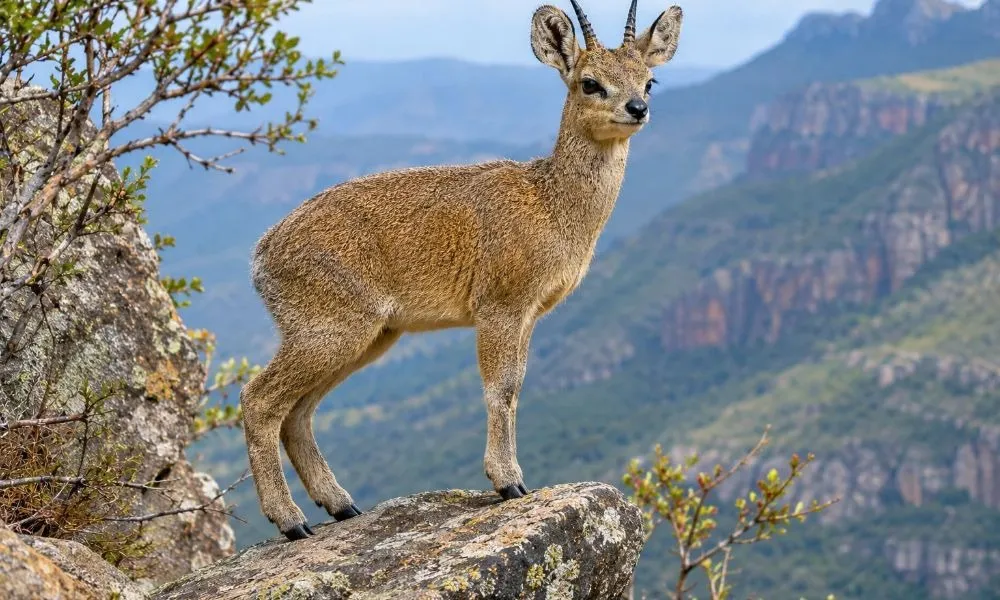
Scientific Name: Oreotragus oreotragus
Family: Bovidae
Habitat: Rocky hills, cliffs, and mountainous terrain
Range: Eastern and southern Africa
Size and Weight: About 75–115 cm long; roughly 8–18 kg
Diet: Leaves, flowers, fruits, and other vegetation
Lifespan: Around 10–15 years
Conservation Status: Least Concern
Key Fact: Klipspringers are small antelopes with specially adapted hooves. They can balance on narrow rocky surfaces and move confidently across steep cliffs. Their remarkable agility helps them escape predators in mountainous habitats.
Birds That Start With K
Birds beginning with K include flightless island species, intelligent parrots, colorful forest birds, and impressive marine hunters. These species share interesting characteristics with other flightless birds found in different parts of the world.
Many have developed specialized behaviors that help them survive in isolated or challenging environments.
8. Kingfisher

Scientific Name: Alcedo atthis (Common Kingfisher)
Family: Alcedinidae
Habitat: Rivers, lakes, streams, and wetlands
Range: Europe, Asia, and parts of North Africa
Size and Weight: About 16–17 cm long; roughly 30–40 g
Diet: Small fish, aquatic insects, and crustaceans
Lifespan: Around 2–5 years in the wild
Conservation Status: Least Concern
Key Fact: Kingfishers are famous for their bright blue and orange feathers. They watch for prey from branches before diving rapidly into water. Their long, pointed bills help them capture small fish with remarkable precision.
9. Kākāpō
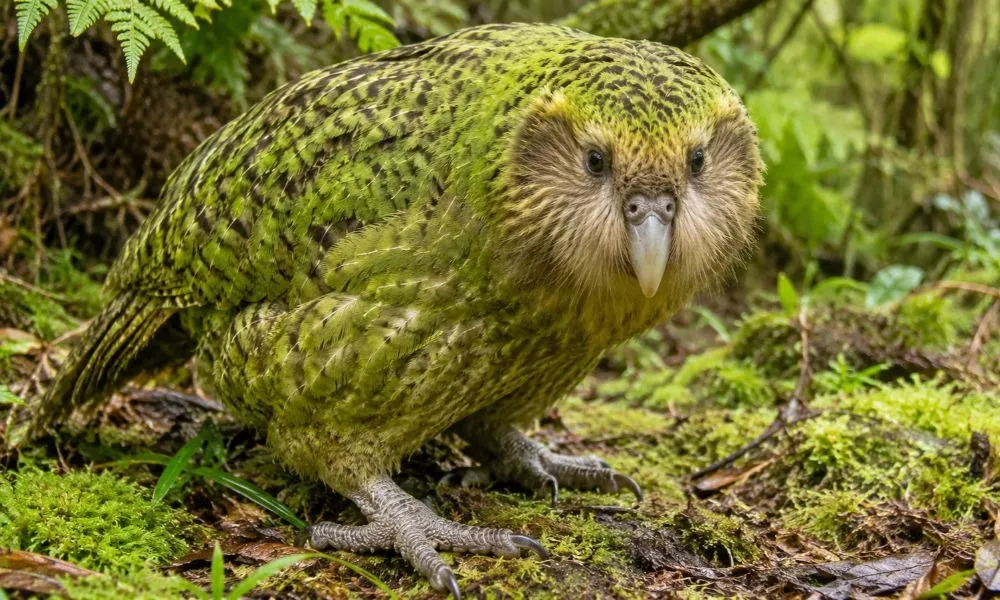
Scientific Name: Strigops habroptilus
Family: Strigopidae
Habitat: Protected forests and island sanctuaries
Range: New Zealand
Size and Weight: About 58–64 cm long; males can weigh up to 4 kg
Diet: Native plants, seeds, fruits, and leaves
Lifespan: Potentially 60–90 years
Conservation Status: Critically Endangered
Key Fact: The kākāpō is a flightless, nocturnal parrot with an owl-like face. It is the world’s heaviest parrot and has an unusual breeding system called lekking. Intensive conservation programs protect its extremely small population.
10.Kea

Scientific Name: Nestor notabilis
Family: Nestoridae
Habitat: Alpine forests, mountains, and subalpine grasslands
Range: South Island, New Zealand
Size and Weight: About 46–50 cm long; roughly 700–1,000 g
Diet: Roots, seeds, fruits, insects, and carrion
Lifespan: Around 15–20 years in the wild
Conservation Status: Endangered
Key Fact: Keas are highly intelligent mountain parrots. They investigate unfamiliar objects, solve problems, and use their strong curved bills to explore their surroundings. Their olive-green feathers hide flashes of bright orange beneath their wings.
11. Kiwi
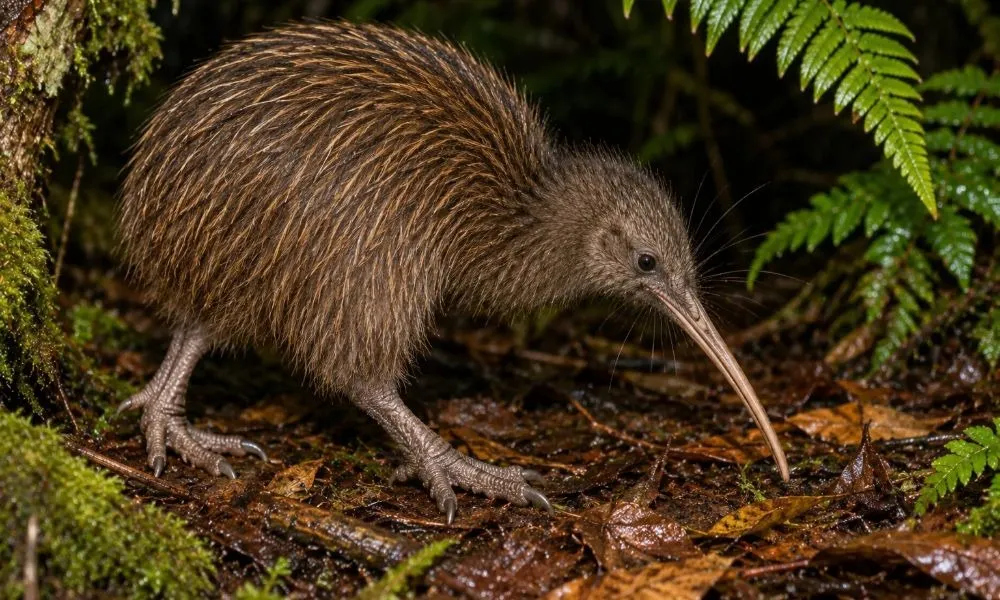
Scientific Name: Apteryx species
Family: Apterygidae
Habitat: Forests, scrublands, and grassland habitats
Range: New Zealand
Size and Weight: Approximately 25–55 cm long, depending on species
Diet: Earthworms, insects, larvae, and other small invertebrates
Lifespan: Around 25–50 years
Conservation Status: Varies by species
Key Fact: Kiwis are unusual flightless birds with loose, hair-like feathers and strong legs. Unlike most birds, they have nostrils near the tip of their long bills. Their excellent sense of smell helps them locate food beneath the soil.
12. Kookaburra
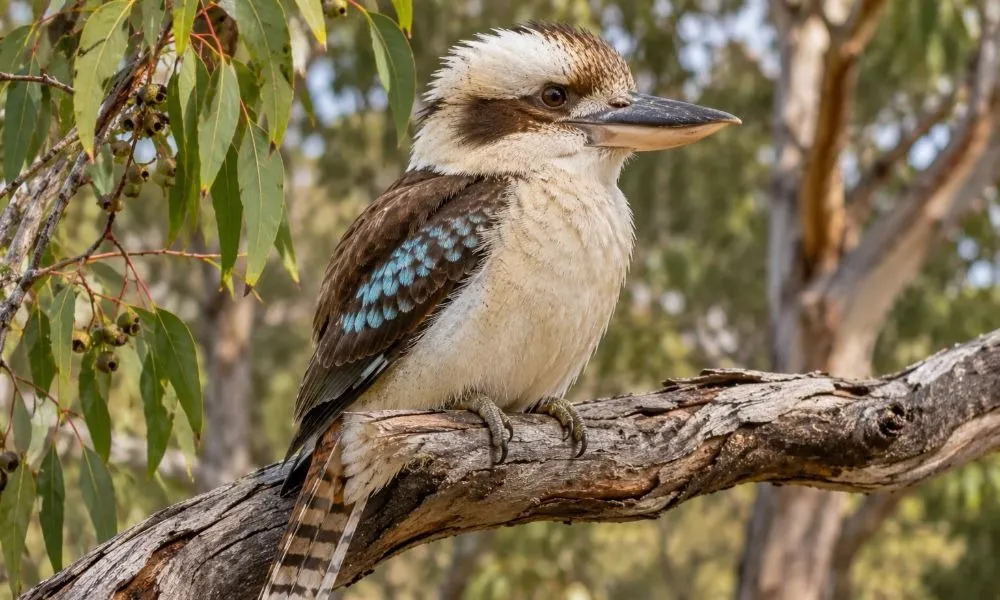
Scientific Name: Dacelo novaeguineae (Laughing Kookaburra)
Family: Alcedinidae
Habitat: Open forests, woodlands, and suburban gardens
Range: Eastern Australia
Size and Weight: About 39–45 cm long; roughly 300–450 g
Diet: Insects, reptiles, small mammals, and birds
Lifespan: Around 10–15 years in the wild
Conservation Status: Least Concern
Key Fact: The laughing kookaburra is famous for its distinctive call, which sounds remarkably like human laughter. Family groups often call together, particularly around sunrise and sunset. It usually hunts by watching from a branch before swooping down on prey.
13. Kagu
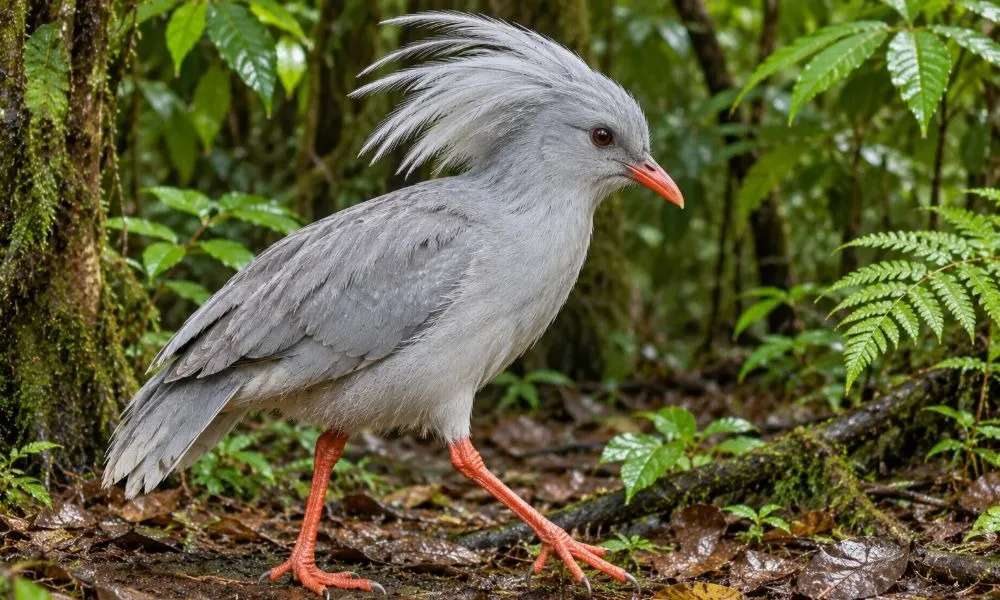
Scientific Name: Rhynochetos jubatus
Family: Rhynochetidae
Habitat: Dense tropical forests and humid woodland
Range: New Caledonia
Size and Weight: About 55 cm long; roughly 700–1,100 g
Diet: Earthworms, insects, spiders, and small invertebrates
Lifespan: Can exceed 20 years in captivity
Conservation Status: Endangered
Key Fact: The kagu is a distinctive, nearly flightless bird with pale gray feathers and a prominent crest. It uses its long legs to search through forest leaf litter for food. Its rarity makes habitat protection especially important.
Reptiles That Start With K
Reptiles beginning with K include powerful predators and fascinating smaller species. They occupy tropical forests, deserts, and rocky environments, using specialized features to hunt, hide, and survive.
14. Komodo Dragon

Scientific Name: Varanus komodoensis
Family: Varanidae
Habitat: Tropical forests, savannas, and dry grasslands
Range: Indonesian islands, including Komodo, Rinca, and Flores
Size and Weight: About 1.8–3 m long; roughly 70–136 kg
Diet: Deer, wild pigs, smaller reptiles, and carrion
Lifespan: Up to 30 years
Conservation Status: Endangered
Key Fact: The Komodo dragon is the largest living lizard on Earth. It has powerful claws, serrated teeth, and a highly developed sense of smell. Its forked tongue helps detect chemical signals from the environmen
15.King Cobra
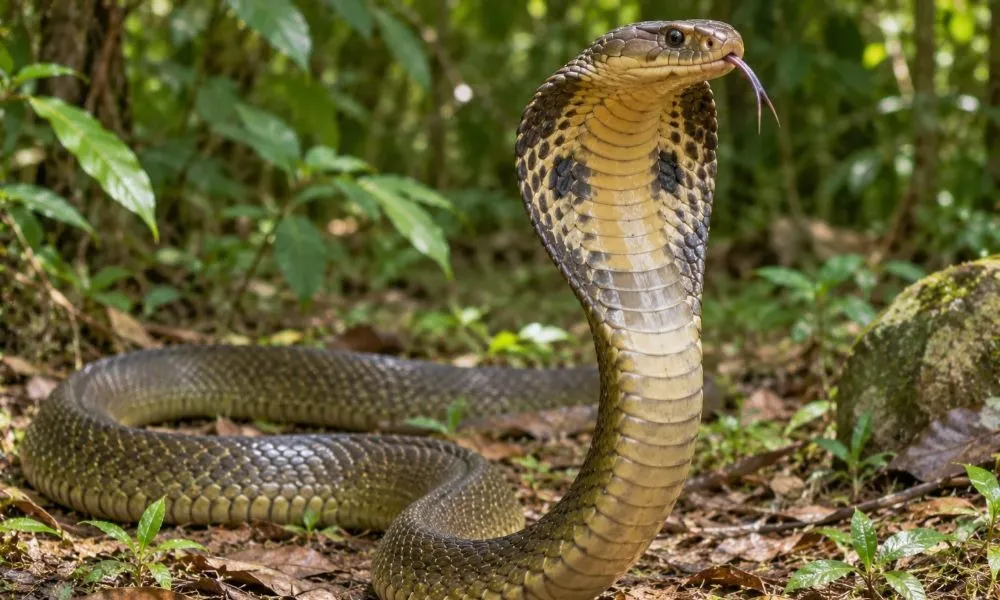
Scientific Name: Ophiophagus hannah
Family: Elapidae
Habitat: Tropical forests, bamboo forests, and wetlands
Range: South and Southeast Asia
Size and Weight: Usually 3–4 m long; sometimes exceeding 5 m
Diet: Primarily other snakes
Lifespan: Around 20 years in captivity
Conservation Status: Vulnerable
Key Fact: The king cobra is the world’s longest venomous snake. When threatened, it can raise the front portion of its body and spread its distinctive hood. Its scientific name means snake-eater, reflecting its specialized diet.
16. Kenyan Sand Boa

Scientific Name: Eryx colubrinus
Family: Boidae
Habitat: Dry savannas, sandy deserts, and scrublands
Range: Eastern Africa
Size and Weight: Approximately 40–90 cm long
Diet: Small rodents, lizards, and other small animals
Lifespan: Around 15–20 years in captivity
Conservation Status: Least Concern
Key Fact: The Kenyan sand boa spends much of its time beneath loose sand. Its smooth body and blunt head help it move through sandy environments. It is a nonvenomous constrictor that captures small prey.
17. Kuhl’s Flying Gecko
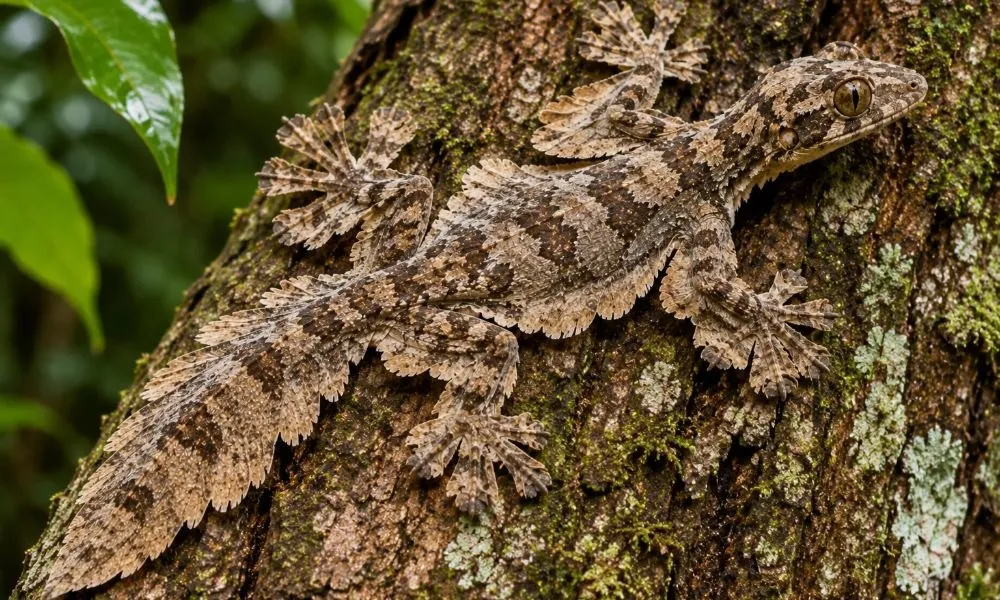
Scientific Name: Gekko kuhli
Family: Gekkonidae
Habitat: Tropical rainforests and humid woodland
Range: Southeast Asia
Size and Weight: Approximately 15–20 cm long, including the tail
Diet: Insects and other small invertebrates
Lifespan: Around 5–10 years in captivity
Conservation Status: Not separately established in all assessments
Key Fact: Kuhl’s flying gecko has skin flaps along its body, legs, and tail. These structures help it glide between trees and provide camouflage against tree bark. Its flattened body also helps it remain hidden among branches.
Amphibians That Start With K
Amphibians beginning with K include species that depend on moist environments and freshwater habitats. Their sensitive skin and specialized life cycles make them important parts of natural ecosystems.
18. Kihansi Spray Toad
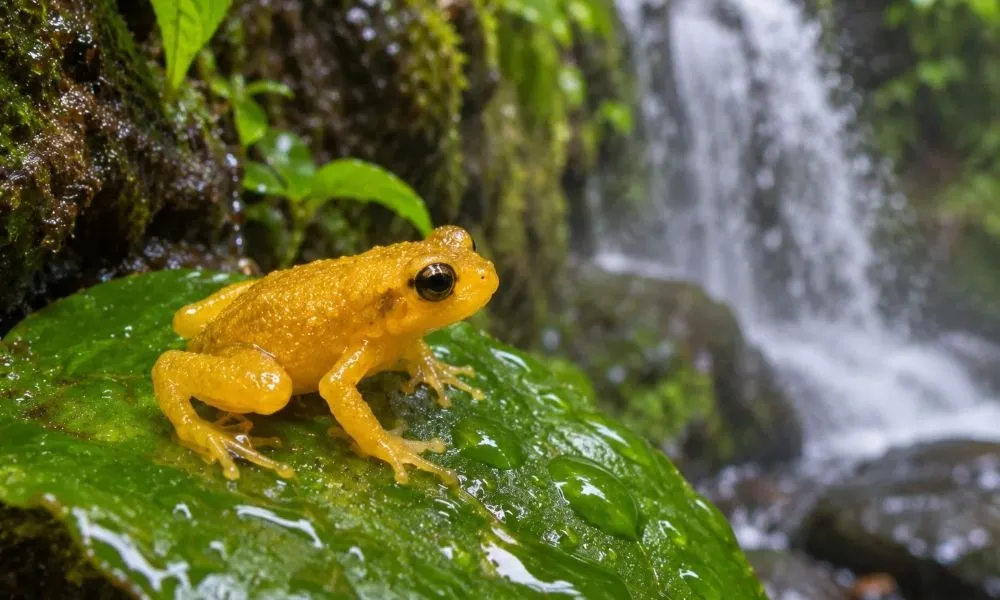
Scientific Name: Nectophrynoides asperginis
Family: Bufonidae
Habitat: Moist spray zones near waterfalls
Range: Kihansi Gorge, Tanzania
Size and Weight: Approximately 1.5–2.5 cm long
Diet: Tiny insects and other small invertebrates
Lifespan: Not well documented in the wild
Conservation Status: Extinct in the Wild
Key Fact: The Kihansi spray toad is a tiny amphibian that originally lived in the constant water spray of a Tanzanian waterfall. Changes to its natural water supply caused a dramatic population decline. Conservation breeding programs have helped establish populations outside its original habitat.
Fish That Start With K
Fish beginning with K include colorful freshwater species, deep-sea predators, and migratory animals. Their different body structures and feeding adaptations help them survive in rivers, lakes, and oceans.
19. Koi Fish

Scientific Name: Cyprinus carpio (domesticated varieties)
Family: Cyprinidae
Habitat: Ponds and freshwater ornamental lakes
Range: Domesticated worldwide; developed from carp in East Asia
Size and Weight: Commonly 60–90 cm long; weight varies considerably
Diet: Algae, insects, plant material, and small aquatic organisms
Lifespan: Often 20–35 years with proper care
Conservation Status: Domesticated ornamental varieties
Key Fact: Koi fish are famous for their beautiful color patterns, including white, red, orange, yellow, and black. They are selectively bred ornamental carp and can live for decades in well-maintained ponds.
20. King Salmon
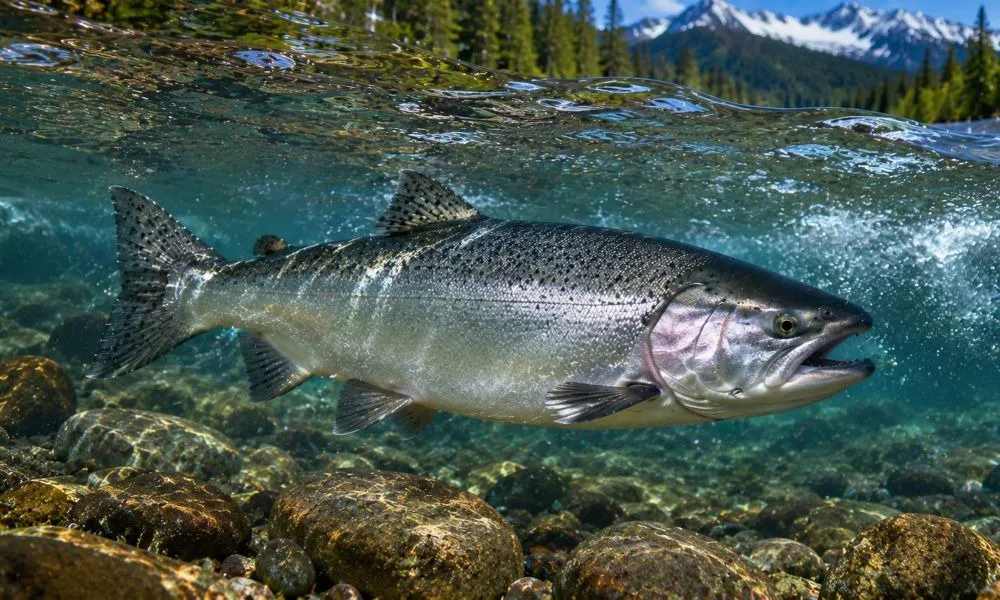
Scientific Name: Oncorhynchus tshawytscha
Family: Salmonidae
Habitat: North Pacific Ocean, rivers, and freshwater streams
Range: North Pacific coastal regions of North America and Asia
Size and Weight: About 70–150 cm long; commonly 4–23 kg
Diet: Smaller fish, squid, and crustaceans
Lifespan: Around 3–7 years
Conservation Status: Varies by population
Key Fact: King salmon, also called Chinook salmon, are the largest Pacific salmon species. They migrate from the ocean into freshwater rivers to reproduce. Their remarkable migration can involve traveling hundreds of miles upstream.
21. Kitefin Shark
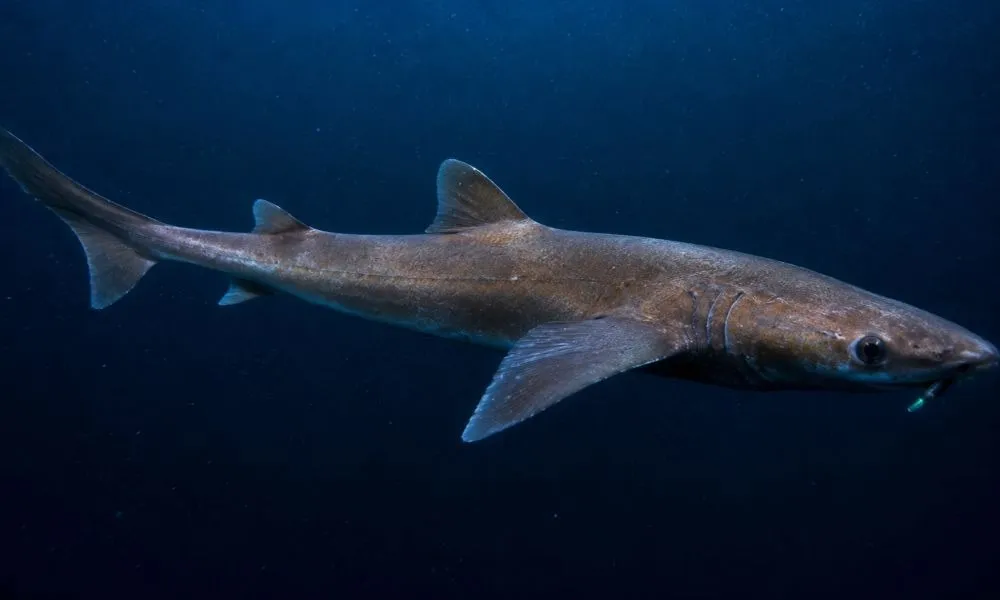
Scientific Name: Dalatias licha
Family: Dalatiidae
Habitat: Deep ocean waters and continental slopes
Range: Temperate and tropical oceans worldwide
Size and Weight: Can reach approximately 1.8 m long
Diet: Fish, squid, crustaceans, and other marine animals
Lifespan: Not well established
Conservation Status: Vulnerable
Key Fact: The kitefin shark is a deep-water species with a relatively small body and strong jaws. It has specialized light-producing organs called photophores, which create a faint glow. This ability helps it blend into the dim ocean environment.
22. Knifefish
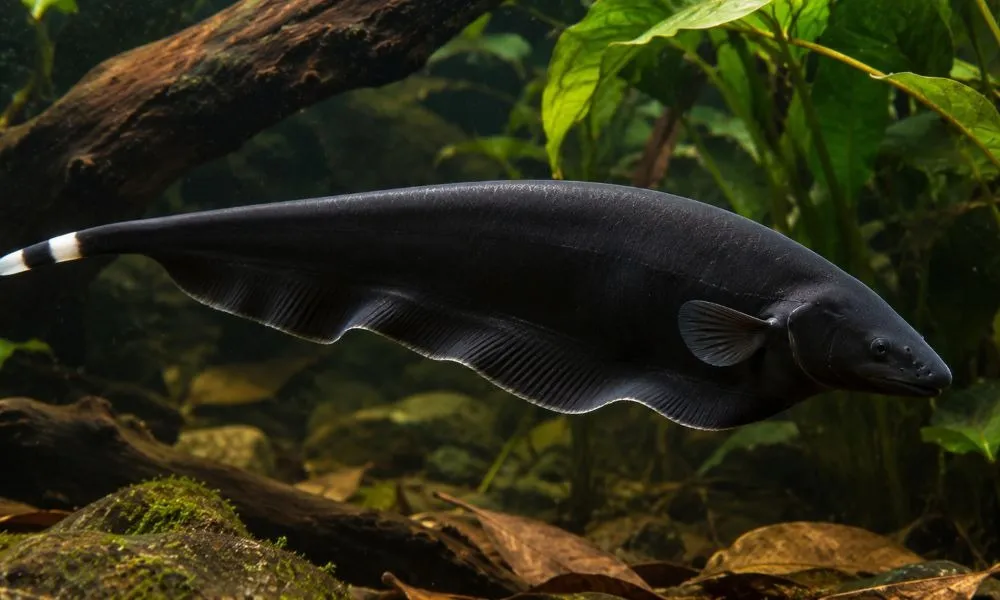
Scientific Name: Apteronotus albifrons (Black Ghost Knifefish)
Family: Apteronotidae
Habitat: Freshwater rivers and streams
Range: South America, especially the Amazon and Orinoco river systems
Size and Weight: Approximately 30–50 cm long
Diet: Small insects, worms, and other aquatic organisms
Lifespan: Around 10–15 years in captivity
Conservation Status: Not evaluated individually in all assessments
Key Fact: The black ghost knifefish has an elongated body and a long fin running along its underside. It produces weak electrical signals that help it navigate and detect nearby objects in dark or murky water.
23. Killifish

Scientific Name: Fundulopanchax gardneri (Gardner’s Killifish)
Family: Nothobranchiidae
Habitat: Freshwater streams, pools, and wetlands
Range: West Africa
Size and Weight: Approximately 5–7 cm long
Diet: Small insects, insect larvae, worms, and aquatic invertebrates
Lifespan: Around 2–4 years, depending on species and conditions
Conservation Status: Varies by species
Key Fact: Killifish are a diverse group of small freshwater fish. Some species have remarkable adaptations for surviving seasonal water changes. Their bright colors and distinctive patterns also make several species popular among aquarium enthusiasts.
Invertebrates That Start With K
Invertebrates beginning with K include small insects and marine animals with fascinating adaptations. Although many are tiny, they perform important ecological roles as pollinators, decomposers, and food sources for other wildlife.
24. Krill

Scientific Name: Euphausia superba (Antarctic krill)
Family: Euphausiidae
Habitat: Cold Southern Ocean waters
Range: Antarctic waters
Size and Weight: Approximately 4–6 cm long
Diet: Phytoplankton, algae, and microscopic organisms
Lifespan: Around 5–7 years
Conservation Status: Not assessed individually as a species under the IUCN Red List
Key Fact: Antarctic krill are small, shrimp-like crustaceans that form enormous swarms. They are an essential food source for whales, seals, penguins, and fish. Their feeding activity also helps transfer energy through the Antarctic marine food web.
25. Katydid
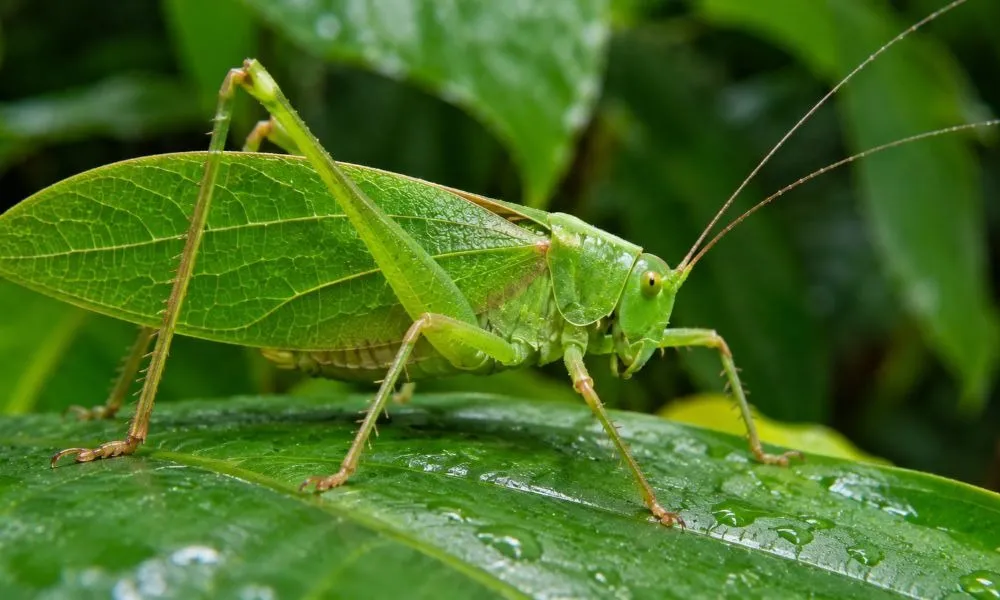
Scientific Name: Tettigoniidae (family)
Family: Tettigoniidae
Habitat: Forests, grasslands, gardens, and tropical vegetation
Range: Worldwide, except Antarctica
Size and Weight: Commonly 2–10 cm long, depending on species
Diet: Leaves, flowers, seeds, and occasionally small insects
Lifespan: Usually several months to around one year
Conservation Status: Varies by species
Key Fact: Katydids are known for their leaf-like appearance and distinctive nighttime sounds. Their green bodies help them blend into surrounding vegetation. Many species produce sounds by rubbing their wings together, a behavior called stridulation.
Frequently Asked Questions
What are the most popular animals that start with K?
Some well-known animals beginning with K include kangaroos, koalas, kingfishers, king cobras, killer whales, kiwis, and Komodo dragons. They live in different environments, including forests, grasslands, deserts, and oceans.
Which animal that starts with K is the largest?
The Kodiak bear is among the largest K-named land mammals. However, the killer whale is considerably larger overall and is the largest member of the dolphin family.
Which K animals are endangered?
Several K animals face conservation challenges. The kākāpō is Critically Endangered, the Komodo dragon and kea are Endangered, and the king cobra is Vulnerable.
Are there any flightless birds that start with K?
Yes. The kiwi and kākāpō are both flightless birds native to New Zealand. They have different body structures, feeding habits, and survival adaptations.
Which animal that starts with K lives in the ocean?
Several K animals live in marine environments, including killer whales, king salmon, kitefin sharks, krill, and king crabs.
Conclusion
Animals that start with the letter K represent an extraordinary variety of wildlife, just like other alphabetical wildlife collections featuring animals that start with B.
From the powerful kangaroo and enormous Kodiak bear to the unusual kākāpō and fascinating Komodo dragon, every species has distinctive characteristics.
Some thrive in tropical forests, while others survive in deserts, snowy mountains, freshwater habitats, and deep oceans. Their unique adaptations demonstrate the remarkable diversity of animal life and the importance of protecting natural ecosystems.