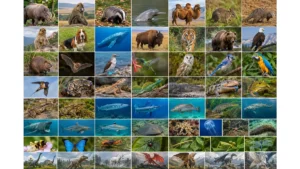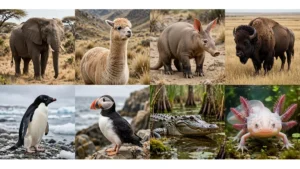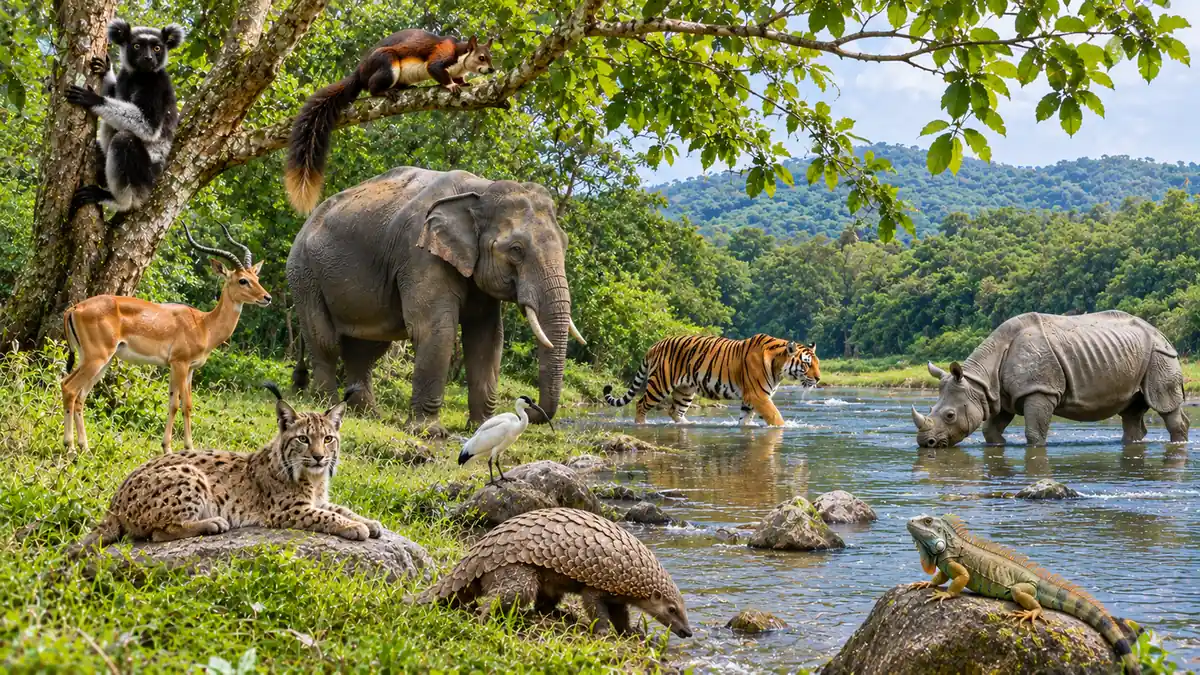
Animals that start with the letter I include some remarkable creatures from different parts of the world. The list features familiar names like the iguana, impala, ibis, and ibex, along with unusual animals such as the indri, immortal jellyfish, and inland taipan.
This guide explores 40 interesting I animals across different animal groups. From African grasslands and tropical forests to deep oceans and ancient landscapes, each creature has something special to discover.
Key Takeaways
- The impala is a graceful African antelope known for its impressive jumps.
- The indri is the largest living lemur and is native to Madagascar.
- The inland taipan has extremely potent venom.
- The immortal jellyfish can return to an earlier stage of its life cycle.
- Ichthyosaurus and Iguanodon are fascinating prehistoric animals.
- Many I animals have special adaptations for surviving in challenging environments.
Mammals That Start With I
Mammals are warm-blooded animals that feed their young with milk. The letter I includes several interesting mammals, from powerful elephants and large antelopes to rare forest-dwelling primates.
Ibex

- Scientific Name: Capra ibex (Alpine ibex)
- Family: Bovidae
- Habitat: Rocky mountains, alpine meadows, and steep cliffs
- Range: European Alps
- Size and Weight: About 1.2–1.7 m long; roughly 40–120 kg
- Diet: Grasses, herbs, leaves, and shrubs
- Lifespan: Around 15–20 years
- Conservation Status: Least Concern (Alpine ibex)
Key Fact: Ibex are excellent mountain climbers. Their strong legs and specially adapted hooves help them balance on narrow rocky surfaces that many other animals cannot reach.
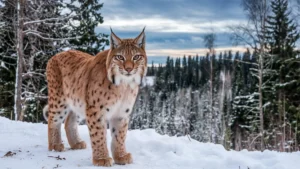
Iberian Lynx
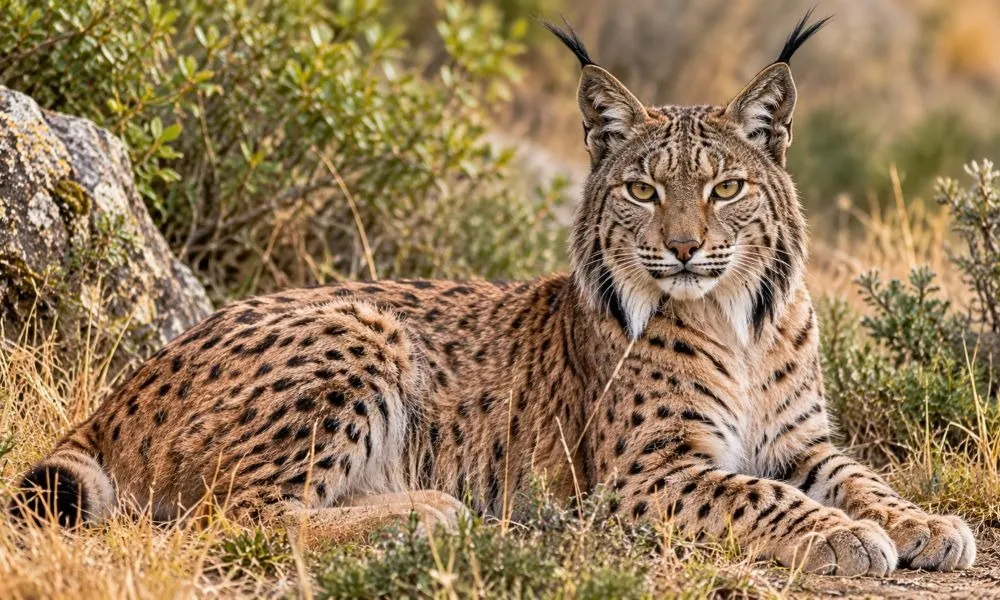
- Scientific Name: Lynx pardinus
- Family: Felidae
- Habitat: Mediterranean scrubland and open woodland
- Range: Spain and Portugal
- Size and Weight: About 85–110 cm long; roughly 9–15 kg
- Diet: Mainly European rabbits
- Lifespan: Around 10–13 years in the wild
- Conservation Status: Vulnerable
Key Fact: The Iberian lynx has long ear tufts, a short tail, and spotted fur. It is also a skilled hunter that depends heavily on rabbits for food.
Indian Elephant
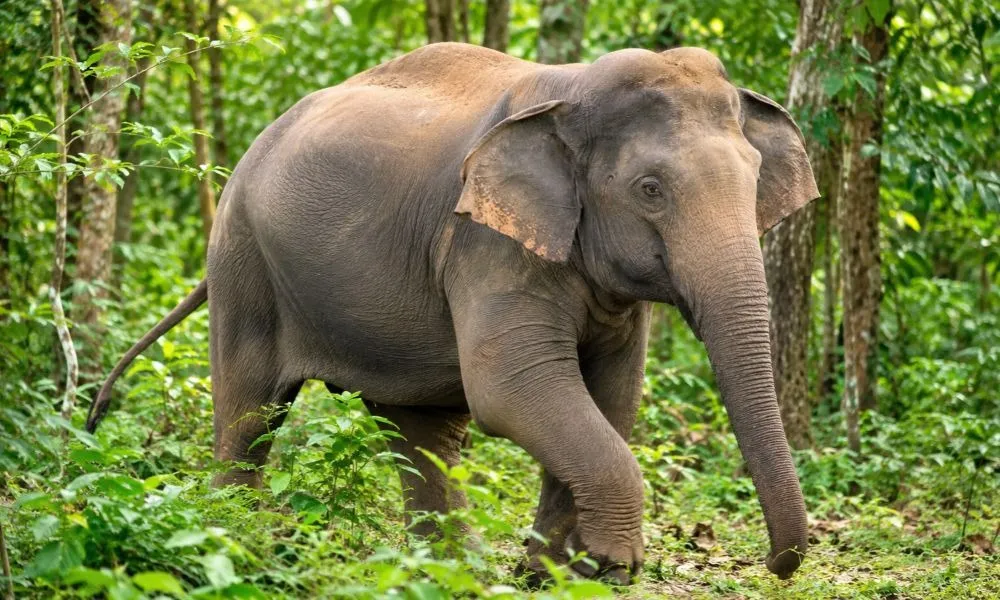
- Scientific Name: Elephas maximus indicus
- Family: Elephantidae
- Habitat: Tropical forests, grasslands, and scrublands
- Range: India and parts of South and Southeast Asia
- Size and Weight: About 2–3.5 m tall at the shoulder; roughly 2,000–5,000 kg
- Diet: Grass, leaves, bark, roots, and fruit
- Lifespan: Around 50–60 years
- Conservation Status: Endangered (Asian elephant)
Key Fact: Indian elephants use their trunks for breathing, smelling, drinking, and picking up food. Their trunks contain thousands of muscles, making them incredibly flexible.
Indian Giant Squirrel

- Scientific Name: Ratufa indica
- Family: Sciuridae
- Habitat: Tropical evergreen and deciduous forests
- Range: Western Ghats and central parts of India
- Size and Weight: About 25–45 cm long, excluding the tail; roughly 1–2 kg
- Diet: Fruits, nuts, seeds, flowers, and bark
- Lifespan: Around 15–20 years in captivity
- Conservation Status: Least Concern
Key Fact: The Indian giant squirrel can leap between distant tree branches. Its colorful coat may include shades of orange, maroon, brown, and cream.
Indian Pangolin
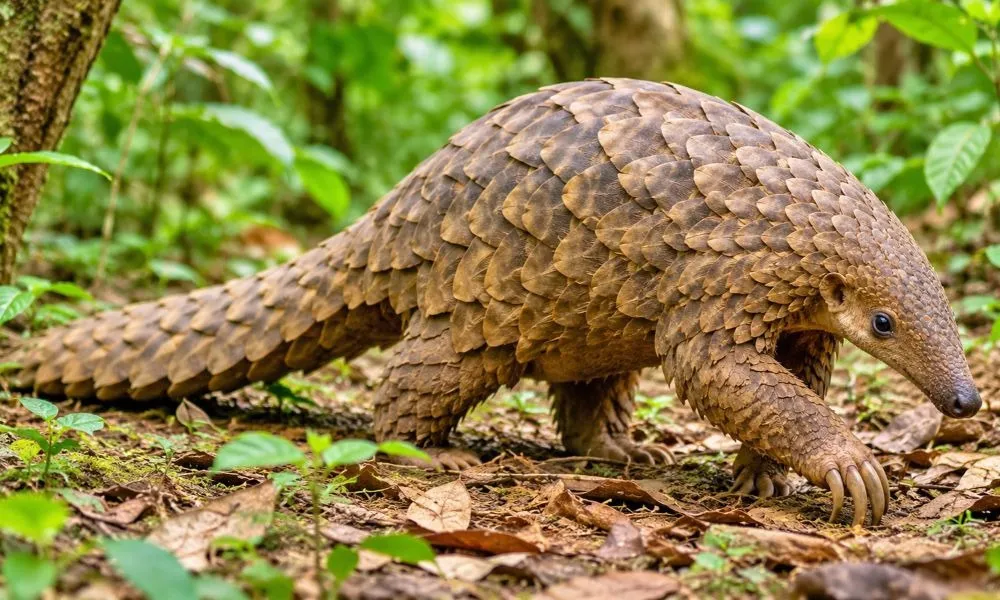
- Scientific Name: Manis crassicaudata
- Family: Manidae
- Habitat: Dry forests, grasslands, and open woodland
- Range: India, Pakistan, Nepal, and Sri Lanka
- Size and Weight: About 60–75 cm long, excluding the tail; roughly 10–16 kg
- Diet: Ants and termites
- Lifespan: Not well documented in the wild
- Conservation Status: Endangered
Key Fact: When threatened, the Indian pangolin curls into a tight ball. Its tough scales help protect its soft body from predators.
Indochinese Tiger
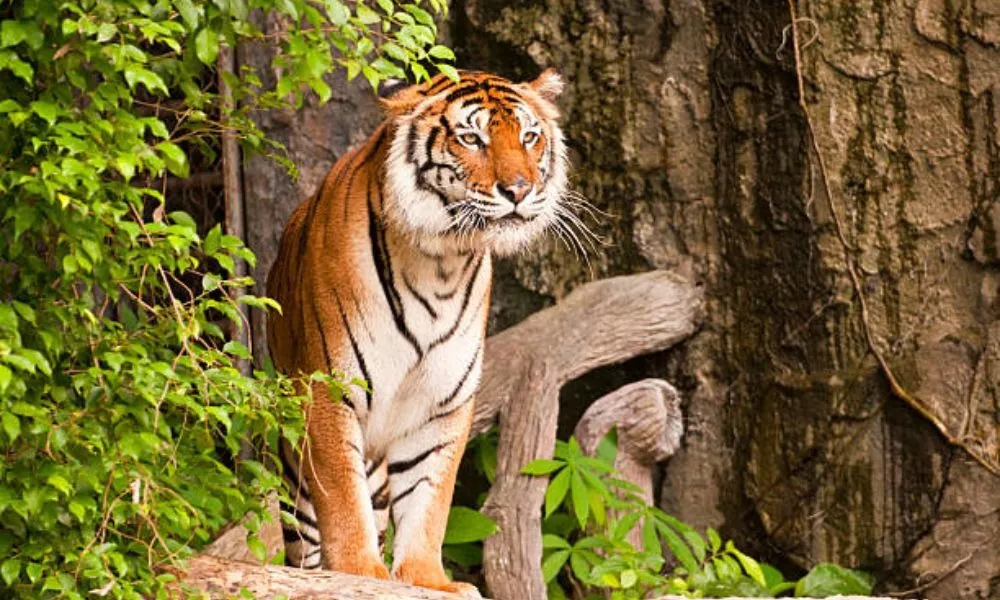
- Scientific Name: Panthera tigris corbetti
- Family: Felidae
- Habitat: Tropical forests, grasslands, and mountainous woodland
- Range: Mainland Southeast Asia
- Size and Weight: About 2.4–2.8 m long, including the tail; roughly 100–195 kg
- Diet: Deer, wild pigs, and other medium-sized animals
- Lifespan: Around 10–15 years in the wild
- Conservation Status: Endangered (tiger)
Key Fact: Every tiger has a unique stripe pattern. These markings help identify individuals and provide camouflage among trees and tall grass.
Indri
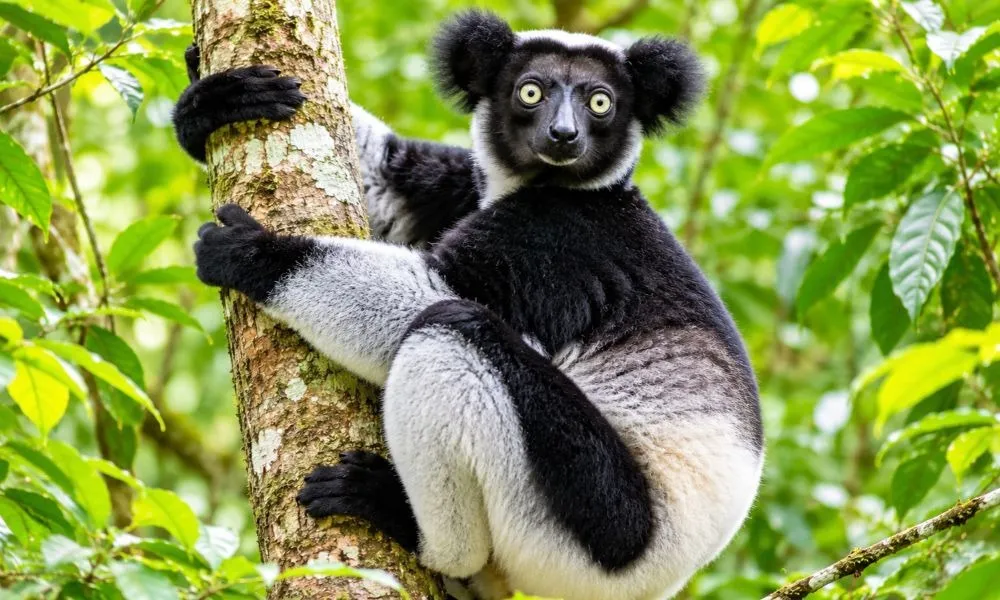
- Scientific Name: Indri indri
- Family: Indriidae
- Habitat: Tropical rainforests
- Range: Eastern Madagascar
- Size and Weight: About 60–75 cm tall; roughly 6–9 kg
- Diet: Leaves, flowers, fruit, and seeds
- Lifespan: Around 15–20 years in the wild
- Conservation Status: Critically Endangered
Key Fact: The indri is the largest living lemur. It is famous for its loud, musical calls, which can travel through the forest over long distances.
ImpalaScientific Name: Aepyceros melampus
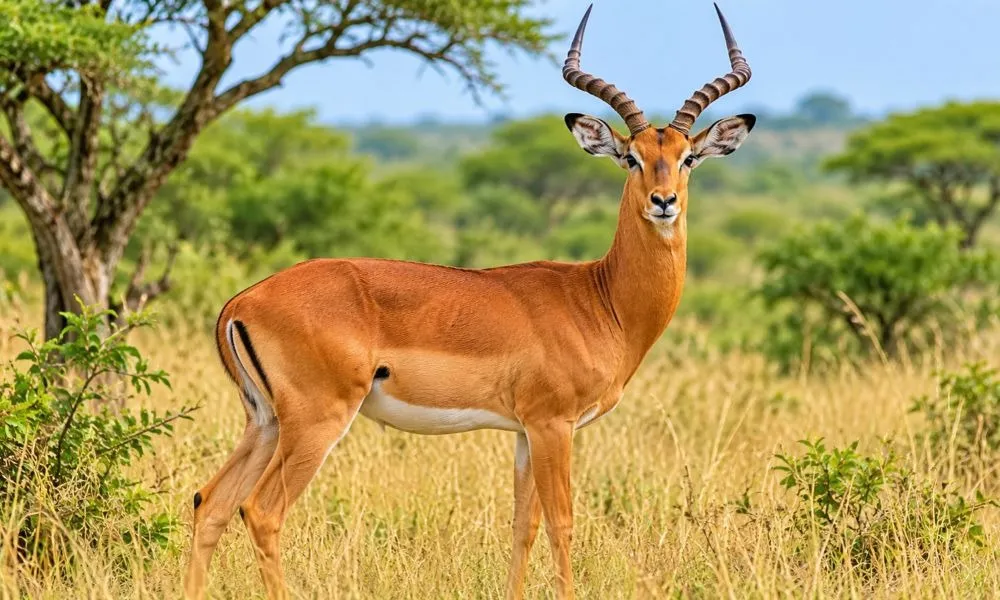
- Family: Bovidae
- Habitat: Savannas, open woodlands, and grasslands
- Range: Eastern and southern Africa
- Size and Weight: About 1.2–1.6 m long; roughly 40–75 kg
- Diet: Grass, leaves, shoots, and fruit
- Lifespan: Around 12–15 years in the wild
- Conservation Status: Least Concern
Key Fact: Impalas are famous for their powerful jumps. They can leap several meters into the air and cover long distances in a single bound to escape predators.
Indian Rhinoceros
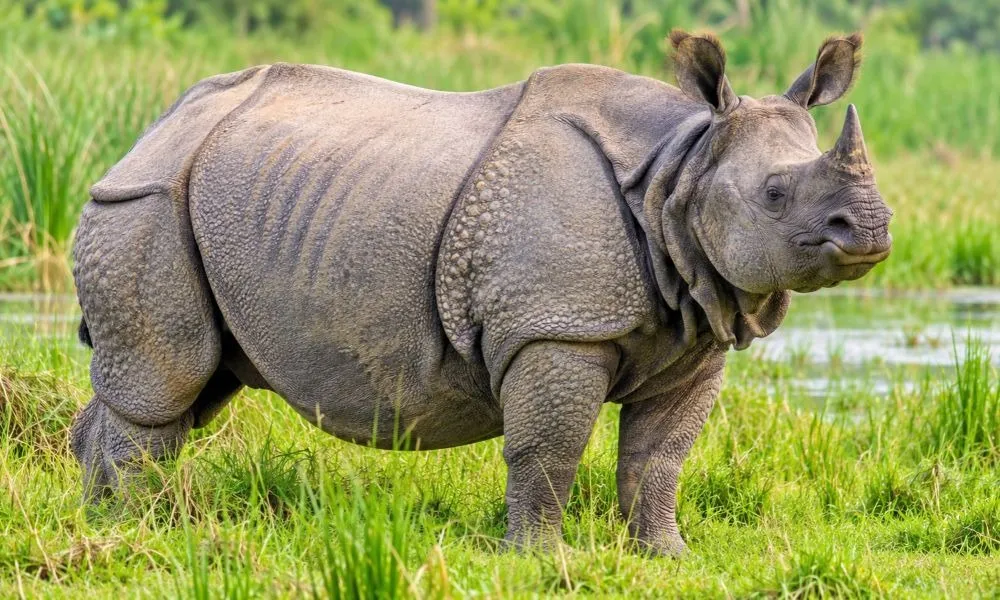
- Scientific Name: Rhinoceros unicornis
- Family: Rhinocerotidae
- Habitat: Grasslands, wetlands, and riverine forests
- Range: Northeastern India and Nepal
- Size and Weight: About 3–3.8 m long; roughly 1,800–2,700 kg
- Diet: Grass, leaves, aquatic plants, and fruit
- Lifespan: Around 35–45 years
- Conservation Status: Vulnerable
Key Fact: The Indian rhinoceros has only one horn. Its thick, folded skin gives it an armored appearance, although the skin is still sensitive.
Irrawaddy Dolphin
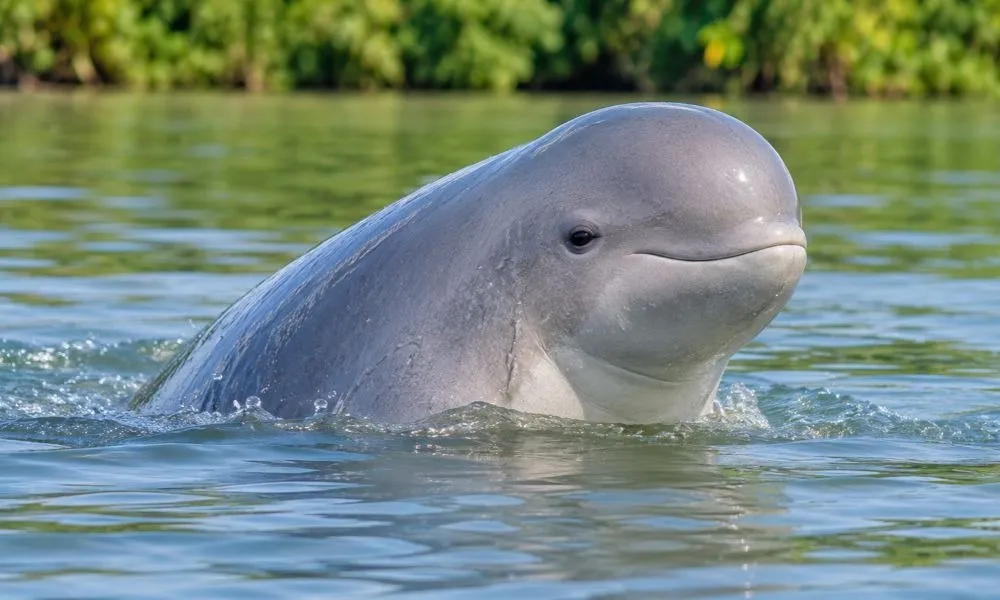
- Scientific Name: Orcaella brevirostris
- Family: Delphinidae
- Habitat: Coastal waters, estuaries, and freshwater rivers
- Range: South and Southeast Asia
- Size and Weight: About 2–2.75 m long; roughly 90–200 kg
- Diet: Fish, shrimp, and other aquatic animals
- Lifespan: Around 20–30 years
- Conservation Status: Vulnerable overall; some river populations are Critically Endangered
Key Fact: Unlike many dolphins, the Irrawaddy dolphin has a rounded forehead and no long, pointed beak. It often surfaces gently to breathe.
Birds That Start With I
Birds have feathers, beaks, and wings, although not every species can fly. I animals in this group include colorful forest birds, wetland feeders, and impressive species that travel across large distances.
Ibis
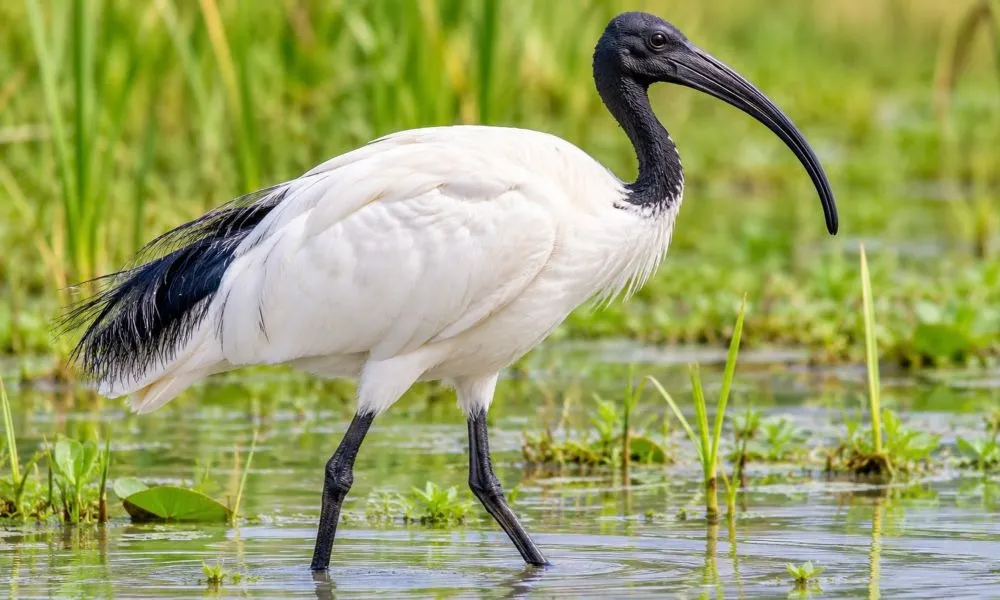
- Scientific Name: Threskiornis aethiopicus (African sacred ibis)
- Family: Threskiornithidae
- Habitat: Wetlands, marshes, lakes, and grasslands
- Range: Sub-Saharan Africa
- Size and Weight: About 65–89 cm long; roughly 1–1.5 kg
- Diet: Insects, fish, frogs, worms, and small aquatic animals
- Lifespan: Around 15–20 years
- Conservation Status: Least Concern
Key Fact: Ibises use their long, curved bills to search through mud and shallow water for food. The African sacred ibis was also an important bird in ancient Egyptian culture.
Indian Peafowl

- Scientific Name: Pavo cristatus
- Family: Phasianidae
- Habitat: Forest edges, grasslands, and agricultural areas
- Range: Indian subcontinent
- Size and Weight: About 90–230 cm long, including the male’s long train; roughly 2.7–6 kg
- Diet: Seeds, insects, fruits, and small reptiles
- Lifespan: Around 10–20 years
- Conservation Status: Least Concern
Key Fact: Male Indian peafowls spread their colorful tail feathers during courtship displays. The eye-like patterns on these feathers make the display especially beautiful.
Indigo Bunting
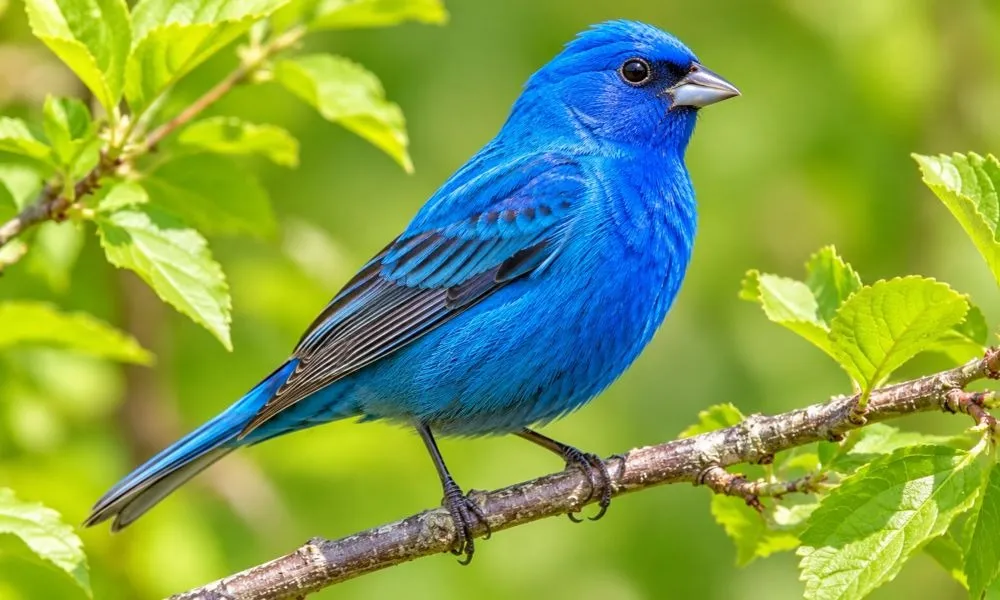
- Scientific Name: Passerina cyanea
- Family: Cardinalidae
- Habitat: Shrubby fields, woodland edges, and open forests
- Range: Eastern North America, migrating to Central America and the Caribbean
- Size and Weight: About 11–14 cm long; roughly 11–15 g
- Diet: Seeds, berries, and insects
- Lifespan: Around 5–10 years
- Conservation Status: Least Concern
Key Fact: Male indigo buntings appear bright blue during the breeding season. Their feathers do not contain blue pigment; their color comes mainly from the way light reflects off their feather structure.
Indian Roller
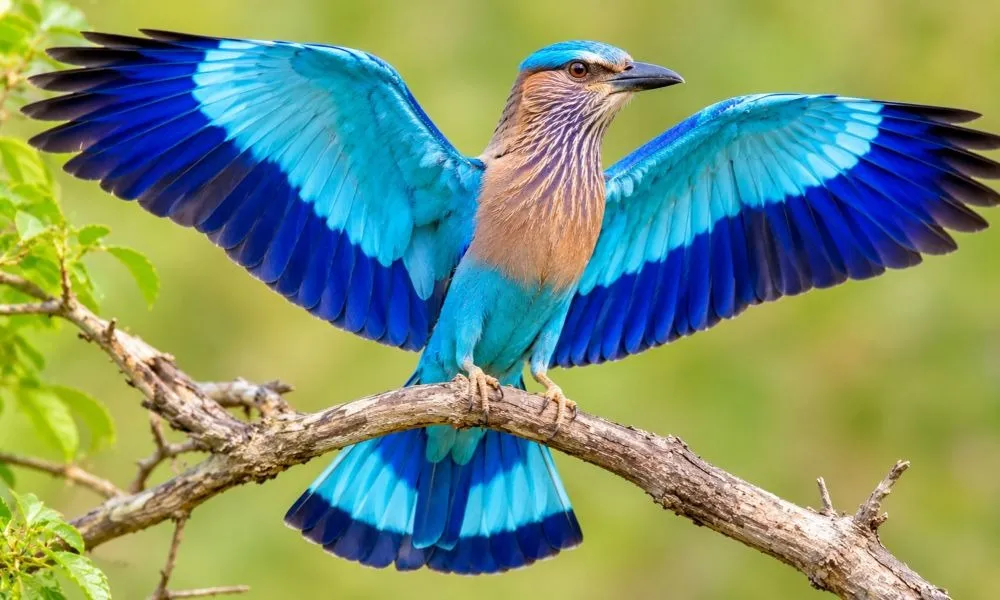
- Scientific Name: Coracias benghalensis
- Family: Coraciidae
- Habitat: Open woodland, grasslands, farmland, and roadsides
- Range: South Asia
- Size and Weight: About 26–27 cm long; roughly 80–100 g
- Diet: Insects, small reptiles, and other small animals
- Lifespan: Around 10–15 years
- Conservation Status: Least Concern
Key Fact: The Indian roller is famous for its colorful aerial displays. Its bright blue wings become especially noticeable when it flies.
Ivory Gull

- Scientific Name: Pagophila eburnea
- Family: Laridae
- Habitat: Arctic sea ice and rocky coastal areas
- Range: Arctic regions of Canada, Greenland, Russia, and nearby islands
- Size and Weight: About 40–43 cm long; roughly 450–700 g
- Diet: Fish, marine invertebrates, and carrion
- Lifespan: Around 10–20 years
- Conservation Status: Near Threatened
Key Fact: The ivory gull has completely white adult plumage. It is one of the few bird species that spends much of its life close to Arctic sea ice.
Ivory-Billed Woodpecker
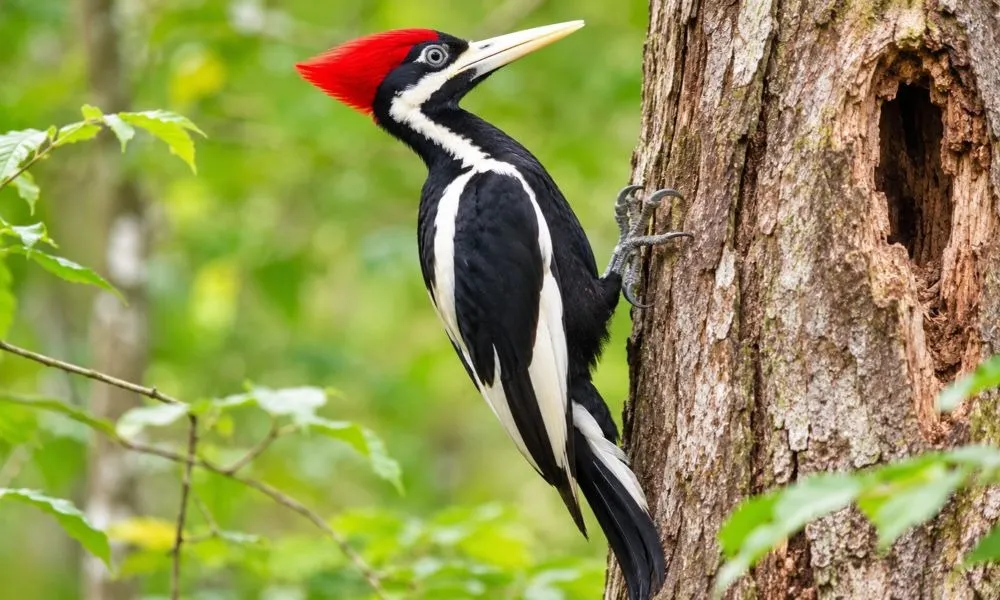
- Scientific Name: Campephilus principalis
- Family: Picidae
- Habitat: Mature bottomland hardwood forests and swamp woodlands
- Range: Historically the southeastern United States and Cuba
- Size and Weight: About 48–53 cm long
- Diet: Wood-boring beetle larvae and other insects
- Lifespan: Not well documented
- Conservation Status: Critically Endangered; possibly extinct
Key Fact: The ivory-billed woodpecker was one of the largest woodpeckers in the world. Its striking appearance and extremely rare sightings have made it one of North America’s most famous lost birds.
Reptiles That Start With I
Reptiles have scaly skin and depend on their surroundings to regulate body temperature. This group includes powerful snakes, large lizards, and beautifully patterned tortoises.
Iguana
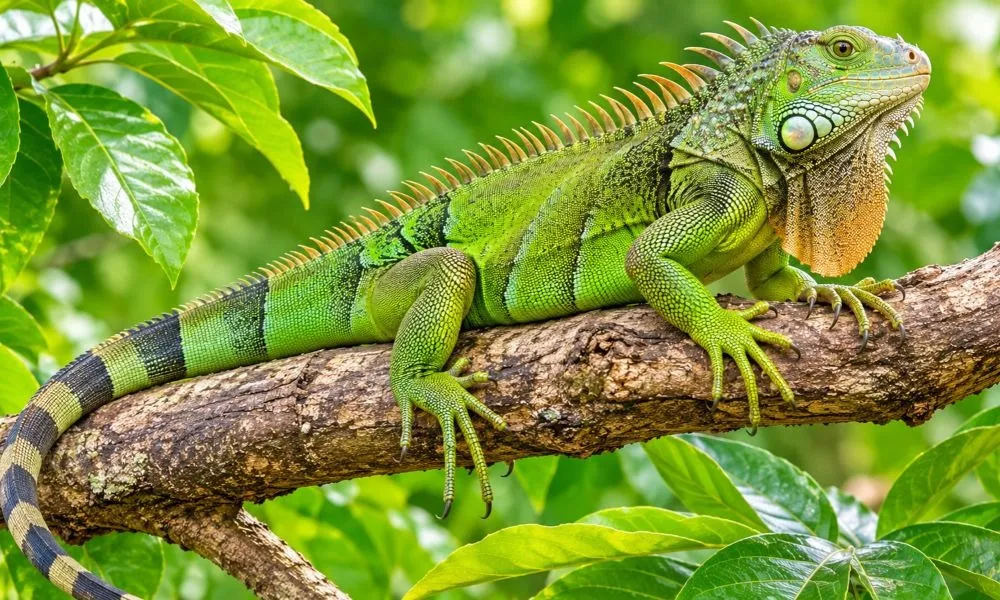
- Scientific Name: Iguana iguana
- Family: Iguanidae
- Habitat: Tropical forests, woodland edges, and areas near water
- Range: Central and South America and parts of the Caribbean
- Size and Weight: Up to about 1.5–2 m long, including the tail; roughly 4–8 kg
- Diet: Leaves, flowers, and fruit
- Lifespan: Around 10–20 years
- Conservation Status: Least Concern (green iguana)
Key Fact: Iguanas have a third eye-like structure on top of their heads, called the parietal eye. It helps detect changes in light and movement.
Indian Cobra
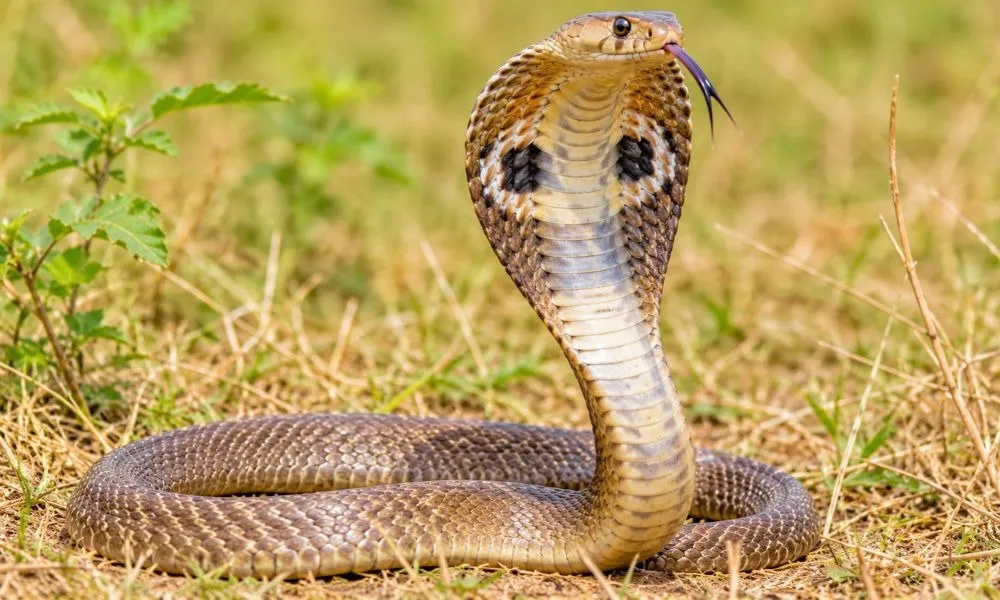
- Scientific Name: Naja naja
- Family: Elapidae
- Habitat: Forests, grasslands, agricultural areas, and open woodland
- Range: Indian subcontinent
- Size and Weight: About 1–1.8 m long
- Diet: Rodents, frogs, lizards, and other small animals
- Lifespan: Around 15–20 years
- Conservation Status: Least Concern
Key Fact: The Indian cobra spreads its neck ribs to form a hood when threatened. Some individuals have a marking that looks like a pair of spectacles on the back of their hood.
Indian Python
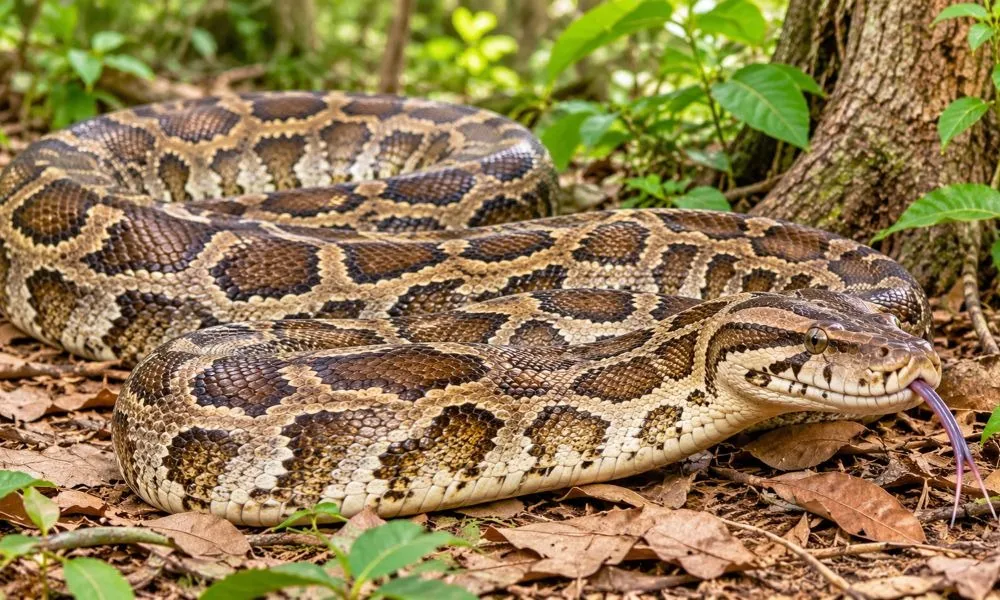
- Scientific Name: Python molurus
- Family: Pythonidae
- Habitat: Forests, grasslands, wetlands, and rocky areas
- Range: South Asia
- Size and Weight: About 3–5 m long; roughly 30–90 kg
- Diet: Birds, rodents, and medium-sized mammals
- Lifespan: Around 20–25 years
- Conservation Status: Near Threatened
Key Fact: Indian pythons kill their prey through constriction rather than venom. They wrap their powerful bodies around prey before swallowing it whole.
Indian Star Tortoise
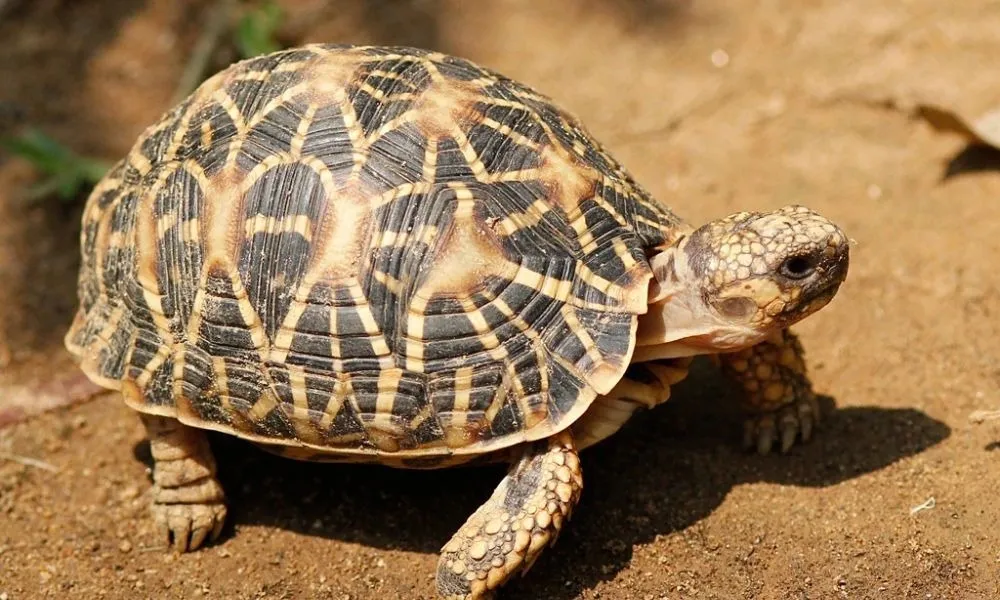
- Scientific Name: Geochelone elegans
- Family: Testudinidae
- Habitat: Dry grasslands, scrublands, and open forests
- Range: India, Pakistan, and Sri Lanka
- Size and Weight: About 20–35 cm long; roughly 1–7 kg
- Diet: Grasses, leaves, flowers, and fruit
- Lifespan: Several decades
- Conservation Status: Vulnerable
Key Fact: The Indian star tortoise gets its name from the bright yellow lines that spread across its dark shell. These patterns create a beautiful star-like design.
Inland Taipan

- Scientific Name: Oxyuranus microlepidotus
- Family: Elapidae
- Habitat: Dry inland plains and black-soil deserts
- Range: Central Australia
- Size and Weight: About 1.8–2.5 m long
- Diet: Mainly small mammals, especially rodents
- Lifespan: Around 10–15 years
- Conservation Status: Least Concern
Key Fact: The inland taipan has the most toxic venom of any known land snake based on laboratory toxicity tests. However, it is shy and rarely encounters people.
Amphibians That Start With I
Amphibians usually have moist skin and often depend on water or damp environments during part of their lives. Although the letter I has fewer familiar amphibian names, a few unusual species are worth exploring.
Iberian Ribbed Newt
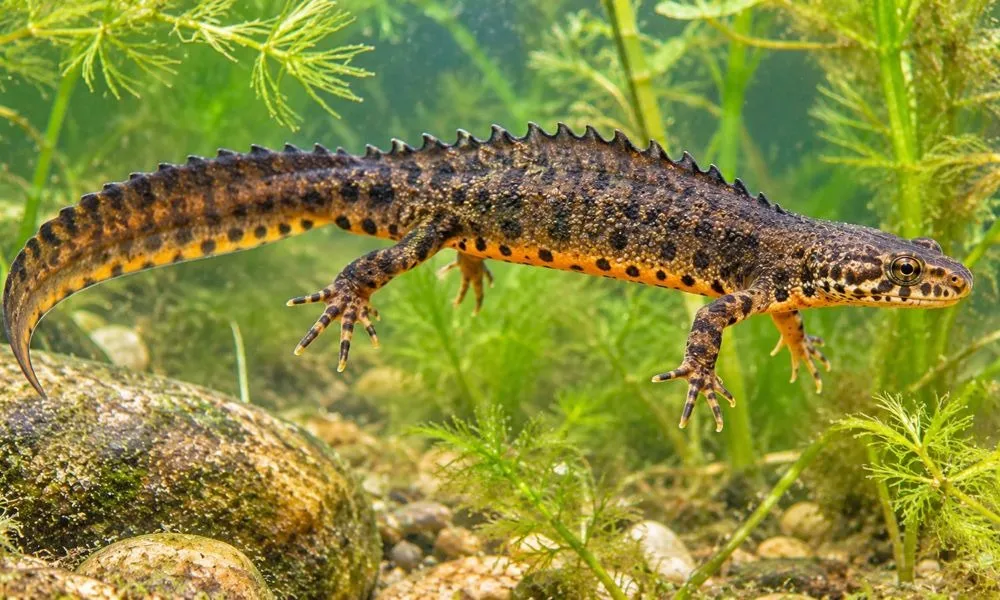
- Scientific Name: Pleurodeles waltl
- Family: Salamandridae
- Habitat: Ponds, lakes, and slow-moving freshwater
- Range: Spain, Portugal, and northern Morocco
- Size and Weight: About 15–30 cm long
- Diet: Insects, worms, small crustaceans, and aquatic invertebrates
- Lifespan: Around 7–10 years in the wild; longer in captivity
- Conservation Status: Least Concern
Key Fact: The Iberian ribbed newt has a remarkable defense. When threatened, it can push the tips of its ribs through special skin areas to discourage predators.
Italian Crested Newt

- Scientific Name: Triturus carnifex
- Family: Salamandridae
- Habitat: Ponds, wetlands, and nearby woodland
- Range: Italy and parts of southeastern Europe
- Size and Weight: About 12–18 cm long
- Diet: Insects, worms, small crustaceans, and other invertebrates
- Lifespan: Around 10–15 years
- Conservation Status: Least Concern
Key Fact: During the breeding season, male Italian crested newts develop a noticeable crest along their backs and tails. This makes their appearance especially distinctive.
Fish That Start With I
Fish live in freshwater or saltwater environments and breathe through gills. Some I fish are known for their unusual body shapes, while others are famous for speed, size, or surprising survival abilities.
Icefish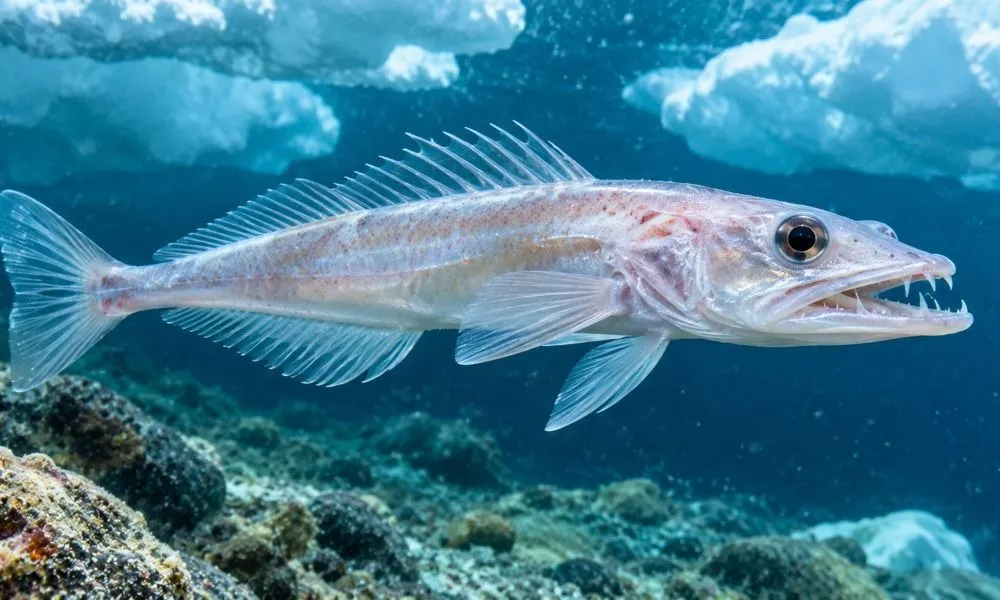
- Scientific Name: Channichthyidae
- Family: Channichthyidae
- Habitat: Cold Antarctic and sub-Antarctic waters
- Range: Southern Ocean
- Size and Weight: Varies by species; some grow beyond 70 cm
- Diet: Krill, small fish, and other marine animals
- Lifespan: Varies by species
- Conservation Status: Varies by species
Key Fact: Some Antarctic icefish have almost transparent blood because they lack hemoglobin, the red protein that carries oxygen in most vertebrates.
Indo-Pacific Sailfish
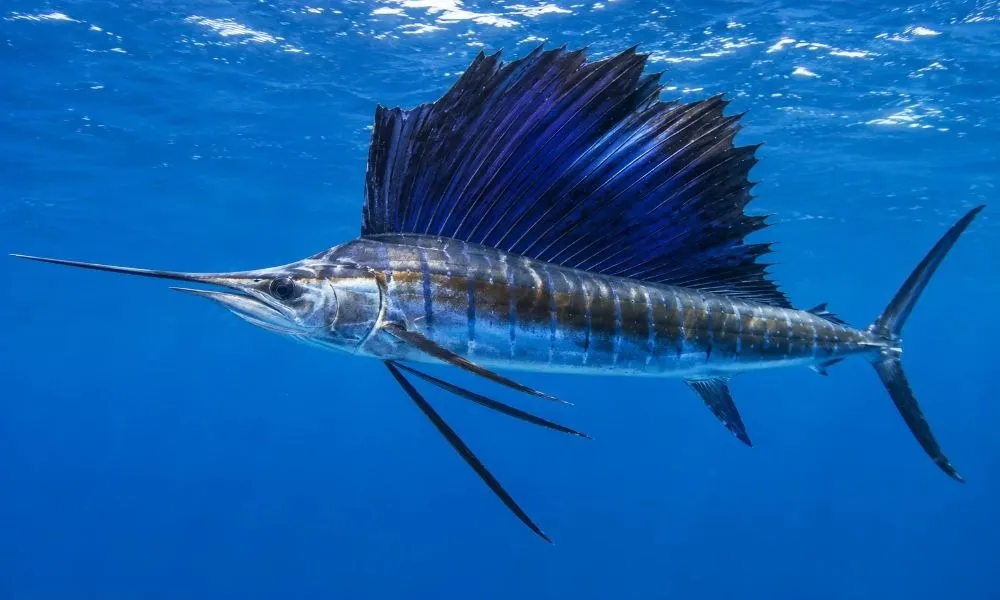
- Scientific Name: Istiophorus platypterus
- Family: Istiophoridae
- Habitat: Warm open-ocean waters
- Range: Tropical and subtropical oceans worldwide
- Size and Weight: Up to about 3.4 m long; roughly 60–100 kg
- Diet: Small fish and squid
- Lifespan: Around 4–5 years
- Conservation Status: Least Concern
Key Fact: The Indo-Pacific sailfish has a large sail-like dorsal fin and a long pointed bill. It is one of the fastest fish in the ocean.
Indian Mackerel
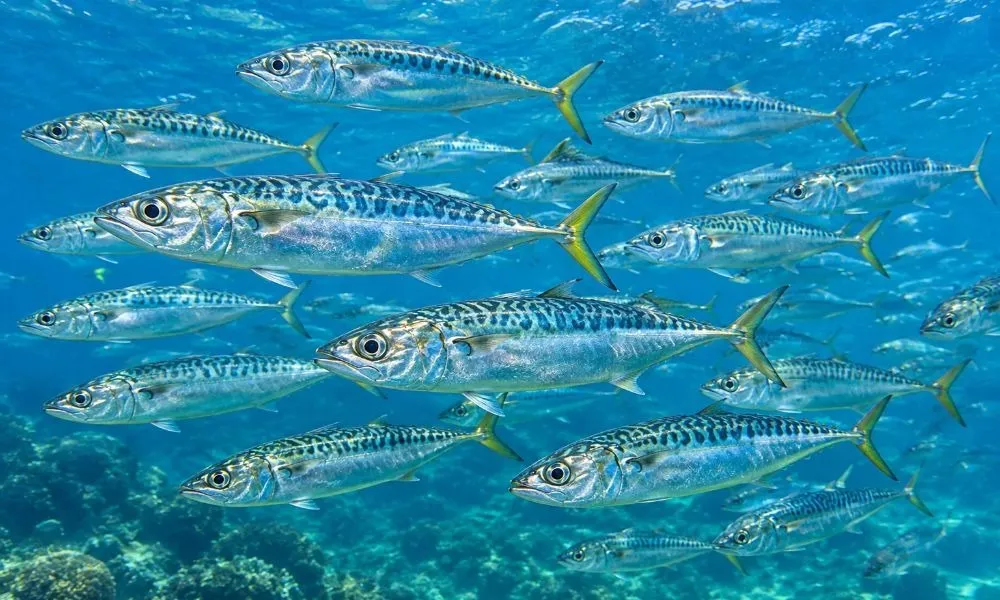
- Scientific Name: Rastrelliger kanagurta
- Family: Scombridae
- Habitat: Coastal waters and coral reef areas
- Range: Indian and western Pacific oceans
- Size and Weight: About 20–35 cm long
- Diet: Plankton and small marine organisms
- Lifespan: Around 3–4 years
- Conservation Status: Least Concern
Key Fact: Indian mackerel travel in schools for protection and feeding. They are also an important food fish across many coastal communities.
Indian Ocean Humpback Dolphin
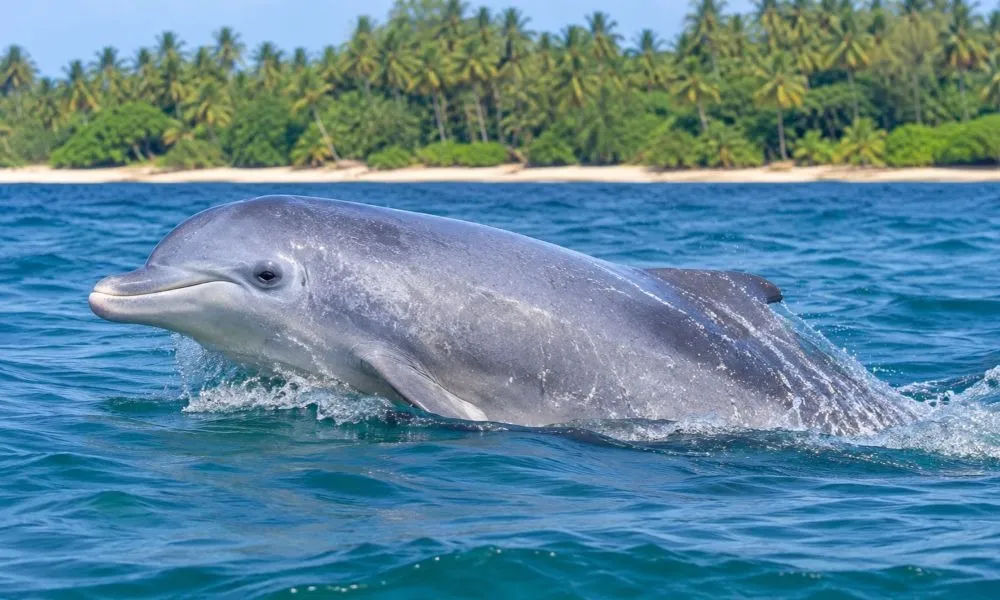
- Scientific Name: Sousa plumbea
- Family: Delphinidae
- Habitat: Shallow coastal waters and estuaries
- Range: Western Indian Ocean, from eastern Africa to western India
- Size and Weight: About 2–2.8 m long; roughly 150–250 kg
- Diet: Fish, squid, and crustaceans
- Lifespan: Around 25–40 years
- Conservation Status: Endangered
Key Fact: Indian Ocean humpback dolphins usually stay close to shore. Their coastal lifestyle makes them vulnerable to fishing nets, boat activity, and habitat changes.
Sea and Freshwater Invertebrates That Start With I
Invertebrates are animals without backbones. They include jellyfish, worms, mollusks, and many other small creatures that play important roles in aquatic ecosystems.
Immortal Jellyfish
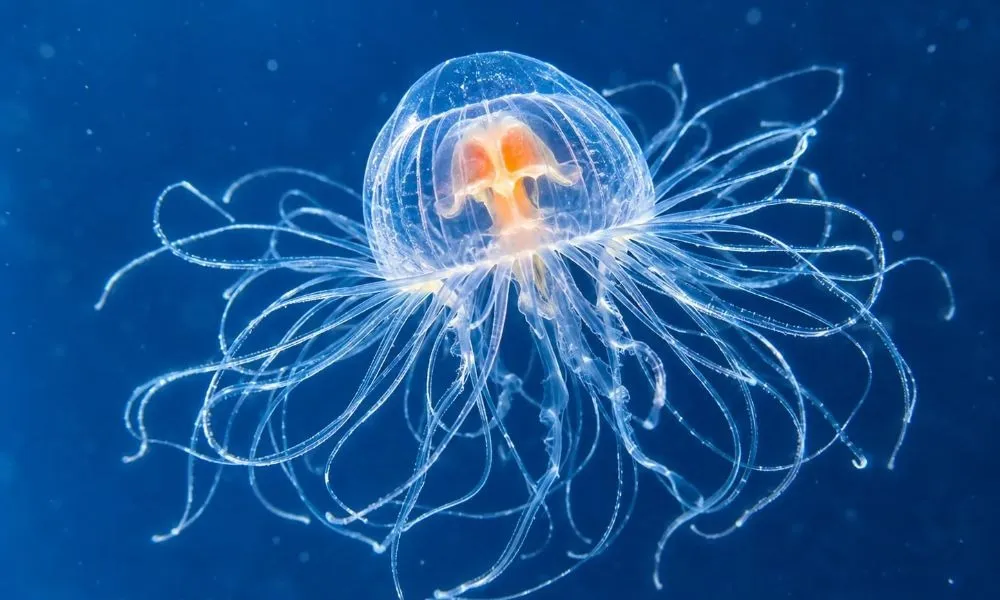
- Scientific Name: Turritopsis dohrnii
- Family: Oceaniidae
- Habitat: Marine waters
- Range: Originally described in the Mediterranean; now reported in oceans worldwide
- Size and Weight: About 4–5 mm across
- Diet: Plankton and tiny marine organisms
- Lifespan: Not fixed in the same way as most animals
- Conservation Status: Not assessed
Key Fact: The immortal jellyfish can reverse its development under certain conditions, returning from its adult stage to an earlier polyp stage. This unusual ability is the reason behind its famous name.
Irukandji Jellyfish

- Scientific Name: Carukia barnesi
- Family: Carukiidae
- Habitat: Warm tropical marine waters
- Range: Northern Australia and nearby Indo-Pacific waters
- Size and Weight: Bell about 1–2.5 cm wide
- Diet: Small planktonic animals
- Lifespan: Not well documented
- Conservation Status: Not assessed
Key Fact: The Irukandji jellyfish is extremely small, but its sting can cause severe symptoms known as Irukandji syndrome. Its size makes it difficult to spot in open water.
Isopod

- Scientific Name: Isopoda
- Family: Varies by species
- Habitat: Oceans, freshwater, and damp terrestrial environments
- Range: Worldwide
- Size and Weight: From a few millimeters to around 50 cm in giant deep-sea species
- Diet: Varies; includes decaying matter, plants, and small animals
- Lifespan: Varies widely by species
- Conservation Status: Varies by species
Key Fact: Isopods are relatives of crabs and shrimp. Some giant deep-sea species can survive for long periods without eating.
Ice Worm

- Scientific Name: Mesenchytraeus solifugus
- Family: Enchytraeidae
- Habitat: Temperate glaciers and permanent ice fields
- Range: Pacific coastal glaciers of North America
- Size and Weight: About 1–3 cm long
- Diet: Algae, bacteria, and organic material
- Lifespan: Not well documented
- Conservation Status: Not assessed
Key Fact: Ice worms live in glacier ice and are specially adapted to extremely cold conditions. They become inactive or die when temperatures rise too far above freezing.
Frequently Asked Questions
What are the most popular animals that start with I?
Some of the best-known animals beginning with I include the iguana, impala, ibex, ibis, Indian elephant, and Indian rhinoceros. These animals live in different habitats, from tropical forests to African grasslands.
Which animal that starts with I can live in extremely cold environments?
The ice worm is adapted to life on glaciers. It survives in freezing environments and feeds on tiny organisms and organic material found in the ice.
Which animals that start with I are endangered?
Several I animals face serious conservation challenges. The indri is Critically Endangered, while the Indian elephant, Indian pangolin, Iberian lynx, Indian rhinoceros, and Indian Ocean humpback dolphin are among the species with threatened conservation status.
Are there any prehistoric animals that start with I?
Yes. Ichthyosaurus, Ichthyostega, Iguanodon, and the Irish elk are examples of extinct animals beginning with I. They lived in different periods and environments, from ancient oceans to prehistoric grasslands.
Which I animal is known for its impressive jumping ability?
The impala is famous for its powerful leaps. It can jump several meters into the air and cover considerable distances when escaping predators.
Conclusion
The letter I introduces a fascinating collection of animals, from the graceful impala and colorful Indian peafowl to the unusual immortal jellyfish and ancient Iguanodon. Each one has special features that help explain how diverse the animal kingdom really is.
Some live in warm tropical forests, while others survive in icy waters, dry deserts, and remote mountain regions. Exploring these animals is a wonderful way to discover more about nature and the remarkable ways wildlife adapts to its surroundings.