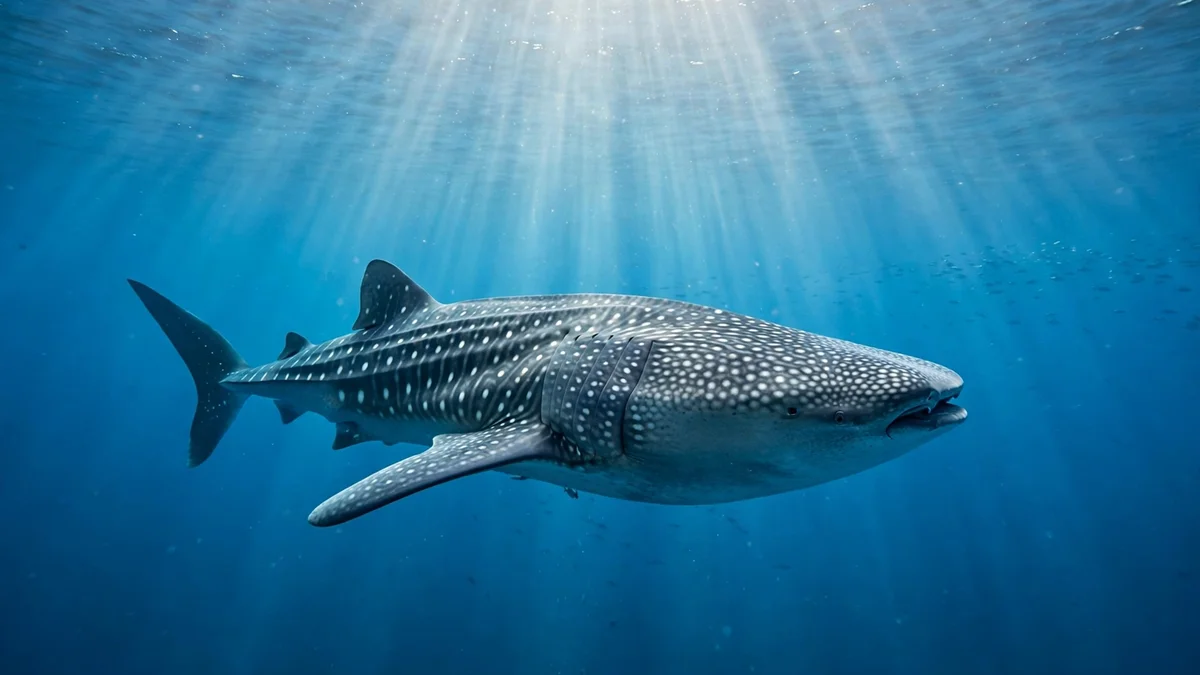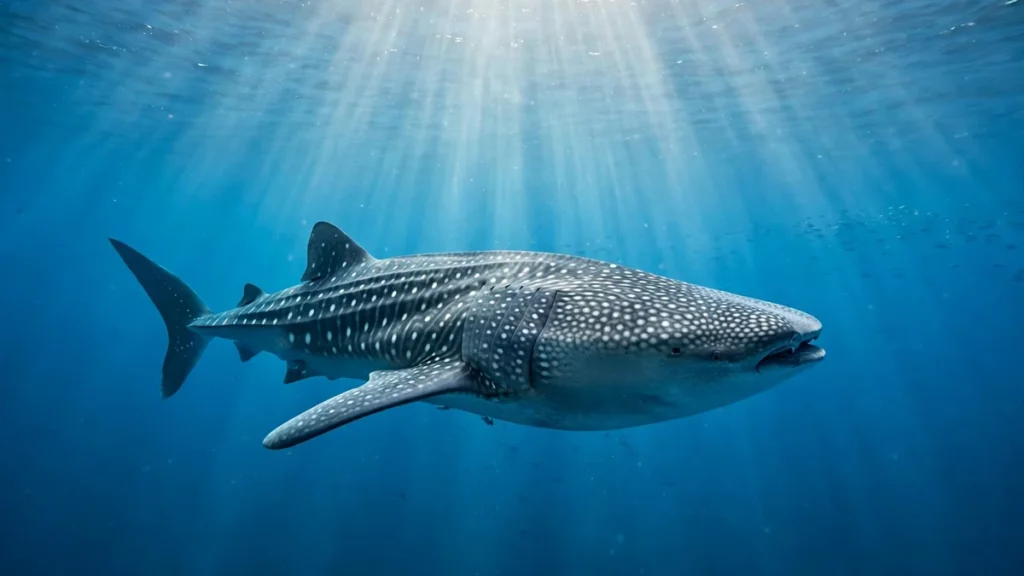
The whale shark species is a single species, Rhincodon typus, the largest fish in the world, a gentle giant that swims with its mouth open, filtering plankton from the sea, and it is the only shark that grows as big as a bus. If you are asking how many whale shark species there are, the answer is one: there is only one whale shark species in the world, and every whale shark alive today belongs to it.
The whale shark belongs to the carpet shark order, Orectolobiformes, and it lives in the warm tropical and subtropical seas of the world, where plankton blooms in the sunlit surface waters. Its huge grey body, its white spots and stripes and its wide flat head make it one of the most recognisable fish on Earth.
Key takeaways
- There is only one whale shark species, Rhincodon typus, and it is the largest fish in the world.
- Whale sharks are filter feeders that eat plankton, krill, small fish and squid, never hunting large prey.
- Each whale shark has a unique pattern of white spots, like a fingerprint, which lets scientists identify individuals.
- Whale sharks can live for 70 to 100 years or more, and they grow slowly, taking decades to reach full size.
- Whale sharks are listed as Endangered, and ship strikes, fishing and the fin trade are the main threats to their future.
What makes a whale shark a whale shark
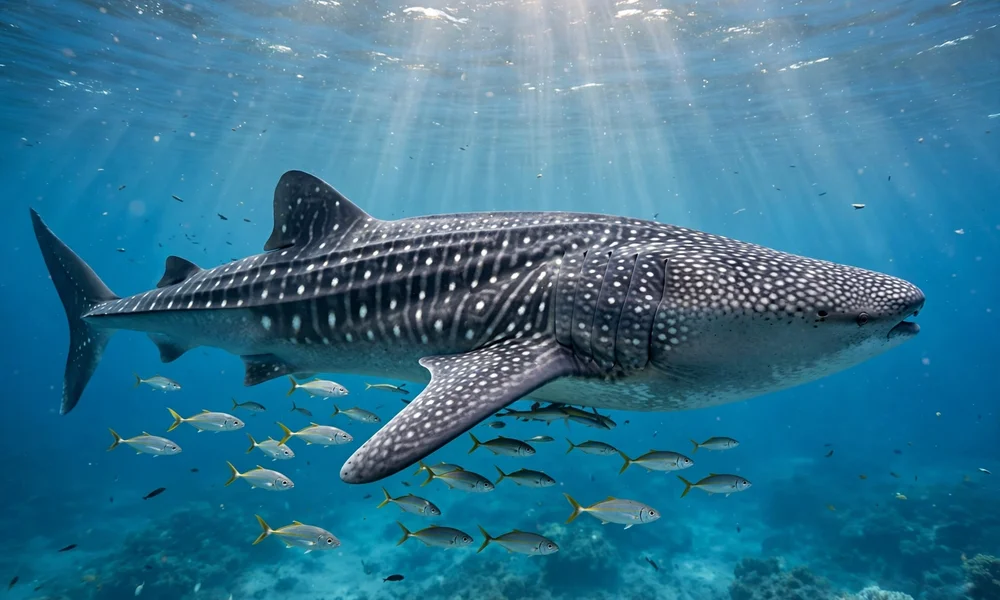
A whale shark is a huge grey fish with a wide flat head, a mouth up to 1.5 metres across, a body covered in white spots and stripes, and a length of 5.5 to 10 metres, with the largest reliably measured at 12.65 metres and animals up to about 20 tonnes in weight. It is the largest living fish, bigger than any other shark, and it has more than 300 rows of tiny teeth that it never uses for feeding.
The spots define the whale shark: every animal carries a unique pattern of white dots and stripes on its grey skin, and scientists photograph the pattern behind the gills to identify each shark, just as people are identified by fingerprints. Its mouth is at the front of its head, not underneath like other sharks, and its filter pads strain plankton from the water as it swims. Like other sharks, it has a skeleton of cartilage rather than bone, and it must keep swimming to push water over its gills.
The whale shark species and its relatives
Rhincodon typus is the only whale shark species, and it is not split into formally recognised subspecies. Whale sharks in the Atlantic and the Indo-Pacific form separate populations, but they are all the same species, and the animals travel thousands of kilometres across open ocean following plankton blooms.
The great white shark is the whale shark’s most famous relative, a fast hunter with serrated teeth, but it is smaller, grows to about 6 metres, and hunts seals and fish, while the whale shark filters plankton. The hammerhead shark is another relative with a flattened head, the tiger shark is a striped hunter of tropical seas, and the basking shark is the only other shark that grows as large and feeds the same way, filtering plankton in cold northern waters. The mako shark is the fastest shark of all, and the nurse shark is a slow bottom-feeder that shares the whale shark’s reefs.
| Type | Animal | Where it lives | Best-known food | Length or Weight |
|---|---|---|---|---|
| Species | Whale shark (Rhincodon typus) | Tropical and subtropical seas worldwide | Plankton, krill and small fish | 5.5 to 10 m, up to 20 tonnes |
| Close relative | Great white shark | Coastal seas worldwide | Seals, sea lions and fish | 3.5 to 6 m |
| Close relative | Hammerhead shark | Tropical and warm temperate seas | Stingrays and fish | 3 to 6 m |
| Close relative | Tiger shark | Tropical and subtropical seas | Fish, turtles and seals | 3 to 5 m |
| Close relative | Basking shark | Cool temperate seas | Plankton | 7 to 10 m |
| Close relative | Mako shark | Open oceans worldwide | Tuna, squid and fish | 3 to 4 m |
| Close relative | Nurse shark | Tropical Atlantic and Pacific reefs | Fish, squid and crustaceans | 2 to 3 m |
How whale sharks live
Whale sharks are creatures of the open tropical sea. A whale shark lives alone, swimming slowly through warm surface waters, and it comes together with others only where plankton is thick, gathering in groups of dozens or even hundreds at feeding sites. Like other ocean animals, it follows the seasons, moving across whole oceans as plankton blooms come and go.
Plankton makes up most of the diet, along with krill, small fish, squid and fish eggs, and a whale shark feeds by swimming slowly with its mouth open, straining food from the water with its filter pads, or by standing upright in the water and sucking in mouthfuls. It can filter more than 600,000 litres of water in an hour, and it swims at about 5 kilometres per hour, though it can burst faster when startled.
Breeding is still little understood, because whale shark mating has never been seen in the wild, but females give birth to live young, and one female was found carrying 300 pups at different stages of growth, the largest litter ever recorded in a shark. The pups are born about 55 centimetres long, and they grow slowly, taking about 30 years to reach breeding age. Whale sharks live for around 70 to 100 years in the wild, and perhaps longer.
Where whale sharks live
The whale shark lives in the warm tropical and subtropical seas of the world, from the coasts of Mexico and the Philippines to the reefs of Australia and the islands of the Indian Ocean, and it is most common where plankton gathers in large numbers. It is seen regularly at Ningaloo Reef in Western Australia, at Isla Holbox in Mexico, in the Philippines, in Mozambique and in the Maldives, where the animals return to the same feeding sites each year.
Warm water is the key requirement. A whale shark needs water above about 21 degrees Celsius, so it follows the warm currents as they move with the seasons, and it dives to depths of more than 1,900 metres, where the water is cold and dark, though it spends most of its time near the surface.
The species is listed as Endangered, and its numbers are falling. The main pressures are ship strikes, which kill whale sharks in busy shipping lanes, fishing for meat and fins, and disturbance by boats and swimmers at feeding sites. The population is thought to have fallen by more than half in the last 75 years, and whale sharks are now protected by law in most of the countries where they gather, including Australia, Mexico and the Philippines.
Best seasons for whale shark watching
There is no single watching season, because whale sharks move with the plankton, but the best time to look for them depends on where you go. At Ningaloo Reef in Western Australia the best months are often March to July, when the coral spawns and the plankton blooms. At Isla Holbox in Mexico the best months are often June to September, when the sharks gather in large numbers to feed.
Staying safe around whale sharks
A whale shark is a wild animal with great size and weight, and it can hurt a person by accident, though whale sharks are gentle and have never attacked a person. Keep your distance, never chase a whale shark, and never try to touch, feed or ride one, because a whale shark that is touched can be stressed and may dive away, and touching removes the protective mucus from its skin. If you swim with whale sharks, stay at least 3 metres from the body and 4 metres from the tail, and never get in front of its mouth.
Whale shark watching checklist
A little preparation turns a Ningaloo Reef trip into a real chance of seeing a whale shark, so pack for sun, warm water and long days at sea.
- A mask and snorkel that fit well, for watching a whale shark from the surface without disturbing it.
- A camera with an underwater housing, because whale sharks should always be watched from a distance, never touched.
- Sun cream and a hat, because the best watching is in the bright midday sun.
- Water and snacks for long days, because the best sightings come after hours at sea.
- A booked licensed operator with a spotter plane and guides who know the whale shark rules.
- A plan to be out in the feeding season, when the plankton blooms and the sharks gather.
- Patience and silence, because whale sharks are shy animals and a noisy boat will send them away.
Frequently asked questions
How many whale shark species are there?
There is one whale shark species, Rhincodon typus. Whale sharks in the Atlantic and the Indo-Pacific form separate populations, but they are all the same species. No second whale shark species is recognised.
Are whale sharks dangerous to people?
No. Whale sharks are filter feeders that eat plankton and small fish, and they have never attacked a person. Their teeth are tiny, only a few millimetres long, and they are not used for feeding. Swimmers are asked to keep their distance so the shark is not stressed.
Why are whale sharks covered in spots?
Each whale shark has a unique pattern of white spots and stripes, which may help it blend in with the dappled light at the surface, and which lets scientists identify individual sharks from photographs. The pattern is set for life, like a human fingerprint.
Can you keep a whale shark as a pet?
No. A whale shark is a wild animal that needs open tropical ocean, eats plankton by the tonne, and is fully protected by law in most countries where it lives. Whale sharks in aquariums need tanks holding millions of litres of seawater, and they are not pets.
How is this guide different from the tapir species guide?
This guide covers the single whale shark species, the largest fish in the world, which filters plankton in the warm tropical seas, while our tapir species guide covers four tapir species, shy forest animals that spread seeds through the rainforest of South America and Southeast Asia. The whale shark lives in the open ocean and eats plankton, and the tapir lives on the forest floor and eats leaves.
Are whale sharks endangered?
Whale sharks are listed as Endangered, so they are classed as endangered. Their numbers are thought to have fallen by more than half in the last 75 years, and ship strikes and fishing are the main threats.
Conclusion
The whale shark species shows how much gentleness one animal can hold: a single species of giant fish, with a mouth a metre wide, a body covered in unique spots, and a life spent filtering plankton from the warm tropical seas. It is the largest fish on Earth, and it has lived in the oceans for millions of years.
If you go looking for one, go in the feeding season to Ningaloo Reef or Isla Holbox, go with a licensed operator, and go quietly. Watch a whale shark gliding past with remoras on its belly and you will understand why it has earned its place as the gentle giant of the sea, and why keeping its plankton and its open ocean matters most.