Monaco animals are the animals of a tiny coastal city-state: yellow-legged gulls over the harbour, Mediterranean fish in the Larvotto marine reserve, dolphins offshore in the Ligurian Sea, and garden birds in the parks and on the rooftops. If you are wondering which animals live in Monaco and where to see them, the short answer is this: Monaco has almost no land wildlife, because almost all of its two square kilometres is city — but its sea holds fish, dolphins and seabirds, and its cliffs, gardens and rooftops hold gulls, swifts and wall lizards.
Monaco is the second-smallest country in the world, a principality of just 2.02 square kilometres on the Mediterranean coast, wedged between France and the sea. It is almost entirely built up: tower blocks, a harbour, a palace on a rocky headland, and gardens between the buildings. There is no forest, no farmland and no wild countryside, so its wildlife is the wildlife that can live in a city by the sea.
Key takeaways
- Monaco’s wildlife is mostly marine: yellow-legged gulls over the harbour, fish in the Larvotto marine reserve, and dolphins offshore in the Ligurian Sea.
- The yellow-legged gull is Monaco’s signature bird, nesting on rooftops and cliffs and hunting over the harbour all year.
- The Larvotto marine reserve protects Mediterranean fish, groupers, octopus and Posidonia seagrass meadows just off the beach.
- Monaco has no endemic land mammal and almost no land wildlife: no mammal lives only in Monaco, and wild land mammals are limited to bats and small rodents.
- Dawn and dusk are best for the gulls and garden birds, summer for snorkelling the reserve, and summer for dolphins offshore.
What makes Monaco’s wildlife special
Monaco sits where a rocky Mediterranean coast meets a city, and its wildlife is shaped by that meeting. The water off the coast is part of the Pelagos Sanctuary, a protected area for whales and dolphins agreed by France, Italy and Monaco, and the Larvotto reserve guards a stretch of seabed just off the beach.
Monaco has no endemic land mammal: no mammal lives only in Monaco. What it has instead is a small, honest sample of Mediterranean coastal life, packed into a harbour, a rocky headland and a few gardens. The yellow-legged gull, the great seabird of the Mediterranean, is at home here as in few other capitals, nesting on the rooftops of Monte Carlo and hunting over Port Hercule.
The sea is the heart of it. Below the yachts of the harbour, the water holds damselfish, wrasse, sea bream and mullet, and in the reserve the dusky grouper shelters among the rocks. The Mediterranean here is warm, clear and alive, and it is the best reason to look closely.
Gulls, seabirds and the birds of the harbour
The yellow-legged gull is Monaco’s most characteristic animal, a large white gull with a yellow beak and yellow legs that nests on the rooftops and cliffs of Le Rocher. It is present all year, wheeling over the harbour in the morning, standing on the breakwaters, and calling loudly from the palace rock at dawn. No visit to Monaco passes without seeing one.

The Mediterranean shag, a dark green-black seabird, fishes from the rocks at the foot of the cliffs, diving for small fish in the clear water. Cormorants pass through in winter, and black-headed gulls join them over the harbour in the colder months. Audouin’s gull, a Mediterranean speciality with a red beak, passes along this coast, and a sighting is a prize for a careful watcher.
The peregrine falcon hunts over the harbour and the cliffs, and it nests on the coastal cliffs of the Riviera just above Monaco. Swifts scream over the rooftops in summer, nesting in the gaps of the old buildings, and house martins gather mud from the harbour edges to build their nests under the eaves. Among the coastal animals of the Riviera, the gulls and the shag belong most clearly to Monaco itself.
Black redstarts sing from the rooftops and walls of the old town, and the serin, a small yellow finch, sings from the pines of the gardens. The urban animals of Monaco also include feral pigeons, collared doves and house sparrows, the birds that live in every Mediterranean city.
Fish, dolphins and life in the sea
The Larvotto marine reserve, created in 1976, protects the seabed off Monaco’s eastern beach. In its clear water, damselfish dart among the rocks, rainbow wrasse flash blue and orange, and sea bream and mullet school over the sand. The dusky grouper, a large, slow fish rare elsewhere on this coast, shelters in the rocky crevices of the reserve.
Octopus hide in the rock pools and crevices of the shore, and sea urchins graze the rocks at the water’s edge. The seabed is carpeted in places with Posidonia, the seagrass that is the nursery of the Mediterranean, sheltering young fish and small sea creatures. The ocean animals of the Ligurian Sea are never far away, and the reserve is the easiest place to meet them.
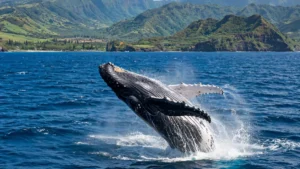
Further out, the Ligurian Sea holds bottlenose dolphins and striped dolphins, seen from the coast and from boats in the warmer months. Fin whales and sperm whales pass offshore in summer, feeding in the deep water of the Pelagos Sanctuary, and loggerhead turtles are occasionally seen at the surface. These are animals of the open sea, but Monaco is one of the best places on this coast to look for them.
Garden birds, lizards and the small life of the city
Not all of Monaco’s wildlife is in the sea. The gardens of the principality, from the Exotic Garden on the cliff to the small parks of Monte Carlo, hold blackbirds, robins and great tits, and the pines hold goldcrests and short-toed treecreepers. The gardens are small, but they are the green heart of the city.
The common wall lizard basks on the sunny rocks and walls of Le Rocher and the harbour, and the Moorish gecko hunts insects on the walls at night, its pale body easy to spot under a light. The island animals of the Mediterranean include many of the same lizards.
Bats are the only wild land mammals of Monaco with any real presence, and the common pipistrelle hunts insects over the gardens and the harbour at dusk, roosting in the gaps of the old buildings. Rats and mice live in the city as they do in every port, and a red fox may slip in from the French hills at night, but no larger land mammal lives here.
Where to see Monaco’s wildlife
Yellow-legged gulls are best over Port Hercule and the cliffs of Le Rocher, where they nest on the rooftops and hunt over the harbour all year. Go at dawn, when they call loudly from the palace rock.
The fish of the Larvotto reserve are best seen by snorkelling from the beach at Larvotto, where the clear water holds damselfish, wrasse and sea bream over the rocks. The mountain animals of the Maritime Alps live just inland, and the hills above the city hold far richer wildlife, so a short trip into France rewards any visitor who wants more than the coast.
Dolphins are best from a boat trip out of Port Hercule in summer, when bottlenose and striped dolphins feed in the Ligurian Sea. The garden birds are best in the Exotic Garden in the morning, and the wall lizards are easiest on the sunny walls of Le Rocher at midday.
| Species | Where to look | Best season | How likely is a sighting |
|---|---|---|---|
| Yellow-legged gull | Port Hercule and Le Rocher | All year | Certain, all day |
| Mediterranean shag | Rocks at the foot of the cliffs | All year | Fair from the shore |
| Dusky grouper | Larvotto marine reserve | Summer, snorkelling | Fair in the reserve |
| Bottlenose dolphin | Ligurian Sea, off the coast | Summer, from a boat | Fair on a boat trip |
| Common wall lizard | Sunny walls of Le Rocher | Spring to autumn | Good at midday |
| Common pipistrelle | Gardens and the harbour | Summer, at dusk | Good at dusk |
| Peregrine falcon | Cliffs above the harbour | Spring to autumn | Low, needs patience |
Best seasons for wildlife watching
Spring is the finest season. The swifts return to the rooftops, the garden birds sing in the parks, and the wall lizards emerge to bask on the sunny walls. It is also the most sensitive season, so keep to paths and give every animal more space than you think it needs.
Summer is the easiest season for the sea, with warm, clear water for snorkelling the Larvotto reserve and the best chance of dolphins from a boat. Autumn brings seabird passage along the coast, and the gulls gather in larger numbers over the harbour.
Winter is the quiet season, but the yellow-legged gulls are present all year, cormorants pass through the harbour, and the garden birds are easiest to see when the trees are bare.
Staying safe around Monaco’s wildlife
Monaco’s wild animals are usually calm, but they deserve respect, and the gulls most of all. Never feed the gulls, never approach a nest on a rooftop or a cliff, and never leave food or rubbish where wild animals can reach it. Keep your distance, take care on the slippery rocks at the foot of the cliffs, and never swim in the harbour itself.
Monaco wildlife watching checklist
- Watch the yellow-legged gulls over Port Hercule at dawn, when they call from Le Rocher.
- Snorkel the Larvotto marine reserve in summer for damselfish, wrasse and sea bream.
- Take a boat trip out of Port Hercule in summer for bottlenose and striped dolphins.
- Walk the Exotic Garden in the morning for warblers and garden birds.
- Look for wall lizards basking on the sunny walls of Le Rocher at midday.
- Leave no trace: take your rubbish home and keep to marked paths.
Frequently asked questions
What is the most famous animal in Monaco?
The yellow-legged gull is the most famous, nesting on the rooftops of Monte Carlo and hunting over Port Hercule. The dusky grouper of the Larvotto reserve is the best-loved fish of the coast.
Are there any wild land mammals in Monaco?
Almost none. Bats are the only wild land mammals with any real presence, hunting over the gardens and the harbour at dusk. No larger land mammal lives here, and a fox may only slip in from the French hills at night.
What animal lives only in Monaco?
No land mammal lives only in Monaco. The country holds no endemic land mammal, and almost no land wildlife at all — its wildlife is that of the Mediterranean coast and sea.
When is the best time to see dolphins in Monaco?
Dolphins are best in summer, from a boat trip out of Port Hercule into the Ligurian Sea. Bottlenose and striped dolphins feed offshore in the warmer months.
Can I snorkel with the fish in Monaco?
Yes. The Larvotto reserve is the best place to snorkel, with damselfish, wrasse, sea bream and mullet in the clear water off the beach. The reserve is protected, so look but do not touch.
Where can I see gulls in Monaco?
Yellow-legged gulls are everywhere in Monaco, and they are best over Port Hercule and the cliffs of Le Rocher, where they nest on the rooftops. Go at dawn.
Conclusion
Monaco’s wildlife rewards patience: yellow-legged gulls over the harbour, fish in the clear water of the Larvotto reserve, dolphins in the Ligurian Sea, and wall lizards on the sunny walls of Le Rocher are all within reach if you plan around the seasons and look closely at the sea.
The next step is to pick one species and one season — a dawn watch over Port Hercule, a summer snorkel at Larvotto, or a summer boat trip for dolphins — and plan around it.