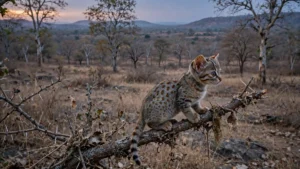
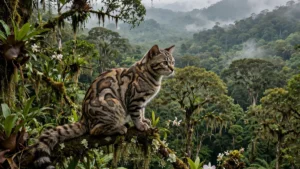
San Marino animals include roe deer and wild boar in the oak and chestnut woods of the Apennine hills, red foxes and badgers in the scrub and farmland, and hoopoes, kestrels and peregrine falcons around the cliffs of Monte Titano. If you are wondering which animals live in San Marino, the short answer is this: the wildlife is the central Apennines in miniature — deer, boar, foxes, badgers, hares and hill birds — in a country of just 61 square kilometres, with no endemic land mammal and no large predators.
San Marino is one of the smallest and oldest republics in the world, a hill country entirely surrounded by Italy, rising from the plains of Emilia-Romagna to the limestone ridge of Monte Titano. Its wildlife is easy to overlook, yet the wooded slopes, dry scrub and old stone walls hold a surprising amount of life for so small a place.
Key takeaways
- San Marino animals are the animals of the central Apennines: roe deer, wild boar, red foxes, badgers, hares and stone martens.
- The cliffs of Monte Titano hold peregrine falcons and kestrels, and the hills hold hoopoes, jays, blackbirds and warblers.
- San Marino has no endemic land mammal: no mammal lives only in San Marino, and there are no wolves, bears or lynx.
- The best wildlife is in the wooded slopes and scrub below Monte Titano, away from the busy old town.
- Dawn and dusk are best for mammals, spring and early summer for birds, and autumn for wild boar signs.
What makes San Marino’s wildlife special
San Marino sits on the eastern edge of the Apennines, where the mountains meet the farmland of the Adriatic coast. Woodland animals from the mountains live a short walk from farmland birds of the lowlands, and the whole country can be crossed on foot in a day.
San Marino has no endemic land mammal: no mammal lives only in San Marino. Instead it holds a well-kept corner of the Apennines, where the same animals as the hills of Emilia-Romagna and the Marche live in oak and chestnut woods, dry scrub and old farmland. The country is tiny, but more than a third of it is wooded or scrub, and that green cover is the heart of its wildlife.
The cliffs of Monte Titano are the other half of the story. The limestone ridge that carries the three towers is a hunting ground for peregrine falcons, and its scrubby slopes are the haunt of the hoopoe, one of the most striking birds of the Sammarinese hills.
The great mammals of the hills
The roe deer is San Marino’s most graceful animal, living in the oak and chestnut woods below Monte Titano. The bucks are small and neat, with short antlers, and the does graze the woodland edges at dawn and dusk. Roe deer are shy but common in the quieter valleys, and their tracks in the soft earth are easy signs of their presence.

Wild boar root through the woods, turning over the leaf litter in search of acorns, chestnuts, roots and fungi. The animals are mostly active at night and hard to see, but their signs are everywhere in autumn: rooted earth, muddy wallows and tracks along the paths. Among the predators, the red fox is common in the scrub and farmland, hunting mice, voles and rabbits at dawn and dusk, and the stone marten hunts in the old woods and around farm buildings.
The badger lives in the woods and hedgerows, most active after dark, and the forest animals of the hills also include red squirrels, dormice and bank voles. Hares run in the open fields of the lower slopes, and the crested porcupine, a large spiny rodent of the Italian hills, is present in the woods and scrub, most often seen only by the quills it leaves on the paths.
Wolves and bears do not live in San Marino. Wolves have returned to the wider Apennines, and a lone animal may pass through from time to time, but they are not residents, and brown bears have been absent for centuries. The largest hunter a visitor is likely to meet is the fox.
Birds of Monte Titano and the hills
The cliffs of Monte Titano are the birdwatching heart of the country. The peregrine falcon nests on the limestone crags, and the kestrel hovers over the scrubby slopes below, watching for voles and lizards. Ravens croak over the ridge, and the crag martin sweeps along the rock faces in summer.
The woods and scrub hold a rich cast of birds of their own. The hoopoe, with its pink crest, long curved bill and black-and-white wings, feeds on the ground in the dry meadows and along the old stone walls. Jays call in the oak woods, blackbirds sing from the hedgerows, and the owls of San Marino include the tawny owl of the woodlands and the little owl of the old walls and farm buildings, both most often heard rather than seen.
In the scrub and farmland, warblers sing from the bushes in spring, goldfinches feed on thistles, and the green woodpecker laughs from the old trees. The mountain animals of the ridge include the alpine swift, which screams over the towers of Monte Titano on summer evenings, and the rock bunting of the sunny, rocky slopes.
Reptiles, amphibians and small life
Not all of San Marino’s wildlife is large. The sunny stone walls and dry slopes are the home of lizards: the common wall lizard basks on almost every old wall, and the green lizard, a large and brightly coloured lizard, hunts insects in the scrub and hedgerows. The Aesculapian snake, a long, harmless snake, climbs trees and old walls in search of mice and birds’ eggs.
The small streams and damp hollows hold common frogs and toads, and summer evenings fill with the calls of tree frogs from the wet meadows. Butterflies are a delight of the hills: swallowtails, clouded yellows and many blues and fritillaries fly over the flowery meadows in late spring and summer, and the old woods hold stag beetles, one of the largest beetles in Europe.
Where to see San Marino’s wildlife
Roe deer are best in the wooded slopes below Monte Titano, where the oak and chestnut woods hold the largest numbers. Go at dawn, walk quietly along the woodland paths, and watch the edges where the deer come out to graze. Wild boar signs are easiest in the same woods in autumn, when the animals root the earth in search of acorns and chestnuts.
Peregrine falcons and kestrels are best around the cliffs of Monte Titano, where they hunt over the ridge and the slopes below. San Marino’s birds are best looked for on the paths below the towers, away from the crowds of the old town, much as the wildlife of Luxembourg rewards quiet paths away from the capital. Hoopoes are best in the dry meadows and along the old stone walls of the lower slopes in spring and early summer, when they feed on the ground in the open.
Badgers and foxes are easiest at dusk in the scrub and farmland of the lower slopes, and the old walls are the best places to watch wall lizards basking in the sun. The woods of the valleys are best for red squirrels and jays, and for the tawny owl, which calls from the old trees after dark.
| Species | Where to look | Best season | How likely is a sighting |
|---|---|---|---|
| Roe deer | Woods below Monte Titano | All year, at dawn and dusk | Fair |
| Wild boar | Woods of the slopes | Autumn, at dusk | Fair |
| Red fox | Scrub and farmland | All year, at dawn and dusk | Good |
| Hoopoe | Dry meadows and old stone walls | Spring to early summer | Good |
| Peregrine falcon | Cliffs of Monte Titano | Spring to summer | Fair |
| Badger | Woods and hedgerows | All year, after dark | Low |
| Wall lizard | Old stone walls | Spring to autumn | Very good |
Best seasons for wildlife watching
Spring is the finest season. The hoopoes return to the dry meadows, the warblers sing from the scrub, the meadows fill with flowers and butterflies, and the roe deer are easy to see in the fresh green of the woods. It is also the most sensitive season, so keep to paths and give every animal more space than you think it needs.
Summer is the easiest season for the birds of the cliffs, with peregrines and kestrels hunting over Monte Titano and swifts over the towers in the evening. Autumn brings the wild boar into the woods in search of acorns and chestnuts.
Winter is the quiet season, and the hardest for watching, but deer tracks are easiest to find in the mud after rain, and the fields hold flocks of finches and buntings from the north.
Staying safe around San Marino’s wildlife
San Marino’s wild animals are usually calm, but they deserve respect, and the wild boar most of all. Never approach a boar, never walk between a sow and her piglets, and never leave food or rubbish where wild animals can reach it. Keep your distance, and walk with a local guide in the woods if you want to see deer and boar.
San Marino wildlife watching checklist
- Walk the wooded slopes below Monte Titano at dawn for roe deer.
- Scan the cliffs of Monte Titano in spring for peregrines and kestrels.
- Listen for hoopoes in the dry meadows and along the old stone walls.
- Look for wild boar signs in the woods in autumn: rooted earth, muddy wallows and tracks.
- Watch the old stone walls on a warm day for wall lizards basking in the sun.
- Leave no trace: take your rubbish home and keep to marked paths.
Frequently asked questions
What is the most famous animal in San Marino?
The roe deer is the best-known mammal, grazing the woodland edges below Monte Titano at dawn and dusk. The hoopoe is the best-loved bird of the hills.
Are there wolves and bears in San Marino?
No, there are no resident wolves or bears in San Marino. Wolves have returned to the wider Apennines and a lone animal may pass through, but they do not live here, and brown bears have been absent for centuries.
What animal lives only in San Marino?
No land mammal lives only in San Marino. The country holds no endemic land mammal, but it does hold roe deer, wild boar, foxes, badgers, hoopoes and peregrine falcons.
When is the best time to see roe deer in San Marino?
Roe deer are best in the woods below Monte Titano at dawn and dusk in spring and early summer, when they come out to graze at the woodland edges.
Can I see hoopoes in San Marino?
Yes. Hoopoes feed on the ground in the dry meadows and along the old stone walls from spring to summer. Listen for their soft, repeated call, and watch for their pink crest and black-and-white wings.
Where can I see peregrine falcons in San Marino?
Peregrine falcons nest on the limestone cliffs of Monte Titano and hunt over the ridge from spring to summer. Watch the cliffs from the paths below the towers, away from the crowds of the old town.
Conclusion
San Marino’s wildlife rewards patience: roe deer in the woods below Monte Titano, hoopoes in the dry meadows, peregrines over the cliffs, and wall lizards on the old stone walls are all within reach if you plan around the seasons and walk quietly.
The next step is to pick one species and one season — a spring walk for hoopoes, a summer evening below the towers for peregrines, or an autumn morning in the woods for deer and boar signs — and plan your visit around it.