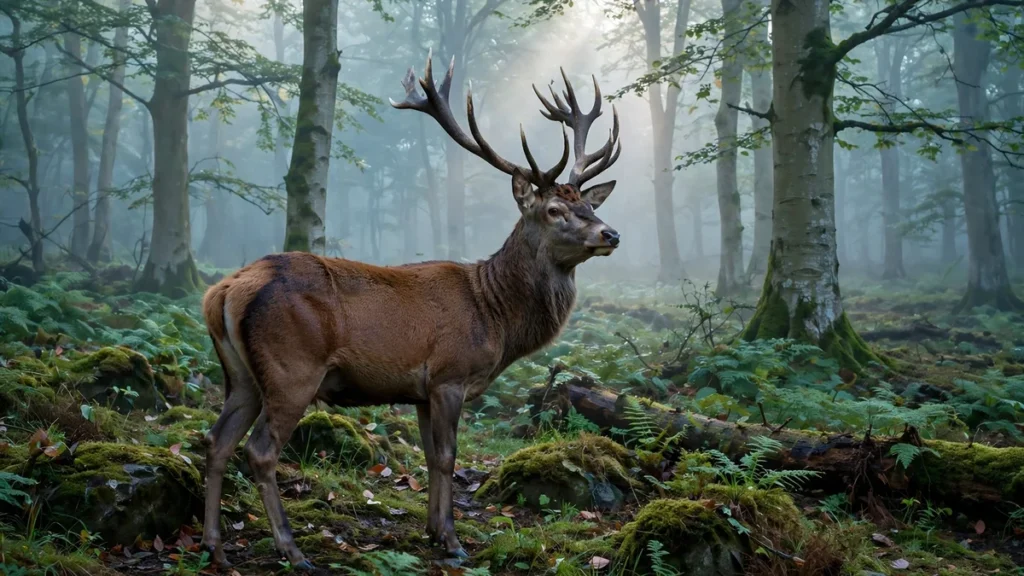
Luxembourg animals include red deer and wild boar in the forests of the Ardennes, roe deer and foxes in the meadows and woodland edges, black storks and kingfishers along the rivers, and bats in the old mines and forests of the Mullerthal. If you are wondering which animals live in Luxembourg and where to see them, the short answer is this: the northern forests hold deer, boar, badgers and pine martens, the rivers and reservoirs hold herons, kingfishers and black storks, and the rocky valleys of the east hold bats, peregrines and dippers.
Luxembourg is one of the smallest countries in Europe, and its wildlife is easy to miss if you only pass through the capital. Yet between the forested hills of the north and the river valleys of the south it holds a surprising mix of forest, river and meadow animals.
Key takeaways
- Luxembourg holds red deer, roe deer and wild boar in the forests of the Ardennes, the wooded hills of the north known as the Oesling.
- The rivers of the country, the Sure, the Our and the Moselle, are the best places for birds, with black storks, kingfishers, herons and dippers along their banks.
- Badgers, pine martens, foxes and red squirrels live in the forests across the country, and bats roost in the old mines and caves of the Mullerthal.
- Luxembourg has no endemic land mammal: no mammal lives only in Luxembourg, but its forests are among the best-kept in western Europe.
- Dawn and dusk are best for mammals, spring and early summer for the birds of the rivers, and autumn for the deer rut in the forests of the north.
What makes Luxembourg’s wildlife special
Luxembourg sits where three worlds meet: the Ardennes forests of the north, the river valleys of the Moselle in the east, and the farmland and meadows of the south. That meeting of landscapes is what makes its wildlife worth seeking out.
Luxembourg has no endemic land mammal: no mammal lives only in Luxembourg. What it has instead is a well-kept corner of the Ardennes, where the same large mammals as the forests of Belgium and Germany live in woodland that has been managed for centuries. The country is small, but more than a third of it is forest, and that forest is the heart of its wildlife.
The black stork, a shy forest bird that nests far from people, has returned to the quiet valleys of the north, and the beaver has come back to the rivers of the country after a long absence. Both are signs of how clean and undisturbed the forests and rivers of Luxembourg have become.
The great mammals of the Ardennes
The red deer is Luxembourg’s most impressive animal, living in the forests of the Oesling, the Luxembourg part of the Ardennes, in the north of the country. The stags are large and the autumn rut fills the valleys with roaring, but the forest is dense and the deer are shy, so a sighting takes a guide, an early start and patience.
Roe deer are far easier to see, grazing in the meadows and forest edges at dawn and dusk across the whole country. Wild boar root through the oak and beech woods of the north, and their tracks and turned-over earth are easy signs of their presence even when the animals themselves stay hidden. Among the predators, the red fox is common in farmland and forest edges, and the pine marten hunts in the old woods.
The badger lives in the forests and hedgerows, most active after dark, and the forest animals of Luxembourg also include red squirrels, dormice and bank voles. Wolves have returned to the wider Ardennes region in recent years, but they are only occasional visitors to Luxembourg, not residents.
The beaver has returned to the rivers of Luxembourg, where its dams and gnawed trees are easy signs of its presence along the Sure and the Our. Otters are rare but present in the cleanest rivers, most active at dawn, and the rivers of the north are among the best places in the country to look for their tracks.
Birds of the rivers and the forests
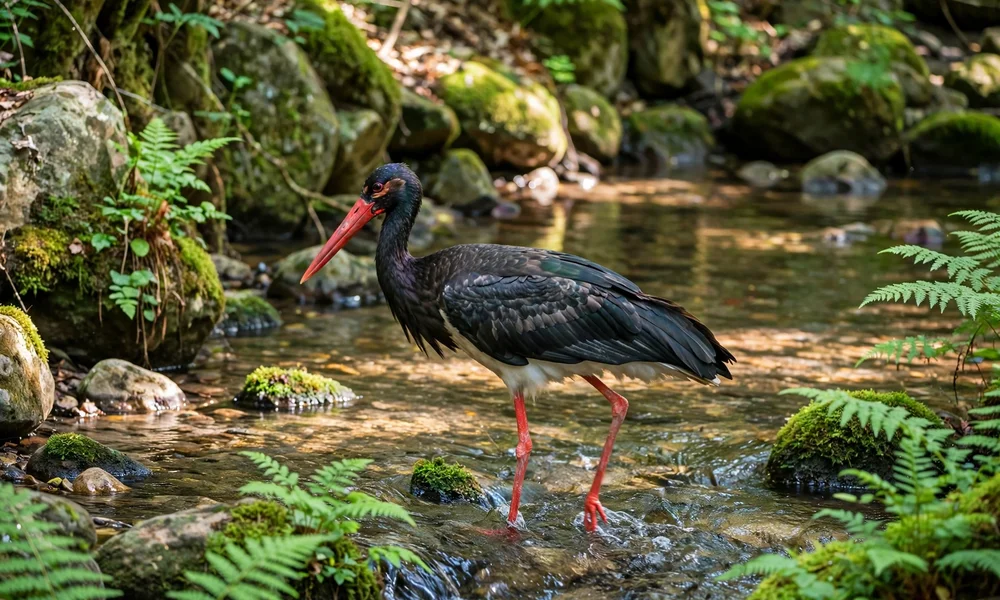
The rivers of Luxembourg are the birdwatching heart of the country. The kingfisher flashes along the Sure and the Our, and the dipper walks the fast streams of the Mullerthal and the north. Grey herons stand in the shallows of the reservoirs, and the black stork, a shy bird of the quiet valleys, nests in the old forests of the Oesling.
The forests hold a rich cast of birds of their own. The owls of Luxembourg include the tawny owl of the woodlands and the long-eared owl of the forest edges, and the black woodpecker, the largest woodpecker in Europe, drums in the old beech forests of the north. Buzzards circle over the meadows.
In the rocky valleys of the Mullerthal, the peregrine falcon nests on the sandstone cliffs, and the raven croaks over the forests.
Bats, small mammals and life in the valleys
Not all of Luxembourg’s wildlife is large. The old mines and caves of the Mullerthal and the south are among the most important bat roosts in the region, holding greater mouse-eared bats, Bechstein’s bats and several other species through the winter. In summer, the bats hunt over the rivers and meadows at dusk.
The meadows and hedgerows hold hares, and the nocturnal animals of Luxembourg include the badger, the pine marten and the fox, all most active after dark.
Adders bask on sunny slopes in the Ardennes, and the grass snake hunts frogs along the rivers. The ponds and marshes hold common frogs and newts, and the summer evenings fill with the calls of frogs from the reed beds of the reservoirs.
Where to see Luxembourg’s wildlife
Red deer are best in the forests of the Oesling, where the old beech and oak woods of the north hold the largest herds. The autumn rut, when the stags roar, is the best time of all.
Black storks and kingfishers are best along the Sure and the Our, where the rivers wind through the valleys of the north. The wetland animals of the reservoirs are reached by the tracks along the lake shores, and the birds are most active in the morning and evening. Dippers are best on the fast streams of the Mullerthal, where they walk the rocks in the clear water.
Bats are easiest in the Mullerthal, where the old mines and caves hold winter roosts, and the forests of the north are the best places to watch them hunting at dusk in summer. Wild boar are easiest in the forests of the Oesling, where their tracks and rooted earth are easy to find even when the animals stay out of sight.
| Species | Where to look | Best season | How likely is a sighting |
|---|---|---|---|
| Red deer | Forests of the Oesling | Autumn, during the rut | Fair at dawn and dusk |
| Wild boar | Oak and beech woods of the north | All year, at dusk | Fair, look for tracks |
| Black stork | Quiet valleys of the Sure and Our | Spring to summer | Low, needs patience |
| Kingfisher | Rivers of the Sure and Our | All year | Good along the banks |
| Greater mouse-eared bat | Mullerthal caves and mines | Summer, at dusk | Good with a guide |
| Eurasian beaver | Rivers of the Sure and Our | All year, at dusk | Fair, look for dams |
| Peregrine falcon | Sandstone cliffs of the Mullerthal | Spring to summer | Fair over the cliffs |
Best seasons for wildlife watching
Spring is the finest season. The black storks return to the valleys of the north, the kingfishers are busy along the rivers, and the meadows fill with flowers and butterflies. It is also the most sensitive season, so keep to paths, keep dogs on a lead and give every animal more space than you think it needs.
Summer is the easiest season for the rivers and for the bats of the Mullerthal, which hunt over the meadows at dusk. Autumn brings the deer rut in the forests of the north, when the stags roar in the valleys.
Winter is the quiet season, and the hardest for watching, but deer tracks are easiest to find in the snow of the Ardennes forests, and the reservoirs hold great flocks of ducks and geese from the north.
Staying safe around Luxembourg’s wildlife
Luxembourg’s wild animals are usually calm, but they deserve respect, and the wild boar most of all. Never approach a boar, never walk between a sow and her piglets, and never leave food or rubbish where wild animals can reach it. Keep your distance from any animal you meet, and walk with a local guide in the forests of the north.
Luxembourg wildlife watching checklist
- Book a guided deer walk in the forests of the Oesling, and go early in the morning.
- Walk the banks of the Sure and the Our in late spring for kingfishers and black storks.
- Visit the Mullerthal in summer at dusk to watch bats hunting over the meadows.
- Scan the sandstone cliffs of the Mullerthal on a clear day for peregrine falcons.
- Never feed wild animals, and never use food or calls to lure them closer for a photograph.
- Leave no trace: take your rubbish home and keep to marked paths in the forests and along the rivers.
Frequently asked questions
What is the most famous animal in Luxembourg?
The red deer is the most famous, and the stags of the Oesling forests are one of the best reasons to visit the north. The black stork is the best-loved bird of the quiet river valleys.
Are there wolves and bears in Luxembourg?
No, there are no resident wolves or bears in Luxembourg. Wolves have returned to the wider Ardennes region and may pass through from time to time, but they do not live here, and brown bears have been absent for centuries.
What animal lives only in Luxembourg?
No land mammal lives only in Luxembourg. The country holds no endemic land mammal, but it does hold red deer, wild boar, beavers and black storks, and its forests are among the best-kept in western Europe.
When is the best time to see red deer in Luxembourg?
Red deer are best in the forests of the Oesling in autumn, during the rut, when the stags roar in the valleys. They are most active at dawn and dusk, and a local guide greatly improves your chances.
Can I see black storks in Luxembourg?
Yes. Black storks nest in the quiet forests of the Oesling and hunt along the Sure and the Our from spring to summer. They are shy birds, so a sighting takes patience and a quiet approach.
Where can I see bats in Luxembourg?
Bats are best in the Mullerthal, where the old mines and caves hold important winter roosts. In summer, watch them hunting over the rivers and meadows at dusk, best with a local guide.
Conclusion
Luxembourg’s wildlife rewards patience: red deer in the forests of the Oesling, black storks along the rivers of the north, kingfishers on the Sure and the Our, and bats in the caves of the Mullerthal are all within reach if you plan around the seasons and go with a local guide.
The next step is to pick one species and one season — a spring walk along the Sure for kingfishers, a summer evening in the Mullerthal for bats, or an autumn morning in the Oesling forests for the deer rut — and plan your visit around it.














