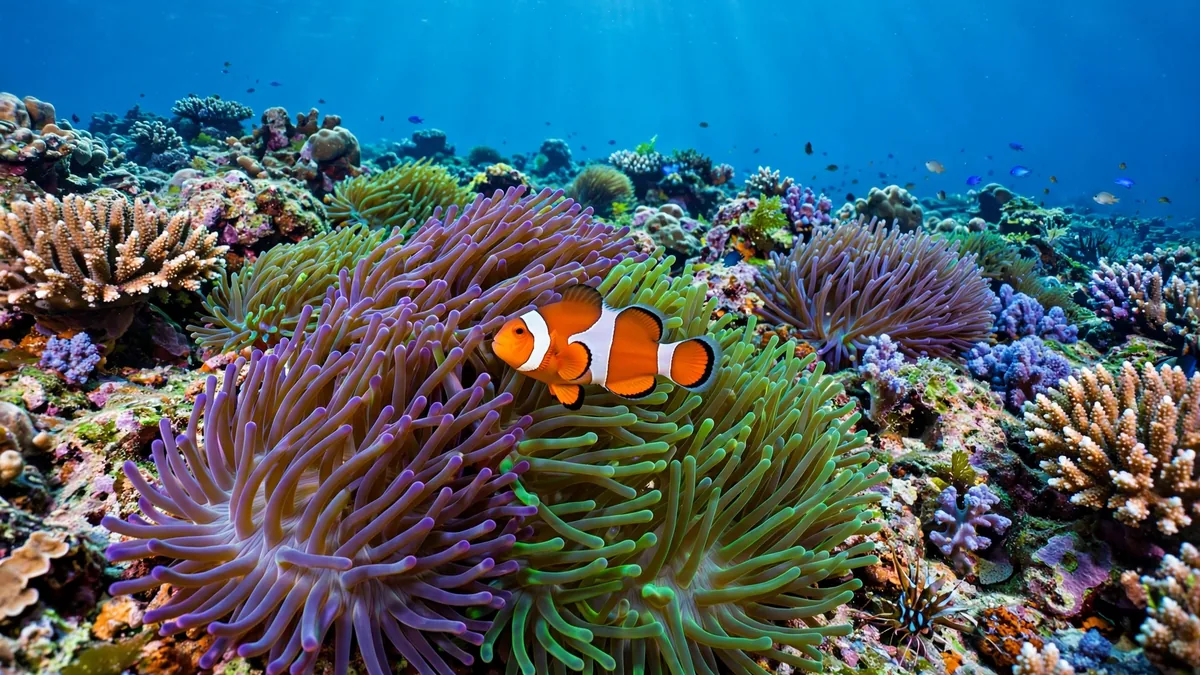
Coral reef animals are the creatures that live on and around the coral reefs of the warm, shallow seas, in some of the busiest and most colourful habitats on earth. If you are wondering what makes a reef such a crowded place, the short answer is this: the coral itself builds a maze of nooks, crannies and hiding places, and the warm, clear water is full of food, so thousands of kinds of fish, turtles, sharks, octopuses and eels live in a small space.
This guide covers the best-known coral reef animals, from clownfish and parrotfish to sea turtles, reef sharks and octopuses.
Key takeaways
- Coral reef animals include clownfish, parrotfish, sea turtles, reef sharks, octopuses, moray eels and rays.
- Clownfish live safely among the stinging tentacles of sea anemones, which get protection in return.
- Parrotfish crunch coral, and their feeding helps keep the reef clean and builds new sand.
- Sea turtles return to the same beaches where they were born to lay their own eggs.
- Reefs are found in warm, shallow, clear seas, and they support more kinds of animal than almost any other place in the sea.
Fish of the reef
The clownfish is the most famous fish of the reef, a small orange fish with white stripes that lives among the stinging tentacles of a sea anemone. The anemone’s sting would hurt most fish, but the clownfish is protected by a layer of slime on its skin, so it can swim safely among the tentacles. In return, the clownfish chases away fish that would eat the anemone, and its waste feeds the anemone too. It is one of the best-known partnerships in the sea.
The parrotfish is the gardener of the reef. It has a strong beak, like a parrot’s, which it uses to scrape algae from the coral and to crunch lumps of dead coral. The coral is ground up in the parrotfish’s gut and comes out as fine white sand, so the beaches of coral islands are made in part by parrotfish. Parrotfish are brightly coloured, in greens, blues and pinks, and they sleep at night in a cocoon of slime that hides their smell from hunters.
Other reef fish are just as striking. The angelfish is a flat, brightly patterned fish that grazes on sponges and algae, and the butterflyfish, with its long snout, picks tiny animals from the cracks of the coral. Like the ocean animals of the open sea, reef fish are strong swimmers, but they stay close to the coral, where food and shelter are always near.
Turtles, sharks and rays
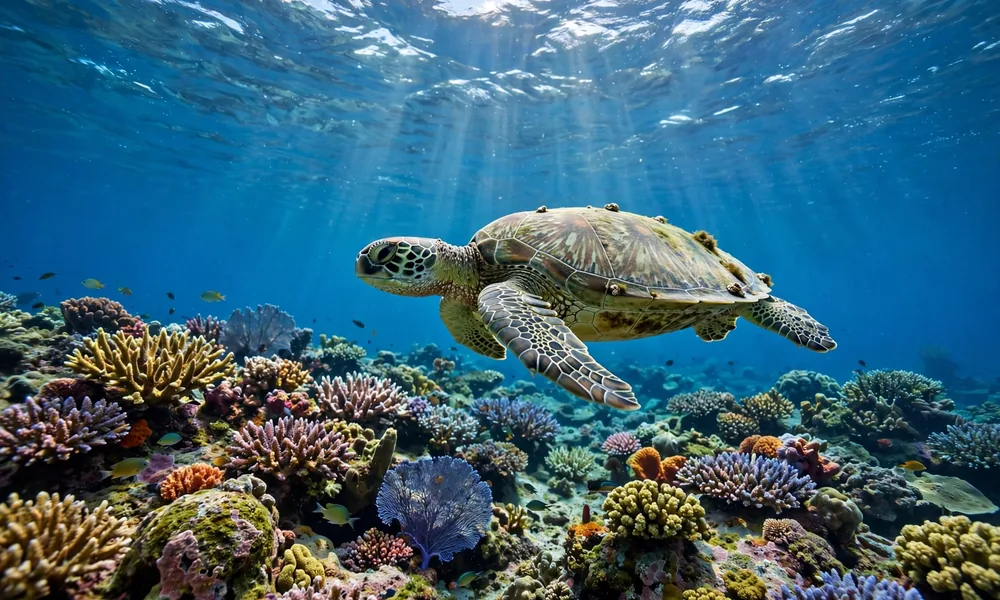
The green sea turtle is the gentle giant of the reef: a large turtle with a smooth, brown shell that grazes on seagrass and algae in the shallow water around the reef, and it can hold its breath for a long while as it feeds. Female green turtles come ashore at night to lay their eggs in the sand of the same beaches where they themselves were born, digging a nest with their flippers, laying their eggs and returning to the sea before dawn. The young hatch weeks later and dash for the water, where many are caught by birds and fish.
Reef sharks are the hunters of the reef, but they are smaller and shyer than the great sharks of the open ocean. The blacktip reef shark is a slim shark with black tips on its fins that patrols the shallow water at the edge of the reef, hunting small fish, and the whitetip reef shark rests under a coral ledge by day, hunting at night. Reef sharks keep the reef healthy by eating the sick and the slow.
Rays glide over the reef like great birds of the sea. The manta ray is the largest of them, a huge, flat animal with wing-like fins that sweeps through the water eating tiny plankton, and the spotted eagle ray is a smaller ray with a spotted back that digs in the sand for shellfish. Like the island animals of tropical shores, rays and turtles are at home in warm, shallow water, and they return to the same reefs year after year.
Octopuses, eels and other reef hunters
The octopus is the cleverest animal on the reef. It has eight arms, no bones at all, and a brain that lets it solve problems and squeeze through gaps no wider than its own eye. An octopus can change colour and texture in a moment, turning from bright red to sandy brown, or growing bumps on its skin to match the coral around it, and it can squirt a cloud of dark ink to confuse a hunter while it jets away. Octopuses live in dens in the coral, coming out at night to hunt crabs, shrimps and shellfish.
The moray eel is the reef’s most secretive hunter: a long, snake-like fish that lives in a hole in the coral, with only its head poking out, waiting for a fish to swim too close. When prey comes within reach, the eel darts out and drags it back into its hole. Moray eels have a second set of jaws in their throat that reaches forward to pull the prey down, and they often hunt at night, when the reef is quiet.
Other reef hunters work the reef in their own ways. The lionfish is a striped fish with long, venomous spines that it spreads like a fan to warn off attackers, and it hunts by cornering small fish against the coral. Like the nocturnal animals of the land, many reef hunters are most active at dawn and dusk, when the light is low.
How reef animals survive
Life on a reef is life in a crowd, and reef animals survive by finding their own corner of it. Some live in the coral itself, like the clownfish in its anemone and the moray eel in its hole, while others patrol the open water above the reef. Colour is a big part of survival: bright colours warn hunters that a fish is poisonous or bad to eat, while camouflage lets a stonefish or an octopus vanish against the coral. Many reef fish change colour as they grow, because the young need to hide in different places from the adults.
Partnerships are everywhere on a reef. Cleaner fish set up cleaning stations on the coral, and larger fish queue up to be cleaned, holding still with their mouths open while the small cleaners pick parasites from their skin and teeth. The cleaner gets a meal and the big fish gets clean. Clownfish and anemones, moray eels and cleaner shrimps, and corals and the tiny algae that live inside them, all work the same way: each partner gives something and gets something back.
Food on a reef is never far away, but it has to be shared. The coral itself is built by tiny animals called polyps, which catch plankton from the water, and the reef they build gives shelter to everything else. Parrotfish keep the coral clean by scraping off the algae. Like the wetland animals that share a marsh, reef animals live in a web where each kind depends on the others, and the reef stays healthy only while the web holds.
Coral reef animals and people
People have always depended on coral reefs, and reef animals have always been part of that life. Reefs give food to fishing communities, shelter coasts from storms, and draw divers and snorkellers from all over the world. The clownfish, the turtle and the reef shark are known to millions who have never seen a reef, and they have become symbols of the sea itself.
Reefs are under pressure from warming seas, pollution, overfishing and damage from boats and anchors, and when a reef is damaged its animals have nowhere to go. The good news is that reefs can be protected: marine reserves give fish and turtles a safe place to feed and breed, fishing can be managed so that stocks recover, and coral can be grown and planted back on damaged reefs. Protecting reef animals means protecting the whole reef: the clean, warm water, the coral, the seagrass and the open sea around it.
| Animal | Type | Where it lives | Best-known fact |
|---|---|---|---|
| Clownfish | Fish | Anemones on reefs of the Indo-Pacific | Lives safely among stinging tentacles |
| Parrotfish | Fish | Tropical reefs worldwide | Makes sand by crunching coral |
| Green sea turtle | Reptile | Warm seas worldwide | Returns to its birth beach to nest |
| Blacktip reef shark | Fish | Shallow reefs of the Indo-Pacific | Patrols the reef edge for small fish |
| Octopus | Mollusc | Reefs worldwide | Changes colour and solves problems |
| Moray eel | Fish | Holes in tropical reefs worldwide | Has a second set of jaws in its throat |
| Manta ray | Fish | Warm open water near reefs | Glides on wing-like fins eating plankton |
| Lionfish | Fish | Reefs of the Indo-Pacific | Spreads venomous spines like a fan |
Coral reef animals checklist
- Start with the fish of the reef: clownfish, parrotfish, angelfish and butterflyfish.
- Remember the big animals: green sea turtles, blacktip reef sharks, whitetip reef sharks and manta rays.
- Do not forget the hunters: octopuses, moray eels, lionfish and stonefish of the coral cracks.
- Add the partnerships: clownfish and anemones, and cleaner fish at their cleaning stations.
- Check the facts: a parrotfish makes sand by crunching coral, and a turtle returns to its birth beach to nest.
- Use this guide for quizzes, school projects and trips, and add your own favourites.
Frequently asked questions
What animals live on coral reefs?
Coral reefs are home to clownfish, parrotfish, angelfish, sea turtles, reef sharks, rays, octopuses, moray eels, lionfish and many kinds of crab, shrimp and shellfish. Warm, shallow, clear seas hold the richest reefs.
Why do clownfish live in anemones?
The anemone’s stinging tentacles keep most fish away, but the clownfish is protected by a layer of slime on its skin, so it can live safely among them. In return, the clownfish chases away fish that would eat the anemone.
How do parrotfish make sand?
Parrotfish crunch lumps of dead coral with their strong beaks to get at the algae growing on it. The coral is ground up in the gut and comes out as fine white sand, which helps build the beaches of coral islands.
Do sea turtles return to the same beach?
Yes, female sea turtles return to the beaches where they themselves were born to lay their own eggs. They come ashore at night, dig a nest in the sand, lay their eggs and return to the sea before dawn.
Are reef sharks dangerous?
Reef sharks are smaller and shyer than the great sharks of the open ocean, and they rarely bother people. They patrol the reef for small fish, and they keep it healthy by eating the sick and the slow.
What is the best way to see coral reef animals?
Snorkelling and diving on a healthy reef are the best ways, in warm, clear water on a calm day. Go with a guide, do not touch the coral or the animals, and never stand on the reef, because the coral is fragile.
Conclusion
Coral reefs look still from the surface, but below the water they are among the busiest places on earth for wildlife. Clownfish hide in anemones, parrotfish crunch coral into sand, turtles graze the shallows, and sharks patrol the edge.
Slip into the warm, clear water and look closely at the coral, and you will see why the reef is worth protecting.