Malta animals include the blue rock thrush on the limestone cliffs, Yelkouan and Scopoli’s shearwaters breeding on the sea cliffs, Eleonora’s falcon hunting over the coast, honey buzzards and bee-eaters passing through on migration, and the Maltese wall lizard on the dry stone walls. If you are wondering which animals live in Malta and where to see them, the short answer is this: the cliffs hold shearwaters and the national bird, the garigue and valleys hold lizards, shrews and rabbits, and the sea holds dolphins, turtles and a wealth of fish.
Malta is a small, dry archipelago in the middle of the Mediterranean, and its wildlife is easy to miss if you only see the towns and the beaches. Yet between the sea cliffs of the west and the quiet valleys of the interior it holds a surprising mix of seabirds, migrants, lizards and sea life.
Key takeaways
- Malta holds Yelkouan and Scopoli’s shearwaters breeding on the sea cliffs, and the blue rock thrush, the national bird, on the limestone cliffs and old buildings.
- The islands are one of the best places in the Mediterranean for migrating birds, with honey buzzards, bee-eaters and harriers passing through in spring and autumn.
- The Maltese wall lizard is the islands’ best-known endemic reptile, living on dry stone walls and rocky ground across Malta and Gozo.
- Malta has no endemic land mammal: no mammal lives only in Malta, and the land mammals here are small and mostly introduced.
- Spring and autumn are best for migrating birds, summer evenings for shearwaters returning to the cliffs, and dawn for the birds of the valleys.
What makes Malta’s wildlife special
Malta sits in the middle of the Mediterranean, on the flyway between Europe and Africa, and that position is what makes its wildlife worth seeking out. Twice a year, in spring and in autumn, great numbers of birds pass over the islands on their way between the two continents.
Malta has no endemic land mammal: no mammal lives only in Malta. What it has instead is a seabird story. The shearwaters that breed on the cliffs of Malta are among the most important colonies in the Mediterranean, and the blue rock thrush, the national bird, sings from the limestone cliffs and the old fortifications. The land mammals are small: rabbits, hedgehogs and shrews, all introduced long ago.
The islands hold no native snakes except the harmless leopard snake, and the only endemic species are small ones: the Maltese wall lizard, the Maltese freshwater crab, and a handful of endemic plants and insects.
Seabirds of the cliffs
The Yelkouan shearwater is Malta’s most important seabird, breeding in burrows on the cliffs of the west and south coasts. The birds come ashore only at night, and on a summer evening you can watch them rafting on the sea off the cliffs before they return to their burrows after dark. Scopoli’s shearwater, larger and paler, breeds on the cliffs of Gozo and on the small island of Filfla.
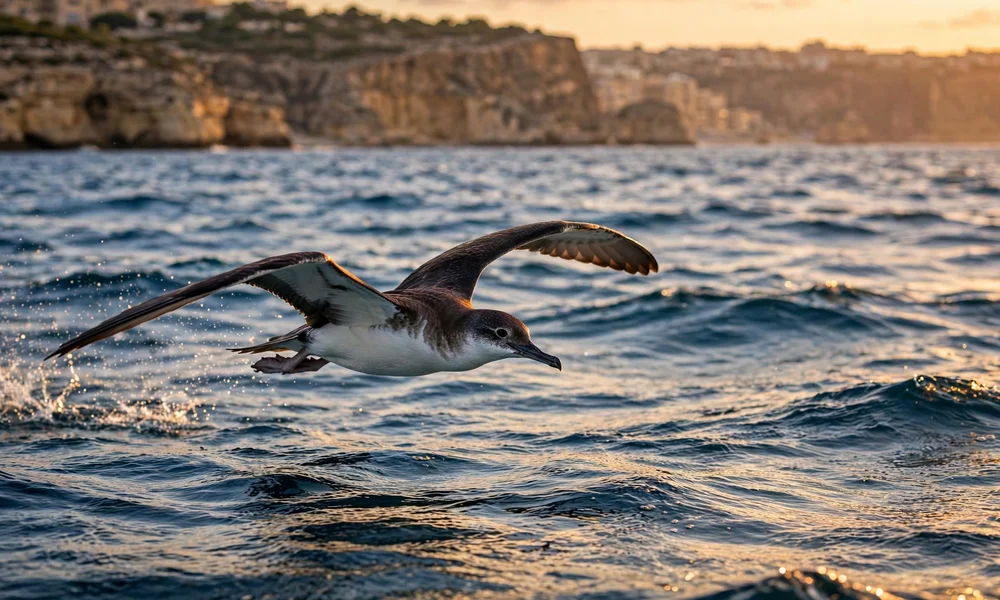
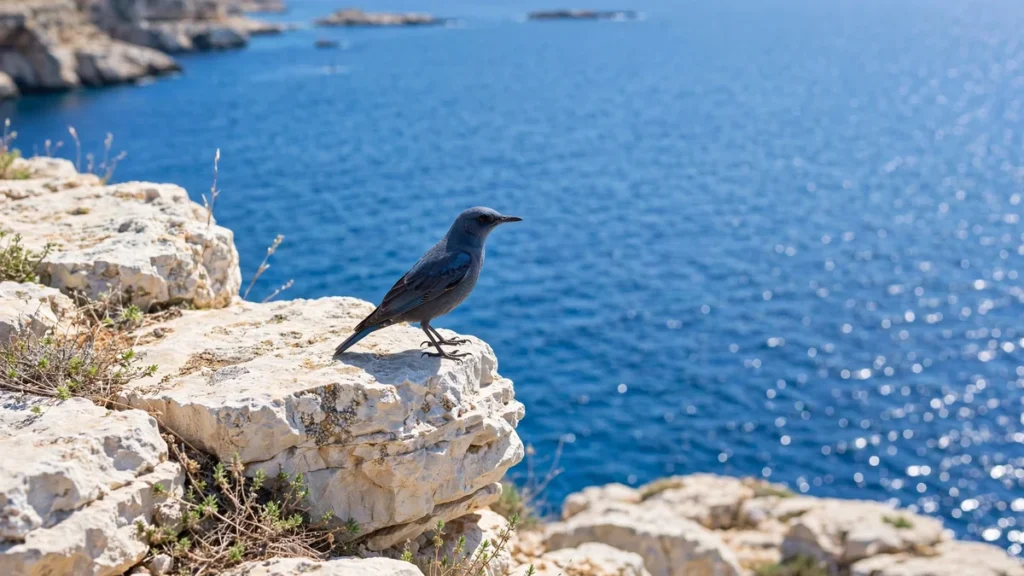
The blue rock thrush, the national bird of Malta, lives on the limestone cliffs and the old stone buildings of the islands. The male is a deep blue-grey, and his song carries across the cliffs in spring. Among the island animals of Malta, the thrush is the one most visitors remember, and it is easiest to see on the cliffs of the west coast and on Gozo.
Eleonora’s falcon hunts over the cliffs in late summer, timing its breeding to the autumn migration so that it can feed its young on the passing birds. The falcon is a rare and graceful sight, and the cliffs of the south and west are the best places to look for it. Cory’s shearwaters, as Scopoli’s shearwaters are also known, and storm petrels also breed on the offshore rocks.
The ocean animals off Malta include common dolphins and striped dolphins, which are seen from boats off the west coast, and loggerhead turtles, which pass through the waters around the islands.
Birds of passage and the valleys
Malta is one of the best places in the Mediterranean for migrating birds. In spring, honey buzzards, marsh harriers and bee-eaters pass over the islands in great numbers. In autumn, the migration runs the other way, and the cliffs hold wheatears, whinchats and pipits.
The valleys hold a rich cast of resident birds of their own. The owls of Malta include the barn owl, which hunts over the fields at night, and the short-eared owl, a winter visitor to the open ground. The Spanish sparrow nests in the towns and the countryside, and the Sardinian warbler sings from the scrub of the garigue.
In the garigue, the low scrubland of the islands, the spectacled warbler and the zitting cisticola nest among the thyme and the wildflowers.
Lizards, crabs and the small wildlife of the islands
Not all of Malta’s wildlife flies. The Maltese wall lizard, a subspecies-level endemic, lives on the dry stone walls, the rocky ground and the old buildings of the islands, and it is the reptile most visitors see. The males are brightly coloured in spring, with green backs and blue throats, and they bask on the warm limestone through the day.
The nocturnal animals of Malta include the hedgehog, which snuffles through the gardens and fields at night, and the shrew, a tiny mammal that lives in the stone walls and the scrub. The rabbit, introduced long ago, lives in the valleys and on the offshore islands, and the weasel, also introduced, hunts in the fields and the garigue.
The Maltese freshwater crab lives in the few permanent streams of the islands, in the valleys of Buskett and Girgenti, and it is one of the rarest animals in Malta. The garigue is rich in butterflies, bees and wildflowers, and the islands hold several endemic insects found nowhere else.
Where to see Malta’s wildlife
Shearwaters are best off the cliffs of the west coast, where the birds raft on the sea in the evening before returning to their burrows after dark. Go in summer, take binoculars, and watch from the cliff tops at dusk. The blue rock thrush is easiest on the limestone cliffs of the west and on Gozo, where it sings from the rocks in spring.
Migrating birds are best in the valleys of Buskett and Girgenti in spring and autumn, when the honey buzzards, bee-eaters and harriers pass over the islands. The wetland animals of the salt pans and the reservoirs are best in winter, when the waders and ducks gather on the shallow water.
Lizards are easiest on the dry stone walls and the rocky ground of the garigue, where the Maltese wall lizard basks in the sun through the day. Dolphins are best from a boat off the west coast.
| Species | Where to look | Best season | How likely is a sighting |
|---|---|---|---|
| Blue rock thrush | Limestone cliffs of the west coast | Spring, when singing | Good on the cliffs |
| Yelkouan shearwater | Sea cliffs of the west and south | Summer evenings | Good from the cliffs at dusk |
| Scopoli’s shearwater | Cliffs of Gozo and Filfla | Summer | Fair from a boat |
| Eleonora’s falcon | Cliffs of the south and west | Late summer to autumn | Low, needs patience |
| Maltese wall lizard | Dry stone walls and garigue | All year, in sunshine | Very good in the sun |
| Honey buzzard | Valleys of Buskett and Girgenti | Spring and autumn migration | Good on a clear day |
| Common dolphin | Waters off the west coast | Summer, from a boat | Fair on a calm day |
Best seasons for wildlife watching
Spring is the finest season. The honey buzzards and bee-eaters pass over the islands, the blue rock thrush sings from the cliffs, and the garigue fills with flowers and butterflies. It is also the most sensitive season, so keep to paths, keep dogs on a lead and give every animal more space than you think it needs.
Summer is the easiest season for the shearwaters and for the lizards, which bask on the warm limestone through the day. Autumn brings the second migration, when the falcons hunt over the cliffs and the valleys fill with passing birds.
Winter is the quiet season, and the hardest for watching, but the salt pans and the reservoirs hold waders, ducks and herons, and the fields hold stonechats and pipits from the north.
Staying safe around Malta’s wildlife
Malta’s wild animals are usually calm, but they deserve respect, and the cliffs most of all. Keep well back from the cliff edges, never climb down to the shearwater burrows, and never leave food or rubbish where wild animals can reach it. Keep your distance from any animal you meet, and watch the sea from the shore on a calm day.
Malta wildlife watching checklist
- Watch the cliffs of the west coast at dusk in summer for shearwaters rafting on the sea.
- Walk the valleys of Buskett and Girgenti in spring for honey buzzards, bee-eaters and warblers.
- Look for the blue rock thrush singing from the limestone cliffs of the west and on Gozo.
- Scan the dry stone walls and the garigue in the sunshine for Maltese wall lizards.
- Never feed wild animals, and never use food or calls to lure them closer for a photograph.
- Leave no trace: take your rubbish home and keep to marked paths on the cliffs and in the valleys.
Frequently asked questions
What is the most famous animal in Malta?
The blue rock thrush is the most famous, and it is the national bird of Malta, singing from the limestone cliffs and the old buildings. The Yelkouan shearwater is the best-loved seabird of the islands.
Are there snakes in Malta?
Yes, but only one native snake lives in Malta, the leopard snake, and it is harmless. No venomous snakes live on the islands, and the leopard snake is a shy animal that is rarely seen.
What animal lives only in Malta?
No land mammal lives only in Malta. The country holds no endemic land mammal, but it does hold the Maltese wall lizard, the Maltese freshwater crab and several endemic plants and insects, all found nowhere else.
When is the best time to see migrating birds in Malta?
Migrating birds are best in spring and autumn, when honey buzzards, bee-eaters and harriers pass over the islands on their way between Europe and Africa. The valleys of Buskett and Girgenti are the best places to watch them.
Can I see shearwaters in Malta?
Yes. Yelkouan shearwaters breed on the sea cliffs of the west and south coasts, and on a summer evening you can watch them rafting on the sea off the cliffs before they return to their burrows after dark.
Where can I see the blue rock thrush in Malta?
The blue rock thrush lives on the limestone cliffs of the west coast and on Gozo, where the male sings from the rocks in spring. It also lives on the old stone buildings and fortifications of the islands.
Conclusion
Malta’s wildlife rewards patience: shearwaters on the sea cliffs at dusk, the blue rock thrush singing from the limestone, honey buzzards passing over the valleys in spring, and wall lizards basking on the dry stone walls are all within reach if you plan around the seasons and go with binoculars.
The next step is to pick one species and one season — a spring walk in the valleys of Buskett for migrating birds, a summer evening on the west coast cliffs for shearwaters, or a sunny morning in the garigue for wall lizards — and plan your visit around it.