Jungle animals are the creatures that live on the floor and in the understorey of dense lowland tropical forest, from jaguars padding through tangled undergrowth to poison dart frogs calling from the leaf litter. If you are wondering which animals live in the jungle and what makes jungle life different, the short answer is this: jaguars, tapirs, capybaras, anacondas, sloths, toucans, poison dart frogs and leaf-cutter ants live in the thick, shadowed growth at ground level, where the forest is dense, damp and crowded.
This guide covers the best-known jungle animals, how they survive in the dense understorey, and where to see them.
Key takeaways
- Jungle animals live on the forest floor and in the understorey of dense lowland tropical forest.
- Jaguars are the top hunters of the jungle floor, and tapirs, capybaras and peccaries are the large plant-eaters they hunt.
- Poison dart frogs are small, brightly coloured frogs whose skin carries poison that warns hunters away.
- Leaf-cutter ants carry pieces of leaf many times their own weight back to their nests, where they farm fungus on them.
- Sloths move slowly through the trees at the forest edge, and toucans feed on fruit where the jungle meets open ground.
What makes the jungle floor special
The jungle floor is a world of shade and damp. Above it, the trees join in a roof that lets only a little light through, so the ground is dim even at midday. The understorey is a tangle of saplings, vines, fallen leaves and rotting logs. It is a hard place to move through, but it is full of life, and most of that life stays close to the ground.
What makes the jungle floor special is how crowded it is. On a single patch of ground you can find a jaguar’s tracks, a tapir’s trail, a column of leaf-cutter ants, a poison dart frog on a leaf, and a sloth asleep in a low branch above you. The animals of the floor live in a maze, and they have learned to find food, avoid hunters and raise their young in the dark, damp tangle. That is the jungle in this guide: the dense lowland growth at ground level, not the open air above the trees.
Jaguars, tapirs and capybaras: mammals of the jungle floor
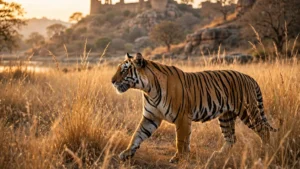
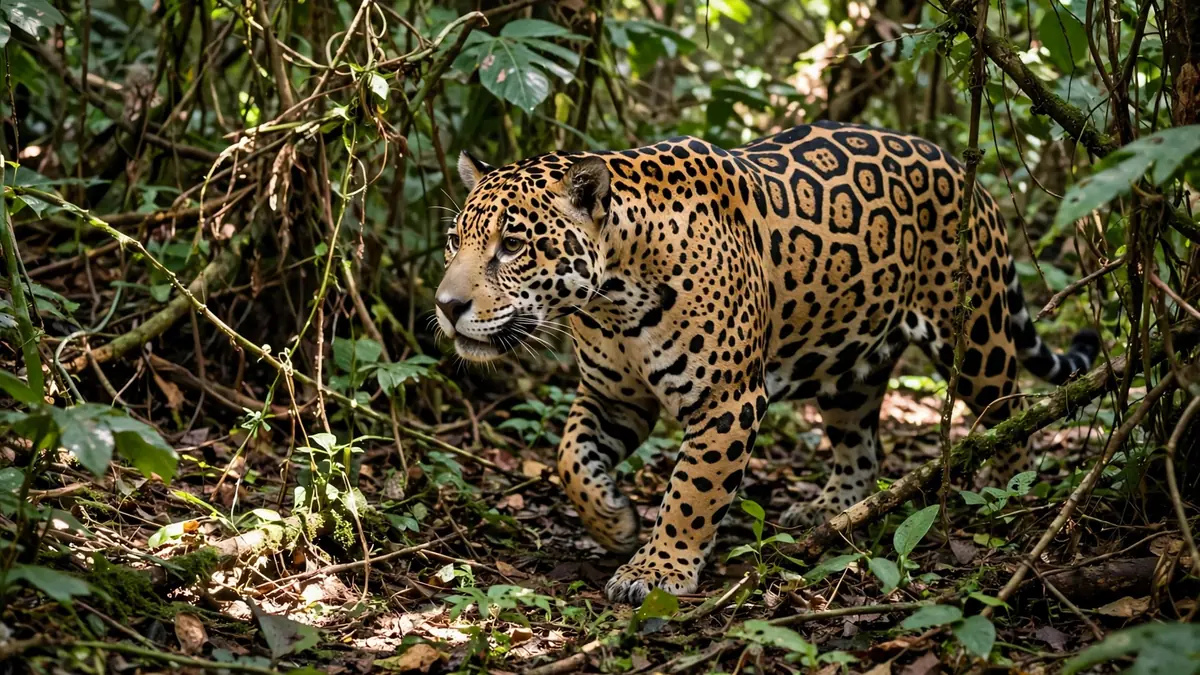
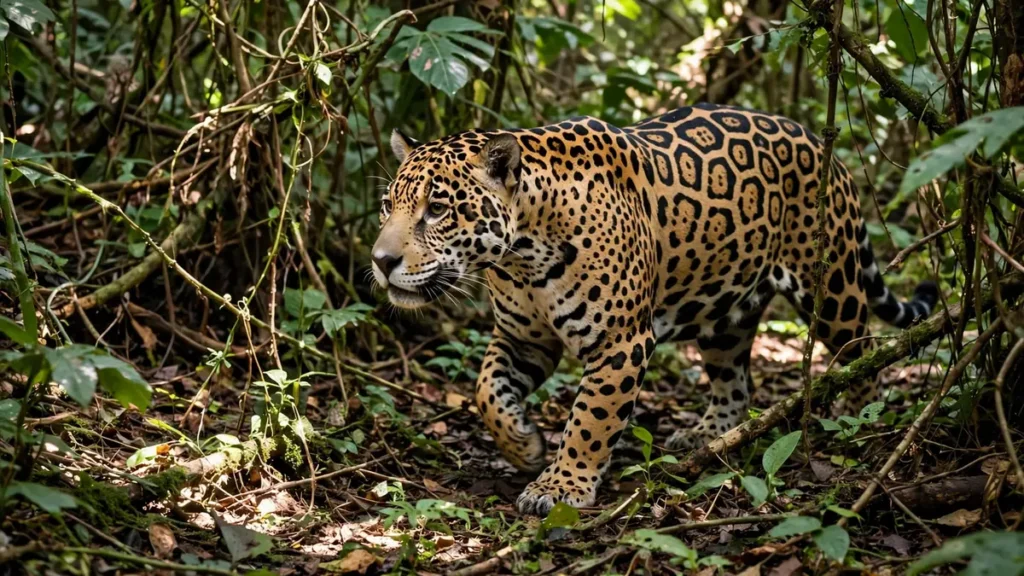
The jaguar is the top hunter of the jungle floor. It is a large, powerful cat with a spotted coat that breaks up its shape in the dappled light, and it hunts by stealth, moving silently through the undergrowth and striking from close range. Jaguars hunt tapirs, peccaries, capybaras and caimans, and they are strong swimmers. A jaguar is rarely seen, but its tracks in the mud are signs that it has passed.
The tapir is the largest land mammal of the jungle floor, a shy, pig-like animal with a short trunk for a nose, which it uses to pull leaves and fruit into its mouth. Tapirs are most active at night, and they love water: they swim well and wallow in muddy pools to cool down and to escape biting insects. Their trails through the undergrowth are clear paths in the tangle, and other animals use them too.
Capybaras are the largest rodents in the world, and they live in groups along the rivers and flooded clearings at the edge of the jungle. They are excellent swimmers, and they graze on grasses and water plants at the water’s edge. Like the predators that hunt them, jaguars and anacondas both take capybaras, so a capybara group is always alert. Peccaries, wild pigs of the jungle, travel in herds through the undergrowth, rooting in the leaf litter for roots, fruit and nuts.
Poison dart frogs, leaf-cutter ants and anacondas
Poison dart frogs are the brightest animals of the jungle floor, and their colour is a warning. These small frogs are blue, yellow, red or green, and their skin carries poison that can sicken or kill a hunter that tries to eat them. They live in the damp leaf litter, feeding on tiny ants and mites.

Leaf-cutter ants are the farmers of the jungle floor. A column of these ants, each carrying a piece of green leaf many times its own weight, is one of the great sights of the jungle. The ants do not eat the leaves: they carry them back to their nest, where they chew them into a pulp and grow fungus on it, and the fungus is what they eat. A single colony can hold millions of ants.
The green anaconda is the largest snake of the jungle floor, and one of the heaviest snakes in the world. It lives in the rivers, swamps and flooded forest at the edge of the jungle, where it waits in the water for capybaras, caimans and fish to come within reach. Anacondas are not venomous: they wrap around their prey and squeeze it. Like the swamp animals of other wet places, anacondas spend most of their lives in and around water.
Sloths, toucans and life at the forest edge
Sloths are the slowest animals of the jungle, and their slowness is their defence. A sloth hangs upside down from a branch in the low trees and the forest edge, moving so slowly that hunters often miss it altogether. Sloths eat leaves, which give them little energy, so they move little, sleep much of the day, and come down to the ground only about once a week.
Toucans are the bright birds of the forest edge, with huge, colourful bills and black, white and yellow plumage. They feed on fruit in the low trees and at the edge of clearings, and they nest in holes in trees. A toucan’s bill looks heavy, but it is light and hollow, and the bird uses it to reach fruit on thin branches that would not hold its weight.
How jungle animals survive the dense understorey
Life on the jungle floor is life in a maze, and jungle animals survive by knowing it well. Jaguars follow the tapir trails and river banks, where prey is easier to find. Like the nocturnal animals of other forests, many jungle animals are most active at dawn and dusk. Leaf-cutter ants keep their trails clear, cutting a path through the leaf litter. Poison dart frogs stay in a small patch of ground they know well.
Where to see jungle animals
The best place to see jungle animals is a guided walk through lowland tropical forest in Central or South America, where the forest floor is dense and the rivers run slow. Jaguars are best looked for along river banks in the early morning, where their tracks show in the mud, and a boat trip along a jungle river is often the best way to see capybaras, caimans and tapirs at the water’s edge.
Leaf-cutter ant trails are easy to find on the forest floor, and they are best watched in the morning, when the columns are busiest. Sloths are best seen in the low trees at the forest edge, and toucans are best seen where the jungle meets a clearing, feeding on fruit in the morning light. The rainforest animals of the canopy above are best seen from a tower or a walkway, but the animals of this guide are best seen on foot, at ground level, with a local guide.
| Animal | Where it lives | Best time to see it | Best-known fact |
|---|---|---|---|
| Jaguar | Dense lowland jungle of Central and South America | Early morning, by rivers | Top hunter of the jungle floor |
| Tapir | Dense jungle near rivers and pools | Night | Uses its short trunk to pull in leaves |
| Poison dart frog | Damp leaf litter near jungle streams | Day, after rain | Bright skin warns hunters of its poison |
| Leaf-cutter ant | Trails on the jungle floor | Morning | Farms fungus on the leaves it carries |
| Green anaconda | Rivers and flooded forest at the jungle edge | Day, in the water | Heaviest snake in the world |
| Capybara | Rivers and flooded clearings | Morning and evening | Largest rodent in the world |
| Sloth | Low trees at the forest edge | Day, hanging upside down | Moves so slowly hunters miss it |
| Toucan | Forest edge and clearings | Morning | Huge, light bill reaches fruit on thin branches |
Best seasons for jungle wildlife watching
The dry season is the best time to walk the jungle floor, when the trails are firm and animals gather at the remaining pools to drink. The dry season is also the best time for leaf-cutter ants, whose trails are clearest when the leaf litter is dry.
Staying safe around jungle animals
The jungle floor is a wild place, and it deserves respect. Never approach a jaguar, an anaconda or a tapir, and never walk between a mother and her young. Keep your distance from any animal you meet, and walk with a local guide who knows the trails. Wear long trousers and closed shoes, use insect repellent, and watch where you put your hands and feet. Do not touch brightly coloured frogs, and do not feed any wild animal.
Jungle animals checklist
- Look for jaguar tracks in the mud along river banks in the early morning.
- Watch a leaf-cutter ant trail on the forest floor, and follow it to the nest.
- Listen for poison dart frogs calling from the damp leaf litter after rain.
- Look up into the low trees at the forest edge for sloths hanging upside down.
- Watch the forest edge in the morning for toucans feeding on fruit.
- Never touch a brightly coloured frog, never feed wild animals, and always walk with a local guide.
Frequently asked questions
What animals live in the jungle?
The jungle floor is home to jaguars, tapirs, capybaras, peccaries, green anacondas, poison dart frogs, leaf-cutter ants, sloths and toucans. Most of them live close to the ground, in the dense understorey and the damp leaf litter.
How is this guide different from the rainforest guide?
This guide covers the jungle as the dense, tangled lowland growth at ground level: the forest floor and the understorey, where jaguars, tapirs, frogs and ants live. The rainforest guide covers the full forest, including the canopy and the emergent trees above. Think of the jungle as the ground floor of the forest, and the rainforest as the whole building.
Are poison dart frogs dangerous?
Poison dart frogs carry poison in their skin, which can sicken a hunter that tries to eat them, and their bright colour warns hunters away. They are not dangerous if you leave them alone, but never touch one.
What do leaf-cutter ants eat?
Leaf-cutter ants do not eat the leaves they carry. They take them back to their nest, chew them into a pulp and grow fungus on it, and the fungus is what they eat.
Are anacondas dangerous to people?
Green anacondas are powerful snakes that hunt capybaras, caimans and fish in rivers and flooded forest, but attacks on people are very rare. They are not venomous: they wrap around their prey and squeeze it. Keep your distance.
Where is the best place to see a jaguar?
Jaguars are best looked for along river banks in the lowland jungle of Central and South America in the early morning, where their tracks show in the mud. A boat trip with a local guide gives the best chance of a sighting, but jaguars are shy and a sighting is never certain.
Conclusion
Jungle animals live in the dense tangle at the foot of the forest: jaguars padding along river banks, tapirs wallowing in muddy pools, poison dart frogs calling from the leaf litter, and sloths hanging in the low trees at the forest edge.
The next step is to plan a guided walk at ground level, early in the morning, with a local guide who knows the trails — and to look down at the leaf litter as well as up at the trees.