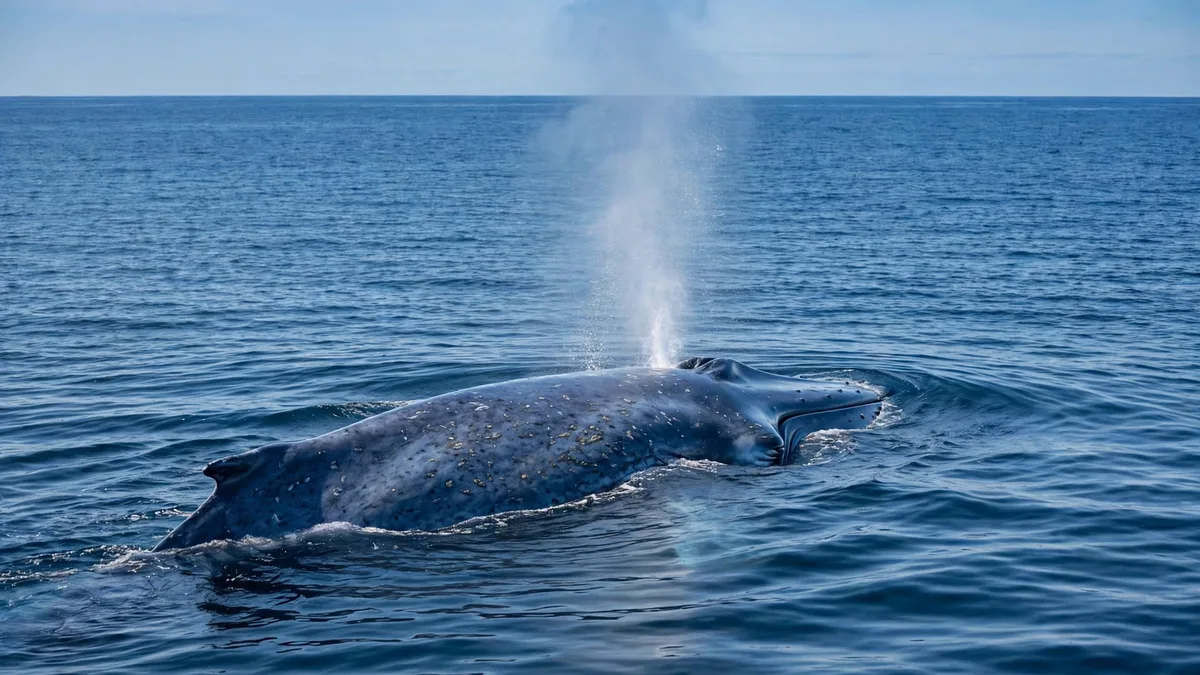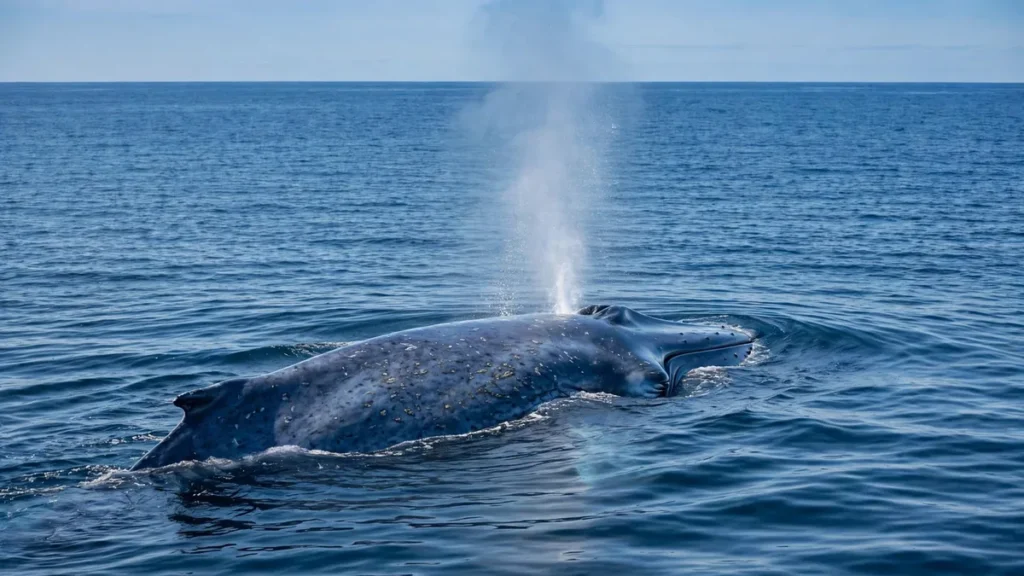
The blue whale species is a single species, Balaenoptera musculus, the largest animal ever known, bigger than any dinosaur that ever lived, a blue-grey giant of the open ocean that feeds on tiny krill. If you are asking how many blue whale species there are, the answer is one: there is only one blue whale species in the world, and every blue whale alive today belongs to it.
The blue whale belongs to the rorqual family, Balaenopteridae, the baleen whales with pleated throats that expand to take in huge mouthfuls of water. It is the largest animal on Earth, and its heart alone is about the size of a small car.
Key takeaways
- There is only one blue whale species, Balaenoptera musculus, and it is the largest animal ever known.
- Blue whales can reach about 30 metres long and weigh up to about 200 tonnes.
- Blue whales eat almost nothing but krill, taking in up to around 4 tonnes of the tiny shrimp-like animals in a single day.
- Blue whales are listed as Endangered, after commercial whaling drove them close to extinction in the twentieth century.
- Blue whales migrate between polar feeding grounds in summer and warmer breeding waters in winter.
What makes a blue whale a blue whale
A blue whale is a huge, long and slender whale with a broad flat head, a small dorsal fin set far back on its body, and smooth blue-grey skin often mottled with lighter spots. Its body measures roughly 24 to 30 metres long, with a tail fluke up to about 7 metres across, and it usually weighs between 100 and 200 tonnes, with females slightly larger than males.
The size defines the blue whale: its heart is about the size of a small car and its tongue weighs about as much as an elephant. Its call is the loudest made by any animal, reaching about 188 decibels, and it can be heard by other blue whales hundreds of kilometres away. Blue whales feed by lunging through swarms of krill with their mouths open, taking in a huge volume of water and then pushing it out through their baleen plates, trapping the krill inside.
The blue whale species and its relatives
Balaenoptera musculus is the only blue whale species, and it is split into three recognised subspecies. Balaenoptera musculus intermedia, the Antarctic blue whale, lives in the Southern Ocean and is the largest of the three, reaching about 30 metres. Balaenoptera musculus musculus, the northern blue whale, lives in the North Atlantic and North Pacific, and Balaenoptera musculus brevicauda, the pygmy blue whale, lives in the Indian Ocean and the southern Pacific and is smaller, reaching about 24 metres. Some scientists also recognise a fourth group, the Chilean blue whale of the eastern South Pacific.
The fin whale is the blue whale’s closest relative in size, being the second largest animal on Earth, but it is slimmer and faster, with a white lower jaw on one side. The humpback whale is smaller and much more acrobatic, famous for breaching clear out of the water and for its long, complex songs, while the blue whale rarely breaches. The grey whale is a bottom feeder that scoops up mud and small animals from the sea floor, a very different way of life from the blue whale’s open-ocean krill hunting.
| Type | Animal | Where it lives | Best-known food | Length |
|---|---|---|---|---|
| Species | Blue whale (Balaenoptera musculus) | Oceans worldwide | Krill | 24 to 30 m |
| Subspecies | Antarctic blue whale | Southern Ocean | Antarctic krill | Up to about 30 m |
| Subspecies | Pygmy blue whale | Indian Ocean and southern Pacific | Krill | Up to about 24 m |
| Close relative | Fin whale | Oceans worldwide | Krill and small fish | 18 to 27 m |
| Close relative | Humpback whale | Oceans worldwide | Krill and small fish | 12 to 16 m |
| Close relative | Grey whale | North Pacific | Small animals from the sea floor | 11 to 15 m |
| Close relative | Minke whale | Oceans worldwide | Krill and small fish | 7 to 10 m |
How blue whales live
Blue whales are creatures of the open ocean. A blue whale usually travels alone or in a pair, following the krill swarms across whole oceans, and mothers and calves stay together for the calf’s first year. Like other ocean animals, the blue whale spends its whole life at sea, surfacing only to breathe through the blowholes on top of its head, and it can stay down for 10 to 20 minutes on a deep feeding dive.
Krill makes up almost the whole diet, and the blue whale lunges through dense swarms of the tiny shrimp-like animals, taking in a mouthful of water and then straining it out through its baleen plates. In the rich feeding season a blue whale can eat up to around 4 tonnes of krill in a single day, and it must build up thick layers of blubber to survive the months when food is scarce.
Breeding happens in winter in warmer waters, and after a gestation of about 10 to 12 months the female gives birth to a single calf, about 7 metres long and weighing around 2.7 tonnes. The calf drinks about 400 litres of its mother’s rich milk every day and gains roughly 90 kilogrammes a day, and it is weaned at about seven or eight months old. Blue whales live for around 80 to 90 years in the wild, and some may live longer.
Where blue whales live
The blue whale’s range covers all the world’s oceans, from the polar seas to the tropics, and it is one of the most wide-ranging animals on Earth. It lives in the open ocean, feeding in cold, krill-rich waters in summer and moving to warmer waters in winter to breed. It is one of the characteristic whale species of the Southern Ocean, where the Antarctic blue whale feeds on the huge krill swarms around Antarctica.
Cold, food-rich water is the key requirement. A blue whale needs dense swarms of krill, so it spends the summer feeding in polar waters and moves towards the equator in winter, when it feeds little and lives off its blubber. It depends on the ocean staying rich in krill, like the Antarctic animals that share its Southern Ocean feeding grounds, and warming seas that shrink the krill are a growing worry.
The species is listed as Endangered, and its numbers are slowly recovering. The main pressure was commercial whaling, which killed hundreds of thousands of blue whales in the twentieth century and drove the Antarctic population from around 350,000 down to only a few hundred by the 1960s. Whaling was banned in 1966, and the world population is now estimated at 10,000 to 25,000 animals, but ship strikes and entanglement in fishing gear still kill blue whales today.
Best seasons for blue whale watching
There is no single season, because blue whales are found in different oceans at different times of year, but the feeding season in each place is usually the best time to look for them. Off Sri Lanka the best months are often December to April, off California from June to October, and off Iceland from May to September.
The winter breeding season has its own rewards: the whales are in warmer, calmer waters, and mothers with calves may be seen close to shore. Whichever season you choose, the best hours are the morning, when the sea is usually calmest, and a sighting is never guaranteed, because blue whales roam across whole oceans and may be far from shore on any given day.
Good places to try include Mirissa in Sri Lanka, where blue whales feed close to shore, Husavik in Iceland, the Azores in the mid-Atlantic, and Monterey Bay in California. Antarctic cruises also offer a chance to see the great Antarctic blue whale in its feeding grounds.
Staying safe around blue whales
A blue whale is a wild animal many times larger than any boat, and it can hurt a person, though blue whales are gentle and almost never approach people. Keep your distance, never swim with or try to touch a blue whale, and never get between a mother and her calf. If you are on a boat, follow your captain’s instructions, stay seated when the boat is moving, and never lean over the side.
Any contact with a stranded whale should be left to trained rescuers. Admire from a distance, and avoid flash photography, because a bright flash can startle a whale at the surface and disturb its feeding.
Blue whale watching checklist
A little preparation turns a whale watching trip into a real chance of seeing a blue whale, so pack for cold sea wind and long hours on the water.
- Binoculars with good low-light performance, for picking a blue whale’s spout out of the open sea.
- A camera with a long lens, because blue whales should always be watched from a distance.
- Warm layers and waterproof clothing, because the open ocean is cold and windy even in summer.
- Water and snacks for long trips, because the best sightings come after hours of searching.
- A booked local operator who knows the feeding grounds and follows whale watching rules.
- A plan to be out in the morning, when the sea is usually calmest and the light is at its best.
- Patience and silence, because blue whales are quiet animals and a noisy boat will send them away.
Frequently asked questions
How many blue whale species are there?
There is one blue whale species, Balaenoptera musculus. It is split into three recognised subspecies — the Antarctic, northern and pygmy blue whales — but they are all the same species.
Is the blue whale the largest animal ever?
Yes. The blue whale is the largest animal ever known to have lived on Earth, bigger than any dinosaur. It can reach about 30 metres long and weigh up to about 200 tonnes.
What do blue whales eat?
Blue whales eat almost nothing but krill, tiny shrimp-like animals that swarm in cold ocean waters. A blue whale lunges through a swarm with its mouth open, takes in a huge volume of water, and strains the krill out through its baleen plates.
Are blue whales endangered?
Yes. Blue whales are listed as Endangered, after commercial whaling killed hundreds of thousands of them in the twentieth century and drove the Antarctic population down to only a few hundred animals. Whaling was banned in 1966, and numbers are slowly recovering.
How is this guide different from the orangutan species guide?
This guide covers the single blue whale species, the largest animal ever known, a krill eater of the open ocean, while our orangutan species guide covers the three orangutan species, red-haired tree-living great apes of Borneo and Sumatra. The blue whale lives in the sea and weighs up to 200 tonnes, and the orangutan lives in the rainforest canopy and weighs under 100 kilogrammes.
How long do blue whales live?
Blue whales live for around 80 to 90 years in the wild. Scientists work out their age by counting the layers in their earplugs, much like counting the rings of a tree, and the oldest blue whale measured this way was about 110 years old.
Conclusion
The blue whale species shows how much scale one animal can hold: Balaenoptera musculus, with a heart the size of a small car and a life spent following krill across whole oceans. It is the largest animal ever known.
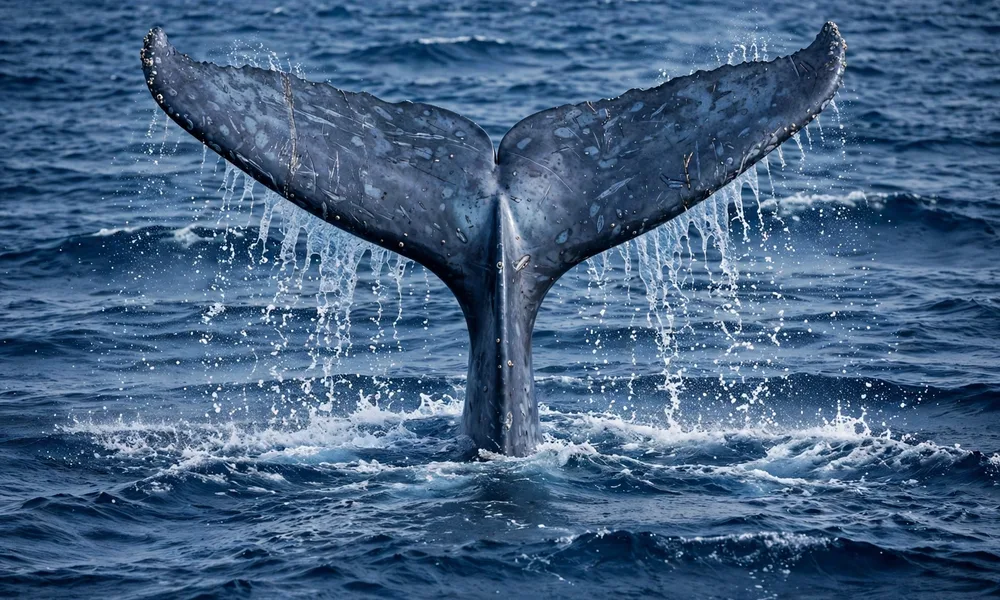
If you go looking for one, go in the feeding season, go with a licensed operator, and go quietly. Watch a blue whale raise its tail fluke and slip beneath the waves and you will understand why it has earned its place as the largest animal ever known, and why keeping its ocean rich in krill matters most.