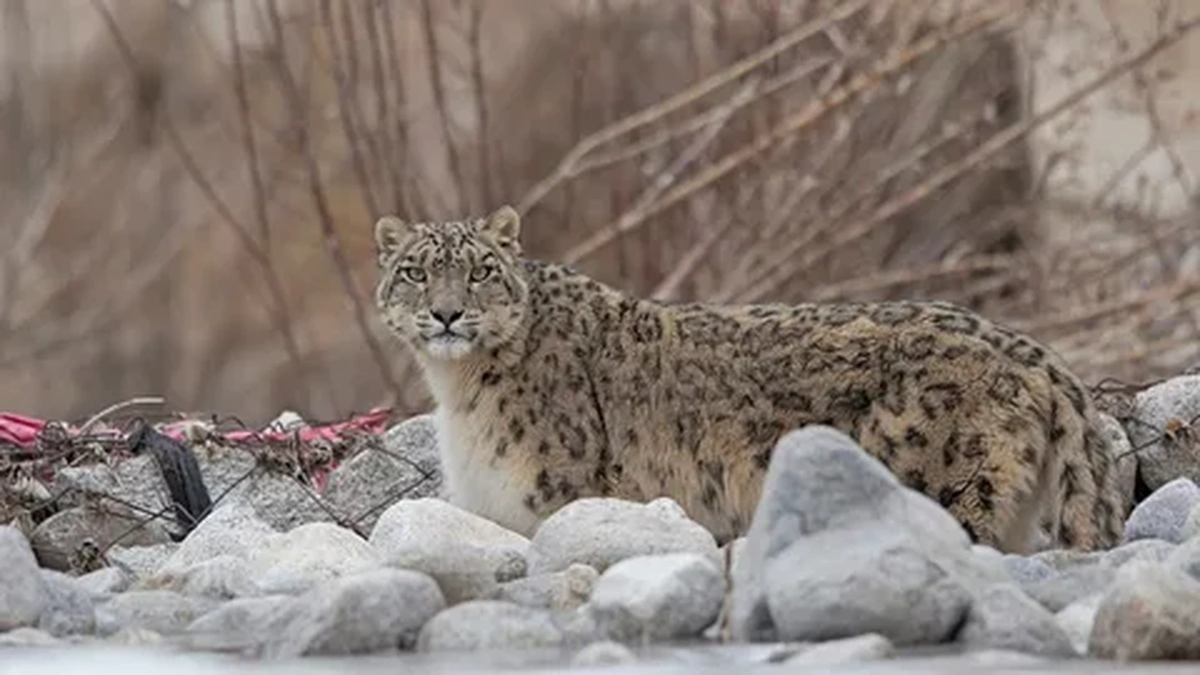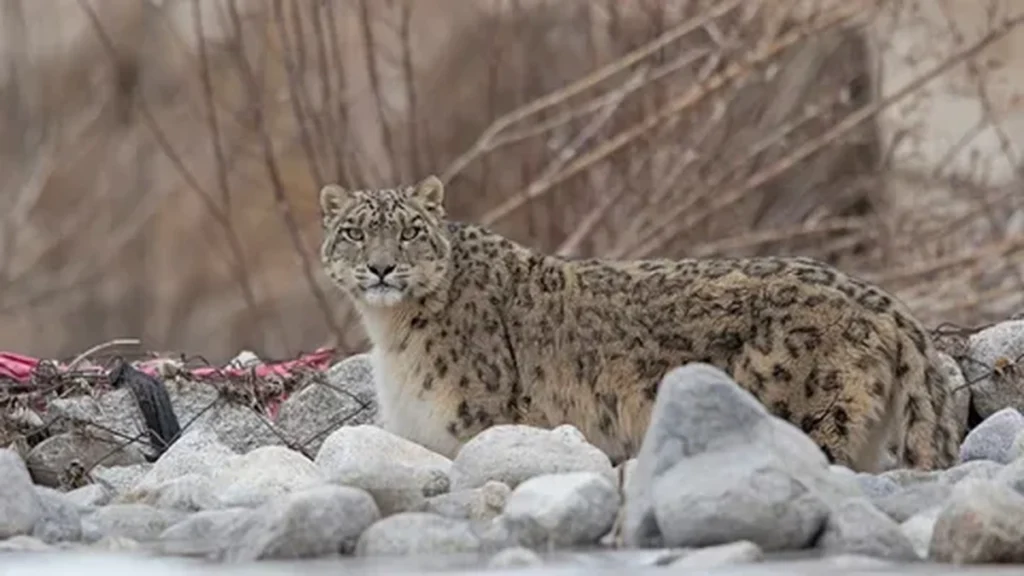
High in the mountains of Central Asia, where icy winds sweep across rocky cliffs and snow can hide an entire landscape, a remarkable predator moves almost silently. Its pale coat blends into the stone, its enormous tail trails behind it for balance, and its wide paws help it cross snow-covered ground.
This is the snow leopard, one of the most elusive big cats on Earth. Often called the ghost of the mountains, it lives in some of the harshest terrain imaginable, rarely seen even by people who share its habitat.
But what makes the snow leopard so special? From its extraordinary adaptations to its hunting skills and threatened future, this mountain cat has a story worth knowing.
What Is a Snow Leopard?
The snow leopard (Panthera uncia) is a large wild cat native to the high mountains of Central and South Asia. It belongs to the cat family, Felidae, and is closely related to other big cats, although it has its own distinctive appearance and behavior.
Snow leopards are best known for their smoky-gray fur, dark rosettes, pale underparts, and exceptionally long, thick tails. Unlike lions, which often live in groups, snow leopards are generally solitary. They spend much of their lives moving across rugged mountain terrain in search of prey.
They are also famously difficult to observe. Their remote habitat, natural camouflage, and cautious behavior make sightings uncommon.
What Does a Snow Leopard Look Like?
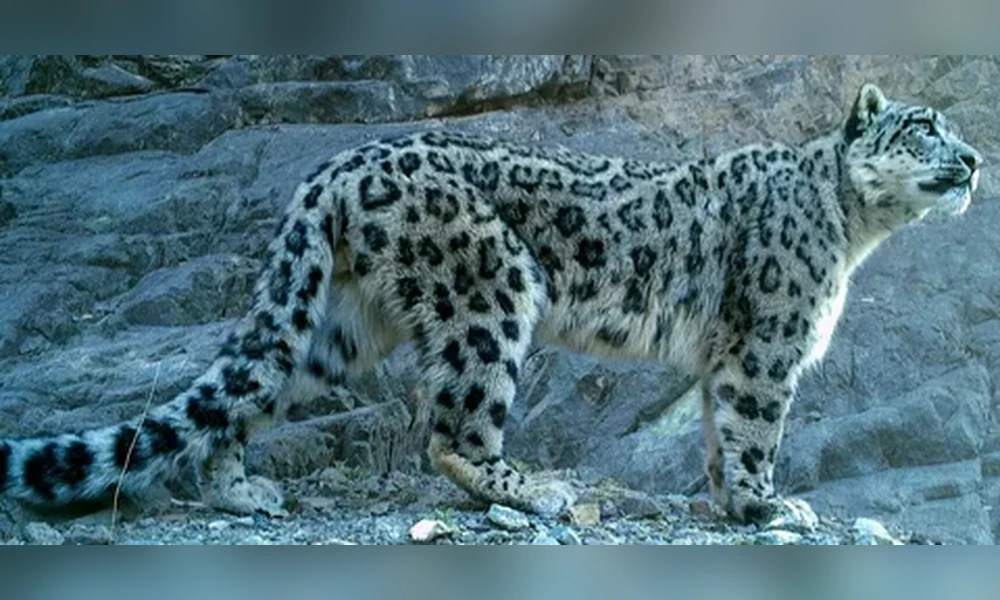
A snow leopard looks built for a world of cold air, steep cliffs, and deep snow. Every part of its body helps it survive in the mountains.
Thick, spotted fur
Its coat is usually smoky gray or pale cream, marked with dark spots and large rosette-shaped patterns. The pattern breaks up the outline of its body against rocky slopes, helping the cat remain difficult to see.
Its fur becomes especially dense during cold weather, providing insulation against freezing temperatures.
A long, heavy tail
The snow leopard’s tail can approach the length of its body. It helps the animal maintain balance while navigating narrow ledges and steep slopes.
When resting in bitter cold, the cat may wrap its thick tail around its body and face for extra warmth.
Wide, furry paws
Snow leopard paws act like natural snowshoes. Their broad shape helps distribute the animal’s weight across soft snow, while the fur around the toes provides insulation and improves traction.
Powerful legs and a flexible body
Snow leopards have strong hind legs that help them leap across rocky gaps and pursue prey on steep terrain. Their muscular bodies and long tails also help them make sudden turns while moving through uneven landscapes.
Despite their powerful build, they are not the largest big cats. Their success comes from adapting exceptionally well to their environment.
Where Do Snow Leopards Live?
Snow leopards inhabit high mountain ranges across Central and South Asia. Their range includes parts of Afghanistan, Bhutan, China, India, Kazakhstan, Kyrgyzstan, Mongolia, Nepal, Pakistan, Russia, Tajikistan, and Uzbekistan.
They are associated with mountain systems such as the Himalayas, Karakoram, Hindu Kush, Pamirs, Tian Shan, and Altai.
Their habitat typically includes rocky slopes, ridgelines, cliffs, and alpine meadows. Depending on the region and season, they may move through areas at elevations of roughly 3,000 to 5,000 meters, although they can occur at lower elevations in some places.
These landscapes offer cover for stalking prey but create serious challenges. Temperatures can plunge, vegetation is sparse, and food may be spread across enormous distances.
A snow leopard’s territory can cover a large area, especially where prey is scarce. That means even a mountain range that appears vast and empty may support only a relatively small number of these cats.
What Do Snow Leopards Eat?
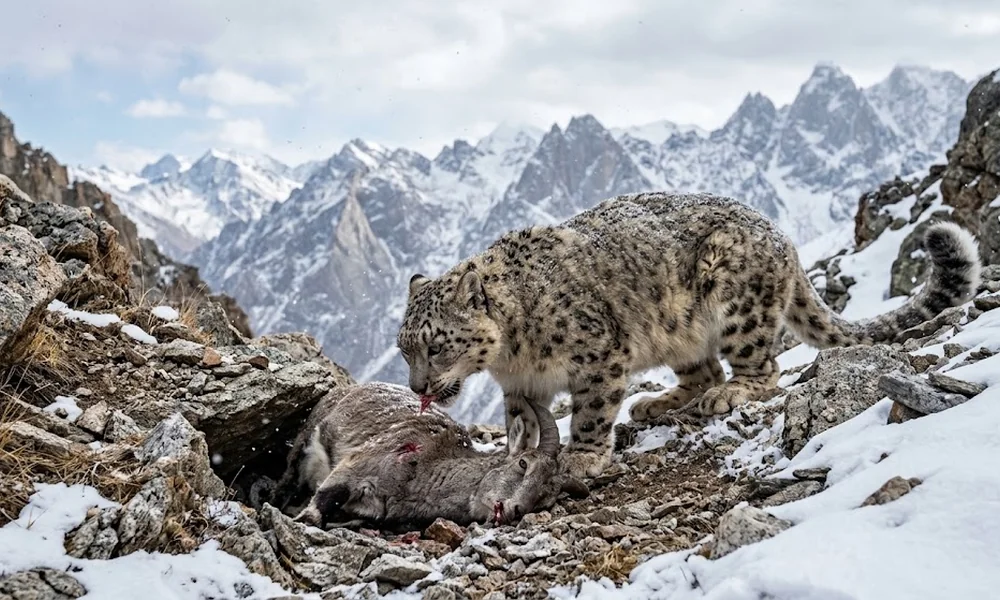
Snow leopards are carnivores. Their diet depends on which prey animals live in their particular mountain region.
Common prey includes:
- Blue sheep, also called bharal
- Siberian ibex
- Argali sheep
- Marmots
- Pikas
- Other small mammals and birds when opportunities arise
In some areas, snow leopards may also hunt livestock, including domestic goats and sheep. This can bring them into conflict with herders, particularly when wild prey is limited or livestock is poorly protected.
How does a snow leopard hunt?
A snow leopard rarely relies on a long, open chase. Instead, it uses terrain and patience.
It may move above a herd, keeping behind rocks or ridges before approaching within striking distance. When the moment comes, it launches a powerful ambush, attempting to grab its prey and bring it down on the slope.
The hunt can be risky. A missed attack may mean a long wait before another opportunity appears.
This is why healthy mountain ecosystems matter so much. Protecting wild prey helps snow leopards survive while reducing the likelihood that they will target domestic animals.
How Do Snow Leopards Survive the Cold?
Snow leopards live in environments that would challenge many other large predators. Their bodies are adapted to conserve heat, move efficiently, and find food in difficult terrain.
Their dense coats insulate them from the cold. Small, rounded ears reduce exposed surface area, while their wide, furry paws help them travel over snow and cold rock.
Their nasal passages help warm and humidify the air they breathe. Their strong limbs make it possible to navigate steep slopes where many animals would struggle to move.
Their behavior matters just as much as their anatomy. By using rocky cover, choosing sheltered resting places, and moving across large territories, snow leopards make the most of an unforgiving landscape.
They do not need to be the biggest or fastest predator in the mountains. They need to be quiet, efficient, and well adapted to the terrain.
Are Snow Leopards Dangerous to Humans?
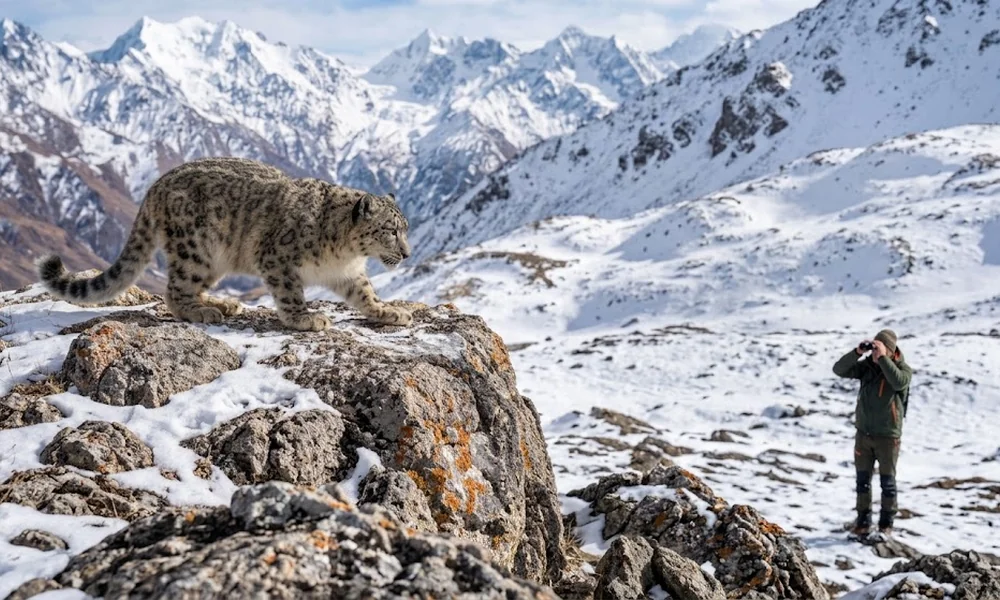
Snow leopards are powerful predators, but they are not generally considered a major threat to people. They tend to avoid human contact and are rarely encountered at close range.
There is no good reason to approach one, however. Like any wild animal, a snow leopard could defend itself if cornered, injured, or threatened.
If someone is fortunate enough to see a snow leopard in the wild, the safest response is to keep a respectful distance, avoid following it, and never attempt to feed or touch it.
For communities living near snow leopard habitat, the more significant concern is often the reverse: conflict between people and snow leopards when livestock is attacked.
Why Are Snow Leopards So Rare?
Snow leopards are classified as Vulnerable on the International Union for Conservation of Nature’s Red List. Their survival is threatened by several connected pressures.
1. Habitat loss and fragmentation
Roads, mining, infrastructure, and other development can disturb mountain habitats and divide areas that wildlife needs to move between.
2. Declining wild prey
When populations of wild sheep and goats decline, snow leopards may struggle to find enough food. In some locations, this can also increase attacks on livestock.
3. Conflict with herders
A snow leopard that kills domestic animals can cause substantial financial losses for a family. In some cases, this leads to retaliatory killing.
Livestock insurance, predator-resistant enclosures, and community-led conservation programs can help reduce this conflict.
4. Illegal hunting and wildlife trade
Snow leopards have been killed for their fur and other body parts. Although legal protections exist across their range, illegal killing remains a conservation concern.
5. Climate change
Warming temperatures can alter alpine habitats, shift the distribution of prey, and change the vegetation and landscapes on which mountain communities and wildlife depend.
These threats vary by location, but together they make snow leopard conservation a complex challenge.
How Many Snow Leopards Are Left in the Wild?
The exact number is unknown. Snow leopards live across a huge, rugged region, often at low densities, making reliable population estimates difficult.
Conservation assessments have commonly placed the global wild population in the broad range of several thousand animals, but estimates vary with survey methods, geographic coverage, and the year of assessment.
Camera traps, genetic analysis, tracking, and field surveys help researchers estimate their numbers and understand where populations are stable or declining.
It is important to treat any single population figure as an estimate rather than an exact count. Continued monitoring is essential to determine whether conservation efforts are working.
How Can Snow Leopards Be Protected?
Protecting snow leopards requires cooperation between conservationists, governments, scientists, and the mountain communities that live alongside them.
Important measures include:
- Protecting connected mountain habitats and wildlife corridors.
- Maintaining healthy populations of wild sheep and goats.
- Helping herders protect livestock with secure night enclosures.
- Supporting compensation or insurance programs where livestock losses occur.
- Enforcing laws against illegal hunting and wildlife trafficking.
- Involving local communities in monitoring and conservation decisions.
Community involvement is especially important. People who live in snow leopard country understand the landscape and often bear the financial costs of living near predators. Conservation is more likely to succeed when those communities receive practical support and share in its benefits.
Snow Leopard vs. Leopard: What’s the Difference?
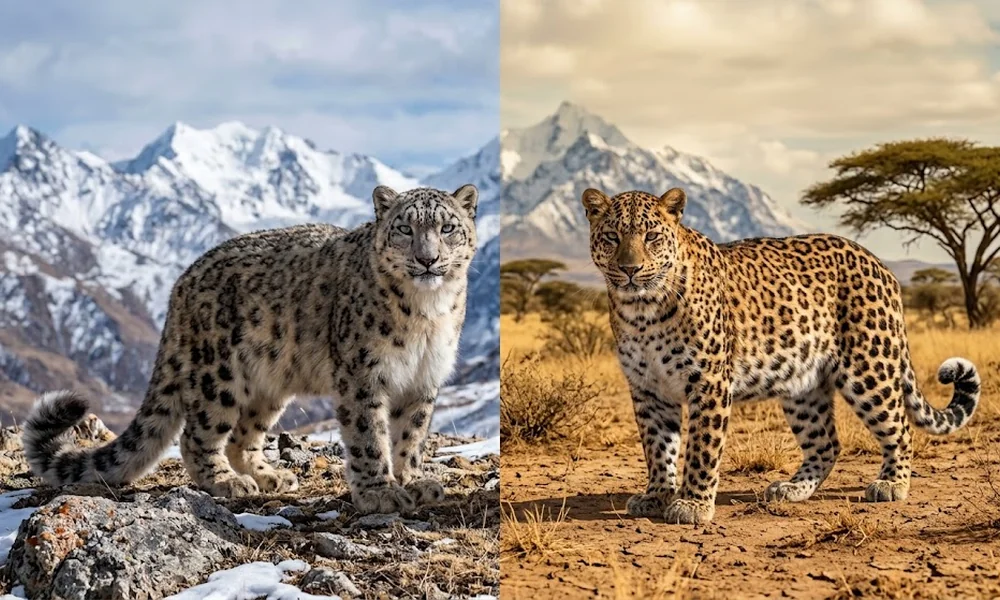
Although they are relatives, snow leopards and common leopards are adapted to different environments.
| Feature | Snow leopard | Leopard |
| Typical habitat | High, cold mountain regions | A wide range of habitats, including forests, grasslands, and mountains |
| Coat | Pale gray or cream with dark rosettes | Usually golden or yellow with dark rosettes |
| Tail | Very long and thick | Long and muscular |
| Cold-weather adaptation | Exceptionally dense fur and furry paws | Adaptations vary with habitat |
| Behavior | Elusive and generally solitary | Elusive and generally solitary |
Their coats can look similar at first glance, but the snow leopard’s paler fur, thick tail, and mountain habitat make it distinctive.
Frequently Asked Questions
Are snow leopards endangered?
Snow leopards are currently classified as Vulnerable, not Endangered, on the IUCN Red List. They still face serious threats across their range.
Can snow leopards roar?
Snow leopards cannot produce the full roar characteristic of lions and tigers. They can make other sounds, including growls, hisses, and a distinctive call often described as a yowl.
How fast can a snow leopard run?
They can move rapidly over short distances, particularly during a hunt, but there is no single well-established top speed that applies reliably across all conditions.
Do snow leopards live in groups?
No. Adults generally live alone, except for females raising cubs and temporary encounters during mating.
How long do snow leopards live?
In the wild, snow leopards commonly live around 10 to 12 years, although individual lifespans vary. Animals in human care may live longer.
Why are snow leopards called ghost cats?
Their camouflage, remote habitat, and secretive behavior make them extraordinarily difficult to spot. They can move through rugged terrain almost unnoticed.
Do snow leopards live in the United States?
No wild snow leopard population lives in the United States. Their natural range is in the mountains of Central and South Asia, though some American zoos and conservation facilities care for them.
The Ghost of the Mountains Needs a Future
A snow leopard can cross a frozen ridge, disappear behind a wall of stone, and leave a landscape looking untouched. That remarkable ability to remain unseen has helped make it one of the world’s most mysterious wild cats.
But being difficult to find does not mean being safe. Habitat disruption, declining prey, illegal hunting, and conflict with people continue to put pressure on snow leopard populations.
Its future depends on protecting more than the cat itself. It means preserving mountain ecosystems, keeping wild prey populations healthy, and helping local communities live alongside a predator that needs enormous stretches of wild country to survive.
The ghost of the mountains may remain elusive. With sustained conservation, it does not have to become a ghost of the past.
Add a quick facts boxTighten repeated adaptation points
Desclaimer: This article is for informational and educational purposes only. It does not provide medical or professional pest-control advice, and we do not advertise or promote any product or service mentioned.