The vulture species of the world number 23, split between 16 Old World species of Europe, Africa and Asia and 7 New World species of the Americas. If you are asking how many vulture species there are, the answer is 23 living species, including the two condors, and they are the most efficient clean-up crew in the animal kingdom.
On a warm day you can see vultures riding the rising air for hours without a single wingbeat, circling high above open country while they search for dead animals far below. Without them, the landscape would be a far dirtier and more dangerous place.
Key takeaways
- There are 23 vulture species in the world: 16 Old World species in the family Accipitridae and 7 New World species in the family Cathartidae.
- Vultures eat almost entirely carrion, and their powerful stomach acid kills bacteria and viruses that would otherwise spread disease.
- Old World vultures find food by sight, while the turkey vulture also finds it by smell.
- Most vultures have bare heads and necks, broad wings built for soaring, and weak feet that are useless for killing live prey.
- Nine of the 23 vulture species are Critically Endangered, with the Asian diclofenac crisis and lead poisoning among the main causes.
What makes a vulture a vulture
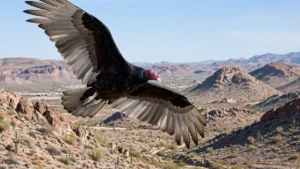
A vulture is a bird of prey that scavenges on carrion, the dead bodies of animals, rather than hunting live prey. Vultures range from the turkey vulture, with a wingspan of 160 to 183 centimetres, to the California condor, about 120 centimetres long with a wingspan of up to 3 metres. Their plumage is usually dark brown or black, and their broad wings are fingered at the tips.
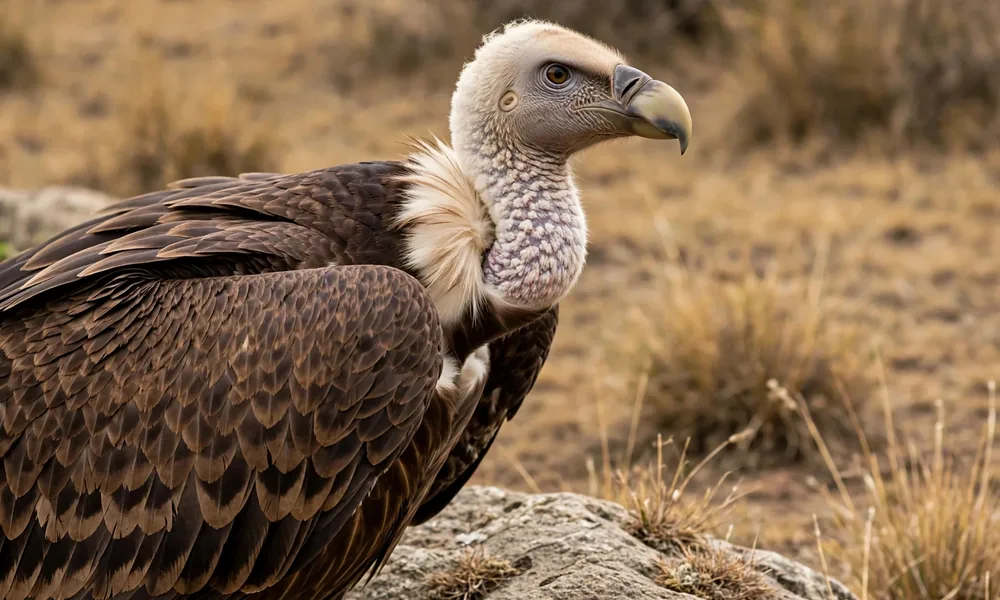
The bare head is the classic vulture feature. Feathers would trap rotting flesh while the bird feeds inside a carcass, so most vultures have naked skin on the head and neck, which can flush red or yellow. Their bills are strong and hooked for tearing flesh, but their feet are weak and flat, with blunt talons, because they never need to grip struggling prey.
The vulture species and their relatives
The 23 vulture species fall into two groups that are not closely related at all, a famous case of convergent evolution. The Old World vultures of Europe, Africa and Asia belong to the family Accipitridae, the same family as eagles, hawks and kites, and find carcasses by sight alone. The New World vultures of the Americas belong to their own family, Cathartidae, and the turkey vulture also finds food by smell. They look alike because they do the same job.
Among the Old World species, the griffon vulture is the classic Eurasian bird, a pale-headed giant with a wingspan of 230 to 280 centimetres that breeds on cliffs from Spain to the Himalayas. The bearded vulture, or lammergeier, is the odd one out: a rusty-coloured bird that eats bones, dropping them onto rocks to shatter them. Among the New World species, the turkey vulture is the most widespread, and the California condor is the largest flying bird in North America. The Andean condor, with a wingspan of up to 3.2 metres, is the largest of all.
| Type | Animal | Where it lives | Best-known food | Length or Weight |
|---|---|---|---|---|
| Group | Old World vultures (16 species) | Europe, Africa and Asia | Carrion, found by sight | Up to 3.2 m wingspan |
| Group | New World vultures (7 species) | The Americas | Carrion, found by sight and smell | Up to 3 m wingspan |
| Species | Turkey vulture (Cathartes aura) | Southern Canada to Tierra del Fuego | Carrion, found by smell | 62 to 81 cm, 0.8 to 2.3 kg |
| Species | Griffon vulture (Gyps fulvus) | Southern Europe to Central Asia | Carrion of large mammals | 93 to 122 cm, 6.2 to 11 kg |
| Species | Bearded vulture (Gypaetus barbatus) | Mountains of Europe, Africa and Asia | Bones, dropped onto rocks | 94 to 125 cm, 4.5 to 7.8 kg |
| Species | California condor (Gymnogyps californianus) | Western United States | Large carcasses | About 120 cm, 8 to 11 kg |
How vultures live
Vultures feed almost entirely on carrion, the dead bodies of mammals, birds, reptiles and fish, and they prefer animals that died recently. They can strip a large carcass in hours, and their stomach acid is among the strongest of any bird, with a pH close to 1, strong enough to destroy anthrax, cholera and rabies bacteria. In doing so they stop disease spreading to livestock, wildlife and people, a service worth billions and almost entirely free.
Most vultures feed in groups, and the pecking order at a carcass is strict. The largest birds, such as condors, open the tough hide, and smaller species wait their turn or slip in for scraps, while the bearded vulture arrives last for the bones. They are diurnal, searching for food alone or in loose groups.
Breeding vultures are slow to reproduce, which is one reason their numbers recover so slowly after a decline. Most pairs are monogamous and raise a single chick, sometimes two, each year. Old World vultures build nests of sticks on cliffs or in trees, while New World vultures lay their eggs on bare ground in a cave or rock crevice, building no nest at all. The eggs are incubated for about 40 to 60 days, and the chick stays in the nest for months, fed on regurgitated meat, before it fledges. Wild vultures often live for 20 to 30 years, and captives have reached 40 or more.
Where vultures live
Vultures live on every continent except Antarctica and Australia, from the coasts to the high mountains, and from deserts to tropical forest. They favour open country, savanna, grassland and mountains, where they can soar over wide areas and spot carcasses from far away. They avoid enclosed forest, which makes take-off hard and hides the dead.
Old World vultures range from the cliffs of Spain and the Alps, across Africa and the Middle East, to the Himalayas and South-East Asia. New World vultures range from southern Canada to Tierra del Fuego, with the turkey vulture covering the widest range of any of them. Most stay in the same region all year.
The conservation picture is grim. Of the 23 vulture species, nine are Critically Endangered, three are Endangered, one — the Andean condor — is Vulnerable, four are Near Threatened and six are Least Concern, making vultures one of the most threatened groups of birds on Earth. In Asia, the drug diclofenac, given to sick cattle, poisoned the vultures that fed on their carcasses, and three Gyps species in India crashed by more than 95 per cent in a single decade. In Africa, vultures are killed by poisoned bait set for lions and hyenas and by the trade in vulture parts, while in the Americas lead poisoning is the main threat. Like the California condor, reduced to 27 birds in 1987 and saved only by captive breeding, many vulture species now depend on active conservation to survive.
Best seasons for vulture watching
Vultures are easiest to watch from spring to autumn, when thermals are strong and the birds soar for hours over open country. In the northern hemisphere, look for them from March to October, and in the southern hemisphere from September to April. Mid-morning to early afternoon is best, once the sun has warmed the ground.
Staying safe around vultures
A vulture is a shy, non-aggressive bird, and the main risk is to the bird rather than to you. Never approach a roost or a nest site closely, since a startled bird may vomit stomach acid, and keep your distance from a feeding group so the birds are not driven off their meal. Watch from a distance with binoculars, and never feed a vulture by hand. Like the bald eagle and the red-tailed hawk, vultures are protected by law in the United States under the Migratory Bird Treaty Act.
Slow down on roads through open country, because vultures feeding on roadkill are slow to take off and are often killed by cars. If you find a dead vulture, or a bird that looks sick or poisoned, report it to your local wildlife authority rather than handling it yourself.
Vulture watching checklist
A little preparation turns a warm day in open country into a real chance of watching vultures soar.
- A visit from spring to autumn in the north, or at any time of year in the tropics, when the thermals are strong.
- A mid-morning start, once the sun has warmed the ground and the birds are riding the thermals.
- Binoculars, since a soaring vulture is often high overhead and hard to identify with the naked eye.
- An eye for the broad, fingered wings and the slow, circling flight, which separates vultures from eagles and hawks.
- A scan of cliffs, dead trees and towers, where the birds gather to roost and sun their wings.
- Patience and a wide sky, because a vulture may soar for hours over the same patch of country.
- Respect for roosts, nests and feeding birds, keeping your distance and never approaching a carcass.
Frequently asked questions
How many vulture species are there?
There are 23 living vulture species: 16 Old World species in the family Accipitridae, found in Europe, Africa and Asia, and 7 New World species in the family Cathartidae, found in the Americas.
What is the difference between Old World and New World vultures?
Old World vultures belong to the family Accipitridae, the same family as eagles and hawks, and they find carcasses by sight alone. New World vultures belong to their own family, Cathartidae, and the turkey vulture also finds food by smell. The two groups are not closely related; they look alike because they do the same job.
What do vultures eat?
Vultures eat almost entirely carrion, the dead bodies of mammals, birds, reptiles and fish, preferring animals that died recently. The bearded vulture is the exception: it eats bones, dropping them from a height onto rocks to shatter them.
Why do vultures have bare heads?
The bare head stays cleaner while the bird feeds inside a carcass, since feathers would trap rotting flesh. The skin can also flush red or yellow, and the bare neck lets the bird lose heat from the skin.
Are vultures endangered?
Many are. Nine of the 23 vulture species are Critically Endangered, three are Endangered, one is Vulnerable and four are Near Threatened. In Asia, the drug diclofenac poisoned vultures that fed on treated cattle, and three Gyps species crashed by more than 95 per cent. In Africa, poisoned bait is the main threat, and in the Americas, lead poisoning.
How is this guide different from the turkey vulture guide?
This guide covers all 23 vulture species as a group, from the griffon vulture of Europe to the California condor of the Americas, while our turkey vulture species guide covers just one species, Cathartes aura, the wide-ranging New World vulture that finds carrion by smell and soars for hours on a two-metre wingspan.
Conclusion
The vulture species of the world are 23 strong, and every one of them does a job no other bird can do: they turn the dead into dinner, and stop disease from spreading.
If you go looking for one, go on a warm day, go late in the morning, and look up. Find one circling high above an open valley, wings held flat and still, and you will see the clean-up crew at work: a bird that takes only what is already dead, and leaves the land a little safer than it found it.