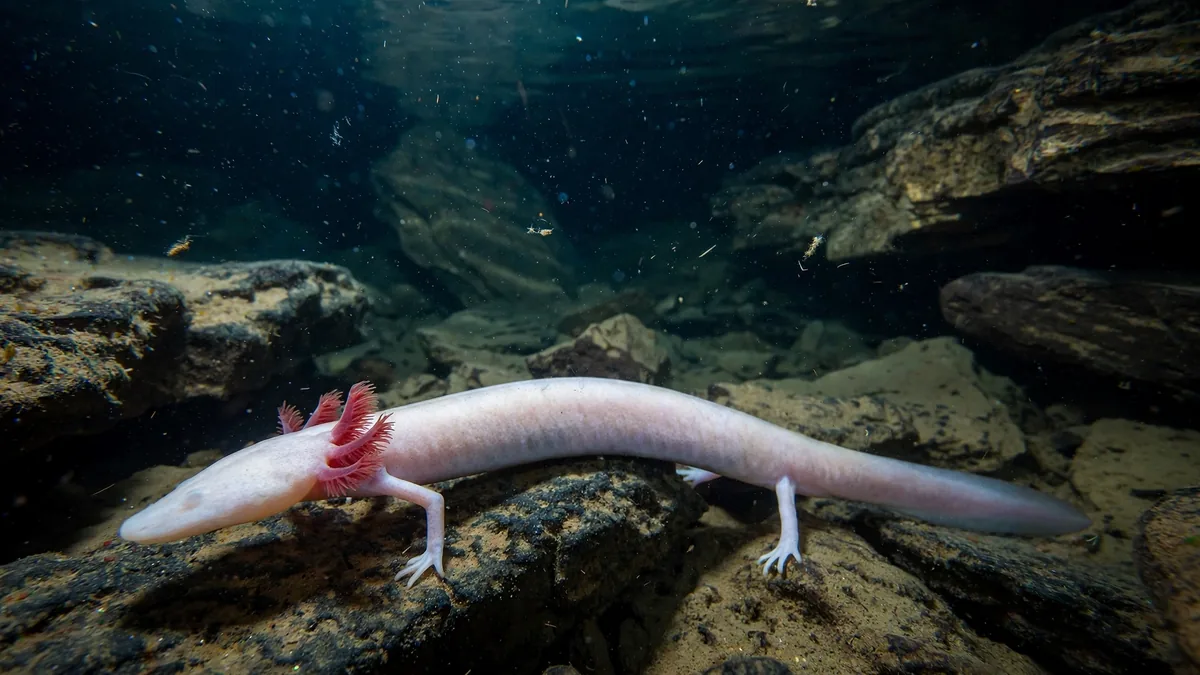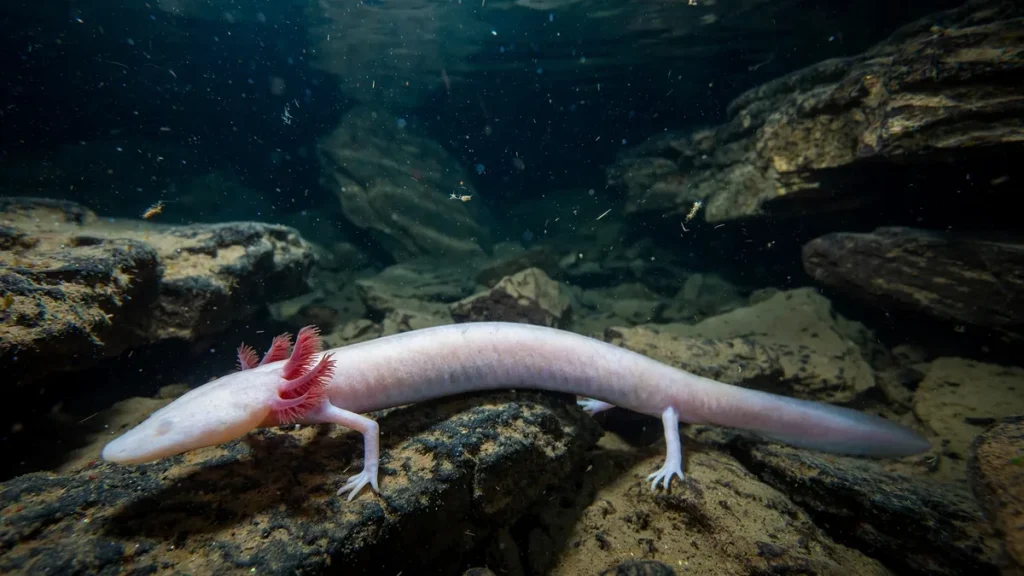
The olm species is Europe’s only fully cave-dwelling vertebrate, a pale, blind salamander that lives its whole life in the flooded limestone caves of the Dinaric karst. If you are asking what an olm is, the short answer is an aquatic salamander, Proteus anguinus, that grows to about 20 to 30 centimetres, keeps feathery red gills all its life, cannot see, and may live for around 100 years in water so dark that no sunlight has ever reached it. It is an animal most people will never see, because it lives hundreds of metres below the surface, in pools and streams that only cavers and scientists ever reach.
Olms have been known to science for centuries, and they have puzzled everyone who met them, from the villagers who thought the pale animals washed out by floods were baby dragons, to Charles Darwin, who used their shrunken eyes as an example in his work on evolution. This guide follows the whole animal, from the way it looks and the caves it needs, through what it eats and how it senses a world without light, to the female who lays her eggs once in a decade or more, and the reasons a creature that lives in the dark is still in danger from what happens on the surface.
Key takeaways
- The olm species is Proteus anguinus, the only species in its genus, and the only exclusively cave-dwelling chordate in Europe, living in the flooded karst caves of the Dinaric Alps.
- Olms grow to 20 to 30 centimetres, with pale, almost translucent skin, feathery red external gills kept for life, and eyes that are shrunken and covered by skin, leaving the animal functionally blind.
- Olms hunt by smell, hearing, touch and an electric-field sense, eating small invertebrates such as crustaceans, snails and insect larvae, and swallowing their prey whole.
- Olms are among the slowest-living amphibians on Earth, maturing at 12 to 15 years, breeding only about once every 12 years, and living for an average of around 68 years, with a maximum of over 100 years.
- The olm is listed as Vulnerable, and its greatest threats are pollution of the groundwater, changes to the water table, and disturbance of the caves it lives in.
The olm species and their relatives
Olms belong to the family Proteidae, the olms and mudpuppies, a small family of permanently aquatic salamanders with only two living genera. One is Proteus, which holds the olm, and the other is Necturus, the mudpuppies and waterdogs of North America. The family sits in the order Caudata, the salamanders and newts, and its members share the same trick: they keep their larval features into adulthood, a habit called neoteny, so an adult olm still has the external gills and the slender body of a larva, and it breeds in that form.
The lead species of this guide is the olm, Proteus anguinus, described by the Austrian naturalist Josephus Nicolaus Laurenti in 1768, and it is the animal this whole guide is about. Adults are usually 20 to 30 centimetres long, with some reaching 40 centimetres, and they weigh 15 to 20 grams, about as much as a few coins. A second form, the black olm, Proteus anguinus parkelj, was found in 1986 in the underground waters near Crnomelj in Slovenia, and it is darkly pigmented with better-developed eyes, living in an area smaller than 100 square kilometres.
| Type | Animal | Where it lives | Best-known food | Length or Weight |
|---|---|---|---|---|
| Family | Olms and mudpuppies (Proteidae) | Balkan caves and North American waters | Small invertebrates and fish | About 15 cm to 40 cm long |
| Genus | Olms (Proteus) | Dinaric karst caves of Europe | Small crustaceans and insect larvae | About 20 cm to 30 cm long |
| Species | Olm (Proteus anguinus) | Dinaric karst caves, Italy to Montenegro | Crustaceans, snails and insect larvae | 20 to 30 cm long |
| Species | Black olm (Proteus anguinus parkelj) | Underground waters near Crnomelj, Slovenia | Small crustaceans and insect larvae | About 20 to 30 cm long |
| Species | Common mudpuppy (Necturus maculosus) | Lakes and rivers of North America | Crayfish, fish and insects | Up to 40 cm long |
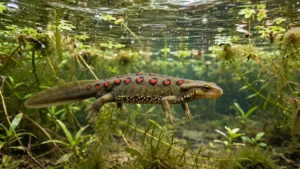
| Species | Axolotl (Ambystoma mexicanum) | Lakes near Mexico City | Worms, insects and small fish | Up to 30 cm long |
The closest relatives of the olm are the mudpuppies of North America, and the comparison shows how far the olm has gone into the dark. The common mudpuppy, Necturus maculosus, grows to about 40 centimetres, keeps its external gills, and lives in lakes and rivers, but it is darkly spotted, has small but working eyes, and lives in the light. The olm has lost its pigment and its sight, and it has kept only the gills, the slender body and the habit of never leaving the water.
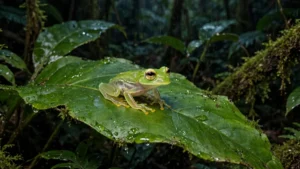
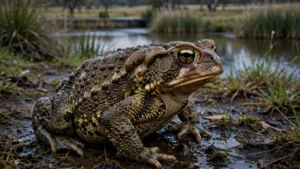
The animal most often confused with an olm is the axolotl, Ambystoma mexicanum, which also keeps its gills into adulthood and grows to about 30 centimetres. The two are easy to separate once you know what to look for, because the axolotl lives in the sunlit lakes near Mexico City, has dark skin and working eyes, and is a popular aquarium animal, while the olm lives only in dark European caves, is pale and blind, and is rarely seen at all. Like the frog, the olm is an amphibian that depends on clean water, but the frog divides its life between water and land, while the olm never leaves the water at all.
What an olm looks like
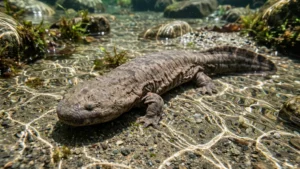
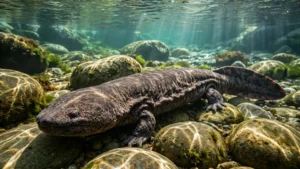
An olm looks like a pale, slender snake with legs, and in a sense that is a fair description of what it is. The body is long and eel-like, 20 to 30 centimetres from snout to tail, with a cylindrical trunk marked by regular furrows, a flattened head with a short, blunt snout, and a tail flattened from side to side that it uses to swim. The limbs are tiny and spindly, with three toes on each front foot and only two on each hind foot, and they look too small to be of much use, which, in the water, they largely are.
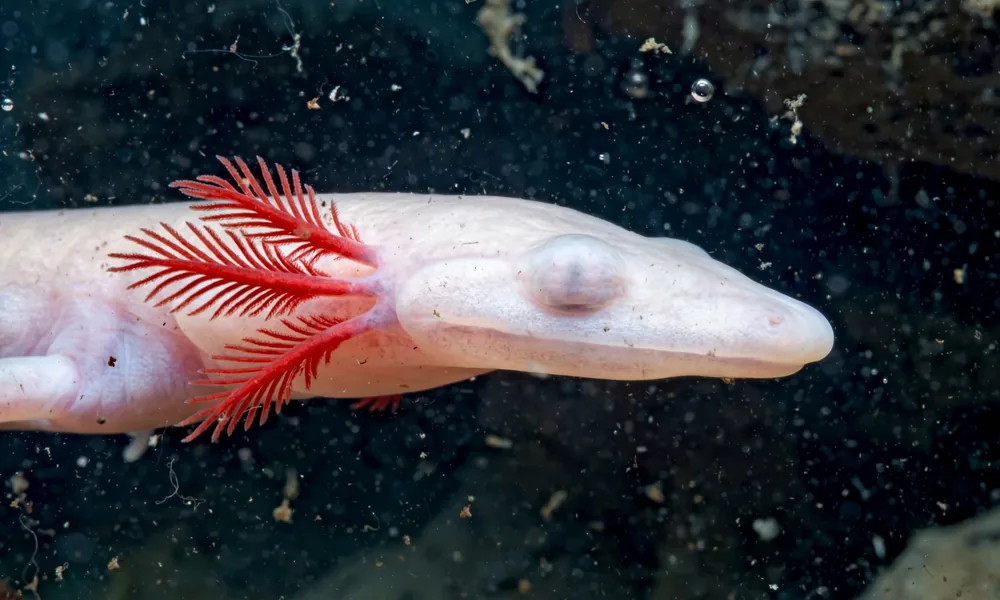
The skin is the most striking part of the animal, and it is the reason the olm looks the way it does. It is pale, creamy white or pinkish, almost translucent, so that the blood vessels and sometimes the outlines of the internal organs show through, and the pink colour comes from the blood beneath the skin rather than from any pigment. The skin can still make melanin, and an olm exposed to light will darken, which is why animals kept in captivity under lights grow grey, but in the dark of the caves there is no need for colour, and the animals stay pale.
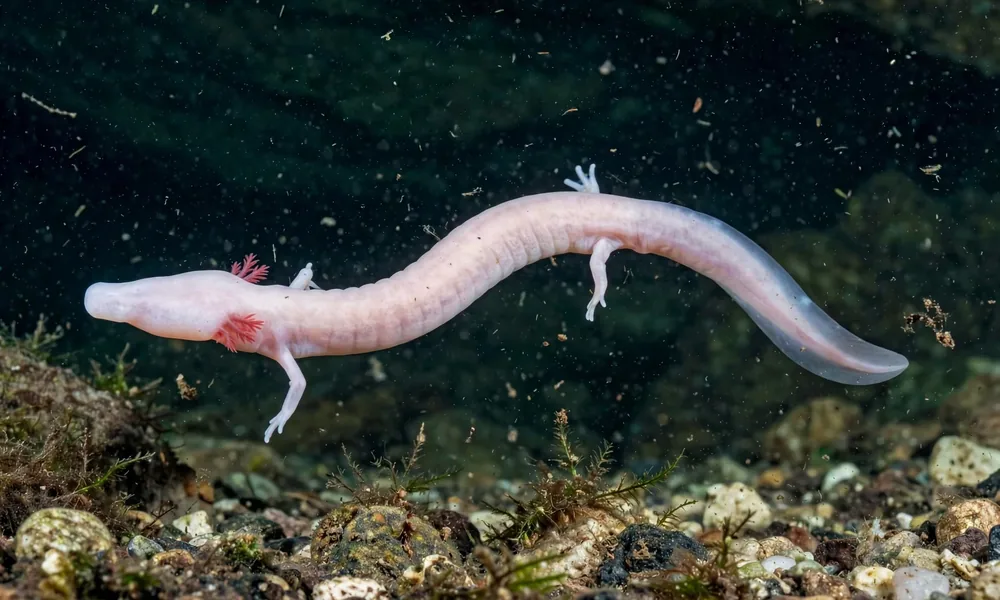
The gills are the second thing you notice, and they are the reason the olm can live where it does. On each side of the head sit feathery, bright red external gills, which the animal keeps all its life, and which take oxygen from the water as it flows over them. The olm also has small, simple lungs, and it can gulp air at the surface when it must, but it breathes mainly through its gills and its skin, and it can survive in water low in oxygen that would suffocate most fish.
The eyes are the most famous part of the olm, and the most misunderstood. They are present, but they are tiny, undeveloped and covered by a layer of skin, and they cannot form an image, so the animal is functionally blind. The eyes do keep some sensitivity to light, and an olm will swim away from a bright light, but it finds its way about by other senses entirely. The black olm is the exception that proves the rule: it has dark skin and better-developed eyes, with working rods and cones, and it lives in waters where a little more light reaches, which suggests that the white olm’s blindness is a loss that came with the dark, not a starting point.
Compared with other cave animals, the olm is easy to tell apart once you have seen one. No other vertebrate in Europe lives entirely in caves, and no other salamander combines a pale, translucent body with permanent red gills and eyes hidden under the skin. The mudpuppy is the nearest lookalike, and its dark, spotted skin and working eyes give it away at a glance, while the axolotl, though it shares the gills, is a dark, eyed animal of sunlit lakes.
Where olms live
Olms live in the flooded limestone caves of the Dinaric karst, a belt of limestone country that runs along the Adriatic coast from north-eastern Italy through Slovenia and Croatia and into Bosnia and Herzegovina and northern Montenegro. Their range follows the underground rivers of the Soča, the Ljubljanica and their neighbours, and they are animals of the water that flows through the rock, not of the surface streams that run above it. They are found in underground lakes and streams, often more than 300 metres below the surface, in water of 5 to 15 degrees Celsius.
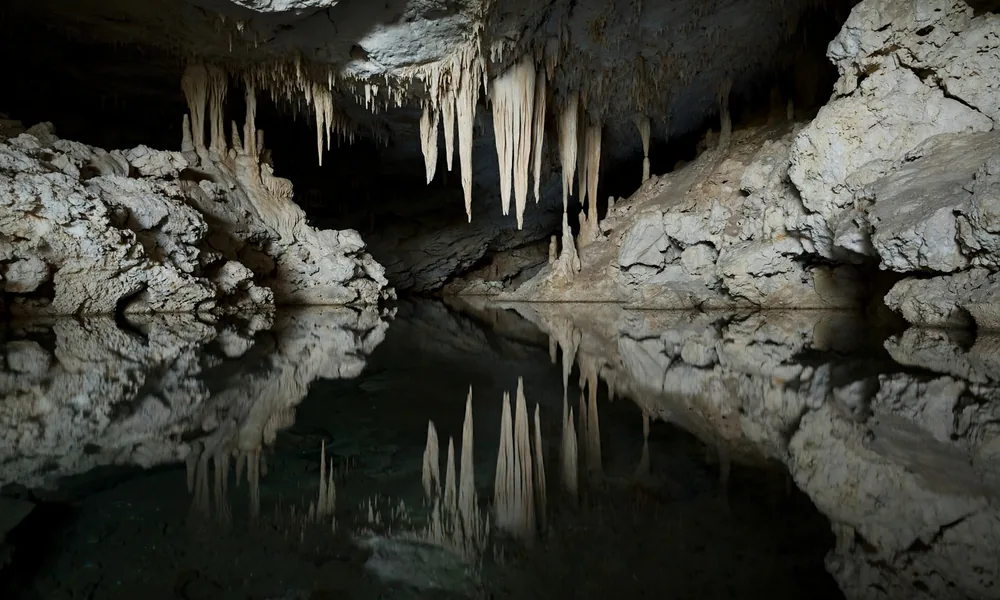
The habitat they need is narrow, and that narrowness is the heart of their trouble. Olms need clean, cold, oxygen-rich groundwater, with a steady temperature and a steady flow, and they need the caves themselves, with their pools, their gravel beds and their crevices to hide in. They are found in water that is low in food but high in oxygen, and they can survive where almost nothing else can, because they need so little. They are not found in surface streams, except after heavy rain, when a few animals are sometimes washed out of the caves and into the daylight, where they do not last long.
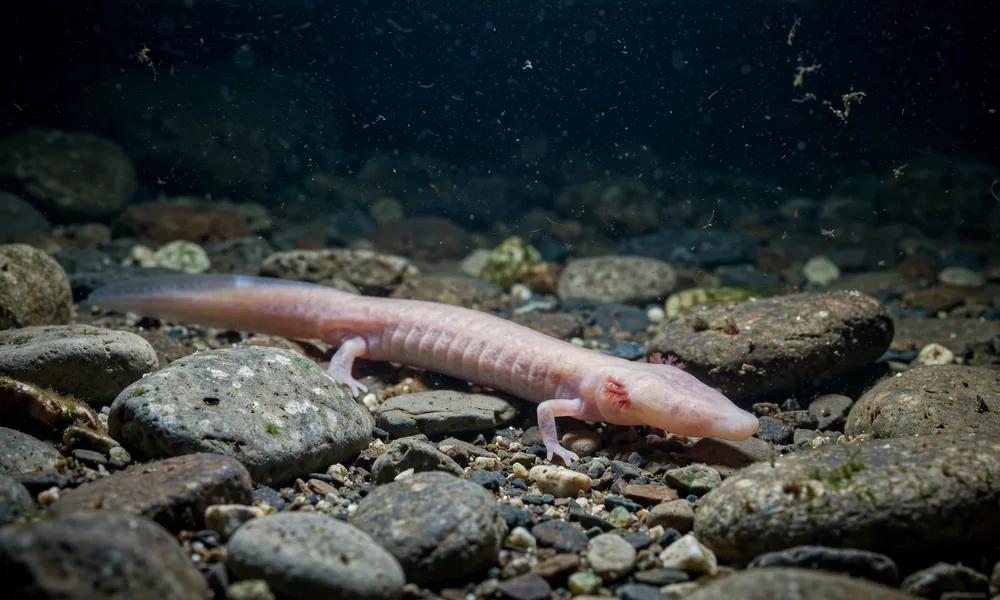
An olm’s home is a small patch of cave, and it does not wander far. Tracking work in a Bosnian cave found individual olms that had not moved more than a few metres in seven years, and one animal was found in the exact same spot 2,569 days later, about seven years after it was first marked. They are solitary animals, and each pool tends to hold only a few, except in the breeding season, when a female will set up a territory of her own. If the water table falls, or the cave is disturbed, the olms have nowhere to go, because the next cave system may be kilometres away through solid rock.
The caves that suit olms best are the ones with clean water flowing through them, because the animals are exquisitely sensitive to pollution. A cave that looks untouched can still be poisoned by what happens on the surface above it, from fertilisers and pesticides on the fields to sewage and industrial waste, and the water that sinks into the limestone carries it all down to the pools where the olms live. That sensitivity is why olms are called indicators of healthy groundwater: where they thrive, the water is clean, and where they have gone, something has already gone wrong.
What olms eat
Olms are hunters, and their diet is written on the cave floor itself. The everyday food is small aquatic invertebrates, and the list is a short one: cave-adapted crustaceans such as Niphargus amphipods and Asellus isopods, small snails, and the larvae of caddisflies, mayflies, stoneflies and true flies that wash in from the surface. They also eat detritus, the fine organic matter that drifts down through the rock, and they will eat almost any small animal they can catch and hold. An olm is not a picky eater, but it is a patient one, and it takes what the cave offers.
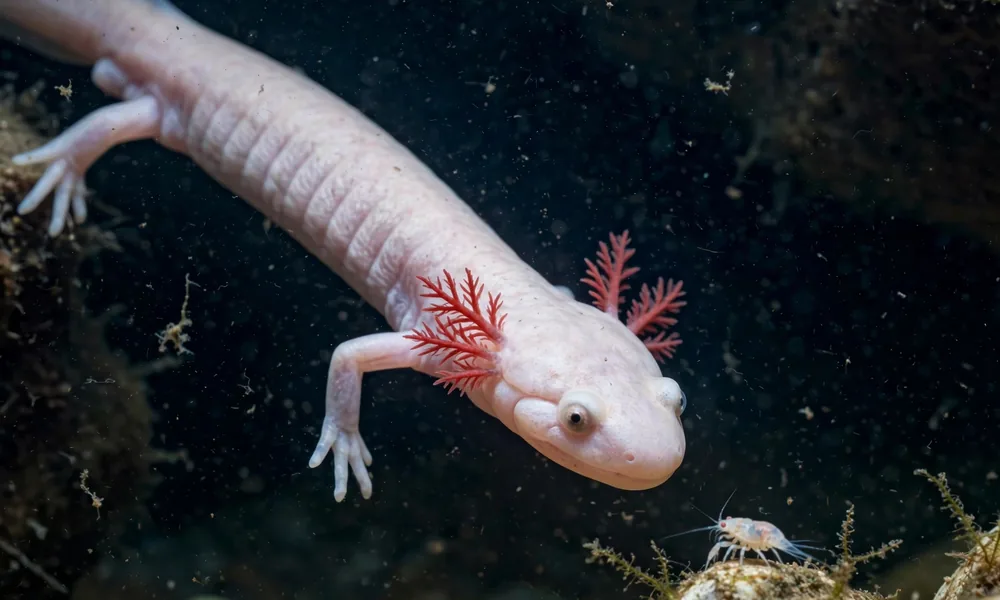
What sets the olm apart is how it hunts. It does not chase its prey, and it does not hunt by sight, because it cannot see. It sits and waits, or it moves very slowly along the cave floor, and it finds its food by smell, by the lateral line that feels the movement of water, and by the ampullary organs that sense weak electric fields, the same kind of sense that sharks use. When it finds something, it opens its wide mouth and sucks the prey in, or it grabs it with its small teeth, and it swallows it whole, because it cannot chew. Like the axolotl, the olm is a salamander that feeds by suction in the water, but the axolotl is a still-water animal of a Mexican lake that hovers and snaps in the light, while the olm is a cave animal that hunts in total darkness by smell and touch alone.
Feeding follows no season, because the cave has none, and it is busiest when food washes in after rain. Olms eat heavily when the opportunity comes, storing fat and glycogen, and then they endure long gaps, lowering their activity and their metabolic rate until the next meal arrives. They can survive for years without food, living off their stored reserves and even reabsorbing their own tissues, and the popular claim that they can fast for ten years is widely repeated, though it should be read alongside the conditions of the experiments that produced it. A well-fed olm can go for months without eating and show no sign of hunger at all.
How olms behave
Olms are slow animals, and their day is a quiet round of resting, waiting and moving very little in the dark. They spend most of their time lying still on the cave floor, or hanging in the water with their gills waving gently, saving energy in a place where food is scarce and there is nothing to hurry for. They are not strong swimmers over distance, and they do not need to be: their life is lived within a few metres of cave, up and down, and the whole underground river is their hunting ground.
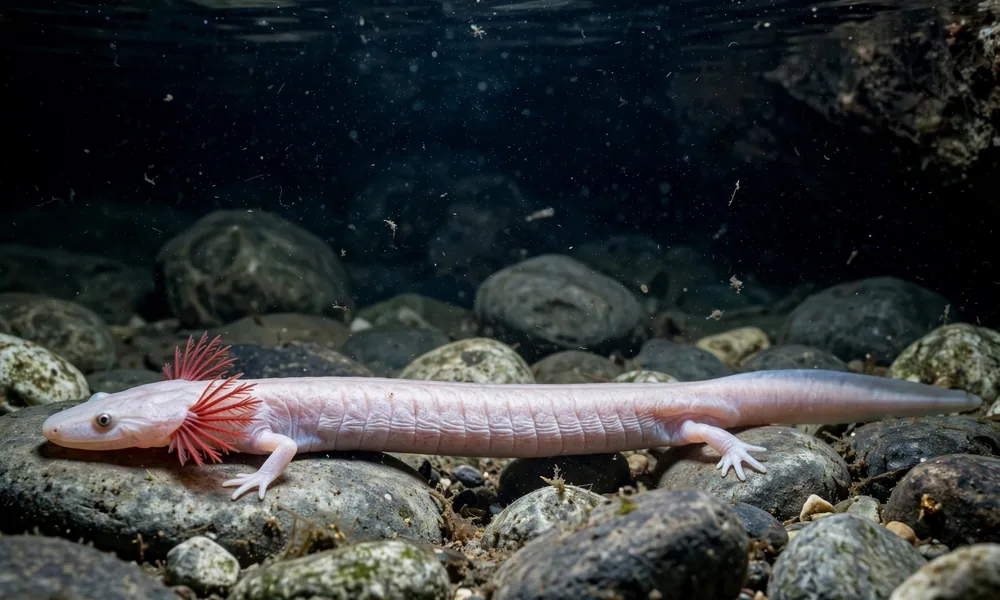
The stillness is the behaviour most people notice first when they see an olm in a tank, and it is easy to mistake for laziness. In fact it is survival: the animal’s metabolic rate is exceptionally low, and it can lower it further when food is scarce, drawing on stored glycogen, then fat, then protein, in that order. An olm that moves little and eats rarely can live for decades on very little, and the tracking work that found one animal in the same spot for seven years is not a story about a lazy animal, but about an animal that has mastered the art of waiting.
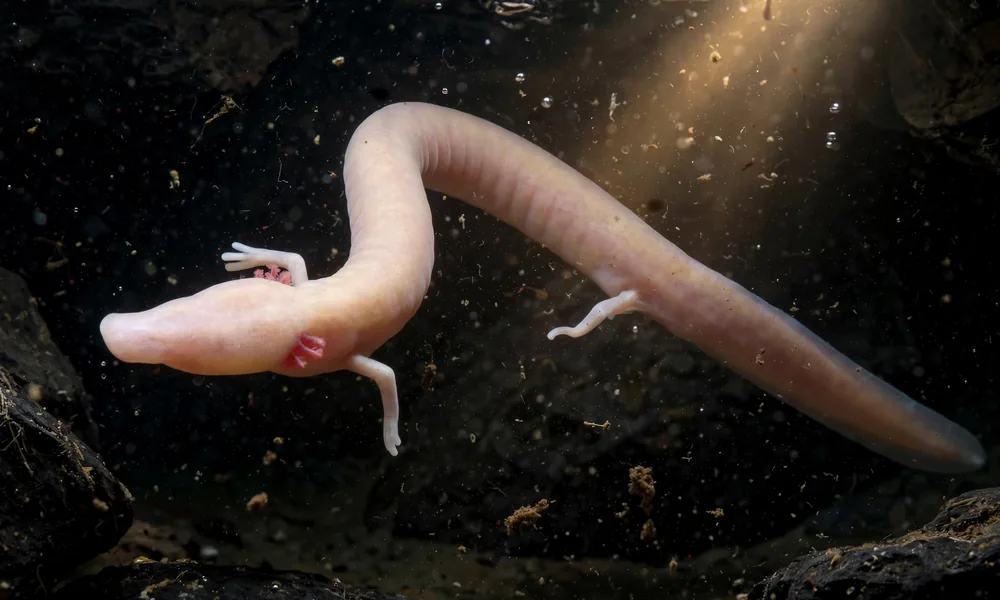
Olms are solitary and, outside the breeding season, they keep to themselves. They do not defend a territory in the way a hellbender defends its rock, but they do keep their distance, and two adults in one small pool is a rare sight. They have no venom and no bite that matters to a person, and their first response to a threat is to stay still and hope not to be noticed, or to swim slowly away into the dark. Their predators are few, because so little lives in the caves, but larger fish and other olms will take the young, and olms are thought to cannibalise each other now and then.
Breeding and life cycle
Olms breed slowly, and the breeding cycle is the slowest of any amphibian that has been studied in detail. The animals reach sexual maturity at 12 to 15 years old, which is a long childhood by any measure, and the females breed only about once every 12 years, with some estimates putting the interval at 12.5 years. Mating takes place in late winter or early spring, when the water temperature and quality are right, and courtship is a matter of touch and chemical signals, with the male depositing a spermatophore on the substrate, which the female then picks up with her cloaca.
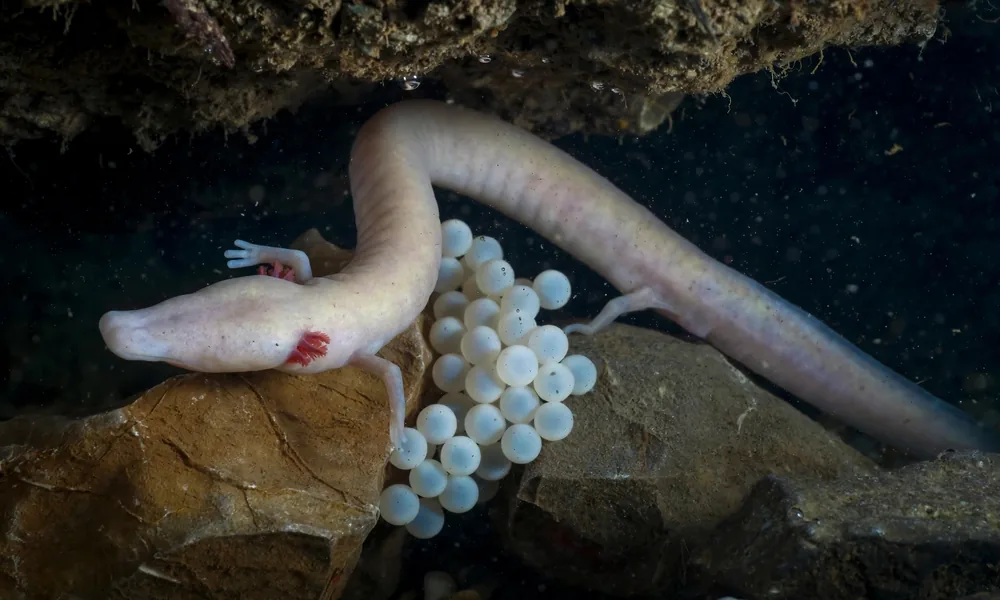
The female carries the fertilised eggs for two to three days, then lays them under a rock, one by one, over as many as 25 days. She lays 35 to 70 eggs, each 4 to 5 millimetres across at first, swelling to 8 to 9 millimetres as they absorb water, and she attaches them individually to the underside of the rock. She then guards them for two to six months, staying with the clutch and keeping it clean, which is a long vigil in a place where food is scarce.
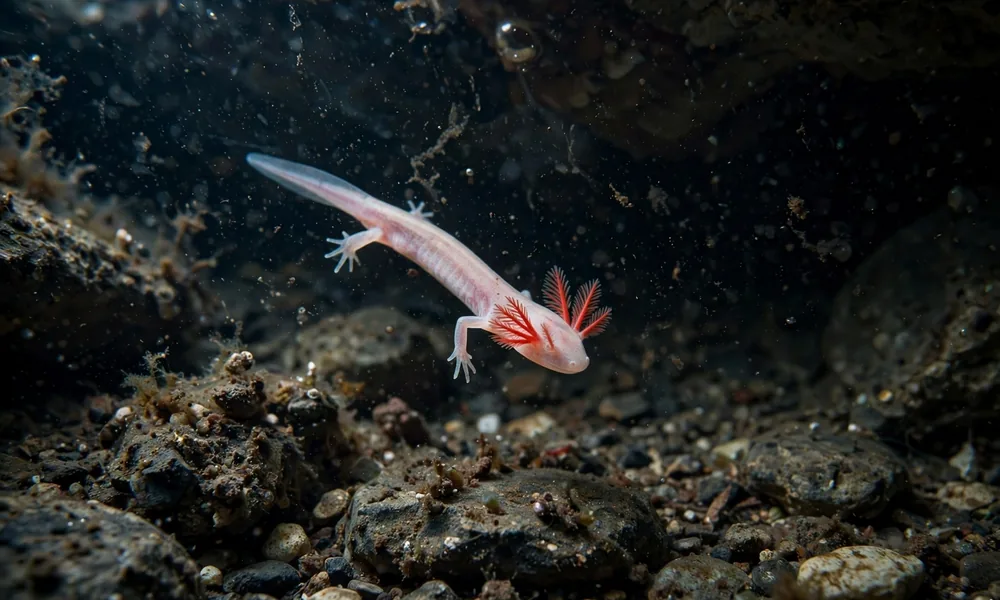
The eggs hatch after two to six months, depending on water temperature, into larvae only a few centimetres long, with external gills and eyes that are still visible, though the skin soon grows over them. The young are independent from the day they hatch, able to feed and hide within hours, but most of them will never reach adulthood, eaten by fish and other predators in their first weeks. Growth is slow, and a young olm can take a decade and a half to become an adult. How long an olm lives is now well understood, because a long-term study of a captive colony in France estimated a maximum lifespan of over 100 years, with an average adult lifespan of around 68.5 years, which makes the olm one of the longest-lived amphibians on Earth.
Conservation status
The olm is listed as Vulnerable on the IUCN Red List, and its populations are shrinking. That single label hides a starker local picture, because the olm lives only in the Dinaric karst, and its populations are broken up into separate cave systems, each of them small and isolated, so the loss of one cave can mean the loss of a whole population. Recent research suggests that the genus Proteus may hold nine distinct species, each with a much narrower range than the single species we have long recognised, which would make each of them rarer still.
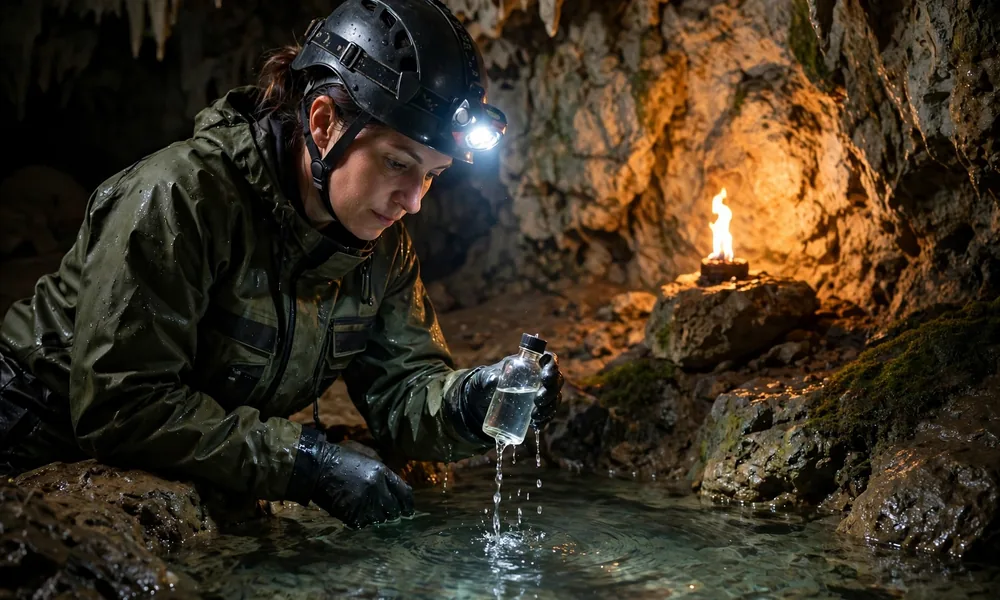
The main pressure is pollution of the groundwater. When fertilisers, pesticides, sewage and industrial waste wash into the limestone, they sink straight down to the pools where the olms live, and the animals, which breathe through their gills and their skin, take it all in. Changes to the water table are the second pressure, because quarrying, damming and the pumping of groundwater can drain a cave or flood it, and an olm that loses its pool has nowhere to go. Disturbance of the caves is the third, because cavers, tourists and collectors can damage the pools, and the light and noise of a torch can stress animals that have never seen light at all.
The most useful conservation work is practical, and it starts on the surface, not in the cave. Protecting the land above the karst, keeping sewage and chemicals out of the groundwater, and controlling quarrying and water extraction keeps the caves intact, and protecting the caves themselves, with access controls and careful management, keeps the pools undisturbed. Captive breeding programmes, notably at Postojna Cave in Slovenia, are now raising young olms and studying how they breed, and the knowledge they gain is the best hope for a species that breeds only once in a decade.
Best seasons for olm watching
The best time to look for an olm is after heavy rain, when a few animals are sometimes washed out of the caves and into the surface springs, though no season will show you one in the wild with any certainty. Olms are present in the caves all year round, so there is no wrong season in the strict sense, but the animals are most likely to be seen at Postojna Cave in Slovenia, where a captive colony is on display in a darkened aquarium, and where the wild animals live in the caves beyond. In the wild, the best chance comes in spring, when the water is high and the animals are most active.
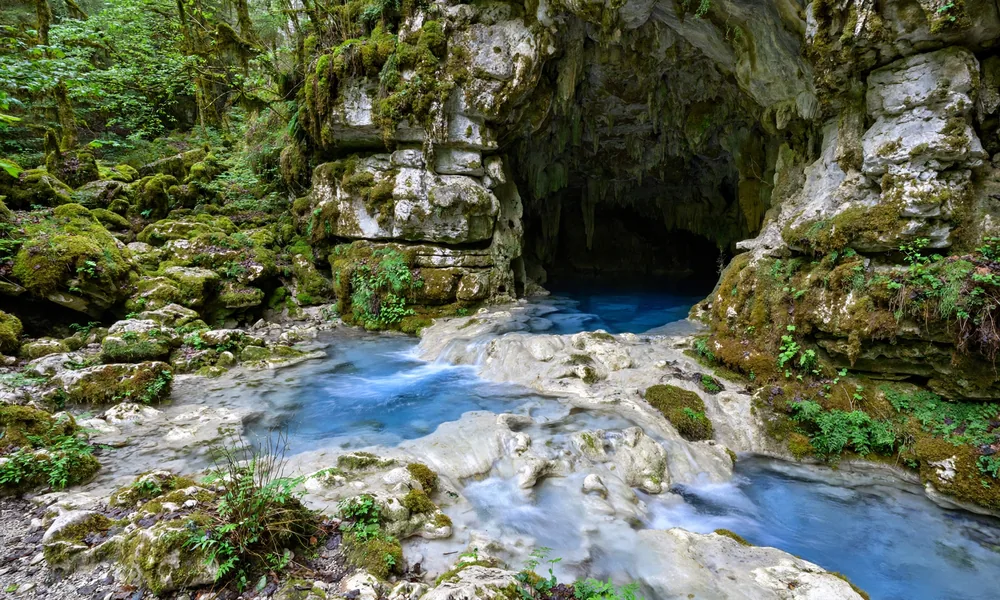
The best hours are the night, when the olms are most likely to be moving in their pools, though in a cave there is no day or night at all, and the animals keep their own slow rhythm. A visit to Postojna Cave, with a guide and a red-filtered torch, is the honest way to see one, and the animals there are used to the quiet passage of visitors. Never enter a wild cave to find an olm, because the caves are fragile, the pools are easily damaged, and a single visit can disturb animals that have lived in the same spot for years.
Staying safe around olms
An olm is not dangerous to people, and there is no safety warning that belongs to the animal itself. It has no venom, it does not bite, and it will not chase or threaten a swimmer, because it lives hundreds of metres underground and it will never meet one. The safety rules for watching olms are the rules of the cave itself: cold water, slippery rock, deep pools and sudden drops, and the sensible approach is to enjoy the animal and respect the cave it lives in.
There are a few practical points for the cave itself. Never enter a wild cave alone, wear a helmet and carry more than one light, and keep an eye on the weather outside, because a cave can flood fast after rain. Do not handle an olm at all if you can avoid it, and if you must move one, for a survey or a rescue, wet your hands first and support the body, because dry hands damage the skin that the animal breathes through. An olm out of the water for more than a few minutes is an animal in danger, so keep it wet, keep it brief, and put it gently back where you found it.
Olm watching checklist
A little preparation turns a quiet visit to a karst cave into a real chance of seeing an olm at its best, pale and still in the dark water.
- A visit to Postojna Cave in Slovenia, where a captive colony is on display and wild olms live in the caves beyond.
- A guided cave tour with a red-filtered torch, so you can see the animals without startling them with bright light.
- A visit in spring, when the water is high and the olms are most likely to be moving in their pools.
- A look at the karst springs after heavy rain, when a few animals are sometimes washed out into the daylight.
- A helmet and more than one light, and a companion, so that a wild cave stays safe from start to finish.
- A camera that works in low light, so you can record an olm without a bright flash that startles it.
- Respect for the animal and the cave, keeping your distance, keeping the olm wet, and leaving every pool exactly as you found it.
Frequently asked questions
How big do olms get?
Most olms measure 20 to 30 centimetres from snout to tail, and a good adult weighs 15 to 20 grams. The largest olms on record reach about 40 centimetres, which makes the olm one of the largest cave-dwelling animals in the world. Females grow larger than males, but otherwise the sexes look much the same, except for the shape of the cloaca in the breeding season.
What do olms eat?
An olm eats small aquatic invertebrates, including cave crustaceans such as Niphargus amphipods and Asellus isopods, small snails, and the larvae of caddisflies, mayflies, stoneflies and true flies. It hunts by smell, touch and an electric-field sense in total darkness, and it swallows its prey whole. When food is plentiful it eats heavily and stores fat, and then it can fast for months or years.
Why are olms blind?
Olms are blind because they live in total darkness, where eyes are of no use, and over many generations the eyes shrank and became covered by skin. The eyes are still there, and they keep some sensitivity to light, so an olm will swim away from a bright light, but they cannot form an image. The olm makes up for the loss with a sharp sense of smell, hearing, touch and an electric-field sense that finds prey in the dark.
Are olms dangerous?
No, olms are not dangerous to people. They have no venom, they do not bite, and they will not chase or threaten a swimmer, because they live hundreds of metres underground and they will never meet one. Their whole defence is built on staying still and staying out of sight, and their first response to a threat is to lie flat on the cave floor and hope not to be noticed.
Can you keep an olm in an aquarium?
You can, but only in a specialist set-up, and most people should not try. An olm needs cold, clean, dark water, a cave-like tank with rocks to hide under, and live invertebrates to eat, and it lives for decades, so it is a commitment of a lifetime. In most countries it is also illegal to collect or keep one without a permit, because the species is protected. An olm belongs in a limestone cave, not in a living room.
How is this guide different from the hellbender guide?
This guide covers the olm, a pale, blind salamander of 20 to 30 centimetres that lives its whole life in the flooded limestone caves of the Dinaric karst, hunts by smell and touch in total darkness, and may live for around 100 years, while our hellbender guide covers a flat, wrinkled salamander of up to 74 centimetres that lives in the cold, fast streams of eastern North America, breathes through the folds of its skin and hunts crayfish by night under flat rocks. One is a cave animal that barely moves for years; the other is a stream animal that walks the river bed every night.
Conclusion
The olm species is a reminder that a cave can hold a century of life and still look empty. A pale, blind salamander of 20 to 30 centimetres, breathing through feathery red gills and hunting by smell in water no sunlight has ever reached, has lived in the limestone of the Dinaric karst for far longer than any human has known it, and it asks for very little: cold, clean groundwater, a quiet pool, and a cave left alone.
If you go looking for one, go to Postojna Cave in spring, go with a guide, and walk the dark passages slowly, with a red-filtered torch and a companion, and look for the pale shape lying still on the cave floor. Find the pool, leave it as you found it, and you will have met the olm that turns an ordinary stretch of underground water into a place with a hundred years of patience hiding in the dark.