
Frog species number more than 7,000 across the world, from the tiny tree frogs of the rainforest canopy to the great toads of the desert and the brightly coloured poison dart frogs of Central and South America. If you are wondering how many frog species there are and what separates a frog from a toad, the short answer is this: frogs are amphibians with smooth moist skin, long hind legs built for jumping and swimming, and a life cycle that usually runs from egg to tadpole to adult, while toads are simply frogs with dry, warty skin and shorter legs that spend more of their lives on land.
Key takeaways
- More than 7,000 frog species are known, and new ones are still being found every year.
- A toad is a kind of frog: toads have dry, warty skin and shorter legs, and they spend more time on land.
- Most frogs begin life as tadpoles in water and change into adults through metamorphosis.
- Tree frogs climb with sticky toe pads, poison dart frogs carry toxins in their skin, and glass frogs are nearly see-through.
- Ponds, wetlands, rainforests and riverbanks are the best places to find frogs, especially on warm, damp evenings.
What makes a frog a frog
A frog is an amphibian, an animal that lives part of its life in water and part on land. Adult frogs have smooth, moist skin, long hind legs, webbed feet and large eyes set high on the head, and most have no tail at all. They breathe through their lungs, but they also take in oxygen through their skin, which must stay damp to work — and that is why almost every frog lives close to water.
The frog’s call is one of the great sounds of the natural world. Male frogs call to attract females, and each species has its own call — a croak, a trill, a whistle or a deep booming note. Some calls carry for more than a kilometre across a marsh on a still night, and a chorus of hundreds of frogs can be heard from far away. Among the wetland animals of marshes and reed beds, frogs are often the loudest animals after dark.
Tree frogs: the climbers of the canopy
Tree frogs are the great climbers of the frog world, with round sticky pads on the ends of their toes that grip leaves, bark and even smooth glass. The red-eyed tree frog of Central America is the most famous of them all, a bright green frog with scarlet eyes, orange feet and blue and yellow stripes down its sides. By day it sleeps folded up under a leaf, its bright colours hidden; by night it wakes to hunt insects in the canopy.
There are hundreds of tree frog species, living in rainforests, woodlands and gardens on every continent except Antarctica. The green tree frog of Australia is a large, placid frog that often turns up in bathrooms and water tanks, while the grey tree frog of North America can change its colour from grey to green to match the bark it sits on. Tree frogs lay their eggs on leaves above the water, and when the tadpoles hatch they drop into the pond below.
Poison dart frogs: small, bright and dangerous
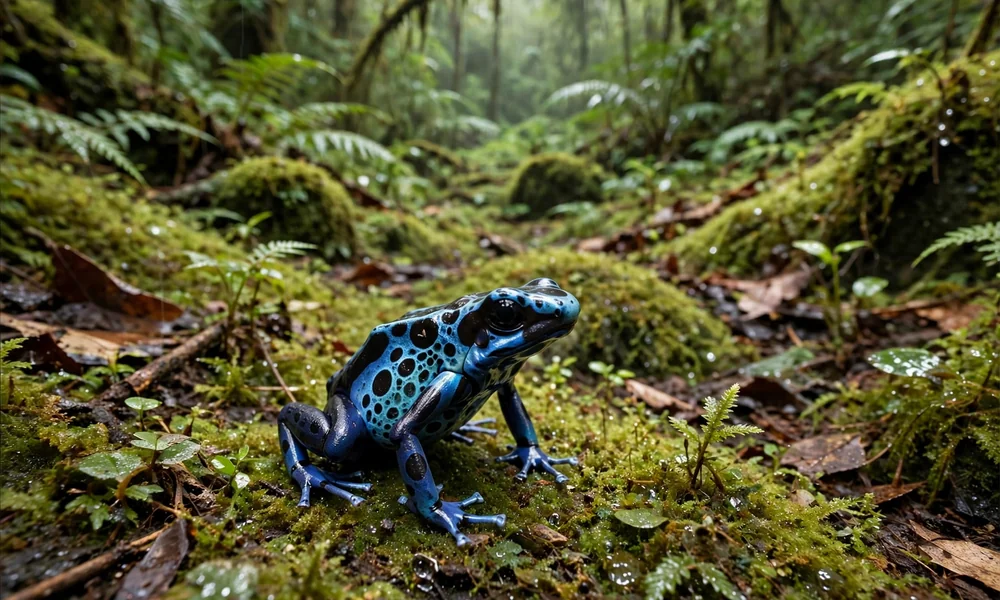
Poison dart frogs are among the most beautiful frog species in the world, and among the most dangerous. These tiny frogs of the rainforests of Central and South America are coloured in brilliant blues, yellows, reds and oranges, and their skin carries powerful toxins that can sicken or kill a predator that tries to eat them. The bright colours are a warning, and most predators learn to leave them alone.
There are around 170 species of poison dart frog, ranging from the golden poison frog of Colombia, one of the most poisonous animals on Earth, to the strawberry poison dart frog, a tiny red frog with dark blue legs that lives in the forests of Costa Rica and Panama. The toxins come from the small insects the frogs eat, especially ants and mites, and frogs raised in captivity on a different diet lose their poison.
Toads: the frogs of dry land
Toads are frogs that have made their peace with dry land. They have dry, warty skin, shorter hind legs and a heavier, walking gait, and they spend much of their lives away from water, returning to ponds only to breed. The common toad of Europe is a large brown toad that migrates to the same pond every spring, sometimes crossing roads in such numbers that volunteers carry them across in buckets.
The cane toad of Australia is the largest toad in the world, a heavy animal that can weigh more than two kilograms. It was brought to Australia from South America to eat cane beetles, but it spread across the north of the continent instead, and its poison glands have harmed many native animals that try to eat it. It is a warning about what happens when an animal is moved to a place where it does not belong.
Glass frogs, horned frogs and other remarkable frogs
Glass frogs are some of the strangest frog species of all. These small green frogs of the Central and South American rainforests have skin so clear on their undersides that you can see their heart, liver and bones through it. They live high in the trees above streams, and the males guard the eggs laid on leaves overhanging the water.
The horned frogs of South America are the opposite: huge, round, wide-mouthed frogs that sit buried in leaf litter with only their eyes showing, waiting for anything that walks past. The ornate horned frog, sometimes called the Pac-Man frog, can eat animals nearly as big as itself, including other frogs, lizards and small mice. It has teeth in its lower jaw, which is rare among frogs.
From egg to tadpole to frog
Most frog species breed in water. The female lays hundreds or even thousands of eggs in a jelly-like mass, and the male fertilises them as they are laid. The eggs hatch into tadpoles, small swimming creatures with tails and gills that eat algae and plants. Over weeks or months the tadpole grows legs, loses its tail, develops lungs and becomes a young frog, in a change called metamorphosis.
Where frogs live
Frogs live on every continent except Antarctica, and they are most numerous in the warm, wet tropics. The rainforests of the Amazon, the Congo and Southeast Asia hold hundreds of species each, and a single night walk in a Costa Rican rainforest can reveal dozens of different frogs calling from the trees, the leaf litter and the streams.
In temperate countries frogs are creatures of ponds, ditches, marshes and wet meadows. The common frog is found across Europe and northern Asia, from lowland ponds to mountain lakes more than 2,000 metres above sea level, and the wood frog of North America can survive being frozen solid in winter, thawing out in spring to breed. The lake animals of northern lakes include frogs that spend the winter buried in the mud at the bottom.
| Species | Group | Where it lives | Size |
|---|---|---|---|
| Red-eyed tree frog | Tree frog | Rainforests of Central America | 7 centimetres |
| Golden poison frog | Poison dart frog | Rainforests of Colombia | 5 centimetres |
| Common toad | Toad | Europe and northern Asia | 18 centimetres |
| Cane toad | Toad | South America, introduced to Australia | 24 centimetres |
| Glass frog | Glass frog | Rainforests of Central and South America | 3 centimetres |
| Ornate horned frog | Horned frog | Grasslands of Argentina and Brazil | 16 centimetres |
| Common frog | True frog | Europe and northern Asia | 11 centimetres |
| Wood frog | True frog | Forests of North America and Alaska | 8 centimetres |
Best seasons for frog watching
Spring is the finest season for frogs in temperate countries, when common frogs and toads gather in ponds to breed and the first tadpoles appear in the shallows. Warm, damp evenings after rain are the best time to listen: stand quietly by a pond at dusk and the chorus will start as the light fades.
Staying safe around frogs
Frogs are wild animals, and they deserve respect. Never pick up a brightly coloured tropical frog, since some carry toxins in their skin, and never handle any frog with dry hands or with insect repellent or sunscreen on your skin, since chemicals pass easily through a frog’s skin. Watch with your eyes, and leave the frogs where you found them.
Frog watching checklist
- Visit a pond on a warm, damp evening in spring and listen for the chorus at dusk.
- Look for tree frogs on leaves and stems after rain, and check the undersides of broad leaves by day.
- Watch for toads migrating to breeding ponds on mild spring nights, and give them space to cross.
- Search the rainforest floor by day for poison dart frogs, and never touch a brightly coloured frog.
- Look for tadpoles in the shallows of ponds in late spring, and leave frogspawn where you find it.
- Leave no trace: keep out of the water, take your rubbish home and never use pesticides near a pond.
Frequently asked questions
How many frog species are there?
More than 7,000 frog species are known, and new ones are still being found every year, especially in the rainforests of South America and Southeast Asia. Frogs are the largest group of amphibians by far.
What is the difference between a frog and a toad?
A toad is a kind of frog. Toads have dry, warty skin and shorter hind legs, and they spend more of their lives on land, while most frogs have smooth, moist skin, long hind legs and live close to water. There is no sharp scientific line between the two words: they are everyday names, not strict groups.
How is this guide different from the wetland animals guide?
This is a species-level guide to frogs: it covers tree frogs, poison dart frogs, toads, glass frogs and horned frogs in detail. The wetland animals guide is a general roundup of many different animals that live in wetlands, and does not go into any one group in this depth.
How is this guide different from the river animals guide?
This guide covers frogs wherever they live, from rainforest canopies to desert burrows, including their life cycle, calls and breeding behaviour. The river animals guide covers the many different animals that live in and along rivers, of which frogs are only one part.
Are poison dart frogs dangerous to people?
Wild poison dart frogs carry toxins in their skin that can sicken a predator, and the golden poison frog is one of the most poisonous animals on Earth. They are dangerous only if they are eaten or handled carelessly, and they do not attack people. Never pick up a brightly coloured tropical frog.
Why are frogs important?
Frogs eat huge numbers of insects, including mosquitoes and crop pests, and they are food for birds, snakes, mammals and fish. Because their skin absorbs water and chemicals so easily, frogs are also sensitive indicators of the health of ponds and wetlands: when frogs disappear, it is often a warning that something is wrong with the water.
Conclusion
Frog species are the great amphibians of the world: tree frogs in the canopy, poison dart frogs on the forest floor, toads on dry land, glass frogs above the streams and common frogs in the garden pond.
The next step is to pick one pond and one warm evening — a spring dusk in the garden, a wet-season night in the rainforest or a summer walk after rain — and listen for the chorus.














