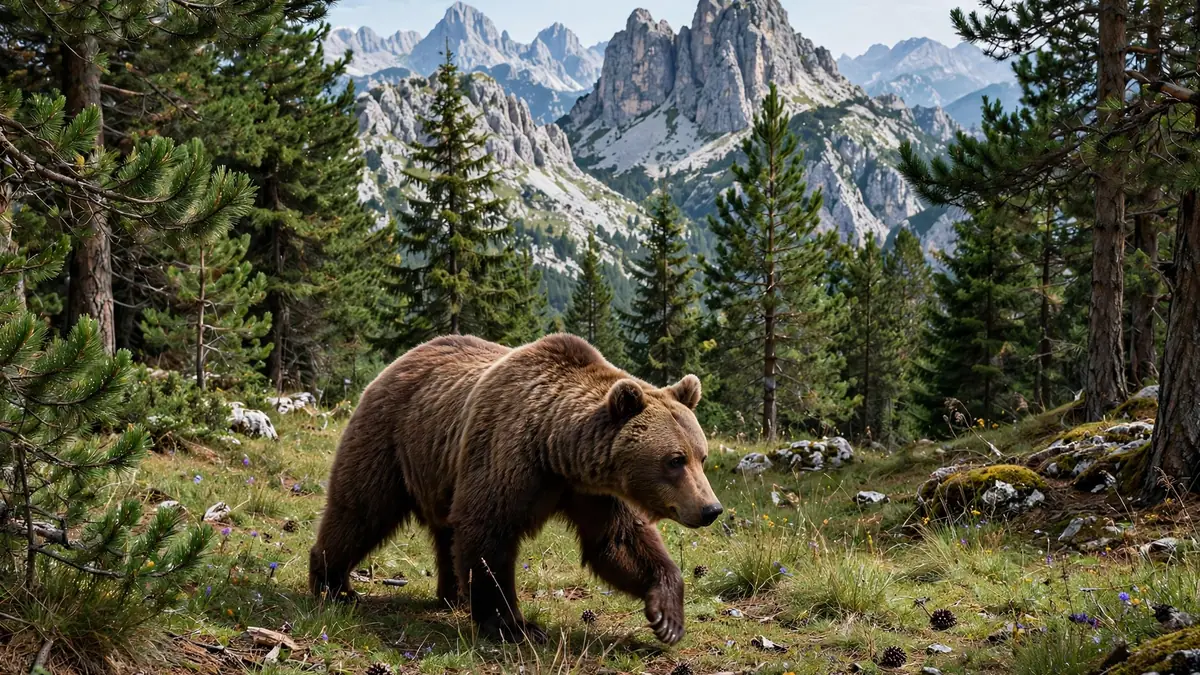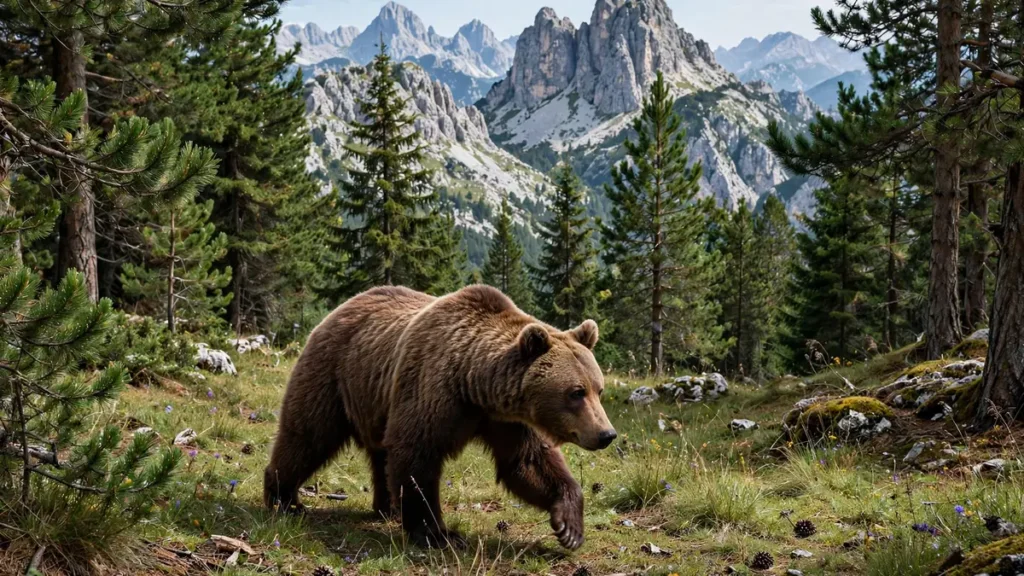
Montenegro animals include brown bears roaming the forests of Durmitor, wolves hunting in the remote mountains, Dalmatian pelicans gliding over Lake Skadar, griffon vultures circling the Tara canyon and chamois climbing the high limestone peaks. If you are wondering which animals live in Montenegro and where to see them, the short answer is this: the northern mountains hold bears, wolves, lynx and chamois, Lake Skadar holds pelicans, herons and egrets, and the Adriatic coast holds dolphins, sea turtles and seabirds.
Montenegro packs an extraordinary range of habitats into a short distance, from the Adriatic shore to high peaks, with deep river canyons, ancient forests and one of the largest lakes in southern Europe in between. This guide covers the species you are most likely to meet, where each one lives and the best seasons to see them.
Key takeaways
- Durmitor and Biogradska Gora are the best places in Montenegro to look for brown bears, wolves and chamois, with the forests and high pastures of the north holding the richest large-mammal wildlife in the country.
- Lake Skadar is one of the most important bird wetlands in southern Europe, and the best place in Montenegro to see Dalmatian pelicans, herons, egrets and many kinds of duck.
- The Tara canyon is among the best places in the Balkans to see griffon vultures and golden eagles, soaring over one of the deepest river gorges in Europe.
- Montenegro has no endemic land mammal, but its mountains, lake and coast together hold a wider mix of species than most countries of its size.
- Dawn and dusk are best for mammals, spring and autumn for migrating birds on Lake Skadar, and summer for dolphins and sea turtles along the Adriatic coast.
What makes Montenegro’s wildlife special
Montenegro is a small country with a dramatic contrast of landscapes, covering the warm Adriatic coast, the reedbeds of Lake Skadar, the deep Tara canyon, the ancient forest of Biogradska Gora and the high peaks of Durmitor and the Prokletije, so it holds species from several habitats at once.
Montenegro has no endemic land mammal, and that honesty matters: the country has no land mammal found nowhere else. What it has instead is a remarkable meeting point of wildlife. Brown bears, wolves and lynx survive in the northern forests, Dalmatian pelicans and other waterbirds gather on Lake Skadar, and dolphins swim along a coast that rises steeply into mountains within a few kilometres of the sea.
Biogradska Gora holds one of the last primeval forests in Europe, a quiet place of ancient trees and mossy streams, and Durmitor is a high mountain landscape of glacial lakes, pine forest and open pasture where chamois and eagles live above the tree line.
The great mammals of Montenegro
The brown bear is Montenegro’s largest land mammal, living in the forests of Durmitor, Biogradska Gora and the Prokletije mountains. Bears are shy and mostly active at dawn and dusk, feeding on berries, nuts, roots and insects, and sightings are never guaranteed, so a guided walk with a local ranger gives the best chance of finding fresh tracks and signs.

Among the predators, the grey wolf lives in the remote mountains and forests of the north, hunting deer and wild boar in packs, and the Balkan lynx is one of the rarest animals in Europe, present in very small numbers in the mountains along the eastern borders. Both are shy and extremely hard to see, and most visitors will only ever find their tracks.
The chamois is the most characteristic animal of the high mountains, a sure-footed goat-antelope that climbs the steep limestone cliffs of Durmitor and the Prokletije in small herds. Red deer live in the forests of the north, roe deer are widespread in woodland and farmland edges, and wild boar root through the forest floor across much of the country.
Smaller mammals are easier to find. The red fox is common in farmland and forest, badgers and pine martens live in the woodlands, and otters hunt along the rivers and the shores of Lake Skadar, where their tracks are often easier to find than the animals themselves.
Birds of the mountains, lakes and coast
The Dalmatian pelican is the most famous bird of Montenegro, and Lake Skadar is one of the best places in Europe to see it. These huge white birds glide low over the water and gather in the reedbeds, and they are best watched from a boat in the quieter corners of the lake.
Golden eagles nest on the cliffs of Durmitor and the Tara canyon, and griffon vultures circle above the gorge on broad wings, often in small groups. The mountains also hold peregrines, ravens and alpine choughs, and the owls of Montenegro include the tawny owl of the woodlands and the eagle owl of the rocky slopes.
Lake Skadar holds herons, egrets, cormorants, grebes and many kinds of duck, and in spring and autumn the lake fills with migrating birds travelling between Europe and Africa. The coast holds gulls, shags and terns, and the Bay of Kotor is a good place to watch seabirds from the shore.
Lake Skadar, rivers and life in the Adriatic
Lake Skadar is the heart of Montenegro’s wetland wildlife. Its shallow water, reedbeds and floating plants hold pelicans, herons, egrets, cormorants and pygmy cormorants, and the lake is also home to fish found only in its waters. Boat trips from the lakeside villages give the closest views, especially in the early morning.
The rivers of Montenegro hold otters, kingfishers, dippers and grey herons, and the clean, cold water of the Tara and the Moraca runs through deep forested gorges. The Tara canyon, one of the deepest river gorges in Europe, is a stronghold for vultures and eagles.
The Adriatic Sea along Montenegro’s coast holds bottlenose dolphins, sometimes seen from the shore and from boats, and loggerhead sea turtles, which visit the warmer coastal waters in summer.
Smaller animals and the wildlife of the high mountains
Not all of Montenegro’s wildlife is large. The high mountains hold alpine marmots, which whistle a warning from the rocks and pastures of Durmitor, and the meadows hold butterflies and many kinds of wildflower in summer. Adders bask on sunny rocks in the hills, and lizards are common on the dry stone walls and rocky slopes.
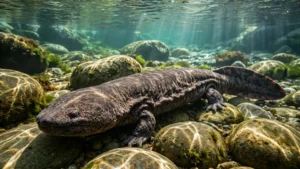
In the forests, red squirrels live in the pine woods of the north, and dormice and bats roost in old trees and caves. The underground rivers of the limestone country are home to the olm, a pale, cave-dwelling salamander that lives in total darkness.
Where to see Montenegro’s wildlife
Brown bears and chamois are easiest in Durmitor National Park, where guided walks give the best chance of finding signs, and in Biogradska Gora, where the ancient forest holds bears, deer and woodpeckers. Wolves and lynx are present in the same mountains but are rarely seen.
Dalmatian pelicans are best on Lake Skadar, from a boat in the early morning, and griffon vultures and golden eagles are best over the Tara canyon. Dolphins are best looked for from the coast near the Bay of Kotor and the open Adriatic shore in summer.
| Species | Where to look | Best season | How likely is a sighting |
|---|---|---|---|
| Brown bear | Durmitor and Biogradska Gora forests | Spring to autumn, dawn and dusk | Low, best with a guide |
| Dalmatian pelican | Lake Skadar, from a boat | Spring to autumn | Good in season |
| Griffon vulture | Tara canyon cliffs | All year, best in summer | Good on a clear day |
| Chamois | High peaks of Durmitor and Prokletije | All year | Fair with binoculars |
| Golden eagle | Durmitor and Tara canyon | All year | Fair, needs patience |
| Grey wolf | Remote mountains of the north | All year, dawn and dusk | Very low, tracks only |
| Bottlenose dolphin | Adriatic coast and Bay of Kotor | Summer | Fair from a boat |
Best seasons for wildlife watching
Spring is the finest season. The pelicans and herons are busy on Lake Skadar, the migrating birds pass through in large numbers, the mountain meadows fill with flowers and butterflies, and the bears come out of their winter dens to feed. It is also the most sensitive season, so keep to paths and give every animal more space than you think it needs.
Summer is the easiest season for dolphins and sea turtles along the coast, and for vultures and eagles over the Tara canyon. Autumn brings the deer rut in the northern forests, when red deer stags are at their most visible and vocal, and the bears feed heavily before winter.
Winter is the quiet season, but the mountains are at their most dramatic, the lake holds wintering ducks and geese, and the coast is mild enough for seabirds and the occasional dolphin.
Staying safe around Montenegro’s wildlife
Montenegro’s wild animals are usually calm, but they deserve respect. Keep your distance from bears, never approach a bear with cubs, and never try to feed or touch any wild animal. Brown bears can be dangerous if surprised at close range, so make noise on forest trails and follow a guide in bear country.
Montenegro wildlife watching checklist
- Take a boat trip on Lake Skadar in the early morning for Dalmatian pelicans, herons and egrets.
- Join a guided walk in Durmitor or Biogradska Gora to look for bear tracks and signs in the forest.
- Watch the Tara canyon cliffs on a clear summer day for griffon vultures and golden eagles.
- Scan the high limestone slopes with binoculars for chamois, and the meadows for marmots.
- Keep at least 100 metres from bears and their cubs, and far more from any wild animal with young.
- Leave no trace: take your rubbish home, keep to marked paths, and never feed wild animals.
Frequently asked questions
What is the most famous animal in Montenegro?
The brown bear is the most famous land animal, and the Dalmatian pelican is the most famous bird. Lake Skadar is the best place in Montenegro to see the pelican, and Durmitor is the best place to look for bear signs.
Are there wolves and bears in Montenegro?
Yes. Brown bears and grey wolves both live in the forests and mountains of northern Montenegro, and the Balkan lynx is present in very small numbers. All three are shy and hard to see, and most visitors find only their tracks.
What animal lives only in Montenegro?
No land mammal lives only in Montenegro. The country has no endemic land mammal, although Lake Skadar holds fish found only in its waters.
When is the best time to see pelicans in Montenegro?
Dalmatian pelicans are best on Lake Skadar from spring to autumn, when the birds are active on the open water and in the reedbeds. A boat trip in the early morning gives the closest views.
Can I see dolphins in Montenegro?
Yes. Bottlenose dolphins are sometimes seen along the Adriatic coast and in the Bay of Kotor, especially in summer, and boat trips give the best chance of a sighting.
Where can I see chamois in Montenegro?
Chamois live on the high limestone peaks of Durmitor and the Prokletije mountains. Scan the cliffs and rocky slopes with binoculars, and look in the early morning when the herds come down to feed.
Conclusion
Montenegro’s wildlife rewards patience: brown bears in the forests of Durmitor, Dalmatian pelicans on Lake Skadar, griffon vultures over the Tara canyon and chamois on the high limestone peaks are all within reach if you plan around the seasons and keep your distance.
The next step is to pick one species and one season — a spring boat trip on Lake Skadar, a summer vulture watch over the Tara canyon, or an autumn walk in Biogradska Gora — and plan your visit around it.