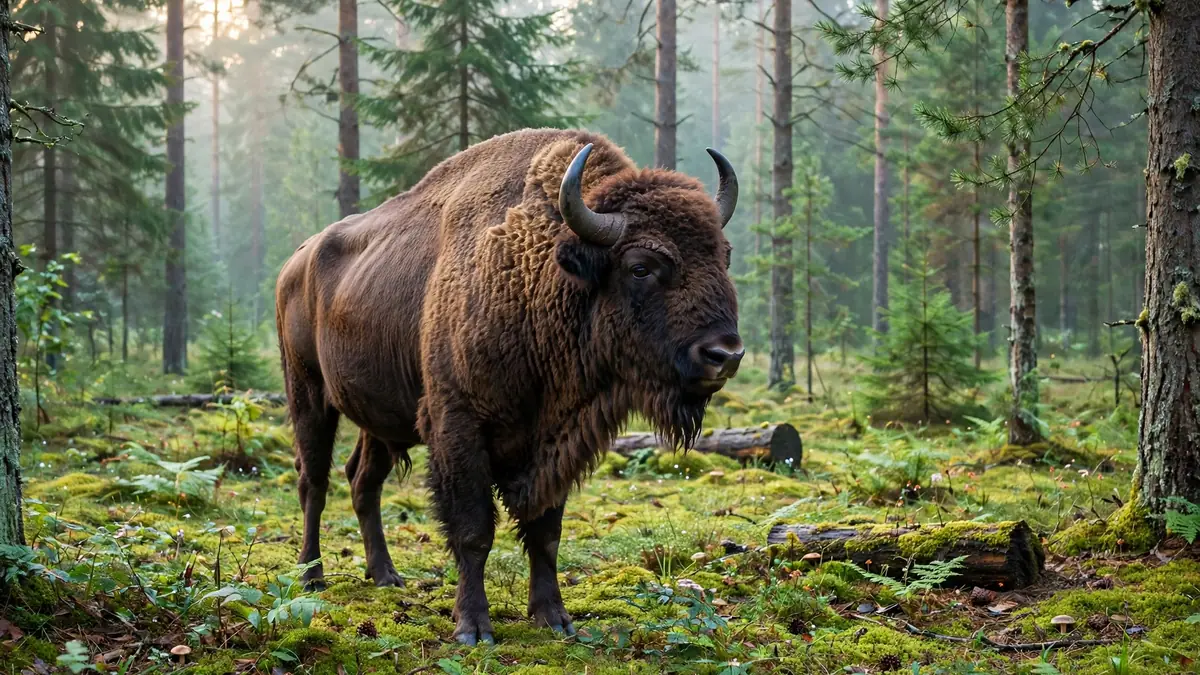
Lithuania animals include European bison grazing in the forests, wolves hunting in the remote woodlands, white-tailed eagles soaring over the lakes, beavers building dams on quiet rivers and elk wading through the wetlands. If you are wondering which animals live in Lithuania and where to see them, the short answer is this: the forests hold bison, wolves, lynx and elk, the wetlands hold beavers, otters and cranes, and the Curonian Spit and the Nemunas Delta hold eagles, storks and many kinds of waterbird.
Lithuania is a low, green country of forests, lakes, rivers and bogs, with a long Baltic coast and some of the largest wetlands in northern Europe. This guide covers the species you are most likely to meet, where each one lives and the best seasons to see them.
Key takeaways
- The European bison is the most famous animal in Lithuania, reintroduced to the forests after it had died out in the wild, and now living in protected herds in the north and the south of the country.
- The Nemunas Delta and the Curonian Spit are among the best places in northern Europe to see white-tailed eagles, black storks, cranes and many kinds of migrating waterbird.
- Lithuania is one of the best places in Europe to see beavers, which have returned to rivers and lakes across the country and are now common in the wetlands.
- Lithuania has no endemic land mammal, but its forests, bogs and wetlands together hold a wider mix of species than most countries of its size.
- Dawn and dusk are best for mammals, spring for cranes and migrating birds, and autumn for the deer rut and the great gatherings of cranes in the wetlands.
What makes Lithuania’s wildlife special
Lithuania is a low, flat country of forest, lake, river and bog, covering pine woodland, raised bogs, floodplain meadows, the reedbeds of the Nemunas Delta and the sandy dunes of the Curonian Spit, so it holds species from several habitats at once.
Lithuania has no endemic land mammal, and that honesty matters: the country has no land mammal found nowhere else. What it has instead is a remarkable recovery story. The European bison, once extinct in the wild here, was brought back to the forests and now lives in protected herds, and the beaver, once hunted to near extinction, has returned to rivers and lakes across the whole country.
The Nemunas Delta is one of the most important bird wetlands in northern Europe, the Curonian Lagoon holds huge numbers of waterbirds, and the raised bogs of the interior hold cranes, waders and many kinds of dragonfly.
The great mammals of Lithuania
The European bison is Lithuania’s largest land mammal, a huge, shaggy animal that grazes in forest clearings and meadows. The bison is not endemic to Lithuania: it was reintroduced after it had died out in the wild, and it now lives in protected herds in the forests of the north. Bison are shy and best watched from a hide or with a guide at dawn and dusk.

Among the predators, the grey wolf lives in the forests of the east and the south, hunting deer and wild boar in packs, and the Eurasian lynx is present in the larger forests, where it hunts roe deer and hares. Both are shy and extremely hard to see, and most visitors will only ever find their tracks.
The elk, known as the moose in North America, is the tallest animal in Lithuania’s forests, wading through wetlands and feeding on young trees and water plants. Red deer live in the forests and meadows, roe deer are widespread in farmland and forest edges, and wild boar root through the forest floor across much of the country.
Smaller mammals are easier to find. The red fox is common in farmland and forest, badgers and pine martens live in the woodlands, and otters hunt along the rivers and lakes, where their tracks and slides are often easier to find than the animals themselves.
Birds of the forests, wetlands and coast
The white-tailed eagle is the most famous bird of Lithuania, and the Nemunas Delta and the Curonian Spit are among the best places in northern Europe to see it. These huge eagles soar over the lagoons and perch in the tall trees along the water, and they are best watched from a boat or a viewing tower.
The black stork is a shy bird of the old forests, nesting in tall trees near quiet streams, and the white stork is one of the most loved birds in Lithuania, nesting on rooftops and poles in villages across the country. Cranes gather in the wetlands in spring and autumn.
The forests hold woodpeckers, owls and many kinds of warbler, and the owls of Lithuania include the tawny owl of the woodlands and the long-eared owl of the forest edges. The Curonian Spit is one of the best places in the Baltic to watch migrating birds in spring and autumn.
Beavers, otters and life in the rivers and lakes
Lithuania is one of the best places in Europe to see beavers. The animals have returned to rivers and lakes across the country, and their dams, lodges and gnawed trees are easy to find along quiet stretches of water. Beavers are most active at dusk, when they swim out from their lodges to feed, and a quiet evening walk along a forest river is the best way to see one.
The rivers and lakes of Lithuania hold otters, kingfishers, dippers and grey herons. The Nemunas, the longest river in Lithuania, flows through meadows and forests to the delta, where it spreads into a maze of channels, reedbeds and shallow lagoons.
The Baltic coast and the Curonian Lagoon hold grey seals, which haul out on the sandy shores of the Curonian Spit, and harbour porpoises, which are occasional visitors to the coastal waters. The lagoons also hold huge numbers of ducks, geese and swans in spring and autumn.
Smaller animals and the wildlife of the bogs and dunes
Not all of Lithuania’s wildlife is large. The raised bogs hold cranes, waders and many kinds of dragonfly, and the bog pools are home to frogs and newts. Adders bask on sunny banks, and grass snakes swim in the ponds and slow rivers of the lowlands.
In the forests, red squirrels live in the pine woods, and dormice and bats roost in old trees and buildings. The dunes of the Curonian Spit hold sand lizards, butterflies and many kinds of wildflower.
Where to see Lithuania’s wildlife
European bison are easiest in the forests of the north, where guided visits and viewing hides give the best chance of a sighting, especially at dawn and dusk. Wolves and lynx live in the same forests but are rarely seen.
White-tailed eagles, black storks and cranes are best in the Nemunas Delta and on the Curonian Spit, where viewing towers and boat trips give good views over the reedbeds and lagoons. Beavers are best looked for at dusk along the quiet rivers of Aukstaitija National Park.
| Species | Where to look | Best season | How likely is a sighting |
|---|---|---|---|
| European bison | Forests of the north, from a hide | All year, dawn and dusk | Fair with a guide |
| White-tailed eagle | Nemunas Delta and Curonian Spit | All year, best in spring | Good from a tower or boat |
| Beaver | Quiet rivers and lakes across the country | All year, best at dusk | Good, look for dams and lodges |
| Grey wolf | Forests of the east and south | All year, dawn and dusk | Very low, tracks only |
| Elk | Wetlands and forests of the east | All year, dawn and dusk | Fair in the wetlands |
| Common crane | Nemunas Delta and raised bogs | Spring and autumn | Good in season |
| White stork | Villages and meadows across the country | Spring to late summer | Good, nests are easy to find |
Best seasons for wildlife watching
Spring is the finest season. The cranes and storks return to the wetlands, the white-tailed eagles are busy at their nests, and the forests fill with warblers. It is also the most sensitive season, so keep to paths and give every animal more space than you think it needs.
Summer is the easiest season for bison, beavers and otters, with long days and boat trips on the Nemunas Delta and the Curonian Lagoon at their fullest. Autumn brings the deer rut, when red deer stags are at their most visible and vocal, and the great gatherings of cranes in the wetlands.
Winter is the quiet season, but the snow makes animal tracks easy to read, the forests hold woodpeckers and owls, and the coast holds wintering ducks, geese and swans.
Staying safe around Lithuania’s wildlife
Lithuania’s wild animals are usually calm, but they deserve respect. Keep your distance from bison and elk, never approach a bison with calves, and never try to feed or touch any wild animal. European bison are huge and can charge if they feel cornered, so give both plenty of space and watch from a hide or a vehicle.
Lithuania wildlife watching checklist
- Book a guided bison visit in the forests of the north, and watch from a hide at dawn or dusk.
- Take a boat trip in the Nemunas Delta in spring for white-tailed eagles, cranes and waterbirds.
- Walk a quiet river in Aukstaitija National Park at dusk to look for beavers and otters.
- Visit the Curonian Spit in autumn for migrating birds, seals and the great dune landscape.
- Keep at least 100 metres from bison and elk, and far more from any wild animal with young.
- Leave no trace: take your rubbish home, keep to marked paths, and never feed wild animals.
Frequently asked questions
What is the most famous animal in Lithuania?
The European bison is the most famous, and Lithuania is one of the best places in Europe to see it. The white-tailed eagle is the most famous bird, and the beaver is the most famous animal of the rivers.
Are there wolves and bears in Lithuania?
Yes, there are wolves, and they live in the forests of the east and the south. Brown bears are only rare visitors from neighbouring countries, and there is no resident bear population in Lithuania today.
What animal lives only in Lithuania?
No land mammal lives only in Lithuania. The country has no endemic land mammal, and the European bison is reintroduced, not endemic: it was brought back to the forests after it had died out in the wild.
When is the best time to see bison in Lithuania?
Bison are best watched from a hide or with a guide at dawn and dusk, all year round. Winter can be a good time, when the animals come to feeding places and their tracks are easy to read in the snow.
Can I see beavers in Lithuania?
Yes. Lithuania is one of the best places in Europe to see beavers, and their dams, lodges and gnawed trees are easy to find along quiet rivers and lakes. The animals themselves are most active at dusk.
Where can I see white-tailed eagles in Lithuania?
White-tailed eagles are best in the Nemunas Delta and on the Curonian Spit, where viewing towers and boat trips give good views over the lagoons and reedbeds, especially in spring.
Conclusion
Lithuania’s wildlife rewards patience: European bison in the northern forests, white-tailed eagles over the Nemunas Delta, beavers on the quiet rivers and cranes in the raised bogs are all within reach if you plan around the seasons and keep your distance.
The next step is to pick one species and one season — a spring boat trip in the Nemunas Delta, a summer beaver watch in Aukstaitija, or an autumn crane gathering in the wetlands — and plan your visit around it.