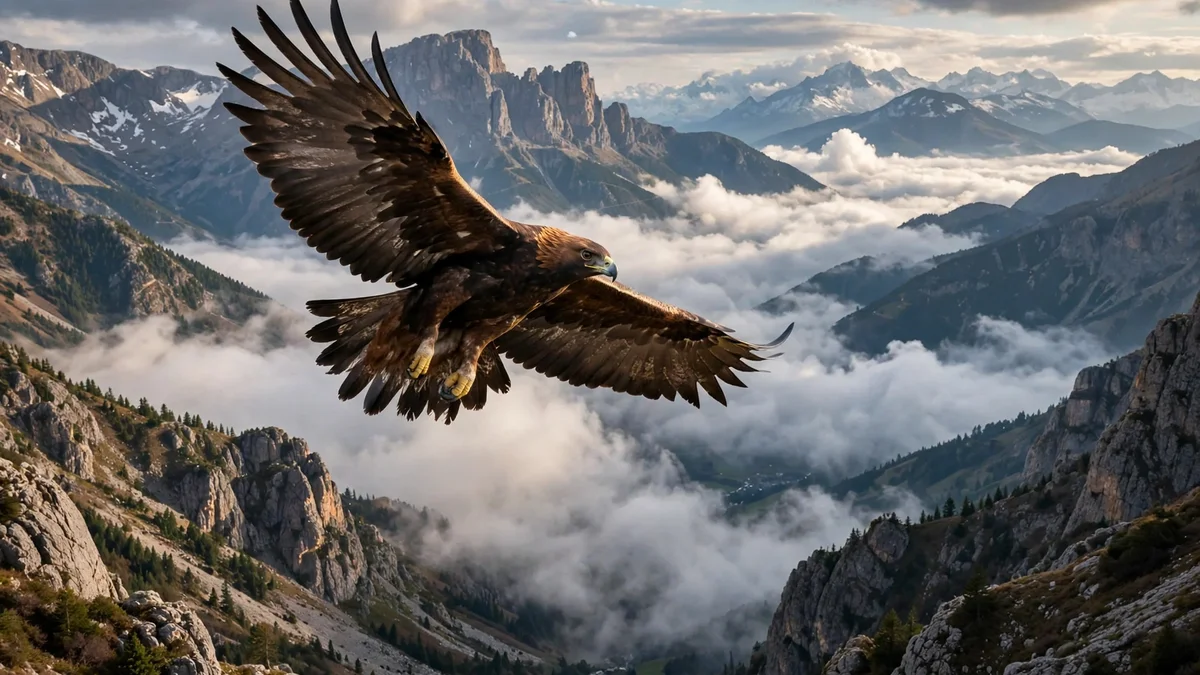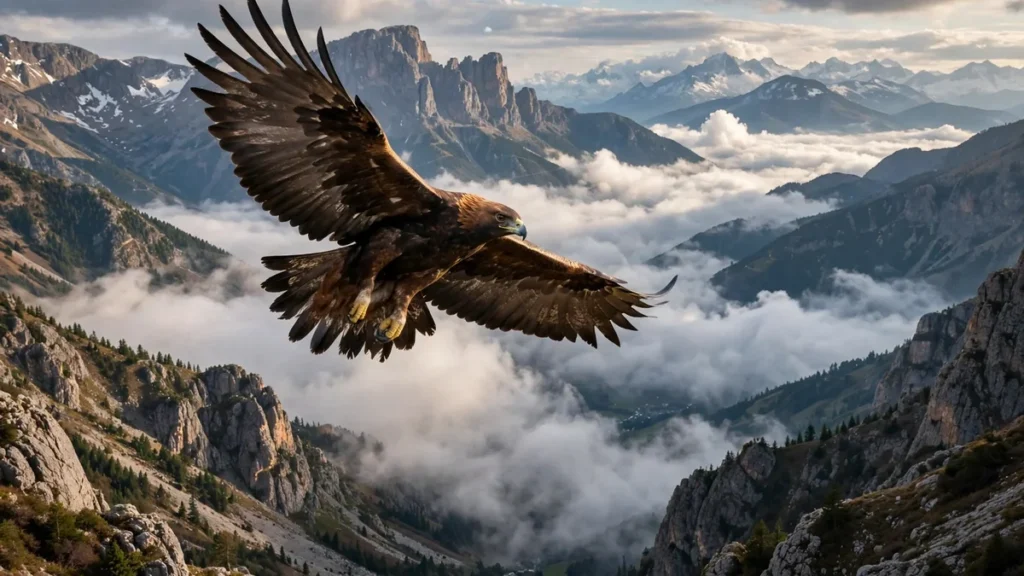
The golden eagle species is a single species, Aquila chrysaetos, a dark hunter of the northern mountains, and one of the largest and most powerful eagles in the world. If you are asking how many golden eagle species there are, the answer is one: there is only one golden eagle species in the world, though it is split into six subspecies, and every golden eagle alive today belongs to it.
The golden eagle belongs to the family Accipitridae, the hawks and eagles, and it lives across the Northern Hemisphere, from Alaska and Canada to Scotland, Spain and Mongolia. Its dark brown plumage, its golden nape, its huge wings and its fearsome hunting dives make it one of the most famous birds of prey on Earth.
Key takeaways
- There is only one golden eagle species, Aquila chrysaetos, and it is split into six subspecies across the Northern Hemisphere.
- Golden eagles have wingspans of up to 2.3 metres, and they can dive at speeds of up to 320 kilometres per hour.
- Golden eagles hunt rabbits, hares, ground squirrels and grouse, and they can kill prey much larger than themselves.
- Golden eagles mate for life and return to the same cliff nest, or eyrie, year after year.
- Golden eagles are listed as Least Concern, and they are the national bird of Mexico.
What makes a golden eagle a golden eagle
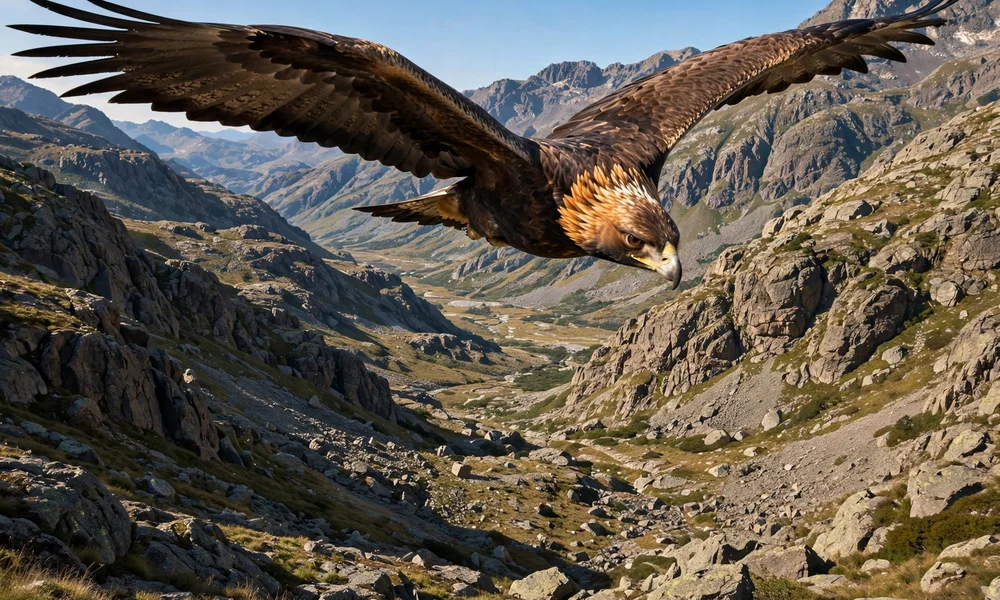
A golden eagle is a large dark brown bird of prey with a golden-brown nape, a hooked beak, powerful yellow feet with huge talons, and broad wings, and it measures roughly 66 to 100 centimetres long with a wingspan of 1.8 to 2.3 metres, and usually weighs between 3 and 6.5 kilogrammes, with females larger than males. The golden nape gives the bird its name, and it shines in the sun when the eagle soars over the mountains.
The dive defines the golden eagle: a stoop from high above, wings folded back, falling at up to 320 kilometres per hour, and the eagle strikes its prey with its talons at full speed. The talons can crush the spine of a rabbit, and the eagle carries its kill to a perch to eat it. Like other bald eagles, the golden eagle is a top predator, but it hunts live prey in the mountains, while the bald eagle fishes along rivers and coasts.
The golden eagle species and their relatives
There is one golden eagle species, Aquila chrysaetos, and it is split into six subspecies. The North American subspecies lives from Alaska to Mexico, and it is the largest of the six, while the European subspecies lives in the mountains of Scotland, Spain and the Alps. The Asian subspecies live from Siberia to Mongolia, and the Japanese subspecies lives only in the mountains of Japan.
The bald eagle is the golden eagle’s most famous relative, a white-headed eagle of North America that fishes along rivers and coasts, while the white-tailed eagle is a huge eagle of northern Europe that also fishes. The wedge-tailed eagle is the largest eagle of Australia, the Spanish imperial eagle is a rare eagle of Spain and Portugal, and the steppe eagle is an eagle of the grasslands of Asia and Africa. The Verreaux’s eagle is a black eagle of the mountains of Africa that hunts rock hyraxes.
| Type | Animal | Where it lives | Best-known food | Length or Weight |
|---|---|---|---|---|
| Species | Golden eagle (Aquila chrysaetos) | Mountains of the Northern Hemisphere | Rabbits, hares and grouse | Wingspan 1.8 to 2.3 m, 3 to 6.5 kg |
| Close relative | Bald eagle | Rivers and coasts of North America | Fish, water birds and carrion | Wingspan 1.8 to 2.3 m, 3 to 6.3 kg |
| Close relative | White-tailed eagle | Coasts of northern Europe | Fish, water birds and carrion | Wingspan 1.9 to 2.4 m, 3.1 to 6.9 kg |
| Close relative | Wedge-tailed eagle | Outback of Australia | Kangaroos, wallabies and rabbits | Wingspan 1.8 to 2.8 m, 3 to 5.8 kg |
| Close relative | Spanish imperial eagle | Spain and Portugal | Rabbits and red-legged partridge | Wingspan 1.8 to 2.1 m, 2.5 to 4.8 kg |
| Close relative | Steppe eagle | Grasslands of Asia and Africa | Ground squirrels and small mammals | Wingspan 1.6 to 2.2 m, 2.3 to 4.9 kg |
| Close relative | Verreaux’s eagle | Mountains of Africa | Rock hyraxes | Wingspan 1.8 to 2.3 m, 3 to 5.8 kg |
How golden eagles live
Golden eagles are creatures of the open mountains. A golden eagle lives in a pair, holding a territory of tens of square kilometres that it defends from other eagles, and it soars for hours on the mountain winds, watching the ground below for movement. Like other peregrine falcons, the golden eagle is a high-speed hunter, but it is far larger and heavier, and it kills with its talons instead of striking in mid-air.
Rabbits, hares and ground squirrels make up most of the diet, along with marmots, grouse and carrion, and a golden eagle eats by diving onto its prey and killing it with its talons, then carrying it to a perch to tear it apart. It hunts mostly in the morning and evening, when rabbits are out feeding, and it can take prey as large as a young deer or a crane, though it usually hunts animals smaller than itself.
Breeding happens in spring, and the pair builds a huge nest of sticks on a cliff ledge, called an eyrie, which they use year after year, adding to it until it is more than two metres across. The female lays one to three eggs, usually two, and she sits on them for about 45 days while the male brings her food, and the chicks fledge after about 70 days, though they stay with their parents for months afterwards. Golden eagles live for around 20 to 30 years in the wild, and up to 40 years or more in captivity.
Where golden eagles live
The golden eagle lives across the Northern Hemisphere, from Alaska and Canada to Scotland, Spain, the Alps and Mongolia, and it is most common in the mountains of the western United States, the Scottish Highlands and the mountains of Central Asia, where rabbits and marmots are plentiful. It is seen regularly in the Rocky Mountains, the Scottish Highlands and the Altai Mountains, where it soars over the high valleys.
Open mountain country is the key requirement. A golden eagle needs open ground to hunt in, and cliffs to nest on, so it follows the seasons as they change, and when winter comes the northern eagles move south to warmer ground. It depends on the rabbits staying plentiful, and it hunts the same valleys year after year, returning to the same eyrie.
The species is listed as Least Concern, and its numbers are stable across most of its range. Roughly 300,000 golden eagles live in the world, and the species is one of the most widespread eagles on Earth. The main pressures are the loss of open country to farming, poisoning from lead shot in carcasses, and collisions with wind turbines, though the eagle’s size and wariness keep most dangers at bay.
Best seasons for golden eagle watching
There is no closed season, because golden eagles are active all year, but the best time to look for them depends on where you go. In Scotland the best months are often April to September, when the eagles are feeding chicks and hunting in the glens. In the western United States the best months are often October to March, when the eagles gather along the wintering grounds.
Staying safe around golden eagles
A golden eagle is a wild animal with huge talons and a powerful beak, and it can injure a person with a strike of its talons, though golden eagles almost never attack people. Keep your distance, never approach a nest, and never try to touch or feed an eagle, because an eagle that is disturbed may abandon its nest and its chicks may die. If you see golden eagles while walking, stay on the path, and watch with binoculars, because eagles that are disturbed may leave their territory for good.
Golden eagle watching checklist
A little preparation turns a mountain visit into a real chance of seeing a golden eagle, so pack for wind, cold and long quiet hours.
- Binoculars with good low-light performance, for picking a soaring eagle out of the sky.
- A telescope, because eagles should always be watched from a distance.
- Warm clothes and a waterproof jacket, because the best watching is on cold mountain mornings.
- A booked visit to a mountain viewpoint with a guide who knows the eagle territories.
- A plan to be out in the morning, when the eagles are most active and hunting.
- Patience and silence, because eagles are shy birds and a noisy group will send them away.
- A field guide to birds of prey, for telling a golden eagle from a white-tailed eagle at a glance.
Frequently asked questions
How many golden eagle species are there?
There is one golden eagle species, Aquila chrysaetos. It is split into six subspecies, from North America to Japan, but they are all the same species, and the golden eagle is not closely related to the bald eagle, despite the shared name.
How fast can a golden eagle dive?
Golden eagles can dive at speeds of up to 320 kilometres per hour, making them one of the fastest birds in the world. They fold their wings back and fall like a stone, striking their prey with their talons at full speed.
Do golden eagles mate for life?
Yes. Golden eagles pair for life, and a pair holds the same territory for years, returning to the same eyrie each spring. If one bird dies, the survivor will find a new mate, but a pair that stays together can breed for more than twenty years.
Can you keep a golden eagle as a pet?
No. A golden eagle is a wild animal that needs the mountains, hunts live prey, and is fully protected by law in most of the countries where it lives. Golden eagles in falconry are kept by licensed falconers only, and they are not pets.
How is this guide different from the stingray species guide?
This guide covers the single golden eagle species, a dark hunter that dives at 320 kilometres per hour over the mountains of the Northern Hemisphere, while our stingray species guide covers more than 200 stingray species, flat bottom-dwellers that bury themselves in sand and defend themselves with a venomous barb. The golden eagle is up to 2.3 metres across the wings and hunts rabbits, and the common stingray is up to 1.4 metres across and eats shellfish.
Are golden eagles endangered?
Golden eagles are listed as Least Concern, so they are not classed as endangered. Roughly 300,000 birds live across the Northern Hemisphere, though the loss of open country and poisoning from lead shot are the main threats.
Conclusion
The golden eagle species shows how much power one bird can hold: a single species of dark hunter, with a golden nape, dives of 320 kilometres per hour, and a life spent soaring over the mountains of the Northern Hemisphere.
If you go looking for one, go in the spring to Scotland or the Rockies, go quietly, and go with patience. Watch a golden eagle soar over the valley and you will understand why it has earned its place as the king of the mountain birds, and why keeping its open country matters most.