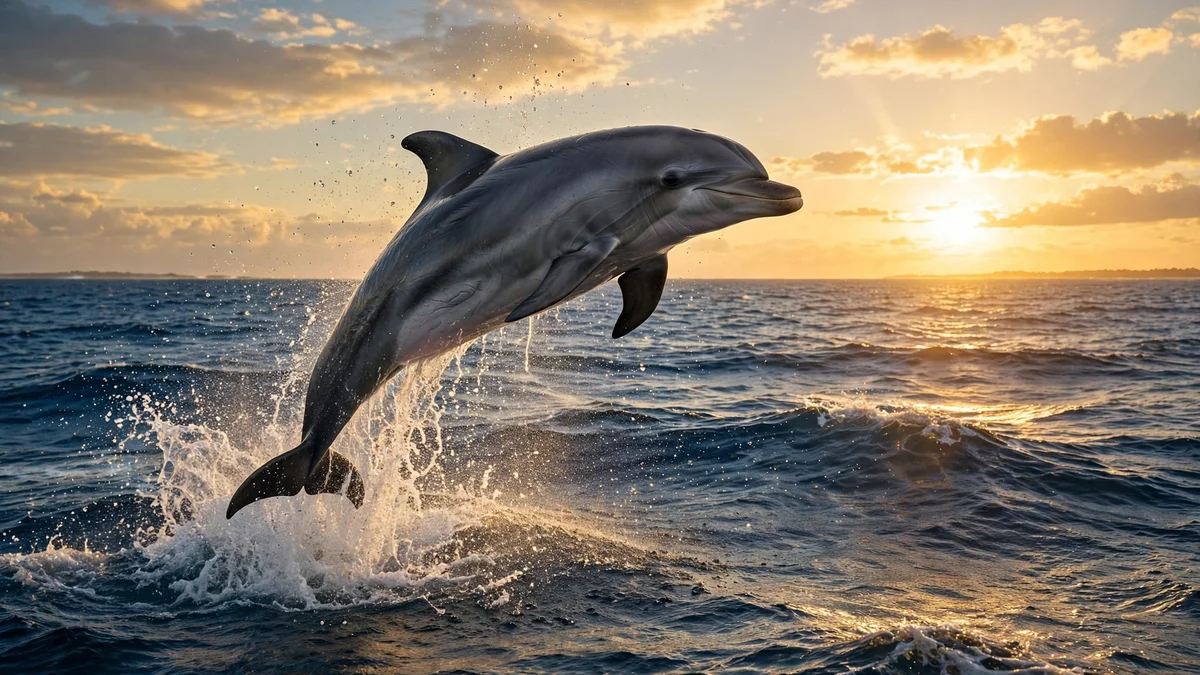
The bottlenose dolphin species number three, clever dolphins of the warm coastal seas, and they are the most familiar dolphins on Earth, the smiling faces of aquariums, films and every holiday boat trip. If you are asking how many bottlenose dolphin species there are, the answer is three: there are three recognised bottlenose dolphin species in the world, the common bottlenose dolphin, the Indo-Pacific bottlenose dolphin and the Burrunan dolphin, and every bottlenose dolphin alive today belongs to one of them.
The bottlenose dolphin belongs to the family Delphinidae, the oceanic dolphins, and it lives in the warm and temperate seas of every ocean, from coastal bays to the open sea. Its grey back, its pale belly, its curved beak and its curved dorsal fin make it one of the most recognisable animals of the sea.
Key takeaways
- There are three bottlenose dolphin species, and the common bottlenose dolphin is the largest and most widespread of them all.
- Bottlenose dolphins find their food by echolocation, sending out clicks and listening to the echoes that bounce back.
- Bottlenose dolphins live in pods, and they stay with their mothers for three to six years, learning to hunt.
- Bottlenose dolphins sleep with half of their brain awake, so they can keep breathing and watch for danger.
- All three bottlenose dolphin species are listed as Least Concern, though the Burrunan dolphin is listed as Critically Endangered in Victoria.
What makes a bottlenose dolphin a bottlenose dolphin
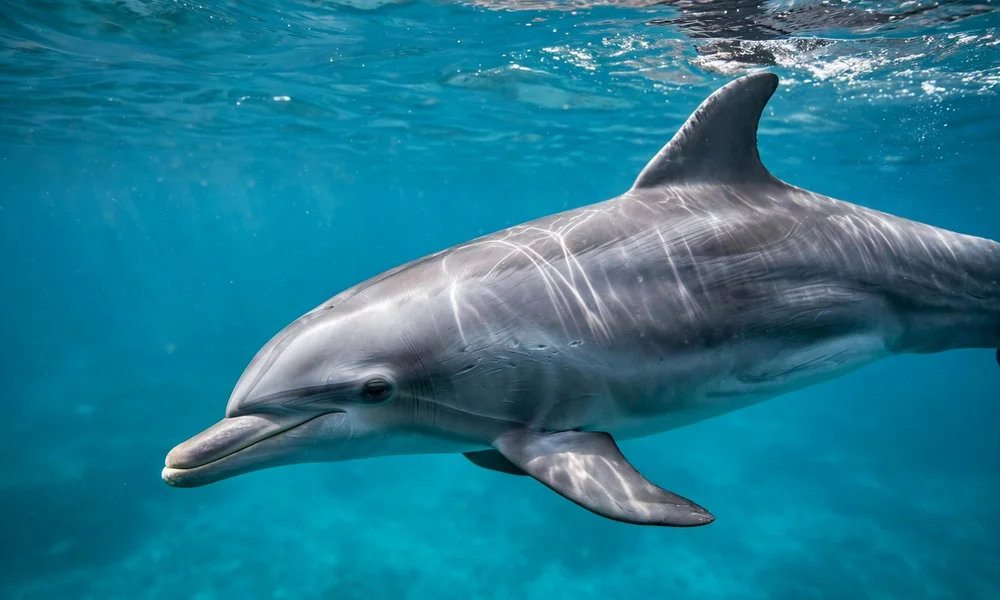
A bottlenose dolphin is a medium-sized dolphin with a grey back, a pale belly, a short stubby beak like a bottle, and a tall curved dorsal fin, and it measures roughly 2 to 4 metres long and usually weighs between 150 and 650 kilogrammes, depending on the species. The common bottlenose dolphin is the largest, at 2 to 4 metres and up to 650 kilogrammes, while the Indo-Pacific bottlenose dolphin is smaller, at 2 to 2.6 metres, and the Burrunan dolphin is the smallest, at about 2.3 metres.
The beak defines the bottlenose dolphin: a short rounded beak that gives the animal its name, and a smile-shaped mouth line that makes it look friendly even when it is not. Its brain is one of the largest of any animal relative to its body, second only to humans, and it can recognise itself in a mirror, use tools and learn new tricks by watching others. Like other whales, the bottlenose dolphin breathes air through a blowhole on top of its head, and it can hold its breath for up to 10 minutes, though it usually surfaces every few minutes.
The bottlenose dolphin species and their relatives
There are three bottlenose dolphin species. The common bottlenose dolphin lives in the warm and temperate seas of every ocean, from the coasts of Florida to the waters of Australia, and it is the best-known dolphin in the world. The Indo-Pacific bottlenose dolphin lives in the warm waters of the Indian and western Pacific Oceans, from East Africa to Japan, and the Burrunan dolphin lives only in the coastal waters of Victoria in Australia, where it was recognised as a separate species in 2011.
The common dolphin is the bottlenose dolphin’s most familiar relative, a smaller dolphin with an hourglass pattern on its sides that lives in the open ocean, while the spinner dolphin is famous for leaping and spinning in the air, and the spotted dolphin is covered in spots that grow with age. The striped dolphin has bold blue stripes along its sides, the Risso’s dolphin is a large grey dolphin covered in scars, and the pilot whale is a large black dolphin that lives in deep water. The orca, or killer whale, is the largest member of the dolphin family, and it hunts in pods like the bottlenose.
| Type | Animal | Where it lives | Best-known food | Length or Weight |
|---|---|---|---|---|
| Species | Common bottlenose dolphin (Tursiops truncatus) | Warm and temperate seas worldwide | Fish, squid and crustaceans | 2 to 4 m, 150 to 650 kg |
| Close relative | Indo-Pacific bottlenose dolphin | Indian and western Pacific Oceans | Fish and squid | 2 to 2.6 m, 150 to 230 kg |
| Close relative | Burrunan dolphin | Coastal Victoria, Australia | Fish and squid | About 2.3 m, 100 to 200 kg |
| Close relative | Common dolphin | Open ocean worldwide | Small fish and squid | 1.7 to 2.4 m, 70 to 135 kg |
| Close relative | Spinner dolphin | Tropical oceans worldwide | Small fish and squid | 1.3 to 2.1 m, 60 to 80 kg |
| Close relative | Spotted dolphin | Tropical oceans worldwide | Fish and squid | 1.7 to 2.6 m, 100 to 140 kg |
| Close relative | Risso’s dolphin | Deep temperate and tropical seas | Squid and fish | 2.6 to 4 m, 300 to 500 kg |
How bottlenose dolphins live
Bottlenose dolphins are creatures of the warm coastal seas. A bottlenose dolphin lives in a pod, a group of 2 to 15 animals that hunt, play and rest together, and pods join into larger groups of hundreds when food is plentiful. Like other dolphins, it is a social animal, and it stays with its mother for three to six years, learning where the fish are and how to catch them.
Fish make up most of the diet, along with squid, shrimp and other crustaceans, and a bottlenose dolphin eats about 15 to 30 kilogrammes of food every day. It hunts by echolocation, sending out rapid clicks and listening to the echoes, which tell it the size, shape and distance of a fish even in murky water
Breeding happens all year round, and after a gestation of about 12 months the female gives birth to a single calf, usually in shallow water, where the calf can reach the surface easily. The calf is born about 1 metre long, weighing around 20 kilogrammes, and it nurses for 18 months or more, staying with its mother for three to six years. A female breeds only once every three to six years, and bottlenose dolphins live for around 40 to 60 years in the wild.
Where bottlenose dolphins live
The bottlenose dolphin lives in the warm and temperate seas of every ocean, from the coasts of Florida and the Mediterranean to the waters of Australia and South Africa, and it is most common in shallow coastal waters, bays, lagoons and estuaries. The common bottlenose dolphin is found worldwide, the Indo-Pacific bottlenose dolphin lives in the Indian and western Pacific Oceans, and the Burrunan dolphin lives only in Port Phillip Bay and the Gippsland Lakes in Victoria, Australia.
Warm shallow water is the key requirement. A bottlenose dolphin needs water between about 10 and 30 degrees Celsius, with plenty of fish to eat, so it follows the fish as they move with the seasons, and when the water cools the dolphins move towards the equator.
All three bottlenose dolphin species are listed as Least Concern, though the Burrunan dolphin is listed as Critically Endangered in Victoria, where only about 150 animals remain. The main pressures are entanglement in fishing nets, pollution, boat strikes and the loss of coastal habitat, and in some places dolphins are still hunted for meat. In Shark Bay in Australia, bottlenose dolphins have been seen using sponges as tools, one of the few examples of tool use in the wild.
Best seasons for bottlenose dolphin watching
There is no closed season, because bottlenose dolphins are active all year, but the best time to look for them depends on where you go. In Florida the best months are often April to October, when the dolphins feed in the shallow bays.
Staying safe around bottlenose dolphins
A bottlenose dolphin is a wild animal with great strength and sharp teeth, and it can hurt a person by accident, though dolphins almost never attack people. Keep your distance, never chase a dolphin, and never try to touch, feed or swim with one, because a dolphin that learns to approach people is more likely to be hit by a boat. If you see dolphins from a boat, keep the engine slow, watch for their backs breaking the surface, and stay in marked channels.
Bottlenose dolphin watching checklist
A little preparation turns a bay visit into a real chance of seeing a bottlenose dolphin, so pack for sun, calm water and long quiet hours.
- Binoculars with good low-light performance, for picking a grey back out of the water.
- A camera with a zoom lens, because dolphins should always be watched from a distance.
- Sun cream and a hat, because the best watching is in the bright midday sun.
- A booked boat tour with a guide who knows the dolphin rules and the safe routes.
- A plan to be out in the morning, when the dolphins are most active and feeding.
- Patience and silence, because dolphins are shy animals and a noisy group will send them away.
- A polarised pair of sunglasses, for cutting the glare and seeing into the water.
Frequently asked questions
How many bottlenose dolphin species are there?
There are three bottlenose dolphin species: the common bottlenose dolphin, the Indo-Pacific bottlenose dolphin and the Burrunan dolphin. The Burrunan dolphin was recognised as a separate species only in 2011, and it lives only in the coastal waters of Victoria in Australia.
How do bottlenose dolphins find their food?
Bottlenose dolphins find their food by echolocation, sending out rapid clicks from the melon, the fatty organ on top of their heads, and listening to the echoes that bounce back from fish, squid and other objects. The echoes tell the dolphin the size, shape and distance of its prey, even in murky water.
Do bottlenose dolphins sleep?
Yes, but they sleep with half of their brain awake, so they can keep breathing and watch for danger. A dolphin sleeps by resting one half of its brain at a time, swimming slowly in a circle or floating at the surface, and it switches sides every few hours.
Can you keep a bottlenose dolphin as a pet?
No. A bottlenose dolphin is a wild animal that needs the open sea, eats up to 30 kilogrammes of fish a day, and is fully protected by law in every country where it lives. Dolphins in aquariums need huge tanks with filtered seawater, and they are not pets.
How is this guide different from the hummingbird species guide?
This guide covers three bottlenose dolphin species, clever marine mammals that hunt fish by echolocation in the warm coastal seas, while our hummingbird species guide covers more than 360 hummingbird species, tiny birds that hover at flowers and fly backwards across the Americas. The dolphin weighs hundreds of kilogrammes and breathes air through a blowhole, and the hummingbird weighs a few grammes and breathes through lungs.
Are bottlenose dolphins endangered?
Bottlenose dolphins are listed as Least Concern, so they are not classed as endangered. The Burrunan dolphin is listed as Critically Endangered in Victoria, where only about 150 animals remain, and entanglement in fishing nets is the main threat.
Conclusion
The bottlenose dolphin species show how much intelligence one animal can hold: three species of clever dolphin, with brains second only to humans, voices that carry for kilometres, and lives spent hunting in pods through the warm coastal seas.
If you go looking for one, go in the morning to a bay like the Moray Firth or Shark Bay, go with a guide, and go quietly. Watch a bottlenose dolphin leap from the water and you will understand why it has earned its place as the smiling face of the sea, and why keeping its coastal water clean matters most.