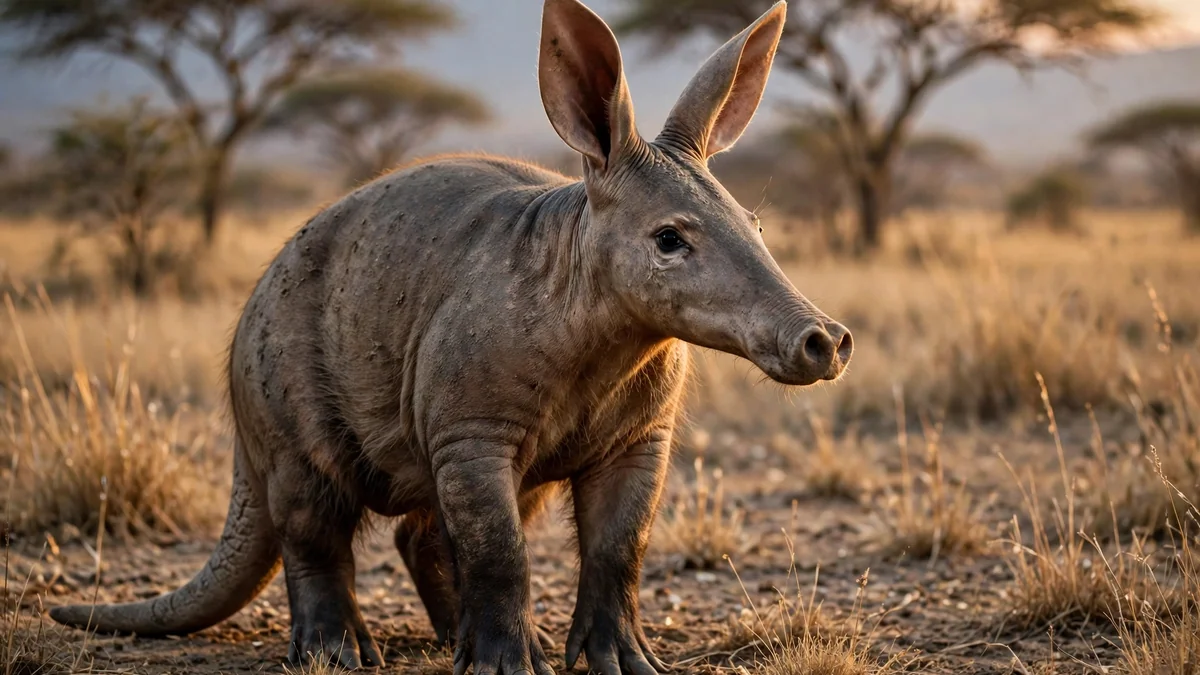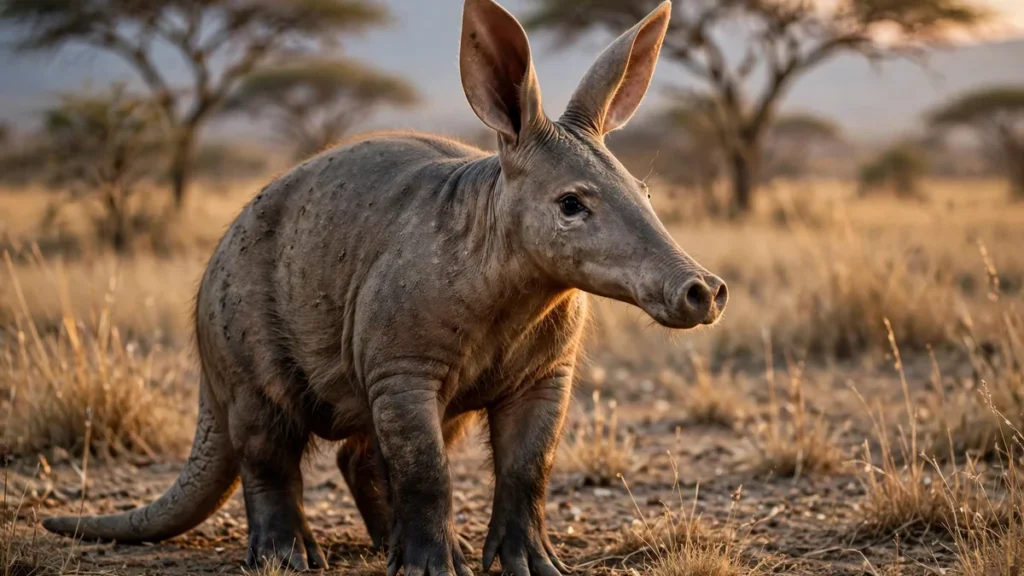
Aardvark species make a very short list, because there is only one aardvark species in the world: Orycteropus afer, the burrowing, nocturnal mammal of sub-Saharan Africa. If you are wondering how many aardvark species there are, the answer is one: the only living member of its whole order, a solitary animal with a pig-like snout, donkey-like ears and a long, sticky tongue made for eating ants and termites.
Key takeaways
- There is only one aardvark species, Orycteropus afer, in sub-Saharan Africa.
- It is the only living species in its family, Orycteropodidae, and its order, Tubulidentata.
- Aardvarks are nocturnal burrowers eating almost nothing but ants and termites, lapped up with a tongue up to 30 centimetres long.
- An aardvark can eat as many as 50,000 ants or termites in a single night.
- Abandoned aardvark burrows give shelter to many other animals, from wild dogs to birds and reptiles.
What makes an aardvark an aardvark
An aardvark is a stocky, medium-sized mammal with a long, narrow head, a pig-like snout, very small eyes and ears up to 24 centimetres long standing upright like a donkey’s. Its back arches high over its shoulders, its skin is pinkish-grey under sparse, coarse hair, and its heavy, muscular tail tapers to a point. An aardvark can weigh up to 65 kilograms and measure up to 2.2 metres long from snout to tail tip, including a tail of about 70 centimetres.
The name aardvark comes from Afrikaans and means earth pig, a fair name for an animal that spends its life digging with powerful, spade-like claws. Its scientific name tells the same story: Orycteropus means burrowing foot, afer means of Africa. It is not a pig, though, and it is not closely related to the anteaters of South America either: it is an afrothere, a group that also includes elephants, manatees and hyraxes.
What sets the aardvark apart from every other living mammal is its teeth. Tubulidentata means tube-toothed, and aardvark teeth are columns of dentine pierced by tiny tubes, with no enamel and no roots. They grow throughout its life, sit only at the back of the jaw, and wear down as it chews, because an aardvark never bites or tears its food: it simply licks it up.
The aardvark and its fellow ant-eaters
The aardvark has no sister species, but it does have company. Across the world, several unrelated mammals have evolved the same way of life: strong claws, a long snout and a long, sticky tongue for the same work. They are not close kin of the aardvark, and the table below labels them honestly as fellow ant-eaters rather than relatives, but they are the animals most often confused with it.
The most famous is the giant anteater of South America, a shaggy, black-and-white animal with a long, tubular snout and a huge, bushy tail it wraps around itself like a blanket when it sleeps. It walks on its knuckles to protect its curved claws, has no teeth, and flicks its tongue in and out up to 150 times a minute. The anteater species guide covers all four anteaters in full, from the giant anteater to the tiny silky anteater of the treetops.

The silky anteater is the smallest, about the size of a squirrel, with soft golden fur and a prehensile tail for gripping branches as it hunts ants in the treetops, sleeping through the day and almost never seen. The giant armadillo of South America, by contrast, is a burrowing giant with a shell of bony plates and claws large enough to dig a burrow a person could crawl into.
Africa has its own scaly ant-eaters, the pangolins. Temminck’s pangolin lives in the same savannas as the aardvark and rolls into a tight, armoured ball when a predator approaches. The Sunda pangolin of South-East Asia climbs trees as well as digging on the forest floor, reaching deep-nesting ants with a tongue longer than its whole body. Pangolins are the most heavily trafficked mammals in the world, and all eight species are now protected.
Australia adds two more: the short-beaked echidna, a spiny, egg-laying mammal that licks up ants and termites just as the aardvark does, and the numbat of south-western Australia, a small, striped marsupial eating almost nothing but termites, as many as 20,000 in a single day. None of these animals is related to the aardvark, yet each has arrived at the same answer to the same problem: how to make a living from insects in hard, well-defended nests.
How aardvarks hunt: claws, smell and a sticky tongue
An aardvark emerges from its burrow in the late afternoon or shortly after sunset and forages alone through the night, travelling 10 to 30 kilometres along familiar zigzag paths. It moves slowly, pausing to sniff and press its snout to the soil, great ears upright for predators. Smell is its best tool: it detects ants and termites underground and follows their scent to the nest.
When it finds a nest, the aardvark digs with astonishing speed, its strong front claws ripping through soil and the cement-hard crust of a termite mound. It closes its nostrils against dust and laps up the insects with a sticky tongue that can extend up to 30 centimetres. It can eat as many as 50,000 ants or termites in one night, yet it rarely destroys a whole colony, moving on after a few minutes so the nest can recover.
Aardvarks eat almost nothing but ants and termites, and the only fruit they are known to eat is the aardvark cucumber, a wild Kalahari fruit named after them. They get most of their water from their food, and thick skin protects them from insect bites. When a lion, leopard or hyena comes too close, an aardvark runs for its burrow or lashes out with its claws and tail.
Where aardvarks live
Aardvarks live across sub-Saharan Africa, from Senegal to Ethiopia and South Africa, wherever savanna, grassland and woodland hold enough ants and termites. They are found as high as 3,200 metres in Ethiopia, and they avoid only rocky ground, which they cannot dig, and true rainforest, where the soil stays too wet. They are among the most widespread desert animals of the dry lands, at home in semi-arid scrub and the Kalahari alike.
An aardvark’s burrow is its home, nursery and refuge, usually 2 to 3 metres long and ending in a sleeping chamber, though some run for 13 metres with several entrances. Aardvarks dig new burrows often and abandon old ones, which are quickly taken over by other animals: wild dogs, warthogs, porcupines, mongooses, snakes, lizards and even birds all shelter in holes an aardvark dug.
| Type | Animal | Where it lives | Best-known food | Length |
|---|---|---|---|---|
| Species | Aardvark | Sub-Saharan Africa | Ants and termites | 2.20 metres |
| Close relative | Giant anteater | Central and South America | Ants and termites | 2.00 metres |
| Close relative | Silky anteater | Central and South America | Ants | 0.35 metres |
| Close relative | Temminck’s pangolin | Southern and eastern Africa | Ants and termites | 0.90 metres |
| Close relative | Sunda pangolin | South-East Asia | Ants and termites | 0.90 metres |
| Close relative | Short-beaked echidna | Australia and New Guinea | Ants and termites | 0.45 metres |
| Close relative | Numbat | South-western Australia | Termites | 0.45 metres |
| Close relative | Giant armadillo | South America | Ants and termites | 1.50 metres |
Best seasons for aardvark watching
The dry season is the best time to look for aardvarks, when short grass and hard ground force them to travel further for food. In southern Africa the dry months from May to September are often best, because cooler nights bring aardvarks out earlier, sometimes before sunset, and thin grass makes them easier to spot in a red spotlight. East Africa’s long dry season from June to October offers the same advantage.
The wet season is harder, because tall grass lets aardvarks feed close to their burrows. In the far south, cold winter nights drive them out in the late afternoon. Wherever you go, the best watching is after dark, on a calm, moonlit night, with a guide who knows the burrows.
Staying safe around aardvarks
Aardvarks are shy, gentle animals, far more afraid of people than people need to be of them. They have no venom and no interest in a fight, but a cornered aardvark can lash out with its claws, so never try to catch one, never put your hand into a burrow, and never block a burrow entrance while an animal is inside. If you find an injured aardvark, call a wildlife rescue group.
Keep a sensible distance and watch with binoculars or a red-filtered spotlight, kinder to night animals than white light. Do not chase or feed an aardvark: a frightened animal may abandon its burrow altogether. Aardvarks share their country with lions, leopards and hyenas, so stay with your guide and remember that you are among the predator animals of the savanna as well as its gentler ones.
Aardvark watching checklist
- Look for fresh digging and sandy spoil heaps at a burrow mouth in open savanna.
- Watch after sunset on a calm, moonlit night, when aardvarks travel furthest.
- Look for a low, grey shape moving slowly, snout pressed to the ground.
- Listen for digging at a termite mound, and watch for dust in the air.
- Use binoculars and a red-filtered light, never a white light in its eyes.
- Keep a good distance, stay quiet, never block a burrow entrance.
- Leave no trace: take your rubbish home and keep to tracks.
Frequently asked questions
How many aardvark species are there?
There is only one aardvark species, Orycteropus afer, living across sub-Saharan Africa, and every aardvark alive today belongs to it. It is the only living species in its genus, its family Orycteropodidae and its order Tubulidentata.
How is this guide different from the anteater species guide?
This guide covers the single aardvark species and the fellow ant-eating mammals it is most often compared with, from pangolins to echidnas, while the anteater species guide covers the four true anteaters of Central and South America in full.
Is an aardvark related to the anteater?
No. The long snout, strong claws and sticky tongue are the result of convergent evolution, because both animals feed on ants and termites. The aardvark is an afrothere, related to elephants and hyraxes.
What do aardvarks eat?
Aardvarks eat almost nothing but ants and termites, lapping them up with a sticky tongue up to 30 centimetres long. One aardvark can eat as many as 50,000 insects in a night; the only fruit they are known to eat is the aardvark cucumber of the Kalahari.
Are aardvarks nocturnal?
Yes. They sleep in their burrows through the heat of the day and emerge in the late afternoon or after sunset to forage alone through the night, travelling 10 to 30 kilometres before returning at dawn. That habit puts them among the nocturnal animals of the African savanna.
Where is the best place to see an aardvark?
The best place is open savanna in sub-Saharan Africa during the dry season, after dark, with a local guide who knows the burrows. Southern Africa from May to September is often best, because short grass and cooler nights bring aardvarks out earlier in the evening.
Conclusion
Aardvark species, all one of them, are a reminder that the animal kingdom still holds loners: a single species, the last survivor of its whole order, eating tens of thousands of ants and termites nightly and sheltering other animals in the holes it leaves behind.
The next step is to spend a night on the African savanna and watch for the low, grey shape of an aardvark moving slowly through the grass with its snout to the ground, the only one of its kind in the world.