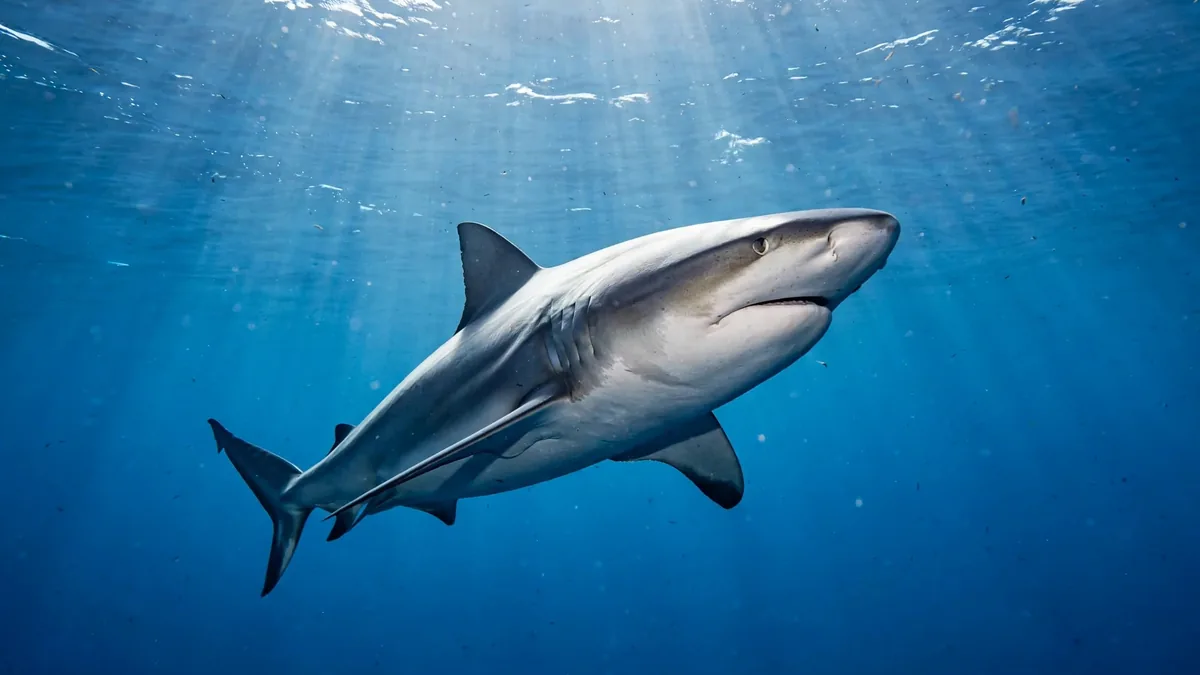
The bull shark species is the shark that refuses to stay in the sea, a stocky, blunt-snouted animal that swims up rivers, into lakes, and through murky estuaries where most sharks would never go. If you are asking what a bull shark is, the short answer is Carcharhinus leucas, a requiem shark 2.1 to 3.5 metres long and weighing 90 to 230 kilograms, built like a barrel, with small eyes, a short broad snout, and a temperament that has earned it more respect, and more fear, than almost any other shark. It is the only shark that lives happily in fresh water for long stretches, and that one habit changes everything about where it hunts, what it eats, and why people meet it.
Most people picture a shark far out at sea, in clear blue water, and the bull shark can be that animal. It also turns up in a muddy river a hundred kilometres inland, in a lake in Nicaragua, in a canal behind a housing estate in Florida, and in the surf where children are swimming. It does not need salt water the way other sharks do. It can hold the salt in its body the way a freshwater fish does, and it can switch between the two worlds as the tide and the season suit it. That flexibility has made it one of the most widespread sharks on earth.
Key takeaways
- The bull shark species is Carcharhinus leucas, a stocky requiem shark 2.1 to 3.5 metres long and weighing 90 to 230 kilograms.
- It can live in fresh water for long periods, swimming up rivers and into lakes such as Lake Nicaragua, which most sharks cannot do.
- It has the highest testosterone levels measured in any animal, which is linked to its bold, aggressive reputation.
- It eats fish, other sharks, rays, turtles and dolphins, and it will take almost anything it can catch, including carrion.
- Females give birth to 1 to 13 live pups after about 10 to 11 months, and the species is listed as Near Threatened by the International Union for Conservation of Nature.
The bull shark species and its relatives
Bull sharks belong to the family Carcharhinidae, the requiem sharks, a large family of warm-water sharks with rounded snouts, and to the genus Carcharhinus, which holds most of the sharks people actually meet: the blacktip, the spinner, the oceanic whitetip and the grey reef shark among them. The scientific name, Carcharhinus leucas, was given by the French zoologist Achille Valenciennes in 1839, and the common name comes from the animal’s build and temper. It is short, thick and heavy-shouldered, with a broad head and a blunt snout, and it behaves the way its name suggests: it does not back off. National Geographic’s profile covers the basics; this guide goes further, into the rivers, the nurseries and the science behind the reputation.
The bull shark’s closest relatives are the other requiem sharks, and the family resemblance is easy to see once you know it. The great white shark is not one of them, despite the size and the fear it inspires: it belongs to a different family, the mackerel sharks, and it is a cold-water, open-ocean hunter built for speed, while the bull shark is a warm-water, coastal animal built for power in shallow, murky water. The two are often confused in news reports, and the confusion matters, because they hunt in different places, in different ways, and for different prey.
| Type | Animal | Where it lives | Best-known food | Length or Weight |
|---|---|---|---|---|
| Family | Requiem sharks (Carcharhinidae) | Warm seas and coasts worldwide | Fish, squid and crustaceans | About 1 m to 5 m long |
| Genus | Requiem sharks (Carcharhinus) | Tropical and subtropical seas | Fish, rays and small sharks | About 1 m to 3.5 m long |
| Species | Bull shark (Carcharhinus leucas) | Warm coasts, rivers and lakes worldwide | Fish, sharks, rays, turtles and dolphins | About 2.1 m to 3.5 m long, 90 kg to 230 kg |
| Species | Tiger shark (Galeocerdo cuvier) | Tropical and subtropical seas worldwide | Fish, turtles, seabirds and carrion | Up to about 5 m long, over 600 kg |
| Species | Lemon shark (Negaprion brevirostris) | Shallow warm waters of the Atlantic | Fish, rays and crustaceans | About 2.4 m to 3.4 m long |
| Species | Blacktip reef shark (Carcharhinus melanopterus) | Shallow reefs of the Indo-Pacific | Small fish and squid | About 1.6 m to 2 m long |
The tiger shark is the bull shark’s big, bold cousin, and it shows how far the family can go. A tiger shark grows up to about 5 metres long and can weigh over 600 kilograms, with dark stripes down its back and a reputation for eating almost anything, from turtles to seabirds to car number plates. The lemon shark is a gentler relative, about 2.4 to 3.4 metres long, a yellowish shark of shallow bays and mangroves that researchers have studied for decades because it is calm enough to work with. The blacktip reef shark is smaller still, about 1.6 to 2 metres long, a quick, nervous shark of coral reefs that usually flees from divers. Next to them, the bull shark sits in the middle for size and at the top for attitude.
What sets the bull shark apart from every one of its relatives is the fresh water. No other requiem shark lives in rivers the way the bull shark does, and the reason is a piece of body chemistry that other sharks lack. A bull shark can adjust how its kidneys and its rectal gland handle salt, holding on to salt in fresh water and flushing it out in the sea, and it can do it again and again as it moves between the two. That is why the same animal can be found in the open ocean one week and a hundred kilometres up a river the next, and why it turns up in places where nobody expects a shark at all.
What a bull shark looks like
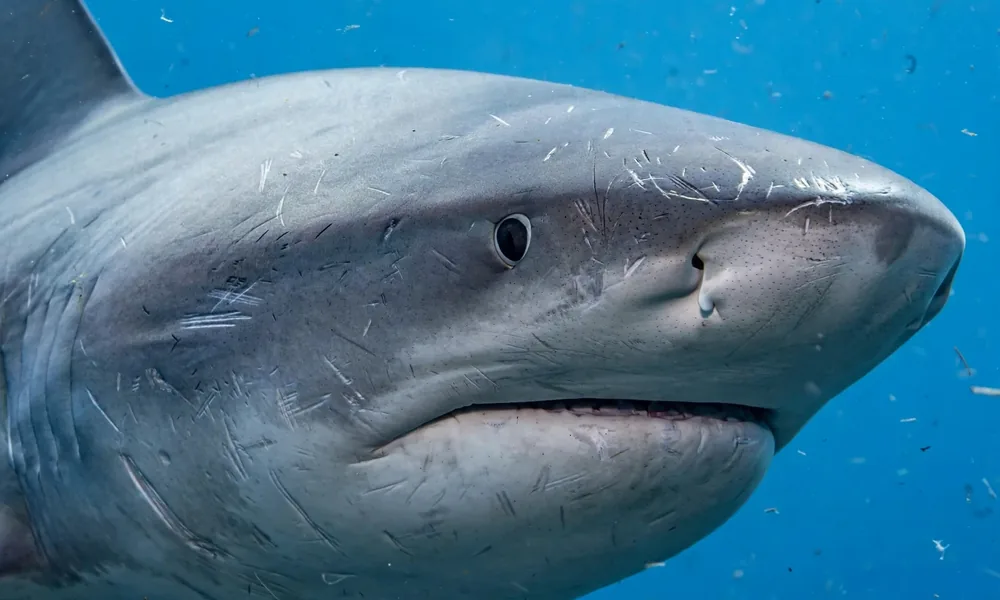
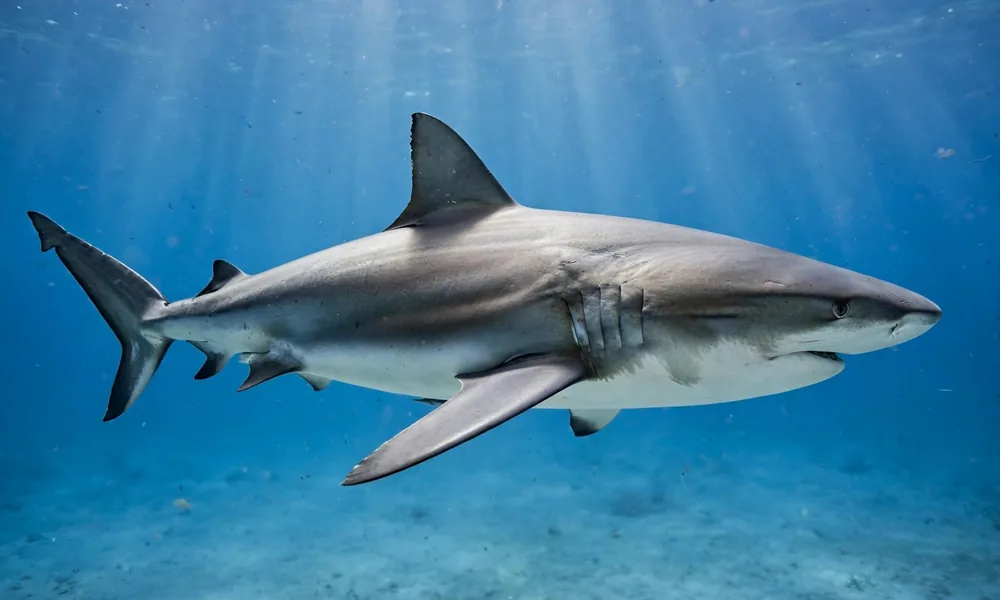
A bull shark looks like a shark that has been lifting weights. The body is thick and heavy through the shoulders, with a broad, flat back and a belly that looks almost swollen, and the whole animal is built for power rather than for grace. Most adults measure 2.1 to 3.5 metres long, and they weigh 90 to 230 kilograms, though a very large female can be heavier still. Females grow bigger than males, and a big old female is the heaviest shark most people will ever see in shallow water. The skin is grey on top and white underneath, a two-tone pattern that hides the shark from above and below, and the grey fades to a paler belly in a clean line along the flank.
The head is the feature that gives the shark away. It is short, wide and blunt, with a rounded snout that looks almost square from above, and small, dark eyes that seem too small for the size of the head. The mouth is broad and full of teeth, and the teeth are the other giveaway. The upper teeth are wide, triangular and serrated, built for cutting through flesh and bone, and they are replaced throughout the shark’s life, row after row, so a lost tooth is never a problem. The pectoral fins are long and pointed, the first dorsal fin is tall and broad, and the tail is large and powerful, with a longer upper lobe that drives the animal through the water in short, strong bursts.
Young bull sharks look like smaller, slimmer versions of their parents, with a proportionally longer snout and a paler grey back, and they grow fast in their first few years. A pup is about 60 to 80 centimetres long at birth, already a capable swimmer and hunter, and it will double in length within a few years if food is plentiful. As the animal ages, the body thickens, the back darkens, and old sharks often carry scars: bite marks from other sharks, scrapes from the bottom, and the nicks and cuts of a life spent in shallow, crowded water.
There is one thing about the bull shark’s looks that matters more than the rest, and it is the reason researchers can tell it apart from other grey sharks at a glance. The snout is shorter and blunter than a blacktip’s or a spinner’s, the body is thicker through the middle, and the first dorsal fin sits further forward, over the back of the pectoral fin. Those are small differences, and they take practice to see, but they are reliable.
Where bull sharks live
Bull sharks live in warm water around the world, in a band that runs through the tropics and subtropics on both sides of the Atlantic, through the Indian Ocean, and across the Pacific. They are found off the south-eastern United States, through the Gulf of Mexico and the Caribbean, along the coasts of West Africa and South Africa, around India and South-East Asia, and along the north coast of Australia. They stay in water warmer than about 20 degrees Celsius, and they follow the warm currents as the seasons change, moving north in summer and south in winter.
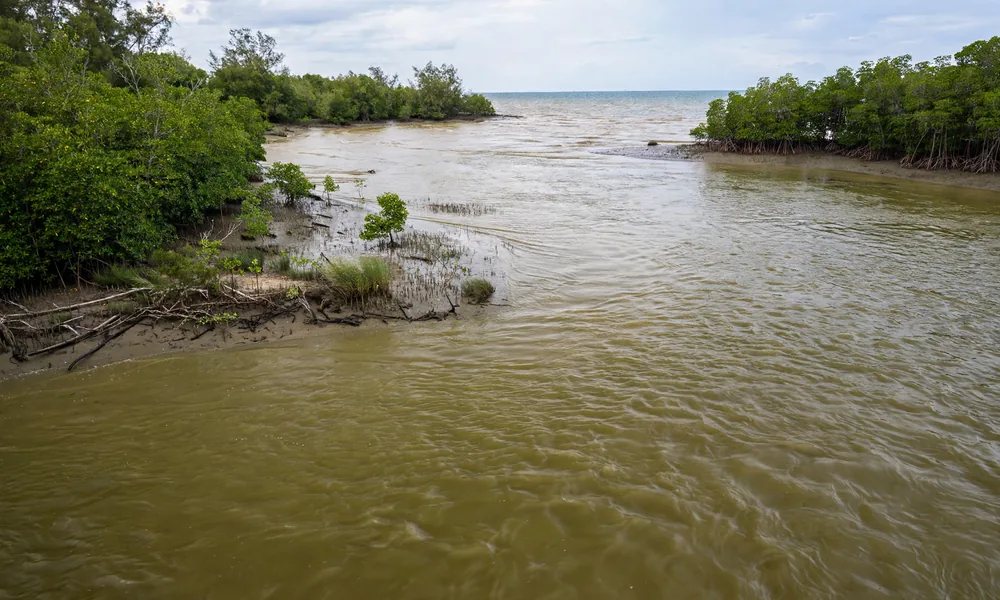
The habitat they choose is shallow, warm and murky, and that is what makes them different from most sharks. A bull shark likes water less than 30 metres deep, close to shore, in bays, estuaries, river mouths and harbours, where the water is cloudy with silt and the food is plentiful. It is not a shark of the open ocean, and it is not a shark of the deep reef. It is a shark of the edge, where the river meets the sea, and it is happiest where the water is too murky for a diver to see it coming.
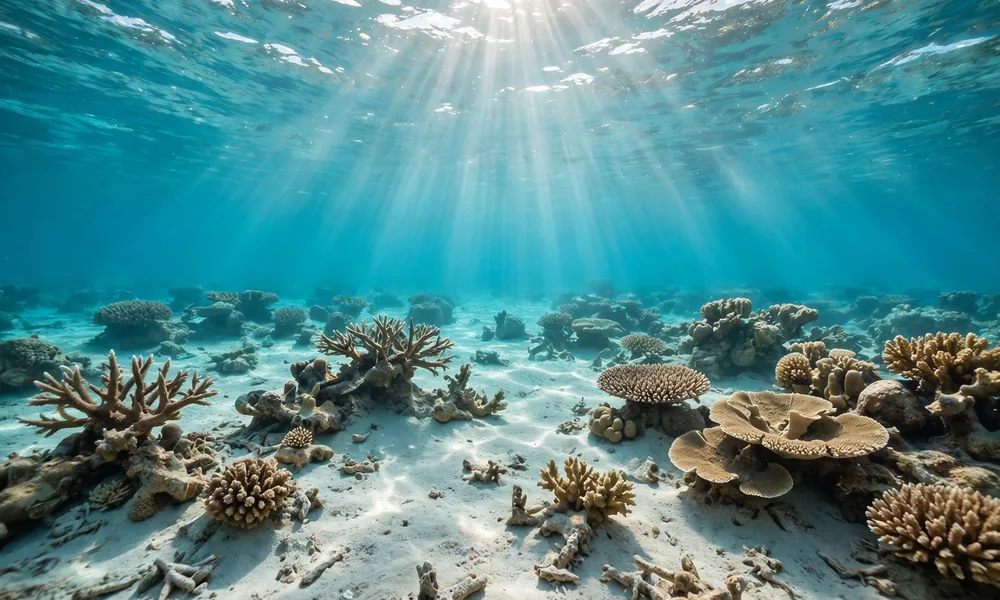
The fresh water is the heart of the story. Bull sharks swim up rivers for hundreds of kilometres, and they have been found far inland: up the Mississippi, up the Amazon, up the Zambezi, and up the Brisbane River in Australia, where one was found in a suburban canal. The most famous population lives in Lake Nicaragua, a huge freshwater lake in Central America, where the sharks swim up the San Juan River from the Caribbean, through rapids, to reach the lake, and some of them stay there for years. They are not trapped there. They can swim back down to the sea whenever they choose, but the lake is full of fish, and the sharks stay because the hunting is good.
The range is set by temperature as much as by water. In winter, bull sharks move towards the equator, following the warm water, and in summer they push north and south again, into waters that were too cold a few months before. Young sharks stay in the warmest, shallowest water of all, in river mouths, mangrove creeks and sheltered bays, where the food is small and the big sharks cannot follow. Adults roam further, and a single shark may travel hundreds of kilometres in a year, between the sea, the estuary and the river, as the seasons and the fish move.
What bull sharks eat
Bull sharks are generalist hunters with a heavy appetite, and they eat almost anything they can catch, from fish to other sharks. The everyday diet is fish: mullet, tarpon, catfish, mackerel and any other schooling fish that comes within reach in the murky water of an estuary. They also eat rays, including stingrays, which they crush with their broad teeth, and they eat other sharks, including smaller bull sharks, as well as turtles, dolphins and seabirds when the chance comes. Carrion is a big part of the diet too, and a dead animal in the water is a meal a bull shark will not pass up.
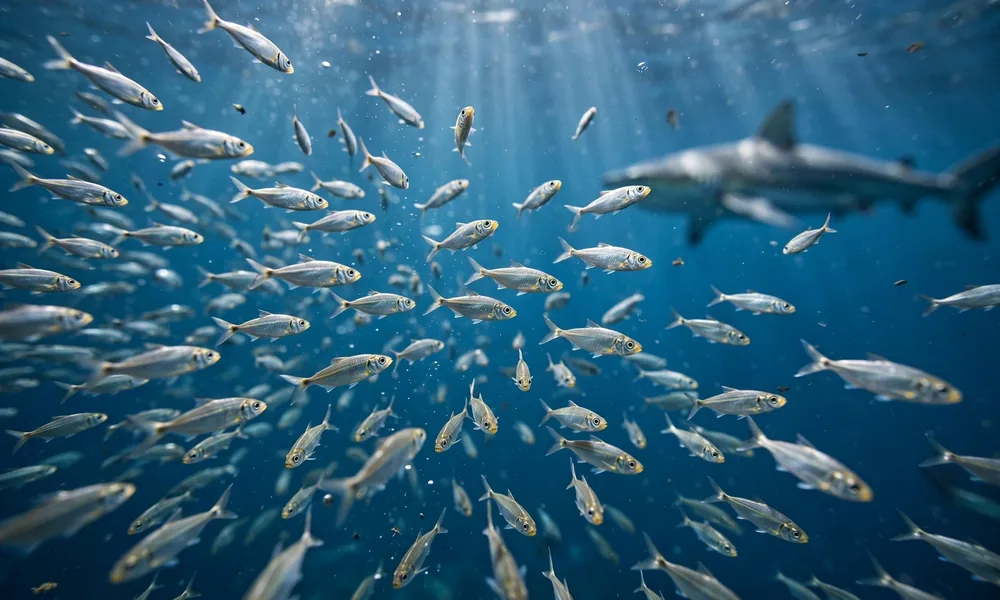
The hunting style is a mix of patience and sudden violence, and it is built around the animal’s greatest asset, which is the murk. A bull shark will cruise slowly through cloudy water, using its sense of smell and the tiny electrical sensors on its snout to find prey it cannot see, and then it will strike in a short, powerful burst, seizing the fish in its jaws and shaking it. The bite is one of the strongest measured in any shark, relative to body size, and it is the reason the bull shark can take prey that other sharks cannot: a turtle’s shell, a ray’s tough skin, and a dolphin’s bone.
Young bull sharks eat smaller food than adults do, because they need to grow fast and they hunt in the shallows where the prey is small. A pup in a river mouth will eat small fish, prawns, crabs and the occasional frog. Adults eat bigger prey, and a big bull shark in an estuary may take a large fish, a ray or a turtle in a single meal. Like the shark family as a whole, the bull shark is an opportunist first and a specialist second, and it takes what the water offers.
Feeding is tied to the tide and to the time of day. Bull sharks feed most at dawn and dusk, when the light is low and the fish are moving, and they feed hard on a rising tide, when the water brings fresh fish into the estuary and the river. In the middle of the day they often rest, cruising slowly or lying on the bottom, and at night they hunt again, using their senses rather than their eyes. A bull shark that has fed well can go for days without another meal, and it will not waste energy chasing prey it cannot catch.
How bull sharks behave
Bull sharks are mostly solitary, mostly coastal, and mostly active at dawn and dusk, and those three habits shape almost everything they do. By day they cruise slowly through shallow water, often alone, and at dusk they become active, moving into the shallows to hunt. They are not schooling animals. Two adults in the same bay will mostly ignore each other, except in the breeding season, and a bull shark that meets another bull shark is as likely to snap at it as to swim alongside it.
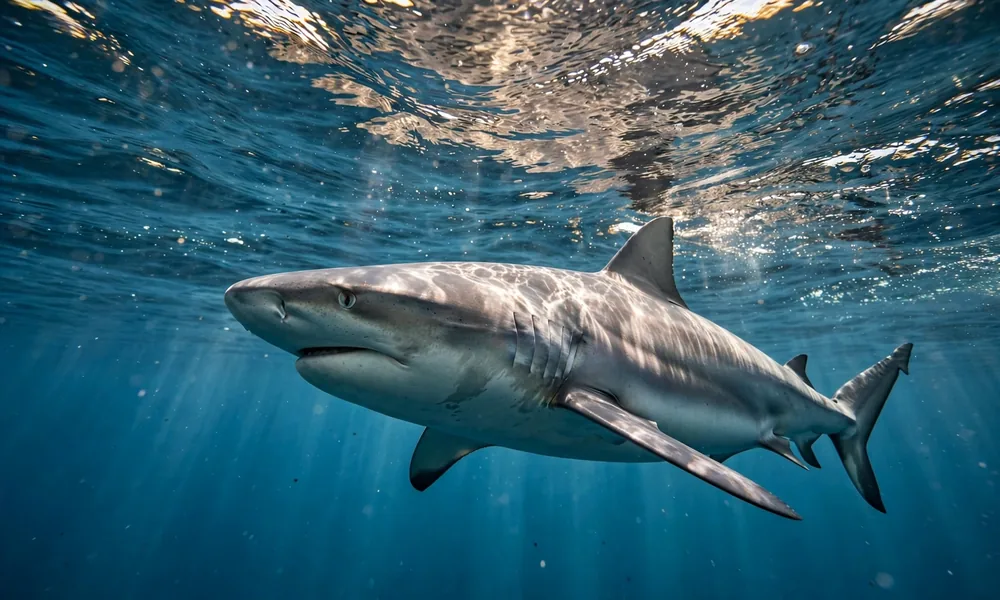
The behaviour that has made the bull shark famous is its boldness. Most sharks flee from people, but a bull shark will often hold its ground, circle, and come closer, and that is what frightens divers and swimmers. It is not mindless aggression. The shark is testing what it has found, the way it tests anything new in the water, and in murky water, where it cannot see well, it may test with its mouth. That is why so many bites happen in cloudy estuaries and river mouths, where the shark cannot tell a swimmer from a fish.
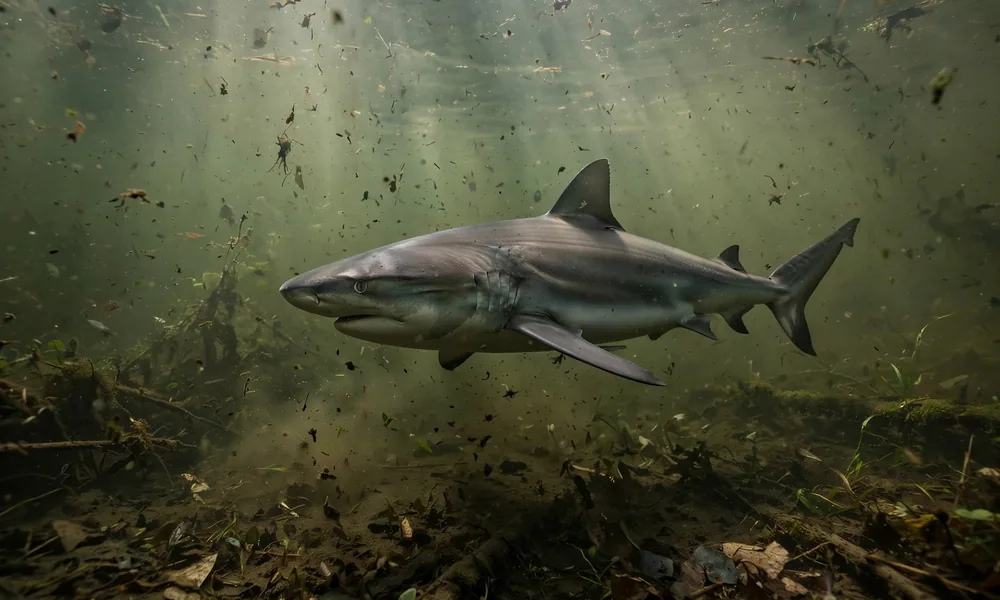
Bull sharks are also famous for their testosterone. Researchers have measured higher testosterone levels in bull sharks than in any other animal, male or female, and the hormone is linked to the animal’s bold, territorial behaviour. A male will defend a patch of river or estuary against other males, and it will bump, charge and bite to make its point. Females are just as bold, and a large female in a nursery area will drive off anything that comes too close, including boats. The testosterone does not make the shark a monster. It makes it a confident, territorial animal that does not back down.
Bull sharks are strong travellers when they need to be. They will swim hundreds of kilometres along a coast, up a river and back down again, and they return to the same estuaries year after year. They navigate by memory and by the smell of the water, and they learn where the fish gather, where the tide runs, and where the deep holes are. They are not fast over a long distance, but they are determined, and they will keep swimming through murky water, over sandbars and through rapids, until they reach the ground they want.
Breeding and life cycle
Bull sharks breed in the warm months, usually from late spring through the summer, when the water is warm and the fish are plentiful. Males find females in the estuaries and river mouths, and mating happens in shallow water, often near the same nursery grounds where the females will later give birth. Courtship is a rough affair: the male follows the female, nudges her, and bites her on the pectoral fin and flank to hold her during mating, and the female may carry the scars for months afterwards. Mating lasts only a few minutes, after which the two go their separate ways, and the female carries the pups for about 10 to 11 months before she gives birth.
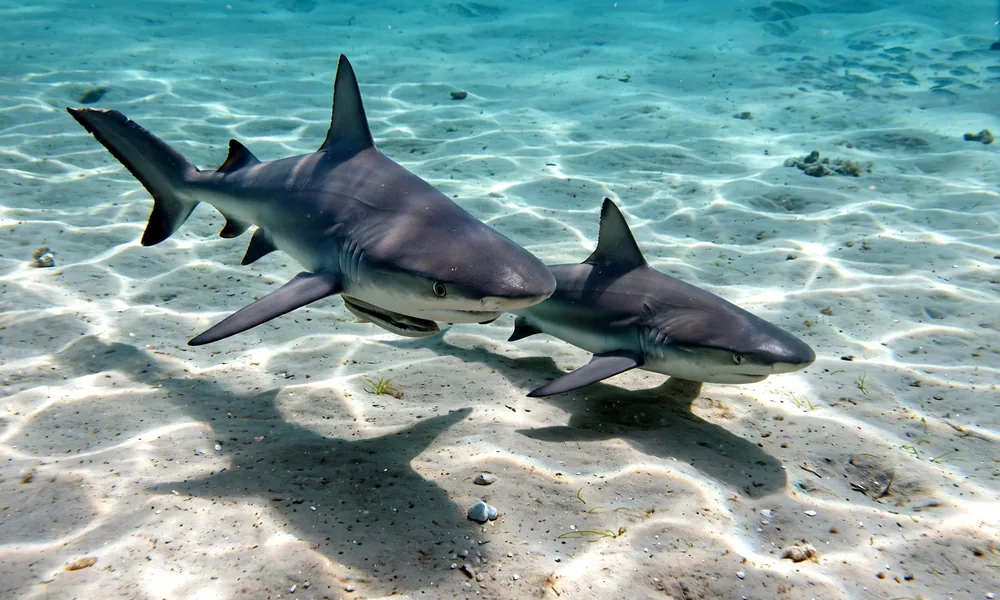
The female gives birth to live pups, usually 1 to 13 of them, in a shallow, sheltered nursery area: a river mouth, a mangrove creek or a quiet bay, where the water is warm, the food is small, and the big sharks stay out. The pups are born fully formed, about 60 to 80 centimetres long, and they can swim and hunt from the day they are born. There is no care after birth. The mother swims away, and the pups are on their own, feeding on small fish and prawns in the shallows and learning to avoid the larger sharks, including their own kind, that would eat them.
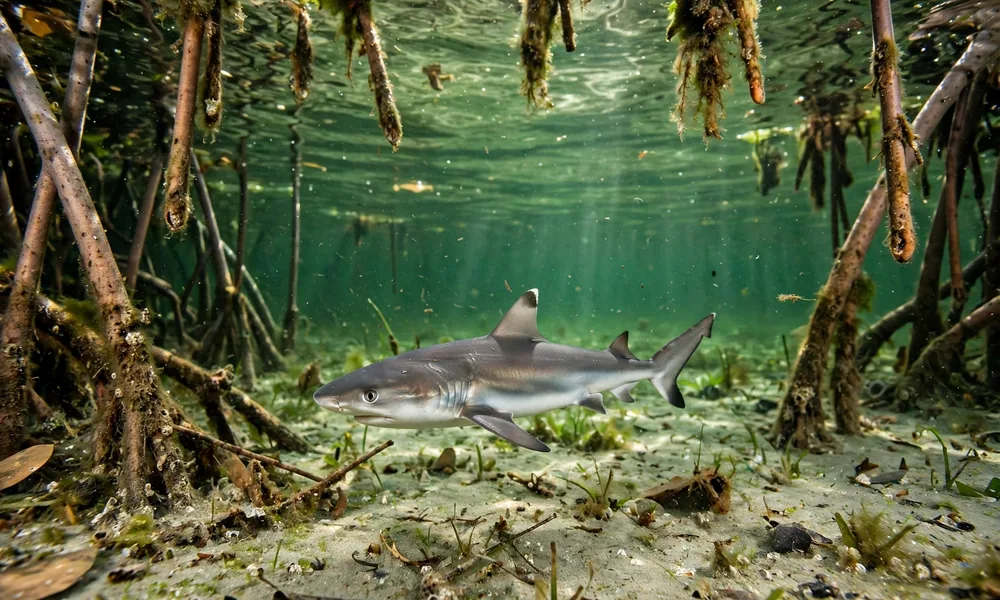
The pups stay in the nursery for several years, growing fast on the small fish and crustaceans of the shallows, and they move into deeper water only when they are big enough to look after themselves. Growth is fast in the first few years and slows later, and a bull shark reaches breeding size at about 10 to 15 years old, when it is close to full length. The sex of a pup is set by its genes, not by the temperature of the water, which is one way sharks differ from turtles and crocodiles, and the ratio of males to females is roughly even.
A bull shark that survives its first years can live a long time: 25 to 30 years in the wild is common, and some animals pass 35. The first years are the dangerous ones, when the pups are small enough to be eaten by larger sharks, by crocodiles in the rivers, and by the big fish of the estuary. The ones that survive grow into animals that few things will challenge, and a full-grown bull shark has almost no natural enemies except people, and the occasional very large crocodile.
Migration is the last great event of the year, and it is tied to the seasons. As the water cools in autumn, the bull sharks move towards the equator, following the warm water, and the females move into the estuaries to give birth in the summer. Some populations stay in one place all year, in water that stays warm enough, and others travel hundreds of kilometres between the sea and the river. A tagged bull shark in Australia was followed for more than 1,000 kilometres along the coast.
Conservation status
The bull shark is listed as Near Threatened by the International Union for Conservation of Nature, and the reasoning is straightforward: it has a very large range, it is still common in many places, but its numbers are falling in others, and its life makes it fragile in ways that are easy to miss. A shark that takes 10 to 15 years to start breeding, and gives birth to only a few pups at a time, cannot replace lost adults quickly, and a nursery that is damaged takes years to recover.
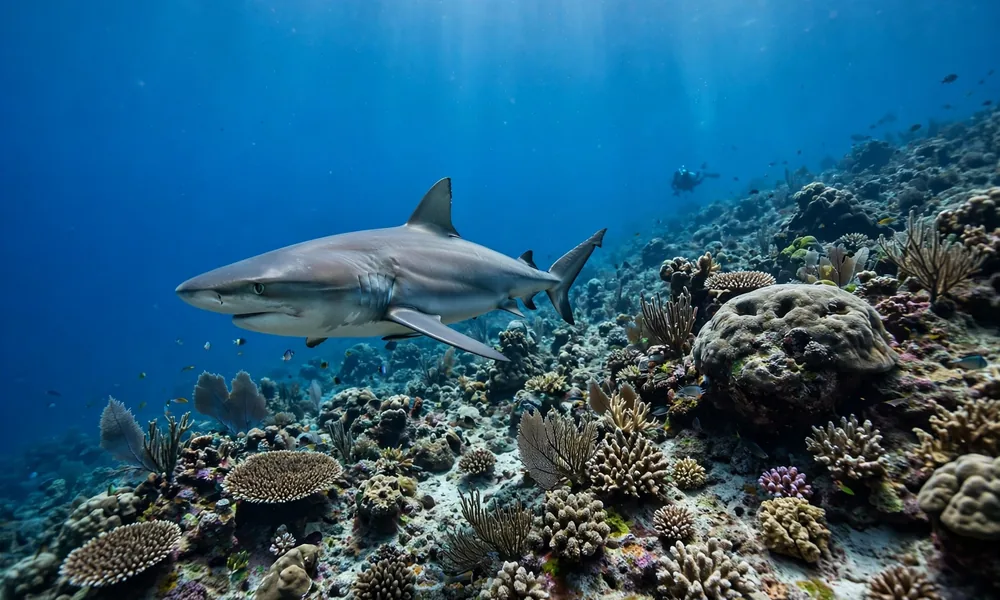
The main pressure is fishing. Bull sharks are caught for their meat, for their fins, and as bycatch in nets set for other fish, and because they live in shallow water close to shore, they are easy to catch. Habitat loss is the second pressure, as mangroves are cleared for building and farming, and as rivers are dammed and polluted, cutting the sharks off from the nurseries they need. The fear of sharks is a third pressure, and in some places bull sharks are killed because they are seen as a danger, even when the risk to people is small.
The most useful conservation work is practical, and much of it is done in the nurseries. Protecting mangroves and estuaries, keeping rivers open so sharks can swim up them, and setting aside marine reserves where the sharks can feed and breed without nets all make a real difference. Tagging and tracking has helped too, because it shows where the sharks go and where they are most at risk, and that knowledge lets fisheries set rules that protect the animals without closing the water to everyone.
Best seasons for bull shark watching
The best time to look for a bull shark is the warm season, from late spring through early autumn, when the water is warm, the sharks are feeding hard, and the females are moving into the estuaries to give birth. Summer is the best season of all, because the sharks are in the shallows, in the river mouths and the bays, and they are easier to see from a boat or from a pier than they are in the open sea. The breeding season also brings the animals together, and a shark that would be alone for most of the year may be one of several in the same estuary.
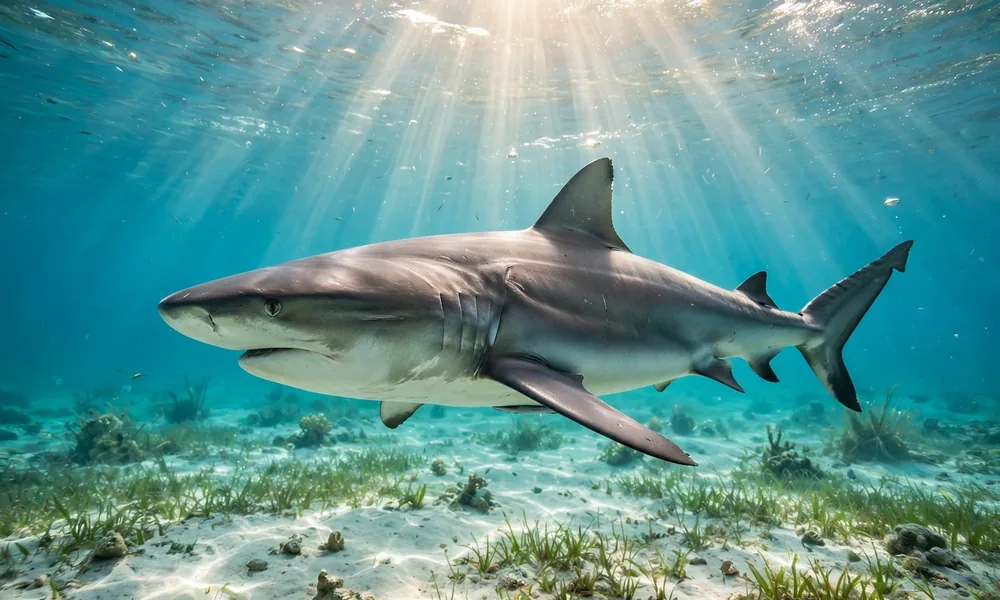
The best hours are the early morning and the late afternoon, when the light is low and the sharks come into the shallows to hunt. A calm, warm morning after a still night is ideal: the water is flat, the sharks are moving, and a fin or a grey shape under the surface is easier to spot than it is at midday, when the sun is high and the sharks slip into deeper water. In the heat of midsummer, the evening is good too, as the animals start to feed in the shallows. By winter they have moved towards the equator, and the estuaries are quiet until the warm water returns.
Staying safe around bull sharks
A bull shark is a wild animal that deserves real respect, and the safety rules are mostly about not putting yourself where it hunts, and not acting like food. The shark does not chase people, and most encounters end with the shark swimming away, but it is bold, it is strong, and it hunts in the same murky, shallow water where people swim, fish and surf. The rule is simple: do not swim in murky water, do not swim at dawn or dusk, do not swim alone, and do not swim near a river mouth, a fishing pier, or a place where fish are being cleaned.
Do not wear shiny jewellery or bright clothing in the water, because the flash can look like a fish to a shark, and do not splash or thrash, because the noise and the movement can draw a shark in. If you are fishing from a boat, keep your catch in the boat, not trailing in the water beside it, and if a shark takes your line, cut it and let it go. If you see a bull shark while you are in the water, stay calm, keep facing it, and move slowly and steadily towards the shore or the boat. If you are bitten, get out of the water, apply pressure to the wound, and seek medical help at once.
Bull shark watching checklist
A little preparation turns a boat trip into a warm estuary into a real chance of seeing one of these stocky, blunt-snouted sharks.
- A visit in the warm season, from late spring to early autumn, when the sharks are feeding and the females are moving into the estuaries.
- An early morning or late afternoon start, when the animals are hunting in the shallows in the low light.
- A warm estuary, river mouth or sheltered bay, with murky water, mangroves and plenty of fish for the sharks to hunt.
- A slow boat trip that scans the water surface, watching for a fin, a grey shape, or a swirl where a shark has turned.
- Binoculars and polarised sunglasses, which cut the glare and let you see a shark under the surface from a distance.
- A reputable local guide, who knows the water, the tides and the sharks, and who keeps the boat at a safe distance.
- Respect for the animal and its ground, keeping your distance, never feeding it, and leaving the nurseries and mangroves as you found them.
Frequently asked questions
How big do bull sharks get?
Most adult bull sharks measure 2.1 to 3.5 metres long and weigh 90 to 230 kilograms, and a very large female can be heavier still. Females grow bigger than males, and young sharks are much smaller, at about 60 to 80 centimetres when they are born.
Can bull sharks really live in fresh water?
Yes. The bull shark is the only shark that lives happily in fresh water for long periods, swimming up rivers for hundreds of kilometres and into lakes such as Lake Nicaragua. It can do this because its kidneys and its rectal gland can adjust how the body handles salt, holding on to salt in fresh water and flushing it out in the sea, and it can switch between the two again and again.
Are bull sharks dangerous?
Bull sharks are among the species most often named in unprovoked bites, and they deserve real respect, but they do not hunt people. Most bites happen in murky water at dawn or dusk, where the shark cannot see well and may mistake a swimmer for a fish, and most encounters end with the shark swimming away. The sensible approach is to stay out of murky water at dawn and dusk, to swim in groups, and to avoid river mouths and fishing piers.
What do bull sharks eat?
A bull shark eats fish such as mullet, tarpon and catfish, as well as rays, other sharks, turtles, dolphins and seabirds, and it will also eat carrion. It hunts by cruising slowly through murky water, using its sense of smell and the electrical sensors on its snout to find prey, and then striking in a short, powerful burst.
How many pups do bull sharks have?
A female bull shark gives birth to 1 to 13 live pups after about 10 to 11 months, in a shallow, sheltered nursery such as a river mouth or a mangrove creek. The pups are born about 60 to 80 centimetres long, they can swim and hunt from the day they are born, and they stay in the nursery for several years before moving into deeper water.
How is this guide different from the snapping turtle guide?
This guide covers the bull shark, a stocky, blunt-snouted shark of warm coasts and rivers that swims up into fresh water, hunts fish and rays in the murk, and gives birth to live pups, while our snapping turtle guide covers a big, rough-shelled freshwater turtle of North America that hunts fish and frogs from the muddy bottom, cannot hide in its shell and bites hard when cornered. One is a fast, live-bearing hunter of the estuary; the other is a slow, egg-laying ambush hunter of the pond.
Conclusion
The bull shark species is a reminder that a shark does not need the open ocean to be remarkable. A thick, barrel-shaped body, a blunt snout, a bite among the strongest of any shark, and a body that can switch between salt water and fresh water have made Carcharhinus leucas one of the most widespread sharks on earth, at home in a coral reef, a murky estuary, a river a hundred kilometres inland, and a lake in Nicaragua alike.
If you go looking for one, go in summer, go in the early morning, and take a boat into a warm estuary with a good local guide and a pair of polarised sunglasses. Watch the surface for a fin or a grey shape under the water, keep a respectful distance, and leave the shark exactly as you found it, and you will have met the shark that refuses to stay in the sea.