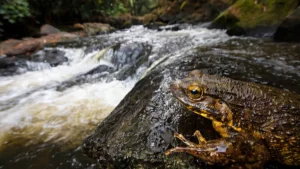
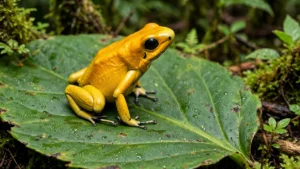
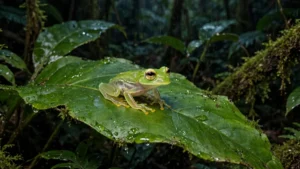
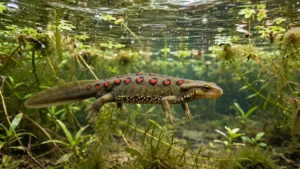
The poison dart frogs species are the brightest small animals in the rainforests of Central and South America, tiny frogs in blue, yellow, red and green that carry some of the strongest natural toxins on Earth in their skin. If you are asking what poison dart frogs are, the short answer is a family of frogs, the Dendrobatidae, with more than 170 species, most of them between 15 and 60 millimetres long, living on the leaf-littered floors of humid tropical forests from southern Nicaragua to northern Brazil, and getting their poison not by making it but by eating it, sequestering alkaloids from the ants, mites and tiny beetles they hunt. They are diurnal, bold, and devoted parents, and they are among the most recognisable frogs in the world.
That brightness is a warning, not a decoration, and it is the thread that runs through everything in this guide. A bird that bites a poison dart frog gets a bitter, burning mouthful and drops the frog, usually before the frog is fatally injured, and a bird that learns the pattern once will avoid every frog wearing it afterwards. Only three species, all in the genus Phyllobates and all native to western Colombia, were ever used to poison blowgun darts, and the most toxic of them all, the golden poison frog, carries enough batrachotoxin to kill ten to twenty people. This guide follows the whole family: how the frogs look, where they live, what they eat, how they raise their young in tiny pools of water caught in leaves, and why so many of them are in trouble today.
Key takeaways
- The poison dart frogs species belong to the family Dendrobatidae, with more than 170 species in about 16 genera, found only in the tropical forests of Central and South America.
- Most adults are between 15 and 60 millimetres long and weigh about 0.5 to 4 grams, with the golden poison frog the largest at 45 to 55 millimetres.
- The frogs do not make their own poison; they sequester alkaloid toxins from the ants, mites and beetles they eat, and captive frogs fed ordinary insects lose their toxicity.
- Their bright colours are aposematic, a warning to predators, and the golden poison frog carries about 1,900 micrograms of batrachotoxin, enough to kill ten to twenty people.
- Males carry newly hatched tadpoles on their backs to small pools in bromeliads and leaf axils, and females of some species feed the tadpoles on unfertilised eggs.
The poison dart frogs species and their relatives
Poison dart frogs belong to the family Dendrobatidae, a family of small, agile frogs that occur in the rainforests of the New World tropics, and the family sits in the order Anura, alongside the true frogs, the true toads and the tree frogs. The name Dendrobatidae comes from the Greek words for tree and walker, an allusion to the fact that these frogs can walk or hop up trees, and the family is divided into about 16 genera, with more than 170 species described and at least three or four new species described each year. The more primitive genera are cryptically coloured with non-toxic skin, while the derived, or more advanced, genera are brightly coloured poison frogs, and it is those bright frogs that most people mean when they say poison dart frog.
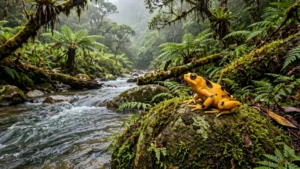
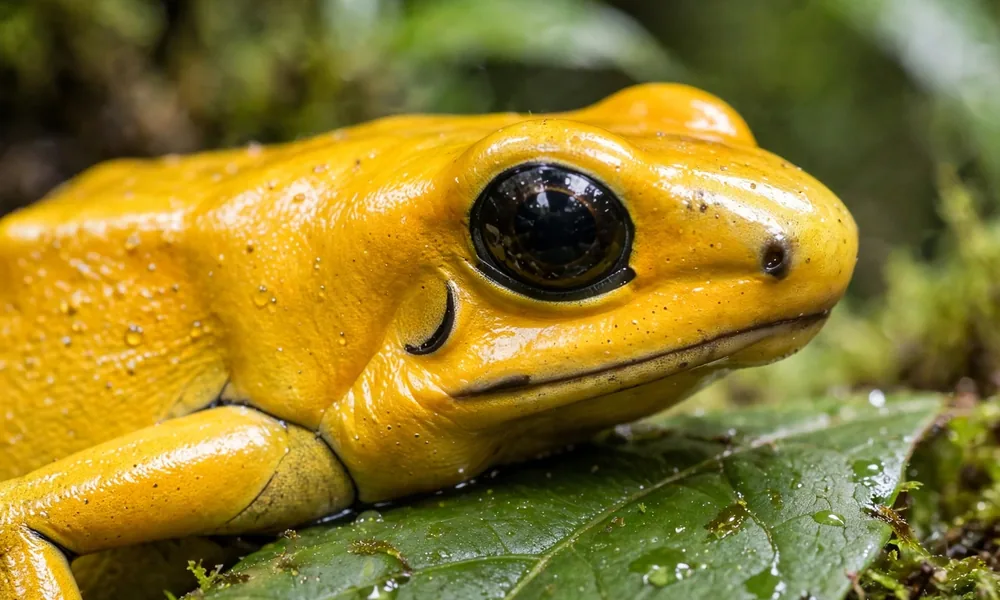
The golden poison frog, Phyllobates terribilis, is the lead species of this guide, and it is the frog that defines the whole family in most people’s minds, largely because it is the most poisonous vertebrate known. It lives in a small range of lowland rainforest on Colombia’s Pacific coast, between the Río Saija and the Río Micay, and it grows to 45 to 55 millimetres long, with females averaging slightly larger than males, and it weighs up to 30 grams, which makes it a giant among poison dart frogs. It is listed as Endangered by the International Union for Conservation of Nature, and its skin secretions are rich in batrachotoxin, a steroidal alkaloid that blocks the inactivation of voltage-gated sodium channels in nerve and muscle cells, leading to paralysis and heart failure if it enters the bloodstream. Like the frog, the poison dart frog is an amphibian that begins life as a tadpole in water and ends it on land, but the ordinary frog of a garden pond is a creature of still water and damp grass, while the poison dart frog is a creature of the rainforest floor, hunting in the leaf litter in broad daylight.
| Type | Animal | Where it lives | Best-known food | Length or Weight |
|---|---|---|---|---|
| Family | Poison dart frogs (Dendrobatidae) | Central and South America | Ants, termites and mites | About 15 mm to 60 mm long |
| Genus | Golden poison frogs (Phyllobates) | Colombia to southern Nicaragua | Ants, mites and beetles | About 40 mm to 55 mm long |
| Species | Golden poison frog (Phyllobates terribilis) | Pacific coast of Colombia | Ants, mites and melyrid beetles | Up to 55 mm long |
| Species | Dyeing poison frog (Dendrobates tinctorius) | Brazil, the Guianas and Suriname | Ants, termites and mites | Up to 60 mm long |
| Species | Strawberry poison frog (Oophaga pumilio) | Central America | Ants, mites and springtails | Up to 24 mm long |
| Species | Green and black poison frog (Dendrobates auratus) | Central America and Colombia | Ants, termites and mites | Up to 40 mm long |
The closest relative of the golden poison frog in fame is the dyeing poison frog, Dendrobates tinctorius, a frog of Brazil, French Guiana, Guyana and Suriname that grows to 40 to 50 millimetres, with some females reaching 60 millimetres. It is listed as Least Concern, and it is bright blue with yellow stripes, though some specimens are black or blue with yellow or black spots towards the extremities, and it is one of the most variable frogs in the family, with a different pattern in almost every valley. Local tribes once used the dyeing poison frog for decoration, pulling feathers from young parrots and rubbing the frogs on the birds’ exposed skin, where the toxin caused yellow or red feathers to grow instead of green.
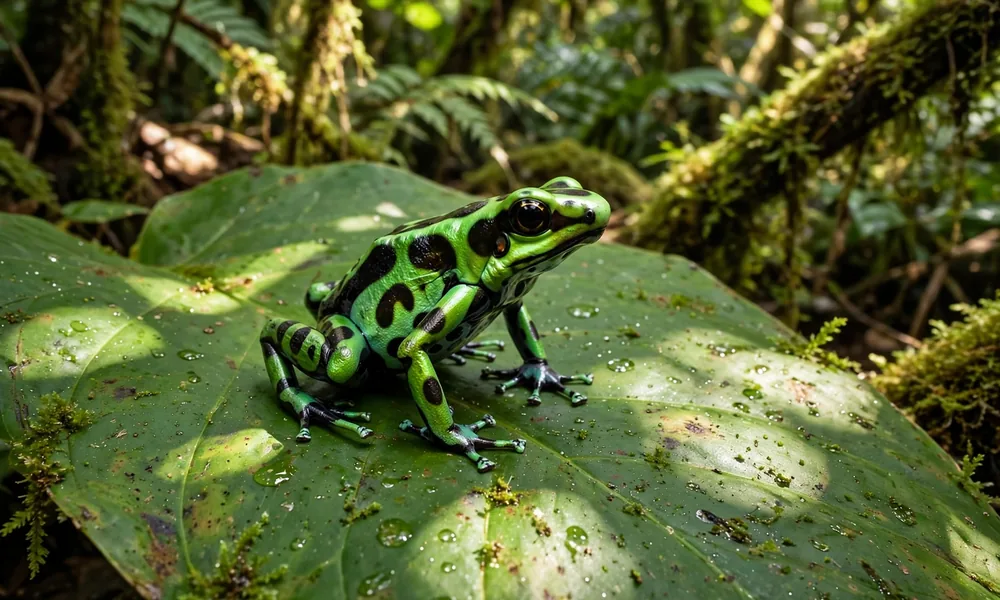
Within the family, the poison dart frogs sort themselves by size, by colour and by the forests they live in. The strawberry poison frog, Oophaga pumilio, is a tiny frog of Central America, only 17 to 24 millimetres long, red, orange, white, green or blue according to the population, and it is one of the most variable species in the whole family, with dozens of colour forms in valleys only a few miles apart. The green and black poison frog, Dendrobates auratus, is a frog of Central America and Colombia, 25 to 40 millimetres long, mint or teal green over black, and it is one of the frogs most often kept in captivity, where it loses its toxicity on a diet of fruit flies and crickets. Both are listed as Least Concern, and both are frogs that a visitor to a Central American rainforest is far more likely to see than the golden poison frog, which lives in a single small corner of Colombia.
What poison dart frogs look like
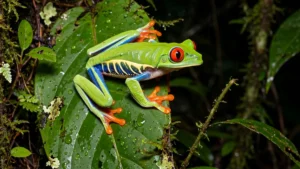
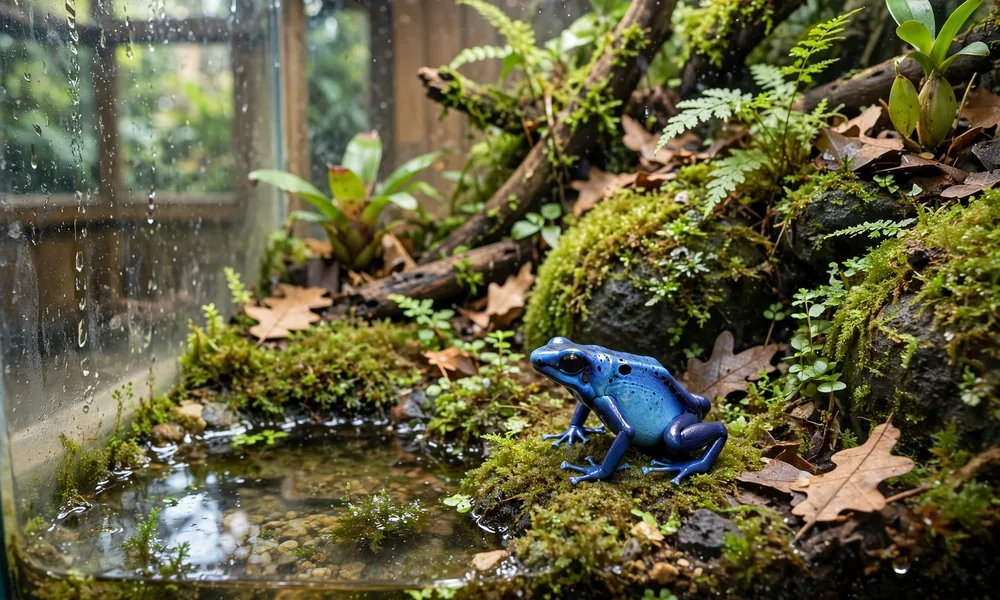
A poison dart frog looks like a small jewel that has learned to sit still on a leaf. The body is compact, with short but powerful hind limbs, and the frogs are agile jumpers and, in some cases, climbers, with divided scutes, thick pads of skin, on the upper surfaces of the fingers and toes that help them grip leaves and stems. The skin is smooth and glossy, and it comes in blue, yellow, orange, red, green, black, white and copper, often combined in spots, stripes or marbling, with the bright blue, fire red, canary yellow and metallic green of the best-known species standing out against the green and brown of the forest floor. The eyes are large and dark, set high on the head so the frog can watch for prey and for predators at the same time.
The size of a poison dart frog depends on the species, and the range is wide for such a small family. Most species are 15 to 35 millimetres in length, and a few reach 60 millimetres, with the smallest no bigger than a thumbnail and weighing as little as 2 grams. Across the whole family, the San Diego Zoo Wildlife Alliance gives a range of 10 to 60 millimetres, and a poison dart frog weighs about 0.5 to 4 grams, which is less than a coin. The golden poison frog is the largest species in the family at 45 to 55 millimetres, and it can weigh close to 30 grams, while the strawberry poison frog is one of the smallest at 17 to 24 millimetres, and the two together show the full range of the family, from a frog the size of a thumbnail to a frog the size of a matchbox.
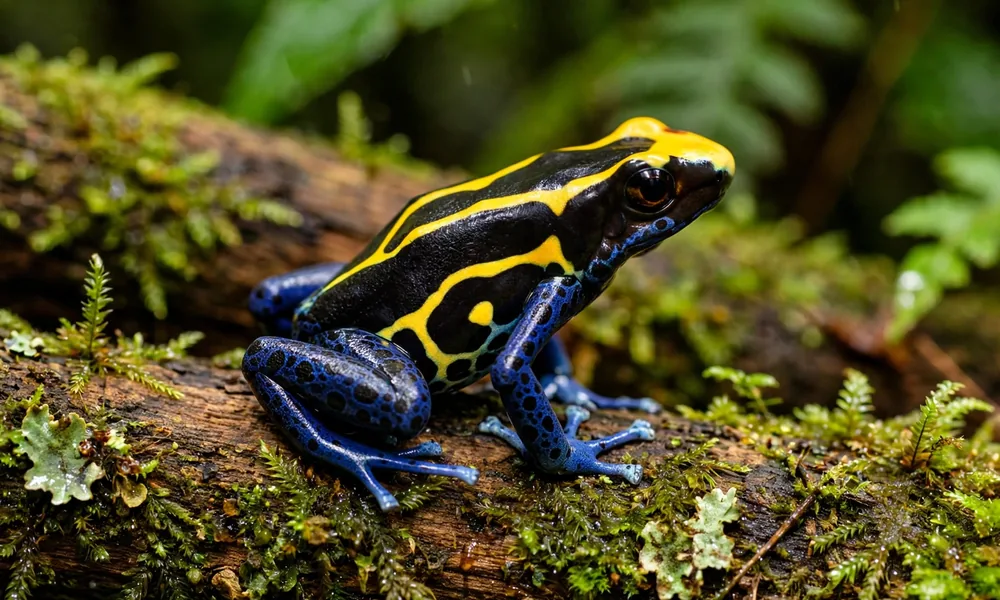
The bright colour is not decoration, and it is not an accident. It is a warning, a form of aposematism, and it tells any predator that looks twice that this small animal is not worth eating. The skin glands contain a large array of alkaloids, which are especially toxic nitrogen-containing chemicals, and individual species or populations of frogs have different alkaloids, and within a population individual frogs may have different combinations. The golden poison frog’s skin is full of batrachotoxin, and a single wild adult is estimated to carry about 1,900 micrograms of it, with as little as 2 micrograms thought to be deadly to a person, which is why the golden poison frog is considered the most poisonous vertebrate known. The toxins vary in potency across the family, and many species carry only weak alkaloids or none at all, which is why not every bright frog is dangerous, and why the loudest species tend to be the ones you least want in your mouth.
Where poison dart frogs live
Poison dart frogs live in the warm, wet tropical forests of Central America and South America, and they are found nowhere else on Earth in the wild. Their range runs from southern Nicaragua and Costa Rica through Panama and into northern South America, including Colombia, Venezuela, Ecuador, Peru, the Guianas and northwestern Brazil, and they prefer humid tropical climates, particularly the leaf-littered floors of lowland and mid-elevation rainforests near streams and small pools. A small introduced population of strawberry poison frogs has also been recorded on the island of Hawaii, in the Manoa Valley, the result of a 1932 release, but that is the only place outside the Americas where a poison dart frog lives in the wild.
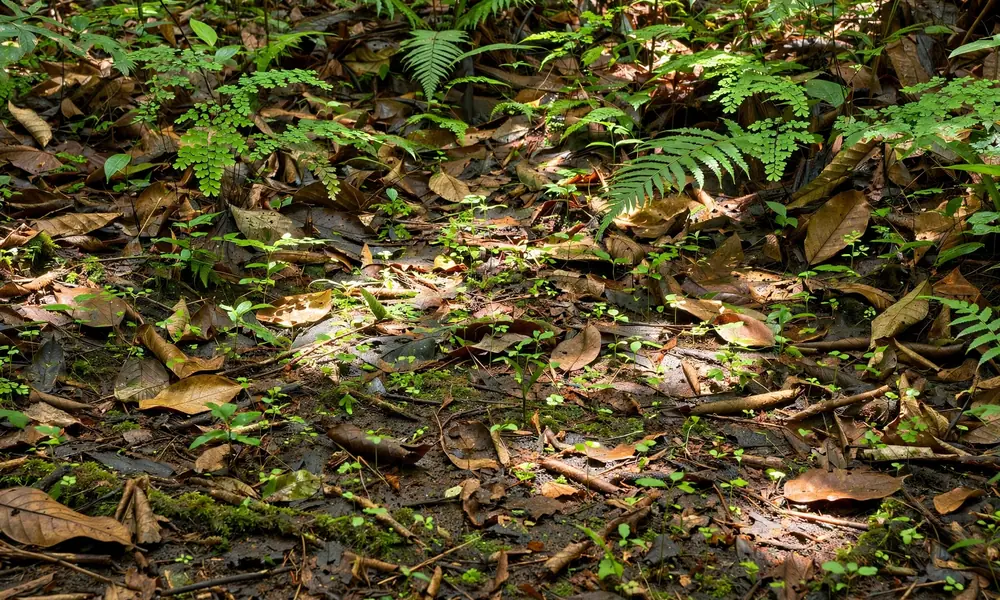
The habitat they choose is the forest floor, and they are rarely found far from damp leaf litter and small pools of water. Most poison dart frogs live on the ground, hunting among the fallen leaves, and some climb into the low vegetation, into bromeliads and into the axils of leaves where water collects, which is where they raise their young. They need humidity, and they need shade, because a small frog dries out quickly in the sun, and they are most active in the morning and the late afternoon, when the forest floor is damp and the light is soft. The golden poison frog’s corner of Colombia gets at least 1.25 metres of rain a year, and sometimes as much as 5 metres, which is why its forest is always wet and always green.
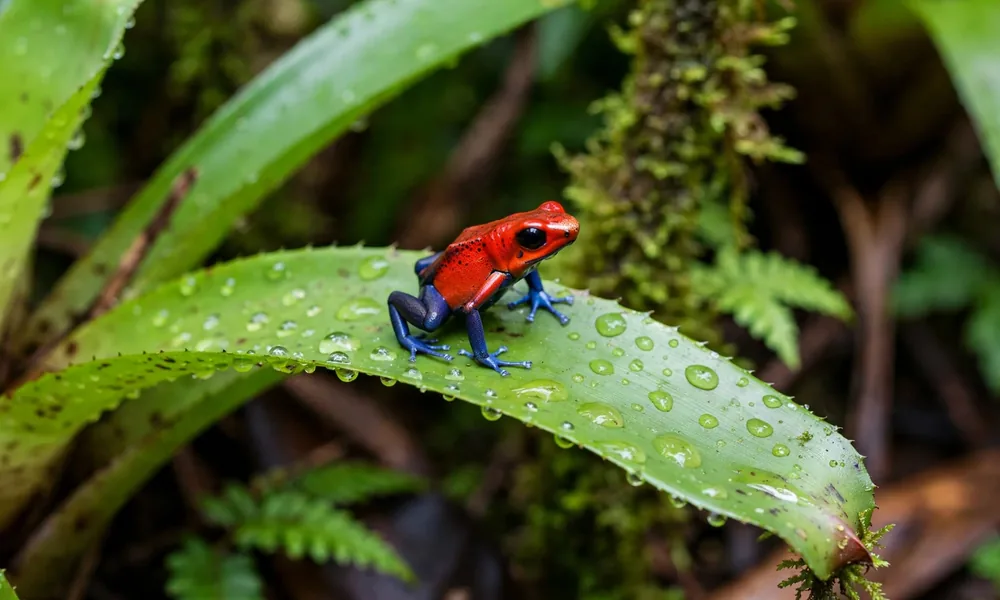
The range of the poison dart frogs as a family is large, but the range of each species is often tiny, and that smallness is part of why so many of them are in trouble. The golden poison frog lives only in a small range of lowland rainforest on Colombia’s Pacific coast, between the Río Saija and the Río Micay, and the blue poison dart frog, a colour form of the dyeing poison frog, lives only in a small area of southern Suriname. When a forest is cleared for farming or for logging, a frog that lives in a single valley has nowhere to go, and that is why habitat loss is the main threat to the family as a whole, even though the family itself ranges across a continent.
What poison dart frogs eat
Poison dart frogs are hunters, and their diet is written on the forest floor itself. The everyday food is ants, termites, mites, beetles and other small invertebrates, and the adults use their sticky tongues to capture ants, termites and other small invertebrates as they move through the leaf litter. They hunt during the day, using sharp eyesight and sticky tongues to catch their prey, and they eat many small animals rather than a few large ones, because a frog the size of a thumbnail cannot swallow anything big. The tadpoles are omnivorous, feeding on debris, dead insects, insect larvae and algae, and some species eat other tadpoles, which is why a mother that feeds her young on unfertilised eggs is giving them a safe food that cannot eat them back. Like the axolotl, the poison dart frog is an amphibian that feeds on small animals it can fit in its mouth, but the axolotl is a fully aquatic salamander that sucks prey into its mouth under water, while the poison dart frog is a land hunter that picks ants off leaves in the open air.
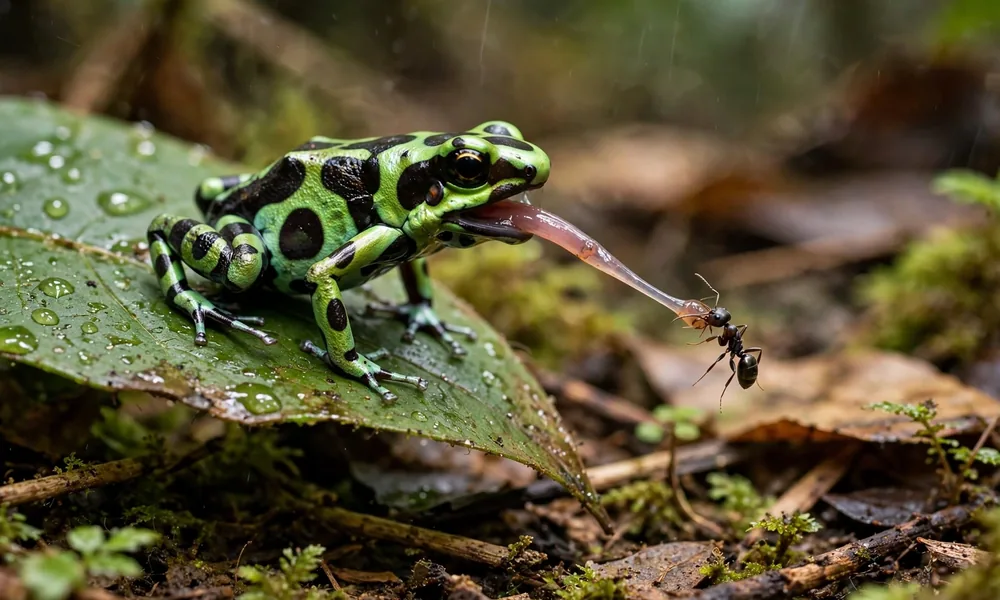
What sets the poison dart frog apart is how its diet feeds its defence. The frogs do not make their own poison from nothing, and they do not synthesise their toxins themselves. Instead, they sequester alkaloids from their prey, particularly from certain ants, mites and small beetles, and they store those alkaloids in glands just under the skin. Researchers have suggested that beetles in the family Melyridae may be a key dietary source of batrachotoxin in golden poison frogs, and the frog then stores those alkaloids in glands across its skin, where a bird that bites down gets an immediate bitter, burning mouthful. Every species ends up with a slightly different mixture, because what a frog eats decides what it becomes, and a frog that eats different ants in a different valley will carry a different poison.
How poison dart frogs behave
Poison dart frogs are day frogs, and their day is a quiet round of hunting, calling and defending a small patch of forest floor. They spend much of their time on the ground, moving slowly through the leaf litter, and they are bold for such small animals, because their bright colours and their toxins let them walk in the open where a camouflaged frog would hide. Males defend territories, calling to warn off rivals and to attract females, and the calls are soft, buzzing or chirping sounds that carry only a short distance through the forest, which is why the frogs live close together and why a male’s territory is often no bigger than a few square metres.
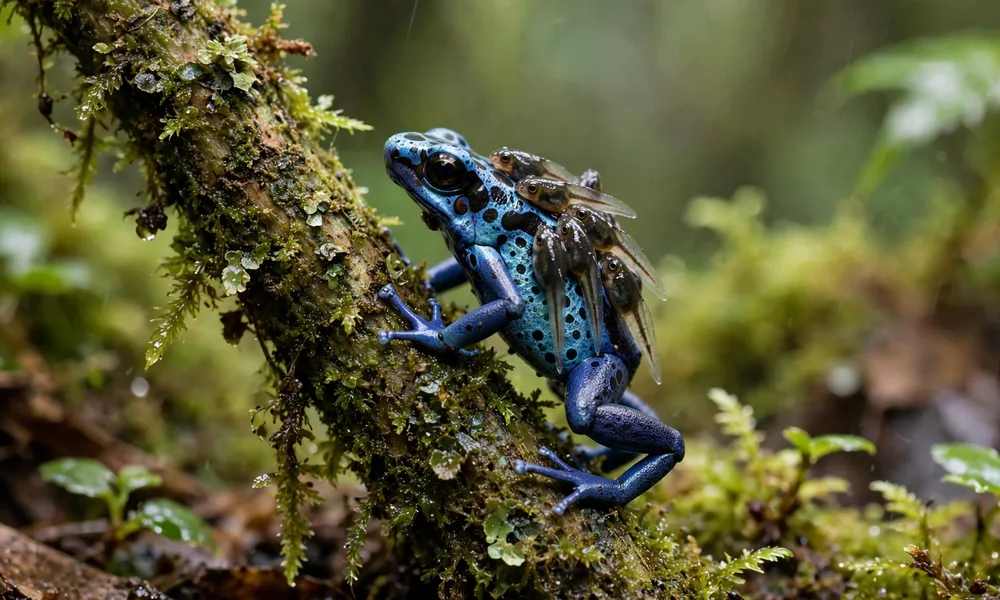
The most famous behaviour in the poison dart frogs is the parental care, and it is unusual among frogs. When the eggs hatch, the male frog carries the tiny tadpoles on his back, where they stick to the mucus on his skin, and moves them into pools of water collected in the leaves of certain plants, often bromeliads, where each tadpole gets its own small pool. The female occasionally feeds them on unfertilised eggs until the tadpoles go through metamorphosis and turn into adults, and that feeding is the reason the tadpoles can grow in a pool too small to hold any other food. It is a devoted kind of parenting, and it is the reason the frogs need the forest intact: without bromeliads and leaf axils, there is nowhere to put a tadpole.
Breeding and life cycle
Poison dart frogs breed in the damp leaf litter, and the timing is set by the rain. Clutch size varies by species but is typically small, on the order of 5 to 40 eggs, and the female lays the eggs on a damp leaf or on the forest floor, where the male guards them and keeps them moist until they hatch. The male then carries the newly hatched tadpoles on his back to a small pool of water, often in a bromeliad or in the axil of a leaf, and each tadpole is usually given its own pool, which keeps the tadpoles from eating each other and gives each one a safe place to grow. The female of some species, notably the strawberry poison frog, returns to feed the tadpoles on unfertilised eggs, and that feeding continues until the tadpoles metamorphose into froglets.
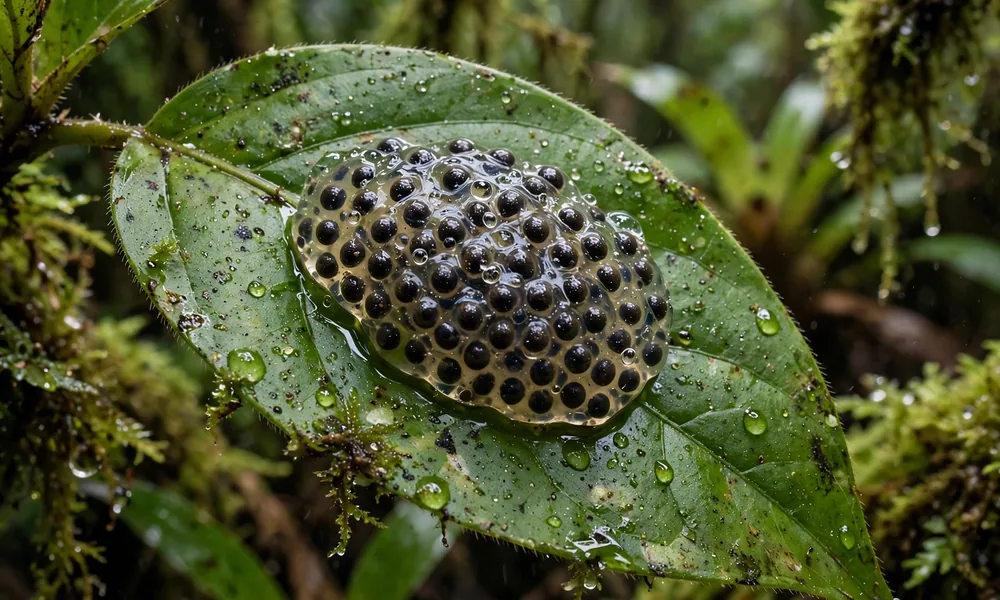
The tadpoles are entirely aquatic creatures at first, and they are built for a life in a pool no bigger than a teacup. They feed on debris, dead insects, insect larvae and algae, and some species eat other tadpoles, which is why a mother that feeds her young on unfertilised eggs is giving them a safe food that cannot eat them back. The tadpoles grow slowly in their small pools, and the time they take to metamorphose depends on the species and on the temperature, with warmer pools producing faster growth and cooler pools producing slower growth, and the young are independent from the day they leave the water, able to feed and hide within hours.

Conservation status
The conservation status of the poison dart frogs varies widely, depending on the species, and that variation is the honest answer. Some species, such as the dyeing poison frog, the green and black poison frog and the strawberry poison frog, are classified by the International Union for Conservation of Nature as Least Concern, because they are widespread and common, while others are in serious trouble: the golden poison frog is listed as Endangered, and some species, such as the blue poison dart frog and the golden poison frog in its narrowest sense, are classified as Critically Endangered in some assessments. The family as a whole is not listed as a single unit, and each species is assessed on its own range, its own numbers and its own threats, which is why a family can hold both common frogs and frogs on the edge of extinction at the same time.
The main pressure is habitat loss. When a rainforest is cleared for farming, for logging or for cattle, the leaf litter goes, the bromeliads go, and the small pools where the frogs raise their young go with them, and a frog that lives in a single valley has nowhere to go. The second pressure is collection for the pet trade, and the rarest colour forms fetch the highest prices, which puts pressure on wild populations that are already small. The third pressure is disease, and the frogs face death from the fungal disease chytridiomycosis, the same chytrid fungus that removed the Panamanian golden frog from the wild, which infects the frog’s skin and disrupts the balance of water and salts in its body.
The most useful conservation work is practical, and it is the same work that helps the whole rainforest. Protecting the rainforest from clearing keeps the leaf litter, the bromeliads and the small pools intact, and protecting the frogs from collection keeps the wild populations in place. Captive breeding in zoos keeps assurance colonies of the rarest species, and the frogs bred in captivity are non-toxic on a diet of fruit flies and crickets, which makes them safe to keep and easy to study. The toxins themselves may also help people: the compound epibatidine, from the skin of the phantasmal poison frog, Epipedobates tricolor, is a painkiller that is 200 times more powerful than morphine, and researchers are studying the frogs’ alkaloids for new medicines, which is one more reason to keep the forest standing.
Best seasons for poison dart frog watching
The best time to look for poison dart frogs is the wet season, when the forest floor is damp and the frogs are out hunting in the open, though no season will show you one from a garden. The frogs are present on the forest floor all year round, so there is no wrong season in the strict sense, but the wet months, from about May to November in Central America, are the time when the leaf litter is dampest and the frogs are most active, and a visit in the early rains will show you males calling and carrying tadpoles on their backs. In the dry season the frogs retreat into the dampest corners of the forest, into bromeliads and into the leaf litter beside streams, and they are harder to find.

The best hours are the morning and the late afternoon, when the frogs are out hunting in the daylight and the sun is low enough not to dry the forest floor. From about mid-morning until late afternoon, the frogs are at their most active, hunting, calling and carrying tadpoles, and they are at their most visible then, sitting in the open where a careful observer can see the bright colours against the green and brown of the leaf litter. The family’s fame is such that National Geographic keeps a live profile of the poison dart frogs, and a guided walk with a local naturalist, in the morning, in the wet season, is the best way to see them in the wild.
Staying safe around poison dart frogs
A poison dart frog is not dangerous to people who leave it alone, and there is no safety warning that belongs to the frog itself beyond the obvious one: do not touch it, and do not eat it. The skin of a wild frog carries alkaloid toxins, and the toxin is dangerous if it gets into a cut, into the eyes or into the mouth, which is why researchers handle wild frogs with wet hands, wear gloves where the work requires it, and wash their hands afterwards. A frog will not chase or threaten a person, and it will not bite, because it lives on the forest floor and it will never meet a swimmer in the way a pond frog might.
Poison dart frogs watching checklist
A little preparation turns a morning on a rainforest trail into a real chance of seeing a poison dart frog at its best, bright on a leaf in the damp leaf litter.
- A guided walk with a local naturalist in the wet season, when the forest floor is damp and the frogs are most active.
- A morning walk, when the frogs are out hunting in the daylight and the sun is low enough not to dry the leaf litter.
- Sturdy boots and long sleeves, so you can walk the slippery forest floor without slipping and without mosquito bites.
- Binoculars and a camera that works in low light, so you can watch the leaf litter without crowding the frogs.
- A field guide to the frogs of Central and South America, so you can tell a dyeing poison frog from a strawberry poison frog.
- A notebook for the colours and the calls, so you can record which frog you saw and where you saw it.
- Respect for the frogs and the forest, keeping your distance, keeping your hands off the frogs, and leaving the forest as you found it.
Frequently asked questions
How big do poison dart frogs get?
Most poison dart frogs measure between 15 and 60 millimetres from snout to vent, and a good frog weighs only a few grams. A typical frog is 20 to 40 millimetres long and weighs about 0.5 to 4 grams, and the largest species, the golden poison frog, grows to 45 to 55 millimetres and can weigh close to 30 grams. The smallest species are no bigger than a thumbnail and weigh as little as 2 grams, so a poison dart frog fits comfortably on the palm of a hand, and most of them are smaller than a matchbox.
What do poison dart frogs eat?
A poison dart frog eats ants, termites, mites, beetles and other small invertebrates, which it takes on the forest floor with a sticky tongue. The everyday food is ants and termites, and the frog hunts by sight in daylight, snapping out its tongue to catch whatever comes within reach. The tadpoles eat differently, feeding on debris, dead insects, insect larvae and algae, and some species eat other tadpoles, which is why a mother that feeds her young on unfertilised eggs is giving them a safe food that cannot eat them back.
Where do poison dart frogs get their poison?
Poison dart frogs get their poison from their food. They do not make their own toxins, and they do not synthesise alkaloids themselves. Instead, they sequester alkaloids from the ants, mites and small beetles they eat, and they store those alkaloids in glands just under the skin, where a predator that bites down gets a bitter, burning mouthful. Frogs raised in captivity, fed fruit flies and crickets, lose their toxicity over time, and frogs bred in captivity are effectively non-toxic, which proves the point: the poison is in the food, not in the frog.
Are poison dart frogs dangerous?
Yes, in the sense that the skin of a wild frog is toxic, but no, in the sense that they will not attack you. A golden poison frog carries about 1,900 micrograms of batrachotoxin, and as little as 2 micrograms is thought to be deadly to a person, which is why its bright colour warns predators away. The frog will not chase or bite a person, and the toxin is dangerous only if it gets into a cut, into the eyes or into the mouth, so the sensible rule is to look, to photograph, and not to touch.
Can you keep a poison dart frog as a pet?
You can, but only a captive-bred one, and only with the right setup, and most people should think carefully before they try. Poison dart frogs are widely kept in captivity, where they are non-toxic on a diet of fruit flies and crickets, and they need a warm, humid terrarium with live plants, a small pool of water and a diet of small live insects. They are not a frog for a beginner, and a frog that escapes into the wild must never be released where it does not belong, because it could carry disease to the local frogs. A poison dart frog belongs in a proper terrarium, or better still, in its home rainforest.
How is this guide different from the Panamanian golden frog guide?
This guide covers the poison dart frogs, a whole family of more than 170 tiny, bright, diurnal frogs of Central and South America that get their poison from the ants and mites they eat and carry their tadpoles on their backs to pools in leaves, while our Panamanian golden frog guide covers a single species, Atelopus zeteki, a bright golden toad of Panama that waves at its rivals over the roar of mountain streams and is most likely extinct in the wild. One is a family you meet on the rainforest floor, bright on a leaf in the damp leaf litter; the other is a single golden frog you watch waving on a mossy rock in a sunlit cloud forest stream.
Conclusion
The poison dart frogs species are a reminder that a frog does not need to be big to be unforgettable. Bright blue, yellow, red and green skin, toxins taken from the ants and mites they eat, fathers that carry tadpoles on their backs to pools in leaves, and a life on the damp forest floor have made the poison dart frogs the most famous small frogs of the rainforest, at home in the humid forests of Central and South America.
If you go looking for one, go on a guided walk in the wet season, go in the morning, and walk slowly through the leaf litter with your eyes on the ground. Find the damp leaf litter, watch for a bright colour against the green and brown, and wait for the frog to move, and you will have met the poison dart frog that turns a quiet stretch of rainforest into a place of sudden, bright excitement.