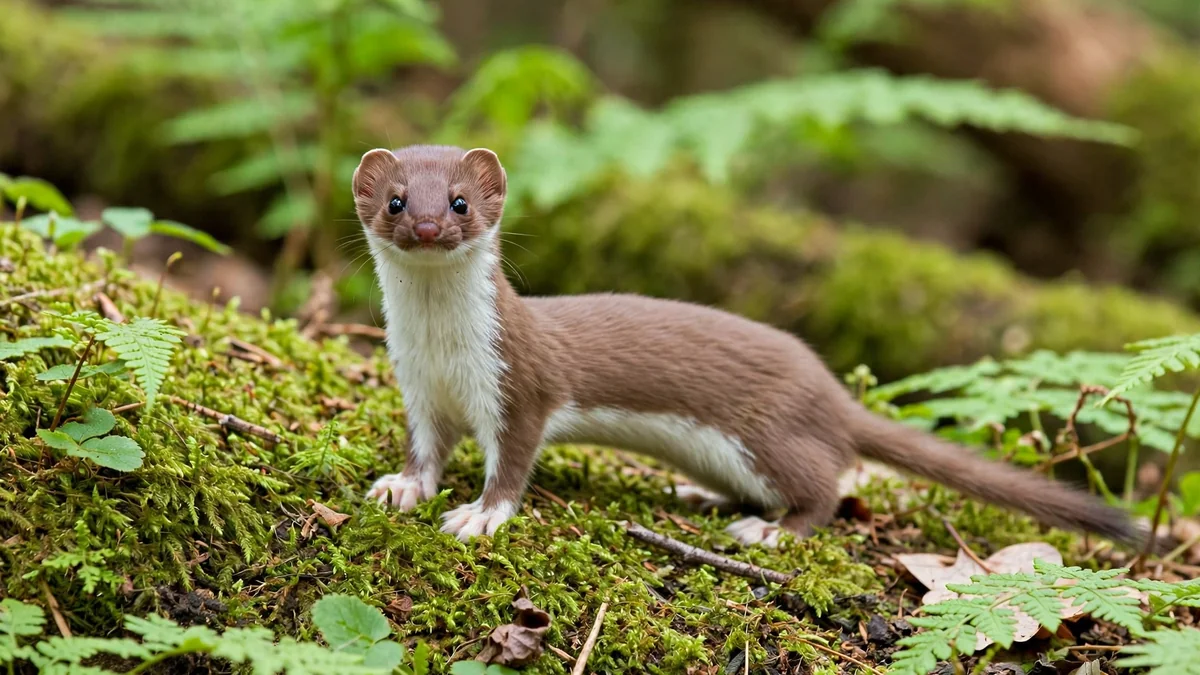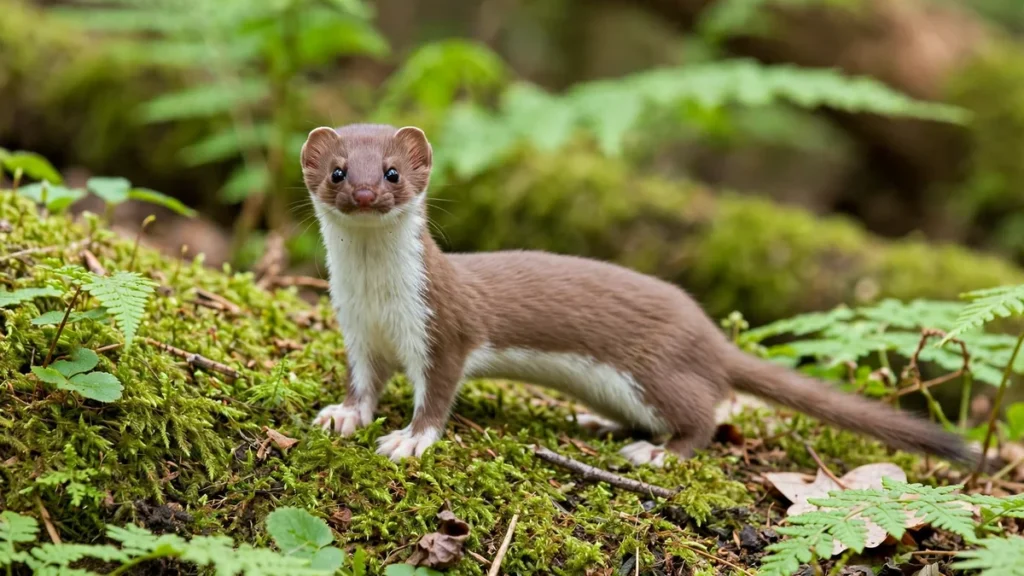
Weasel species are the smallest and boldest hunters of the mustelid family, and there are about 17 weasel species in the genus Mustela, from the tiny least weasel to the long-tailed weasel of the Americas. If you are wondering which weasel species exist and how such small animals catch prey much larger than themselves, the short answer is this: weasels are long, slim and fearless, with short legs, sharp teeth and a boundless appetite, and they hunt by slipping into burrows and chasing voles, mice and rats through tunnels too narrow for any other predator to follow.
Key takeaways
- There are about 17 weasel species in the genus Mustela, living across Europe, Asia and the Americas.
- The least weasel is the smallest carnivore in the world, weighing as little as 25 grams.
- Weasels are long, slim and flexible, with brown fur above and white fur below, and northern weasels turn white in winter.
- A weasel can kill prey much larger than itself, including rabbits, by biting the back of the neck.
- The stoat, also called the short-tailed weasel or ermine, is a close relative, and it has its own guide.
What makes a weasel a weasel
A weasel is a small mammal built for hunting in tight spaces. Its body is long and tube-shaped, its neck is almost as wide as its head, and its legs are short, so it can slide through a mouse burrow or a crack in a stone wall without slowing down. Its fur is short and sleek, brown above and creamy white below, and its tail is long and slim. Its head is small and flat, with rounded ears, dark eyes and a pointed snout full of whiskers that feel the way ahead in the dark.
Weasels are pure hunters, and their bodies are tuned for the chase. They have a very fast metabolism, so they burn energy quickly and must eat often, sometimes taking a third of their own body weight in food every day. They hunt day and night, though many hunt most at dawn and dusk. A weasel moves in a bounding run, arching its back with every leap, and it can climb, swim and squeeze through a hole no wider than a coin.
The weasels of the world
The least weasel is the smallest of all weasel species, and the smallest carnivore in the world. It is about 20 centimetres long from nose to tail, with a short tail, a brown back and a white belly, and it weighs as little as 25 grams, less than a small mouse. Least weasels live across the northern half of the world, from Britain and Europe through Siberia to Alaska and Canada, in meadows, hedgerows and farmland, wherever voles and mice are plentiful.
The long-tailed weasel is the common weasel of the Americas, living from Canada and the United States down through Mexico into South America. It is larger than the least weasel, about 35 centimetres long, with a long tail tipped in black, and it is a bold hunter of voles, mice and rabbits. In the snowy north it turns white in winter, keeping only the black tip of its tail, while in the warm south it stays brown all year round.
The yellow-bellied weasel lives in the mountains and forests of Asia, from the Himalayas through China to South-East Asia, and it is named for the bright yellow fur on its belly and throat. It is about 30 centimetres long, and it hunts rats, mice and birds in forest clearings and rocky slopes. The Siberian weasel, also called the kolonok, lives across northern Asia, from Siberia through China and Korea, and it is about 35 centimetres long, with rich orange-brown fur. It hunts voles, pikas and frogs in forests and river valleys, and it is often seen near human settlements.
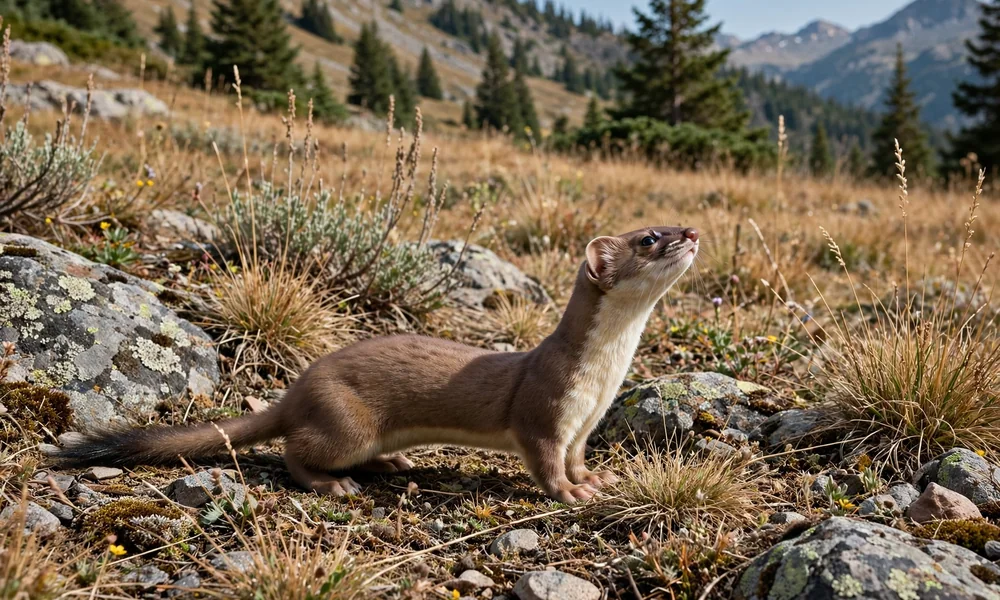
The Japanese weasel lives only in Japan, on the islands of Honshu, Kyushu and Shikoku, and it is about 35 centimetres long, with dark brown fur and a pale belly. It hunts rodents, frogs and birds in forests, rice fields and riverbanks. The mountain weasel lives high in the mountains of Central Asia, at heights of up to 4,000 metres, and it is about 30 centimetres long, with pale, sandy fur that blends with the rocks and dry grass. It hunts voles and pikas among the boulders, and it is one of the least seen of all weasel species.
The Malayan weasel lives in the forests of South-East Asia, from Thailand and Malaysia to Indonesia, and it is about 35 centimetres long, with dark brown fur and a pale throat. It hunts rats, mice and lizards on the forest floor, and it is rarely seen, because it keeps to dense cover and hunts mostly at night. The back-striped weasel lives in South and South-East Asia, from Nepal and India to Vietnam, and it is about 30 centimetres long, with a dark stripe running down its back. It hunts rats, mice and frogs in forests and fields. Together, these eight species show just how far the weasel family has spread, from Arctic tundra to tropical forest.
How weasels hunt
A weasel hunts by smell, hearing and sheer determination. It follows the scent of a vole or a mouse along a hedgerow, through long grass or into a burrow, moving in quick bounds and stopping often to raise its head and sniff the air. Once it finds its prey, it attacks with great speed, seizing the animal by the back of the neck with its sharp teeth. A weasel can kill a rabbit much larger than itself, and it can chase a vole through tunnels barely wider than its own body, where no larger hunter can follow.
Weasels eat mainly voles, mice and rats, along with shrews, small birds, eggs, frogs and insects, and they will take a rabbit when they get the chance. A weasel eats often, because its fast metabolism burns through food quickly, and it stores extra prey in a hidden cache to eat later. Among the predators of the animal world, the weasel is unusual in hunting prey underground as well as above it, and in taking animals far larger than itself with nothing but speed, teeth and courage.
Where weasels live
Weasels live across much of the northern world, in Europe, Asia, North America and South America, wherever there are small rodents to hunt and cover to hide in. They favour meadows, hedgerows, woodland edges, riverbanks and farmland, and they den in hollow logs, stone walls, old burrows and piles of brush. The nocturnal animals of the countryside include weasels that hunt at night, and the forest animals of woodland edges include the weasel, which slips through the undergrowth after voles and mice. Mountain animals include the mountain weasel, which lives higher than almost any other weasel, among the rocks of Central Asia.
| Species | Where it lives | Best-known food | Length |
|---|---|---|---|
| Least weasel | Europe, Asia and North America | Voles, mice | 0.20 metres |
| Long-tailed weasel | North America to South America | Voles, mice, rabbits, birds | 0.35 metres |
| Yellow-bellied weasel | Himalayas to South-East Asia | Rats, mice, birds | 0.30 metres |
| Siberian weasel | Siberia, China and Korea | Voles, pikas, frogs | 0.35 metres |
| Japanese weasel | Japan, Honshu, Kyushu and Shikoku | Rodents, frogs, birds | 0.35 metres |
| Mountain weasel | Mountains of Central Asia | Voles, pikas, small birds | 0.30 metres |
| Malayan weasel | Forests of South-East Asia | Rats, mice, lizards | 0.35 metres |
| Back-striped weasel | South and South-East Asia | Rats, mice, frogs | 0.30 metres |
Best seasons for weasel watching
Winter is the finest season for weasel watching in the north, when weasels turn white against the snow and their tracks show clearly in fresh powder. A weasel in its white winter coat is easy to spot against dark rocks and bare branches, and its bounding tracks, two prints side by side, are a clear sign it has passed that way.
Spring and summer are the best seasons in warmer country, when young weasels leave the den and hunt in meadows and hedgerows. Watch at dawn and dusk, when weasels are most active, and look for a quick, bounding movement in the grass. In autumn, weasels follow mice and voles into barns, gardens and field edges, and they are often seen darting across paths and roads.
Staying safe around weasels
Weasels are wild animals, and they deserve respect. Never try to catch a weasel, never corner one in a shed or a burrow, and never handle one with bare hands. A weasel is small, but it is a fierce fighter when trapped, and it has sharp teeth that can give a painful bite. Keep dogs on a lead near weasel habitat, and leave the animal a clear path to escape. If you find a young weasel alone, leave it where it is, because its mother is almost certainly nearby.
Weasel watching checklist
- Look for bounding tracks in snow or soft mud, two prints side by side in a hopping pattern.
- Watch meadow edges, hedgerows and stone walls at dawn and dusk, when weasels hunt.
- Listen for the alarm calls of small birds, which often give away a hunting weasel.
- Check hollow logs, brush piles and old burrows for signs of a weasel den.
- Never corner a weasel or handle one with bare hands, and keep dogs on a lead.
- Leave no trace: take your rubbish home and keep to marked paths.
Frequently asked questions
How many weasel species are there?
There are about 17 weasel species in the genus Mustela, living across Europe, Asia, North America and South America. The table above shows eight of the best-known true weasels: the least, long-tailed, yellow-bellied, Siberian, Japanese, mountain, Malayan and back-striped weasels. The stoat, also called the short-tailed weasel or ermine, is a close relative, and it has its own guide.
How is this guide different from the predator animals guide?
This guide covers only the weasel species of the genus Mustela, from the least weasel to the back-striped weasel. The predator animals guide covers the whole world of hunting animals, from wolves and eagles to sharks and big cats.
What is the smallest weasel species?
The least weasel is the smallest weasel species, and the smallest carnivore in the world. It is about 20 centimetres long from nose to tail and weighs as little as 25 grams, yet it hunts voles and mice every day.
Why do some weasels turn white in winter?
Some northern weasels, including the least weasel and the long-tailed weasel, turn white in winter so they blend with the snow while they hunt. The change is driven by the shortening days of autumn, and the weasel grows a new white coat before turning brown again in spring.
Are weasels dangerous to people?
Weasels are not dangerous to people, and they will run away rather than attack. A cornered weasel can bite, so never try to catch or handle one. Weasels are far more useful than harmful, because they control the rats, mice and voles that damage crops and spread disease.
Where is the best place to see a weasel?
The best place to see a weasel is a meadow edge, hedgerow or stone wall at dawn or dusk, where voles and mice are plentiful. In winter, look for a white weasel against the snow, and follow its bounding tracks through fresh powder. Be patient and quiet, because a weasel is quick, shy and gone in a moment.
Conclusion
Weasel species, all about 17 of them, are the small, brave hunters of the animal world: least weasels slipping through mouse burrows, long-tailed weasels turning white in the snow, and mountain weasels hunting voles among the rocks.
The next step is to walk a meadow edge at dawn, watch the hedgerow for a quick brown shape bounding through the grass, and remember that the smallest carnivore in the world is hunting nearby.