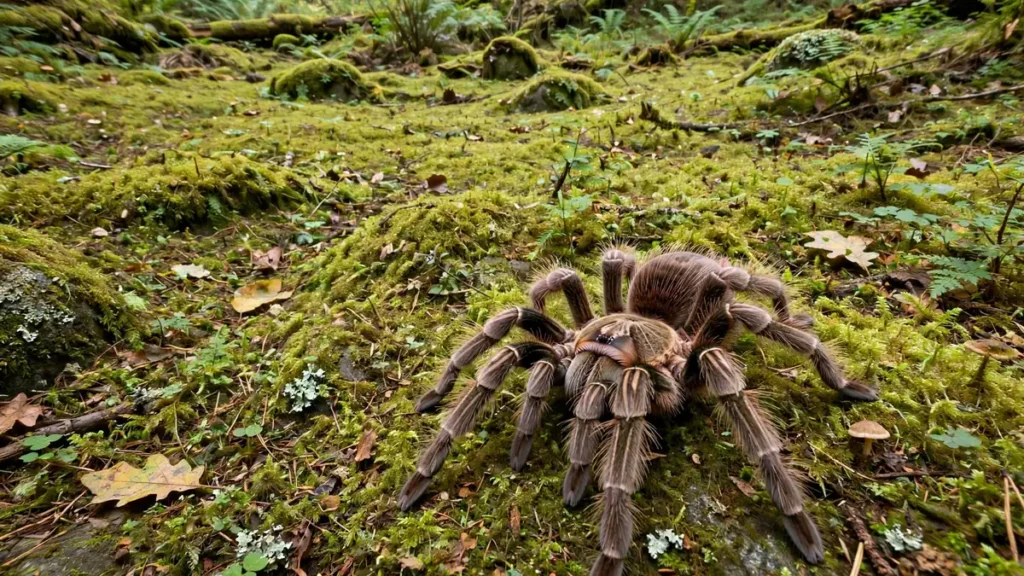
Spider species number more than 50,000 described kinds, from the giant tarantulas of the rainforest floor to the tiny jumping spiders that hunt on garden walls and the orb weavers that rebuild a dew-covered web every night. If you are wondering which spider species exist and how to tell them apart, the short answer is this: spiders are eight-legged arachnids that hunt with silk, venom and remarkable senses, and nearly all are harmless to people, keeping insect numbers in check.
Key takeaways
- Spider species number more than 50,000 described kinds, and new ones are still being found every year.
- Tarantulas, orb weavers, wolf spiders, jumping spiders, black widows, brown recluses, huntsman spiders and funnel-web spiders are the best-known groups.
- Most spiders hunt with silk webs, but wolf spiders and jumping spiders hunt by running down or pouncing on their prey.
- Almost all spiders have venom, but only a handful of species are dangerous to people.
- Gardens, meadows, forests, deserts and caves are the best places to see spiders, at dawn and dusk.
What makes a spider a spider
A spider is an arachnid, not an insect. It has eight legs, two body parts — the cephalothorax and the abdomen — and no wings or antennae. Spiders have simple eyes, usually eight of them, although some species have six, and they sense the world largely through touch and vibration. Fine hairs on their legs pick up the smallest tremor in a web or on the ground, and that is how a spider knows something has arrived.
Every spider produces silk, even the species that never build a web. Silk is made in glands inside the abdomen and drawn out through spinnerets at the rear of the body. Different glands make different kinds of silk: strong dragline silk for safety lines, sticky silk for catching prey, soft silk for wrapping eggs and fine silk for lining a burrow.
Spiders also have venom, delivered through fangs, which they use to subdue their prey. The venom of most spider species is made for insects and other small animals, and it is far too weak to harm a person. Only a small number of species, such as the black widow and the funnel-web spider, carry venom that can seriously affect people, and even then bites are rare and usually happen when a spider is trapped against the skin.
The great spider groups of the world
Tarantulas are the giants of the spider world. The Goliath birdeater of South America is the largest spider species by weight, with a leg span of up to 30 centimetres, and it lives in burrows on the rainforest floor, hunting insects, frogs and small rodents. Tarantulas are slow-growing and long-lived, with some females living for more than 20 years, and they flick fine hairs at attackers as a defence.
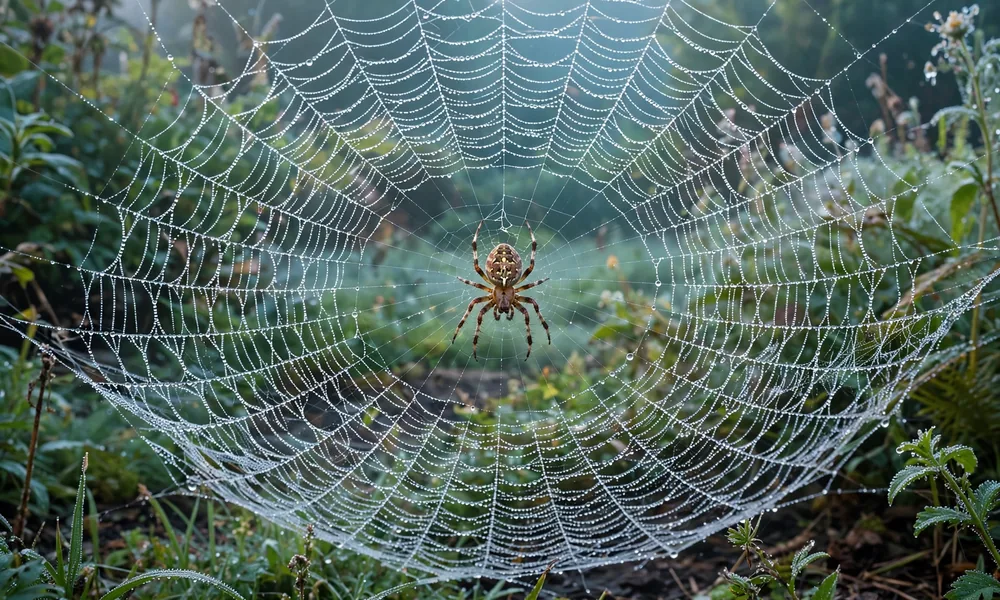
Orb weavers are the classic web builders. The garden orb weaver spins a perfect circular web between plants each evening, sits in the middle of it through the night, and eats the web again at dawn to recycle the silk. Orb weaver webs can be half a metre across, and on a misty morning every thread is strung with dew.
Wolf spiders are the hunters that never build a web at all. They are fast, ground-dwelling spiders with excellent eyesight, and they chase down their prey across the soil and leaf litter. A female wolf spider carries her egg sac attached to her spinnerets, and when the young hatch she carries dozens of spiderlings on her back for days, a habit almost unique among spiders.
Jumping spiders are the most charming spider species of all. They are small, compact and brightly coloured, with two huge forward-facing eyes that give them the best vision of any spider. They stalk their prey like tiny cats, then leap on it from several body lengths away, trailing a safety line of silk in case they miss.
The black widow is one of the few spider species people genuinely fear. The female is glossy black with a red hourglass mark on her underside, and she builds a tangled web in dark corners, sheds and woodpiles. The brown recluse is a shy brown spider of the southern United States that hides in cellars and cupboards, identified by a violin-shaped mark on its back. The huntsman spider is a large, flat spider of Australia and Asia that lives under bark and on walls and runs sideways with remarkable speed, and the Sydney funnel-web spider builds a silk-lined burrow with a funnel-shaped entrance and is considered one of the most venomous spiders in the world.
Webs and hunting: how spiders catch their prey
Web-building spiders are patient hunters. An orb weaver sits at the hub of her web and feels every vibration through her legs, rushing out the moment an insect strikes the silk. She wraps the insect in silk, bites it to inject venom, and either eats it at once or stores it for later. Some orb weavers rebuild their webs every night, because a dusty web catches far less than a fresh one.
Other spiders hunt without webs at all. Wolf spiders run their prey down across the ground, jumping spiders stalk and pounce, and huntsman spiders chase insects across walls and tree trunks. Trapdoor spiders dig a silk-lined burrow with a hinged lid of soil and silk, then wait with their front legs on the lid, bursting out the moment something walks past. Among the predators of the small animal world, spiders are among the most successful, eating hundreds of millions of tonnes of insects every year.
Where spiders live
Spiders live in almost every habitat on Earth, from the hottest deserts to the coldest mountains, and from deep caves to the centres of cities. Orb weavers hang their webs in gardens, hedgerows and meadows, wolf spiders hunt across open ground and leaf litter, and tarantulas dig burrows in rainforest soil. The jungle animals of the rainforest include tarantulas and giant orb weavers, and the desert animals of the dry lands include wolf spiders and trapdoor spiders that hunt at night to escape the heat.
Many spiders are nocturnal, coming out after dark to build webs and hunt while the birds that eat them are asleep. The nocturnal animals of the night include hunting spiders that prowl the ground after sunset, and the cave animals of the underground world include pale, long-legged spiders that have lived in total darkness for thousands of years.
Spiders and people
People have feared spiders for centuries, yet spiders do far more good than harm. A single garden spider can eat thousands of flies, mosquitoes and aphids in a season, and farmers rely on spiders to keep crop pests under control without chemicals.
Most spiders will never bite a person, and those that do usually cause no more than a red mark that fades in a day or two. The few dangerous species are shy and bite only when trapped against the skin, in clothing or bedding. Leave spiders alone, shake out clothes and shoes left in a shed, and wear gloves when clearing a woodpile or a dark corner.
| Species | Where it lives | How it hunts | Size |
|---|---|---|---|
| Goliath birdeater tarantula | Rainforests of South America | Ambush from a burrow | Up to 30 centimetres |
| Garden orb weaver | Gardens and meadows worldwide | Circular silk web | Up to 2 centimetres |
| Wolf spider | Grassland and leaf litter worldwide | Runs down prey | Up to 3 centimetres |
| Jumping spider | Walls, fences and plants worldwide | Stalks and pounces | Up to 2 centimetres |
| Black widow | Warm regions of the Americas | Tangled irregular web | Up to 1.5 centimetres |
| Brown recluse | Southern and central United States | Hunts at night, no web | Up to 1 centimetre |
| Huntsman spider | Australia and Asia | Chases prey on walls and bark | Up to 15 centimetres |
| Sydney funnel-web spider | Eastern Australia | Silk-lined burrow with a funnel entrance | Up to 5 centimetres |
Best seasons for spider watching
Late summer and autumn are the finest seasons for spiders, when orb weavers are at their largest and their webs are strung across every garden, hedge and meadow. In autumn, male spiders wander in search of mates, and that is when many people first see large spiders indoors, as they slip through open doors and windows.
Spring is the best season for wolf spiders and jumping spiders, when the young are out hunting on sunny walls and bare ground.
Staying safe around spiders
Spiders are wild animals, and they deserve respect. Never put your hand into a dark hole, a woodpile or a pile of old clothes without looking first, and never try to pick up a spider you cannot identify. Watch with your eyes or a camera rather than handling them: a frightened spider may bite. If you find a spider indoors, cover it gently with a glass, slide a card underneath and release it outside.
Spider watching checklist
- Look for orb weaver webs in gardens and hedges on misty autumn mornings.
- Watch sunny walls and fences for jumping spiders stalking their prey.
- Scan the leaf litter and bare ground for wolf spiders hunting by day.
- Never put your hand into a dark hole, woodpile or pile of old clothes without looking first.
- Release any spider found indoors with a glass and a card, rather than killing it.
- Leave no trace: take your rubbish home and keep to marked paths.
Frequently asked questions
How many spider species are there?
There are more than 50,000 described spider species, and new ones are still being found every year, mostly in tropical forests. Scientists believe the true total may be far higher, because so many small and secretive species have never been collected.
How is this guide different from the jungle animals guide?
This guide covers spider species from every habitat on Earth, from gardens and deserts to caves and cities, and explains how spiders hunt, spin silk and survive. The jungle animals guide covers the whole community of animals that live in tropical jungles, from monkeys and parrots to jaguars and frogs, with spiders as only one small part of that world.
Are all spiders venomous?
Almost all spider species have venom, which they use to subdue insects and other small prey. The venom of most spiders is harmless to people, and only a handful of species, such as the black widow and the funnel-web spider, carry venom that can seriously affect a person.
Do spiders build a new web every day?
Many orb weaver spiders do rebuild their webs every night, eating the old silk to recycle the protein before spinning a fresh web. Other web builders, such as house spiders and funnel-web spiders, keep and repair the same web for weeks or months.
Why do wolf spiders carry their babies on their back?
A female wolf spider carries her spiderlings on her back for days after they hatch, which protects them from predators and keeps them warm. This habit is almost unique among spiders, and a mother wolf spider may carry more than a hundred young at once.
Where is the best place to see a tarantula?
Tarantulas are best seen in the rainforests of South America, where the Goliath birdeater lives in burrows on the forest floor, and in the deserts of the south-western United States, where males wander in search of mates in autumn. Watch from a distance and never disturb a burrow.
Conclusion
Spider species are the quiet pest controllers of the natural world: tarantulas in their rainforest burrows, orb weavers rebuilding a web every night, wolf spiders running down prey and jumping spiders pouncing from a garden wall.
The next step is to pick one species and one season — a misty autumn morning in the garden for orb weavers, a sunny spring wall for jumping spiders, or a warm evening walk for wolf spiders — and plan your visit around it.














