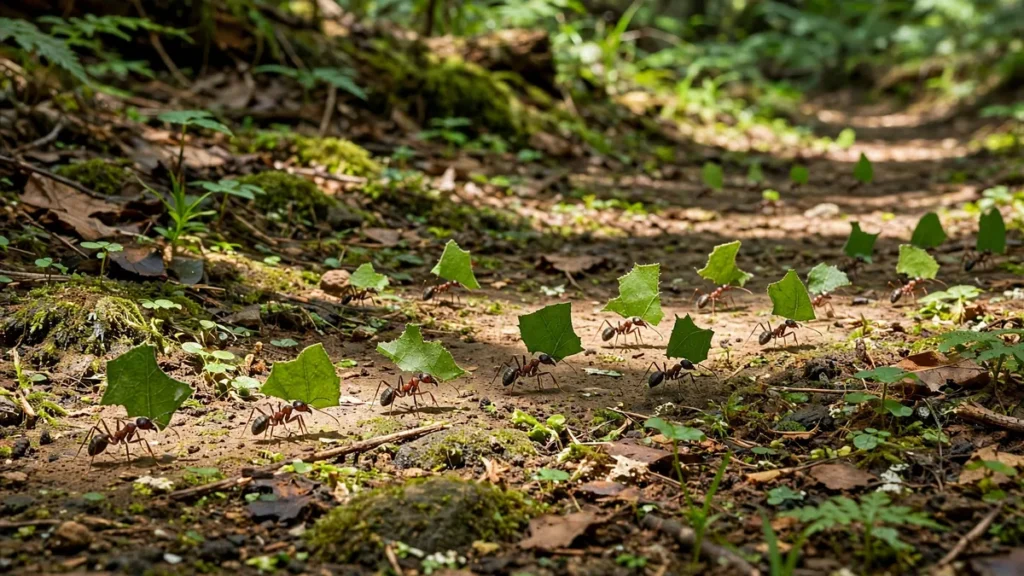
Ant species are the most organised insects on Earth, from the fire ant that builds a mound of red earth to the leafcutter ant that carries a green leaf and the army ant that marches in a living column. If you are wondering which ant species exist, the short answer is this: ants are social insects that live in colonies, with a queen, workers and soldiers working together as one family, and this guide covers eight ant species, showing how each one lives and where you can see it in the wild.
Key takeaways
- Ant species are social insects that live in colonies, with a queen laying the eggs and workers doing the rest of the work.
- The eight ant species in this guide are the fire ant, leafcutter ant, army ant, weaver ant, carpenter ant, bullet ant, pharaoh ant and wood ant.
- Leafcutter ants do not eat the leaves they cut; they feed them to a fungus they farm, and eat the fungus.
- A single ant colony can hold more than a million ants.
- Forest floors, gardens, pavements and kitchen cupboards are the best places to see ants, from spring to early autumn.
What makes an ant an ant
An ant is a small insect with six legs, elbowed antennae and a narrow waist. Its body has three parts: the head, the thorax, which carries the legs, and the abdomen. Ants range in size from tiny pharaoh ants only two millimetres long to the giant bullet ants of the rainforest, which can reach three centimetres.
Ants are often confused with termites, but the two are easy to tell apart once you know what to look for. Termites have straight antennae, a thick waist and pale, soft bodies, while ants have elbowed antennae, a narrow waist and hard bodies. Flying ants are often mistaken for flying termites, but the ant has a narrow waist and wings of different sizes, while the termite has a thick waist and wings of the same size.
There are more than 12,000 described ant species in the world, living on every continent except Antarctica. Ants live in colonies that can hold a few dozen ants or more than a million, and the colony works like a single body.
The eight ant species in this guide
The red fire ant is the most famous ant species of all. It builds a mound of red earth in a lawn or a field, and it defends its nest with a painful sting. Fire ants are native to South America, but they have spread worldwide, where they are a serious pest. A fire ant colony can hold hundreds of thousands of ants, and it can survive a flood by linking its bodies into a living raft that floats on the water.
The leafcutter ant is the farmer of the ant world. It lives in the forests of Central and South America, cutting pieces from leaves and carrying them back to its nest to feed a fungus it grows in underground gardens. The ants eat the fungus, not the leaves, and a colony can strip a small tree of its leaves in a single night. Leafcutter colonies are among the largest of all, with more than a million ants and nests several metres across.
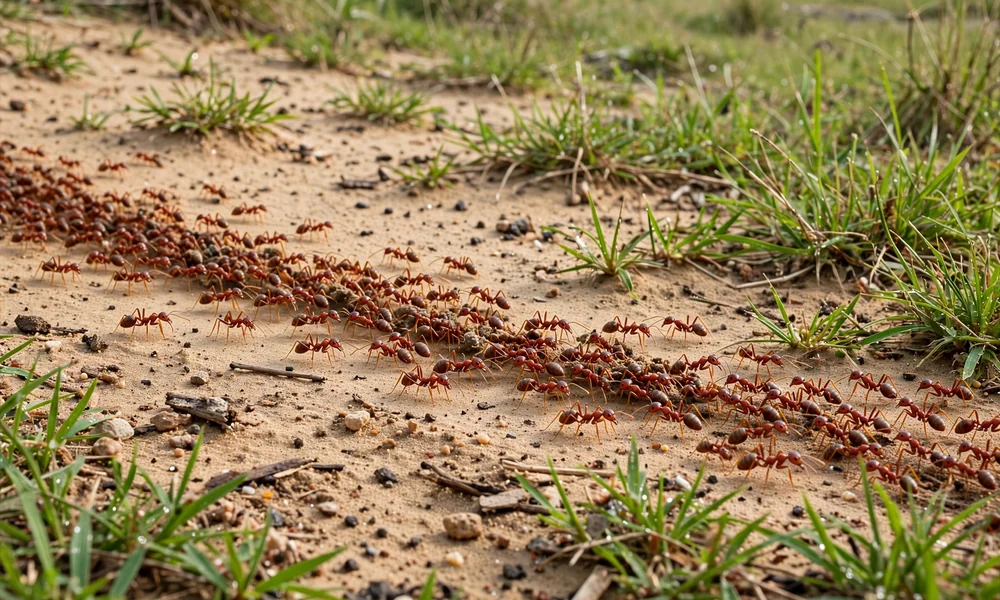
The army ant is the nomad of the ant world. It has no permanent nest, marching through the rainforest in a vast column, hunting insects and spiders as it goes. At night the column stops, and the ants link their bodies together to form a living nest, called a bivouac. Their raids can clear a patch of forest floor of almost every small animal in their path.
The weaver ant is a bright green or red ant that lives in the trees of Asia and Australia, building its nest by sewing leaves together with silk. The workers hold the edges of two leaves together while others carry silk-making larvae back and forth across the join, gluing the leaves into a ball. Weaver ants fiercely defend their trees, and farmers use them to protect fruit trees from pests. The carpenter ant is a large black ant that nests in dead wood, hollowing out tunnels in trees, fence posts and wooden houses, but it does not eat the wood; it feeds on honeydew, insects and sweet foods.
The bullet ant is a large black ant of the rainforests of Central and South America, with the most painful sting of any insect, said to feel like being shot. Bullet ants live in small colonies at the base of trees, hunting insects and drinking nectar. The pharaoh ant is a tiny yellow ant that lives in houses and hospitals, nesting in walls and cupboards, and one of the hardest household pests to remove, because it splits into many small colonies when disturbed. The wood ant is a large red and black ant of the forests of Europe, building tall mounds of pine needles more than a metre high, and a single colony can hold more than a million ants, with workers farming aphids for honeydew.
How ants build colonies and farm
An ant colony begins with a single queen, who mates once, sheds her wings and digs a small chamber in the soil. The first workers are small and weak, but they soon take over the work of the nest, and the queen settles down to laying eggs for more than twenty years. The workers feed her and carry her eggs to the nursery chambers.
Ants farm in many ways. Leafcutter ants farm fungus, and wood ants farm aphids, milking them for honeydew, just as a farmer milks a cow. Some ants keep aphids in their nests through the winter, carrying them to fresh leaves in the spring, and defend them from predators. Ants also farm seeds, carrying them into the nest and storing them for the winter.
Ants communicate with chemicals called pheromones, laid down as scent trails for other ants to follow. An ant that finds food returns to the nest laying a trail, and the other workers follow it, each adding more scent, so the trail grows stronger the more food there is. Among the desert animals and predator animals of the forest floor, ants are the small workers that keep the whole food web turning.
Where ants live
Ants live in almost every habitat on Earth. Fire ants build mounds in lawns and fields, leafcutter ants nest in the rainforest floor, and weaver ants live in the trees of Asia and Australia. Wood ants build mounds in pine forests, carpenter ants nest in dead wood, and pharaoh ants live in house walls.
The forest animals of the woodland floor include wood ants farming aphids in the trees above them, and city gardens are home to black garden ants, which swarm on warm summer evenings in a great mating flight.
Ants and people
People have lived with ants for thousands of years, as pests and as helpers. Fire ants and pharaoh ants are serious pests in houses, gardens and hospitals, and their stings can be painful and sometimes dangerous. Weaver ants are used by farmers in Asia to protect fruit trees from pests, and leafcutter ants are studied by scientists for the way they farm fungus.
Ants turn over the soil, spread seeds, clean up dead insects and feed birds and mammals, from woodpeckers to anteaters. Some ant species are now under pressure from the loss of their habitats and from invasive ants, and fire ants in particular have pushed many native ants out of their homes. Leaving dead wood and bare soil for them are simple steps that help.
| Species | Where it lives | Best-known habit | Colony size |
|---|---|---|---|
| Red fire ant | South America, spread worldwide | Builds red mounds, stings when disturbed | Hundreds of thousands |
| Leafcutter ant | Forests of Central and South America | Cuts leaves to farm fungus | More than a million |
| Army ant | Central and South American rainforests | Marches in hunting columns | Hundreds of thousands |
| Weaver ant | Asian and Australian trees | Sews leaves with silk | Hundreds of thousands |
| Carpenter ant | Dead wood worldwide | Hollows tunnels in timber | Tens of thousands |
| Bullet ant | Central and South American rainforests | Most painful sting of any insect | A few thousand |
| Pharaoh ant | Houses and hospitals worldwide | Nests in walls | Tens of thousands |
| Wood ant | European forests | Builds mounds of pine needles | More than a million |
Best seasons for ant watching
Spring and summer are the finest seasons for ants, when the colonies are at their busiest. In spring, wood ants repair their mounds after the winter, and in summer black garden ants swarm on warm evenings in a great mating flight.
Autumn is best for leafcutter ants in the tropics, when the rains bring fresh leaves.
Staying safe around ants
Ants are wild animals, and they deserve respect. Never disturb a mound or a nest, and never leave sweet food uncovered. Watch ants on the ground rather than picking them up, and if you are bitten or stung, wash the spot with soap and water. People allergic to ant stings should carry their medicine and keep their distance from fire ant mounds.
Ant watching checklist
- Watch a wood ant mound in a pine forest in spring.
- Look for a leafcutter trail in the rainforest, a green river of leaves.
- Check pavements and lawns in summer for black garden ants and their mating swarms.
- Look for weaver ant nests, balls of leaves sewn together, in Asian and Australian trees.
- Never disturb a mound or a nest, and never put your hand into an ant trail.
- Leave no trace: take your rubbish home and keep to marked paths.
Frequently asked questions
How many ant species does this guide cover?
This guide covers eight ant species: the fire ant, leafcutter ant, army ant, weaver ant, carpenter ant, bullet ant, pharaoh ant and wood ant. There are more than 12,000 described ant species in the world.
How is this guide different from the jungle animals guide?
This guide covers ants, small, social insects that live in colonies, with a queen, workers and soldiers working together as one family. The jungle animals guide covers the much larger animals of the jungle, from monkeys and toucans to jaguars and tapirs.
Do all ants sting?
No, most ants do not sting at all, and they defend themselves with their jaws instead. Fire ants and bullet ants have painful stings, but wood ants, carpenter ants and leafcutter ants bite rather than sting, spraying formic acid into the bite.
How long does a queen ant live?
A queen ant lives far longer than the workers. A black garden ant queen can live for more than twenty years, while her workers live for only a few months, and a fire ant queen for around seven years.
What do ants eat?
Ants eat seeds, nectar, insects and honeydew from aphids. Leafcutter ants eat only the fungus they farm, wood ants milk aphids for honeydew, and army ants hunt insects and spiders on their marches.
Where is the best place to see ants?
Ants are best on a forest floor, in a garden or on a pavement in spring and summer. A wood ant mound in a pine forest, a leafcutter trail in the rainforest and a black garden ant swarm are among the best ant sights of all.
Conclusion
Ant species are the organisers of the insect world: fire ants building their red mounds, leafcutter ants farming fungus underground, army ants marching through the forest in a living column and weaver ants sewing leaves together with silk.
The next step is to pick one species and one season — a spring morning at a wood ant mound, a summer evening with a garden ant swarm, or a rainforest trip for the leafcutter trails — and plan your visit around it.














