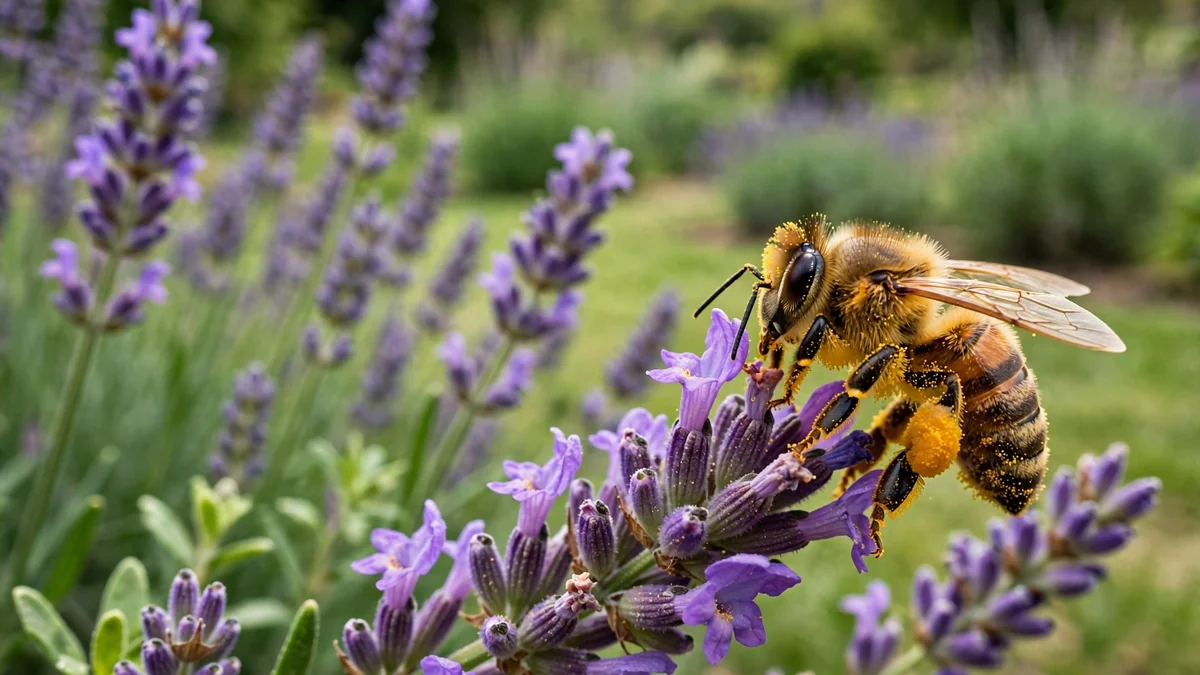
Bee species are the busiest pollinators on Earth, from the honeybee that fills a hive with golden honey to the bumblebee that buzzes over a meadow and the mason bee that nests alone in a hollow stem. If you are wondering which bee species exist and what makes a bee different from a wasp, the short answer is this: bees are hairy, pollen-carrying insects that feed on nectar and pollen, and this guide covers eight bee species, showing how each one lives, pollinates and where you can see it in the wild.
Key takeaways
- Bee species are hairy, pollen-carrying insects that feed on nectar and pollen, and they pollinate most of the flowers, fruit and vegetables we eat.
- The eight bee species in this guide are the honeybee, bumblebee, carpenter bee, mason bee, leafcutter bee, mining bee, sweat bee and stingless bee.
- Only honeybees and stingless bees live in large colonies; most bee species are solitary, with each female building her own nest.
- A honeybee colony can hold around 50,000 bees in summer, while a bumblebee colony holds only a few hundred.
- Meadows, gardens, woodland edges and city parks are the best places to see bees, from spring to early autumn.
What makes a bee a bee
A bee is a flying insect with a hairy body, two pairs of wings and a long tongue, called a proboscis, that reaches deep into flowers to drink nectar. The hairs on a bee’s body are branched, like tiny feathers, and they trap pollen as the bee moves from flower to flower. Many bees carry that pollen home in baskets on their back legs or in a brush of hairs under the abdomen.
Bees are often confused with wasps, but the two are easy to tell apart. Wasps are smooth and shiny, with narrow waists, and they hunt other insects to feed their young. Bees are rounder and hairier, and they feed their young on pollen and nectar. Hoverflies copy the yellow and black stripes of bees, but they have only one pair of wings, while bees have two.
There are more than 20,000 described bee species in the world, living on every continent except Antarctica, from Arctic tundra to tropical rainforest and city gardens. Most bees are solitary, and only a small number of species live in colonies.
The eight bee species in this guide
The western honeybee is the most famous bee species of all, and the only one that makes honey in large amounts. A honeybee colony lives in a hive, a nest of wax honeycomb, ruled by a single queen who lays all the eggs. Workers gather nectar and pollen, feed the young and guard the hive. In summer a strong colony holds around 50,000 bees.
The bumblebee is the bee most people see first in a garden. It is large, round and furry, with a loud buzz and a striped body of yellow, orange, black and white. Bumblebees live in small colonies of a few hundred bees, usually in an old mouse hole or a compost heap. They are superb pollinators of tomatoes, beans and soft fruit, using buzz pollination to shake pollen from the flower.
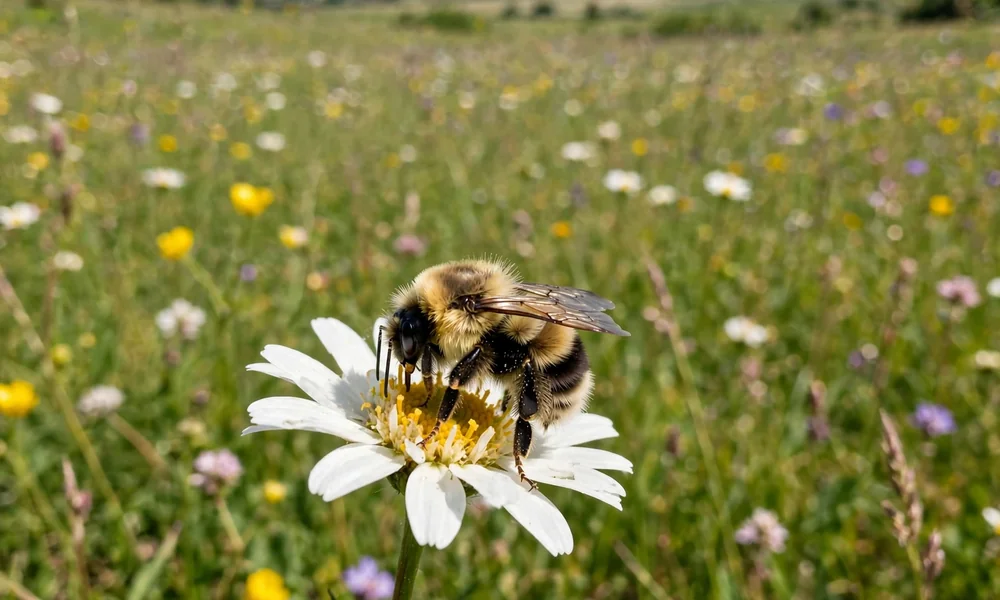
The carpenter bee is a large, dark bee that nests by boring tunnels into dead wood, fence posts and wooden beams. It is often mistaken for a bumblebee, but its abdomen is smooth and shiny rather than furry. Males cannot sting, and the females rarely do. Carpenter bees are important pollinators of passion fruit, tomatoes and many tropical flowers.
The mason bee is a small, solitary bee with a metallic blue or green sheen, and one of the best pollinators of orchards. A female mason bee builds her nest in a hollow stem, a hole in a wall or a bee hotel, sealing each cell with mud. She lays an egg in each cell with a store of pollen, then seals it and moves on, never seeing her young.
The leafcutter bee is a solitary bee that cuts neat circles from the leaves of roses, lilacs and other plants, and carries them home like tiny green umbrellas. She lines each nest cell with the leaf pieces, then fills it with pollen and lays an egg inside. Leafcutter bees rarely sting, and they are valuable pollinators of alfalfa, carrots and many garden flowers.
The mining bee is a small, solitary bee that digs a burrow in bare, sunny soil, often in a lawn or a flower bed. In spring, dozens may nest close together in the same patch of ground, each female digging her own tunnel and raising her own young. They are among the first bees to appear each year, visiting willow and blackthorn. The sweat bee is a tiny, often metallic green bee that is attracted to human sweat for its salt. The stingless bee is a small tropical bee that lives in colonies like the honeybee but has no sting, storing honey in pots of wax and resin in hollow trees across the tropics.
How bees pollinate and make honey
Bees pollinate flowers by accident, and the flower rewards them for it. As a bee drinks nectar, pollen sticks to its hairy body, and when the bee visits the next flower of the same kind, some of that pollen rubs off, fertilising it so that it can set seed and fruit. Without bees, many plants could not reproduce, and crops from apples to beans would fail.
Honeybees make honey by collecting nectar, a sugary liquid made by flowers, and carrying it back to the hive in a special stomach. Back at the hive, the bees pass the nectar from bee to bee, adding enzymes, and fan it with their wings until most of the water has evaporated. The thick, golden honey is then sealed into wax cells, where it keeps for months. A single colony can make tens of kilograms of honey in a good summer.
A honeybee that finds a rich patch of flowers returns to the hive and performs a waggle dance, a figure-of-eight pattern that tells the other bees the direction and distance of the flowers. The angle of the dance shows the direction relative to the sun, and the length of the waggle shows how far away the flowers are. Among the forest animals and butterfly species of a meadow, bees are the pollinators that keep the flowering world turning.
Where bees live
Bees live in almost every habitat on Earth. Honeybees live in hives kept by beekeepers and in wild nests in hollow trees, while bumblebees nest in grassland, gardens and woodland edges. Solitary bees live wherever there are flowers and nesting places: mining bees in bare soil, mason bees in hollow stems, carpenter bees in dead wood and leafcutter bees in garden shrubs.
Many bees are tied to a single kind of flower or a single season. Some mining bees visit only willow in early spring. The urban animals of a city park include bumblebees and mason bees nesting in bee hotels and wall holes, and rooftop hives now produce honey in London, Paris and New York. A garden with flowers in every season is the best home a bee can have.
Bees and people
People have kept honeybees for thousands of years, first in clay pots and hollow logs, and later in hives with movable frames, invented in the nineteenth century, which let beekeepers take honey without destroying the colony. The honeybee remains the most important pollinator of farm crops in the world.
Wild bees are now under pressure in many countries. The loss of wildflower meadows, the use of pesticides and the spread of disease have reduced the numbers of many bee species. Planting wildflowers, leaving bare patches of soil, putting up a bee hotel and avoiding pesticides are simple steps that help bees in any garden, balcony or window box.
| Species | Where it lives | Best-known habit | Colony or solitary |
|---|---|---|---|
| Western honeybee | Worldwide, in hives | Makes honey in wax combs | Colony of around 50,000 |
| Bumblebee | Europe, Asia and the Americas | Buzz pollination of tomatoes and beans | Colony of a few hundred |
| Carpenter bee | Warm regions worldwide | Bores tunnels into dead wood | Solitary |
| Mason bee | Europe, Asia, North America | Seals nest cells with mud | Solitary |
| Leafcutter bee | Worldwide, in gardens and fields | Cuts circles from leaves for its nest | Solitary |
| Mining bee | Worldwide, in bare sunny soil | Digs burrows in lawns and paths | Solitary |
| Sweat bee | Worldwide, in soil and rotting wood | Tiny metallic bee drawn to sweat | Mostly solitary |
| Stingless bee | Tropics worldwide | Stores honey in wax pots, no sting | Colony |
Best seasons for bee watching
Spring and summer are the finest seasons for bees, when flowers are in bloom and the bees are at their busiest. In spring, mining bees and mason bees appear first, visiting willow, blackthorn and fruit blossom, and in summer honeybees and bumblebees work the lavender, clover and wildflower meadows.
Staying safe around bees
Bees are wild animals, and they deserve respect. Never disturb a hive or a nest, never swat at a bee, and never leave sweet drinks or food uncovered where bees can reach them. If a bee lands on you, stay still and it will soon fly away. People allergic to bee stings should carry their medicine and keep their distance from hives.
Bee watching checklist
- Watch lavender and clover in summer for honeybees and bumblebees.
- Look for round holes in rose leaves, the mark of a leafcutter bee.
- Check bare, sunny soil in spring for mining bees.
- Put up a bee hotel for mason bees and leafcutter bees.
- Never disturb a hive or a nest, and never swat at a bee on a flower.
- Leave no trace: plant wildflowers, avoid pesticides and take your rubbish home.
Frequently asked questions
How many bee species does this guide cover?
This guide covers eight bee species: the honeybee, bumblebee, carpenter bee, mason bee, leafcutter bee, mining bee, sweat bee and stingless bee. There are more than 20,000 described bee species in the world.
How is this guide different from the forest animals guide?
This guide covers bees, small, hairy, pollen-carrying insects that live in hives, colonies or solitary nests and pollinate flowers. The forest animals guide covers the much larger animals of the woodland, from deer and foxes to owls and woodpeckers.
Do all bees make honey?
No, only honeybees and stingless bees make honey in large amounts, and only honeybees store it in wax combs. Bumblebees make a small amount for their own colony, and solitary bees make none at all.
Do all bees sting?
Most female bees can sting, but they rarely do unless their nest is threatened, and solitary bees almost never sting at all. Stingless bees have no sting, male bees cannot sting, and a honeybee dies after it stings.
What do bees eat?
Bees eat nectar and pollen from flowers. Nectar gives them energy, pollen gives them protein, and a honeybee colony stores honey to survive the winter, when there are no flowers in bloom.
Where is the best place to see bees?
Bees are best in a wildflower meadow, a garden or a city park in spring and summer, when flowers are in bloom. Lavender, clover, fruit blossom and ivy are among the best flowers to watch, on a sunny morning.
Conclusion
Bee species are the pollinators that keep the flowering world alive: honeybees filling a hive with honey, bumblebees buzzing over the meadow, mason bees sealing their mud nests and leafcutter bees carrying green circles home.
The next step is to pick one species and one season — a spring morning for mining bees, a summer afternoon on the lavender for honeybees, or an autumn walk to the ivy for the last bumblebees — and plan your visit around it.