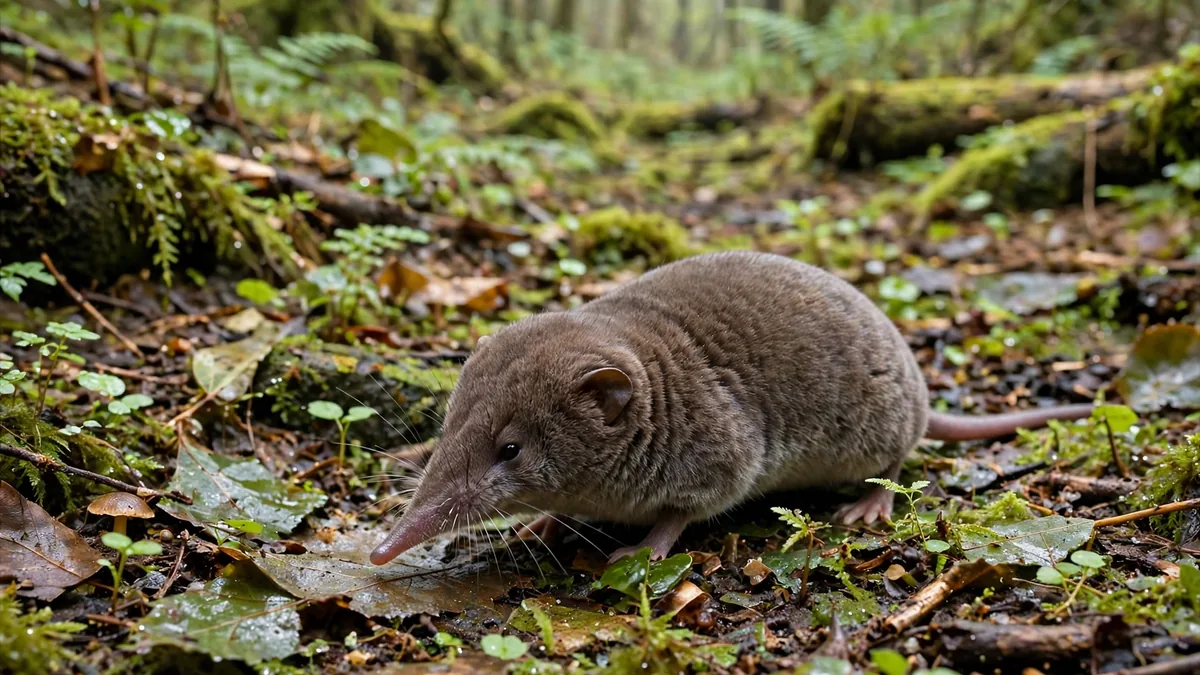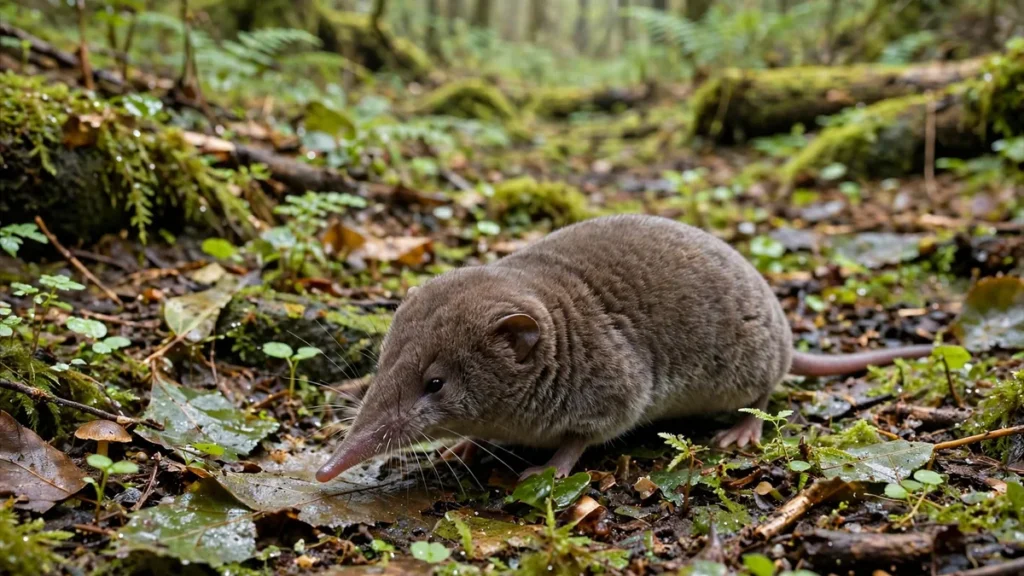
Shrew species are the tiny, fierce insect-eaters of the family Soricidae, and there are about 400 shrew species living on every continent except Australia and Antarctica. If you are wondering which shrew species exist and how such a small animal can eat its own body weight in food every single day, the short answer is this: shrews are built for constant hunting, with a long pointed snout, whiskers that feel the way ahead, a furious metabolism and, in a few species, venom in their bite, and they spend their short lives searching leaf litter and riverbanks for insects and worms.
Key takeaways
- There are about 400 shrew species in the family Soricidae, on every continent except Australia and Antarctica.
- The Etruscan shrew is the smallest mammal in the world by weight, at about 1.8 grams.
- A shrew can eat its own body weight in food every day, and it can starve within hours without food.
- Some shrews are venomous, including the northern short-tailed shrew, which uses venom to paralyse prey.
- Elephant shrews are not true shrews at all, despite the name, and belong to a separate order.
What makes a shrew a shrew
A shrew is a small mammal built for hunting in the dark, damp places of the world. Its body is compact and covered in short, velvety fur, usually brown or grey, and its head runs into a long, pointed snout that is always moving, sniffing and probing. Its eyes are tiny, its ears are small and often hidden in its fur, and its whiskers are long and sensitive, feeling the way ahead in leaf litter and tunnels where sight is almost useless. Its legs are short, its tail is thin, and its feet have five toes with small claws for digging.
Shrews are not rodents, even though they look like mice at first glance. A shrew is an insectivore, a close cousin of the mole and the hedgehog, and its teeth tell the story: sharp, pointed teeth for gripping insects and worms, not the gnawing front teeth of a mouse. The mouse species of the world are rodents, built for gnawing seeds and grain, while shrews are hunters, built for catching living prey. A shrew’s heart can beat more than 800 times a minute, and it must feed almost constantly to stay alive.
The shrews of the world
The common shrew is the shrew most people in Europe are likely to meet, living in gardens, hedgerows, woodland and grassland from Britain and Ireland across Europe to Siberia. It is about 10 centimetres long, with dark brown fur above and a paler belly, and it hunts insects, worms, slugs and snails in the leaf litter. It defends its patch fiercely from other shrews, and most common shrews live for only a year or so.
The pygmy shrew is smaller still, one of the tiniest mammals in Europe, at about 8 centimetres and weighing as little as 3 grams. It lives in damp grassland, moorland and woodland edges, hunting tiny insects, spiders and woodlice. The water shrew is the largest shrew in Europe, about 14 centimetres long, with black fur above, a white belly and stiff hairs on its feet and tail that work like paddles. It dives in streams and ponds, hunting water snails, larvae, small fish and frogs.
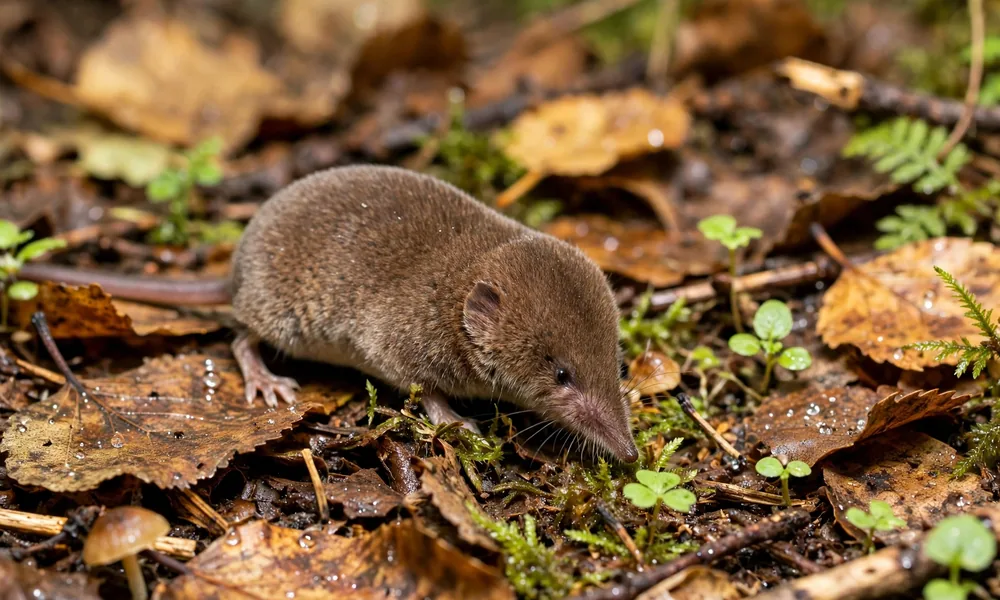
The Etruscan shrew is the smallest mammal in the world by weight, at about 1.8 grams, with a body only 3 to 5 centimetres long. It lives in warm, dry country around the Mediterranean, from southern Europe through North Africa to Asia, hunting insects and spiders among stones and dry grass. The masked shrew is the common shrew of North America, living from Alaska and Canada down through the northern United States in forests, meadows and marshes. It is about 9 centimetres long, with brown fur and a pale belly, and it hunts insects, worms and snails in the leaf litter.
The northern short-tailed shrew lives across eastern North America, from Canada to the southern United States, in forests, fields and gardens. It is about 12 centimetres long, with dark grey fur and a short tail, and it is one of the few venomous mammals in the world. Its venomous saliva paralyses insects, worms and small frogs, which it stores alive in its burrow. The Asian house shrew, the largest here at about 20 centimetres long, lives across South and South-East Asia, often in and around houses, barns and gardens, hunting insects, cockroaches and small lizards. The greater white-toothed shrew, about 13 centimetres long, lives across Europe, North Africa and western Asia in gardens and farmland.
How shrews hunt and live
A shrew hunts by smell, touch and hearing, because its eyesight is poor. It pushes its long snout into leaf litter and soil, sweeping its whiskers from side to side, and follows the scent of an earthworm or a beetle through the dark. When it finds prey, it seizes it with sharp teeth and eats it on the spot, because a shrew cannot afford to wait. A single shrew can eat its own body weight in food in a day, and if it goes without food for more than a few hours it can starve, so it hunts day and night, sleeping only in short bursts between meals.
Some shrews hunt in ways no other small mammal can match. A few species, including the common shrew, make high-pitched squeaks and listen for the echoes, a simple form of echolocation that helps them find their way in dark tunnels and dense cover. Venomous shrews, such as the northern short-tailed shrew, bite their prey and let the venom do the work, paralysing worms and insects to store alive in a hidden cache. Shrews are solitary and fiercely territorial, marking the ground with scent from glands on their flanks. In winter, the common shrew’s body, skull and even brain shrink, so it needs less food to survive the cold, then grow again in spring, a trick known as Dehnel’s phenomenon.
Where shrews live
Shrews live almost everywhere on land, from the Arctic tundra to tropical forests, in every habitat that holds damp soil and small prey. They favour leaf litter, hedgerows, woodland floors, riverbanks, marshes and gardens, and shelter in burrows, under logs and stones, in compost heaps and in the runs of voles and mice. The forest animals of the woodland floor include shrews, which hunt among the fallen leaves, and the nocturnal animals of the garden include shrews that are out hunting long after dark. Water shrews live along streams and ponds, Asian house shrews live in and around human homes, and Etruscan shrews live in dry, stony country.
| Species | Where it lives | Best-known food | Length |
|---|---|---|---|
| Common shrew | Europe to Siberia | Insects, worms, slugs, snails | 0.10 metres |
| Pygmy shrew | Europe | Tiny insects, spiders, woodlice | 0.08 metres |
| Water shrew | Europe and northern Asia | Water snails, larvae, small fish | 0.14 metres |
| Etruscan shrew | Mediterranean, North Africa, Asia | Insects, spiders | 0.07 metres |
| Masked shrew | Alaska, Canada, northern USA | Insects, worms, snails | 0.09 metres |
| Northern short-tailed shrew | Eastern North America | Insects, worms, frogs | 0.12 metres |
| Asian house shrew | South and South-East Asia | Insects, cockroaches, lizards | 0.20 metres |
| Greater white-toothed shrew | Europe, North Africa, western Asia | Insects, worms, slugs | 0.13 metres |
Best seasons for shrew watching
Spring and summer are the best seasons for shrew watching, when shrews are at their busiest and young shrews leave the nest to hunt for themselves. Look in damp leaf litter, under logs and stones, and along hedgerows at dawn and dusk, when shrews are most active. A shrew moves in quick bursts, pausing to sniff the air with its snout raised, and it is gone in a moment, so watch quietly and be patient.
Autumn is a good season too, when shrews feed hard before winter and are often seen in gardens and compost heaps. In winter, shrews are much harder to find, because they stay under the leaf litter and snow. The best sign of a shrew at any time of year is its tiny, narrow tracks in soft mud, and the small holes it leaves in the leaf litter where it has been digging for worms.
Staying safe around shrews
Shrews are wild animals, and they deserve respect. Never try to catch a shrew, never corner one in a shed or under a log, and never handle one with bare hands. A shrew is small, but it is a fierce fighter when trapped, and it has sharp teeth that can give a painful bite. The venom of the northern short-tailed shrew is not dangerous to people, but its bite can still hurt and may cause swelling, so keep your distance. Keep cats indoors at dawn and dusk, because cats kill many shrews. If you find a young shrew alone, leave it where it is.
Shrew watching checklist
- Look in damp leaf litter, under logs and stones, and along hedgerows.
- Watch for quick movements in the leaves and a long snout raised to sniff the air.
- Check soft mud for tiny, narrow shrew tracks and small holes dug in the leaf litter.
- Listen for faint, high-pitched squeaks in dense cover near streams and ponds.
- Never corner a shrew or handle one with bare hands, and keep cats indoors at dawn and dusk.
- Leave no trace: take your rubbish home and replace any log or stone you lift.
Frequently asked questions
How many shrew species are there?
There are about 400 shrew species in the family Soricidae, living on every continent except Australia and Antarctica. The table above shows eight of the best known.
How is this guide different from the mole species guide?
This guide covers only the shrews of the family Soricidae, from the common shrew to the Etruscan shrew, and how they hunt above ground in leaf litter. The mole species guide covers moles, close cousins of shrews that live almost entirely underground, digging tunnels with broad, spade-like front feet.
What is the smallest shrew species?
The Etruscan shrew is the smallest shrew, and the smallest mammal in the world by weight. It weighs about 1.8 grams, less than a coin, and its body is only 3 to 5 centimetres long, yet it eats nearly its own weight in food every day.
Are shrews venomous?
Some shrews are venomous, including the northern short-tailed shrew of North America and the Eurasian water shrew. Their saliva carries a venom that paralyses insects, worms and small frogs, which the shrew stores alive in its burrow. The venom is not dangerous to people, but a bite can hurt, so never handle a shrew with bare hands.
Are shrews rodents?
No, shrews are not rodents, even though they look like mice. Shrews are insectivores, close cousins of moles and hedgehogs, eating insects, worms and snails rather than seeds and grain. You can tell a shrew from a mouse by its long pointed snout, its tiny eyes and its sharp, pointed teeth, made for gripping prey rather than gnawing.
Where is the best place to see a shrew?
The best place to see a shrew is a damp garden, hedgerow or woodland edge at dawn or dusk, where leaf litter holds insects and worms. Lift a log or a stone gently and watch for quick movements in the leaves. Be patient and quiet, because a shrew is quick, shy and gone in a moment.
Conclusion
Shrew species, all about 400 of them, are the small, tireless hunters of the animal world: common shrews in the leaf litter, water shrews diving in streams, Etruscan shrews weighing less than a coin, and short-tailed shrews hunting with venom.
The next step is to walk a hedgerow at dawn, lift a log gently and look for a quick brown shape in the leaves, and remember that the smallest hunter in the garden eats its own weight in food every day.