Lemming species are the small, round-bodied rodents of the far north, and there are about 20 lemming species in the tribe Lemmini. If you are wondering which lemming species exist, why their numbers rise and crash so sharply, and whether lemmings really jump off cliffs, the short answer is this: lemmings are hardy plant-eaters that breed fast in good years and crash when food runs out, they survive winter by living and feeding under the snow, and they do not deliberately jump off cliffs, a story that came from a staged scene in a 1958 Disney film.
Key takeaways
- There are about 20 lemming species in the tribe Lemmini, across four genera: Lemmus, Dicrostonyx, Myopus and Synaptomys.
- The best-known are the Norway, brown, collared, Siberian brown and wood lemmings.
- Lemming numbers boom and bust in cycles of three to five years, driven by food, predators and winter conditions.
- Lemmings do not deliberately jump off cliffs; that myth came from a staged scene in a 1958 Disney film.
- Lemmings stay active all winter, tunnelling and feeding under the snow.
What makes a lemming a lemming
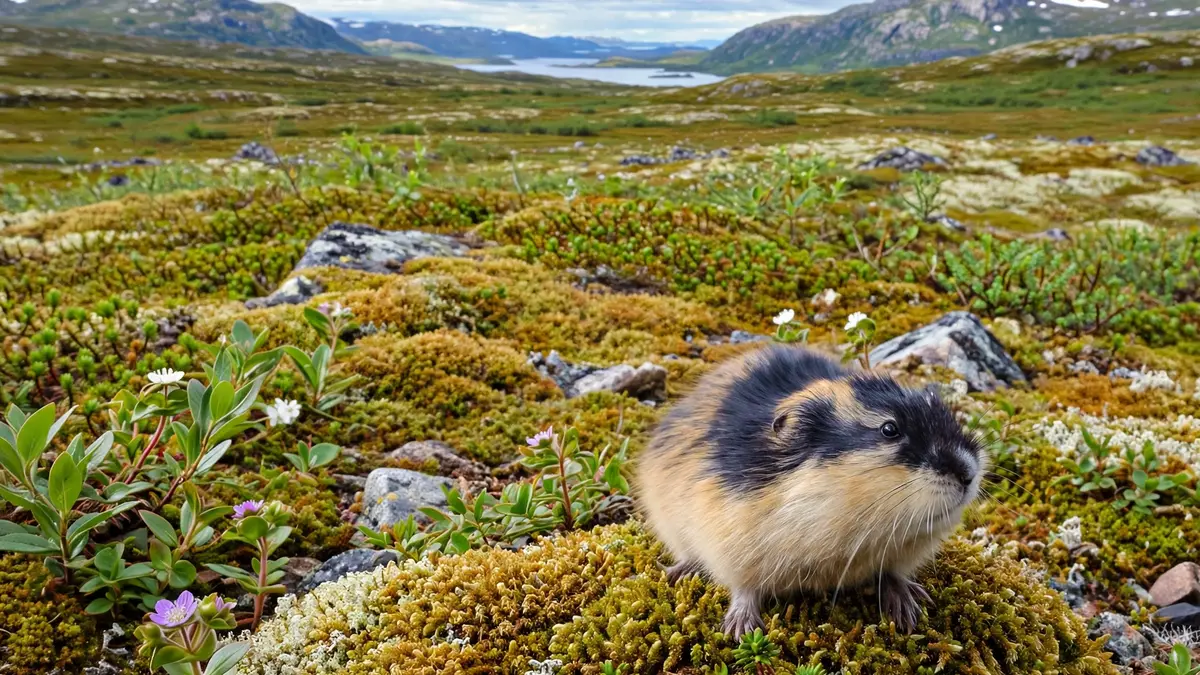
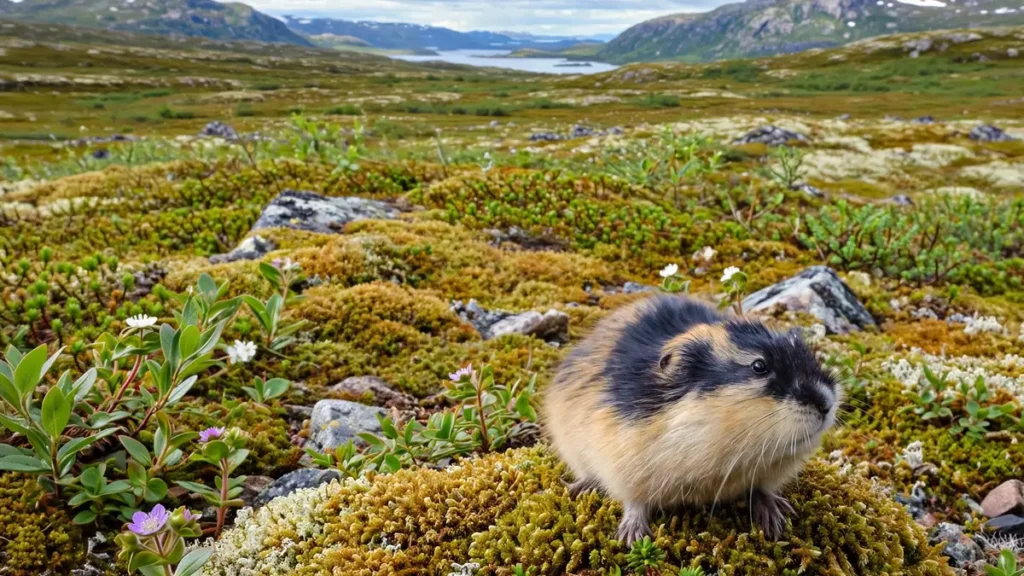
A lemming is a small, chunky rodent built for life in cold country. Its body is short and round, its head is blunt, its ears are small and hidden in its fur, and its tail is very short. Its legs are short and strong, with claws made for digging through soil, moss and snow. Most lemmings are brown or grey, which hides them among the tundra plants, but the Norway lemming breaks the rule, with bold black and yellow markings that warn predators it will fight back rather than run.
Lemmings are plant-eaters, tuned for a tough diet of grasses, sedges, mosses, lichens, leaves, shoots and roots, including coarse tundra plants many other animals cannot use. Their front teeth grow throughout their lives, because constant gnawing wears them down. A lemming is active day and night, in short bursts of feeding and resting, and it does not hibernate, even in the darkest Arctic winter.
What sets lemmings apart is how fast they breed and how sharply their numbers change. A female can breed in her first summer, sometimes when she is only a few weeks old, and raise several litters a year, each with five or six young. In a good year, numbers can rise tenfold or more, then crash just as fast when food runs short and predators gather.
The lemmings of the world
The Norway lemming is the most famous of all lemming species, living in the mountains and tundra of Norway, Sweden and Finland. It is about 15 centimetres long, with bold black, yellow and brown fur no other lemming shares, and it is famous for its fearless temper. When threatened, it stands its ground, squeaks loudly and may even jump at a fox or a dog.
The brown lemming lives across the Arctic tundra of Alaska and northern Canada, and it is one of the most important animals of the north. It is about 15 centimetres long, with soft brown fur above and a paler belly, and it feeds on grasses and sedges in the wet tundra. In summer it is the main food of snowy owls, Arctic foxes and weasels, whose breeding success rises and falls with its cycle.

The collared lemming lives further north than any other lemming, across the high Arctic islands of Canada and Greenland, and it is the only lemming that turns white in winter. In summer it is grey-brown with a dark stripe down its back and a pale collar across its chest; in winter its coat turns pure white so it blends with the snow. It digs burrows in dry, stony ground and eats Arctic willow and saxifrage.
The Siberian brown lemming lives across the tundra of northern Russia and Siberia, from the White Sea to the far east, and it is close in looks and habits to the brown lemming of North America. It is about 14 centimetres long, with brown fur and a darker back, and it feeds on grasses and sedges in wet meadows and river valleys.
The wood lemming lives in the forests of northern Europe and Siberia, from Norway and Sweden through Finland and Russia, and it is the only lemming that prefers forest to open tundra. It is about 13 centimetres long, with dark grey fur and a paler belly, and it feeds mainly on mosses in damp spruce and birch forest. It is shy and rarely seen, living under moss and fallen logs.
The northern and southern bog lemmings live in North America, and they are the only lemmings in the genus Synaptomys. The northern bog lemming lives in wet meadows and bogs in Canada and Alaska, while the southern bog lemming lives further south, in marshes and damp grassland from Canada down through the eastern United States. Both are about 13 centimetres long, with dark brown fur, and both feed on grasses, sedges and other wetland plants. The Amur lemming, about 13 centimetres long, lives in larch forest and mountain tundra in the far east of Siberia. Together, these eight species show how far lemmings have spread, from the high Arctic islands to the marshes of the eastern United States.
How lemmings live
A lemming lives by eating often and breeding fast. It feeds in short bursts through the day and night, cutting grasses and sedges with its sharp front teeth. In summer it digs shallow burrows with nesting chambers lined with dry grass and moss, and it builds runways through the vegetation, narrow paths it uses again and again. In winter it moves under the snow, tunnelling through the soft layer at the bottom of the drifts.
The lemming cycle is the most famous part of lemming life. In a good year, lemmings breed through the summer and even under the snow in winter, and their numbers climb steeply. As numbers rise, food grows scarce and predators gather to feed on them. Then the population crashes, sometimes to a tiny fraction of its peak, and predators that depended on lemmings, such as snowy owls and Arctic foxes, raise few or no young that year. The crash is caused by hunger, disease and cold, not by lemmings throwing themselves off cliffs.
Among the predators of the north, lemmings are the prey that keeps the whole system fed. Snowy owls, Arctic foxes, weasels and skuas all depend on lemmings in peak years, and their own numbers follow the lemming cycle.
Where lemmings live
Lemmings live across the far north, in the Arctic and sub-Arctic lands of Europe, Asia and North America. They favour tundra, wet meadows, bogs and mountain slopes, and the wood lemming alone prefers the damp forests of the north. They den in burrows under the soil, under rocks and under the snow, seldom far from the low plants they eat. The tundra animals of the open north include several lemming species, and the Arctic animals of the high north include the collared lemming, which lives further north than almost any other land mammal. Like the mouse species of the wider world, lemmings are small rodents that thrive where bigger animals cannot.
| Species | Where it lives | Best-known food | Length |
|---|---|---|---|
| Norway lemming | Mountains of Norway, Sweden and Finland | Grasses, sedges, mosses | 0.15 metres |
| Brown lemming | Arctic tundra of Alaska and northern Canada | Grasses, sedges | 0.15 metres |
| Collared lemming | High Arctic islands of Canada and Greenland | Arctic willow, saxifrage | 0.14 metres |
| Siberian brown lemming | Tundra of northern Russia and Siberia | Grasses, sedges | 0.14 metres |
| Wood lemming | Forests of northern Europe and Siberia | Mosses, grasses | 0.13 metres |
| Amur lemming | Far eastern Siberia, Amur region | Grasses, sedges, mosses | 0.13 metres |
| Northern bog lemming | Wet meadows and bogs of Canada and Alaska | Grasses, sedges | 0.13 metres |
| Southern bog lemming | Marshes of Canada and eastern United States | Grasses, sedges, wetland plants | 0.13 metres |
Best seasons for lemming watching
Summer is the finest season for lemming watching, when the tundra is green, the lemmings are active in daylight, and their runways show clearly through the moss and grass. In a peak year, lemmings are easy to find in wet meadows and along stream banks, and a Norway lemming may even stand its ground and squeak at you.
In spring, the melting snow reveals the winter nests, round balls of dry grass built under the snow. In autumn, lemmings gather food and dig fresh burrows. Winter watching is harder, because lemmings live under the snow.
Staying safe around lemmings
Lemmings are wild animals, and they deserve respect. Never try to catch a lemming, never dig into a burrow, and never handle one with bare hands. A Norway lemming is famously bold and may bite if cornered, and any wild rodent can carry disease, so admire lemmings from a distance. Keep dogs on a lead near lemming ground. If you find a young lemming alone, leave it where it is, because its mother is almost certainly nearby.
Lemming watching checklist
- Look for runways through moss and grass, and small burrow entrances in wet meadows.
- Watch stream banks and wet tundra at dawn and dusk, when lemmings feed most.
- Listen for the loud squeak of a Norway lemming.
- Check melting snow in spring for round winter nests.
- Never corner a lemming, and keep dogs on a lead.
- Leave no trace: take your rubbish home and keep to marked paths.
Frequently asked questions
How many lemming species are there?
There are about 20 lemming species in the tribe Lemmini, across the genera Lemmus, Dicrostonyx, Myopus and Synaptomys. The table above shows eight of the best-known: the Norway, brown, collared, Siberian brown, wood, Amur and bog lemmings.
How is this guide different from the tundra animals guide?
This guide covers only the lemming species of the tribe Lemmini, from the Norway lemming to the southern bog lemming, with their cycles, winter life and the cliff myth explained in full. The tundra animals guide covers the whole community of the tundra, from reindeer and Arctic foxes to snowy owls.
Do lemmings really jump off cliffs?
No, lemmings do not deliberately jump off cliffs. The story came from a staged scene in the 1958 Disney film White Wilderness, in which lemmings were herded off a cliff by the film crew. In the wild, lemmings sometimes drown while swimming across streams and lakes in search of food in peak years.
Why do lemming numbers boom and bust?
Lemming numbers boom because lemmings breed very fast, with several litters a year, when food is plentiful and the winter is kind. They bust because food runs short, predators gather, and disease and cold take their toll, so the population can crash to a small fraction of its peak.
How do lemmings survive the Arctic winter?
Lemmings stay active all winter and do not hibernate. They live and feed in tunnels under the snow, eating grasses and mosses they reach by tunnelling down to the ground.
Where is the best place to see a lemming?
The best place to see a lemming is a wet meadow or stream bank on the tundra in summer, in a peak year of the cycle. In Scandinavia, look for the boldly coloured Norway lemming in mountain tundra, and watch for its runways through the moss and its loud squeak when it stands its ground.
Conclusion
Lemming species, about 20 of them, are the small, hardy plant-eaters of the far north: Norway lemmings standing their ground in bright colours, brown lemmings feeding the owls and foxes of the tundra, and collared lemmings turning white in the high Arctic.
The next step is to walk a wet tundra meadow in summer, watch the moss for a small brown shape moving along a runway, and remember that the lemming in front of you is not heading for a cliff, but looking for its next meal.