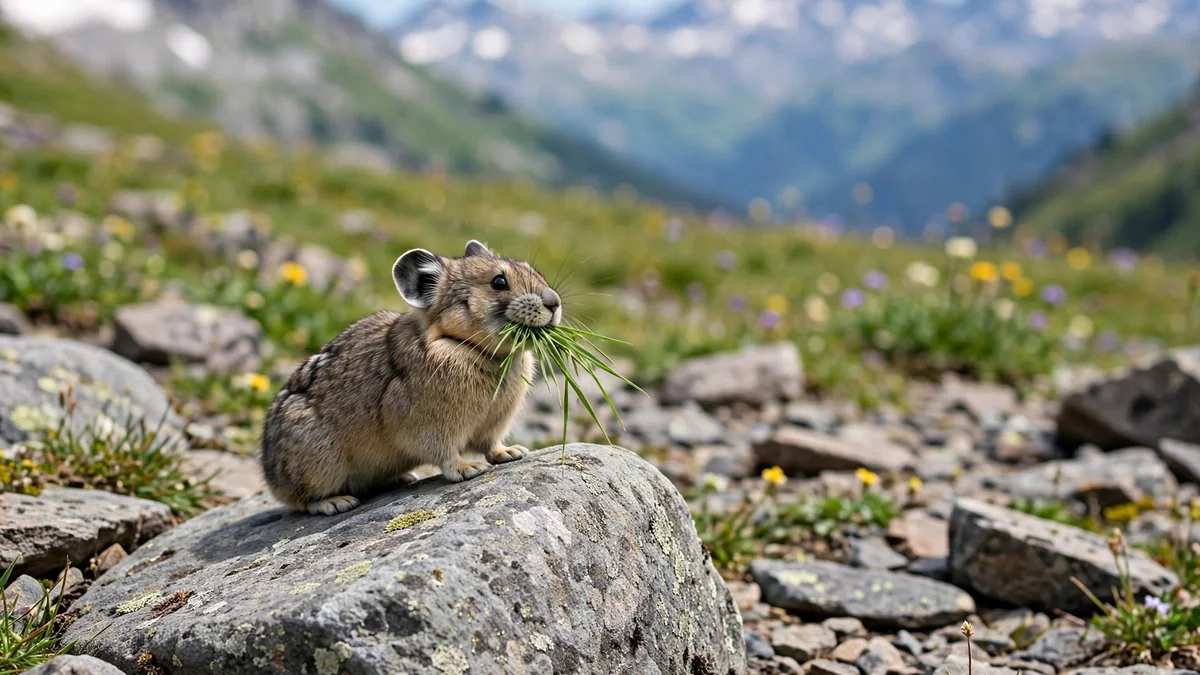
Pika species are the small, round-eared mountain mammals of the genus Ochotona, and there are about 30 pika species living across the cold mountains and steppes of Asia and North America. If you are wondering which pika species exist and how these tiny relatives of rabbits survive the winter without hibernating, the short answer is this: pikas spend the summer cutting grass and wildflowers, carry them mouthful by mouthful to a haypile hidden among the rocks, and live all winter on the stored food, sheltered in the gaps of the talus slope.
Key takeaways
- There are about 30 pika species in the genus Ochotona, living in the mountains and steppes of Asia and North America.
- Pikas are lagomorphs, close relatives of rabbits and hares, not rodents, and they have round ears and no visible tail.
- Pikas do not hibernate: they build haypiles of dried grass and flowers to eat through the long winter.
- The American pika is the best-known species, famous for its sharp warning call and its haypiles among the boulders.
- The Ili pika of China is one of the rarest mammals in the world, seen only a handful of times since it was found in 1983.
What makes a pika a pika
A pika is a small mammal built for life among the rocks. Its body is round and compact, about the size of a hamster, with short legs, a blunt nose and small round ears edged in white, and it has no visible tail at all. Its fur is soft and dense, grey-brown above and paler below, and it blends so well with lichen-covered boulders that a pika can sit still on a rock and vanish in plain sight.
Pikas are lagomorphs, which means they belong to the same order as rabbits and hares, and they are not rodents at all. Like rabbits, they have two pairs of upper front teeth and eat only plants. They are most active in the cool of the morning and the late afternoon, and they are famous for two things: the sharp, high call they give from the top of a boulder, and the haypile, a neat stack of dried plants they build through the summer and eat from all winter long.
The pikas of the world
The American pika is the best-known of all pika species, living in the mountains of western North America, from Canada down through the Rocky Mountains and the Sierra Nevada. It is about 15 to 20 centimetres long and weighs around 120 to 180 grams, with grey-brown fur, round ears and a loud, squeaking call. It lives among the boulders of the talus slope, gathering grass and wildflowers into a haypile that can weigh as much as the pika itself. The collared pika lives further north, in Alaska and the Yukon, and it is named for the pale grey band across its neck and shoulders. It is about the same size, and where the two meet, the collar is the clearest way to tell them apart.
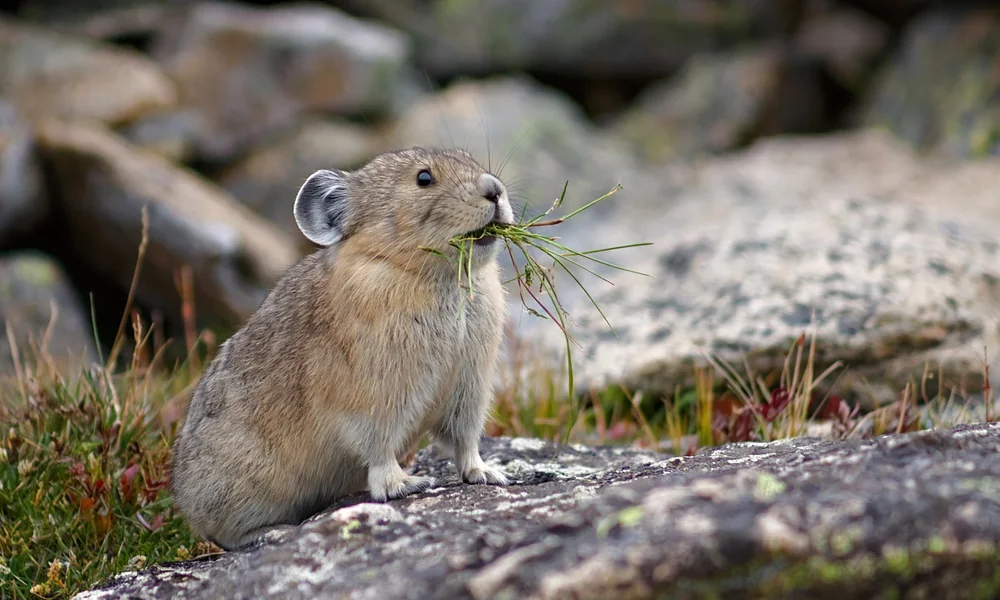
The plateau pika lives on the high Tibetan Plateau, at heights of 3,000 to 5,000 metres, in great colonies that dig burrows in the alpine meadows. It is about 14 to 20 centimetres long, with sandy brown fur, and its burrows shelter other animals. The large-eared pika lives even higher, in the Himalayas and the mountains of Central Asia, at heights of up to 6,000 metres, and it is named for its long ears, the longest of any pika. It is about 20 to 24 centimetres long, and it lives among the rocks and scree of the highest slopes, where few other mammals survive.
The Ili pika is the rarest of all pika species. It was found in 1983 in the Tianshan Mountains of north-west China, and it has been seen only a handful of times since. It is about 20 centimetres long, with a rusty forehead and large round ears, and it lives on bare rock faces at heights of around 3,000 metres. Hoffmann’s pika lives in the mountains of Mongolia, and it is about 15 to 20 centimetres long, with grey-brown fur. The steppe pika is the odd one out, because it lives on flat grassland rather than in the mountains, digging burrows in the open steppes of Eastern Europe and Asia. The northern pika lives in the far north, across Siberia and into Alaska, in rocky places at the edge of the tundra, and it is about 14 to 20 centimetres long, with thick grey fur for the long Arctic winter. Together, these eight show how far the pika family has spread.
How pikas live
A pika lives by the haypile. Through the summer it cuts grass, leaves and wildflowers with its sharp teeth, carries each mouthful back to a sheltered spot among the rocks, and lays it out in the sun to dry before stacking it into a neat pile. A single haypile can hold several kilograms of dried plants, and the pika guards it fiercely. The haypile is the pika’s winter larder, and it is the reason the pika does not need to hibernate: it stays awake all winter, tucked in the gaps between the boulders, eating from its store.
Pikas also live by the call. A pika sits on a high boulder and gives a short, sharp squeak, like a high-pitched whistle, to warn other pikas of a weasel, an eagle or a fox. Pikas rest in the shade during the heat of the day, because a pika can overheat quickly and cannot sweat. In winter the pika stays below the snow, in the warm gaps of the talus, and it ventures out only to feed from its haypile.
Where pikas live
Pikas live across the cold places of the northern world, in the mountains of Asia and North America, from the Himalayas and the Tibetan Plateau through Siberia to Alaska and the Rocky Mountains. They favour talus slopes, the jumbled fields of boulders at the foot of cliffs, where the gaps between the stones give them shelter and a safe place to store their haypiles. The mountain animals of these high places include the pika, which lives higher than almost any other small mammal, and the tundra animals of the far north include the northern pika, which survives at the edge of the Arctic. The desert animals of the cold, dry Tibetan Plateau include the plateau pika, which thrives in the high, treeless grassland.
| Species | Where it lives | Best-known food | Length |
|---|---|---|---|
| American pika | Mountains of western North America | Grasses, wildflowers | 0.15 to 0.20 metres |
| Collared pika | Alaska and the Yukon | Grasses, shrubs, flowers | 0.17 to 0.20 metres |
| Plateau pika | Tibetan Plateau, 3,000 to 5,000 metres | Grasses, sedges, herbs | 0.14 to 0.20 metres |
| Large-eared pika | Central Asia and the Himalayas | Grasses, leaves, flowers | 0.20 to 0.24 metres |
| Ili pika | Tianshan Mountains, China | Alpine plants, grasses | 0.20 metres |
| Hoffmann’s pika | Mountains of Mongolia | Grasses, herbs, shrubs | 0.15 to 0.20 metres |
| Steppe pika | Steppes of Eastern Europe and Central Asia | Grasses, herbs, roots | 0.15 to 0.20 metres |
| Northern pika | Siberia and Alaska, edge of the tundra | Grasses, leaves, berries | 0.14 to 0.20 metres |
Best seasons for pika watching
Summer is the finest season for pika watching, when pikas are at their busiest, cutting grass and carrying it to their haypiles in the morning and the late afternoon. A pika with a mouthful of grass is easy to spot as it hurries across the boulders.
Autumn is the best season to see a finished haypile, when the stack of dried plants is at its fullest and the pika is still adding to it before the snow comes. In winter, pikas stay hidden below the snow in the gaps between the boulders, and they are rarely seen. In spring, pikas come out to feed on the first new shoots.
Staying safe around pikas
Pikas are wild animals, and they deserve respect. Never try to catch a pika, never reach into the gaps between boulders where a pika may be hiding, and never handle one with bare hands. A pika is small and shy, and it will run from people, but it has sharp teeth and it can bite if it is cornered. Keep dogs on a lead near pika habitat, because a dog can kill a pika in a moment and can also disturb the whole colony. If you find a haypile, leave it alone, because it is the pika’s whole winter food store.
Pika watching checklist
- Look for talus slopes, the jumbled boulder fields at the foot of cliffs, where pikas live and store their haypiles.
- Watch at dawn and in the late afternoon, when pikas are most active and the mountain air is cool.
- Listen for the sharp, high warning call from the top of a boulder, which often gives a pika away before you see it.
- Look for a fresh haypile of green grass and flowers drying on a flat rock near the boulders.
- Bring binoculars, move slowly and quietly, and never reach into the gaps between boulders.
- Leave no trace: take your rubbish home, keep dogs on a lead, and never disturb a haypile.
Frequently asked questions
How many pika species are there?
There are about 30 pika species in the genus Ochotona, living across the mountains and steppes of Asia and North America. The table above shows eight of the best-known: the American, collared, plateau, large-eared, Ili, Hoffmann’s, steppe and northern pikas.
How is this guide different from the rabbit species guide?
This guide covers only the pika species of the genus Ochotona, small round-eared mountain mammals that live among boulders, build haypiles and do not hibernate. The rabbit species guide covers rabbits and hares, which live in burrows and meadows rather than on rocky mountain slopes.
Are pikas rodents?
No, pikas are not rodents. Pikas are lagomorphs, close relatives of rabbits and hares, in the order Lagomorpha. They have two pairs of upper front teeth, one pair tucked behind the other, while rodents have only one pair.
Why do pikas make haypiles?
Pikas make haypiles because they do not hibernate, and they need food all through the winter. Through the summer a pika cuts grass, leaves and wildflowers, dries them in the sun and stacks them into a haypile. In winter it stays in the gaps of the talus slope and eats from its store.
What does a pika call sound like?
A pika call is a short, sharp squeak, like a high-pitched whistle, given from the top of a boulder. The call warns other pikas of a predator, such as a weasel, an eagle or a fox, and it also marks the caller’s territory.
Where is the best place to see a pika?
The best place to see a pika is a talus slope in the mountains, a jumbled field of boulders at the foot of a cliff, in the morning or the late afternoon. Listen for the sharp warning call, then look for a small grey-brown shape sitting on a high rock, or a pika hurrying across the boulders with a mouthful of grass.
Conclusion
Pika species, all about 30 of them, are the small, round-eared gardeners of the high mountains: American pikas stacking haypiles among the boulders, plateau pikas digging burrows on the roof of the world, and Ili pikas hiding on the bare rock faces of China.
The next step is to walk a mountain trail at dawn, listen for the sharp squeak from the top of a boulder, and remember that the tiny animal calling from the rocks has already gathered its whole winter dinner, one mouthful of grass at a time.