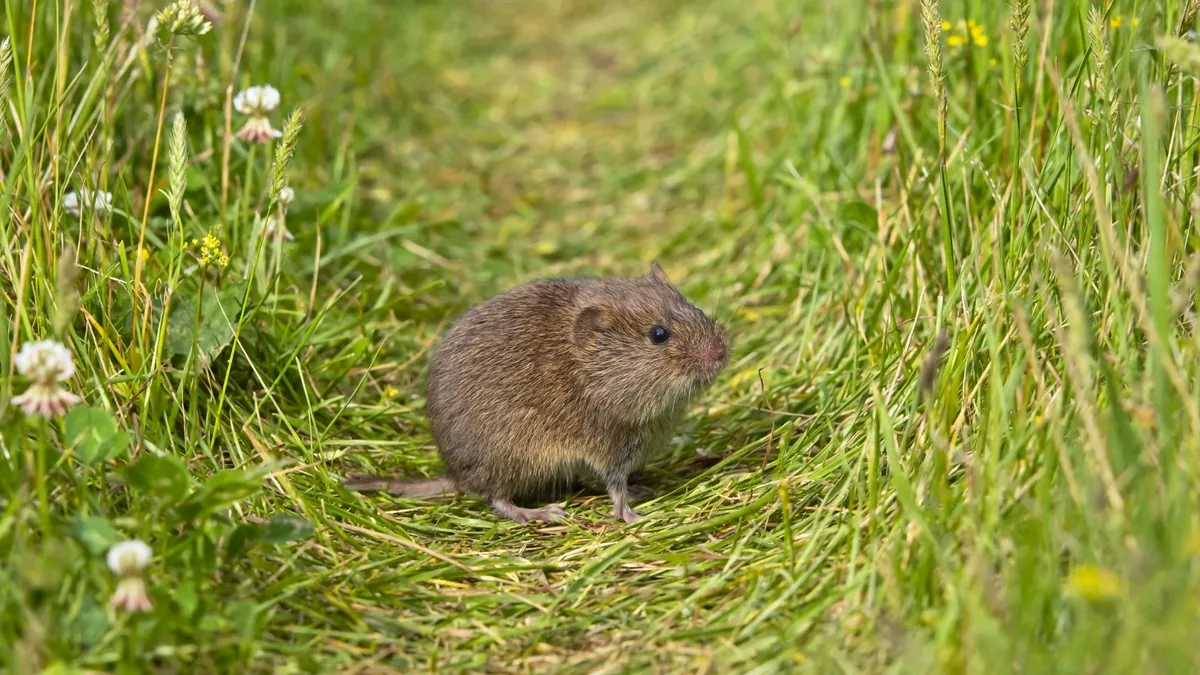
Vole species are the small, round-bodied rodents that tunnel through grass along hidden runways, and there are about 150 vole species in the subfamily Arvicolinae, living across Europe, Asia and North America. If you are wondering which vole species exist and how to tell a vole from a mouse, the short answer is this: voles are short-tailed, blunt-faced rodents with small ears and stocky bodies, and they live in grass runways, burrows and riverbanks, eating grass, roots and seeds, while owls, kestrels, foxes and weasels hunt them every day.
Key takeaways
- About 150 vole species in the subfamily Arvicolinae live across Europe, Asia and North America.
- Voles are not mice: shorter tails, blunter faces, smaller ears and stockier bodies.
- The best-known voles are the field, bank, water, tundra, prairie, meadow, common and snow voles.
- Voles live in grass runways and burrows, eating grass, roots, bark and seeds, and they breed quickly.
- Voles are one of the most important foods in the wild, for owls, kestrels, foxes, stoats and weasels.
What makes a vole a vole
A vole is a small rodent built for life in the grass, with a short, stocky body, a blunt, rounded head, small ears often hidden in its fur, and a short tail, usually less than half its body length. Its fur is thick and soft, grey-brown above and paler below, and its short legs make it scurry rather than leap. Its teeth grow all through its life, worn down by constant gnawing.
Voles are often confused with mice, but the differences are clear once you know them. A mouse has a long, thin tail, a pointed face, large ears and a slim body, while a vole is short-tailed, blunt-faced, small-eared and stocky. Voles also behave differently: they live in grass runways, the neat paths they cut through long grass, and they spend much of their time underground in burrows. Hamsters are close relatives of voles, but they are larger, with cheek pouches for carrying food, while voles eat where they find it.
The voles of the world
The field vole, also called the short-tailed vole, is the most common vole in Britain and northern Europe. It is about 12 centimetres long, with grey-brown fur, and it lives in rough grassland, moorland and young woodland, where it cuts runways through the grass. Field voles breed quickly, with several litters a year, and they are the main food of barn owls, kestrels and weasels.
The bank vole is the reddish vole of woodlands and hedgerows across Europe. It is about 11 centimetres long, with warm chestnut-brown fur and a paler belly, and it climbs low bushes to eat buds, berries, nuts and seeds. Bank voles live in woodland, gardens and hedgerows, storing food in their burrows for winter.

The water vole is the largest vole in Britain and Europe, about 20 centimetres long, with rich brown fur. It lives along slow rivers, streams and ponds, digging burrows into the banks and eating water plants and reeds. Once common across Britain, it has become rare, because its riverside habitat has been drained and built over, and the escaped American mink hunts it along the waterways.
The tundra vole, also called the root vole, lives in the cold north, across northern Europe, Siberia and Alaska. About 14 centimetres long, with dark brown fur, it lives in wet tundra, marshes and river valleys, eating roots, sedges and grasses. In winter it tunnels under the snow, feeding on roots and bark.
The prairie vole lives in the grasslands of central North America. It is about 14 centimetres long, with grey-brown fur, and it is famous because prairie voles form lasting pairs and both parents care for the young, which is rare among rodents. The meadow vole is the common vole of North American fields and marshes, about 15 centimetres long, and it lives in grass runways like the field vole of Europe.
The common vole lives across Europe and western Asia, in fields, meadows and farmland, and it is about 11 centimetres long. Its numbers rise and fall in great cycles, with huge peaks every few years, followed by sudden crashes when predators and disease catch up. The snow vole lives high in the mountains of Europe and Asia, at heights of up to 4,000 metres. It is about 12 centimetres long, with soft grey fur and a long tail for a vole, and it lives among rocks and scree, eating grasses and alpine plants. Together, these eight show how far the vole family has spread, from Arctic tundra to mountain peaks, riverbanks and prairie grassland.
How voles live
A vole lives most of its life in the grass, among runways and burrows. It cuts neat paths through long grass and travels along them to its feeding places, burrow and nest. The burrow is a shallow network of tunnels, with a nest chamber lined with dry grass and several entrances hidden among the roots. A vole feeds, rests and grooms through the day, and it is active both day and night, though most often seen at dawn and dusk.
Voles eat mainly grass, roots, stems, bark, seeds and berries, and fallen fruit and nuts when they can find them. A vole eats a lot for its size, because its diet is low in energy, and it stores grass and roots in its burrow for winter. Voles breed quickly, with females producing several litters a year, each of four to eight young, and the young leave the nest after only three weeks. This fast breeding is their defence: so many hunters eat voles that only a high birth rate keeps their numbers up. Among the predators of the animal world, owls, kestrels, foxes, stoats and weasels all depend on voles, and when vole numbers fall, their hunters go hungry too.
Where voles live
Voles live across the northern half of the world, in Europe, Asia and North America, wherever there is grass, cover and food. They favour meadows, rough grassland, moorland, woodland edges, riverbanks and farmland, living in burrows, grass runways and, for the water vole, bankside tunnels. The forest animals of woodland edges include the bank vole, which climbs among the roots and bushes, and the nocturnal animals of the countryside include voles that feed through the night, rustling in the grass while owls hunt above them.
| Species | Where it lives | Best-known food | Length |
|---|---|---|---|
| Field vole | Britain and northern Europe | Grass, roots, seeds | 0.12 metres |
| Bank vole | Woodlands of Europe | Buds, berries, nuts, seeds | 0.11 metres |
| Water vole | Rivers and ponds of Europe | Water plants, reeds, grasses | 0.20 metres |
| Tundra vole | Northern Europe, Siberia, Alaska | Roots, sedges, grasses | 0.14 metres |
| Prairie vole | Grasslands of North America | Grasses, roots, seeds | 0.14 metres |
| Meadow vole | Fields and marshes of North America | Grasses, roots, seeds | 0.15 metres |
| Common vole | Europe and western Asia | Grass, roots, seeds | 0.11 metres |
| Snow vole | Mountains of Europe and Asia | Grasses, roots, alpine plants | 0.12 metres |
Best seasons for vole watching
Spring and summer are best for vole watching, when the grass is long and voles are busy feeding and raising their young. Look for their runways, the neat paths worn through the grass, and watch quietly at dawn and dusk. A vole is quick and shy, but if you sit still near a runway, you may see a small brown shape darting along the path.
Autumn is also good, when voles gather food for winter and their runways show in the thinning grass. In winter, voles tunnel under the snow, leaving tracks and small holes where they have come up to feed. The water vole is best seen in spring and summer, eating water plants on a riverbank, often diving in with a loud plop.
Staying safe around voles
Never try to catch a vole, never dig into a burrow, and never handle one with bare hands. A vole is small, but it has sharp teeth and can bite if frightened, and wild rodents can carry diseases that pass to people. Keep dogs on a lead near vole habitat, and leave the animal a clear path to escape. If you find a young vole alone, leave it where it is: its mother is almost certainly nearby.
Vole watching checklist
- Look for grass runways, neat worn paths through long grass.
- Watch meadow edges, riverbanks and hedgerows at dawn and dusk, when voles feed.
- Listen for rustling in the grass, and look for a small brown shape darting along a runway.
- Check riverbanks for water vole burrows and neat piles of cut stems.
- Never dig into a burrow or handle a vole with bare hands, and keep dogs on a lead.
- Leave no trace: take your rubbish home and keep to marked paths.
Frequently asked questions
How many vole species are there?
About 150 vole species in the subfamily Arvicolinae live across Europe, Asia and North America. The table above shows eight of the best-known true voles: the field, bank, water, tundra, prairie, meadow, common and snow voles. Many more live in Asia and North America, in mountains, forests and Arctic tundra.
How is this guide different from the mouse species guide?
This guide covers only the vole species of the subfamily Arvicolinae. The mouse species guide covers the true mice, which have long tails, pointed faces and large ears, and which climb, live in houses and barns, and travel in the open. Voles are not mice: they have shorter tails, blunter faces, smaller ears and stockier bodies, and they live in grass runways and burrows.
What is the difference between a vole and a mouse?
A vole has a short tail, a blunt face, small ears and a stocky body, while a mouse has a long, thin tail, a pointed face, large ears and a slim body. Voles live in grass runways and burrows and eat grass, roots and bark, while mice are more likely to climb, live in houses and barns, and eat seeds and grain. A tail shorter than half the body almost certainly means a vole.
What do voles eat?
Voles eat mainly grass, roots, stems, bark, seeds and berries, and the water vole eats water plants and reeds. Bank voles also eat buds, nuts and fallen fruit. A vole eats a lot for its size, because its diet is low in energy, and it stores food in its burrow for winter.
Are voles dangerous to people?
Voles are not dangerous to people, and they run away rather than attack. A cornered vole can bite, so never try to catch or handle one, and never dig into a burrow. Voles can carry diseases that pass to people, so wash your hands after touching anything in vole habitat. They are far more useful than harmful, because they feed owls, kestrels and foxes, and their burrowing turns over the soil.
Where is the best place to see a vole?
The best place to see a vole is a meadow edge, riverbank or hedgerow at dawn or dusk, where long grass hides their runways. Look for neat, worn paths through the grass, and sit quietly nearby. In spring and summer, you may see a field vole nibbling a grass stem, or a water vole eating plants on a riverbank.
Conclusion
Vole species, all about 150 of them, are the small, round-bodied rodents of the grass world: field voles cutting runways through meadows, bank voles climbing in woodlands, water voles digging burrows into riverbanks.
The next step is to walk a meadow edge at dawn, watch for a quick brown shape darting along a runway, and remember that the smallest animals in the field feed the owls, kestrels and foxes above them.