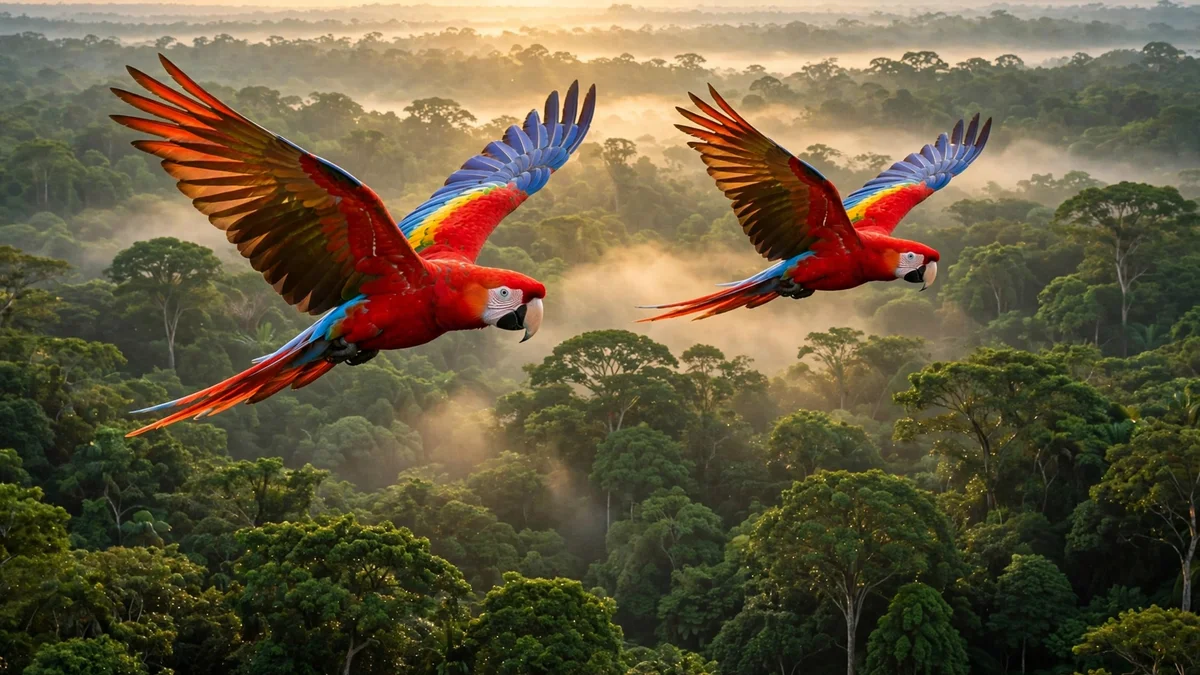
The scarlet macaw species is a single species, Ara macao, a large red, yellow and blue parrot of the American rainforest, and one of the most colourful birds on Earth, with wings that flash like flags as it flies over the canopy. If you are asking how many scarlet macaw species there are, the answer is one: there is only one scarlet macaw species in the world, and every scarlet macaw alive today belongs to it.
The scarlet macaw belongs to the parrot family, Psittacidae, and it lives in the humid evergreen forests of Central and South America, from Mexico to Brazil, where it flies in pairs over the canopy. Its scarlet body, its yellow and blue wings and its long tail make it one of the most recognisable birds on Earth.
Key takeaways
- There is only one scarlet macaw species, Ara macao, with two recognised subspecies in Central and South America.
- Scarlet macaws are among the largest parrots, reaching 81 to 96 centimetres long with a wingspan of about a metre.
- Scarlet macaws visit clay licks, eating mineral-rich clay that neutralises the toxins in the seeds they eat.
- Scarlet macaws pair for life, and the pair stays together all year, flying, feeding and roosting side by side.
- Scarlet macaws are listed as Least Concern, but their numbers are falling as the forest is cleared and birds are trapped.
What makes a scarlet macaw a scarlet macaw
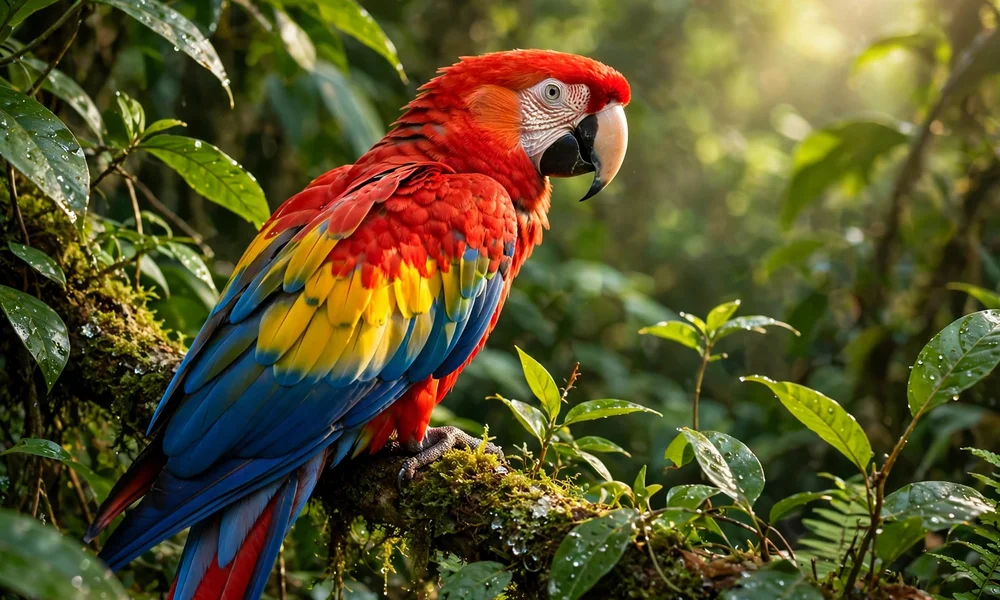
A scarlet macaw is a large parrot with a scarlet red body, yellow and blue wings, a long red and blue tail and a large pale beak with a black lower half, and it measures roughly 81 to 96 centimetres long and usually weighs about 1 kilogramme. The male and female look alike, and both have bare white skin around the eyes, patterned with tiny lines of red feathers.
The colours define the scarlet macaw: red, yellow and blue feathers that flash in the sun as the bird flies, and the colours may warn predators that the bird is strong and hard to catch, or help the pair recognise each other in the canopy. Its beak is one of the strongest of any bird, able to crack the hardest nuts, and its feet have two toes pointing forwards and two backwards, which grip branches and hold food.
The scarlet macaw species and their relatives
Ara macao is the only scarlet macaw species, and it is split into two recognised subspecies. The South American subspecies lives from the Amazon to Brazil, Peru and Bolivia, while the Central American subspecies lives from Mexico to Nicaragua and Costa Rica, and it is slightly larger with a wider yellow band on its wings. The two subspecies are the same species, and they interbreed where their ranges meet in Panama.
The blue-and-yellow macaw is the scarlet macaw’s most familiar relative, a blue and gold parrot that lives in the same forests, while the green-winged macaw is a larger red macaw with green wings and a red face. The hyacinth macaw is the largest parrot in the world, a deep blue bird of the Pantanal, and the military macaw is a green macaw of the mountains of Mexico and the Andes. The great green macaw is a green and red macaw of Central America, and the blue-throated macaw is a small blue and yellow macaw that lives only in Bolivia.
| Type | Animal | Where it lives | Best-known food | Length or Weight |
|---|---|---|---|---|
| Species | Scarlet macaw (Ara macao) | Central and South American forests | Fruit, nuts and seeds | 81 to 96 cm, about 1 kg |
| Close relative | Blue-and-yellow macaw | Amazon and Orinoco basins | Fruit, nuts and seeds | 76 to 86 cm, 900 g to 1.3 kg |
| Close relative | Green-winged macaw | South American forests | Fruit, nuts and seeds | 90 to 95 cm, 1.2 to 1.7 kg |
| Close relative | Hyacinth macaw | Pantanal and Amazon basin | Palm nuts | 100 cm, 1.2 to 1.7 kg |
| Close relative | Military macaw | Mexico and the Andes | Fruit, nuts and seeds | 70 to 80 cm, 900 g to 1.1 kg |
| Close relative | Great green macaw | Central American forests | Almonds and seeds | 85 to 90 cm, 1.2 to 1.4 kg |
| Close relative | Blue-throated macaw | Savannas of Bolivia | Palm nuts and fruit | 85 cm, 800 g to 1 kg |
How scarlet macaws live
Scarlet macaws are creatures of the rainforest canopy. A scarlet macaw lives in a pair, flying, feeding and roosting with its mate all year, and the pairs gather in small flocks at clay licks and fruiting trees. Like other Amazon animals, it follows the fruiting seasons, moving through the forest as different trees come into fruit.
Fruit makes up most of the diet, along with nuts, seeds, leaves, flowers and nectar, and a scarlet macaw eats by cracking nuts with its powerful beak and holding the kernel in its foot. It visits clay licks, eating mineral-rich clay that neutralises the toxins in the seeds it eats, and it gathers there in noisy groups of dozens of birds, one of the great wildlife sights of the Amazon.
Breeding happens in the dry season, when food is plentiful, and the pair nests in a tree cavity, often in a dead tree, laying 2 to 4 white eggs, of which usually only one or two chicks survive. Both parents incubate the eggs for about 25 days, and the chicks are born naked and blind, fed by both parents for about 90 days before they fledge. The young stay with their parents for a year or more, learning where the fruit trees and clay licks are. Scarlet macaws live for around 40 to 50 years in the wild, and up to 75 years in captivity.
Where scarlet macaws live
The scarlet macaw lives in the humid evergreen forests of Central and South America, from southern Mexico through Central America to the Amazon basin and the Atlantic forests of Brazil, and it is most common in the lowland rainforest, where fruiting trees are thickest. It is seen regularly in the Amazon of Peru and Brazil, in the Pantanal and in the forests of Costa Rica, where the birds return to the same clay licks each morning.
Rainforest is the key requirement. A scarlet macaw needs tall trees to nest in, fruiting trees to feed from and clay licks to visit, so it follows the fruit as it ripens, and when the forest is cleared the macaw has nowhere to live. In Central America the scarlet macaw has disappeared from much of its range, and it survives only in a few strongholds, including the Osa Peninsula in Costa Rica.
The species is listed as Least Concern, but its numbers are falling. The main pressures are the loss of rainforest to farming, ranching and logging, and trapping for the pet trade, which takes chicks from the nest and sells them for thousands of dollars.
Best seasons for scarlet macaw watching
There is no closed season, because scarlet macaws are active all year, but the best time to look for them depends on where you go. In Peru the best months are often the dry season, from about May to October, when the birds gather at the clay licks each morning. In Costa Rica the best months are often December to April, when the birds are breeding and easy to find near their nests.
Staying safe around scarlet macaws
A scarlet macaw is a wild bird with a powerful beak and sharp claws, and it can hurt a person, though macaws almost never attack people. Keep your distance, never approach a macaw nest, and never try to catch a macaw, because a frightened bird may bite hard enough to break a finger. If you see macaws feeding, stay on the path and watch with binoculars, because macaws that are disturbed may abandon their clay lick.
Scarlet macaw watching checklist
A little preparation turns a rainforest visit into a real chance of seeing a scarlet macaw, so pack for heat, humidity and long quiet hours.
- Binoculars with good low-light performance, for picking a red bird out of the green canopy.
- A camera with a long lens, because macaws should always be watched from a distance.
- Sun cream and a hat, because the best watching is in the bright morning sun.
- Water and snacks for long days, because the best sightings come after hours of waiting.
- A field guide to parrots, for telling a scarlet macaw from a green-winged at a glance.
- A plan to be out at dawn, when the macaws fly to the clay licks to feed.
- Patience and silence, because macaws are shy birds and a noisy group will send them away.
Frequently asked questions
How many scarlet macaw species are there?
There is one scarlet macaw species, Ara macao. It is split into two recognised subspecies, one in South America and one in Central America, but they are the same species. No second scarlet macaw species is recognised.
Why do scarlet macaws eat clay?
Scarlet macaws eat clay at clay licks because the mineral-rich clay neutralises the toxins in the seeds they eat, and because it supplies salt and minerals that are scarce in their diet. The birds gather at the licks in noisy flocks each morning, one of the great sights of the Amazon.
Do scarlet macaws mate for life?
Yes. Scarlet macaws pair for life, and the pair stays together all year, flying, feeding and roosting side by side. If one bird dies, the other may take years to find a new mate, and the pair raises its chicks together.
Can you keep a scarlet macaw as a pet?
No. A scarlet macaw is a wild bird that needs rainforest, eats fruit and nuts by the kilogramme, and is fully protected by international law, which bans the trade in wild-caught birds. Macaws in zoos need huge aviaries with trees and climbing frames, and they are not pets.
How is this guide different from the toucan species guide?
This guide covers the single scarlet macaw species, a red, yellow and blue parrot that pairs for life and visits clay licks in the American rainforest, while our toucan species guide covers more than forty toucan species, big-billed fruit eaters that live in the same rainforest canopy. The macaw cracks nuts with its beak and eats clay, and the toucan tosses fruit into the air with its hollow bill.
Are scarlet macaws endangered?
Scarlet macaws are listed as Least Concern, so they are not classed as endangered, but their numbers are falling. Between 20,000 and 50,000 mature birds remain in the wild, and the loss of rainforest and trapping for the pet trade are the main threats.
Conclusion
The scarlet macaw species shows how much colour one bird can hold: a single species of parrot, with scarlet, yellow and blue feathers, a beak that cracks the hardest nuts, and a life spent flying in pairs over the canopy of the American rainforest. It is one of the most colourful birds on Earth, and it has lived in the forests of Central and South America for millions of years.
If you go looking for one, go in the dry season to the clay licks of the Tambopata or the Osa Peninsula, go quietly, and go with patience. Watch a flock of scarlet macaws landing on the clay and you will understand why it has earned its place as the flying flag of the rainforest, and why keeping its forest matters most.