The quail species of the world are not one bird but a whole group, roughly 130 species, split between the New World quail of the Americas and the Old World quail of Europe, Asia, Africa and Australia. If you are asking how many quail species there are, the answer depends on how strictly you count them, and this guide covers the group as a whole.
On a quiet morning you can hear quail before you see them, a bobwhite whistling its own name from a fence post, or a covey of California quail chuckling as it hurries through the dry grass. Then the whole covey bursts into the air at your feet, wings whirring, and is gone before you can lift your binoculars.
Key takeaways
- Quail is a collective name for roughly 130 species, split between New World quail in the family Odontophoridae and Old World quail in the family Phasianidae.
- Quail are small, plump, short-tailed ground birds, usually 18 to 28 centimetres long, with mottled brown plumage that hides them among grass and leaf litter.
- Most quail live in coveys, small family groups that feed, roost and dust-bathe together.
- Quail eat mainly seeds and grain, with insects and green leaves in summer, and the common quail is the only migratory game bird in the world.
- Most quail species are Least Concern, but a few are in trouble, including the Endangered Manipur bush quail and the Critically Endangered Himalayan quail.
What makes a quail a quail
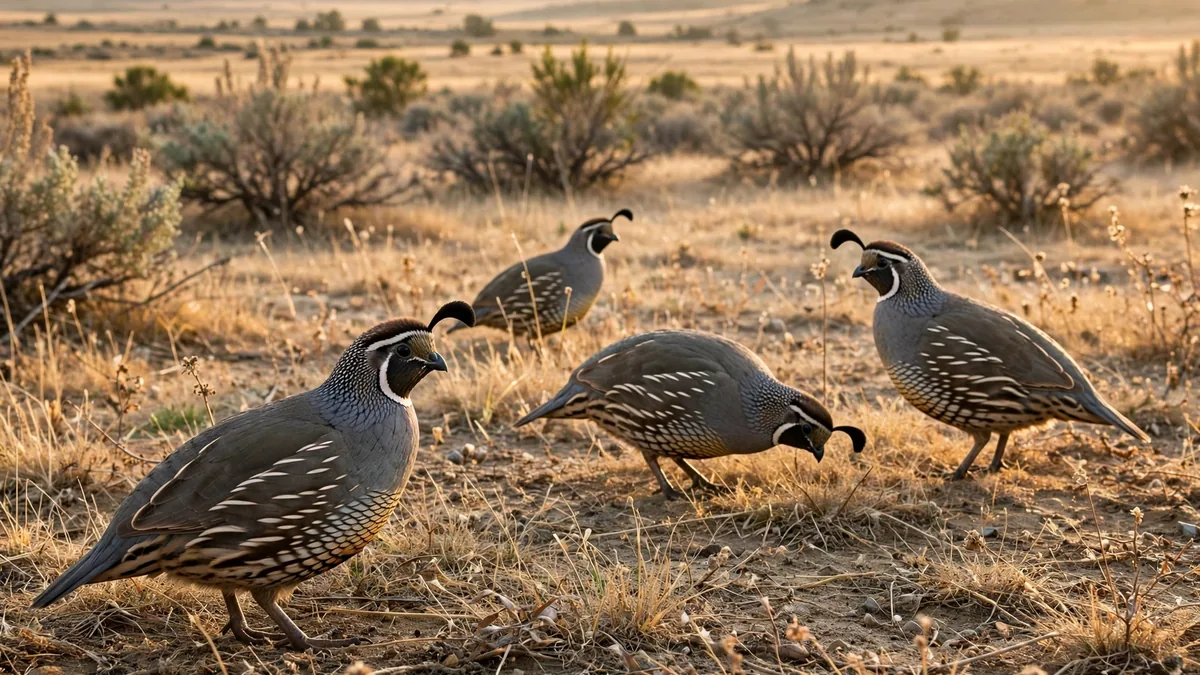
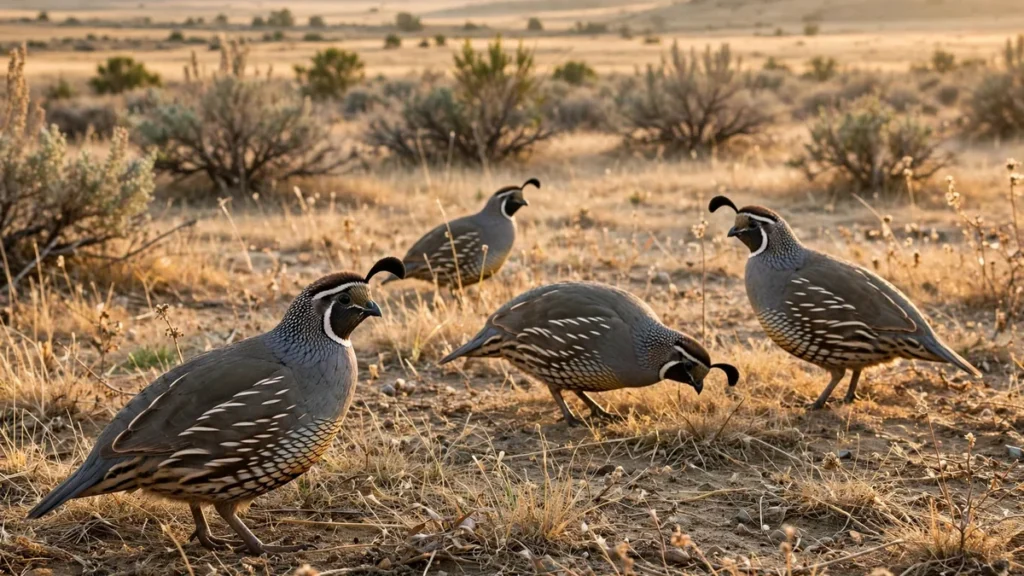
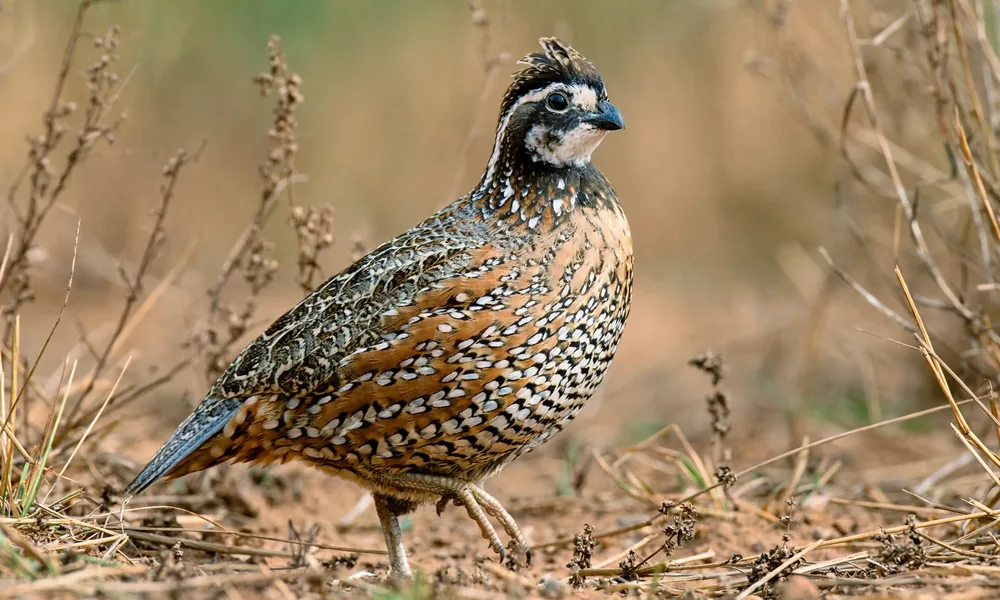
A quail is a small, plump, short-tailed game bird, usually 18 to 28 centimetres long and weighing 70 to 280 grammes, with a small head, a short bill and strong legs. Its plumage is mottled brown, buff, grey and white, a pattern that hides it among dry grass, fallen leaves and bare earth. Many species have a striking head pattern, such as the white throat of the male northern bobwhite or the forward-curving black topknot of the California quail, and the male is usually more boldly marked than the female.
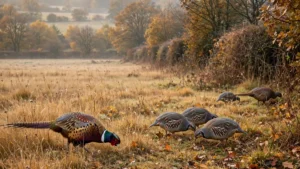
Quail spend almost all of their lives on the ground, walking, running and scratching for food, and they fly only in short, fast bursts when danger is close, before dropping back into cover a short distance away. They are sociable birds, living in coveys of a dozen or more outside the breeding season, and they roost huddled together in a tight circle on the ground, tails pointing inwards.
The quail species and their relatives
The quail species fall into two groups that are not closely related at all. The New World quail belong to their own family, Odontophoridae, with at least 32 species in nine genera, all of them found in the Americas. The best known are the northern bobwhite, Colinus virginianus, the California quail, Callipepla californica, the Gambel’s quail, Callipepla gambelii, the scaled quail, Callipepla squamata, the mountain quail, Oreortyx pictus, and the Montezuma quail, Cyrtonyx montezumae. South America adds the wood quail of the genus Odontophorus, fifteen forest species.
The Old World quail belong to the family Phasianidae, the same family as pheasants, partridges and chickens, and they number about 95 species in the broad sense. The best known are the common quail, Coturnix coturnix, the Japanese quail, Coturnix japonica, the stubble quail of Australia, Coturnix pectoralis, and the king quail, Synoicus chinensis. Counting quail is a matter of definition: a strict review of the true quail counted only 47 species, while the broader use of the name reaches roughly 130. This guide uses the broad sense.
| Type | Animal | Where it lives | Best-known food | Length or Weight |
|---|---|---|---|---|
| Group | New World quail (Odontophoridae) | The Americas | Seeds and insects | About 20 to 28 cm long |
| Group | Old World quail (Phasianidae) | Europe, Asia, Africa and Australia | Seeds and insects | About 18 to 25 cm long |
| Species | Northern bobwhite (Colinus virginianus) | Eastern North America | Seeds and insects | 24 to 28 cm, 170 to 200 g |
| Species | California quail (Callipepla californica) | Western North America | Seeds and leaves | About 25 cm, 150 to 190 g |
| Species | Common quail (Coturnix coturnix) | Europe, Asia and Africa | Seeds and insects | About 18 cm, 70 to 140 g |
| Species | Japanese quail (Coturnix japonica) | East Asia, domesticated | Seeds and insects | About 19 cm, 90 to 100 g |
How quails live
Quail feed mostly on the ground, walking through grass and scrub and scratching at the soil to uncover seeds, grain, fruit and green leaves. In spring and summer they also take insects and other small creatures, the main food of the chicks in their first weeks of life. The Montezuma quail is the odd one out, digging with its long claws for underground tubers and bulbs. The common quail is the only migratory game bird in the world, flying between Europe and Asia and Africa each year.
Quail are diurnal, and they spend the day feeding in the covey, resting in the shade at midday and dust-bathing in dry ground. The covey is the centre of quail life outside the breeding season, and the birds call softly to keep in touch as they move through cover. When danger threatens, the covey bursts into the air together with a loud whirr of wings, scattering before dropping back into cover and regrouping with soft calls. The northern bobwhite gives its name as a clear whistled bob-WHITE, while the California quail calls a three-note chi-ca-go.
Breeding quail nest on the ground, in a shallow hollow lined with grass and hidden in dense vegetation. The female lays a large clutch, often 12 to 16 eggs, speckled white or buff, and incubates them for about 23 to 24 days in the bobwhite, or 17 to 18 days in the common quail. The chicks hatch covered in down and able to walk within hours, and they can fly short distances within two weeks. Wild quail live fast and die young, most surviving only one or two years.
Where quails live
Quail live on every continent except Antarctica, from grassland and farmland to scrub, desert edge and open woodland. They favour open country with grass for cover and bare ground for feeding, and they avoid dense forest and wet ground. The northern bobwhite lives in the fields and hedgerows of eastern North America, the California quail in the chaparral of the west coast, and the common quail in the grassland and cereal fields of Europe, Asia and Africa.
Most quail stay in the same region all year, but the common quail migrates thousands of kilometres between Europe and Asia and Africa. The Japanese quail has been domesticated for centuries and is now kept worldwide for its eggs and meat. The mountain quail moves up and down the mountains of western North America with the seasons.
The conservation picture is mixed. Of the 47 true quail species in the strict count, about three-quarters are Least Concern, but the rest are in trouble. The Manipur bush quail of north-eastern India is Endangered, the Himalayan quail is Critically Endangered and may already be extinct, and the New Zealand quail is extinct. Like the California condor, saved only by captive breeding, the rarest quail now depend on their grassland habitat being protected. The northern bobwhite itself has fallen sharply as hedgerows and weedy fields have vanished.
Best seasons for quail watching
Quail are easiest to watch from spring to early summer, when the males are calling and the coveys have broken up into pairs. In North America, look for them from April to July, when the bobwhite is whistling from a fence post and the California quail is calling from a bush top. In Europe, listen for the common quail from May to July, when the male gives his wet-my-lips call from a hayfield.
Staying safe around quails
A quail is a shy, harmless bird, and the main risk is to the bird rather than to you. Never approach a nest closely, since the female may abandon it, and keep your distance from a calling male. Watch from a distance with binoculars, and stay on paths and field edges rather than trampling through the grass. Like the red-tailed hawk and the game birds of our other guides, quail are protected by law in many places.
Slow down on roads through farmland, because quail feeding along the verge are slow to take off and are often killed by cars. If you find a quail chick on its own, leave it alone: the chicks leave the nest within hours of hatching, and the parents are almost certainly nearby.
Quail watching checklist
A little preparation turns a morning on farmland into a real chance of seeing quail.
- A visit from spring to early summer, when the males are calling.
- An early-morning or evening start, when the birds are feeding and calling.
- Binoculars, since a quail on the ground is small and mottled and hard to see.
- An ear for the bobwhite whistle, the California quail chi-ca-go and the common quail wet-my-lips call.
- A scan of field edges and hedgerows, where the coveys feed.
- Patience and a quiet approach, because a covey may burst into flight at your feet.
- Respect for nests, keeping to paths and never approaching a calling bird or a nest.
Frequently asked questions
How many quail species are there?
It depends on how strictly you count them. In the broad sense, roughly 130 species carry the name quail, split between at least 32 New World species in the family Odontophoridae and about 95 Old World species in the family Phasianidae. A stricter count of the true quail gives 47 species.
What is the difference between New World and Old World quail?
New World quail belong to their own family, Odontophoridae, and live only in the Americas, while Old World quail belong to the family Phasianidae, the same family as pheasants and chickens, and live in Europe, Asia, Africa and Australia. New World quail have stronger bills and no leg spurs, while Old World quail are smaller and stockier, often with spurred legs.
What do quails eat?
Quail eat mainly seeds and grain, with green leaves and fallen fruit, and in spring and summer they take insects, the main food of the chicks. The Montezuma quail is the exception, digging for underground tubers and bulbs.
Are quails endangered?
Most are not. About three-quarters of the 47 true quail species are Least Concern, but a few are in serious trouble: the Manipur bush quail is Endangered, the Himalayan quail is Critically Endangered and may already be extinct, and the New Zealand quail is extinct.
Can you keep quails?
Yes, and the Japanese quail is the usual choice, kept worldwide for its eggs and meat after centuries of domestication. Coturnix quail are small and hardy, laying an egg almost every day, but they need a secure run and a proper diet, and wild quail should never be taken from the wild.
How is this guide different from the pileated woodpecker guide?
This guide covers the quail as a group, roughly 130 species of small ground-living game birds from two different families, while our pileated woodpecker species guide covers just one species, Dryocopus pileatus, the crow-sized forest woodpecker that hammers carpenter ants out of dead trees. One lives its whole life on the ground; the other lives high in the trees.
Conclusion
The quail species of the world are a group, not a single bird, and every one of them does the same quiet job: small, mottled and ground-living, feeding on seeds and insects, raising a dozen chicks at a time and bursting into the air when danger comes close.
If you go looking for one, go on a spring morning, go early, and listen first. Find a covey feeding along a field edge, and you will see why the quail, for all its shyness, is one of the best-loved birds of the open country.