The mallard duck species is a single species, Anas platyrhynchos, the most widespread dabbling duck on Earth and the wild ancestor of nearly all domestic ducks. If you are asking how many mallard duck species there are, the answer is one, a duck with two generally recognised subspecies that breeds across the temperate Northern Hemisphere and has been introduced on five continents.
On a still morning you can find a mallard almost anywhere there is shallow water, from a city park pond to a remote marsh — the duck most people picture when they hear the word duck.
Key takeaways
- The mallard duck species is Anas platyrhynchos, one species with two generally recognised subspecies: A. p. platyrhynchos and the Greenland mallard, A. p. conboschas.
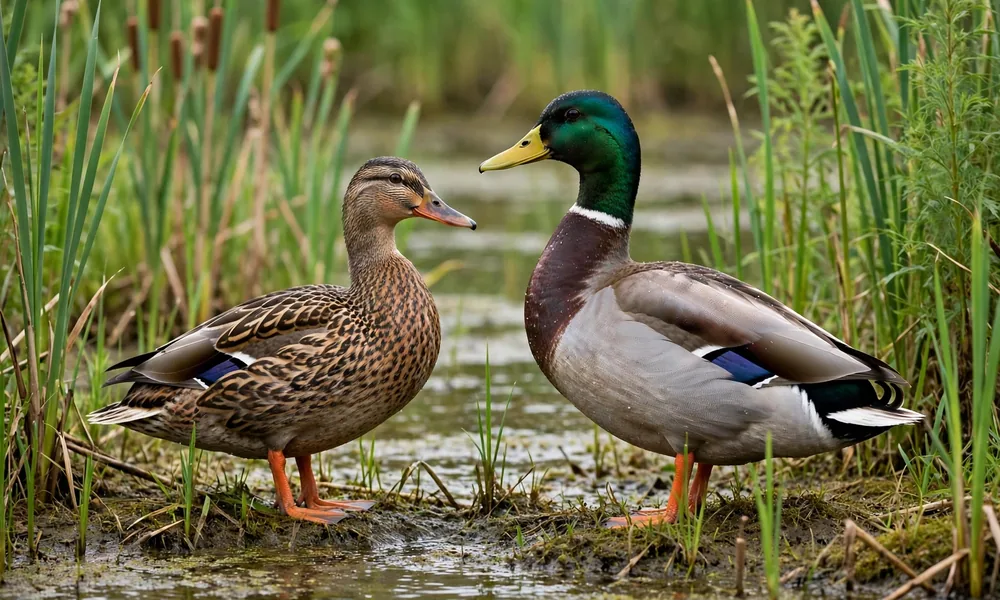
- The drake has a glossy green head, a white neck ring, a chestnut breast and a grey body, while the hen is mottled brown all over, with a blue speculum edged in white on each wing.
- It is 50 to 65 centimetres long, with a wingspan of 81 to 98 centimetres and a weight of 0.7 to 1.6 kilogrammes, and it feeds by dabbling at the surface of shallow water.
- Mallards eat seeds and aquatic plants for most of the year, switching to insects, snails and crustaceans in the breeding season, and they nest on the ground near water.
- Listed as Least Concern, with more than 17 million mature birds, but numbers are falling, and escaped domestic mallards threaten other wild ducks through hybridisation.
What makes a mallard duck a mallard duck
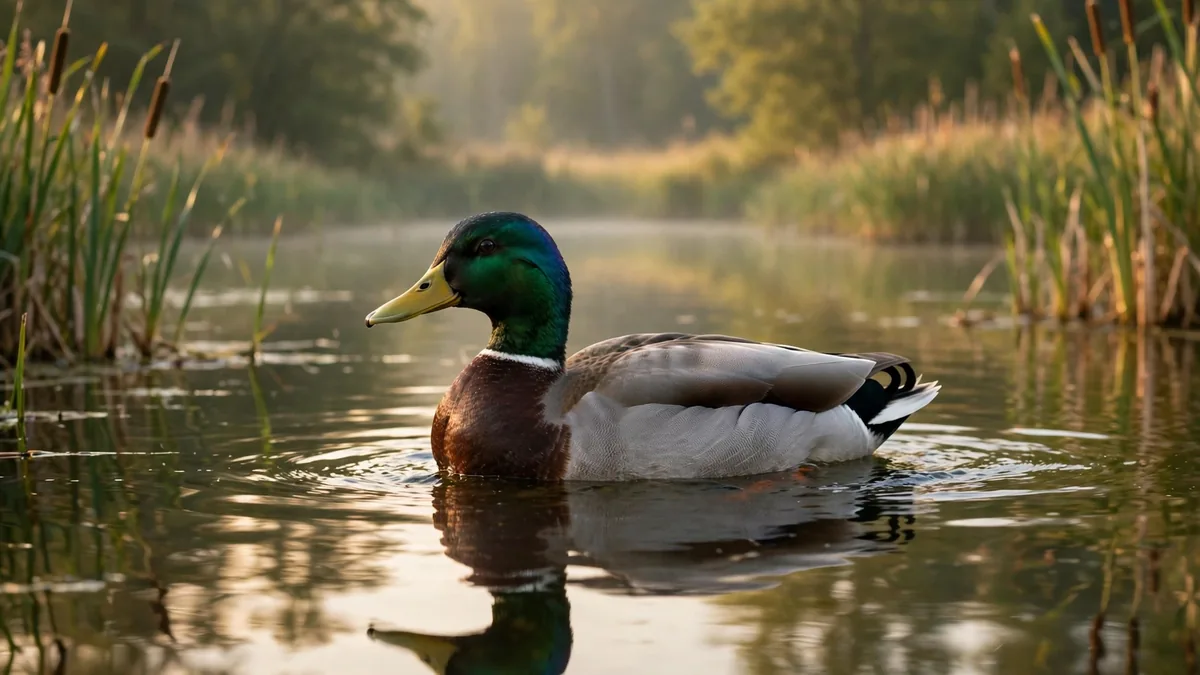
A mallard is a medium-sized dabbling duck, 50 to 65 centimetres long, with a wingspan of 81 to 98 centimetres and a weight of 0.7 to 1.6 kilogrammes. The breeding drake is unmistakable: a glossy bottle-green head, a white neck ring, a chestnut breast, a grey body, a yellow bill and curled black tail feathers. The hen is mottled buff, tan and dark brown all over, with an orange-brown bill, and she vanishes against dead reeds when she sits on her nest.
Both sexes carry a bright blue speculum on the wing, bordered with black and white, which flashes as the bird takes off. Mallards feed by dabbling, tipping forward so the head goes under and the tail points up, straining food through the comb-like edges of the bill. They fly strongly and directly, and gather in loose flocks outside the breeding season. The hen gives the loud, familiar quack; the drake’s call is a quieter croak.
The mallard duck species and their relatives
The mallard belongs to Anas, the great genus of dabbling ducks in the waterfowl family Anatidae. The nominate race, A. p. platyrhynchos, described by Linnaeus in 1758, breeds across North America, Europe and Asia except for Greenland. The Greenland mallard, A. p. conboschas, lives only in Greenland, and is slightly larger and stockier, with paler plumage and a smaller bill, an example of Bergmann’s rule.
The count of two is disputed: some authorities treat the Greenland bird as the northern end of a smooth size cline, not a true subspecies. A third name in older lists, A. p. domesticus, is the domestic duck, a farmyard form bred from wild mallards, not a wild subspecies. The mallard is the main ancestor of most domestic duck breeds, and escaped domestic birds now interbreed freely with wild mallards, blurring the wild gene pool.
| Type | Animal | Where it lives | Best-known food | Length or Weight |
|---|---|---|---|---|
| Family | Ducks, geese and swans (Anatidae) | Worldwide | Plants, seeds and small animals | About 40 to 150 cm long |
| Genus | Dabbling ducks (Anas) | Northern Hemisphere | Seeds and aquatic plants | About 40 to 65 cm long |
| Species | Mallard (Anas platyrhynchos) | Temperate Northern Hemisphere | Seeds, plants and insects | 50 to 65 cm, 0.7 to 1.6 kg |
| Species | Wood duck (Aix sponsa) | North America | Acorns, seeds and insects | About 47 to 54 cm, 0.5 to 0.7 kg |
| Species | Northern pintail (Anas acuta) | Northern Hemisphere | Seeds and aquatic plants | About 51 to 66 cm, 0.5 to 1.1 kg |
| Species | Canada goose (Branta canadensis) | North America | Grasses, sedges and grain | About 75 to 110 cm, 2.6 to 6.5 kg |
How mallard ducks live
Mallards are omnivores, and their diet changes with the seasons. For most of the year plants make up the larger part of what they eat, especially in autumn and winter, when they feed on the seeds of sedges, bulrushes and pondweeds, on aquatic vegetation, roots and tubers, and on waste grain in harvested fields. In spring and summer the balance shifts: breeding hens and growing ducklings rely heavily on insects, snails, worms and crustaceans.
Mallards form pairs in autumn and winter, and the bond lasts until the hen begins to lay in spring. The nest is a bowl of grass and leaves lined with down, built on the ground and hidden in vegetation, sometimes surprisingly far from water, in gardens, planters and even on balconies. The hen lays 8 to 13 creamy white to greenish-buff eggs and incubates them alone for 27 to 28 days. The ducklings are precocial: they hatch covered in yellow and brown down, leave the nest within a day, and can swim and feed themselves within hours, following their mother to the water. They fledge at 50 to 60 days old.
In early summer the drakes shed all their flight feathers at once and become flightless for three to four weeks, moulting into a dull, hen-like eclipse plumage. Outside the breeding season mallards gather in flocks that can number in the thousands, thriving on city ponds, reservoirs, flooded fields and estuaries wherever shallow water and food are found.
Where mallard ducks live
The mallard has the broadest natural distribution of any duck in the Northern Hemisphere, breeding from Alaska and northern Canada across Eurasia to Siberia, Japan and Korea, and south to Mexico, North Africa, the Middle East and northern India. It has also been introduced to New Zealand, Australia, South Africa and parts of South America, where it now breeds widely and is regarded as invasive in some places. Mallards gather in marshes, beaver ponds, flooded meadows, river backwaters, estuaries and city parks, wherever the water is calm and shallow.
Northern birds are migratory, moving south when the cold arrives, while birds in milder regions stay put all year, and winter flocks gather on open water in huge numbers. Like the wood duck and the Canada goose, it is a bird that has learned to live beside people, and like the snow goose it can turn up in the thousands on a single winter wetland.
The mallard is listed as Least Concern on the IUCN Red List, a status it has held since 1998, because its range covers more than 65 million square kilometres and its population is estimated at more than 17 million mature birds. The trend is decreasing, though, and the greatest long-term threat is hybridisation with domestic and feral mallards, which risks swamping the gene pools of native ducks in places such as New Zealand and Hawaii.
Best seasons for mallard duck watching
Mallards can be watched all year in most places, but spring and autumn are the best times. In spring the drakes are in full breeding plumage, the pairs are courting, and by late spring the hens lead lines of ducklings across the pond. In autumn and winter the birds gather in large flocks on open water, and the drakes grow back their green heads after the summer moult.
Staying safe around mallard ducks
A mallard is a harmless bird, and the main risk is to the duck rather than to you. Never feed bread to ducks: it swells in the stomach and fills them without nourishing them, and crowds of fed ducks spread disease. Scatter a little grain, peas or chopped lettuce instead, and only a small amount. Keep dogs on a lead near nesting birds and ducklings, and keep your distance from a hen on a nest, because a flushed hen may not return.
Wash your hands after handling ducks or touching water where they gather, and avoid touching sick or dead birds, reporting them to the local wildlife authorities instead. Like the wood duck, the mallard is protected by law in many countries, so nests, eggs and birds must be left alone.
Mallard duck watching checklist
A little preparation turns a morning by the pond into a real chance of seeing mallards at their best.
- A visit in spring for courting pairs and ducklings, or in autumn and winter for large flocks.
- An early-morning start, when the birds are feeding actively and the light is at its best.
- Binoculars, since a mallard dabbling at the far side of a marsh is hard to study with the naked eye.
- An eye for the drake’s green head and white neck ring, and the hen’s mottled brown plumage and blue speculum.
- A scan of shallow water and muddy edges, where mallards tip forward to feed with their tails in the air.
- Patience and a quiet approach, because mallards soon move off if they are crowded or chased.
- Respect for nests and ducklings, keeping dogs on a lead and never feeding bread.
Frequently asked questions
How many mallard duck species are there?
There is one mallard duck species, Anas platyrhynchos, with two generally recognised subspecies: the nominate A. p. platyrhynchos of the Holarctic, and the Greenland mallard, A. p. conboschas, a larger, paler, stockier bird with a smaller bill that lives only in Greenland. Some authorities dispute the Greenland form as the northern end of a smooth cline.
What is the difference between a male and a female mallard?
The drake has a glossy green head, a white neck ring, a chestnut breast and a grey body with a yellow bill, while the hen is mottled brown all over with an orange-brown bill. In summer the drake moults into a dull, hen-like eclipse plumage and becomes flightless for three to four weeks before growing back his breeding colours.
What does a mallard duck eat?
A mallard eats seeds, aquatic plants, roots, tubers and waste grain for most of the year, and insects, snails, worms and crustaceans in the breeding season. It feeds by dabbling, tipping forward in shallow water to strain food through the comb-like edges of its bill, and it also grazes on land.
Where do mallards nest?
Mallards nest on the ground in a bowl of grass lined with down, hidden in vegetation near water, though hens sometimes nest far from water in gardens, planters and on balconies. The hen lays 8 to 13 eggs and incubates them alone for 27 to 28 days, and the ducklings leave the nest within a day of hatching.
Are mallard ducks endangered?
Not officially. The mallard is listed as Least Concern on the IUCN Red List, with more than 17 million mature birds across a range of over 65 million square kilometres. Numbers are falling, though, and the spread of domestic mallards threatens other wild ducks through hybridisation.
How is this guide different from the Indian peafowl guide?
This guide covers the mallard duck, a dabbling duck of northern wetlands that tips forward to feed in shallow water and nests on the ground, while our Indian peafowl species guide covers the peacock, a large land bird of India famous for the male’s iridescent train. One belongs to the pond; the other belongs to the forest floor.
Conclusion
The mallard duck species needs no introduction once you have seen it: one species, Anas platyrhynchos, a green-headed drake and a mottled brown hen, dabbling in the shallows of a pond that could be almost anywhere in the world.
If you go looking for one, go on a spring morning, go early, and watch the shallow water for a drake tipping forward with his tail in the air.