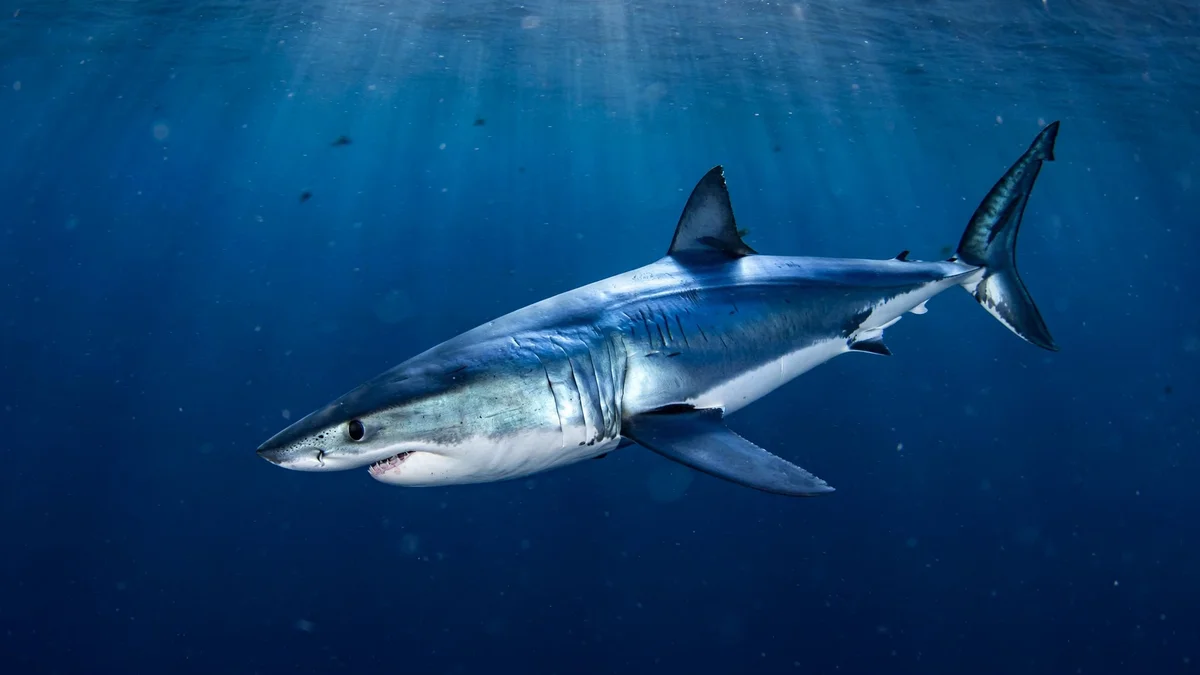
The mako shark species number two, the fastest sharks in the sea, and they are the sprinters of the shark world, able to burst through the water at 74 kilometres per hour. If you are asking how many mako shark species there are, the answer is two: there are two recognised mako shark species in the world, the shortfin mako and the longfin mako, and every mako shark alive today belongs to one of them.
The mako shark belongs to the family Lamnidae, the mackerel sharks, and it lives in the temperate and tropical open ocean of every sea, from the surface to the deep water. Its metallic blue back, its pale belly, its pointed snout and its crescent tail make it one of the most recognisable sharks in the world.
Key takeaways
- There are two mako shark species, and the shortfin mako is the most common and best known of them.
- Mako sharks are the fastest sharks on Earth, reaching bursts of 74 kilometres per hour when chasing tuna.
- Mako sharks keep their muscles warmer than the sea, which gives them the power to swim fast and hunt in cold water.
- Mako sharks leap clear of the water when hooked, jumping up to 6 metres into the air.
- Both mako shark species are listed as Endangered, and fishing for their meat and fins is the main threat.
What makes a mako shark a mako shark
A mako shark is a large streamlined shark with a pointed snout, a metallic blue back, a white belly and a crescent-shaped tail, and it measures roughly 2.5 to 4 metres long and usually weighs between 60 and 570 kilogrammes, depending on the species. The shortfin mako is the larger and heavier of the two, reaching more than 4 metres and 570 kilogrammes, while the longfin mako is slimmer, with much larger pectoral fins and larger eyes.
The speed defines the mako shark: a torpedo-shaped body, a stiff trunk and a crescent tail that drives it through the water at up to 74 kilometres per hour in bursts, the fastest of any shark. Its muscles are kept warmer than the sea by a heat-exchange network in its body, which gives it the power to hunt fast fish in cold water, and its teeth are long and thin, built for gripping slippery tuna and swordfish. Like other sharks, the mako must keep swimming to breathe, driving water over its gills, and it never stops, day or night.
The mako shark species and their relatives
There are two mako shark species. The shortfin mako lives in the temperate and tropical open ocean of every sea, from the Atlantic to the Pacific, and it is the best-known mako, prized by sport anglers. The longfin mako lives in the tropical open ocean, in warmer water than its cousin, and it is rarer and less well known, with much larger pectoral fins and darker colouring around its mouth.
The great white shark is the mako shark’s most famous relative, a larger mackerel shark that hunts seals in cold water, while the porbeagle is a cold-water mackerel shark of the North Atlantic. The salmon shark is a northern mackerel shark that eats salmon, the tiger shark is a striped hunter of the warm seas, and the whale shark is the largest fish in the world and eats only plankton. The blue shark is a slim blue shark of the open ocean, and the thresher shark is a shark with a tail as long as its body.

| Type | Animal | Where it lives | Best-known food | Length or Weight |
|---|---|---|---|---|
| Species | Shortfin mako shark (Isurus oxyrinchus) | Temperate and tropical open ocean | Tuna, swordfish and squid | 2.5 to 4 m, 60 to 570 kg |
| Close relative | Longfin mako shark | Tropical open ocean | Tuna and swordfish | 2.5 to 4 m, 60 to 250 kg |
| Close relative | Great white shark | Cool coastal waters worldwide | Seals and sea lions | 4 to 6 m, 680 to 1,100 kg |
| Close relative | Porbeagle shark | Cold North Atlantic and southern oceans | Fish and squid | 2 to 3.6 m, 100 to 230 kg |
| Close relative | Salmon shark | North Pacific | Salmon and fish | 2 to 3 m, 150 to 220 kg |
| Close relative | Tiger shark | Tropical and subtropical seas | Turtles, seals and fish | 3.25 to 4.25 m, 385 to 635 kg |
| Close relative | Thresher shark | Temperate and tropical open ocean | Fish and squid | 3 to 6 m, 100 to 350 kg |
How mako sharks live
Mako sharks are creatures of the open ocean. A mako shark lives alone, patrolling the blue water far from land, and it travels thousands of kilometres across the ocean, following tuna and swordfish as they move with the seasons. Like other whale sharks, it is a traveller of the open sea, but unlike the whale shark it is a hunter, and it has no natural enemies except larger sharks and humans.
Tuna make up most of the diet, along with swordfish, mackerel, squid and other sharks, and a mako shark eats about 3 per cent of its body weight every day. It hunts by speed, chasing down tuna that other sharks cannot catch, and it leaps clear of the water when it strikes, jumping up to 6 metres into the air.
Breeding happens all year round in warm water, and after a gestation of 15 to 18 months the female gives birth to a litter of 4 to 18 pups, which are born about 60 to 70 centimetres long. The pups are left to fend for themselves at once, and the pups eat unfertilised eggs in the womb, a behaviour called oophagy, which makes the surviving pups larger and stronger. The young grow slowly, taking 7 to 8 years for males and 14 to 18 years for females to mature, and mako sharks live for around 30 years in the wild.
Where mako sharks live
The mako shark lives in the temperate and tropical open ocean of every sea, from the Atlantic to the Pacific and Indian Oceans, and it is most common in water between 16 and 22 degrees Celsius. The shortfin mako is found worldwide, from the coasts of California and New Zealand to the Mediterranean, while the longfin mako lives in warmer tropical water, in the Atlantic, Pacific and Indian Oceans.
Open ocean is the key requirement. A mako shark needs deep blue water, with plenty of tuna and swordfish to hunt, so it follows the warm currents as they move with the seasons, and when the water cools the sharks move towards the equator.
Both mako shark species are listed as Endangered, and their numbers are falling fast. The main pressures are fishing for their meat and fins, and bycatch in tuna longlines, which kill thousands of makos every year, and the sharks are slow to breed, taking many years to mature. The shortfin mako was uplisted from Vulnerable to Endangered in 2019, and both species were added to CITES Appendix II in the same year, which controls their trade.
Best seasons for mako shark watching
There is no closed season, because mako sharks are active all year, but the best time to look for them depends on where you go. In California the best months are often June to October, when the makos come into the warm water off the coast. In New Zealand the best months are often the summer, when the tuna are running and the makos follow them, and in the Mediterranean the best months are often the warm summer, when the sharks come into the shallow bays.
Staying safe around mako sharks
A mako shark is a wild animal with great strength and sharp teeth, and it can hurt a person, though attacks on swimmers are very rare and almost always happen to anglers who have hooked one. Keep your distance, never swim alone in the open ocean, and never swim near fishing boats, because a mako that smells blood may come to investigate. If you see a mako shark, stay calm and swim slowly back to the boat, because a frightened swimmer that splashes looks like prey.
Mako shark watching checklist
A little preparation turns an ocean visit into a real chance of seeing a mako shark, so pack for sun, open water and long quiet hours.
- A mask and snorkel with good visibility, for picking a blue shark out of the deep water.
- A camera in an underwater housing, because makos should always be watched from a distance.
- Sun cream and a hat, because the best watching is in the bright midday sun.
- A booked boat tour with a guide who knows the shark rules and the safe routes.
- A plan to be out in the summer, when the tuna are running and the makos follow them.
- Patience and silence, because makos are shy sharks and a noisy group will send them away.
- A wetsuit, for staying warm during long hours in the water.
Frequently asked questions
How many mako shark species are there?
There are two mako shark species: the shortfin mako and the longfin mako. The shortfin mako is the larger and better known of the two, and the longfin mako is slimmer, with much larger pectoral fins and larger eyes, and it lives in warmer tropical water.
How fast can a mako shark swim?
A mako shark can swim at up to 74 kilometres per hour in bursts, making it the fastest shark in the world.
Why do mako sharks leap out of the water?
Mako sharks leap out of the water when they strike prey, when they are hooked by anglers, and sometimes for no clear reason at all. A hooked mako can jump up to 6 metres into the air, twisting and turning, which is why sport anglers prize them so highly.
Can you keep a mako shark as a pet?
No. A mako shark is a wild animal that needs the open ocean, eats fast fish every day, and is fully protected by international law, which controls the trade in both mako species. Makos in aquariums need huge tanks with fast-moving water, and they are not pets.
How is this guide different from the tiger shark species guide?
This guide covers two mako shark species, the fastest sharks in the sea, which hunt tuna in the open ocean, while our tiger shark species guide covers the single tiger shark species, a striped hunter that eats turtles and seals in the warm coastal seas. The mako is built for speed and eats fast fish, and the tiger shark is built for power and eats almost anything.
Are mako sharks endangered?
Yes. Both mako shark species are listed as Endangered, after being uplisted from Vulnerable in 2019. Fishing for their meat and fins is the main threat, and bycatch in tuna longlines kills thousands more every year.
Conclusion
The mako shark species show how much speed one animal can hold: two species of torpedo, with muscles warmer than the sea, tails like crescents, and lives spent chasing tuna across the open ocean.
If you go looking for one, go in the summer to the warm water off California or New Zealand, go with a guide, and go quietly. Watch a mako shark leap clear of the water and you will understand why it has earned its place as the cheetah of the sea, and why keeping its ocean clean matters most.