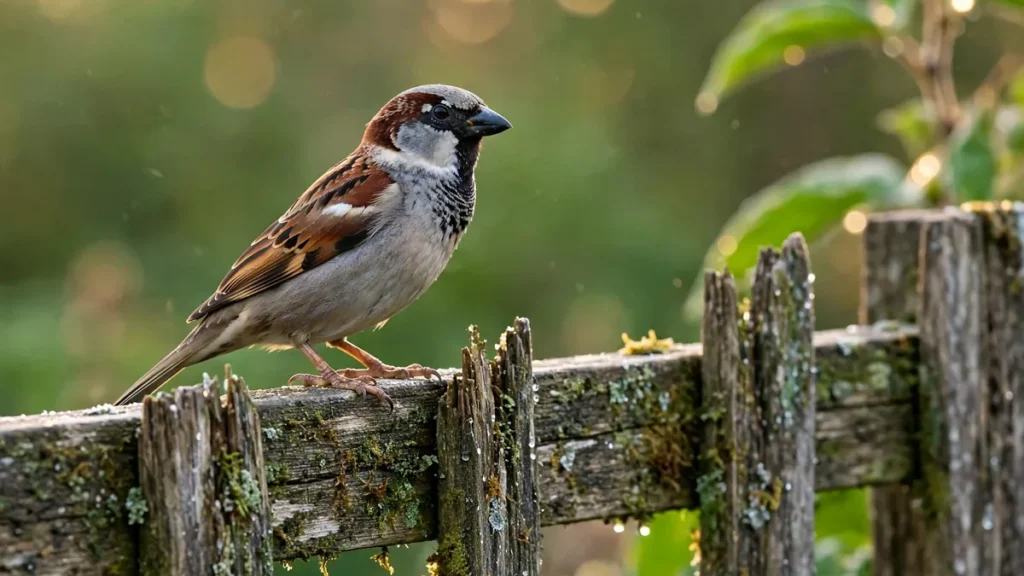
The house sparrow species is a single species, Passer domesticus, a small, stocky brown bird that lives closer to people than any other wild bird in the world. If you are asking how many house sparrow species there are, the answer is one, and it is found in almost every town, village and farmyard on Earth, listed as Least Concern even though its numbers are falling.
The house sparrow followed people out of the Middle East thousands of years ago, learning to eat our grain, nest in our roofs and ride our ships to new continents. It was introduced to New York City in 1851, and from that small beginning it spread across the whole of North America within a few decades.
Key takeaways
- There is one house sparrow species, Passer domesticus, a small, stocky bird with a thick, seed-cracking bill.
- Adult males have a grey crown, a chestnut nape and a black bib, while females and young birds are plain grey-brown.
- Adults are 14 to 16 centimetres long, weigh 24 to 38 grams, and usually live for around three years.
- They eat seeds and grain, feed insects to their chicks, and nest in holes in buildings, walls and nest boxes.
- The species is Least Concern worldwide, but it is falling fast in Britain, where it is on the Red List.
What makes a house sparrow a house sparrow
A house sparrow is a small, stocky bird, 14 to 16 centimetres long with a wingspan of 19 to 25 centimetres and a thick bill built for cracking seeds. The male is the showier bird: a grey crown, a chestnut nape, a black bib on the throat and chest, a grey cheek and brown upperparts streaked with black. The female is much plainer, grey-brown all over with a pale stripe behind the eye, and young birds look like females, which makes them easy to confuse with other small brown birds.
Its voice is a cheerful, unmusical chirp, given in short bursts from a rooftop, a hedge or a feeder, and a flock in full voice can be heard from a long way off. Its flight is direct and rather hurried, with rapid wingbeats and a steady line, unlike the bounding flight of many finches. House sparrows are sociable, feeding in loose flocks, bathing in dust together and roosting in noisy groups in ivy, thick bushes and roof spaces.
The house sparrow species and their relatives
The house sparrow belongs to Passer, a genus of about 28 species of small, seed-eating birds, and Passer domesticus is the most widespread of them all. Its closest relatives include the tree sparrow, the Spanish sparrow and the Italian sparrow. In Britain the tree sparrow is the only other member of the genus that lives here. The two are easy to tell apart: the tree sparrow has a chestnut crown, a black spot on a white cheek and a neater look, while the house sparrow male has a grey crown and no cheek spot.
The house sparrow’s family is the Old World sparrows, Passeridae, a group of small, stocky birds that evolved alongside farming in Africa and Asia. The house sparrow is the one member of the family that has gone truly global, and its success is tied to ours: wherever people build houses, grow grain and spill food, house sparrows move in.
| Type | Animal | Where it lives | Best-known food | Length or Weight |
|---|---|---|---|---|
| Genus | Sparrows (genus Passer) | Towns, farms and grassland worldwide | Seeds and grain | About 14 to 16 cm long |
| Species | House sparrow (Passer domesticus) | Worldwide, wherever people live | Seeds, grain and insects | About 14 to 16 cm long |
| Species | Tree sparrow (Passer montanus) | Europe and Asia, in farmland and woods | Seeds, buds and insects | About 12 to 14 cm long |
| Species | Spanish sparrow (Passer hispaniolensis) | Southern Europe, North Africa and Asia | Seeds and insects | About 15 to 16 cm long |
| Species | Italian sparrow (Passer italiae) | Italy and the western Mediterranean | Seeds and insects | About 14 to 16 cm long |
| Species | Cape sparrow (Passer melanurus) | Southern Africa | Seeds, grain and insects | About 15 cm long |
How house sparrows live
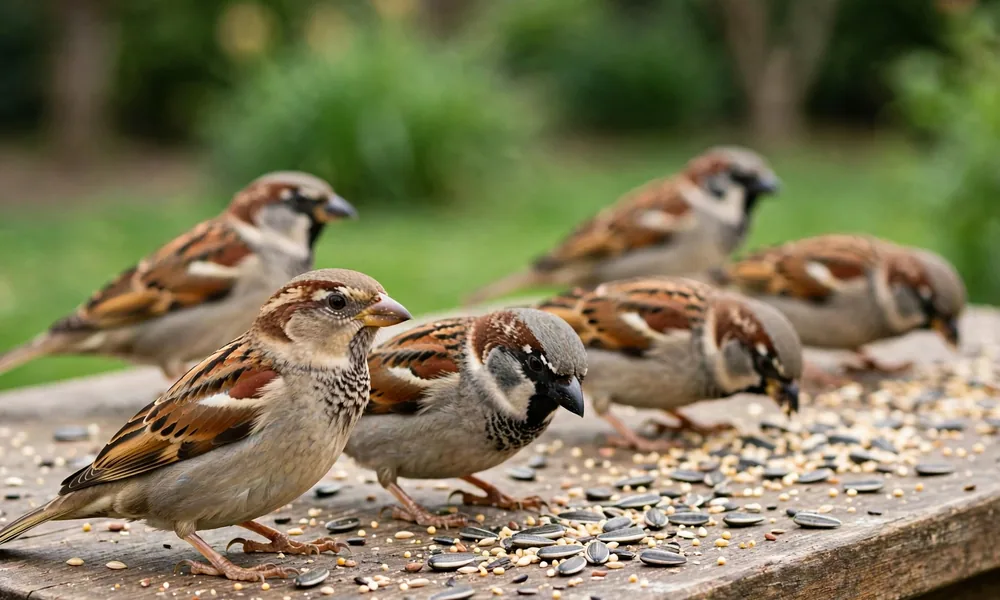
House sparrows eat mostly seeds and grain, cracking them open with the thick, conical bill, and they visit gardens and bird tables all year round. In towns they eat scraps and spilled food as well, and in summer they forage for insects in hedges and meadows, because insects are rich in protein. Nestlings are fed almost entirely on insects, which is why a garden with plenty of insects raises far more young sparrows than a tidy, sprayed one.
House sparrows nest in holes, usually in a roof, a wall, a nest box or a thick hedge, and pairs often nest close together in loose colonies, squabbling over the best holes. The female lays four or five eggs and incubates them for 11 to 14 days, and the young leave the nest after 14 to 17 days, though the parents keep feeding them for a time afterwards. Most pairs raise two or three broods in a season, from spring into late summer.
House sparrows are noisy, gregarious birds that spend much of the day in company, feeding in flocks, dust-bathing in dry soil and roosting together at night. Their calls are simple: a chirp for contact, a louder chirrup when alarmed and a chattering chorus at dawn and dusk. They usually live for around three years, though the oldest recorded wild bird lived for more than 12 years, and they rarely move far from where they were born.
Where house sparrows live
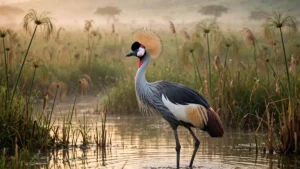
House sparrows live almost everywhere people live, from city centres to remote farms, and they are found year round across most of Britain and Ireland except for the highest uplands. They are native to Europe, the Middle East and much of Asia, and they were carried by people to the Americas, sub-Saharan Africa, Australia and New Zealand, where they are now among the commonest birds. In African towns they share the streets with birds such as the grey-crowned crane, though the crane keeps to the wetlands and the sparrow keeps to the rooftops.
The species is listed as Least Concern on the IUCN Red List, with a falling population trend, and no reliable global total has been published. In Britain the picture is clearer: the population fell by about two-thirds between 1977 and 2015, and in England it fell by 70 per cent between 1977 and 2016. London has lost about 71 per cent of its house sparrows since 1995.
The reasons for the decline are not fully known, but the loss of nest holes in renovated buildings, the loss of insects for feeding chicks and the loss of weedy, seed-rich ground are all thought to play a part. The house sparrow has been on the UK Red List since 2002, and the latest estimate put the UK breeding population at 5.3 million pairs in 2016. Nest boxes, a wild corner and mealworms in spring are practical ways to help.
Best seasons for house sparrow watching
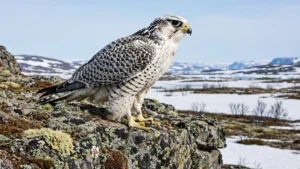
House sparrows can be watched all year, because they do not migrate and stay close to home. Spring is the liveliest time, when males sing from the rooftops and pairs feed their nests, and winter brings big, hungry flocks to garden feeders, when the birds are easiest to count. Winter watching can also bring northern visitors, such as the gyrfalcon, a great Arctic falcon that hunts over open country in the cold months, though it is a far rarer sight than the sparrow.
Staying safe around house sparrows
A house sparrow is harmless and is protected by law in Britain, where all wild birds, their nests and their eggs are protected. Never disturb a nest, and never handle a bird, because a frightened sparrow can injure itself and a disturbed nest may be abandoned. Keep cats indoors at dawn and dusk, when sparrows feed on the ground.
If you feed sparrows, keep the feeder clean and move it from time to time, because dirty feeders spread disease among flocks. Wash your hands after filling feeders or handling a nest box, and clean nest boxes out in autumn, once the breeding season is over, so they are ready for spring. Watch from inside the house or a quiet seat in the garden, and the sparrows will soon ignore you.
House sparrow watching checklist
A little preparation turns a garden, a park or a farmyard into a real chance of watching house sparrows at close range.
- A garden feeder stocked with mixed seed, sunflower hearts and, in spring, live mealworms.
- A nest box fixed high on a house wall, under the eaves, where sparrows nest in company.
- An early morning visit, when males sing from the rooftops and flocks feed on the ground.
- Binoculars, for telling males from females and picking sparrows out of a mixed flock.
- A wild corner with weeds and long grass, where sparrows find seeds and the insects their chicks need.
- A patch of dry, dusty soil, where sparrows dust-bathe together on warm afternoons.
- Patience at a feeder in winter, when hungry flocks arrive in numbers.
Frequently asked questions
How many house sparrow species are there?
There is one house sparrow species, Passer domesticus. It belongs to the genus Passer, which holds about 28 species of sparrows, but only one of them is the house sparrow, the small brown bird that lives in our roofs and gardens.
How can you tell a male house sparrow from a female?
The male has a grey crown, a chestnut nape, a black bib on the throat and chest, and brown upperparts streaked with black, while the female is plain grey-brown all over with a pale stripe behind the eye. Young birds look like females, so a plain brown sparrow is usually a female or a young bird.
What does a house sparrow eat?
A house sparrow eats mostly seeds and grain, with buds, berries and scraps in town gardens, and it visits bird feeders all year. In the breeding season it also eats insects, and nestlings are fed almost entirely on insects.
Why are house sparrows declining in Britain?
The reasons are not fully known, but the loss of nest holes when buildings are renovated, the loss of insects for feeding chicks and the loss of weedy, seed-rich ground are all thought to play a part. England lost about 70 per cent of its house sparrows between 1977 and 2016, and London about 71 per cent since 1995.
How is this guide different from the hoopoe guide?
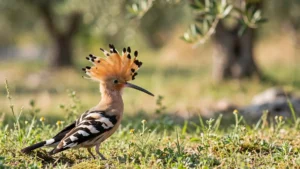
This guide covers the house sparrow, a small, sociable brown bird that lives in our roofs and gardens and eats seeds, while our hoopoe species guide covers the hoopoe, a crested bird of open grassland in Europe, Asia and Africa that probes the soil for insects with a long curved bill. One is the most familiar bird in the world; the other is one of the most unmistakable.
Are house sparrows endangered?
No, not worldwide. The house sparrow is listed as Least Concern on the IUCN Red List, with a falling population trend, but in Britain it is on the Red List of birds of conservation concern, having lost about two-thirds of its population since the 1970s.
Conclusion
The house sparrow species proves how much depends on the small and the familiar: one species, Passer domesticus, living in our roofs, eating our grain and singing from our rooftops.
If you go looking for one, you will not have to go far. Put out seed, leave a wild corner and fix a nest box under the eaves, and the sparrows will come.