The hammerhead shark species number ten, sharks with a flattened hammer-shaped head, and they are the only sharks that use their strange heads to pin stingrays to the seabed and to sense the faint electric fields of hidden prey. If you are asking how many hammerhead shark species there are, the answer is ten: there are ten recognised hammerhead shark species in the world, in two genera, and every hammerhead alive today belongs to one of them.
The hammerhead shark belongs to the family Sphyrnidae, and it lives in the warm tropical and temperate seas of the world, where it hunts fish, squid and rays over reefs and sandy seabeds. Its wide hammer-shaped head, its grey-brown body and its tall dorsal fin make it one of the most recognisable sharks on Earth.
Key takeaways
- There are ten hammerhead shark species, in the genera Sphyrna and Eusphyra, and the great hammerhead is the largest.
- Hammerheads use their wide heads to sense electric fields and to pin stingrays to the seabed while they feed.
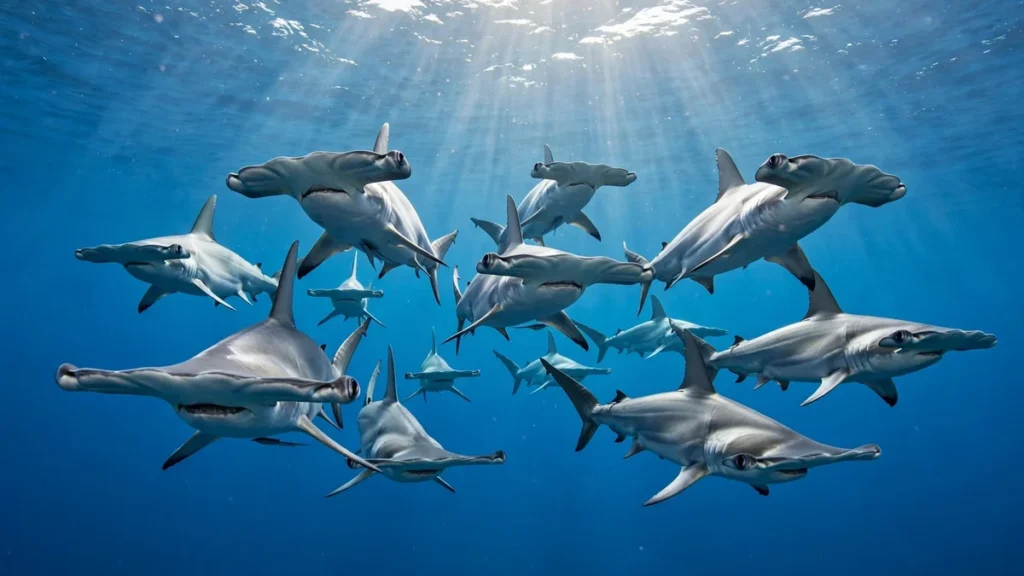
- Scalloped hammerheads gather in schools of hundreds around seamounts and islands in the tropical Pacific.
- Great hammerheads grow to 6 metres long, and they often carry stingray barbs in their heads from their prey.
- Great and scalloped hammerheads are listed as Critically Endangered, and the fin trade is the main threat to their future.
What makes a hammerhead shark a hammerhead shark
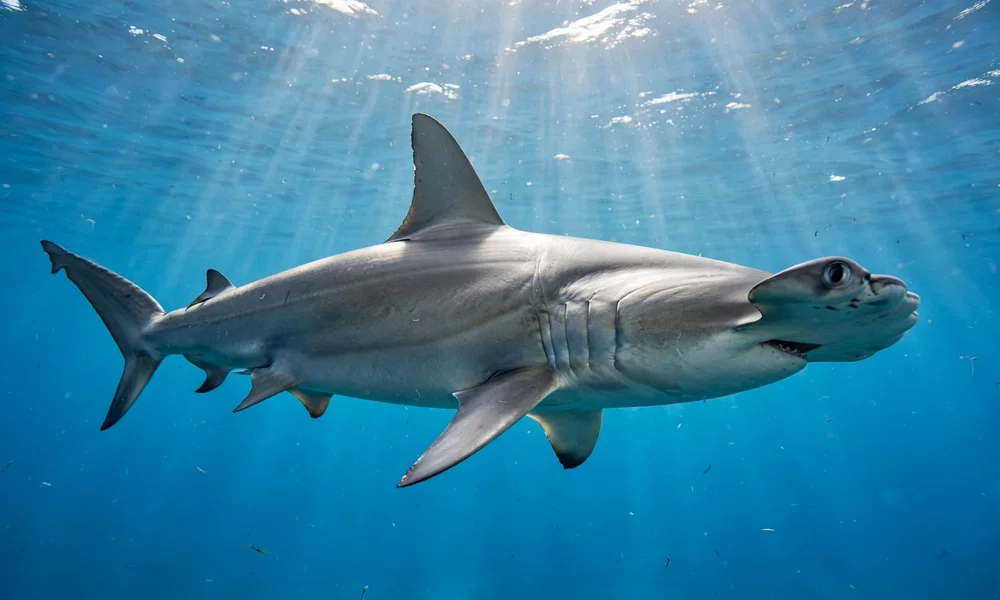
A hammerhead shark is a grey-brown shark with a flattened head shaped like a hammer, called a cephalofoil, eyes set at the ends of the hammer, and a length of 1 to 6 metres, depending on the species. The great hammerhead is the largest, reaching 6 metres and weighing up to 450 kilogrammes, while the bonnethead is the smallest, at about 1 to 1.5 metres.
The hammer defines the hammerhead: the wide head carries sensors called ampullae of Lorenzini that detect the faint electric fields of fish buried in the sand, and it gives the shark a wider field of vision than any other shark, with eyes that see forwards, backwards and sideways at once. The hammer also works as a wing, lifting the shark as it swims, and the great hammerhead uses it to pin stingrays to the seabed before biting them. Like other sharks, it has a skeleton of cartilage rather than bone, and it must keep swimming to push water over its gills.
The hammerhead shark species and their relatives
There are ten hammerhead shark species. The great hammerhead lives in tropical seas worldwide, the scalloped hammerhead lives in warm coastal waters and gathers in huge schools, the smooth hammerhead lives in temperate seas, the bonnethead lives in the shallow waters of the Americas, and the winghead lives in the Indo-Pacific with the widest hammer of all. The smalleye, scoophead, scalloped bonnethead, Carolina and whitefin hammerheads are smaller and less well known, living in the Atlantic and Pacific.
The great white shark is the hammerhead’s most famous relative, a fast hunter with serrated teeth, but it has a pointed snout and hunts seals, while the hammerhead hunts rays on the seabed. The tiger shark is another large hunter of tropical seas, the whale shark is a giant filter feeder that shares the hammerhead’s warm waters, and the mako shark is the fastest shark of all. The nurse shark is a slow bottom-feeder that shares the hammerhead’s reefs, and the blue shark is a slender open-ocean hunter.
| Type | Animal | Where it lives | Best-known food | Length or Weight |
|---|---|---|---|---|
| Species | Great hammerhead (Sphyrna mokarran) | Tropical seas worldwide | Stingrays and fish | Up to 6 m, up to 450 kg |
| Close relative | Scalloped hammerhead | Warm coastal seas worldwide | Fish, squid and rays | 3 to 4 m |
| Close relative | Smooth hammerhead | Temperate seas worldwide | Fish and squid | 3 to 4 m |
| Close relative | Bonnethead | Shallow waters of the Americas | Crabs, shrimp and fish | 1 to 1.5 m |
| Close relative | Winghead shark | Indo-Pacific coastal waters | Fish, crabs and squid | Up to 1.5 m |
| Close relative | Great white shark | Coastal seas worldwide | Seals, sea lions and fish | 3.5 to 6 m |
| Close relative | Tiger shark | Tropical and subtropical seas | Fish, turtles and seals | 3 to 5 m |
How hammerhead sharks live
Hammerhead sharks are creatures of warm coastal seas. A hammerhead lives alone or in small groups, swimming over reefs and sandy seabeds by day and night, and the scalloped hammerhead comes together in schools of hundreds around seamounts and islands. Like other ocean animals, it follows the seasons, moving to warmer waters in winter and gathering at cleaning stations where small fish pick parasites from its skin.
Stingrays make up most of the great hammerhead’s diet, along with fish, squid, crabs and other sharks, and the hammerhead hunts by sweeping its wide head over the sand, sensing the faint electric fields of buried rays, then pinning the ray down and biting it. Great hammerheads often carry stingray barbs in their heads and mouths, a sign of how often they tackle armed prey, and they eat the ray whole, spines and all.
Breeding happens in warm coastal waters, and the female gives birth to live young after a gestation of about 10 to 11 months, with litters of 6 to 42 pups, depending on the species. The pups are born about 50 to 70 centimetres long, and they grow up in shallow nursery bays, where they are safer from larger sharks. Hammerheads live for around 20 to 30 years in the wild.
Where hammerhead sharks live
The hammerhead shark lives in the warm tropical and temperate seas of the world, from the coasts of the Americas and Africa to the reefs of Australia and the islands of the Pacific, and it is most common where warm currents meet seamounts and islands. Scalloped hammerheads gather in huge schools around Cocos Island in Costa Rica, the Galápagos Islands in Ecuador and the Revillagigedo Islands in Mexico, while great hammerheads are seen off Florida, the Bahamas and Australia.
Warm water is the key requirement. A hammerhead needs water above about 20 degrees Celsius, so it follows the warm currents as they move with the seasons, and it spends the day in deep water and the night in the shallows, hunting over reefs and sand. It depends on rays and fish staying plentiful, like the manta rays and tuna that share its hunting grounds, and when the prey is fished out the sharks move on.
Great and scalloped hammerheads are listed as Critically Endangered, and their numbers are falling fast. The main pressure is the fin trade, which takes hammerheads for their tall fins, along with fishing for meat and bycatch in nets and longlines. The population of scalloped hammerheads is thought to have fallen by more than 80 percent in some regions, and hammerheads are now protected by law in many countries, though the trade continues in international waters.
Best seasons for hammerhead shark watching
There is no single watching season, because hammerheads move with the warm currents, but the best time to look for them depends on where you go. At Cocos Island in Costa Rica the best months are often June to November, when the scalloped hammerheads gather in schools of hundreds. In the Bahamas the best months are often December to April, when the great hammerheads come into the shallows.
Staying safe around hammerhead sharks
A hammerhead shark is a wild animal with sharp teeth and great strength, and it can hurt a person, though hammerheads are shy and have almost never attacked people. Keep your distance, never chase a hammerhead, and never try to touch or feed one, because a shark that is fed can become bold and dangerous. If you dive with hammerheads, stay calm, keep your hands close, and let the sharks pass, because a hammerhead would rather flee than fight.
Hammerhead shark watching checklist
A little preparation turns a Cocos Island trip into a real chance of seeing a hammerhead shark, so pack for sun, warm water and long days at sea.
- A mask and snorkel that fit well, for watching a hammerhead from the surface without disturbing it.
- A camera with an underwater housing, because hammerheads should always be watched from a distance, never touched.
- Sun cream and a hat, because the best watching is in the bright midday sun.
- Water and snacks for long days, because the best sightings come after hours at sea.
- A booked licensed dive operator with guides who know the hammerhead rules and the safe sites.
- A plan to be out in the schooling season, when the hammerheads gather around the seamounts.
- Patience and silence, because hammerheads are shy animals and a noisy boat will send them away.
Frequently asked questions
How many hammerhead shark species are there?
There are ten hammerhead shark species, in two genera: Sphyrna, with nine species, and Eusphyra, with one, the winghead shark. The great hammerhead is the largest, and the bonnethead is the smallest.
Why do hammerheads have hammer-shaped heads?
Hammerheads have hammer-shaped heads because the wide head carries sensors that detect the faint electric fields of fish buried in the sand, gives the shark a wider field of vision than any other shark, and works as a wing that lifts the shark as it swims. The great hammerhead also uses its hammer to pin stingrays to the seabed.
Do hammerhead sharks hunt in schools?
Scalloped hammerheads gather in schools of hundreds around seamounts and islands, the only sharks that school in such numbers. The schools are thought to help the sharks find mates and to confuse predators, and they break up at night when the sharks go hunting alone.
Can you keep a hammerhead shark as a pet?
No. A hammerhead shark is a wild animal that needs open tropical ocean, eats rays and fish by the kilogramme, and is fully protected by law in many countries where it lives. Hammerheads in aquariums need tanks holding millions of litres of seawater, and they are not pets.
How is this guide different from the whale shark species guide?
This guide covers ten hammerhead shark species, hunters with hammer-shaped heads that pin stingrays to the seabed, while our whale shark species guide covers the single whale shark species, the largest fish in the world, which filters plankton in the warm tropical seas. The hammerhead hunts rays with its electric senses, and the whale shark strains plankton from the water.
Are hammerhead sharks endangered?
Great and scalloped hammerheads are listed as Critically Endangered, so they are classed as critically endangered, one step from extinction in the wild. The fin trade is the main threat, and scalloped hammerhead numbers have fallen by more than 80 percent in some regions.
Conclusion
The hammerhead shark species show how much strangeness one animal can hold: ten species of shark, with hammer-shaped heads, electric senses, schooling in the hundreds, and a taste for stingrays that leaves barbs in their heads. They are the most distinctive sharks in the sea, and they have lived in the warm waters of the world for millions of years.
If you go looking for one, go in the schooling season to Cocos Island or the Galápagos, go with a licensed operator, and go quietly. Watch a school of hammerheads gliding past in the blue and you will understand why it has earned its place as the strangest shark in the sea, and why keeping its warm water and its rays matters most.