The cone snail species are the prettiest killers on a coral reef, slow-moving sea snails in beautifully patterned cone-shaped shells that hide a venomous harpoon. If you are asking what a cone snail is, the short answer is a predatory marine snail of the genus Conus, usually 4 to 15 centimetres long, that lives buried in sand on tropical reefs, hunts fish, worms and other snails at night, and fires a hollow, barbed tooth loaded with venom to paralyse its prey in a fraction of a second. Most of the more than 800 recognised species are no danger to a careful swimmer, yet a handful, above all the geography cone, Conus geographus, have killed people, and there is no antivenom, which is why every cone snail, however lovely its shell, deserves to be left exactly where it lies.
What makes the cone snail so fascinating is the contrast at its heart. The shell is a collector’s prize, marbled and tent-patterned in browns, whites and golds, and the animal inside is one of the most sophisticated hunters in the sea, carrying a venom made of dozens of precisely aimed toxins and a harpoon it throws away after a single shot. That same venom has also given medicine a powerful painkiller, ziconotide, sold as Prialt, which is used when morphine no longer works. This guide follows the whole animal: how it looks, where it lives, what it eats, how it hunts, how it breeds, and why it still needs healthy reefs to survive.
Key takeaways
- The cone snail species belong to the genus Conus in the family Conidae, with more than 800 recognised species, most of them living in warm, shallow tropical seas, above all in the Indo-Pacific.
- Adult shells are usually 4 to 15 centimetres long, and the geography cone, Conus geographus, typically grows to about 10 to 15 centimetres, with adult shells recorded from 43 to 166 millimetres.
- Every cone snail is venomous, hunting with a hollow, barbed radular tooth fired like a harpoon through a long proboscis, and the venom is a cocktail of conotoxins that blocks nerve signals and causes paralysis.
- The geography cone is the most dangerous cone snail to people, with about three dozen human deaths recorded, and there is no antivenom, so a live cone snail should never be picked up.
- Venom from the magician cone, Conus magus, gave medicine ziconotide, sold as Prialt, a painkiller approved in the United States in 2004 for severe chronic pain that no longer responds to other drugs.
The cone snail species and their relatives
Cone snails belong to the family Conidae, the great family of cone shells, and the family sits in the order Neogastropoda, alongside the whelks, the murex snails and the olive snails. The cone snails are marine gastropods, soft-bodied molluscs that carry a single shell, and they share the features that make a life of slow hunting on a reef possible: a muscular foot for crawling and burrowing, a long siphon for tasting the water, and a feeding apparatus unlike that of any other snail. Within the family, the cone snails of the genus Conus are the group this guide covers, a genus of more than 800 recognised species that ranges from tiny shells barely 16 millimetres long to the geography cone at 166 millimetres, and every one of them is a predator that hunts with venom.
The geography cone, Conus geographus, is the lead species of this guide, and it is the cone snail that defines the whole group in most people’s minds, largely because it is the largest, the most beautiful and the most dangerous of them all. It lives in the Red Sea and across the Indian Ocean and the Indo-Pacific, from East Africa to Hawaii and northern Australia, in shallow water on sand and coral rubble, and it grows to about 10 to 15 centimetres long, with adult shells recorded from 43 to 166 millimetres, and it weighs only a few dozen grams. It is listed as Least Concern by the International Union for Conservation of Nature, and its shell is broad and thin, cylindrically inflated, with a marbled brown and white pattern and a wide, pale aperture. Like the octopus, the cone snail is a soft-bodied hunter that relies on cunning rather than speed, but the octopus is a fast, intelligent animal that grabs prey with eight arms and a beak, while the cone snail is a slow, patient animal that waits buried in sand and strikes with a single venomous harpoon.

| Type | Animal | Where it lives | Best-known food | Length or Weight |
|---|---|---|---|---|
| Family | Cone snails (Conidae) | Tropical and warm seas worldwide | Fish, worms and snails | About 16 mm to 166 mm long |
| Genus | Cone snails (Conus) | Indo-Pacific and Atlantic tropics | Fish, worms and snails | About 16 mm to 166 mm long |
| Species | Geography cone (Conus geographus) | Red Sea and Indo-Pacific | Small fish | About 10 cm to 15 cm long |
| Species | Textile cone (Conus textile) | Indo-Pacific to Hawaii | Other snails | About 9 cm to 10 cm long |
| Species | Magician cone (Conus magus) | Indo-Pacific reefs | Small fish and worms | About 16 mm to 94 mm long |
| Species | Tulip cone (Conus tulipa) | Indo-Pacific reefs | Small fish | About 45 mm to 95 mm long |
The closest relatives of the geography cone are the other cone snails of the genus Conus, a large genus of slow, venomous hunters that live in warm seas around the world, and the genus as a whole ranges from about 16 millimetres to about 166 millimetres long. The textile cone, Conus textile, is a snail of the Indo-Pacific, from East Africa to Hawaii and French Polynesia, that grows to about 9 to 10 centimetres long, with the largest shells reaching 15 centimetres, and it is called the cloth of gold cone for the woven, tent-like pattern of brown and gold on a white shell. It eats other snails, including cones and cowries, and it is highly dangerous, with human deaths recorded. The magician cone, Conus magus, is a smaller snail of Indo-Pacific reefs, with adult shells from 16 to 94 millimetres, a dull white shell with yellow to dark brown markings, and it is the species whose venom gave medicine ziconotide. The tulip cone, Conus tulipa, is a fish-hunting cone of Indo-Pacific reefs, about 45 to 95 millimetres long, and it shares with the geography cone a remarkable trick, the use of insulin as a weapon, releasing it into the water to send a fish into a stupor before the harpoon is even fired.
What cone snails look like
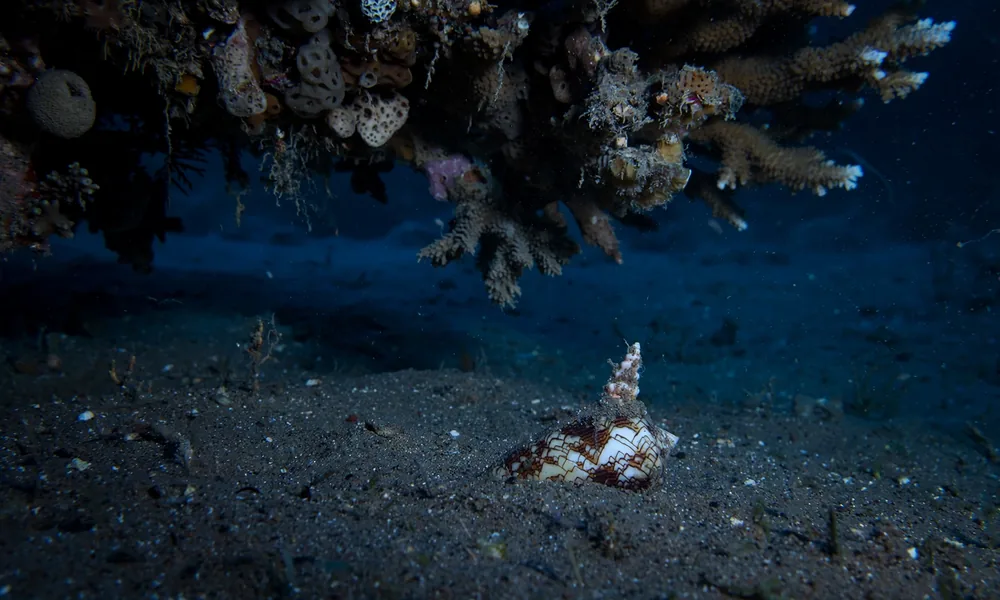
A cone snail looks like a piece of jewellery that has learned to hide in the sand. The shell is a smooth, tapering cone, broad at the shoulder and narrow at the tip, with a flat or gently raised spire and a long, narrow aperture that runs almost the whole length of the shell, and the surface is polished and patterned in browns, whites, golds and blacks, in tents, marbling, bands and spots that break up the outline of the shell against sand and coral rubble. The animal inside is soft and pale, with a broad muscular foot that it uses to crawl and to burrow, a head with two short tentacles and small eyes, and a long, flexible siphon that it holds up out of the sand to taste the water for the chemical scent of prey. When the snail is at rest, the shell sits half-buried and the siphon is the only sign that anything is alive beneath it.
The size of a cone snail depends on the species, and the difference across the genus is wide. The smallest cone snails are barely 16 millimetres long, no bigger than a fingernail, while the geography cone grows to about 10 to 15 centimetres, and the largest recorded geography cone shells reach 166 millimetres, about 6.5 inches. The textile cone is typically 9 to 10 centimetres, with a maximum of 15 centimetres, and the magician cone is smaller still, at 16 to 94 millimetres. The weight is small to match: a geography cone weighs only a few dozen grams, and even the largest cone snail is a light animal for its length, because most of the shell is hollow and the body inside is soft tissue and water. A newly settled cone snail is only about 1.5 millimetres long.

The pattern on the shell is not decoration, and it is not a warning. It is camouflage, and it works because the snail spends its days half-buried in sand and rubble, where a marbled brown and white shell looks like nothing more than a piece of coral debris. Shell collectors have prized these patterns for centuries, and the geography cone and the textile cone are among the most sought-after shells in the world, which is part of the danger: a beautiful shell on a beach tempts a hand to pick it up, and a live cone snail in that shell can sting through a glove. The shell itself is thin for its size in the geography cone, broad and cylindrically inflated, and the aperture is wide and pale, violet white or pink, with ridges on the shoulder that give the shell its grip in the sand.
Where cone snails live
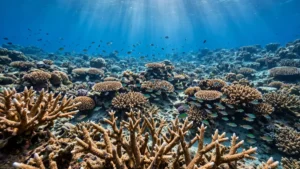
Cone snails live in warm, shallow tropical seas, and they are found nowhere else on Earth in the wild. Their range centres on the Indo-Pacific, from the Red Sea and the east coast of Africa across the Indian Ocean to South-East Asia, northern Australia and the islands of the Pacific as far as Hawaii, with other species in the tropical Atlantic and the Caribbean. They live in shallow water on sand flats, in lagoons, among coral rubble and on reef slopes, and they need warm, clear water and a soft bottom to burrow into, because without sand to hide in there is nowhere to wait for prey. They persist on sand, on rubble and on the edges of seagrass beds where the water stays warm.
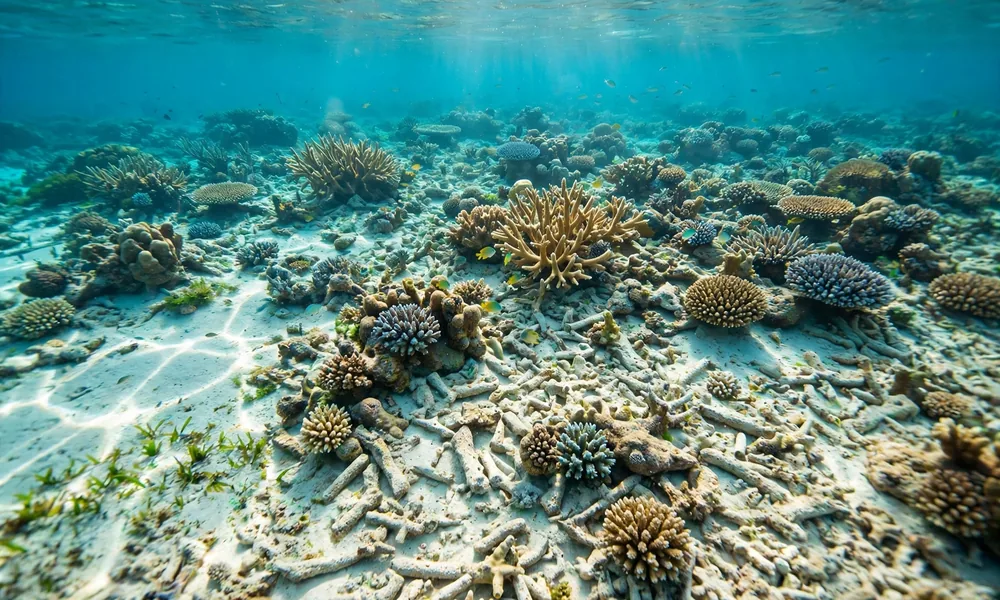
The habitat they choose is the sea floor itself, and they rarely leave it at all. A cone snail spends nearly its whole life after settling on the bottom, between the tide line and the deeper reef slope, buried in sand by day and crawling slowly across the bottom by night. The water has to stay warm, because a cone snail is a tropical animal through and through, and the bottom has to be soft enough to burrow into, because a snail that cannot bury itself is a snail that a passing fish will eat. A patch of sand beside a coral head is a bed, a hunting ground and a nursery all at once, and a reef without sand and rubble is a reef without cone snails.
What cone snails eat
Cone snails are hunters, and their diet is written on the reef itself. The everyday food depends on the species, and cone snails fall into three broad groups: the fish hunters, which eat small fish; the worm hunters, which eat marine worms; and the mollusc hunters, which eat other snails, including other cone snails. The geography cone is a fish hunter, and it takes small fish that blunder too close to its hiding place, while the textile cone is a mollusc hunter that eats cones and cowries, and many smaller species are worm hunters that take the bristleworms and tube worms of the sand. They hunt by scent and by touch, and they need a living animal to recognise food, so they will not eat dead prey, and they eat many small animals rather than a few large ones, because a snail the size of a thumb cannot swallow anything big.

What the snail eats changes as it grows, and the change is a gradual one. The young feed on tiny worms and small marine animals in the sand, and as they grow they take larger prey, until an adult geography cone can take a fish nearly as long as its own shell. A geography cone does not chase its prey, and it does not need to, because its venom does the work: a fish that is stung is paralysed in seconds, and the snail then draws it in with its proboscis and swallows it whole, shell and all, digesting it slowly over hours. The snail may then rest for days before it hunts again, and a single good meal can keep it going for a long while.
How cone snails behave
Cone snails are night snails, and their day is split cleanly in two: buried by day, hunting by night. They spend the daylight hours buried in sand or tucked into coral rubble, with only the tip of the shell and the siphon showing, and they are so still and so well camouflaged that a person can wade straight past a buried cone snail and not see it. As night falls they emerge and begin to crawl slowly across the bottom, tasting the water with the siphon, hunting, and looking for a mate. They are solitary for most of the year, and they do not form groups or colonies, and each snail keeps to its own patch of sand, though several snails may gather on the same rich flat on a good night.

The most famous behaviour in the cone snail is the harpoon strike, and it is a trick that works because the snail is so good at waiting first. When a fish comes within reach, the snail extends its long, flexible proboscis and fires a hollow, barbed radular tooth into the fish, injecting venom in as little as a fraction of a second, and the fish is paralysed almost at once. The tooth is disposable, and it is discarded after a single use, and a replacement is loaded from the radular sac within hours to days, so the snail is never long without a weapon. The geography cone has a second trick as well, a form of hunting called net hunting, in which it spreads its proboscis like a net over a small fish before it stings, and it also releases insulin into the water, which sends the fish into a stupor and makes it easier to catch.

The venom itself is the real marvel, and it is what makes the cone snail both feared and prized. Each species makes its own cocktail of conotoxins, small peptides that block the ion channels and receptors that carry nerve signals, and a single snail may carry 50 to 200 different peptides in its venom, each aimed at a different target. The combined effect is rapid paralysis: the muscles receive no signal to contract, and the body simply stops. Many species make two different venoms, one for hunting and a milder one for defence, and the fish-hunting species are the dangerous ones, because the nerves of a fish and the nerves of a person work in much the same way. A sting from a geography cone can bring numbness, blurred vision, slurred speech and weakness within minutes, and in a severe case the breathing muscles fail, which is why there is no safe way to handle a live cone snail.
Breeding and life cycle
Cone snails breed in the warm months, when the water is at its warmest and food is plentiful, and the season follows the warm season of each reef rather than a single calendar date. Males and females meet on the sand at night, and mating is a slow, deliberate affair, after which the female lays her eggs in small capsules fixed to the sand, to coral rubble or to the underside of a rock. A single female may lay many capsules, each holding a number of eggs, and the capsules are left where they are laid, and the adults do not come back. The eggs are protected by the capsule wall, and inside it the young snail develops until it is ready to face the open water.
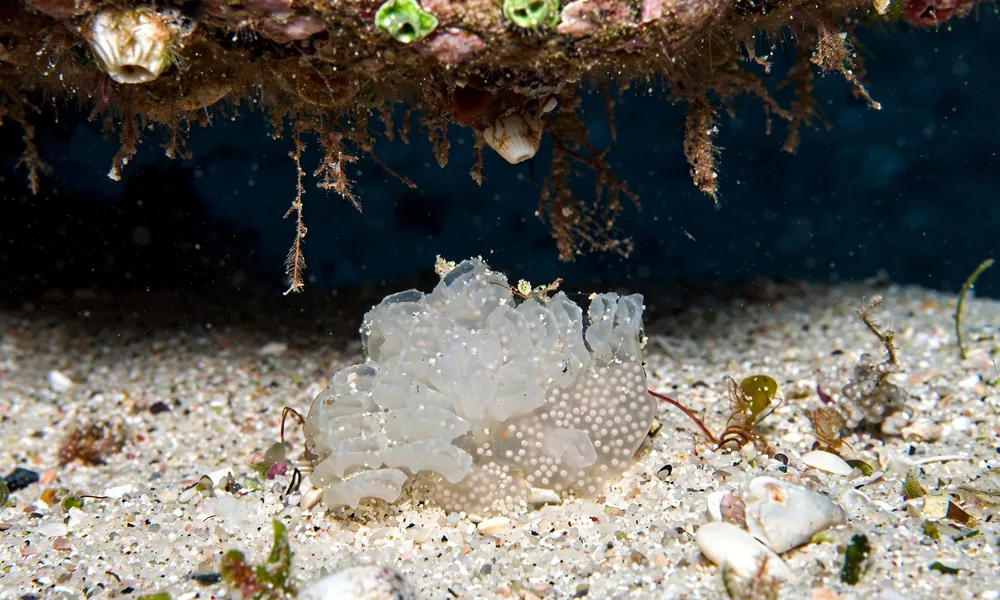
Under normal conditions the young hatch after a little over two weeks, and the larvae drift in the plankton, feeding and growing while fish and filter feeders hunt them from every side. In the textile cone, the eggs hatch after about 16 or 17 days, and the larvae float in the current for about 16 days before they settle on the sea floor, at which point they are only about 1.5 millimetres long. The young are independent from the day they settle, crawling across the sand as tiny snails with a working harpoon already in place, and they must feed and grow through a whole reef of predators before they reach adult size. How long a cone snail lives in the wild is not well measured, and the number is not one that can be stated with confidence, but a large cone snail is a slow-growing animal that has survived many seasons on the reef.
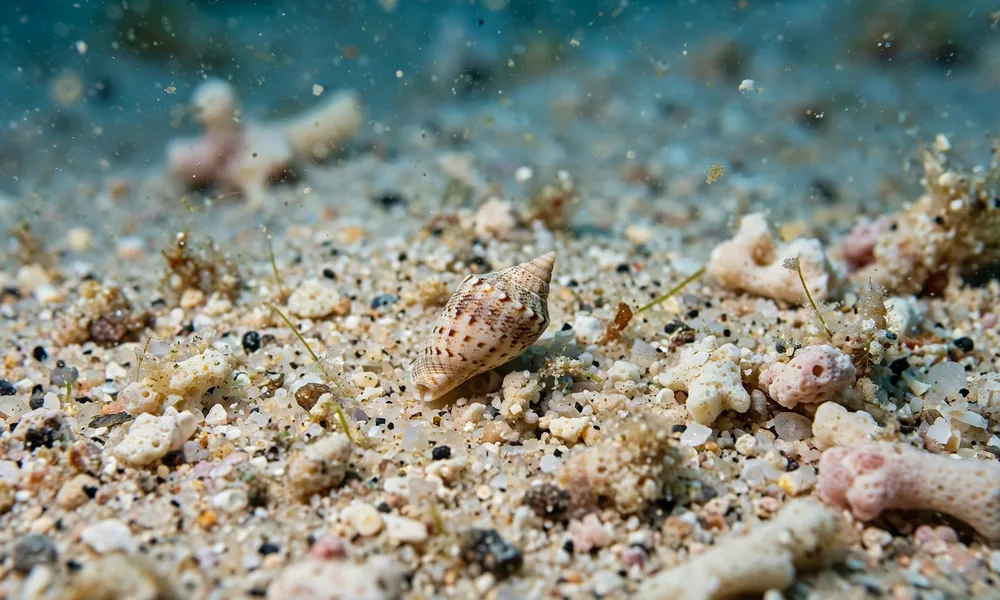
The young snail grows by adding to the edge of its shell, laying down new shell material as its body grows, and the pattern grows with it, so that the marbling of an adult shell is the record of a whole life on the reef. A cone snail that survives its first year on the sand has a good chance of seeing several breeding seasons, and the largest shells on a reef are the oldest animals there, the ones that have outwaited every predator and every storm.
Conservation status
The conservation status of the cone snail is, on paper, a mixed one. The geography cone is listed as Least Concern by the International Union for Conservation of Nature, on the basis of its wide distribution across the Indo-Pacific and the absence of evidence that it is declining fast enough to qualify for a more threatened category. It is common on many reefs, and a diver on a healthy Indo-Pacific reef is quite likely to see one if they know where to look. The listing is honest, and it is also incomplete, because a species can be common across an ocean and still be losing ground in most of the places it lives, and many cone snail species have never been assessed at all.

The main pressure is the loss of the reef itself. When a reef is damaged by bleaching, by pollution, by destructive fishing or by coastal building, the sand flats go, the coral rubble is smothered, and the small fish the snail hunts disappear, and a snail that lives its whole life on one patch of sand has nowhere to go when that patch is ruined. The second pressure is collecting, and the shells of the geography cone and the textile cone are among the most prized in the world, so live animals are taken for their shells and for the shell trade, and a reef that is picked clean of its cone snails loses both a predator and a piece of its balance. The third pressure is the warming sea itself, and a reef that bleaches and dies takes its cone snails with it.
Best seasons for cone snail watching
The best time to look for cone snails is the warm season, when the water is at its warmest and the snails are out hunting in the open, though no season will show you one from a beach towel. The snails are present on the reef all year round, so there is no wrong season in the strict sense, but the warm months are the time when the sand is warmest and the snails are most active, and a visit in the warm season will show you snails crawling across the sand at night and fish hunting in the shallows. In the cooler months the snails retreat into the sand and the rubble, and they are harder to find.
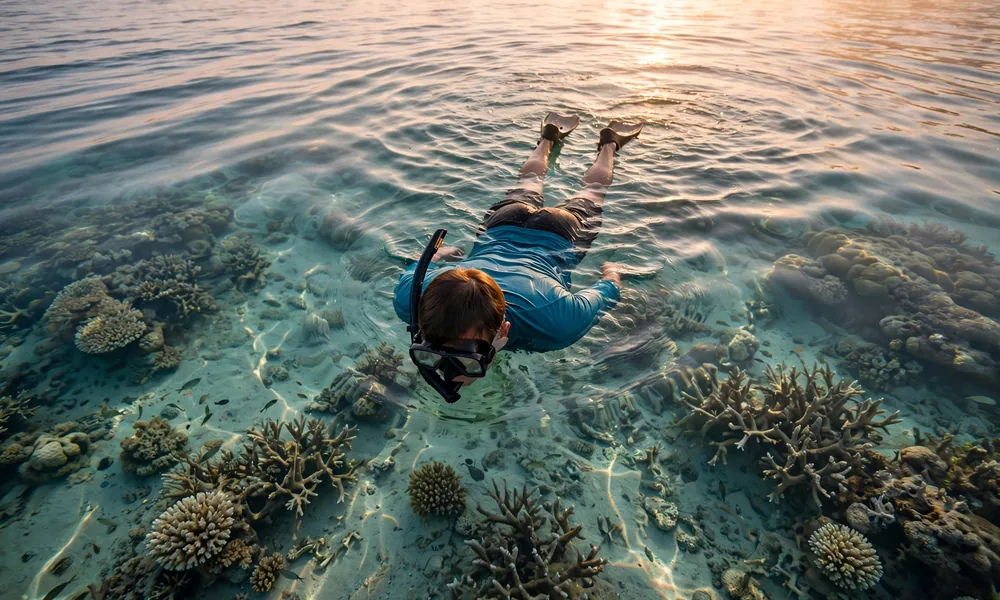
The best hours are the first hours after dark, when the snails are out hunting on the sand and the water is still warm from the day. From about dusk until midnight, the snails are at their most active, crawling, tasting the water and striking at fish, and they are at their most visible then, moving slowly across the sand where a careful observer with a torch can see the patterned shell and the siphon. A guided night snorkel with a local guide, in the warm season, is the best way to see one in the wild, and the guide will know the sand flats where the snails hunt.
Staying safe around cone snails
A cone snail is dangerous to people who pick it up, and there is a safety warning that belongs to the snail itself, and it is a simple one: never pick up a live cone snail, and never put your hand into a shell you cannot see inside. The sting is delivered through a hollow harpoon that can pierce skin, a glove and even a wetsuit, and the proboscis can reach across the length of the shell in any direction, so there is no safe end to hold. The geography cone has caused about three dozen recorded human deaths, and the textile cone has killed people too, and there is no antivenom, so treatment is support for breathing and circulation until the venom wears off. A cone snail will not chase or threaten a person, and it will not bite, because it lives buried in the sand and it will never meet a swimmer that leaves it alone, but a bare foot on a buried snail, or a hand closing around a pretty shell, is all it takes.
Cone snail watching checklist
A little preparation turns a night on a reef into a real chance of seeing a cone snail at its best, patterned on the sand in the warm shallows.
- A guided night snorkel with a local guide in the warm season, when the water is warm and the snails are most active.
- An evening snorkel after dark, when the snails are out hunting on the sand and their patterned shells show in a torch beam.
- Sturdy reef shoes and a wetsuit, so you can walk the sand flats and the rubble without cutting your feet.
- A torch with a gentle beam, so you can find the snails without blinding the reef fish.
- A mask, snorkel and fins that fit well, so you can watch the sand flats without kicking up the bottom.
- A field guide to the shells of the Indo-Pacific, so you can tell a geography cone from a textile cone.
- Respect for the snails and the reef, keeping your hands off every shell, keeping your distance, and leaving the reef as you found it.
Frequently asked questions
How big do cone snails get?
Cone snails range from tiny shells barely 16 millimetres long to the geography cone at 166 millimetres, and most of the species a snorkeller meets are between 4 and 15 centimetres long. A typical geography cone is about 10 to 15 centimetres, with adult shells recorded from 43 to 166 millimetres, and a typical textile cone is about 9 to 10 centimetres, with the largest reaching 15 centimetres. The magician cone is smaller, at 16 to 94 millimetres, and a newly settled cone snail is only about 1.5 millimetres long, a speck of shell on the sand that must grow through a whole reef of dangers before it reaches adult size.
What do cone snails eat?
A cone snail eats fish, worms or other snails, depending on the species, and it takes its prey on the sand at night with a venomous harpoon. The geography cone is a fish hunter, and it takes small fish that drift too close to its hiding place, while the textile cone is a mollusc hunter that eats cones and cowries, and many smaller species are worm hunters that take the worms of the sand. The snail does not chase its prey, and it does not need to, because the venom paralyses the prey in seconds, and the snail then draws it in and swallows it whole.
Are cone snails dangerous to people?
Yes, some cone snails are dangerous to people, and the geography cone is the most dangerous of them all, with about three dozen human deaths recorded. The sting is delivered through a hollow, barbed tooth that can pierce skin, a glove and even a wetsuit, and the venom blocks the nerve signals that keep the muscles working, so a severe sting can stop a person breathing. There is no antivenom, and treatment is support for breathing and circulation until the venom wears off. Most cone snails will never sting a person that leaves them alone, but a live cone snail should never be picked up.
Where do cone snails live?
Cone snails live in warm, shallow tropical seas, above all in the Indo-Pacific, from the Red Sea and the east coast of Africa across the Indian Ocean to South-East Asia, northern Australia and the islands of the Pacific as far as Hawaii. They live in shallow water on sand flats, in lagoons, among coral rubble and on reef slopes, and they need warm, clear water and a soft bottom to burrow into, because without sand to hide in there is nowhere to wait for prey. They spend nearly their whole lives on the sea floor, buried in sand by day and crawling slowly across the bottom by night.
Can you keep a cone snail as a pet?
You should not, and in most places you must not try. Cone snails are venomous, and a geography cone or a textile cone in a home aquarium is a genuine danger to anyone who puts a hand in the tank, because the harpoon can pierce a glove and the sting can kill. They are also difficult to keep, needing warm salt water, live prey and a deep sand bed, and they are nocturnal, so they are most active when their keeper is going to bed. A cone snail that escapes into the wild must never be released where it does not belong, because it could harm the local reef life.
How is this guide different from the coconut crab guide?
This guide covers the cone snail, a slow, venomous sea snail of tropical reefs, Conus geographus and its relatives, that lives buried in sand, hunts fish, worms and other snails at night, and strikes with a single venomous harpoon, while our coconut crab guide covers Birgus latro, the largest living land arthropod, a giant land hermit crab of Indo-Pacific islands that weighs up to 4.1 kilograms, spans up to about a metre across the legs, climbs palm trees, and cracks coconuts with claws strong enough to lift 29 kilograms. One is a small, soft-bodied hunter you meet buried in warm sand under the sea; the other is a huge, hard-shelled climber you meet on a tropical island at night, waving claws the size of a fist.
Conclusion
The cone snail species are a reminder that a snail does not need to be big, or fast, or fierce to be unforgettable. A beautifully patterned shell, a harpoon fired in a fraction of a second, a venom made of dozens of precisely aimed toxins, and a life buried in the sand of a tropical reef have made the cone snail the most famous small hunter of the reef, at home in the warm, shallow seas from the Red Sea to Hawaii.
If you go looking for one, go on a guided night snorkel in the warm season, go after dark, and drift slowly over the sand flats with your eyes on the bottom. Find the patches of sand beside the coral heads, watch for a marbled shell half-buried in the sand and a siphon tasting the water, and wait for the snail to move, and you will have met the cone snail that turns a quiet stretch of reef into a place of sudden, beautiful danger. Look, and do not touch.