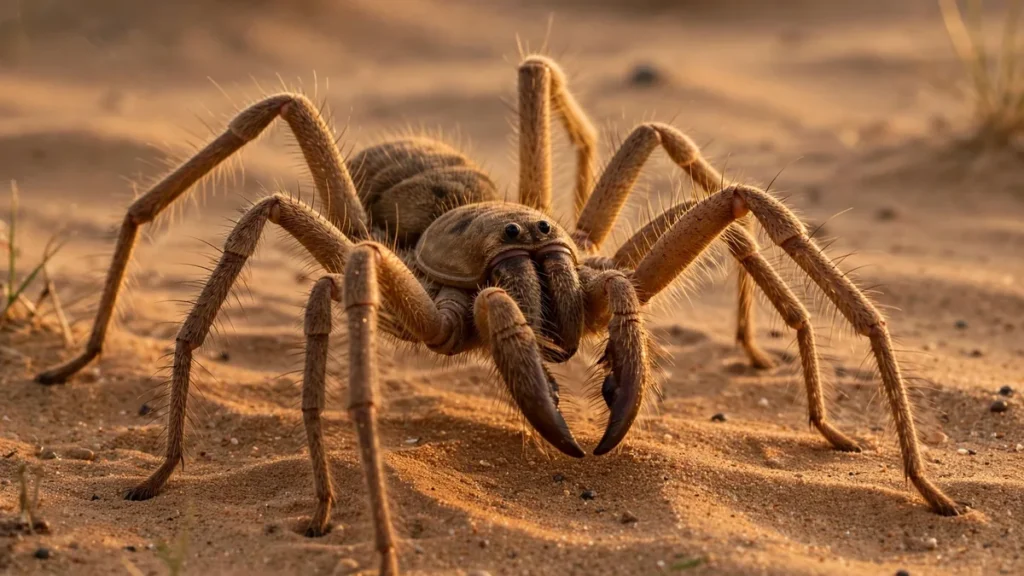
The camel spider species is the desert hunter that photographs made famous and facts made ordinary, a fast, sandy-coloured arachnid with jaws so large they look Photoshopped, yet it is neither a spider nor a camel, and it is not venomous. If you are asking what a camel spider is, the short answer is a solifuge, a member of the arachnid order Solifugae, a ground-running predator of hot deserts that hunts at night with huge chelicerae, has no venom glands and spins no silk, and is usually no more than 5 to 7 centimetres in body length, with a leg span of up to 15 centimetres in the largest species. There are more than 1,100 described species of solifuge in the world, and the best known is Galeodes arabs, the Arabian camel spider of the deserts of the Middle East and North Africa.
What makes the camel spider worth a whole guide is the gap between its reputation and its reality. The stories say it chases soldiers across the desert, screams as it runs, eats camels from the inside, and grows as big as a dinner plate, and almost none of that is true. The real animal is smaller, quieter and far more interesting: a high-speed hunter that follows shade in the daytime, sprints across the sand at night, and crunches beetles and scorpions with jaws that make up a third of its body length. This guide follows the whole animal: how it looks, where it lives, what it eats, how it behaves, and how it breeds.
Key takeaways
- The camel spider species belongs to the order Solifugae, the solifuges, and it is neither a true spider nor a scorpion, though it is an arachnid like both of them.
- Camel spiders have no venom glands and spin no silk, and no species of solifuge is known to be venomous, though a large one can give a painful nip with its jaws.
- The Arabian camel spider, Galeodes arabs, is 5 to 7 centimetres in body length, with a leg span of up to 15 centimetres, and its chelicerae can make up a third of its body length.
- The often-quoted top speed of about 16 kilometres per hour is an estimate rather than a measured speed, and recorded speeds are well below it, though camel spiders are still fast for an arachnid.
- There are more than 1,100 described species of solifuge, living in the arid and semi-arid regions of Africa, the Middle East, Asia and the Americas, and they are absent from Antarctica and Australia.
The camel spider species and their relatives
Camel spiders belong to the order Solifugae, a distinct order of arachnids that sits in the class Arachnida alongside the true spiders, the scorpions, the harvestmen, the ticks and the mites, and the order’s name comes from Latin and means those that flee from the sun, a nod to their mostly nocturnal habits. Solifuges are sometimes called sun spiders, wind scorpions or wind spiders, but none of those names is accurate, because they are not spiders and not scorpions. They share the arachnid body plan of two body sections and eight legs, but they belong to none of the other orders. There are more than 1,100 described species of solifuge, in about 15 families, and they occur across most of the world’s arid and semi-arid regions.
The Arabian camel spider, Galeodes arabs, is the lead species of this guide, and it is the solifuge most people picture when they hear the name, a large, sandy-brown hunter of the deserts of the Middle East and North Africa. It grows to about 5 to 7 centimetres in body length, with a total leg span of up to 15 centimetres, and its chelicerae, the huge forward-pointing jaws, can make up a third of its body length. It is a nocturnal and crepuscular predator that shelters by day in a burrow it digs with its jaws and its spiny legs, and it lives for about one to two years. Like the spider, the camel spider is an arachnid with eight legs and two body sections, but the ordinary spider spins silk, waits in a web or stalks its prey with venom, while the camel spider spins nothing, waits for no web, and hunts down its prey on foot with brute jaw power alone.
| Type | Animal | Where it lives | Best-known food | Length or Weight |
|---|---|---|---|---|
| Family | Camel spiders (Galeodidae) | Africa, Middle East and Asia | Beetles, termites and lizards | About 1 cm to 7 cm long |
| Genus | Camel spiders (Galeodes) | Africa, Middle East and Asia | Beetles, termites and lizards | About 3 cm to 7 cm long |
| Species | Arabian camel spider (Galeodes arabs) | Middle East and North Africa | Beetles, scorpions and lizards | Body 5 to 7 cm long |
| Species | Granti’s camel spider (Galeodes granti) | Southern Africa | Beetles and termites | About 3 cm to 6 cm long |
| Species | North American sun spider (Eremobates species) | South-western North America | Beetles and termites | About 1 cm to 4 cm long |
| Species | South African sun spider (Solpuga species) | Southern Africa | Beetles and termites | About 2 cm to 5 cm long |
The closest relatives of the Arabian camel spider are the other solifuges of the genus Galeodes, a genus of large, fast desert hunters that live across Africa, the Middle East and Asia, and the genus as a whole ranges from about 3 to 7 centimetres in body length. Granti’s camel spider, Galeodes granti, is a hunter of the deserts of southern Africa, about 3 to 6 centimetres long, that lives in the same dry country as the Namib and the Kalahari and hunts beetles and termites on the sand at night. The North American sun spiders, Eremobates species, are smaller, about 1 to 4 centimetres long, and they live in the deserts of the south-western United States and Mexico, where they are sometimes found under rocks and in houses after a hot day. The South African sun spiders, Solpuga species, are about 2 to 5 centimetres long, and they are the solifuges of the southern African scrub and savanna, hunting the same beetles and termites as their northern cousins.
What camel spiders look like
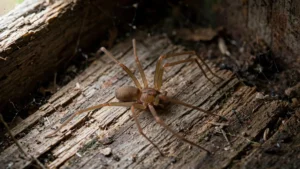
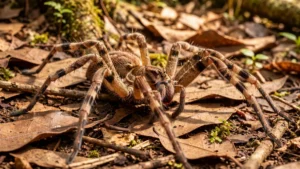
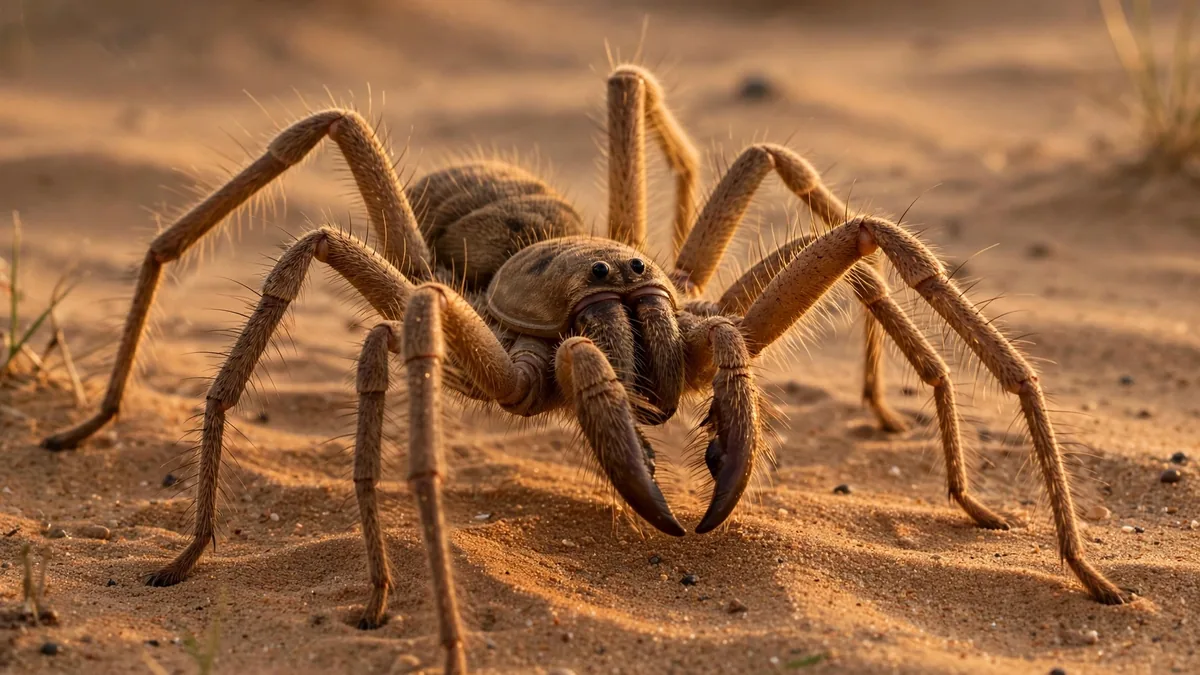
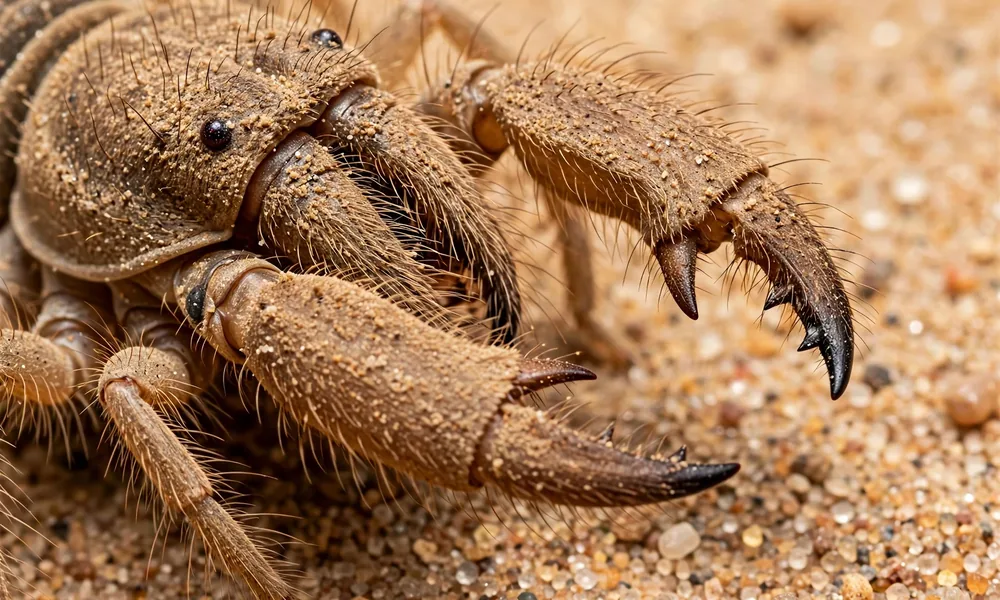
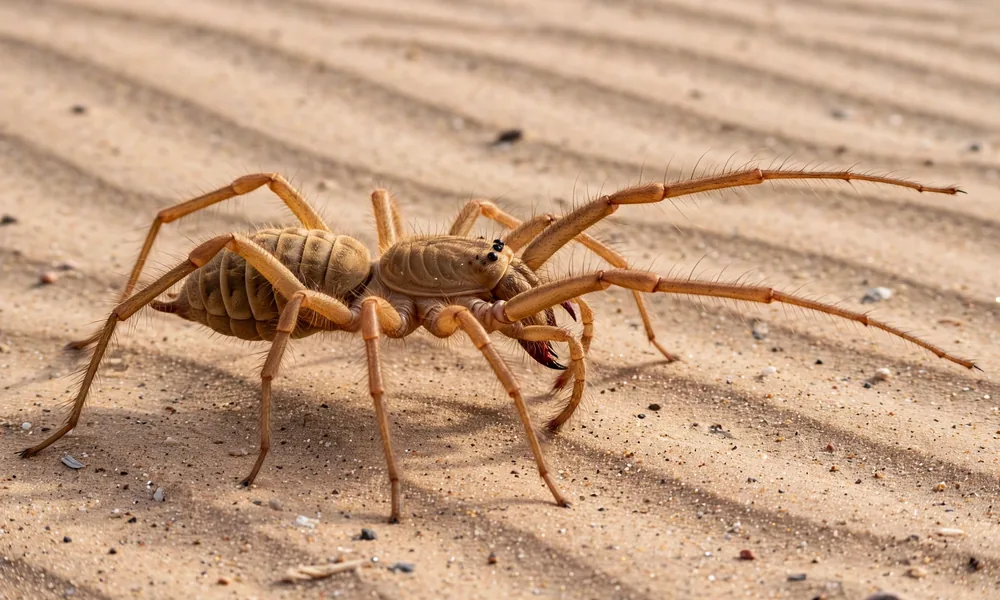
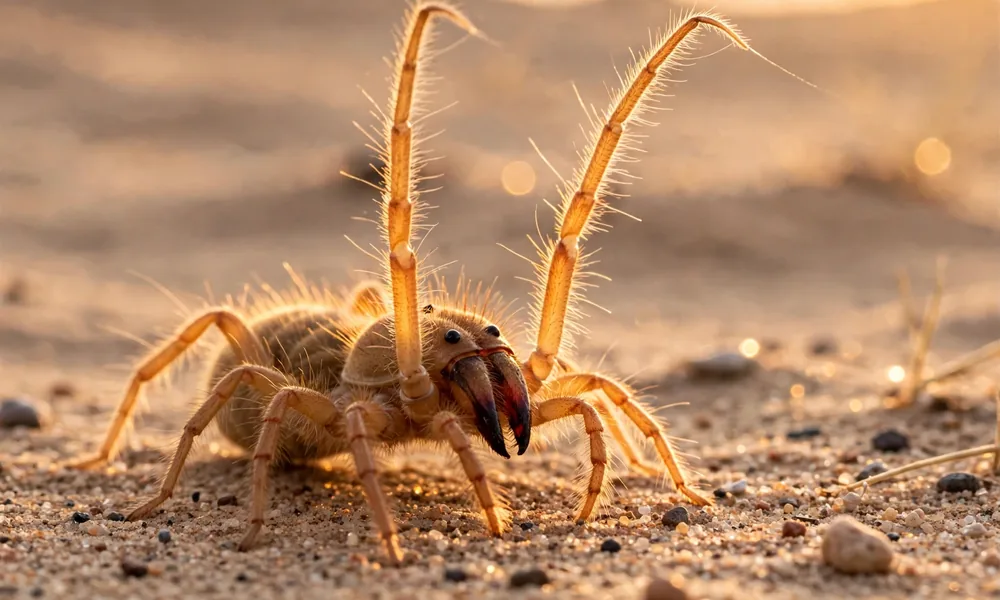
A camel spider looks like a spider that has been built for sprinting, and the first thing anyone notices is the jaws. The body is divided into two sections, a front prosoma and a rear opisthosoma, and the front carries a pair of enormous chelicerae, two-segmented jaws that point forwards and can make up a third of the body length, armed with teeth and strong enough to crush a beetle’s shell. Behind the jaws are two long, leg-like pedipalps that the animal holds up in front of it like feelers, and behind those are eight walking legs, though the first pair is so slender that it is used as a feeler rather than for walking, so a camel spider runs on six legs and feels its way with the other four appendages. The body is covered in bristly hairs, sandy brown, yellowish or grey, and the abdomen is soft and segmented, swelling visibly after a big meal.
The size of a camel spider depends on the species, and the difference between a small one and a large one is easy to see once you know to look for it. Most solifuges are small, only 1 to 4 centimetres in body length, and a North American sun spider is about that size, a quick, sandy creature that fits on a coin. The Arabian camel spider is one of the largest, at 5 to 7 centimetres in body length, with a leg span of up to 15 centimetres, and the largest solifuges of all reach a leg span of about 12 to 15 centimetres. That is big for an arachnid, and it is a long way from the dinner-plate monsters of the stories, and no measured specimen has ever supported the claim of a camel spider the size of a human leg.
The jaws are not decoration, and they are not there only to look frightening. They are the camel spider’s whole hunting kit, and they do the work that venom does for a true spider. A camel spider has no venom glands and no means of injecting anything, so it catches its prey with its pedipalps, chops it up with its chelicerae, and softens it with digestive fluids before it feeds. The jaws are also tools, and a camel spider digs its daytime burrow with them, scraping sand and cutting through roots, and a female uses them to defend her burrow. The bristly hairs are sense organs as much as they are covering, and a camel spider feels the world through its pedipalps, its first pair of legs and the hairs on its body, because its eyesight is poor and it hunts mostly by touch and vibration.
Where camel spiders live
Camel spiders live in the hot, dry places of the world, and they are found across most of the arid and semi-arid regions of Africa, the Middle East, Central Asia and the Americas, from the Sahara and the Arabian deserts to the deserts of the south-western United States and Mexico. Their heartland is the desert, the sand seas, the gravel plains and the rocky wadis of North Africa and the Middle East, and they are most common where the days are hot and the ground is open enough to run on. They are absent from Antarctica and Australia, and they are rare in wet country, because a solifuge is built for dry heat and does poorly in damp soil. The Arabian camel spider lives across North Africa, from Morocco to Egypt and Sudan, and across the Arabian Peninsula, the Levant, Iraq and Iran, in hyper-arid sand seas, gravel plains and rocky wadis.
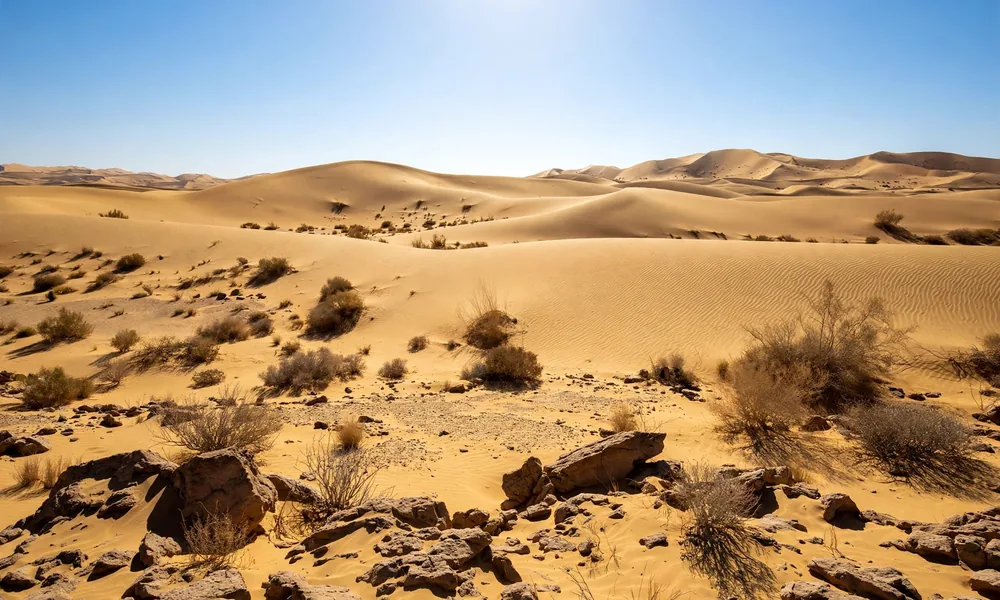
The habitat a camel spider needs is not one place but two, close together: open ground to hunt on, and shelter to hide in by day. The hunting ground is the open desert floor, the sand and gravel where beetles and termites move at night, and the camel spider needs room to sprint, because it hunts by running its prey down rather than by waiting in ambush. The shelter is a burrow it digs itself with its jaws and its spiny legs, or a crevice under a rock, or a hollow beneath a shrub, and it spends the heat of the day in the dark and the cool, coming out at dusk and at night to hunt. A camel spider that cannot find shelter in the heat of the day will die of it, and a desert without rocks, shrubs or burrows is a desert without camel spiders.
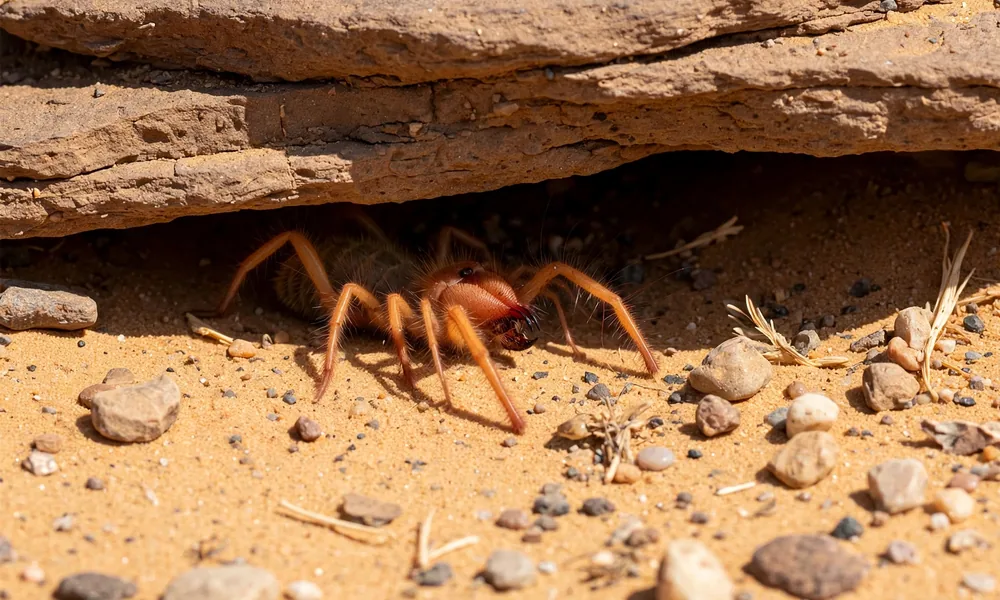
Camel spiders also turn up where people do, and a solifuge in a house or a camp is usually there for the same reason a person is: shade and cool. Soldiers in Iraq and Afghanistan met them in tents and sleeping bags, and desert travellers meet them in the shade of a vehicle or a building, and the animal is not there to hunt people but to escape the sun. A camel spider that runs towards a person in the daytime is usually running towards the person’s shadow, because the shadow is the nearest patch of shade, and if the person walks away the shadow moves, and the camel spider follows it.
What camel spiders eat
Camel spiders eat other animals, and they are not fussy about which ones. The everyday food is insects, and the desert offers a steady supply of darkling beetles, ground beetles, grasshoppers, crickets and termites, and a camel spider will take any of them that it can catch. It also eats other arachnids, including scorpions and other solifuges, and it will take small lizards, rodents and birds on rare occasions. It is a top predator of its size class in the desert, and it eats other predators as readily as it eats prey, which is why two camel spiders that meet will often fight, and why the larger one will eat the smaller.
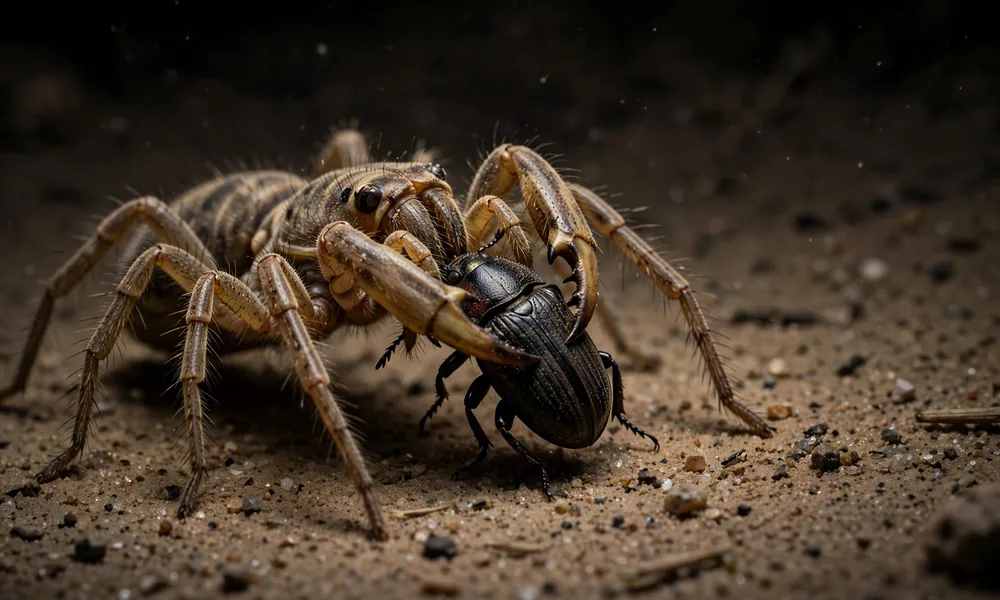
A camel spider hunts by running, and it is one of the fastest land invertebrates for its size. It sprints across the sand in short, erratic bursts, using its pedipalps and its first pair of legs to feel the ground ahead, and when it finds prey it grabs it with its pedipalps and brings its jaws to bear. The chelicerae chop and crush, and the digestive fluids soften the flesh, and the camel spider sucks up the liquid food, leaving the hard shell behind. It has a high metabolic rate for a desert animal, and it eats a lot for its size, and a camel spider that has just fed will have a visibly swollen abdomen, while one that has not fed for days will be thin and restless.
What a camel spider eats changes with what is available, and the animal is as much a scavenger as a hunter when the desert offers it a meal. A dead insect, a wounded lizard or a carcass left by another predator will all be eaten, and a camel spider will feed on carrion without hesitation. It can also go a long time without food or water, living off the moisture in its prey, and studies of the Arabian camel spider have found that it loses water only slowly in dry air, which is part of how it survives where rain may not fall for months. The young eat smaller prey, tiny insects and termites, and they grow fast, because a solifuge that grows slowly is a solifuge that gets eaten.
How camel spiders behave
Camel spiders are night hunters, and their day is split cleanly in two: shelter by day, hunt by night. They spend the heat of the day in a burrow or under a rock, and they come out at dusk and hunt through the night, when the desert is cool and the beetles and termites are out. They are solitary animals, and they do not form groups or colonies, and each camel spider keeps to its own patch of desert, though several may hunt the same ground on a good night. They are also fiercely territorial, and a camel spider that meets another of its kind will usually fight, and the loser, if it cannot escape, will be eaten.
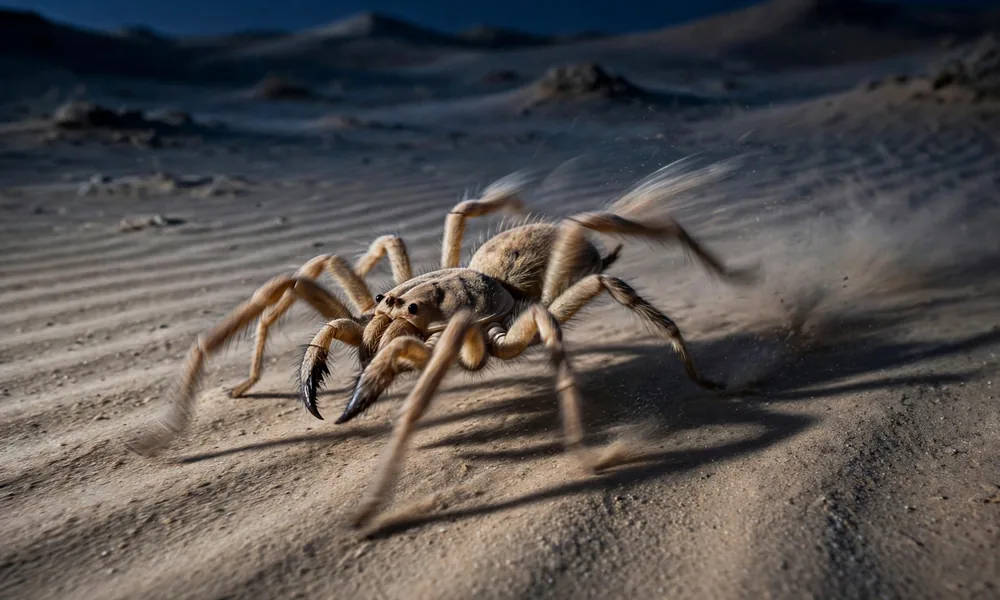
The most famous behaviour in the camel spider is the one that never happens, and it is worth setting out plainly, because the myths have travelled further than the facts. Camel spiders do not chase people, and they do not scream. What looks like chasing is a search for shade, and what sounds like screaming is a faint hiss or rasp, made by rubbing the chelicerae together, a sound called stridulation that is far too quiet to be heard across a camp. They do not eat camels, and they do not lay eggs in a camel’s stomach, and the stories of camel spiders nipping at a camel’s belly until its intestines fall out are folklore, not biology. They do not trim hair in the night either, though in South Africa they are called haarskeerders, or beard trimmers, because some people believe they cut the hair of sleeping people to line their nests.
The speed is real, even if the number is not, and a camel spider is fast enough to startle anyone who sees it move. The figure most often quoted is about 16 kilometres per hour, or 10 miles per hour, and it is repeated in almost every popular account, but it is an estimate rather than a measured speed, and museum staff who went looking for hard measurements found recorded speeds well below it. What is certain is that a camel spider can sprint in bursts of several metres per second across open sand, which is very fast for an animal of its size. The speed is for hunting and for escaping, and a camel spider that is caught in the open in daylight will run for the nearest shade as fast as it can.
Breeding and life cycle
Camel spiders breed in the warm months, when the desert is at its most active, and the courtship is brief and businesslike. The male finds a female by following her scent, and he deposits a packet of sperm, called a spermatophore, on the ground or directly into the female’s genital opening, using his chelicerae to place it, and then he leaves quickly. The female digs a burrow in the sand, often deeper than her daytime shelter, and lays her eggs in it, in a clutch that can number several dozen, and she stays with them, guarding the burrow and the eggs until they hatch. The eggs hatch in a few weeks, depending on the warmth of the sand, and the young that come out are small, pale versions of the adults.
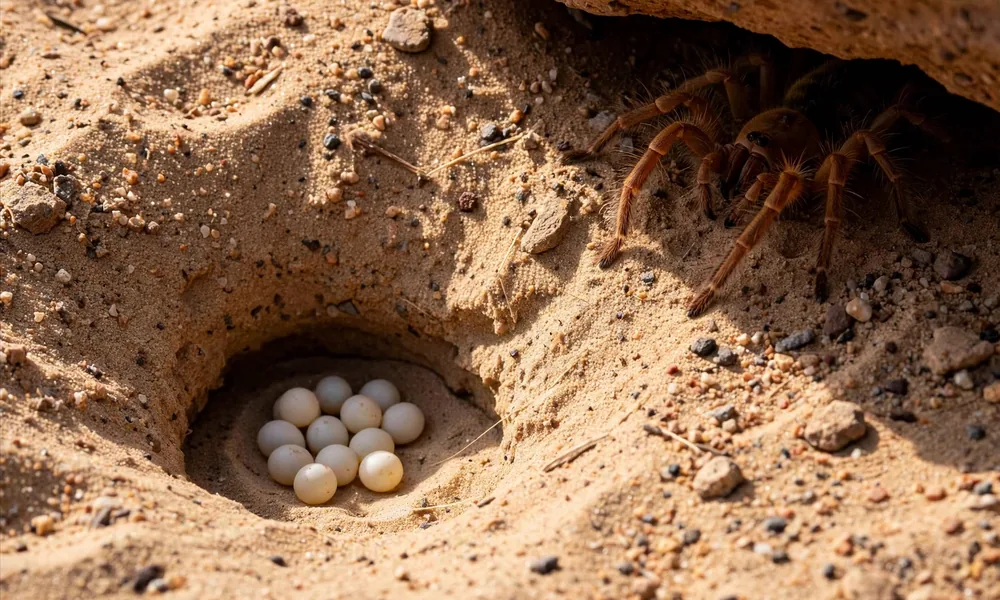
The young go through several moults before they reach adulthood, and each moult leaves them soft and vulnerable for hours, hiding in the burrow while the new cuticle hardens. They grow fast, because the desert gives them only a short season, and they eat the smallest prey they can find, tiny insects and termites, before moving on to beetles and scorpions as they grow. Most solifuge species live for only about a year, and the Arabian camel spider lives for about one to two years, growing fast, eating voraciously, reproducing once or twice, and dying, often before the next winter sets in.
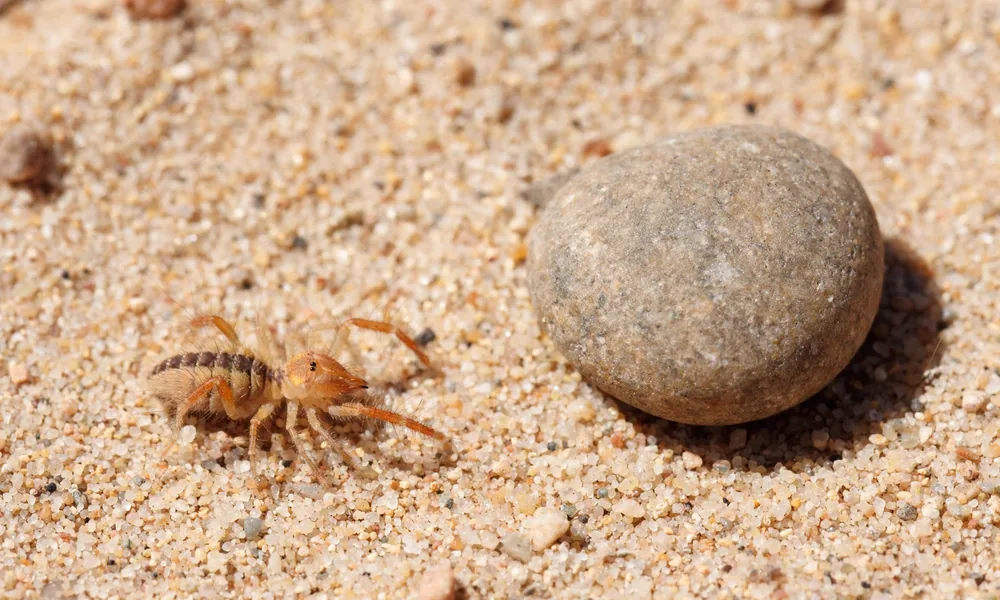
The life cycle is short and intense, and it is shaped by the desert’s seasons. The adults are most active in the warm months, when the nights are warm enough to hunt and the prey is plentiful, and they are least active in the cold of winter, when many species shelter in burrows and wait for the warmth to return. There is no parental care beyond the guarding of the eggs, and the young are independent from the day they leave the burrow, hunting for themselves and moulting on their own, with no help from the adults.
Conservation status
The conservation status of the camel spider is, in a word, unassessed. Solifuges as a group have not been widely assessed by the International Union for Conservation of Nature, and no species of solifuge is listed as threatened, which is not the same as saying they are all safe, but it is the honest position. They are generally common where their habitat remains, and a visitor to a desert at night in the warm months is likely to see one if they look carefully. The lack of assessment is itself a problem, because a group that has never been counted cannot be shown to be declining, and the desert is changing faster than the science that studies it.
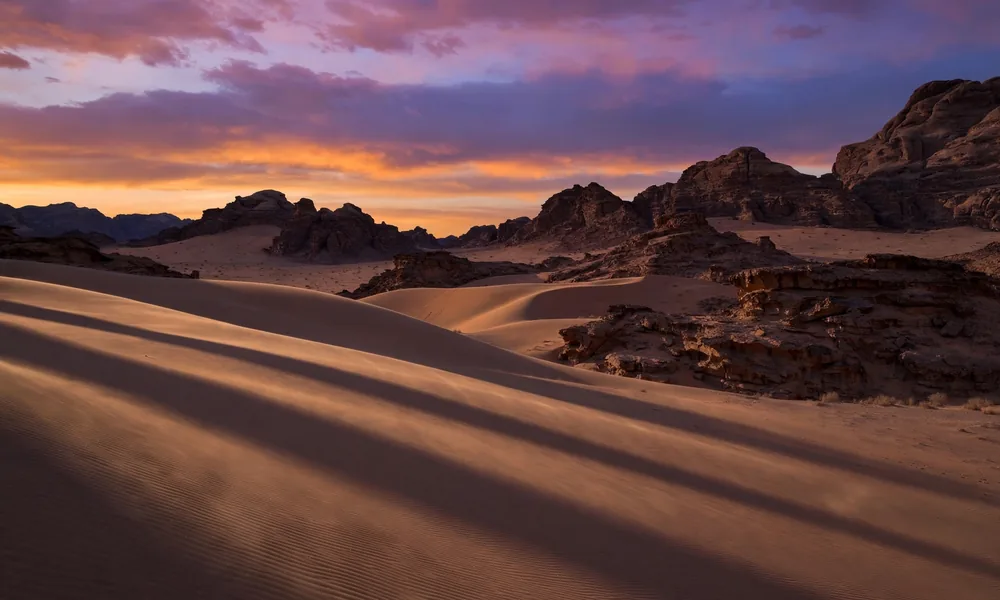
The main pressure on camel spiders is habitat loss, and it comes in the forms that deserts are most vulnerable to. A desert that is built on, mined, ploughed or driven over loses the open ground the camel spider hunts on and the rocks and shrubs it shelters under, and a desert that is lit all night loses the darkness its nocturnal hunters need. Pesticides are a second pressure, because a camel spider that eats poisoned beetles is poisoned itself, and a desert sprayed for locusts loses its insects and its insect eaters together. The third pressure is collection, because large camel spiders are sometimes taken for the pet trade, and a solifuge taken from the desert rarely survives long in captivity. The best protection for a camel spider is the desert itself, left open, dark and undisturbed.
Best seasons for camel spider watching
The best time to look for camel spiders is the warm half of the year, when the nights are warm enough for them to hunt and the desert is at its most active. In the Middle East and North Africa that means the spring and the autumn, when the days are hot but not brutal and the nights are warm. The winter is the wrong season, because the nights are cold and the camel spiders stay in their burrows, and the height of summer can be too hot even for them, with the ground too warm to cross in daylight.
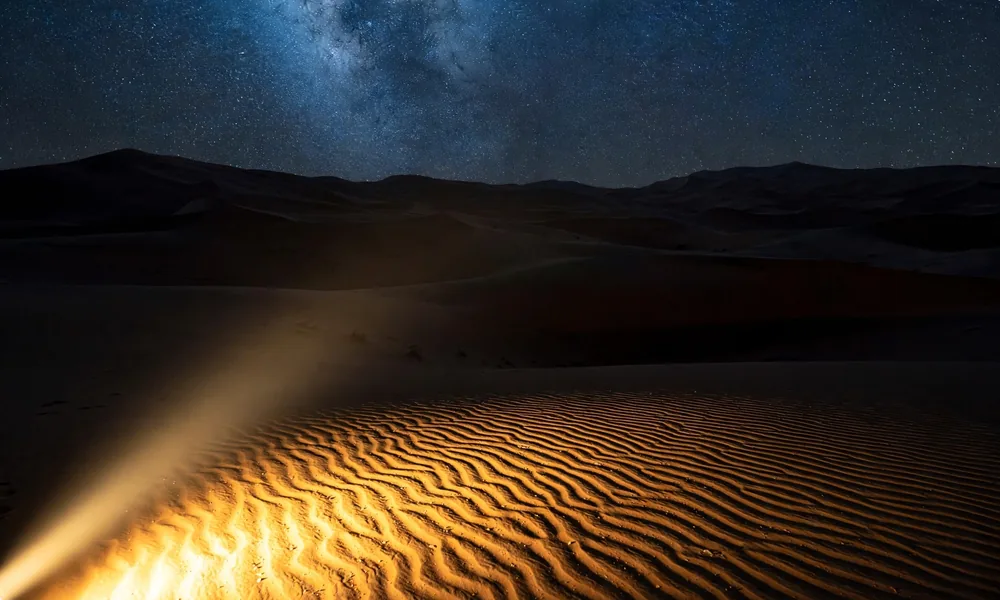
The best hours are the first hours after dark, when the camel spiders come out of their burrows and begin to hunt, and the air is still warm from the day. From about dusk until midnight, the desert floor is at its busiest, with beetles and termites on the move and camel spiders sprinting after them, and a careful observer with a torch can see them crossing open sand in the beam. The most famous camel spider of all is the Arabian camel spider, and National Geographic keeps a live profile of the camel spider, so a guided night walk in the desert in spring or autumn, with a local guide who knows the ground, is the best way to meet one in the wild.
Staying safe around camel spiders
A camel spider is not dangerous to people who leave it alone, and there is no safety warning that belongs to the animal itself beyond the obvious one: do not handle it, and do not corner it. A camel spider is not venomous, and its bite delivers no toxin, but the jaws are powerful and a large one can give a painful nip that breaks the skin, and any wound from a wild animal can become infected if it is not cleaned. If you are bitten, clean the wound thoroughly with soap and water and watch it for signs of infection, and seek medical help if it becomes red, swollen or painful. In camp, shake out your shoes and your sleeping bag before you use them, keep your tent zipped, and do not reach into dark crevices with a bare hand.
Camel spider watching checklist
A little preparation turns a night in the desert into a real chance of seeing a camel spider at its best, sprinting across the sand in the dark.
- A guided night walk in the desert in spring or autumn, when the nights are warm and the camel spiders are out hunting.
- An evening walk after dark, when the desert floor is at its busiest and the camel spiders are crossing open sand.
- Sturdy boots and long trousers, so you can walk the rocky desert ground without cutting your feet or your legs.
- A torch with a gentle beam, so you can find the camel spiders without blinding them or the other desert animals.
- Binoculars and a camera that works in low light, so you can watch the sand without crowding the animals.
- A field guide to the arachnids of the desert, so you can tell a camel spider from a true spider or a scorpion.
- Respect for the animals and the desert, keeping your distance, keeping your hands out of burrows and crevices, and leaving the desert as you found it.
Frequently asked questions
How big do camel spiders get?
Camel spiders are big for an arachnid, and the Arabian camel spider is 5 to 7 centimetres in body length, with a leg span of up to 15 centimetres. Most solifuges are smaller, only 1 to 4 centimetres in body length, and the largest leg spans of all are about 12 to 15 centimetres. No measured specimen has ever supported the claim of a camel spider the size of a dinner plate, and the famous photograph that made two camel spiders look as big as a person’s torso was a trick of forced perspective, with the animals held close to the camera.
Are camel spiders venomous?
No, camel spiders are not venomous, and no species of solifuge is known to be venomous. They have no venom glands and no means of delivering venom, and they catch their prey with their jaws and their pedipalps instead. A single report from 1978 claimed to have found venom glands in an Indian solifuge, but it was never confirmed by later studies, and it described no way for the animal to deliver any venom. A large camel spider can give a painful nip, and a bite that breaks the skin should be cleaned, but the bite itself delivers no toxin.
Do camel spiders chase people?
No, camel spiders do not chase people, and they do not scream either. What looks like chasing is a search for shade: a camel spider in the daytime runs towards the nearest patch of shade, and a person’s shadow is a convenient one, so if the person walks away the shadow moves and the camel spider follows it. What sounds like screaming is a faint hiss or rasp, made by rubbing the chelicerae together, and it is far too quiet to be heard across a camp. A camel spider that runs towards you in the desert is looking for shade, not for you.
Where do camel spiders live?
Camel spiders live in the arid and semi-arid regions of Africa, the Middle East, Central Asia and the Americas, from the Sahara and the Arabian deserts to the deserts of the south-western United States and Mexico. They need open ground to hunt on and shelter to hide in by day, a burrow they dig themselves or a crevice under a rock, and they are most active at night, when the desert is cool and the beetles and termites are out. They are absent from Antarctica and Australia, and they are rare in wet country, because they are built for dry heat.
Can you keep a camel spider as a pet?
You can, but you should not, and most people who try will be disappointed. Camel spiders live for only about one to two years, they need a large area of warm, dry sand to run on, and they are solitary and territorial, so they cannot be kept together. Their needs in captivity are poorly understood, and they tend to fare badly outside their native habitat, refusing food and dying young. A camel spider is a desert hunter, and it belongs in the desert, where it can sprint across open sand at night and dig its own burrow by day.
How is this guide different from the bumblebee guide?
This guide covers the camel spider, a fast, solitary desert hunter of the order Solifugae that is neither a true spider nor venomous, hunts at night with huge jaws, and lives for about one to two years in the deserts of the Middle East and North Africa, while our bumblebee guide covers a gentle, fuzzy pollinator of the genus Bombus that lives in a small annual colony of 50 to 400 bees, flies in cold weather, and shakes pollen from flowers by buzz pollination. One is a lone hunter you meet sprinting across the sand at night; the other is a social bee you meet working a flower in a sunny meadow by day.
This guide also goes further than our general spider guide, which covers spiders as a whole, from garden spiders to tarantulas to orb weavers, in a single broad sweep. That guide is the place to start if you want to know what a spider is, while this guide stays with one group for its whole length, following the camel spider from its solifuge relatives and its huge jaws through its desert habitat, its beetle and scorpion diet, its night hunts and its myths to the seasons and the checklist that will help you see one for yourself.
Conclusion
The camel spider species is a reminder that a fearsome reputation can hide an ordinary animal, and that the ordinary animal is more interesting than the monster. Huge jaws, a sprint across the sand, a burrow in the desert and a life of hunting beetles and scorpions at night have made the camel spider the most misunderstood arachnid of the desert, at home in the hot, dry places of Africa, the Middle East, Asia and the Americas.
If you go looking for one, go to a desert in spring or autumn, go after dark, and walk slowly across the open sand with a torch and a local guide. Watch for a low, sandy shape sprinting across the beam, jaws first and pedipalps raised, and you will have met the camel spider that turns a quiet stretch of desert into a place of sudden, startling speed.