The antarctic krill species is a small, shrimp-like crustacean that holds the whole Southern Ocean together, and it does so in numbers that are hard to picture. Antarctic krill, Euphausia superba, grows to just 6 centimetres long and weighs no more than 2 grams, yet it gathers in swarms so dense that they can be seen from space, and its total biomass is estimated at around 379 million tonnes. If you are asking what Antarctic krill is, the short answer is a keystone species of the cold waters around Antarctica, a filter feeder that eats the tiniest plants in the sea and is in turn eaten by almost everything else, from penguins and seals to the blue whale.
Most people will never see a krill with their own eyes, and that is part of the wonder of it. The animal is barely the length of a finger and almost transparent, yet whole food webs lean on it, and the Southern Ocean would fall silent without it. A single blue whale can eat around 4 tonnes of krill in a day, and the krill’s own droppings carry carbon down to the deep sea, where it stays locked away for a thousand years. This guide follows the whole animal: how it looks, where it lives, what it eats, how it breeds, and why a creature the size of a paperclip has become one of the most closely watched animals in the world.
Key takeaways
- The antarctic krill species is Euphausia superba, a shrimp-like crustacean that grows to 6 centimetres long and weighs up to 2 grams, yet forms one of the largest biomasses of any animal on Earth, estimated at around 379 million tonnes.
- It lives only in the Southern Ocean, in a circumpolar range of about 19 million square kilometres, and it gathers in swarms of 10,000 to 30,000 animals per cubic metre.
- It feeds on minute phytoplankton, especially tiny diatoms, which it filters from the water with a basket of feathery legs, and the green food often shows through its transparent body.
- It is the keystone prey of the Antarctic, eaten by blue whales, penguins, seals, fish and squid, and a single blue whale can take around 4 tonnes of krill in a day.
- It is listed as Least Concern, but it is under pressure from a growing fishery, warming seas and shrinking sea ice, and it is managed by CCAMLR under a precautionary catch limit.
The antarctic krill species and their relatives
The Antarctic krill belongs to the family Euphausiidae, the krill, a family of about 86 known species of small, free-swimming crustaceans found in every ocean on Earth. Krill look like shrimp, but they are not shrimp at all. They belong to their own order, the Euphausiacea, and they are set apart by their feathery gills, their light organs and their habit of gathering in enormous swarms. The genus that matters most in the Southern Ocean is Euphausia, and it holds the Antarctic krill, the ice krill of the Antarctic coast and the Pacific krill of the far north.
The genus is Euphausia, a name that means, roughly, good light. The lead species of this guide, the Antarctic krill, Euphausia superba, is the largest and the most abundant of all the krill, a circumpolar animal of the Southern Ocean that reaches 6 centimetres at most and weighs up to 2 grams when fully grown. Females grow a little larger than males, and a big adult is about the length of a human thumb. The name superba means superb, and the animal was given it by the American naturalist James Dwight Dana, who described the species in 1850 from specimens brought back by the United States Exploring Expedition.
| Type | Animal | Where it lives | Best-known food | Length or Weight |
|---|---|---|---|---|
| Family | Krill (Euphausiidae) | Every ocean, from the poles to the tropics | Phytoplankton and small zooplankton | Up to 6 cm long |
| Genus | Krill (Euphausia) | Southern Ocean and the cold waters of the north | Phytoplankton, especially diatoms | Up to 6 cm long |
| Species | Antarctic krill (Euphausia superba) | The Southern Ocean around Antarctica | Phytoplankton, especially tiny diatoms | Up to 6 cm long |
| Species | Ice krill (Euphausia crystallorophias) | Coastal waters of Antarctica, under the sea ice | Ice algae and phytoplankton | Up to 4 cm long |
| Species | Northern krill (Meganyctiphanes norvegica) | The North Atlantic and the Arctic seas | Phytoplankton and small zooplankton | Up to 4 cm long |
| Species | Pacific krill (Euphausia pacifica) | The North Pacific, from Japan to California | Phytoplankton, especially diatoms | Up to 2.5 cm long |
What an Antarctic krill looks like
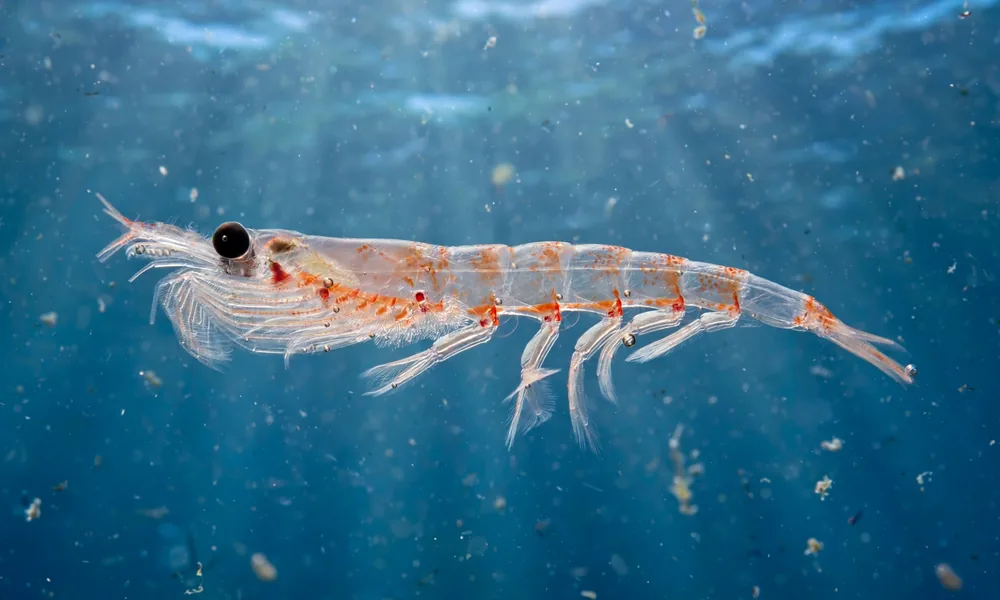
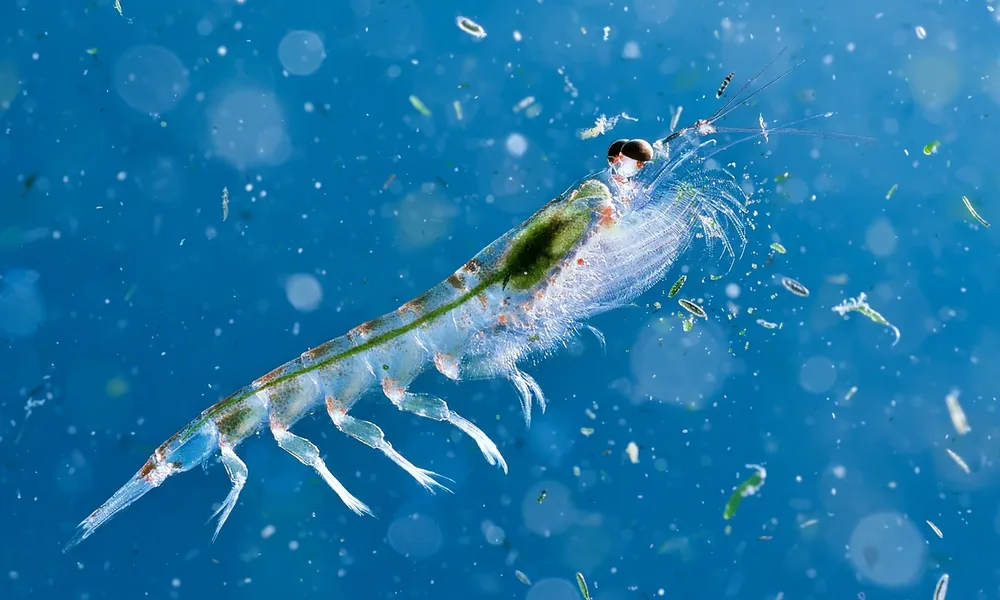
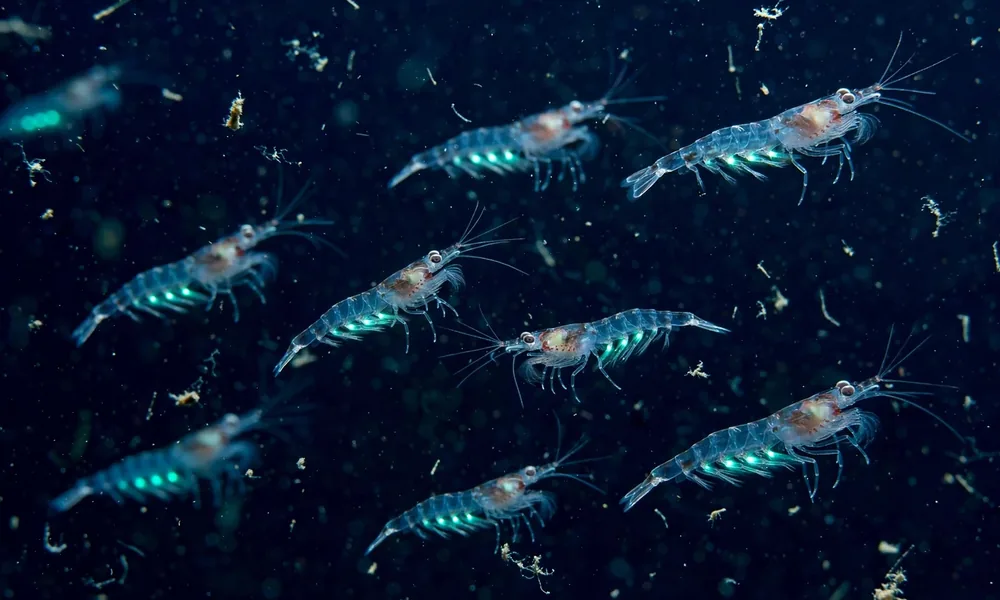
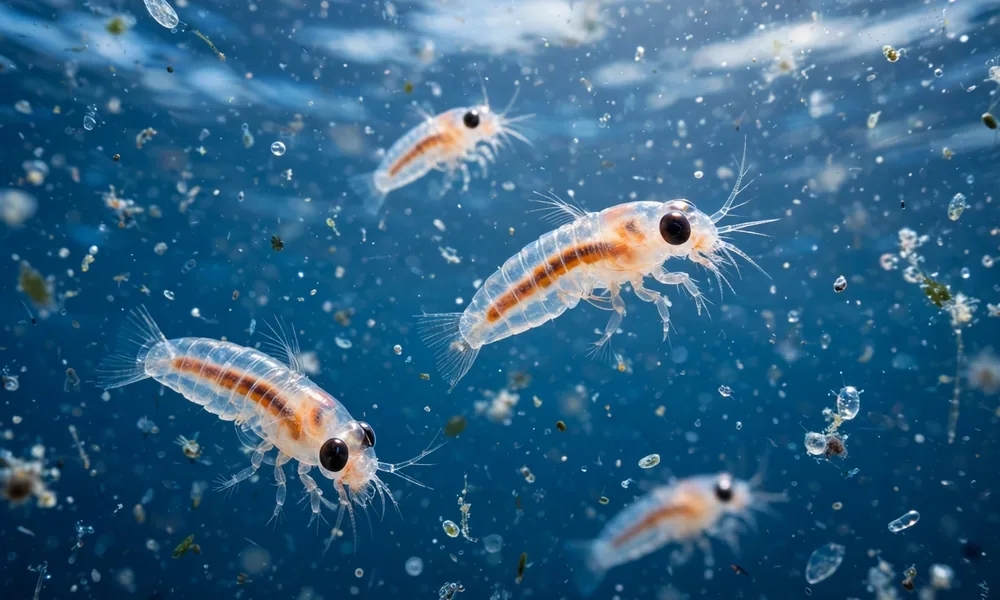
An Antarctic krill looks, at first glance, like a small pink shrimp. The body is long and curved, divided into a head, a thorax and a segmented abdomen ending in a fan-shaped tail, and it is covered in a thin shell that lets the green of its food show through. The animal is mostly transparent, with a pinkish tinge from tiny red spots scattered across the body, and when a krill has been feeding well, its gut shines green through the skin, a clear sign of a diet of diatoms. The eyes are large and black, set on short stalks, and the head carries two pairs of long antennae that sense the water and the movement of neighbours in the swarm.
The legs are the most remarkable part of the animal, and they are what make a krill a krill. Antarctic krill have a basket of feathery thoracic legs that they hold out in front of them and beat in a steady rhythm, filtering the smallest plants from the water and passing them back to the mouth. Behind those come five pairs of swimming legs under the abdomen, which paddle in waves and drive the animal through the water, and the whole body is built for life in open water, with no claws and no defence except numbers and speed. A krill can also glow. Along its body are small light organs, called photophores, that produce a soft blue-green light, which may help the animals keep together in the dark, or confuse the predators that hunt them from below.
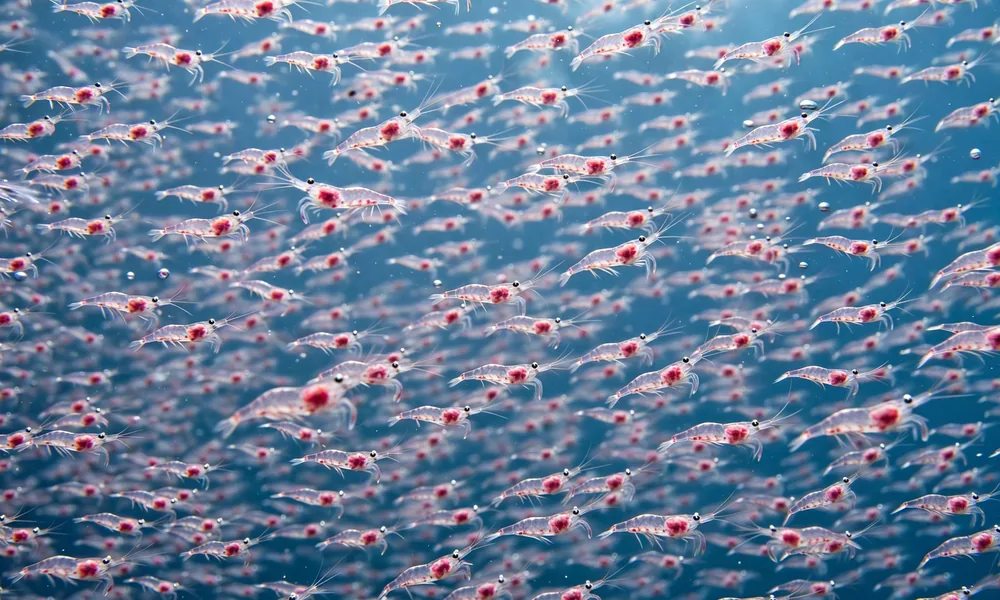
Size is the first thing to get right about a krill, because almost every photograph of one is misleading. The animal in a close-up looks as big as a prawn, but a real adult is 5 to 6 centimetres long, about the length of a paperclip, and it weighs around 2 grams, about the same as a sheet of paper. Females are a little larger than males, and a krill that has been starved can actually shrink, moulting out of its old shell into a smaller one, a trick almost no other animal can manage, which lets it survive the long, dark Antarctic winter when food is scarce. A krill at 15 millimetres long already looks like a miniature adult, with the same long antennae, feathery legs and black eyes.
Where Antarctic krill live
Antarctic krill live only in the Southern Ocean, the cold ring of water that circles Antarctica, and they are found nowhere else on Earth. Their range is circumpolar, covering about 19 million square kilometres, and it runs from the edge of the sea ice in the south to the Antarctic Circumpolar Current in the north. Within that ring the krill are not spread evenly. They are thickest in the Atlantic sector, around the Antarctic Peninsula and South Georgia, where the currents bring cold, nutrient-rich water up to the surface, and they are thinner in the deep, open waters of the Pacific sector. A krill needs water close to freezing, usually between minus 1.5 and 2 degrees Celsius.
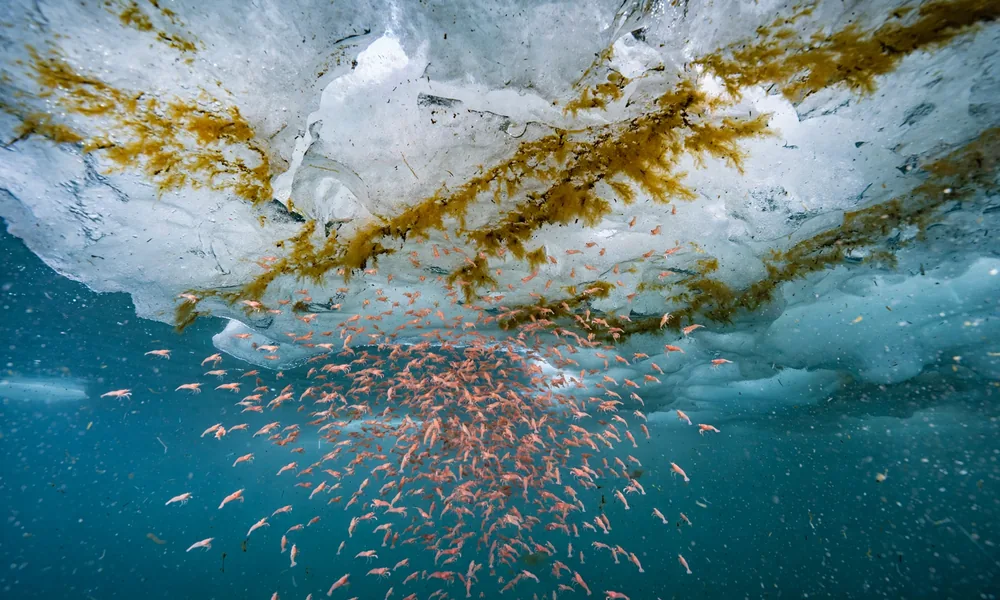
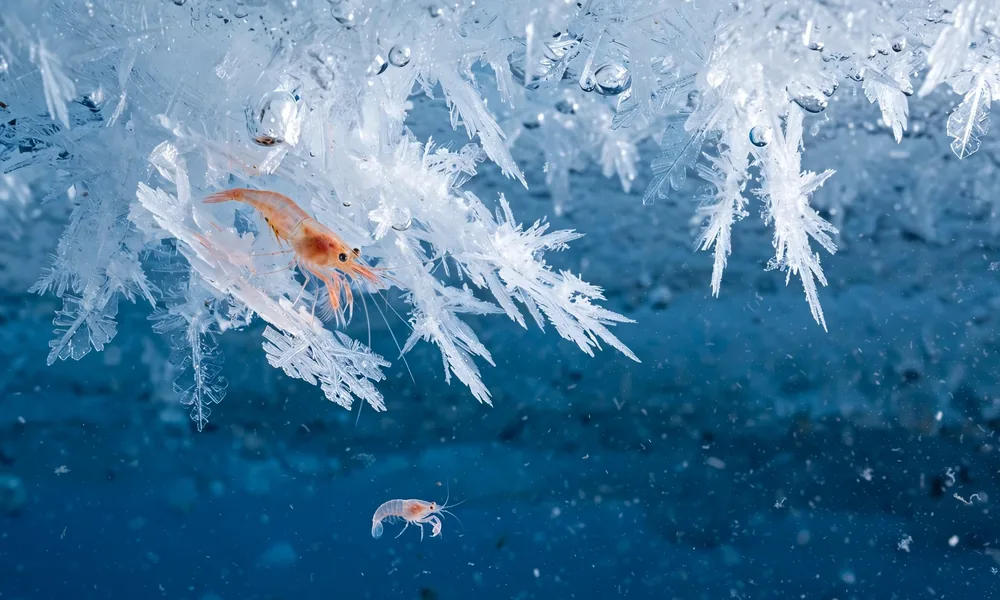
The krill’s life is tied to the sea ice, and the young animals depend on it completely. In the winter, when the ocean around Antarctica freezes over, the larvae and juveniles shelter beneath the ice, feeding on the algae that grow in golden-brown mats on its underside. The ice is both a nursery and a larder, and a winter with little ice means a poor year for young krill. Adults are more flexible. They can be found from the very surface down to the sea floor, inshore and far out in the open ocean, and they move up and down through the water every day, sinking into the dark depths by day and rising to the surface at night to feed, eating at the surface while avoiding the predators that hunt by sight.
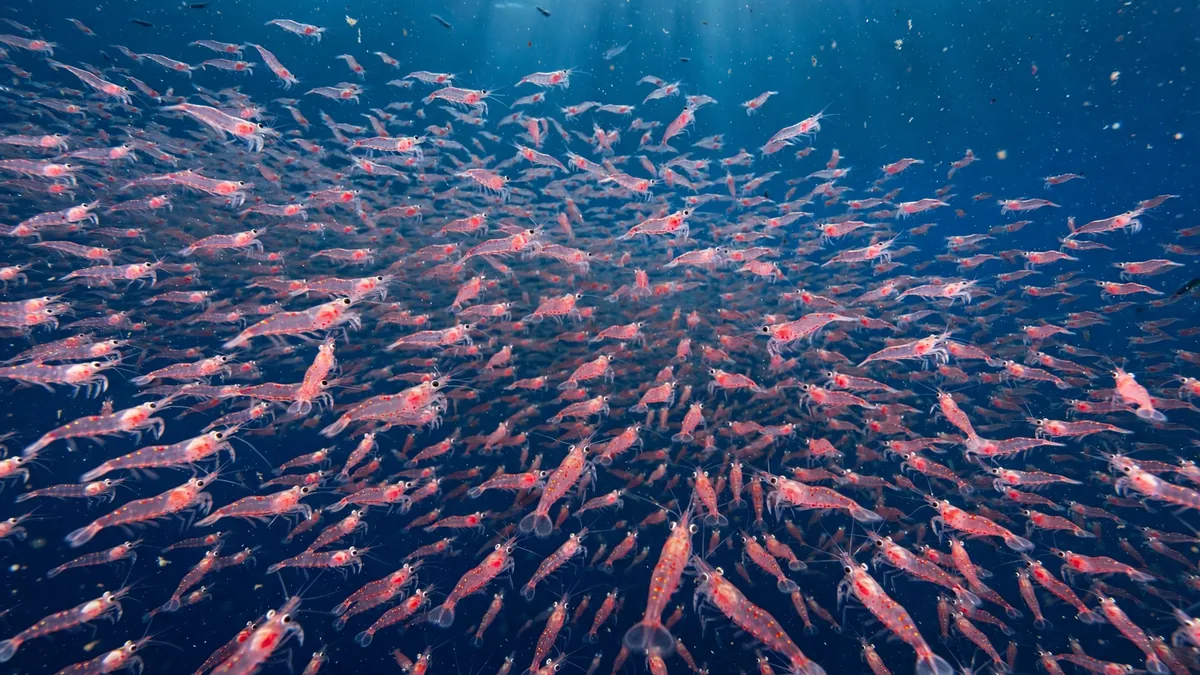
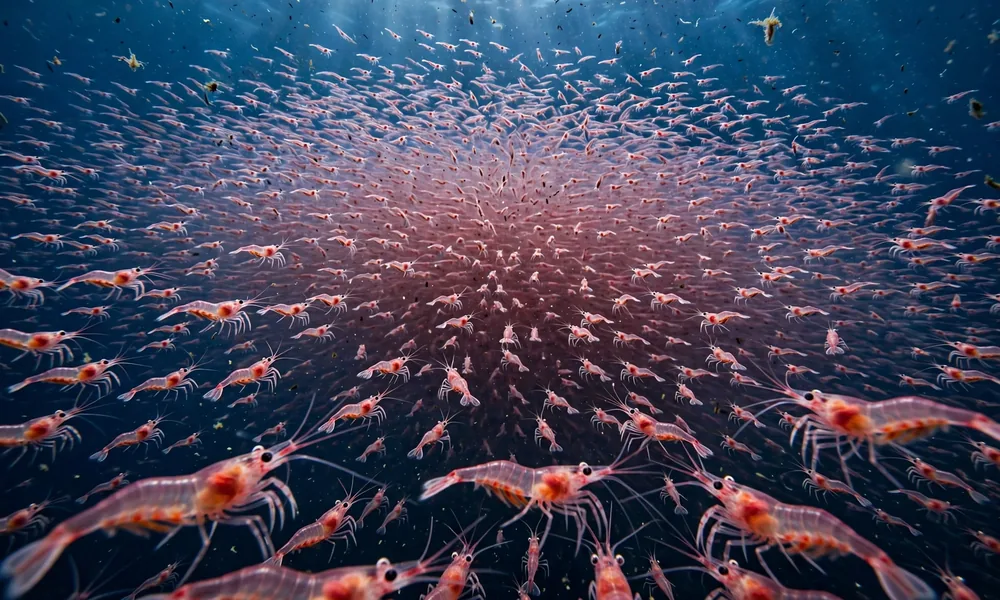
The swarm is the krill’s true home, and it is one of the great sights of the natural world. Antarctic krill gather in dense aggregations that can stretch for kilometres and hold billions of animals, and in the thickest swarms there are 10,000 to 30,000 krill in a single cubic metre of water, so many that the sea turns a rusty red and the swarm can be picked out from a satellite. The animals in a swarm all face the same way and move together, turning and diving as one, and the swarm itself behaves almost like a single creature, splitting around obstacles and reforming on the other side. The swarm protects the individual, confuses predators and puts every krill within reach of the food that drifts through the water. A lone krill is a quick meal for a fish; a krill in a swarm of a billion is hard to single out.
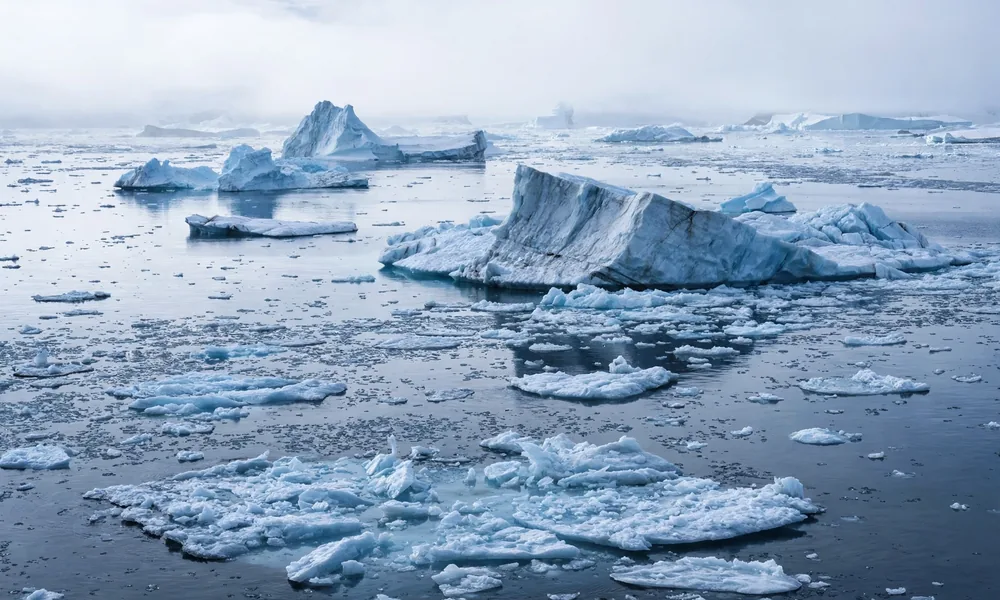
Krill are also on the move, and their range is shifting. As the Southern Ocean warms and the sea ice retreats, the centre of the krill’s distribution in the southwest Atlantic has moved south by about 440 kilometres since the 1920s, and the animals are now scarcer in the warmer northern waters where they were once common. It is a slow, quiet retreat, but it matters enormously, because the penguins, seals and whales that feed on krill breed on land, and they cannot follow the food south for ever. A colony of penguins tied to a beach on South Georgia cannot move its chicks to follow a swarm that has gone hundreds of kilometres further south, and that mismatch is one of the sharpest worries in Antarctic science.
What Antarctic krill eat
Antarctic krill eat the smallest plants in the sea, and they eat them by the tonne. Their main food is phytoplankton, the microscopic algae that drift in the sunlit surface waters, and above all the tiny diatoms, single-celled algae in glass shells that measure about 20 micrometres across, far too small for the eye to see. A krill feeds by holding out its basket of feathery legs and beating them in a steady rhythm, straining the water and combing the diatoms out of it. The animal is a messy eater, and it often spits out clumps of phytoplankton, little balls of thousands of cells stuck together, which sink quickly. What it does swallow shows plainly, because the green food shines through the transparent body, and a well-fed krill is a green krill.
Krill are not fussy, and their diet widens with the seasons. In the summer, when the sun is high and the surface waters bloom with phytoplankton, they feed almost entirely on diatoms, and they grow fast on that rich food. In the winter, when the blooms are gone and the surface is dark, they turn to the ice algae on the underside of the sea ice, scraping it off with their legs, and they will also eat small zooplankton, the larvae of other animals, and the sinking debris of dead plants and animals, the marine snow that falls steadily through the water. Krill even eat their own moulted shells, recycling the chitin, and in the hardest winters they can live for months on almost nothing. It is a diet that makes them the link between the smallest life in the sea and the largest, because the energy of the sun, caught by a diatom twenty micrometres across, ends up in the body of a blue whale through the body of a krill.
The scale of the eating is hard to grasp, and it runs in both directions. The krill population eats an enormous share of the Southern Ocean’s annual production of phytoplankton, and in the same breath it is eaten in enormous quantities. Seals take tens of millions of tonnes a year, seabirds take millions more, and baleen whales take tens of millions of tonnes. Our blue whale guide follows the animal at the top of that chain, a whale that can weigh 150 tonnes and still lives almost entirely on creatures the size of a paperclip. The krill sit in the middle of it all, turning the invisible plankton bloom into food that a penguin, a seal and a whale can all eat.
How Antarctic krill behave
Antarctic krill behave like no other crustacean, because almost everything they do, they do together. A krill on its own is a small, vulnerable animal, but a krill in a swarm is part of a moving wall of life that can stretch for kilometres. The animals in a swarm keep a precise spacing, all facing the same way, and they react to a threat in a fraction of a second, the whole swarm turning or diving at once, as if a single mind were steering it. The synchrony comes from the animals watching each other and feeling the water move, and it is so tight that a predator lunging into a swarm often comes out empty-handed. Penguins hunt them by swimming straight through the swarm and snapping left and right, and whales take them by the mouthful, and still the swarm holds together.
The daily rhythm of a krill is a vertical one, and it is governed by light. By day, the krill sink into the deeper, darker water, often hundreds of metres down, where the eyes of penguins and seals cannot easily find them. At dusk they rise to the surface, where the phytoplankton are thickest, and they spend the night feeding in the top few metres, their green guts filling as they filter the bloom. At dawn they sink again, and the cycle repeats. It is the largest daily migration on the planet, made by one of the smallest animals. The migration also carries the krill’s droppings down with it, because krill produce long strings of faeces that sink fast, heavy with carbon and with the glass shells of the diatoms they ate.
Krill moult constantly, and moulting shapes their whole life. A krill sheds its shell every few weeks as it grows, and it can also moult to shrink when food is scarce, a reversal of growth that is almost unknown in other animals. The moult is a dangerous moment, because the new shell is soft and the animal is slow. Krill also talk to each other, in their fashion, with light and with movement. The photophores along the body flash in the dark, and the animals respond to the flashes of their neighbours, and the glow almost certainly helps the swarm stay together at night. A krill is a social animal in the truest sense: it is almost never alone, and it is at its best when it is one among millions.
Breeding and life cycle
Antarctic krill breed in the Antarctic summer, when the days are long, the ice has pulled back and the surface waters are thick with phytoplankton. The breeding season runs from December to March, and it is timed to the bloom, because the larvae that hatch will need food from their first day. Mating takes place in the swarms, and a female can lay up to 10,000 eggs at a time, releasing them into the water where they are fertilised and begin to sink. The eggs fall slowly, sinking hundreds of metres, and sometimes more than a thousand, before they hatch, and the tiny larvae that emerge must then swim back up to the surface, a journey that can take ten days or more.
The journey upwards is the most dangerous part of a krill’s life, and most larvae do not survive it. The young pass through a series of stages, changing shape as they grow, and the odds are against them at every step. Those that reach the surface feed on the summer bloom and grow quickly, and by the autumn they are juveniles of about 15 millimetres, already shaped like small adults, and they move under the sea ice for the winter, where the algae on the ice will feed them through the dark months. A krill takes about two years to reach maturity, and it can live for five to seven years, with some animals reported to reach eleven, a long life for a creature so small.
The life cycle is a loop that follows the seasons of the ice, and it is tuned to a world that is changing fast. The eggs sink and the larvae rise, the juveniles shelter under the ice and the adults gather in the great summer swarms, and each stage depends on the one before it and on the timing of the ice and the bloom. If the ice forms late, the juveniles have nowhere to shelter, and if the bloom comes early, the larvae may arrive after the food has gone. Krill are famously fertile, and a single female can lay ten thousand eggs, and lay again if the food is rich, but fertility is no protection against a world that is changing faster than the animals can follow.
Conservation status
Antarctic krill are listed as Least Concern on the IUCN Red List, and that listing is honest as far as it goes. The population is enormous and the range is vast, so there is no immediate danger of the species vanishing. But Least Concern is not the same as safe, and the pressures on krill are growing fast, and they are the sort of pressures that a Red List category is slow to catch. The krill fishery is expanding, the sea ice is shrinking, the ocean is warming and acidifying, and the animals that depend on krill are already feeling the change.
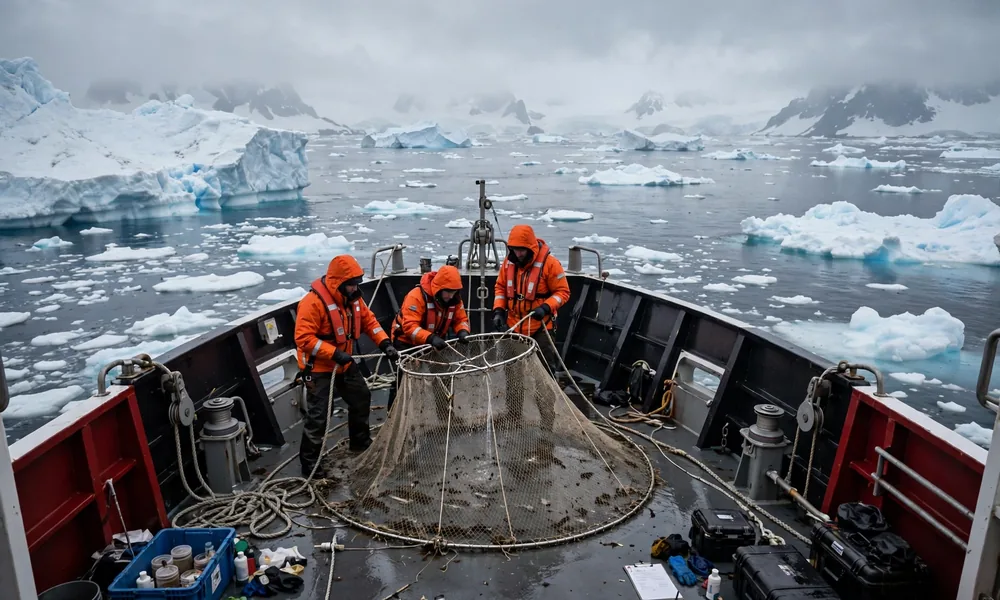
The fishery is the most visible pressure. Antarctic krill have been fished commercially since the 1970s, when Soviet trawlers first worked the Southern Ocean, and the catch peaked at 528,000 tonnes in 1982, a record that has not been broken since. Today the catch is around 400,000 tonnes a year, taken mostly by Norway, China, South Korea and Chile. Most of it becomes feed for farmed fish and a growing trade in krill oil, sold as an omega-3 supplement. The fishery is managed by the Commission for the Conservation of Antarctic Marine Living Resources, known as CCAMLR, which sets a precautionary catch limit of 620,000 tonnes a year for the main fishing area around the Antarctic Peninsula, and the catch is still well inside that limit. But the fishing concentrates in the same coastal waters where penguins and whales feed, so the competition is local, and a penguin colony can go hungry while the regional catch still looks safe.
The deeper pressures are harder to manage, because they are not about fishing at all. The Southern Ocean is warming, and the sea ice that shelters young krill is forming later and melting earlier, and the krill’s range is sliding south as the water warms. Ocean acidification may also hurt the krill, because their shells and their eggs are sensitive to the chemistry of the water, and the tiny diatoms they eat are sensitive too. There is also a quieter threat in the krill’s own success: the animals are so abundant that it is easy to assume they will always be there, and the science that tracks them is thin, with surveys that cover only a fraction of the ocean. What is certain is that the Antarctic food web has no spare parts. If the krill falter, the penguins, the seals and the whales falter with them, and there is no other animal that can take their place.
Best seasons for Antarctic krill watching
The best season for Antarctic krill watching is the Antarctic summer, from November to March, when the days are long, the ice has pulled back and the krill gather in their great surface swarms. This is the season when the Southern Ocean is at its richest, and a krill swarm at the surface can be seen from the deck of a ship as a red stain spreading across the blue water. Most people who see krill see them in the summer, from the deck of an expedition cruise ship crossing the Drake Passage to the Antarctic Peninsula, and the best weeks are January and February, when the swarms are thickest and the whales are feeding hardest. Our penguin guide follows the birds that share those same summer waters, and they are often the best sign that krill are near.
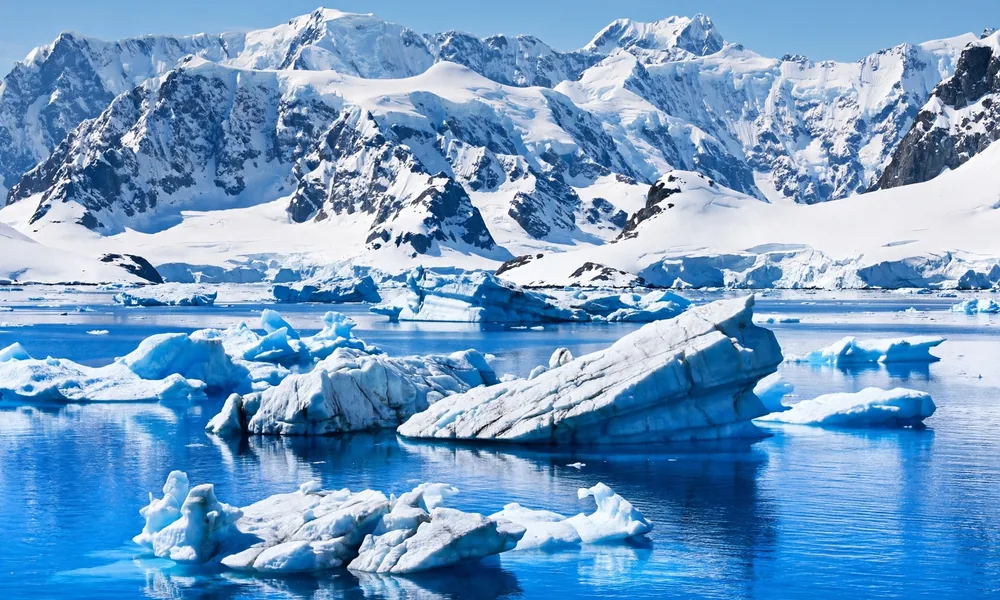
The best hours are the night, when the krill rise to the surface to feed, and the best way to see them is from the water itself. From a ship, the surface swarms show as red patches in the water, and in the dark they can be found by shining a light over the side, which brings the krill up in their thousands, their bodies glowing faintly in the beam. From a zodiac, you can be close enough to see the individual animals, tiny and transparent, flicking their tails as they swim. In the winter the krill are still there, but they are deeper and harder to find, and the Southern Ocean in winter is a place for research ships, not for watchers.
Staying safe around Antarctic krill
Antarctic krill are not dangerous to people, and there is no safety warning that belongs to the animal itself. A krill has no sting, no bite, no venom and no interest in you, and the worst it can do is flick its tail and swim away. The safety rules for watching krill are the rules of the Southern Ocean, and they are serious. The water is close to freezing and the sea around Antarctica is one of the roughest on Earth, so the danger is never the krill, it is the place. Never go out on the water alone, never lean over the side of a small boat without a life jacket, and never put a hand in the water for longer than you must.
There are a few practical points for the ship and the shore. Travel only with an experienced Antarctic operator, follow the crew’s instructions on deck, and keep a firm hold in rough weather, because the Southern Ocean can throw a ship around without warning. Dress for the cold, with layers, a waterproof outer shell, gloves and a hat. Respect the wildlife rules of the Antarctic Treaty, keep your distance from penguins, seals and whales, and never take anything from the shore.
Antarctic krill watching checklist
A little preparation turns a crossing of the Southern Ocean into a real chance of seeing Antarctic krill at their best, thick in the water and glowing in the dark.
- A trip to the Antarctic Peninsula in January or February, when the summer swarms are at their thickest and the whales are feeding hardest.
- A night watch from the deck, when the krill rise to the surface to feed and a light over the side brings them up in their thousands.
- Red patches in the blue water, the surest sign of a swarm, visible from the deck and sometimes even from a satellite.
- Penguins and whales feeding nearby, because where the hunters are working, the krill are thick.
- Warm layers and a waterproof shell, so that a night on a cold deck stays comfortable from start to finish.
- A life jacket and a buddy on any small boat, so that a trip out on freezing water stays safe if the weather turns.
- Respect for the animal and the ocean, keeping your distance from the wildlife, taking nothing from the shore, and leaving the water as you found it.
Frequently asked questions
How big do Antarctic krill get?
Antarctic krill grow to 6 centimetres long at most, about the length of a paperclip, and they weigh up to 2 grams, about the same as a sheet of paper. Females grow a little larger than males, and a typical adult is 5 to 6 centimetres long. A krill at 15 millimetres already looks like a miniature adult, with the same long antennae, feathery legs and black eyes.
What do Antarctic krill eat?
Antarctic krill eat phytoplankton, the microscopic algae that drift in the sunlit surface waters, and above all the tiny diatoms, single-celled algae about 20 micrometres across, which they filter from the water with a basket of feathery legs. In the winter they turn to the ice algae on the underside of the sea ice, and they will also eat small zooplankton and sinking debris. The green food often shows through their transparent bodies.
How long do Antarctic krill live?
Antarctic krill live for five to seven years, with some animals reported to reach eleven years, which is a long life for a creature so small. They take about two years to reach maturity, and a female can lay up to 10,000 eggs at a time in the summer breeding season. Most larvae do not survive the long rise from the deep water to the surface, but the survivors grow fast on the summer bloom.
Are Antarctic krill endangered?
No, Antarctic krill are listed as Least Concern on the IUCN Red List, and their population is enormous, with a biomass estimated at around 379 million tonnes. But the listing does not mean they are safe. The animals that depend on krill, from penguins to blue whales, are the ones that feel the change first.
Why are Antarctic krill important?
Antarctic krill are important because they are the link between the smallest life in the Southern Ocean and the largest. They eat the microscopic phytoplankton that no bigger animal can use, and they turn it into food for penguins, seals, fish, squid and baleen whales. Their droppings also carry carbon down to the deep sea, where it stays locked away for a thousand years.
How is this guide different from the wood frog guide?
This guide covers the Antarctic krill, a 6-centimetre marine crustacean that lives in swarms of billions in the freezing Southern Ocean, filters microscopic diatoms from the water and feeds blue whales, penguins and seals, while our wood frog guide covers a small land-living amphibian of the forests of North America that freezes solid in winter and thaws out in spring, eating insects on the forest floor. One is a nearly transparent animal of the open sea; the other is a brown frog of the leaf litter you can hold in your hand.
Conclusion
The antarctic krill species is a reminder that the most important animal in a place is rarely the biggest or the fiercest. A creature the length of a paperclip, almost transparent, with feathery legs and a green gut, holds the whole Southern Ocean together, turning sunlight and diatoms into food for whales, penguins and seals, and carrying carbon down to the deep sea as it goes. It gathers in swarms of billions, it glows in the dark, and it shrinks when it is hungry.
If you go looking for krill, go to the Antarctic Peninsula in the summer, go at night, and watch for the red water. Find the penguins feeding, find the whales lunging, and shine a light over the side of the ship, and you will have met the animal that turns a cold stretch of ocean into one of the richest places on the planet.