The brown recluse spider species is the quiet, violin-marked spider of the American Midwest and South, a small light brown hunter that would far rather hide in a dark corner than meet a person at all. If you are asking what a brown recluse spider is, the short answer is a shy nocturnal spider, Loxosceles reclusa, about 6 to 20 millimetres long in the body with a leg span of about 2.5 centimetres, recognised by the dark violin shape on its back and by having six eyes instead of the usual eight, living in dry undisturbed corners of houses and in sheltered spots outdoors across the central United States. It is venomous, and its bite can in rare cases cause a slow-healing wound, yet most bites cause little or no harm, and the spider itself bites only when it is trapped against the skin.
What makes the brown recluse so widely talked about is the gap between its reputation and its real behaviour. It is one of the most feared spiders in North America, blamed for wounds it never caused in places it has never lived, while the animal itself spends its life tucked away in cardboard boxes, behind skirting boards and under bark, coming out at night to hunt crickets and cockroaches. This guide follows the whole spider: how it looks, where it lives, what it eats, how it behaves, how it breeds, and how to live alongside it safely.
Key takeaways
- The brown recluse spider species is Loxosceles reclusa, a member of the family Sicariidae, found in the central and south-central United States from Nebraska and Iowa south to Texas and the Gulf of Mexico.
- Adults have a body about 6 to 20 millimetres long, usually about 7 millimetres, with a leg span of about 2.5 centimetres, and they weigh so little that a spider is barely felt on the skin.
- The spider has six eyes arranged in three pairs, unlike most spiders which have eight, and a dark violin-shaped marking on its back with the neck of the violin pointing towards the abdomen.
- It is a shy nocturnal hunter that hides by day in dry, undisturbed places, leaves its messy silk retreat at night to hunt, and often prefers dead insects to live prey.
- About 90 per cent of bites cause no reaction or only a small red spot that heals on its own, while about 10 per cent cause a slow-healing skin wound, and bites are rare because the spider bites only when trapped against the skin.
The brown recluse spider species and their relatives
Brown recluse spiders belong to the family Sicariidae, a small family of six-eyed spiders that includes the recluse spiders and their close cousins the six-eyed sand spiders, and the family sits in the order Araneae, alongside the wolf spiders, the orb weavers, the jumping spiders and the black widows. The recluse spiders of the genus Loxosceles are found in warm places across the world, from North and South America to Africa, Asia and Europe, and the genus holds well over a hundred described species, most of them shy, brown, long-legged spiders of dry sheltered places.
The brown recluse, Loxosceles reclusa, is the lead species of this guide, and it is the best known of all the recluse spiders, largely because it is the one that most often shares houses with people. It lives in the central and south-central United States, in a range that runs roughly south of a line from south-eastern Nebraska through southern Iowa, Illinois and Indiana to south-western Ohio, and from central Texas east to western Georgia and north to Kentucky, and it grows to about 6 to 20 millimetres in body length, though most adults are nearer 7 millimetres, with a leg span of about 2.5 centimetres, about the size of an American quarter coin with the legs spread. Like the spider, the brown recluse is an arachnid with eight legs and two body parts, a cephalothorax and an abdomen, but the ordinary garden spider is a creature of webs strung in the open, while the brown recluse is a creature of corners and cupboards, hunting on foot at night and using silk mainly as a daytime retreat.
| Type | Animal | Where it lives | Best-known food | Length or Weight |
|---|---|---|---|---|
| Family | Recluse spiders (Sicariidae) | Warm regions worldwide | Crickets, cockroaches and other insects | About 6 mm to 20 mm long |
| Genus | Recluse spiders (Loxosceles) | Americas, Africa, Asia and Europe | Crickets, cockroaches and other insects | About 6 mm to 20 mm long |
| Species | Brown recluse (Loxosceles reclusa) | Central and south-central United States | Crickets, cockroaches and other insects | About 6 mm to 20 mm long |
| Species | Mediterranean recluse (Loxosceles rufescens) | Mediterranean region and warm buildings worldwide | Small insects and other spiders | About 7 mm to 12 mm long |
| Species | Chilean recluse (Loxosceles laeta) | South America and warm buildings worldwide | Small insects and other spiders | About 8 mm to 15 mm long |
| Species | Desert recluse (Loxosceles deserta) | Deserts of the south-western United States | Small insects and other spiders | About 6 mm to 20 mm long |
The closest relatives of the brown recluse are the other recluse spiders of the genus Loxosceles, a large genus of plain brown spiders that share the six-eye pattern and the habit of hiding in dry, sheltered places. The Mediterranean recluse, Loxosceles rufescens, is a spider of the Mediterranean region that has travelled the world in cargo and now lives in warm buildings far from home, growing to about 7 to 12 millimetres long, and it is the recluse most often found in Florida, where the brown recluse itself has no breeding population. The Chilean recluse, Loxosceles laeta, is a spider of South America that grows to about 8 to 15 millimetres long, and it is the recluse with the strongest reputation for a serious bite in its home range. The desert recluse, Loxosceles deserta, is a spider of the deserts of the south-western United States that grows to about the same size as the brown recluse, and it lives under rocks and in rodent burrows rather than in houses, which is why most people never meet it at all.
What brown recluse spiders look like
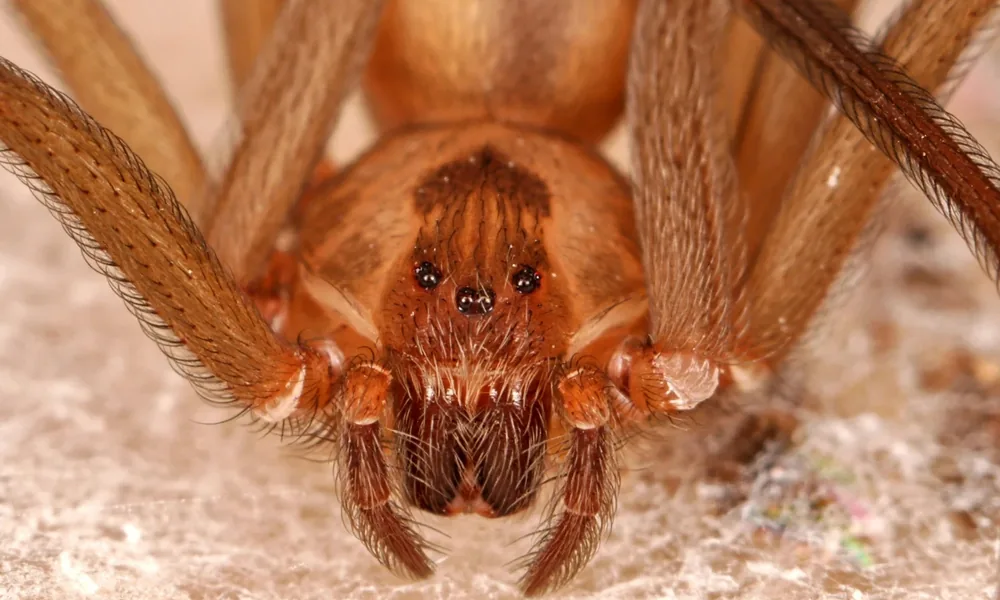
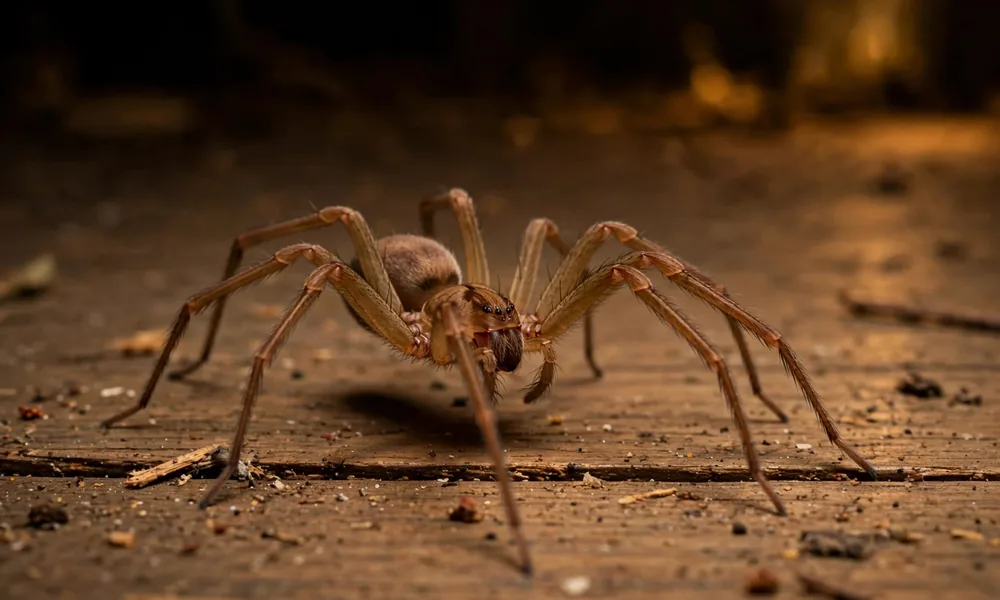
A brown recluse spider looks plain on purpose. The body is a soft tan to medium brown, sometimes almost yellow, sometimes dark brown or greyish, and the whole spider is covered in short fine hairs that give it a velvety look rather than a shiny one. The front half of the body, the cephalothorax, carries the dark violin marking, with the neck of the violin running backwards towards the abdomen, though the marking can be faint in young spiders and varies in strength from one spider to the next. The legs are long, thin and unbanded, without spines or stripes, and the abdomen is plain and unmarked, a soft oval that is usually the same colour as the rest of the body or a little paler. There is nothing flashy about it, and that is the point: a brown recluse is built to disappear against wood, cardboard and dry leaves.
The size of a brown recluse is easy to overstate, and most people who think they have seen a large one have seen something else entirely. The body of an adult is about 6 to 20 millimetres long, but most adults measure about 7 millimetres, roughly a quarter of an inch, and with the legs spread the spider is about 2.5 centimetres across, about the size of an American quarter coin, or at most a half dollar. Females are a little larger and heavier than males, and both sexes are dwarfed by the wolf spiders and fishing spiders they are so often confused with. A spider with a body longer than half an inch, with banded or spiny legs, or with a patterned abdomen, is almost certainly not a brown recluse, whatever the violin shape on its back may seem to suggest.

The eyes are the real identification mark, and they are worth learning because the violin alone is not enough. Most spiders have eight eyes, but the brown recluse has six, arranged in three pairs, one pair in the middle and one pair on each side, in a gentle curve across the front of the head. Cellar spiders and pirate spiders can carry markings that look much like a violin, and a dozen other brown spiders can look the same at a glance, yet none of them has that six-eye pattern. The eyes are small and hard to see without a magnifier, which is why a photograph taken close up is the sensible way to check a spider you have caught in a jar, rather than leaning in close to a live one.
Young brown recluses look different again, and that catches people out. A spiderling fresh from the egg sac is pale and tiny, and the violin marking is not visible on young spiders at all, so a young recluse looks like any other small pale spider until it has moulted several times and grown into its adult colours.
Where brown recluse spiders live
Brown recluse spiders live in the central and south-central United States, and they are found nowhere else in the wild in any numbers. Their native range covers sixteen states, Alabama, Arkansas, Georgia, Illinois, Indiana, Iowa, Kansas, Kentucky, Louisiana, Mississippi, Missouri, Nebraska, Ohio, Oklahoma, Tennessee and Texas, with the heaviest populations in Missouri, Kansas, Oklahoma, Arkansas, Tennessee and Texas. The range runs roughly south of a line from south-eastern Nebraska through southern Iowa, Illinois and Indiana to south-western Ohio, and from central Texas east to western Georgia and north to Kentucky. Despite the rumours that follow this spider everywhere, it has not established itself in California, and it has not established itself anywhere outside its native range, so a brown recluse reported in Florida or California or New York is almost always a spider that arrived in a box, or a different spider altogether.
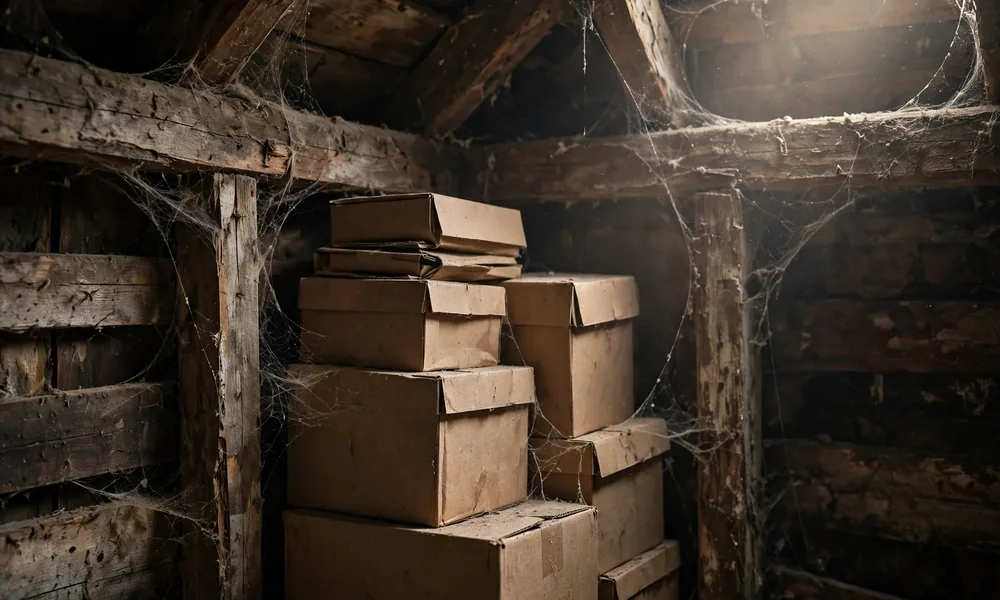
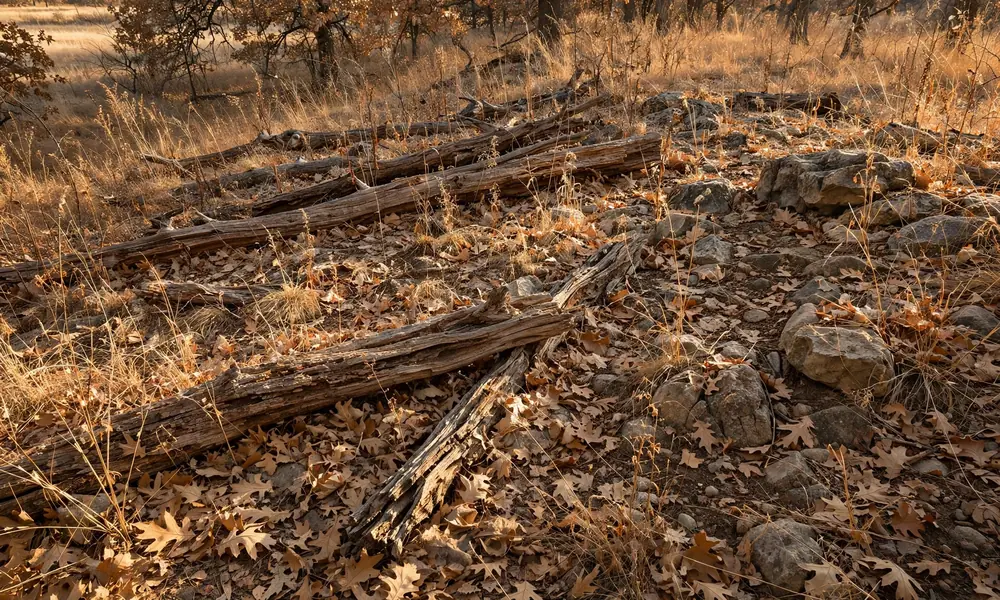
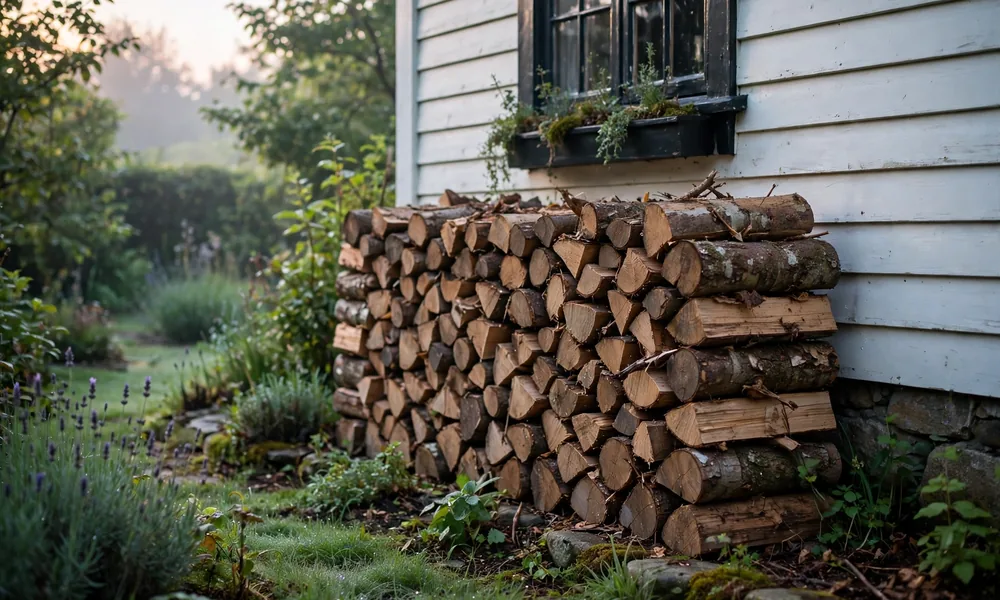
Outdoors, the brown recluse is a spider of dry sheltered places. It lives under rocks, behind loose tree bark, in woodpiles and log piles, in sheds and outbuildings, and in caves and rodent burrows, anywhere that is dry, dark and rarely disturbed. Indoors, it is a synanthrope, a creature that thrives alongside people, and it settles in the parts of a house that people visit least: attics, cellars, closets, garages, storage rooms, wall voids and ceiling voids. It seems to favour cardboard, perhaps because cardboard feels much like the rotting bark it hides under in the wild, and it is often found in shoes left on the floor, in stacks of clothes, in bedding that is rarely used, behind pictures and skirting boards, and near furnaces. A house inside the native range can hold a large population without anyone noticing, and one study collected more than 2,000 spiders from a single home over six months while the people living there had not been bitten in six years.

The spider is not a traveller. Newly hatched recluses do not balloon on silk threads the way many young spiders do, so populations stay close together in tight clusters, and a house can hold hundreds of spiders while the house next door holds none. The spider is also remarkably tough, and it can live for months without food or water, with some spiders going as long as ten months without either. It is inactive from late autumn to early spring, roughly October through March, even in houses where the temperature and the light stay steady.
What brown recluse spiders eat
Brown recluse spiders eat small insects and other small arthropods, and their favourite food is the soft-bodied insects that share their hiding places. Crickets and cockroaches are the mainstay, along with firebrats, moths, flies and other spiders, and the spider will take whatever small prey it can overpower, alive or dead. It is a hunter rather than a web builder, and it does not sit in a web waiting for food to arrive. Instead it leaves its silk retreat at night and walks the floors and walls in search of prey, feeling its way with its long front legs and seizing what it finds with its fangs. Like the black widow, the brown recluse is a venomous spider that subdues its prey with venom, but the black widow hangs upside down in a tangled web and waits for prey to blunder in, while the brown recluse roams the floor at night and hunts its food down.

What sets the brown recluse apart from most spiders is how happy it is to eat dead insects. It is a scavenger as much as a hunter, and it often prefers prey that is already dead, especially if the insect was killed within the last day or so, or if the live insect would be dangerous to attack. A large cockroach with strong legs can injure a small spider, so the recluse will bite and retreat, then come back later to feed once the venom has done its work.
The spider drinks little and needs little water, getting most of its moisture from its prey, and it will go for months without a drink when it has to. That frugality is part of why it does so well in dry houses, and why a house with plenty of crickets and cockroaches can support plenty of brown recluses.
How brown recluse spiders behave
Brown recluse spiders are night spiders, and their day is split cleanly in two: hide by day, hunt by night. By day the spider sits in its silk retreat, a flat, messy sheet of silk tucked into a corner or a crack, and it does not move unless it is disturbed. As darkness falls it leaves the retreat and walks the house, hunting for insects and exploring new hiding places, and as daylight approaches it looks for the nearest dark crack to hide in again, which is how it ends up in shoes, in folded clothes and in bedding left on the floor. It is solitary for most of its life, and it does not form colonies or share a web, though many spiders may live in the same house, each keeping to its own retreat and its own patch of floor.
The spider’s reputation for aggression is the opposite of the truth. A brown recluse is shy and reluctant to bite, and in experiments where spiders were pressed and pinched, brown recluses showed almost no defensive biting at all, while wolf spiders in the same tests bit readily. When a brown recluse does bite a person, it is almost always because the spider has been trapped against the skin, in a shoe that was put on without shaking, in clothing that was picked up off the floor, or in bedding that someone rolled over onto in their sleep. The spider does not chase people, it does not drop from ceilings onto passers-by, and it does not seek out a fight it cannot win. Its first response to danger is to run, its second is to play dead, and biting is the last resort of a spider that has nowhere left to go.
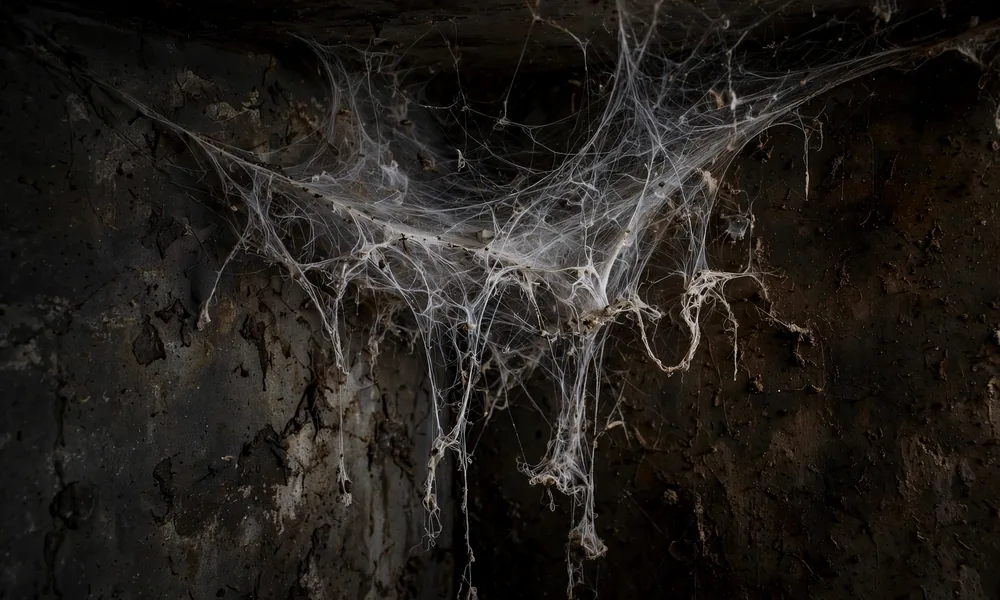
Males and females behave differently, and the difference matters for anyone living with these spiders. Females stay close to their retreats, guarding their egg sacs and hunting nearby, while males and older juveniles roam much further, especially in the summer mating season, wandering through the house in search of a mate. That roaming is why the spiders most often found in bedding and clothing are males, and why most bites happen in summer, when the males are at their most mobile.
Breeding and life cycle
Brown recluse spiders breed in the warmer months, from about May to July, when the house is warm and insect prey is plentiful. Males wander in search of females, and mating takes place in or near the female’s retreat, after which the male moves on and plays no part in raising the young. The female then builds an egg sac, a round off-white ball of loosely woven silk about a third of an inch across, and lays her eggs inside it, usually in a sheltered spot she can guard. Each sac holds about 40 to 50 eggs, though some hold as few as 20 and a few hold many more, and a female may build two or three sacs in a season, and up to five in her lifetime, so a single female can produce well over a hundred young.

The eggs hatch in about a month, usually 25 to 39 days after they are laid, and the spiderlings moult at least once inside the sac before they emerge, tiny pale copies of the adults. From egg to adult takes about 336 days on average, roughly eleven months, and the young spider moults five to eight times as it grows. It reaches adulthood in its first year or so, and an adult then lives for two to three more years, so the whole life of a brown recluse runs to about two to four years.

The young are independent from the day they leave the sac, and they do not stay together for long. Each spiderling finds its own crack to hide in, and because young recluses do not balloon away on silk threads, most of them settle close to where they hatched, which is why a house with one female can soon hold a whole population of her young.
Conservation status
The brown recluse spider has no formal assessment on the International Union for Conservation of Nature Red List, and it does not need one. It is common and abundant across its native range, it thrives in houses and outbuildings as readily as it does under bark and rocks, and there is no evidence that its numbers are falling anywhere. A spider that lives happily in cardboard boxes and wall voids is not a spider in danger of disappearing, and no conservation programme is aimed at it, nor is one likely to be. Its future is secure for as long as there are dry, quiet corners in the American Midwest for it to hide in.
The real conservation question around the brown recluse is not about the spider at all, but about the harm done by fear of it. Houses inside the native range are sprayed with insecticide for spiders that are doing no harm, and harmless spiders are killed by the thousand because they look a little like a recluse, which does real damage to the local spider population and to the insects and birds that depend on spiders for food.
Best seasons for brown recluse spider watching
The best time to look for a brown recluse spider is the warm season, from about May to October, when the spiders are active, hunting and breeding in the open. They are present in the house all year round, so there is no wrong season in the strict sense, but the summer months are when the males are roaming and the spiders are most likely to be seen out of their retreats, walking the floor after dark. In the winter, from October to March, the spiders go quiet, even in warm houses, and they are much harder to find, tucked away in their retreats and waiting for spring.
The best hours are the first hours after dark, when the spiders leave their retreats to hunt. From about dusk until midnight, a brown recluse is at its most active, walking the floor and the walls in search of crickets and cockroaches, and it is at its most visible then. A torch with a gentle beam and a careful eye on the corners and the skirting boards will show you more of this spider than any amount of daytime searching.
Staying safe around brown recluse spiders
A brown recluse spider is not dangerous to people who give it room, and the safety rules around it are simple and practical. Shake out shoes and clothes that have been left on the floor before putting them on, especially in summer, and do not leave bedding trailing on the floor in a house inside the native range. Keep storage boxes off the floor, seal the cracks around skirting boards and pipes, and wear gloves when you move a woodpile or clear out a shed or attic. A spider that is caught in a jar can be looked at safely and released outdoors, well away from the house, and a spider found indoors can be caught the same way rather than killed.
If you think you have been bitten, stay calm and get the bite looked at by a doctor, and take the spider with you in a sealed jar if you can catch it safely, since a confirmed identification matters more than any guess. Most bites need little more than cleaning and watching, but a bite that grows painful, blistered or discoloured over the following days, or any bite on a child, should be seen promptly by a doctor. Do not apply folk remedies, do not cut the bite, and do not assume that every sore on the skin is a spider bite, since most wounds blamed on brown recluses turn out to be something else entirely.
Brown recluse spider watching checklist
A little care turns a house inside the brown recluse range into a place where you can live alongside this spider safely, and even watch it, without ever putting a hand where it should not go.
- A torch with a gentle beam, for watching the floor and the skirting boards after dark when the spiders come out to hunt.
- Gloves and long sleeves, for moving a woodpile, clearing a shed, or sorting boxes in an attic or cellar.
- Shoes and clothes shaken out before they are put on, especially anything left on the floor overnight in summer.
- A clear jar with a lid, for catching a spider safely so it can be looked at, identified and released outdoors.
- A magnifier or a camera that takes good close-ups, so the six eyes and the violin marking can be checked without leaning in close.
- Sealed storage boxes kept off the floor, so spiders and their insect prey have fewer dark, quiet places to settle.
- Respect for the spider and its retreat, keeping your hands out of dark corners, and leaving a spider in peace when it is doing no harm.
Frequently asked questions
How big do brown recluse spiders get?
Brown recluse spiders have a body about 6 to 20 millimetres long, but most adults are nearer 7 millimetres, roughly a quarter of an inch, and with the legs spread the spider is about 2.5 centimetres across, about the size of an American quarter coin. Females are a little larger than males, and the spiderling that hatches from the egg sac is only a few millimetres long, growing through five to eight moults before it reaches adult size. A spider with a body longer than half an inch is almost certainly not a brown recluse, whatever it may look like at first glance.
What do brown recluse spiders eat?
A brown recluse spider eats crickets, cockroaches, firebrats, moths, flies and other small insects, along with other spiders, and it is unusual among spiders in how happily it eats dead insects. It hunts at night on foot, leaving its silk retreat after dark to walk the floor in search of prey, and it will bite and retreat from a large insect, coming back to feed once the venom has done its work. It gets most of its moisture from its prey, and it can go for months without food or water when it has to.
Are brown recluse spiders dangerous?
Brown recluse spiders are venomous, and they should be treated with respect, but they are far less dangerous than their reputation suggests. About 90 per cent of bites cause no reaction or only a small red spot that heals on its own, and about 10 per cent cause a slow-healing skin wound that can take two to four months to heal, while fewer than 1 per cent cause serious whole-body symptoms, most often in children. Bites are rare, and they happen almost only when a spider is trapped against the skin, so a person who shakes out shoes and clothes and keeps bedding off the floor is very unlikely ever to be bitten.
Where do brown recluse spiders live?
Brown recluse spiders live in the central and south-central United States, in sixteen states from Nebraska and Iowa south to Texas and the Gulf of Mexico, and from central Texas east to western Georgia and north to Kentucky. Outdoors they live under rocks, behind loose bark, in woodpiles and in caves and rodent burrows, and indoors they live in attics, cellars, closets, garages and wall voids, favouring dry, quiet places and cardboard boxes. They have not established themselves in California or anywhere outside their native range.
Can you keep a brown recluse spider as a pet?
You should not, and in most cases you would not want to. Brown recluse spiders are shy, nocturnal and secretive, so a pet recluse would spend its life hidden in a corner of its enclosure and would rarely be seen, and it is venomous, so handling it would carry a real risk of a bite that could take months to heal. They are also remarkably good at escaping through small gaps, and a spider that gets loose in a house is a spider that may end up in a shoe or a bed. Anyone who loves spiders would do far better with a tarantula or a jumping spider, which are active, visible and safe to keep.
How is this guide different from the Brazilian wandering spider guide?
This guide covers the brown recluse spider, a single species, Loxosceles reclusa, a small shy brown spider of the central United States that hides in dry corners by day, hunts crickets and cockroaches on foot at night, and bites only when trapped against the skin, while our Brazilian wandering spider guide covers a large, fast, bold spider of South American forests that roams the forest floor at night, defends itself with a raised threat display, and carries a venom that acts quickly on the nerves. One is a quiet house spider you meet in a cupboard; the other is a wandering forest hunter you meet on the ground in the rainforest.
This guide also goes further than our general spider guide, which covers spiders as a whole, from garden orb weavers to wolf spiders to tarantulas, in a single broad sweep. That guide is the place to start if you want to know what a spider is, while this guide stays with one species for its whole length, following the brown recluse from its six-eyed relatives and its violin marking through its house and woodpile habitat, its night hunting and its taste for dead insects, its egg sacs and its long quiet winters, to the seasons and the checklist that will help you live alongside it safely.
Conclusion
The brown recluse spider species is a reminder that the most feared animal in the house is often the least interested in meeting you. A small brown spider with six eyes and a violin on its back, a body about the size of a coin with its legs spread, a life spent in dry quiet corners and a night spent hunting crickets and cockroaches, it asks for nothing more than to be left alone, and it bites only when it is trapped with nowhere left to go.
If you live inside its range, give it that room: shake out your shoes, keep your bedding off the floor, wear gloves at the woodpile, and look before you put a hand into a dark corner. Do that, and the brown recluse will stay what it has always been, a shy neighbour in the quiet parts of the house, doing its night work among the insects while you sleep.